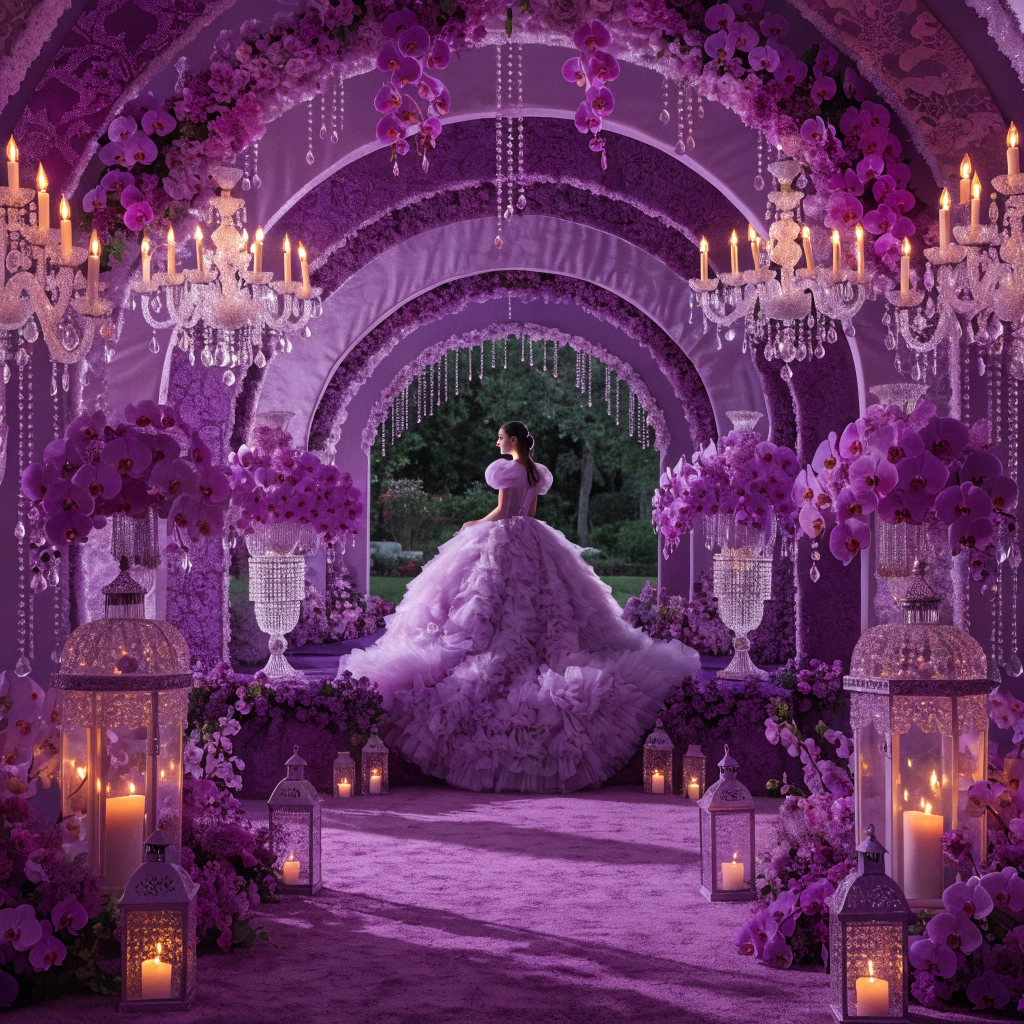
A Special Birthday in Mexico
In Mexico, the fifteenth birthday is very special. It is called the Quinceañera. This party is for girls. It is a big celebration with family and friends.
The girl wears a beautiful, long dress. She often wears a crown too. She goes to a church with her parents. They give thanks for her life.
After the church, there is a big party. People eat traditional food and dance. The girl dances with her father. It is a happy day for everyone. Many people come to help and celebrate.
Grammar Spotlight
Pattern: Present Simple (to be)
"The fifteenth birthday is very special."
We use 'is' with singular subjects like 'birthday' to describe facts or states. It is the most common verb in English.
Pattern: Present Simple (Third Person Singular)
"The girl wears a beautiful, long dress."
We add an 's' to the end of the action verb when the subject is 'he', 'she', or 'it'. Here, 'the girl' is 'she'.
Test Your Understanding
10 questions · A1 Beginner · 1 free preview
Test what you learned from this article. Answer all questions to earn XP!
How old is the girl at a Quinceañera?
Want to finish the quiz?
9 more questions are waiting for you. Sign up free to unlock the full quiz and earn XP!
Sign Up FreeAlready have an account? Sign In
Question Breakdown
How old is the girl at a Quinceañera?
Your answer:
Correct answer: Fifteen
The Quinceañera is a party for boys.
Your answer:
Correct answer: False
What is a 'dress'?
Your answer:
Correct answer: A piece of clothing
The girl wears a _____ on her head.
Your answer:
Correct answer: crown
A Special Fifteenth Birthday in Mexico
The Quinceañera is a special celebration for girls in Mexico. It happens on their fifteenth birthday. This day is more important than a normal birthday because it shows that a girl is now a young woman.
This tradition is very old. It began with the Aztecs a long time ago. Later, Spanish people brought new ideas and religion. Today, the celebration is a mix of these different cultures.
On this day, the girl wears a very beautiful dress. It is often pink or white, and it is bigger than a regular party dress. First, the family goes to a special church service. After the church, they have a big party with music, dancing, and delicious food.
The Quinceañera is an important milestone. It is a happy time because the family celebrates together. The girl feels like a princess, but she also learns about her new responsibilities in the community.
Grammar Spotlight
Pattern: Comparatives (more / -er)
"This day is more important than a normal birthday because it shows that a girl is now a young woman."
We use 'more' with long adjectives and '-er' with short adjectives to compare two things. It helps show that one thing has more of a quality than another.
Pattern: Past Simple
"It began with the Aztecs a long time ago."
We use the past simple to talk about actions that finished in the past. 'Began' is the irregular past form of the verb 'begin'.
Test Your Understanding
11 questions · A2 Elementary · 1 free preview
Test what you learned from this article. Answer all questions to earn XP!
How old is a girl when she has a Quinceañera?
Want to finish the quiz?
10 more questions are waiting for you. Sign up free to unlock the full quiz and earn XP!
Sign Up FreeAlready have an account? Sign In
Question Breakdown
How old is a girl when she has a Quinceañera?
Your answer:
Correct answer: 15
The Quinceañera tradition started very recently.
Your answer:
Correct answer: False
What does 'delicious' mean?
Your answer:
Correct answer: Very tasty
On this day, the girl wears a very beautiful _____.
Your answer:
Correct answer: dress
Where does the family go before the party?
Your answer:
Correct answer: To the church
The Quinceañera: A Journey into Adulthood
The Quinceañera is a beautiful Mexican tradition that marks a girl's fifteenth birthday. For many families, this event is more than just a party; it is a significant milestone that represents the transition from childhood to womanhood. This tradition has been celebrated for centuries, blending Spanish customs with ancient Aztec rituals.
The celebration usually begins with a religious ceremony called a Mass. During the service, the young woman, who is known as the 'quinceañera,' receives a blessing from the priest. This part of the day is considered very important because it shows her commitment to her faith and community. Many gifts, such as a Bible or a rosary, are given to her during the ceremony to represent her spiritual growth.
After the Mass, a large party is held for family and friends. The girl wears a grand, colorful dress that looks like a ballgown. She is often accompanied by a group of young men and women, who are called the 'Court of Honor.' These friends help her perform a traditional waltz, which has been practiced for many weeks before the event. This dance is a highlight of the night and demonstrates the girl's grace and new maturity.
In recent years, the Quinceañera has evolved to include modern music and themes. However, the core values remain the same. Even though some rituals have changed, the event is still seen as a way to honor the girl's heritage. It is a day where the community comes together to celebrate family history and the bright future of a young woman.
Grammar Spotlight
Pattern: Passive Voice
"Many gifts, such as a Bible or a rosary, are given to her during the ceremony."
The passive voice is used to focus on the person or object that receives an action. It is formed using 'to be' + the past participle.
Pattern: Relative Clauses
"She is often accompanied by a group of young men and women, who are called the 'Court of Honor.'"
Relative clauses start with words like 'who' or 'which' to give more information about a noun. They help connect two ideas into one sentence.
Test Your Understanding
11 questions · B1 Intermediate · 1 free preview
Test what you learned from this article. Answer all questions to earn XP!
At what age does a girl celebrate her Quinceañera?
Want to finish the quiz?
10 more questions are waiting for you. Sign up free to unlock the full quiz and earn XP!
Sign Up FreeAlready have an account? Sign In
Question Breakdown
At what age does a girl celebrate her Quinceañera?
Your answer:
Correct answer: Fifteen
The Quinceañera tradition only comes from Spanish customs.
Your answer:
Correct answer: False
What does 'milestone' mean?
Your answer:
Correct answer: A significant event in life
The girl performs a traditional _____ with her Court of Honor.
Your answer:
Correct answer: waltz
Where does the Quinceañera celebration usually begin?
Your answer:
Correct answer: At a religious Mass
The Quinceañera: A Fusion of Tradition and Modernity
The Quinceañera is widely regarded as a pivotal milestone in the life of a young Mexican woman. Occurring on her fifteenth birthday, this celebration represents far more than a mere birthday party; it is a complex rite of passage that marks the transition from childhood to womanhood. While it may appear similar to debutante balls or 'sweet sixteen' parties in other cultures, the Quinceañera possesses a unique cultural significance deeply rooted in a blend of history and spirituality.
Historically, the tradition is a fascinating fusion of two distinct worlds. In Pre-Hispanic Aztec culture, reaching the age of fifteen was a crucial stage when young women were formally prepared for their future roles within the community. Following the Spanish conquest, Catholic elements were gradually integrated into these indigenous practices. Consequently, the modern Quinceañera serves as a spiritual renewal as much as a social debut, reflecting the complex identity of modern Mexico.
The celebration typically commences with a religious ceremony at a local church, known as the 'Misa de Acción de Gracias.' During this Mass, the 'quinceañera'—the girl herself—receives a special blessing and reaffirms her commitment to her faith and community. This spiritual component is essential, as it highlights the core values of family, duty, and devotion. It is common for the girl to leave her bouquet at the altar of the Virgin Mary, symbolizing her gratitude for the guidance she has received during her childhood.
Following the religious service, an elaborate reception is held, which is often the result of years of meticulous planning. A central highlight of the party is the choreographed waltz performed by the girl and her 'court of honor,' which consists of young men and women chosen from her closest friends and relatives. Furthermore, symbolic gifts are often exchanged during the event. For instance, the 'changing of the shoes,' where the father replaces his daughter's flat shoes with high heels, visually represents her readiness to step into the adult world.
In contemporary society, some critics argue that the events have become overly extravagant, with families spending vast sums of money on designer dresses and luxury venues. However, many families continue to view the celebration as a vital way to preserve their cultural identity and strengthen community ties. Despite the high costs involved, the event often involves 'padrinos' or sponsors who contribute financially, illustrating the communal nature of the tradition. Ultimately, the Quinceañera remains a powerful symbol of heritage, ensuring that ancient customs are not lost in an increasingly globalized world.
Grammar Spotlight
Pattern: Passive Voice
"The Quinceañera is widely regarded as a pivotal milestone in the life of a young Mexican woman."
The passive voice is used here to emphasize the cultural status of the event rather than focusing on the people who hold the opinion. It is formed using the verb 'to be' plus the past participle.
Pattern: Non-defining Relative Clauses
"A central highlight of the party is the choreographed waltz performed by the girl and her 'court of honor,' which consists of young men and women chosen from her closest friends and relatives."
The relative clause beginning with 'which' provides extra information about the 'court of honor.' Because the information is additional and not essential to identify the noun, it is separated by a comma.
Pattern: Present Perfect
"It is common for the girl to leave her bouquet at the altar of the Virgin Mary, symbolizing her gratitude for the guidance she has received during her childhood."
The present perfect 'has received' is used to describe an action that started in the past and is relevant to the present moment of the ceremony. It is formed with 'has' + past participle.
Test Your Understanding
11 questions · B2 Upper Intermediate · 1 free preview
Test what you learned from this article. Answer all questions to earn XP!
What is the primary purpose of the Quinceañera according to the article?
Want to finish the quiz?
10 more questions are waiting for you. Sign up free to unlock the full quiz and earn XP!
Sign Up FreeAlready have an account? Sign In
Question Breakdown
What is the primary purpose of the Quinceañera according to the article?
Your answer:
Correct answer: To mark the transition from childhood to womanhood
The tradition of the Quinceañera has roots in Pre-Hispanic Aztec culture.
Your answer:
Correct answer: True
What does the word 'elaborate' mean in the context of the reception?
Your answer:
Correct answer: Highly detailed and complex
The Quinceañera is a rite of passage that marks the _____ from childhood to adulthood.
Your answer:
Correct answer: transition
What does the 'changing of the shoes' symbolize?
Your answer:
Correct answer: Her readiness to enter the adult world
The Quinceañera: A Sophisticated Synthesis of Heritage and Modernity
Seldom does a tradition so profoundly encapsulate the labyrinthine history of a nation as the Quinceañera does for Mexico. This pivotal rite of passage, marking a young woman’s transition from childhood to maturity at the age of fifteen, is far more than a mere social gathering; it is a complex tapestry woven from the vestiges of Aztec heritage and the enduring influence of Spanish Catholicism. The amalgamation of these disparate cultural strands has birthed a ceremony that is as much a spiritual affirmation as it is a public declaration of social standing.
Historically, the roots of the Quinceañera can be traced back to pre-Hispanic civilizations. In Aztec society, fifteen was the age at which young women were formally introduced to the community, prepared for the responsibilities of marriage and child-rearing. What the Spanish conquest introduced was a Catholic veneer, transforming an indigenous initiation into a religious commemoration. It is this historical layering that provides the Quinceañera with its unique gravitas. The celebration typically commences with a Misa de Acción de Gracias (Mass of Thanksgiving), where the girl publicly reaffirms her faith. It is through the meticulous choreography of the religious service that the transition is sanctified, bridging the gap between the secular and the divine.
However, the modern Quinceañera is not without its controversies, particularly regarding the concept of conspicuous consumption. The sheer scale of these events—often involving elaborate ball gowns, choreographed waltzes, and hundreds of guests—can place an immense financial burden on families. Yet, the resilience of the tradition is maintained through the system of padrinos (godparents), whose altruistic contributions ensure the event’s success regardless of the immediate family’s economic constraints. This communal participation underscores a collective investment in the youth’s future, reinforcing social cohesion within the community.
Critics often argue that the tradition perpetuates antiquated notions of female subservience or domesticity. Nevertheless, a more nuanced analysis reveals that for many contemporary participants, the Quinceañera represents a moment of empowerment—a day where they are the literal and metaphorical center of their universe. The celebration has evolved into a vibrant manifestation of cultural identity, especially within the Mexican diaspora in the United States, where it serves as a defiant assertion of heritage against the pressures of assimilation.
Ultimately, the Quinceañera remains a dynamic institution. While the aesthetic trappings may shift with global trends, the underlying essence—a profound acknowledgment of the threshold between childhood and adulthood—remains immutable. It is a testament to the enduring power of ritual to provide meaning in an increasingly fragmented world.
Grammar Spotlight
Pattern: Inversion with Negative Adverbials
"Seldom does a tradition so profoundly encapsulate the labyrinthine history of a nation as the Quinceañera does for Mexico."
When starting a sentence with a negative or restrictive adverbial like 'seldom', the auxiliary verb comes before the subject. This is used in formal writing to add emphasis and rhetorical flair.
Pattern: It-Cleft Sentences
"It is through the meticulous choreography of the religious service that the transition is sanctified."
A cleft sentence divides a single clause into two parts to focus on specific information. It follows the structure 'It + is/was + [focused element] + that/who clause'.
Pattern: Nominalization
"The amalgamation of these disparate cultural strands has birthed a ceremony..."
Nominalization involves turning verbs or adjectives into nouns (e.g., 'amalgamate' to 'amalgamation'). This makes the writing more abstract, formal, and concise, typical of C1 level academic prose.
Test Your Understanding
12 questions · C1 Advanced · 1 free preview
Test what you learned from this article. Answer all questions to earn XP!
What is the primary focus of the article's analysis of the Quinceañera?
Want to finish the quiz?
11 more questions are waiting for you. Sign up free to unlock the full quiz and earn XP!
Sign Up FreeAlready have an account? Sign In
Question Breakdown
What is the primary focus of the article's analysis of the Quinceañera?
Your answer:
Correct answer: A critical examination of its historical, cultural, and social complexities.
The article suggests that the Quinceañera is purely a religious event with no social implications.
Your answer:
Correct answer: False
What does 'nuanced' mean in the context of the article?
Your answer:
Correct answer: Subtle and complex
_____ does a tradition so profoundly encapsulate the history of a nation?
Your answer:
Correct answer: Seldom
How is the financial burden of the celebration managed according to the text?
Your answer:
Correct answer: Through the altruistic support of godparents (padrinos).
The tradition has roots in pre-Hispanic Aztec culture.
Your answer:
Correct answer: True
The Quinceañera: A Sociocultural Analysis of the Mexican Rite of Passage
To perceive the Quinceañera merely as a lavish, sixteenth-century-esque debutante ball would be to overlook the profound sociocultural strata that underpin this quintessential Mexican rite of passage. It is an intricate tapestry woven from the threads of indigenous Mesoamerican traditions and the subsequent imposition of Spanish Catholicism. Were one to scrutinize the historical trajectory of this event, one would find its origins deeply rooted in the Aztec civilization, wherein the age of fifteen marked a pivotal transition for young women, signifying their readiness for marriage and communal duty.
The celebration serves as a liminal space—a temporal threshold where the child is ostensibly transformed into a woman. This syncretism is perhaps most evident in the religious ceremony that precedes the secular festivities. While the Catholic Mass bestows a spiritual imprimatur upon the transition, the underlying structure mirrors ancient rites intended to prepare young women for the gravity of adulthood. It is imperative that the initiate acknowledge her new status, not merely through the donning of an ostentatious gown, but through the symbolic abandonment of childhood relics. This is most poignantly illustrated in the 'Ultima Muñeca' (the last doll) ceremony, where the celebrant relinquishes a toy to a younger sibling, thereby signaling her departure from the realm of infancy.
One cannot ignore the conspicuous consumption that often characterizes modern iterations of the Quinceañera. Critics often posit that the ephemeral nature of the celebration—frequently involving costs that rival those of weddings—reflects an unfortunate shift toward materialism and social signaling. However, such a reductionist view fails to account for the social capital and familial cohesion generated by such events. The practice of 'padrinazgo' (sponsorship) ensures that the financial burden is distributed across a network of extended family and friends, reinforcing communal bonds and shared responsibility. In this light, the celebration is less about individual vanity and more about the collective affirmation of the family’s social standing and cultural continuity.
Seldom does a cultural phenomenon manage to maintain its core essence while simultaneously adapting to the pressures of globalization and migration. The Quinceañera remains a robust paradigm of identity preservation, particularly within the Mexican diaspora. In the United States, for instance, the celebration persists as a defiant assertion of heritage, often incorporating modern musical genres and fashion while retaining its foundational rituals. It is as if the collective memory of the community insists that the tradition be upheld, lest the cultural thread be severed by the forces of acculturation.
Furthermore, the gendered nature of the Quinceañera invites academic scrutiny. While some argue it reinforces patriarchal norms by emphasizing a girl's 'debut' into society as a marriageable entity, others contend that it empowers the young woman, placing her at the epicenter of her community's attention and celebrating her autonomy. The 'Change of Shoes' ritual, where a father replaces his daughter's flat slippers with high heels, serves as a powerful semiotic marker of this transition, though its interpretation remains multifaceted and occasionally ambivalent among contemporary feminists.
In conclusion, the Quinceañera is far more than a mere birthday milestone; it is a complex intersection of history, religion, and social hierarchy. Whether viewed as an empowering rite of passage or an antiquated vestige of colonial structures, its persistence in the contemporary Mexican psyche is undeniable. It remains a testament to the enduring power of ritual in an increasingly fragmented world, providing a sense of belonging and historical continuity that transcends the ephemeral nature of the party itself. Should this tradition continue to evolve, it will likely remain a cornerstone of Mexican cultural identity for generations to come.
Grammar Spotlight
Pattern: Second Conditional with Subjunctive 'Were'
"Were one to scrutinize the historical trajectory of this event, one would find its origins deeply rooted in the Aztec civilization."
This formal structure uses 'were' instead of 'was' for hypothetical situations. It creates a scholarly tone and emphasizes the analytical distance of the author.
Pattern: Negative Inversion
"Seldom does a cultural phenomenon manage to maintain its core essence while simultaneously adapting to the pressures of globalization."
When an adverb with a negative or restrictive meaning (like 'seldom') starts a sentence, the subject and auxiliary verb are inverted. This is used for rhetorical emphasis in formal writing.
Pattern: Academic Hedging with Modal Verbs
"Critics often posit that the ephemeral nature of the celebration... reflects an unfortunate shift toward materialism."
Using verbs like 'posit' and 'reflect' combined with adverbs like 'often' allows the author to present arguments without claiming absolute certainty, a hallmark of C2 academic prose.
Test Your Understanding
12 questions · C2 Mastery · 1 free preview
Test what you learned from this article. Answer all questions to earn XP!
What is the primary thesis of the article regarding the Quinceañera?
Want to finish the quiz?
11 more questions are waiting for you. Sign up free to unlock the full quiz and earn XP!
Sign Up FreeAlready have an account? Sign In
Question Breakdown
What is the primary thesis of the article regarding the Quinceañera?
Your answer:
Correct answer: It is a complex cultural synthesis that serves as a vital rite of passage.
The author suggests that the 'Ultima Muñeca' ceremony symbolizes the celebrant's entry into motherhood.
Your answer:
Correct answer: False
Which word best describes a short-lived event?
Your answer:
Correct answer: Ephemeral
The author uses the term _____ to describe the blending of indigenous and Catholic traditions.
Your answer:
Correct answer: syncretism
How does the author view the financial cost of the Quinceañera?
Your answer:
Correct answer: As a shared communal investment that reinforces social bonds.
The 'Change of Shoes' ritual is universally accepted by feminists as an empowering act.
Your answer:
Correct answer: False
