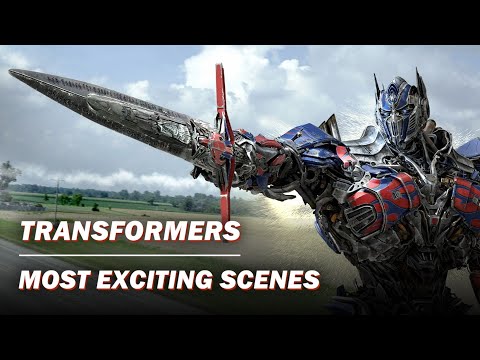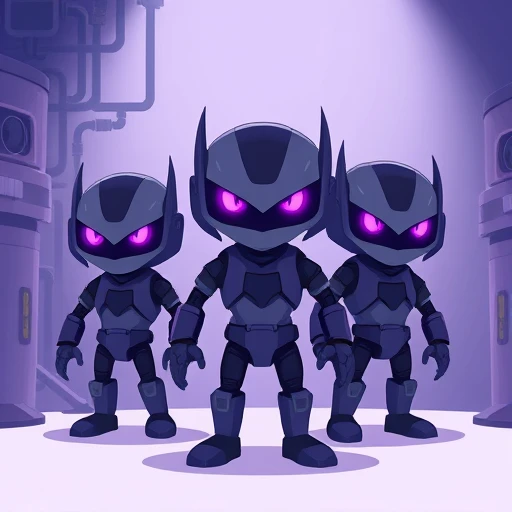
decepticons در ۳۰ ثانیه
- The Decepticons are the primary antagonist faction of sentient, transforming robots from the planet Cybertron in the globally famous Transformers media franchise.
- Led by the tyrannical Megatron, they are characterized by their pursuit of power, militaristic organization, and their distinctive purple robotic face insignia.
- Their name is a portmanteau of 'deception' and 'construction,' highlighting their core ability to hide in plain sight as everyday vehicles or machinery.
- They serve as the eternal rivals to the heroic Autobots, creating a central conflict that has spanned decades of movies, cartoons, and toys.
The term Decepticons refers to a specific and iconic faction of fictional extraterrestrial lifeforms from the Transformers universe. These beings are not merely robots in the traditional sense; they are sentient, modular organisms composed of complex machinery and advanced circuitry. In the overarching narrative of the franchise, the Decepticons serve as the primary antagonists, defined by their relentless pursuit of power, their militaristic hierarchy, and their ideological conflict with the heroic Autobots. The name itself is a portmanteau, blending the concepts of 'deception' and 'construction' or 'icons,' which perfectly encapsulates their original modus operandi: hiding in plain sight as everyday vehicles or machinery to achieve their nefarious goals. When people use this word, they are usually referring to the characters within the movies, cartoons, or comic books, but it has also entered the broader cultural lexicon as a metaphor for something that is technologically intimidating, deceptively complex, or inherently villainous in a high-tech way.
- Core Identity
- The Decepticons are characterized by their purple insignia and their preference for military-grade alt-modes, such as fighter jets, tanks, and advanced weaponry.
In the latest movie, the Decepticons launched a coordinated attack on the city's power grid to harvest energy for their dying planet.
Historically, the Decepticons emerged from the creative collaboration between Hasbro and Takara in the early 1980s. Their leader, Megatron, is often depicted as a revolutionary-turned-tyrant who believes that 'peace through tyranny' is the only way to ensure the survival of their mechanical race. This philosophical depth distinguishes the Decepticons from standard 'bad guys.' They represent a critique of military industrialism and the corrupting nature of absolute power. In casual conversation, a fan might say, 'I've always preferred the Decepticons because their designs are much more aggressive and sleek compared to the Autobots.' This usage highlights the aesthetic appeal of the faction, which often features sharp angles, dark color palettes, and intimidating silhouettes.
- Symbolism
- The Decepticon logo, a stylized robotic face with sharp, angular features, has become a universal symbol for 'the bad guys' in geek culture.
My brother has a massive collection of Decepticons toys, ranging from the original 1984 models to the modern masterpiece editions.
Beyond the screen, the word is used in engineering and robotics circles as a playful reference. For instance, if a robot has a particularly complex transformation sequence, an engineer might joke that it looks like a Decepticon. In political or social commentary, the term might be used to describe a group that appears helpful but has hidden, destructive motives. This metaphorical usage relies on the audience's familiarity with the 'robots in disguise' tagline. The cultural footprint of the Decepticons is so vast that even those who have never seen a Transformers film likely recognize the name as synonymous with high-tech villainy. Whether you are analyzing 1980s pop culture or discussing modern cinematic tropes, the Decepticons serve as a primary example of how fictional entities can shape our language and collective imagination regarding technology and morality.
The way that drone unfolded its wings was so smooth, it reminded me of the Decepticons from the cartoons I watched as a kid.
- Linguistic Origin
- The name was coined by Marvel Comics writer Bob Budiansky, who was tasked with creating backstories for the toy line.
Fans often debate whether the Decepticons were actually the ones who started the war on Cybertron.
The Decepticons are famous for their ability to hide as ordinary objects, like cassette players or cameras.
Using the word Decepticons correctly requires an understanding of its role as a collective proper noun. Because it refers to a specific group, it should always be capitalized. In most contexts, it is used in the plural form, as it represents the entire faction. However, you can also use it as a modifier, such as in 'Decepticon technology' or 'Decepticon leader.' When writing about them, it is common to contrast them with their rivals, the Autobots, to provide context for their actions and motivations. For example, 'While the Autobots fight for freedom, the Decepticons fight for total control.' This contrast helps the reader understand the moral alignment of the group immediately.
- Subject-Verb Agreement
- Since 'Decepticons' is plural, it takes a plural verb. Example: 'The Decepticons are invading,' not 'The Decepticons is invading.'
The Decepticons have established a secret base in the Arctic to mine for Energon cubes.
In creative writing or fan fiction, the word is often used to set a dark or tense mood. You might describe the 'shadowy presence of the Decepticons' or the 'menacing hum of Decepticon engines.' Because the characters are known for being 'in disguise,' sentences often involve themes of revelation or betrayal. For instance, 'The humble tractor-trailer was actually one of the most dangerous Decepticons in disguise.' This highlights the dual nature of the characters. Furthermore, when using the word in a metaphorical sense, it is important to ensure the audience understands the reference. Saying 'That new software update is a total Decepticon' implies that the update looks good on the surface but is actually harmful or overly complex.
- Possessive Form
- The possessive of the plural is 'Decepticons'', as in 'The Decepticons' plan was foiled by Bumblebee.'
Starscream is one of the most treacherous Decepticons, constantly plotting to overthrow Megatron.
When discussing the franchise's history, the word is used to categorize specific eras of toys or media. You might hear someone say, 'The G1 Decepticons had much simpler designs than the ones in the live-action films.' Here, 'Decepticons' acts as the head noun in a complex noun phrase. It is also useful to use the word when describing the aesthetic of a project. 'The architecture of the villain's lair had a very Decepticon feel to it, with lots of sharp metal and purple lighting.' This usage treats the name as an adjective-like descriptor of a specific style. In academic or critical analysis of media, the Decepticons might be discussed as a 'monolithic antagonist force' or a 'representation of industrial anxiety.'
Throughout the series, the Decepticons have shown a remarkable ability to adapt to human technology.
- Common Verbs
- Decepticons are often the subjects of verbs like 'transform,' 'conquer,' 'scheme,' 'attack,' and 'retreat.'
The Decepticons retreated to their ship, the Nemesis, after the battle was lost.
Soundwave is perhaps the most loyal of all the Decepticons, serving as Megatron's communications officer.
The word Decepticons is ubiquitous in popular culture, particularly within the realms of science fiction, toy collecting, and blockbuster cinema. You will most frequently encounter it in the context of the Transformers franchise, which includes numerous animated series, live-action movies directed by Michael Bay and others, and a vast array of comic books published by companies like Marvel, Dreamwave, and IDW. In these media, the name is spoken by characters, written in title cards, and featured prominently on promotional materials. If you visit a toy store or an online retailer like Amazon, you will see the word used to categorize action figures and playsets. It is a key search term for collectors looking for specific villains from their childhood or the latest movie tie-ins.
- Media Presence
- The Decepticons have appeared in every major Transformers iteration since 1984, making them one of the most enduring antagonist groups in history.
I heard the narrator in the trailer say, 'The Decepticons are coming for our world,' and I knew it was going to be an epic movie.
Beyond direct franchise media, you might hear the word in casual conversation among 'Gen X' and 'Millennial' adults who grew up with the original cartoons. It is often used as a nostalgic touchstone. In the world of video games, 'Decepticons' is a common term in titles like 'Transformers: Devastation' or 'War for Cybertron,' where players can often choose to play as the faction. Furthermore, the word pops up in music lyrics, especially in hip-hop, where artists use 'Decepticon' as a metaphor for being tough, transformative, or having a 'hidden' side. For example, a rapper might boast about their car 'transforming like a Decepticon' when the convertible top goes down. This shows how the word has moved from a specific brand name to a general cultural descriptor.
- Gaming Culture
- In many Transformers games, the 'Decepticon Campaign' is a popular feature that allows players to experience the story from the villains' perspective.
During the gaming convention, everyone was cheering when the new Decepticons skins were revealed for the battle royale game.
In the tech world, you might hear the word used by software developers or hardware engineers. It is sometimes used as a codename for projects involving modularity or complex mechanical transitions. For instance, a startup working on folding screens might internally refer to their prototype as a 'Decepticon.' In internet memes, the Decepticon logo is frequently used to label things that are 'evil' or 'suspiciously high-tech.' You might see a photo of a strangely shaped kitchen appliance with the caption 'Is this a Decepticon?' This type of humor relies on the shared cultural understanding that Decepticons can be anything. Finally, in the world of competitive sports or e-sports, a team known for aggressive tactics might be nicknamed 'The Decepticons' by fans or commentators.
The commentator joked that the team's defensive formation was as impenetrable as a Decepticons blockade.
- Conventions
- At events like Comic-Con, you will see hundreds of fans dressed as their favorite Decepticons, from Megatron to Shockwave.
The toy collector explained that the 'Pre-Rub' Decepticons are the most valuable pieces in his entire vault.
When the jet flew low over the stadium, a kid in the front row pointed and yelled, 'Look, it's one of the Decepticons!'
One of the most frequent mistakes people make when using the word Decepticons is failing to capitalize it. As a proper noun referring to a specific group, it requires a capital 'D.' Writing 'decepticons' in lowercase is grammatically incorrect in the same way that writing 'americans' or 'londoners' without capitalization would be. Another common error is confusing the Decepticons with their counterparts, the Autobots. While both are Transformers, their roles are diametrically opposed. Using the terms interchangeably can lead to confusion, especially in fan communities or when discussing the plot of a movie. For example, saying 'Optimus Prime is the leader of the Decepticons' is a factual error that any fan would immediately notice.
- Pluralization Errors
- Some people mistakenly use 'Decepticon' when they mean the whole group, or 'Decepticons' when referring to a single individual. Remember: one Decepticon, many Decepticons.
Incorrect: The decepticons is attacking. Correct: The Decepticons are attacking.
Spelling is another area where mistakes occur. The word is often misspelled as 'Decepticons' with an 'a' (Decepticans) or with a 'k' (Deceptikons). The correct spelling uses 'i-c-o-n-s' at the end, which relates to the idea of them being 'icons' of deception. Additionally, people sometimes struggle with the possessive form. Because the word ends in 's,' the possessive for the group should be 'Decepticons',' with the apostrophe after the 's.' For a single member, it would be 'Decepticon's.' For example, 'The Decepticon's weapon was glowing' refers to one robot, while 'The Decepticons' base was hidden' refers to the group's facility.
- Misidentification
- Don't assume every 'evil robot' in a movie is a Decepticon. The term is specific to the Transformers brand.
It's a common mistake to call the Decepticons 'robots'; they prefer the term 'Cybertronians.'
In terms of pronunciation, some learners might stress the wrong syllable. The primary stress is on the second syllable: de-CEP-ti-cons. Mispronouncing it as DE-cep-ti-cons can make the word sound awkward to native speakers. Furthermore, using the word in a formal academic essay without defining it or providing context can be a mistake. Unless the essay is specifically about pop culture, the term might be too informal or niche. If you must use it, ensure you explain that it refers to a fictional faction from the Transformers franchise. Lastly, avoid using 'Decepticons' to describe real-life people in a way that might be seen as overly childish or unprofessional, unless you are in a very casual setting where such metaphors are common.
He accidentally referred to the Decepticons as 'the bad cars,' forgetting that many of them transform into planes.
- Contextual Error
- Avoid using the term in serious political discussions unless you are making a very specific, well-understood cultural comparison.
The student lost points on his essay for using Decepticons as a synonym for 'dishonest politicians' without explanation.
Don't forget that Decepticons is always plural when referring to the group as a whole.
While Decepticons is a highly specific brand name, there are several words and phrases you can use depending on the context. If you are looking for a more general term for the 'bad guys' in a story, you might use 'antagonists,' 'villains,' or 'foes.' These words lack the specific robotic and transformative connotations but convey the same narrative role. In the context of science fiction, you might use 'hostile extraterrestrials' or 'malevolent machines.' If you want to capture the specific 'disguise' aspect of the Decepticons, you could use words like 'infiltrators,' 'imposters,' or 'sleeper agents.' These terms highlight the group's ability to blend into their surroundings to achieve a goal.
- Antagonists
- A formal term for the characters who oppose the protagonist. Usage: 'The Decepticons are the primary antagonists of the series.'
- Villains
- A common term for evil characters. Usage: 'Megatron is one of the most famous villains in animation.'
Instead of saying Decepticons, the narrator referred to them as 'the mechanical invaders from beyond the stars.'
In the Transformers lore itself, there are sub-factions or related groups that are often confused with or used alongside Decepticons. For instance, the 'Predacons' and 'Vehicons' are different groups of antagonists within the same universe. Using these specific names can show a deeper knowledge of the franchise. If you are describing the aesthetic of the Decepticons, you might use adjectives like 'industrial,' 'menacing,' 'angular,' or 'cybernetic.' These words help paint a picture of the faction's visual style without using the trademarked name. In a metaphorical sense, if you want to describe someone who is deceptive, you could use 'charlatan,' 'trickster,' or 'double-dealer.' These words capture the 'deception' part of the name without the 'robot' part.
- Opponents
- A neutral term for those on the other side of a conflict. Usage: 'The Autobots faced their long-time opponents, the Decepticons.'
- Enemies
- A strong term for those who wish to cause harm. Usage: 'The Decepticons are the sworn enemies of all peaceful lifeforms.'
The script used the term 'the faction of shadows' to describe the Decepticons before their true identity was revealed.
When writing for a younger audience, you might simplify 'Decepticons' to 'the bad robots' or 'the mean machines.' Conversely, in a more technical or academic setting, you might refer to them as 'the antagonist cybernetic organism faction.' Another interesting alternative is to use the names of specific characters as a synecdoche for the whole group. For example, 'Megatron's forces' or 'the seekers' often refers to the Decepticons as a whole. This adds variety to your writing and avoids repeating the same word too many times. Finally, consider the word 'adversaries,' which is a sophisticated way to describe the Decepticons in a formal analysis of the franchise's themes of war and conflict.
The Decepticons are often compared to other famous sci-fi villains like the Daleks or the Borg.
- Rivals
- Implies a long-standing competition. Usage: 'The Decepticons and Autobots have been rivals for millions of years.'
In the fan community, the Decepticons are sometimes affectionately called 'Cons' for short.
The movie poster didn't even mention the Decepticons by name, simply showing their glowing red eyes in the dark.
چقدر رسمی است؟
نکته جالب
Before the name 'Decepticons' was chosen, the villains were almost called 'The Evil Transformers,' but the marketing team wanted something more unique and trademarkable.
راهنمای تلفظ
- Pronouncing it as 'DE-cep-ti-cons' (stressing the first syllable).
- Saying 'De-cep-ti-cans' (changing the 'o' to an 'a').
- Adding an extra syllable: 'De-cep-ti-ca-ons'.
- Dropping the 's' when referring to the group.
- Pronouncing the 'c' as a 'k' sound (which is correct) but spelling it with a 'k'.
سطح دشواری
The word itself is easy to read, but the context can be complex.
Capitalization and spelling (i vs e) can be tricky for learners.
Pronunciation is straightforward once the stress is learned.
Very distinct sound, easy to pick out in movies or shows.
بعداً چه یاد بگیریم؟
پیشنیازها
بعداً یاد بگیرید
پیشرفته
گرامر لازم
Proper Noun Capitalization
Always write 'Decepticons' with a capital D.
Plural Verb Agreement
The Decepticons 'are' (not 'is') attacking.
Possessive of Plural Nouns ending in S
The Decepticons' base was hidden.
Collective Nouns as Modifiers
Decepticon technology (no 's' needed when used as an adjective).
Article Usage with Factions
Use 'the' when referring to the group: 'The Decepticons'.
مثالها بر اساس سطح
The Decepticons are big robots.
Decepticons are large robots.
Proper noun, plural subject.
I have a Decepticons toy.
I have a toy from the Decepticons group.
Used as a modifier for the noun 'toy'.
Decepticons can fly.
These robots have the ability to fly.
Plural noun with a modal verb.
Are the Decepticons bad?
Are they the villains?
Interrogative sentence with plural verb.
The Decepticons are purple.
Their color is purple.
Linking verb with an adjective.
Look at the Decepticons!
Watch the robots.
Imperative sentence.
The Decepticons fight the Autobots.
They are in a battle.
Present simple tense.
I like the Decepticons.
I enjoy these characters.
Direct object of the verb 'like'.
The Decepticons hide as cars and planes.
They pretend to be vehicles.
Verb 'hide' followed by a prepositional phrase.
Megatron is the leader of the Decepticons.
He is the boss of the group.
Prepositional phrase 'of the Decepticons'.
The Decepticons want to find more energy.
They are looking for power.
Infinitive phrase 'to find'.
Many Decepticons can transform very quickly.
They change shape fast.
Adverb 'quickly' modifying the verb 'transform'.
The Decepticons have a purple symbol.
They have a special mark.
Possessive verb 'have'.
Do you know any Decepticons names?
Can you name some of them?
Possessive noun used as a modifier.
The Decepticons are from another planet.
They are aliens.
Prepositional phrase indicating origin.
I saw the Decepticons in the new movie.
I watched them on the screen.
Past simple tense.
The Decepticons launched a surprise attack on the city.
They attacked when no one expected it.
Compound noun 'surprise attack'.
Most Decepticons value power above everything else.
Power is the most important thing to them.
Adverbial phrase 'above everything else'.
The Autobots must stop the Decepticons from stealing the Energon.
They need to prevent the theft.
Verb pattern 'stop [someone] from [doing something]'.
Starscream is known for being the most treacherous of the Decepticons.
He is famous for betraying others.
Superlative adjective 'most treacherous'.
The Decepticons' technology is far more advanced than ours.
Their machines are much better.
Possessive plural noun 'Decepticons''.
If the Decepticons win, the world will be in danger.
A bad result will happen if they succeed.
First conditional sentence.
The Decepticons are often depicted as fighter jets.
They are usually shown as planes.
Passive voice 'are depicted'.
We need to identify which vehicles are actually Decepticons.
We must find the hidden robots.
Noun clause 'which vehicles are actually Decepticons'.
The Decepticons' ideology is centered around the concept of 'peace through tyranny.'
They believe in ruling with an iron fist to keep order.
Passive construction 'is centered around'.
Lacking a clear leader, the Decepticons often descend into internal infighting.
They fight each other when no one is in charge.
Participle phrase 'Lacking a clear leader'.
The Decepticons utilized their cloaking technology to bypass the orbital sensors.
They used stealth to get past the radars.
Transitive verb 'utilized' with a direct object.
Many fans find the Decepticons more compelling than the Autobots due to their complex motivations.
They are more interesting because they have deep reasons for their actions.
Comparative adjective 'more compelling'.
The Decepticons' arrival on Earth signaled the beginning of a global crisis.
When they came, a big problem started.
Gerund phrase 'the beginning of a global crisis'.
Despite their villainous reputation, some Decepticons have shown moments of honor.
They are bad, but sometimes they do good things.
Preposition 'Despite' followed by a noun phrase.
The Decepticons' primary objective was to convert the planet's resources into fuel.
Their main goal was making fuel from Earth.
Subject complement 'to convert...'.
The Decepticons are characterized by their sharp, aggressive aesthetic and dark color schemes.
They look mean and use dark colors.
Parallel structure 'sharp, aggressive aesthetic and dark color schemes'.
The narrative arc of the Decepticons has evolved from simple villainy to a nuanced critique of social hierarchy.
The story changed from 'bad guys' to a deep look at society.
Present perfect tense 'has evolved'.
One could argue that the Decepticons represent the inevitable consequence of a society built on militarism.
They show what happens when a group focuses only on war.
Modal verb 'could' for hypothetical argument.
The Decepticons' ability to mimic human technology raises profound questions about the nature of identity.
Their disguises make us think about what is real.
Complex subject 'The Decepticons' ability to mimic human technology'.
Throughout the various reboots, the Decepticons have remained a constant symbol of technological anxiety.
They always represent our fear of machines.
Prepositional phrase 'Throughout the various reboots'.
The Decepticons' tactical superiority is often undermined by their inherent inability to cooperate.
They are better at fighting but lose because they don't work together.
Passive voice 'is often undermined'.
By portraying the Decepticons as tragic figures, the writers added a layer of emotional depth to the franchise.
Making them sad characters made the story better.
Gerund phrase 'By portraying...'.
The Decepticons' quest for Energon serves as a blatant metaphor for the global struggle over finite resources.
Their fight for power is like our fight for oil.
Metaphorical usage of 'serves as'.
The Decepticons' complex internal politics often drive the plot forward more than the actions of the heroes.
Their own arguments are the main part of the story.
Comparative structure 'more than'.
The Decepticons function as a semiotic construct that interrogates the boundaries between the organic and the synthetic.
They are a symbol that questions what is alive and what is a machine.
Relative clause 'that interrogates...'.
The Decepticons' hegemony over Cybertron was characterized by a totalizing surveillance state and the suppression of dissent.
They ruled with total control and didn't let anyone disagree.
Abstract nouns 'hegemony,' 'surveillance,' 'suppression'.
To understand the Decepticons is to grapple with the darker impulses of the human psyche projected onto a cosmic scale.
They show our own bad thoughts in a big space story.
Infinitive phrase as subject 'To understand...'.
The Decepticons' aesthetic—all jagged edges and cold steel—is a masterclass in visual storytelling for antagonist factions.
Their look perfectly shows they are the bad guys.
Appositive phrase 'all jagged edges and cold steel'.
The Decepticons' enduring popularity suggests a collective fascination with the seductive nature of absolute power.
People like them because we are interested in how power can be tempting.
Noun clause 'that the Decepticons' enduring popularity suggests...'.
In the IDW continuity, the Decepticons' origins are rooted in a legitimate proletarian uprising against a corrupt functionalist regime.
They started as workers fighting a bad government.
Passive construction 'are rooted in'.
The Decepticons' propensity for betrayal is not merely a character flaw but a structural necessity of their Darwinian social order.
They betray each other because their society forces them to be the strongest.
Correlative conjunction 'not merely... but...'.
The Decepticons' cinematic portrayal has often been criticized for prioritizing spectacle over the philosophical depth of the source material.
The movies focus on explosions rather than the deep ideas from the books.
Present perfect passive 'has often been criticized'.
ترکیبهای رایج
عبارات رایج
— A classic command given by Megatron to start a battle.
Megatron pointed his fusion cannon and yelled, 'Decepticons, attack!'
— The command given when the villains are losing a fight.
Realizing they were outnumbered, the leader shouted, 'Decepticons, retreat!'
— The main tagline of the franchise, often applied to Decepticons.
The Decepticons are truly robots in disguise, hiding as fighter jets.
— Another famous tagline describing the hidden nature of these robots.
Like all Transformers, the Decepticons are more than meets the eye.
— The core philosophy of the Decepticon faction.
The Decepticons believe in bringing peace through tyranny.
— A phrase used to describe the harsh punishment within the group.
Starscream feared facing Decepticon justice after his failure.
— A common chant or phrase used to show loyalty to the leader.
The soldiers bowed and said, 'All hail Megatron!'
— A phrase used by fans or characters to show lasting loyalty.
He ended his fan letter with the words 'Decepticons forever!'
— Refers to the overall goals and mission of the faction.
He was fully committed to the Decepticon cause.
— An invitation or recruitment phrase often seen on merchandise.
The poster said, 'Join the Decepticons and rule the galaxy!'
اغلب اشتباه گرفته میشود با
The heroes. People often mix up the names if they aren't fans.
Another famous group of 'bad robots' (from Doctor Who), but they are very different.
The robotic antagonists from Battlestar Galactica.
اصطلاحات و عبارات
— A playful variation of 'a spanner in the works,' meaning something that ruins a plan.
Everything was going fine until a Decepticon in the works messed up the code.
Informal/Geeky— To change one's appearance or behavior very quickly and dramatically.
When the boss walked in, his attitude transformed like a Decepticon.
Informal— Used to describe someone who is more villainous or selfish than heroic.
In that business deal, he was definitely more Decepticon than Autobot.
Informal— To do something secretly without being noticed by powerful enemies.
We need to keep this project under the Decepticon radar for now.
Informal— To attempt to betray one's leader to take their place (specific to Decepticon lore).
The vice president is definitely pulling a Starscream this week.
Informal/Slang— Extremely low on energy or resources (based on Decepticon needs).
After the marathon, I felt completely Energon-starved.
Informal— A very serious and high-tech danger.
This new computer virus is a Decepticon-level threat to our servers.
Informal— The idea that someone is always listening (Soundwave is the Decepticon spy).
Be careful what you say; Soundwave's ears are everywhere in this office.
Informal— Ruling with absolute and crushing authority.
The CEO runs the company with Megatron's fist.
Informal— Hiding one's true nature or identity.
That harmless-looking app is actually a Decepticon in disguise.
Neutralبهراحتی اشتباه گرفته میشود
It is the root word.
Deception is the act of lying; Decepticons are the characters who use it.
The Decepticons used deception to enter the city.
Similar sounding and they are a sub-group of Decepticons.
Constructicons are a specific team of six Decepticons who build things.
The Constructicons are the most famous Decepticon engineering team.
Another faction of 'bad' Transformers.
Predacons usually transform into animals, not vehicles.
In Beast Wars, the Predacons replaced the Decepticons.
Generic drone soldiers in some series.
Vehicons are usually mindless clones, unlike the sentient Decepticons.
The Decepticon army is mostly made of Vehicons.
Sounds similar due to the 'Inception' movie title.
Incepticons is not a real word in the franchise.
He mistakenly called them Incepticons after watching the Christopher Nolan film.
الگوهای جملهسازی
The Decepticons are [adjective].
The Decepticons are mean.
The Decepticons can [verb].
The Decepticons can transform.
The Decepticons want to [verb] the [noun].
The Decepticons want to conquer the Earth.
Led by [Name], the Decepticons [verb-past]...
Led by Megatron, the Decepticons attacked the base.
The Decepticons represent the [abstract noun] of...
The Decepticons represent the corruption of power.
The Decepticons' [noun] is a testament to...
The Decepticons' enduring legacy is a testament to great character design.
Neither the Autobots nor the Decepticons...
Neither the Autobots nor the Decepticons wanted the war to last this long.
It was a Decepticon who...
It was a Decepticon who first discovered the energy source.
خانواده کلمه
اسمها
صفتها
مرتبط
نحوه استفاده
Common in pop culture and sci-fi contexts.
-
Using lowercase 'decepticons'.
→
Decepticons
It is a proper noun, like a name or a country.
-
Saying 'The Decepticons is here'.
→
The Decepticons are here.
The word is plural and requires a plural verb.
-
Spelling it 'Decepticans'.
→
Decepticons
The suffix is '-cons', not '-cans'.
-
Calling Optimus Prime a Decepticon.
→
Optimus Prime is an Autobot.
This is a factual error in the context of the story.
-
Using 'Decepticon's' for the plural.
→
Decepticons
Do not use an apostrophe just to make a word plural.
نکات
Always Capitalize
Remember that Decepticons is a proper noun. It refers to a specific group, so the 'D' must always be uppercase.
Learn the Sub-groups
Knowing terms like 'Seekers' or 'Constructicons' will help you understand more detailed discussions about the Decepticons.
Watch the Original
To truly understand the word, watch a few episodes of the 1984 cartoon. It's where the term was defined.
Use as a Metaphor
You can use the word to describe something that is surprisingly complex or hidden, like 'This laptop is a Decepticon!'
Check the 'i'
Many people write 'Decepticon' with an 'e' (Deceptecon). Remember it's 'i' like in 'icon'.
Stress the Middle
Focus on the 'CEP' sound. de-CEP-ti-cons. This is the most natural way to say it.
Contrast with Autobots
When writing, mentioning the Autobots provides immediate context for what the Decepticons are.
Identify the Theme
The Decepticons often have dark, industrial-sounding background music in movies.
Fan Slang
Using the word 'Cons' is a great way to build rapport with Transformers fans.
Not Just Robots
Remember they are 'sentient beings,' not just programmed machines. This changes how you describe their actions.
حفظ کنید
روش یادسپاری
Think of 'Deception' + 'Icons'. They are icons of deception because they hide their true forms.
تداعی تصویری
Imagine a purple robot face with sharp, angry eyes. That is the Decepticon logo.
شبکه واژگان
چالش
Try to name five different Decepticons and describe what vehicles they transform into.
ریشه کلمه
The word was created in 1984 by Bob Budiansky, a writer for Marvel Comics who was hired by Hasbro to develop the names and personalities for the Transformers toy line. It was designed to sound menacing and high-tech.
معنای اصلی: A combination of 'deception' and 'construction' or 'icons.'
English (Modern Neologism)بافت فرهنگی
The term is fictional and generally safe to use, but avoid using it to describe real people in professional settings as it can be seen as calling them 'evil' or 'fake'.
In the US and UK, the term is synonymous with 80s nostalgia and is a staple of 'geek culture.'
تمرین در زندگی واقعی
موقعیتهای واقعی
Movie Reviews
- The Decepticons were terrifying.
- Stunning Decepticon transformations.
- A new Decepticon threat.
- The Decepticon leader's voice.
Toy Collecting
- Rare Decepticon figures.
- Complete your Decepticon collection.
- Vintage Decepticon toys.
- Decepticon box art.
Gaming
- Play as the Decepticons.
- Defeat the Decepticon boss.
- Decepticon campaign mode.
- Unlock Decepticon skins.
Pop Culture Discussions
- Classic Decepticon characters.
- The Decepticon vs Autobot war.
- Decepticon symbolism.
- Why the Decepticons are iconic.
Metaphorical Usage
- He's a Decepticon in disguise.
- That machine is a Decepticon.
- Decepticon-like behavior.
- Hidden like a Decepticon.
شروعکنندههای مکالمه
"Who is your favorite member of the Decepticons and why do you like them?"
"Do you think the Decepticons have a point in their fight against the Autobots?"
"If you were a Decepticon, what kind of vehicle would you want to transform into?"
"Why do you think the Decepticons' logo is so recognizable even to non-fans?"
"How have the Decepticons changed from the 1980s cartoons to the modern movies?"
موضوعات نگارش
Write a short story from the perspective of a Decepticon who is tired of the constant fighting.
Describe a real-world piece of technology that looks like it could be a Decepticon in disguise.
Analyze why audiences are often drawn to villainous factions like the Decepticons.
Compare the leadership styles of Megatron (Decepticons) and Optimus Prime (Autobots).
If the Decepticons actually invaded Earth, how do you think humanity would react?
سوالات متداول
10 سوالWhile they are the villains, some stories show Decepticons who are not purely evil but are following a different ideology or were forced into the faction. Some even switch sides to join the Autobots.
Purple was chosen in the 1980s as a color often associated with royalty and villainy in Western media, contrasting with the Autobots' heroic red.
In the story, they were created on Cybertron. In real life, they were created by Hasbro, Takara, and Marvel Comics writers.
Yes, this is called 'defecting.' Characters like Jetfire started as Decepticons but became Autobots because they disagreed with Megatron's methods.
They don't eat food; they consume 'Energon,' which is a powerful energy source that they often store in cubes.
The name comes from their ability to deceive others by hiding as normal machines. It combines 'Deception' and 'Icon'.
No, other characters like Galvatron, Starscream, and Shockwave have led the Decepticons at various times in different stories.
The number varies by story, but they are usually shown as a massive army with hundreds of named characters and thousands of soldiers.
Yes, they are sentient beings with emotions like anger, fear, loyalty, and sometimes even regret.
Megatron's original form was a handgun, but Starscream's F-15 fighter jet mode is perhaps the most iconic vehicle form.
خودت رو بسنج 200 سوال
Describe what a Decepticon is to someone who has never heard of Transformers.
خوب نوشتید! تلاش خوبی بود! پاسخ نمونه را ببینید.
Write a short dialogue between Megatron and a human.
خوب نوشتید! تلاش خوبی بود! پاسخ نمونه را ببینید.
Explain the meaning behind the name 'Decepticons'.
خوب نوشتید! تلاش خوبی بود! پاسخ نمونه را ببینید.
Compare and contrast the Decepticons and the Autobots.
خوب نوشتید! تلاش خوبی بود! پاسخ نمونه را ببینید.
Write a news report about a Decepticon attack on a city.
خوب نوشتید! تلاش خوبی بود! پاسخ نمونه را ببینید.
Describe your favorite Decepticon and their special abilities.
خوب نوشتید! تلاش خوبی بود! پاسخ نمونه را ببینید.
Argue whether the Decepticons are truly evil or just misunderstood.
خوب نوشتید! تلاش خوبی بود! پاسخ نمونه را ببینید.
Write a poem about the fall of Cybertron to the Decepticons.
خوب نوشتید! تلاش خوبی بود! پاسخ نمونه را ببینید.
Imagine you found a Decepticon in your garage. What would you do?
خوب نوشتید! تلاش خوبی بود! پاسخ نمونه را ببینید.
Describe the Decepticon logo in detail.
خوب نوشتید! تلاش خوبی بود! پاسخ نمونه را ببینید.
Write a recruitment speech for the Decepticon army.
خوب نوشتید! تلاش خوبی بود! پاسخ نمونه را ببینید.
Explain why the Decepticons use 'robots in disguise' as a tactic.
خوب نوشتید! تلاش خوبی بود! پاسخ نمونه را ببینید.
Write a review of a movie featuring the Decepticons.
خوب نوشتید! تلاش خوبی بود! پاسخ نمونه را ببینید.
Describe the relationship between Megatron and Starscream.
خوب نوشتید! تلاش خوبی بود! پاسخ نمونه را ببینید.
What kind of vehicle would a modern Decepticon transform into?
خوب نوشتید! تلاش خوبی بود! پاسخ نمونه را ببینید.
Write a short story about a Decepticon spy on Earth.
خوب نوشتید! تلاش خوبی بود! پاسخ نمونه را ببینید.
Discuss the cultural impact of the Decepticons.
خوب نوشتید! تلاش خوبی بود! پاسخ نمونه را ببینید.
Create a new Decepticon character, including their name and alt-mode.
خوب نوشتید! تلاش خوبی بود! پاسخ نمونه را ببینید.
Explain the importance of Energon to the Decepticons.
خوب نوشتید! تلاش خوبی بود! پاسخ نمونه را ببینید.
Write a letter from an Autobot warning humans about the Decepticons.
خوب نوشتید! تلاش خوبی بود! پاسخ نمونه را ببینید.
Pronounce the word 'Decepticons' correctly, focusing on the stress.
این را بلند بخوانید:
تو گفتی:
تشخیص گفتار در مرورگر شما پشتیبانی نمیشود. از کروم یا اج استفاده کنید.
Explain the difference between a Decepticon and an Autobot in 30 seconds.
این را بلند بخوانید:
تو گفتی:
تشخیص گفتار در مرورگر شما پشتیبانی نمیشود. از کروم یا اج استفاده کنید.
Describe your favorite Decepticon character and why you like them.
این را بلند بخوانید:
تو گفتی:
تشخیص گفتار در مرورگر شما پشتیبانی نمیشود. از کروم یا اج استفاده کنید.
Give a short presentation on the history of the Decepticons.
این را بلند بخوانید:
تو گفتی:
تشخیص گفتار در مرورگر شما پشتیبانی نمیشود. از کروم یا اج استفاده کنید.
Debate with a partner: Are the Decepticons better than the Autobots?
این را بلند بخوانید:
تو گفتی:
تشخیص گفتار در مرورگر شما پشتیبانی نمیشود. از کروم یا اج استفاده کنید.
Roleplay as Megatron giving a command to his troops.
این را بلند بخوانید:
تو گفتی:
تشخیص گفتار در مرورگر شما پشتیبانی نمیشود. از کروم یا اج استفاده کنید.
Explain the metaphorical use of the word 'Decepticon' in modern English.
این را بلند بخوانید:
تو گفتی:
تشخیص گفتار در مرورگر شما پشتیبانی نمیشود. از کروم یا اج استفاده کنید.
Discuss the visual design of the Decepticons in the Michael Bay movies.
این را بلند بخوانید:
تو گفتی:
تشخیص گفتار در مرورگر شما پشتیبانی نمیشود. از کروم یا اج استفاده کنید.
Tell a short story about a Decepticon who decides to become good.
این را بلند بخوانید:
تو گفتی:
تشخیص گفتار در مرورگر شما پشتیبانی نمیشود. از کروم یا اج استفاده کنید.
Describe the Decepticon logo and what it represents.
این را بلند بخوانید:
تو گفتی:
تشخیص گفتار در مرورگر شما پشتیبانی نمیشود. از کروم یا اج استفاده کنید.
Talk about a time you saw a vehicle that looked like a Decepticon.
این را بلند بخوانید:
تو گفتی:
تشخیص گفتار در مرورگر شما پشتیبانی نمیشود. از کروم یا اج استفاده کنید.
Summarize the plot of a Transformers movie focusing on the Decepticons.
این را بلند بخوانید:
تو گفتی:
تشخیص گفتار در مرورگر شما پشتیبانی نمیشود. از کروم یا اج استفاده کنید.
Explain why the Decepticons are called 'robots in disguise'.
این را بلند بخوانید:
تو گفتی:
تشخیص گفتار در مرورگر شما پشتیبانی نمیشود. از کروم یا اج استفاده کنید.
Discuss the rivalry between Megatron and Starscream.
این را بلند بخوانید:
تو گفتی:
تشخیص گفتار در مرورگر شما پشتیبانی نمیشود. از کروم یا اج استفاده کنید.
Predict what the Decepticons will do in the next movie.
این را بلند بخوانید:
تو گفتی:
تشخیص گفتار در مرورگر شما پشتیبانی نمیشود. از کروم یا اج استفاده کنید.
Explain the concept of 'Energon' to a non-fan.
این را بلند بخوانید:
تو گفتی:
تشخیص گفتار در مرورگر شما پشتیبانی نمیشود. از کروم یا اج استفاده کنید.
Describe the sound a Decepticon makes when it transforms.
این را بلند بخوانید:
تو گفتی:
تشخیص گفتار در مرورگر شما پشتیبانی نمیشود. از کروم یا اج استفاده کنید.
Discuss the importance of the Decepticons in 80s pop culture.
این را بلند بخوانید:
تو گفتی:
تشخیص گفتار در مرورگر شما پشتیبانی نمیشود. از کروم یا اج استفاده کنید.
Compare the Decepticons to another famous villain group.
این را بلند بخوانید:
تو گفتی:
تشخیص گفتار در مرورگر شما پشتیبانی نمیشود. از کروم یا اج استفاده کنید.
Explain why someone might want to join the Decepticons.
این را بلند بخوانید:
تو گفتی:
تشخیص گفتار در مرورگر شما پشتیبانی نمیشود. از کروم یا اج استفاده کنید.
Listen to a clip from the Transformers cartoon and identify when the word 'Decepticons' is said.
Listen to Megatron's voice and describe his tone (angry, calm, etc.).
Listen to a movie trailer and count how many times 'Decepticons' is mentioned.
Listen to a fan podcast and identify the speaker's favorite Decepticon.
Listen to a song that mentions Decepticons and explain the context.
Listen to an interview with a Transformers writer and note the origin of the name.
Listen to a toy commercial and identify the features of the Decepticon toy.
Listen to a description of a battle and identify which side won.
Listen to a character's transformation sound and guess which Decepticon it is.
Listen to a discussion about Decepticon ideology and summarize it.
Listen to a child talking about their toys and identify the Decepticons.
Listen to a news report about a 'Decepticon' car and explain why they used that word.
Listen to a dialogue between two Decepticons and identify their plan.
Listen to a list of names and pick out the ones that are Decepticons.
Listen to a historical account of the franchise and note the year the Decepticons were created.
/ 200 درست
نمره کامل!
Summary
The Decepticons are more than just 'bad robots'; they are a culturally significant symbol of high-tech villainy and the dangers of unchecked power. For example, in the original series, their leader Megatron famously declared, 'Peace through tyranny,' setting the stage for their role as the ultimate antagonists in science fiction history.
- The Decepticons are the primary antagonist faction of sentient, transforming robots from the planet Cybertron in the globally famous Transformers media franchise.
- Led by the tyrannical Megatron, they are characterized by their pursuit of power, militaristic organization, and their distinctive purple robotic face insignia.
- Their name is a portmanteau of 'deception' and 'construction,' highlighting their core ability to hide in plain sight as everyday vehicles or machinery.
- They serve as the eternal rivals to the heroic Autobots, creating a central conflict that has spanned decades of movies, cartoons, and toys.
Always Capitalize
Remember that Decepticons is a proper noun. It refers to a specific group, so the 'D' must always be uppercase.
Learn the Sub-groups
Knowing terms like 'Seekers' or 'Constructicons' will help you understand more detailed discussions about the Decepticons.
Watch the Original
To truly understand the word, watch a few episodes of the 1984 cartoon. It's where the term was defined.
Use as a Metaphor
You can use the word to describe something that is surprisingly complex or hidden, like 'This laptop is a Decepticon!'