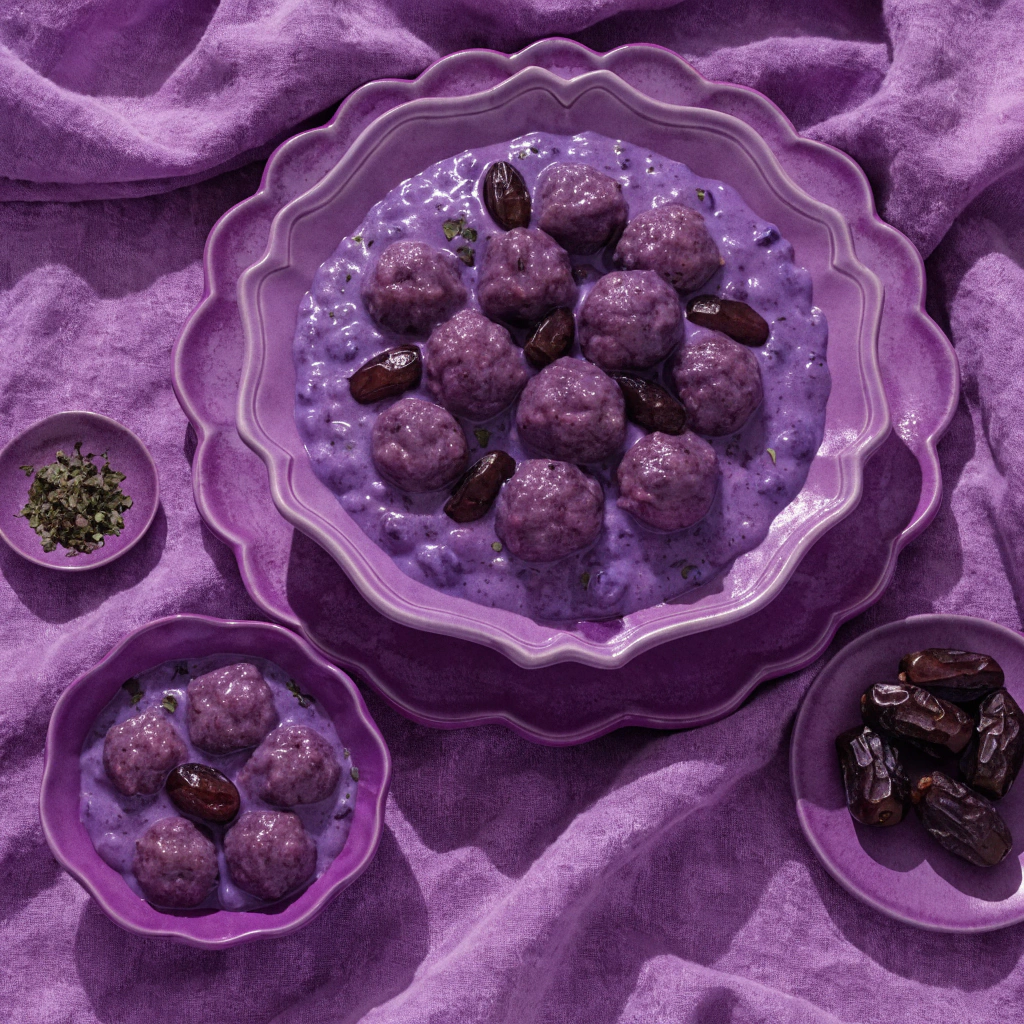
Le Saleeg : Un Plat Simple d'Arabie Saoudite
Le Saleeg est un plat très populaire en Arabie Saoudite. Il vient de la région du Hedjaz. C'est un plat blanc et crémeux. Les gens aiment beaucoup ce plat.
Pour préparer le Saleeg, on utilise du riz et du lait. C'est facile à faire. Le Saleeg est chaud et très doux. Il ressemble un peu au risotto italien, mais c'est un plat saoudien. On mange le Saleeg avec de la viande, comme du poulet ou de l'agneau. C'est un plat réconfortant. C'est bon !
Point grammaire
Structure: Le verbe "être" au présent
"Le Saleeg est un plat très populaire."
Le verbe "être" est très important. Il décrit une chose ou une personne. Au présent, "il/elle/on est" signifie "he/she/one is".
Structure: Les articles définis (le, la)
"Il vient de la région du Hedjaz."
Les articles "le" (masculin) et "la" (féminin) sont des articles définis. Ils désignent une chose spécifique. Par exemple, "la région" signifie "the region".
Teste ta compréhension
10 questions · A1 Débutant · 1 aperçu gratuit
Teste ce que tu as appris dans cet article. Réponds à toutes les questions pour gagner des XP !
D'où vient le Saleeg ?
Tu veux terminer le quiz ?
9 questions supplémentaires t'attendent. Inscris-toi gratuitement pour débloquer le quiz complet et gagner des XP !
S'inscrire gratuitementTu as dj un compte ? Connexion
Bien joué !
Continue à pratiquer !
Déjà terminé — pas de XP supplémentaire
Inscris-toi pour gagner des XPDétail des questions
D'où vient le Saleeg ?
Ta réponse:
Bonne réponse: D'Arabie Saoudite
Le Saleeg est un plat rouge.
Ta réponse:
Bonne réponse: Faux
Que signifie "populaire" ?
Ta réponse:
Bonne réponse: Aimé par beaucoup de gens
Pour préparer le Saleeg, on utilise du riz et du _____.
Ta réponse:
Bonne réponse: lait
Le Saleeg : un plat spécial d'Arabie Saoudite
Le Saleeg est un plat très populaire en Arabie Saoudite. Il vient de la région du Hejaz, où se trouvent les villes de La Mecque, Médine et Djeddah. C'est un plat de riz qui est souvent cuisiné avec du lait et du bouillon. Il est très différent des autres plats saoudiens.
Beaucoup de plats saoudiens sont rouges ou jaunes, avec beaucoup d'épices qui donnent un goût fort. Mais le Saleeg est surtout blanc et sa saveur est douce, un peu lactée. Il n'y a pas beaucoup d'épices dans ce plat. C'est pourquoi sa saveur est plus délicate que celle de beaucoup d'autres plats saoudiens. On le compare parfois à un risotto italien parce qu'il est très crémeux. Mais son origine est purement locale, de l'ouest de l'Arabie Saoudite.
Ce plat est important pour les familles saoudiennes. Il était un repas simple et réconfortant pour les habitants de la région. Aujourd'hui, on le mange souvent pendant les fêtes ou les grandes occasions, avec de la viande de poulet ou d'agneau. C'est un plat unique qui montre la cuisine spéciale de cette région, et il est très apprécié pour son goût délicat.
Point grammaire
Structure: Le comparatif de supériorité (plus... que...)
"C'est pourquoi sa saveur est plus délicate que celle de beaucoup d'autres plats saoudiens."
On utilise 'plus... que...' pour comparer deux choses et dire qu'une est supérieure à l'autre. On met 'plus' avant l'adjectif et 'que' après pour faire la comparaison.
Structure: L'imparfait pour la description dans le passé
"Il était un repas simple et réconfortant pour les habitants de la région."
L'imparfait est un temps du passé. On l'utilise pour décrire des choses ou des situations qui duraient dans le passé. Il parle aussi des habitudes. Par exemple, 'il était' décrit ce qu'il était avant.
Teste ta compréhension
11 questions · A2 mentaire · 1 aperçu gratuit
Teste ce que tu as appris dans cet article. Réponds à toutes les questions pour gagner des XP !
Où se trouve la région du Hejaz ?
Tu veux terminer le quiz ?
10 questions supplémentaires t'attendent. Inscris-toi gratuitement pour débloquer le quiz complet et gagner des XP !
S'inscrire gratuitementTu as dj un compte ? Connexion
Bien joué !
Continue à pratiquer !
Déjà terminé — pas de XP supplémentaire
Inscris-toi pour gagner des XPDétail des questions
Où se trouve la région du Hejaz ?
Ta réponse:
Bonne réponse: En Arabie Saoudite
Le Saleeg est un plat avec beaucoup d'épices.
Ta réponse:
Bonne réponse: Faux
Que signifie 'saveur' ?
Ta réponse:
Bonne réponse: Le goût
Le Saleeg est souvent _____ à un risotto italien.
Ta réponse:
Bonne réponse: comparé
Quelle est la couleur principale du Saleeg ?
Ta réponse:
Bonne réponse: Blanc
Saleeg: The Creamy Comfort Food of Saudi Arabia
Saleeg is a traditional dish from the Hejaz region of Saudi Arabia, which includes the famous cities of Jeddah, Mecca, and Medina. For many years, it has been a favorite comfort food for families. While most Saudi dishes are known for their strong spices and bright colors, Saleeg is famous for its simple, white appearance and creamy taste.
The preparation of Saleeg is quite unique. First, chicken or meat is boiled in water with spices like cardamom and mastic to create a flavorful broth. After the meat has been cooked, it is removed and roasted until it is crispy. Then, short-grain rice is added to the broth. The rice is cooked slowly until it becomes very soft. Finally, milk is added to the pot, which gives the dish its famous creamy texture. Because of this process, Saleeg is often described as the 'risotto of the Middle East.'
In Saudi culture, food is a way to show hospitality. Saleeg is usually served on a large round plate, and the roasted meat is placed on top of the soft rice. A spicy tomato sauce called 'duggus' and a salad are often served on the side to add a bit of heat and freshness. This combination creates a perfect balance of flavors that has been enjoyed by locals for centuries.
Today, Saleeg is still prepared for special occasions, but it is also a popular choice for a cozy family dinner. It has been passed down through generations, and it remains a symbol of the unique culinary history of the western coast. If you ever travel to Saudi Arabia, you should definitely try this delicious meal that has been loved by so many people. It is a dish that truly warms the heart.
Point grammaire
Structure: Relative Clauses
"Saleeg is a traditional dish from the Hejaz region of Saudi Arabia, which includes the famous cities of Jeddah, Mecca, and Medina."
Relative clauses starting with 'which' or 'who' provide extra information about a noun. In this sentence, it gives more detail about the Hejaz region.
Structure: Passive Voice
"The rice is cooked slowly until it becomes very soft."
The passive voice (is/are + past participle) is used when the action is more important than who is doing it. It is very common in recipes and descriptions of processes.
Teste ta compréhension
11 questions · B1 Intermédiaire · 1 aperçu gratuit
Teste ce que tu as appris dans cet article. Réponds à toutes les questions pour gagner des XP !
Which region of Saudi Arabia is Saleeg originally from?
Tu veux terminer le quiz ?
10 questions supplémentaires t'attendent. Inscris-toi gratuitement pour débloquer le quiz complet et gagner des XP !
S'inscrire gratuitementTu as dj un compte ? Connexion
Bien joué !
Continue à pratiquer !
Déjà terminé — pas de XP supplémentaire
Inscris-toi pour gagner des XPDétail des questions
Which region of Saudi Arabia is Saleeg originally from?
Ta réponse:
Bonne réponse: The Hejaz region
Saleeg is known for having very bright colors and many heavy spices.
Ta réponse:
Bonne réponse: Faux
What does the word 'unique' mean?
Ta réponse:
Bonne réponse: Being the only one of its kind
Saleeg is often compared to Italian _____ because of its creamy rice.
Ta réponse:
Bonne réponse: risotto
What ingredient is added at the end to give Saleeg its creamy texture?
Ta réponse:
Bonne réponse: Milk
The Creamy Heart of Hejaz: Understanding Saleeg’s Culinary Significance
Saleeg is often described as the quintessential comfort food of the Hejaz region, a vast area that encompasses the historic western cities of Mecca, Medina, and Jeddah. While much of Saudi Arabian cuisine is characterized by its vibrant reds, deep yellows, and earthy browns—largely due to the heavy use of spices like cumin, coriander, and turmeric—Saleeg stands out for its pristine white appearance and delicate, milky flavor profile. To the uninitiated, the dish might seem deceptively simple; however, its preparation requires a meticulous approach to achieve the perfect balance of texture and taste.
The dish is frequently compared to Italian risotto because of its creamy consistency, yet its origins are purely local, reflecting the unique cultural heritage of the Arabian Peninsula’s western coast. Traditionally, the process begins by boiling meat—usually chicken or lamb—with whole spices such as cardamom, cinnamon sticks, and mastic. Once the meat is tender, it is removed and often roasted separately to give it a crispy exterior. The remaining broth, now infused with aromatic essences, is used to cook short-grain rice. As the rice absorbs the liquid, milk is gradually incorporated, and the mixture is stirred continuously until it reaches a velvety, porridge-like state.
Historically, Saleeg has remained a symbol of hospitality and domestic warmth. In contrast to the more assertive flavors of Kabsa or Mandi, Saleeg offers a sophisticated subtlety that appeals to both children and adults. The use of mastic, a resin obtained from the mastic tree, is a distinctive feature of Hejazi cooking, providing a hauntingly floral aroma that elevates the dish beyond a simple rice-and-milk combination.
Furthermore, the presentation of Saleeg is as specific as its preparation. It is typically served on a large communal platter, with the roasted meat placed prominently on top of the smooth rice. It is almost always accompanied by 'duggus'—a spicy tomato and chili salsa—and a side of fresh salad or pickled vegetables. This contrast between the mild, creamy rice and the sharp, spicy condiment is what makes the meal truly exceptional. Consequently, Saleeg is not merely a meal; it is a culinary reflection of the Hejaz’s historical role as a crossroads of trade and tradition, where simple ingredients are transformed through careful technique into something extraordinary.
Point grammaire
Structure: Passive Voice
"The dish is frequently compared to Italian risotto because of its creamy consistency."
The passive voice is used here to focus on the dish (the object) rather than the person making the comparison. It is formed using the verb 'to be' plus the past participle.
Structure: Non-defining Relative Clauses
"...the Hejaz region, a vast area that encompasses the historic western cities of Mecca, Medina, and Jeddah."
This provides extra information about the Hejaz region. It is separated by commas and adds detail without being essential to the sentence's basic meaning.
Structure: Present Perfect Tense
"Historically, Saleeg has remained a symbol of hospitality and domestic warmth."
The present perfect (has + past participle) is used to describe a state that started in the past and continues to be true in the present.
Teste ta compréhension
11 questions · B2 Intermédiaire supérieur · 1 aperçu gratuit
Teste ce que tu as appris dans cet article. Réponds à toutes les questions pour gagner des XP !
What is the primary visual characteristic that distinguishes Saleeg from other Saudi dishes?
Tu veux terminer le quiz ?
10 questions supplémentaires t'attendent. Inscris-toi gratuitement pour débloquer le quiz complet et gagner des XP !
S'inscrire gratuitementTu as dj un compte ? Connexion
Bien joué !
Continue à pratiquer !
Déjà terminé — pas de XP supplémentaire
Inscris-toi pour gagner des XPDétail des questions
What is the primary visual characteristic that distinguishes Saleeg from other Saudi dishes?
Ta réponse:
Bonne réponse: Its pristine white appearance
Saleeg is originally an Italian dish that was imported to Saudi Arabia.
Ta réponse:
Bonne réponse: Faux
Which word means 'showing great attention to detail'?
Ta réponse:
Bonne réponse: Meticulous
Saleeg is often compared to Italian _____ because of its creamy texture.
Ta réponse:
Bonne réponse: risotto
What ingredient provides the 'hauntingly floral aroma' mentioned in the text?
Ta réponse:
Bonne réponse: Mastic
The Pristine Elegance of Saleeg: A Hijazi Culinary Monolith
The Saudi Arabian culinary landscape is often perceived through a lens of monochromatic intensity, dominated by the fiery reds of Kabsa or the deep ambers of Mandi. However, tucked within the coastal and mountainous stretches of the Hejaz region lies a dish that defies this spicy homogeneity: Saleeg. Not only does Saleeg represent a departure from the spice-laden norms of the peninsula, but it also serves as a testament to the regional diversity of the Hejaz. This quintessential comfort food, primarily associated with the holy cities of Mecca and Medina and the cosmopolitan hub of Jeddah, offers a minimalist aesthetic that belies its complex depth of flavor.
At its core, Saleeg is a white-rice dish cooked in a rich meat broth—usually chicken or lamb—and subsequently finished with a generous infusion of milk. The choice of grain is paramount; unlike the long-grain Basmati favored in other Saudi staples, Saleeg necessitates short-grain rice. This variety possesses a higher starch content, which, through meticulous simmering, creates a velvety, porridge-like consistency. It is the inclusion of mastic and the meticulous simmering of short-grain rice that elevate the dish from a simple porridge to a culinary masterpiece. The mastic provides a subtle, resinous undertone that cuts through the creaminess of the milk, providing a nuanced flavor profile that is both evocative and sophisticated.
Critically, the comparison between Saleeg and Italian risotto is frequently invoked by international food critics. While the juxtaposition of creamy textures and savory proteins is shared, the preparation techniques diverge significantly. Risotto relies on the gradual addition of liquid and constant agitation to release starch, whereas Saleeg achieves its texture through an initial boil in broth followed by a secondary stage of milk absorption. This transition from a broth-based simmer to a milk-infused creaminess requires constant attention to ensure the rice remains tender without becoming cloying. Furthermore, the dish is traditionally served on a large platter known as a 'tabsi', with the rice forming a pristine bed for the roasted meat, often accompanied by 'duqqus'—a piquant tomato and chili salsa—to provide a sharp acidity against the mellow rice.
Beyond its gastronomic appeal, Saleeg functions as a cultural anchor. In a rapidly modernizing society, the persistence of such a specific regional heritage highlights the importance of culinary preservation. The preparation of Saleeg is an act of nostalgia, often reserved for family gatherings or to welcome guests during the cooler winter months. It challenges the reductionist view that Middle Eastern cuisine is a singular entity defined solely by heavy spices. Instead, Saleeg offers a more sophisticated narrative of Saudi gastronomy—one where subtlety, texture, and the purity of ingredients are held in the highest regard.
Point grammaire
Structure: Negative Inversion
"Not only does Saleeg represent a departure from the spice-laden norms of the peninsula, but it also serves as a testament to the regional diversity of the Hejaz."
When a sentence starts with a negative adverbial like 'Not only', the auxiliary verb comes before the subject. This is used in formal writing to add emphasis.
Structure: It-Cleft Sentences
"It is the inclusion of mastic and the meticulous simmering of short-grain rice that elevate the dish from a simple porridge to a culinary masterpiece."
Cleft sentences use 'It + is/was + [emphasized part] + that/who' to focus the reader's attention on a specific detail. Here, it emphasizes the specific ingredients and technique.
Structure: Nominalization
"This transition from a broth-based simmer to a milk-infused creaminess requires constant attention."
Nominalization involves turning verbs or adjectives into nouns (e.g., 'transition', 'simmer', 'creaminess'). This creates a more formal, academic tone typical of C1 level texts.
Teste ta compréhension
12 questions · C1 Avancé · 1 aperçu gratuit
Teste ce que tu as appris dans cet article. Réponds à toutes les questions pour gagner des XP !
What distinguishes Saleeg from other common Saudi dishes like Kabsa?
Tu veux terminer le quiz ?
11 questions supplémentaires t'attendent. Inscris-toi gratuitement pour débloquer le quiz complet et gagner des XP !
S'inscrire gratuitementTu as dj un compte ? Connexion
Bien joué !
Continue à pratiquer !
Déjà terminé — pas de XP supplémentaire
Inscris-toi pour gagner des XPDétail des questions
What distinguishes Saleeg from other common Saudi dishes like Kabsa?
Ta réponse:
Bonne réponse: It lacks the typical heavy spice profile and has a white appearance.
Saleeg is typically prepared using long-grain Basmati rice.
Ta réponse:
Bonne réponse: Faux
What does 'quintessential' mean in the context of the article?
Ta réponse:
Bonne réponse: The most perfect or typical example
The higher _____ content in short-grain rice is essential for achieving Saleeg's texture.
Ta réponse:
Bonne réponse: starch
How does the preparation of Saleeg differ from Italian risotto?
Ta réponse:
Bonne réponse: Saleeg uses a two-stage liquid absorption process rather than gradual additions.
Mastic is added to the dish to provide a subtle, resinous flavor.
Ta réponse:
Bonne réponse: Vrai
The Gastronomic Minimalism of Saleeg: An Ontological Inquiry into Hejazi Comfort
In the vast and varied landscape of Saudi Arabian culinary traditions, where the olfactory senses are typically besieged by a cacophony of cardamom, cloves, and saffron, Saleeg emerges as a serene, monochromatic counterpoint. Were one to traverse the historical crucible of the Hejaz region—encompassing the cosmopolitan hubs of Mecca, Medina, and Jeddah—one would encounter a dish that eschews the exuberant pigments of Kabsa or Mandi in favor of a pristine, milky ivory. This quintessential comfort food represents not merely a caloric necessity but a profound cultural palimpsest, reflecting the unique maritime and pilgrimage-driven influences of the western coast. While the cursory observer might dismiss Saleeg as a mere derivative of Italian risotto, such a comparison, though structurally convenient, fails to acknowledge the dish’s indigenous epistemology. The preparation of Saleeg demands a rigorous attention to viscosity and texture. It is the subtle infusion of mastic and the gradual incorporation of milk into short-grain rice that creates its signature velvety consistency. This process is less an act of cooking and more an exercise in patience, requiring the chef to coax the starch from the grain until it achieves a state of sublime cohesion. Never before has a dish so ostensibly simple commanded such reverence across social strata. The aesthetic of Saleeg—pure, white, and unadorned—is often interpreted as a culinary reflection of the purity sought by pilgrims visiting the Holy Cities. It might be posited that the dish’s lack of aggressive spice is an intentional subversion of the broader Peninsular penchant for intensity, offering instead a restorative neutrality. Furthermore, the juxtaposition of the creamy rice with the succulent, often roasted, poultry or meat provides a textural dialectic that is as intellectually satisfying as it is palatable. Despite the encroachment of globalized fast food, Saleeg remains an egalitarian staple, bridging the gap between the ancestral past and the precarious future. It is the subtle nuances of its preparation—the exact moment the milk is introduced, or the precise quantity of ghee drizzled atop—that define the culinary identity of a Hejazi household. Should the culinary historian seek to map the soul of the western province, they would find it encapsulated in this bowl of white rice: a testament to the enduring power of minimalism in an increasingly complex world. Ultimately, Saleeg serves as a reminder that the most profound expressions of culture are often found not in the ornate, but in the essential.
Point grammaire
Structure: Inverted Conditionals (Subjunctive)
"Were one to traverse the historical crucible of the Hejaz region... one would encounter a dish that eschews the exuberant pigments."
This formal structure replaces 'If one were to traverse'. It is used in C2 academic writing to express hypothetical situations with a higher degree of formality and rhetorical flair.
Structure: Negative Inversion for Emphasis
"Never before has a dish so ostensibly simple commanded such reverence across social strata."
By placing a negative adverbial at the beginning of the sentence, the auxiliary verb 'has' is moved before the subject 'a dish'. This creates a dramatic, emphatic effect common in sophisticated prose.
Structure: Cleft Sentences for Focus
"It is the subtle infusion of mastic and the gradual incorporation of milk into short-grain rice that creates its signature velvety consistency."
This structure (It + is/was + [noun phrase] + that/who) is used to emphasize a specific part of the sentence, highlighting the exact cause or identity of the subject.
Teste ta compréhension
12 questions · C2 Maîtrise · 1 aperçu gratuit
Teste ce que tu as appris dans cet article. Réponds à toutes les questions pour gagner des XP !
What does the author suggest by calling Saleeg a 'cultural palimpsest'?
Tu veux terminer le quiz ?
11 questions supplémentaires t'attendent. Inscris-toi gratuitement pour débloquer le quiz complet et gagner des XP !
S'inscrire gratuitementTu as dj un compte ? Connexion
Bien joué !
Continue à pratiquer !
Déjà terminé — pas de XP supplémentaire
Inscris-toi pour gagner des XPDétail des questions
What does the author suggest by calling Saleeg a 'cultural palimpsest'?
Ta réponse:
Bonne réponse: It reflects layers of historical and cultural influences despite its modern form.
The author argues that Saleeg is merely a local version of Italian risotto.
Ta réponse:
Bonne réponse: Faux
Which word describes the 'thickness' or 'stickiness' of the rice's texture?
Ta réponse:
Bonne réponse: Viscosity
The author notes that Saleeg is a ______ counterpoint to the heavily spiced dishes typically found in Saudi Arabia.
Ta réponse:
Bonne réponse: monochromatic
According to the text, what is the symbolic significance of the dish's white appearance?
Ta réponse:
Bonne réponse: It reflects the spiritual purity sought by pilgrims.
The text suggests that the preparation of Saleeg is a quick and effortless process.
Ta réponse:
Bonne réponse: Faux

