The video owner has disabled playback on external websites.
This video is no longer available on YouTube.
This video cannot be played right now.
Watch on YouTube
Débloquez les outils d'apprentissage IA
Inscrivez-vous pour accéder à des outils puissants qui vous aident à apprendre plus vite avec chaque vidéo.
Coal, Steam, and The Industrial Revolution: Crash Course World History #32
Statistiques d apprentissage
Niveau CECRL
Difficulté
Sous-titres (162 segments)
Hi, I’m John Green; this is Crash Course World History, and today we’re going to
discuss the series of events that made it possible for you to watch Crash Course. And
also made this studio possible. And made the warehouse containing the studio possible.
A warehouse, by the way, that houses stuff for warehouses. That’s right, it’s time
to talk about the Industrial Revolution.
Although it occurred around the same time as the French, American, Latin American, and
Haitian Revolutions - between, say, 1750 and 1850 - the industrial revolution was really
the most revolutionary of the bunch.
Past John: No way, dude. All those other revolutions resulted in, like, new borders and flags and stuff.
Present John: [sigh] We’ve studied 15,000 years of history here at Crash Course, Me
from the Past. And borders and flags have changed plenty, and they’re going to keep
changing. But in all that time, nothing much changed about the way we disposed of waste or located
drinking water or acquired clothing. Most people lived on or very close to the land that provided their food.
Except for a few exceptions, life expectancy never rose above 35 or below 25. Education
was a privilege, not a right. In all those millennia, we never developed a weapon that
could kill more than a couple dozen people at once, or a way to travel faster than horseback.
For 15,000 years, most humans never owned or used a single item made outside of their
communities. Simon Bolivar didn’t change that and neither did the American Declaration of Independence.
You have electricity? Industrial Revolution. Blueberries in February? Industrial Revolution.
You live somewhere other than a farm? Industrial Revolution. You drive a car? Industrial Revolution.
You get twelve years of free, formal education? Industrial Revolution. Your bed, your antibiotics,
your toilet, your contraception, your tap water, your every waking and sleeping second:
Industrial Revolution.
[theme music]
Here’s one simple statistic that sums it up: Before the industrial revolution, about
80% of the world’s population was engaged in farming to keep itself and the other 20%
of people from starving. Today, in the United States, less than 1% of people list their occupation as farming.
I mean, we’ve come so far that we don’t even have to farm flowers anymore. Stan, are
these real, by the way? I can’t tell if they’re made out of foam or digital. So
what happened? TECHNOLOGY! Here’s my definition:
The Industrial Revolution was an increase in production brought about by the use of
machines and characterized by the use of new energy sources. Although this will soon get
more complicated, for our purposes today, industrialization is NOT capitalism - although,
Sous-titres complets disponibles dans le lecteur vidéo
Entraînez-vous avec des exercices
Générez des exercices de vocabulaire, grammaire et compréhension à partir de cette vidéo
Commentaires (0)
Connectez-vous pour CommenterInscris-toi pour débloquer toutes les fonctionnalités
Suis ta progression, sauvegarde du vocabulaire et entraîne-toi
Mode interactif
Quiz
Rponse correcte :
Vidéos liées

Romeo + Juliet (1996) prologue

Why AI Is Our Ultimate Test and Greatest Invitation | Tristan Harris | TED
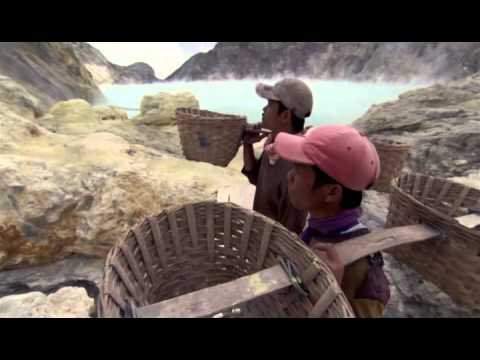
Kawah Ijen Volcano / BBC Human Planet / MVGroup

Disney's Encanto - Official "We Don't Talk About Bruno" Clip

Why Finland's schools outperform most others across the developed world | 7.30

CrashCourse
Quiz
Rponse correcte :
Les quiz apparaissent pendant que tu regardes la vidéo
Astuce mémo
Dans cette vidéo
Apprendre les langues gratuitement

