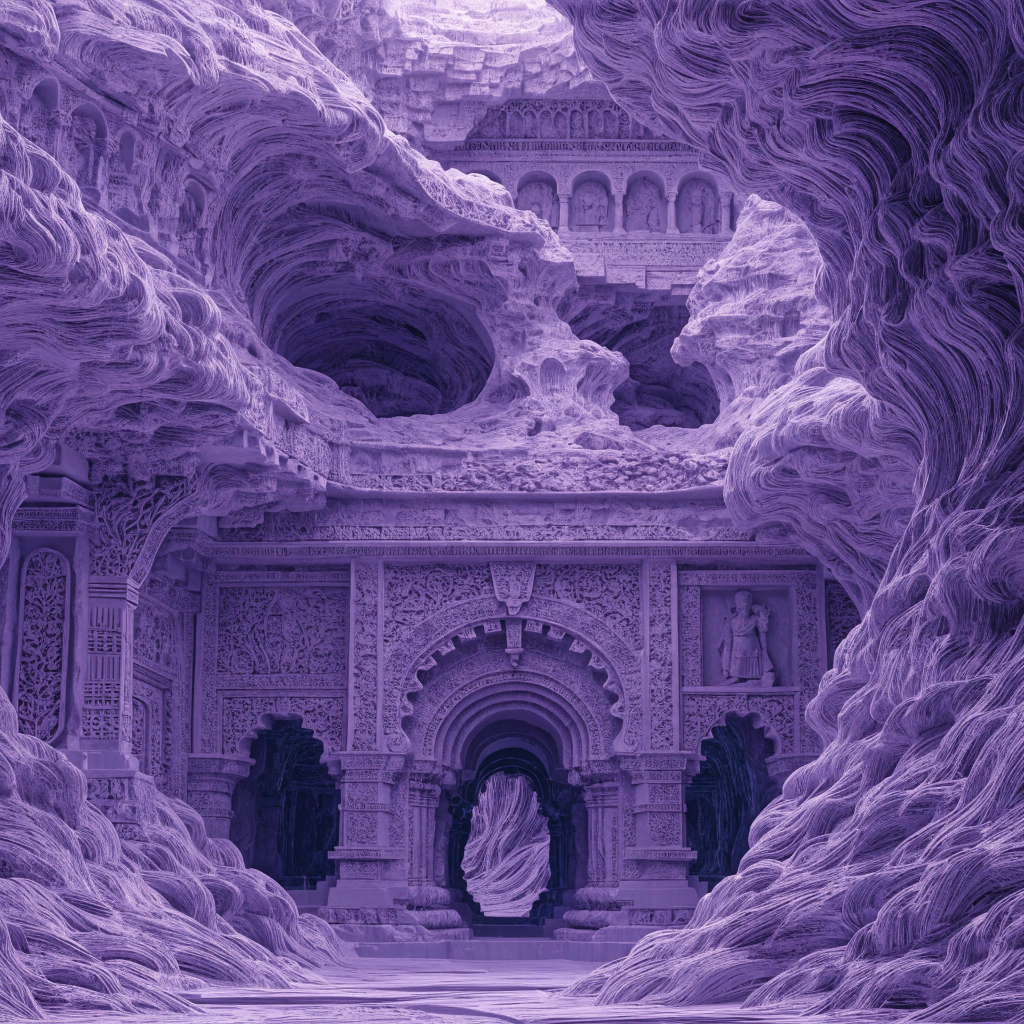
The Amazing Ajanta Caves
The Ajanta Caves are in India. They are very old and beautiful. There are 30 caves in a big rock. The caves are near a river.
Inside the caves, there are many paintings. These paintings show stories about the Buddha. Many people visit these caves every year. They are a special place for history.
The caves are a UNESCO World Heritage Site. You can see big statues and colorful art. It is a great place to learn about ancient India. The caves are very quiet and peaceful.
文法スポットライト
パターン: Present Simple of 'Be'
"The Ajanta Caves are in India."
We use 'are' with plural subjects like 'caves' to describe where something is or what it is like. It is the most common verb in English for descriptions.
パターン: There is / There are
"There are 30 caves in a big rock."
We use 'There are' to say that something exists. We use it with plural nouns and numbers to give information about a place.
理解度をチェック
10 問 · A1 初級 · 無料プレビュー 1回
この記事で学んだことをテストしよう。全問正解してXPを獲得!
Where are the Ajanta Caves located?
問題の内訳
Where are the Ajanta Caves located?
あなたの回答:
正解: India
The caves are near a river.
あなたの回答:
正解: 正しい
What does 'ancient' mean?
あなたの回答:
正解: Very old
There are 30 _____ in a big rock.
あなたの回答:
正解: caves
インドの美しい場所:アジャンター石窟群
アジャンター石窟群(せっくつぐん)は、インドのとても有名な場所です。マハーラーシュトラ州というところにあります。これは、古い仏教のお寺です。山の中に大きい洞窟がたくさんあります。全部で30ぐらいの洞窟があります。
これらの洞窟は、昔の人が岩を削って作りました。とても大変な仕事でした。洞窟の中には、美しい絵や彫刻がたくさんあります。これらは仏教の物語や昔のインドの人々の生活を見せています。絵の色は、今もきれいです。
アジャンター石窟群は、二つの時代に作られました。一番古い洞窟は、今から2200年ぐらい前に作られました。そして、もっと新しい洞窟は、今から1500年ぐらい前に作られました。それぞれの時代で、違うスタイルの芸術を見ることができます。
この場所は、ユネスコの世界遺産です。世界中の人々が、この美しい芸術を見に来ます。アジャンター石窟群は、インドの歴史と文化を学ぶことができる、とても大切な場所です。
文法スポットライト
パターン: 〜にあります
"マハーラーシュトラ州というところにあります。"
これは、物がある場所を言うときに使う表現です。「場所+に+あります」の形で使います。「あります」は、動かない物があることを表します。
パターン: 〜て形 + 動詞 (〜て作りました)
"昔の人が岩を削って作りました。"
「〜て形」は、二つの動詞をつなぐときに使います。前の動詞が、次の動詞のやり方や方法を表すことがあります。この文では、「削る」という方法で「作る」ことを表しています。
理解度をチェック
11 問 · A2 初級 · 無料プレビュー 1回
この記事で学んだことをテストしよう。全問正解してXPを獲得!
アジャンター石窟群は、インドのどの州にありますか?
問題の内訳
アジャンター石窟群は、インドのどの州にありますか?
あなたの回答:
正解: マハーラーシュトラ州
アジャンター石窟群には、全部で50ぐらいの洞窟があります。
あなたの回答:
正解: 間違い
「削る」という言葉の意味は何ですか?
あなたの回答:
正解: 硬いものから形を作るために取り除くこと
洞窟の中には、美しい絵や〇〇がたくさんあります。
あなたの回答:
正解: 彫刻
アジャンター石窟群の洞窟の中には、どんなものが描かれていますか?
あなたの回答:
正解: 仏教の物語や昔のインドの人々の生活
アジャンター石窟群:インドの古代美術の宝庫
インドのマハラシュトラ州にあるアジャンター石窟群は、古代インドの芸術と建築の素晴らしい成果の一つです。このユネスコ世界遺産は、ワグーラ川を見下ろす馬蹄形の谷の側面に彫られた、約30の仏教石窟寺院から成り立っています。これらの石窟は、硬い岩を削って作られました。
アジャンター石窟群は、二つの異なる時代に作られたことが知られています。最初のものは紀元前2世紀にまでさかのぼり、二つ目のグループは紀元5世紀から6世紀の間に作られました。長い間忘れ去られていましたが、19世紀にイギリスの軍人によって再び「発見」されました。
この場所を特別にしているのは、その美しい壁画と彫刻です。これらの芸術作品は、仏陀の生涯や仏教の物語を描いており、当時の人々の生活や文化も伝えています。色鮮やかな絵画は、洞窟の壁や天井を飾り、訪れる人々を魅了してきました。
アジャンター石窟群を訪れると、まるで時間を旅しているような気分になります。古代インドの深い信仰心と、それを表現した芸術家の技術に感動することでしょう。世界中から多くの観光客がこの歴史的な場所を訪れ、その美しさに心を奪われています。
文法スポットライト
パターン: 受身形(〜られました / 〜されています)
"これらの石窟は、硬い岩を削って作られました。"
動詞の受身形は、「〜によって〜されました」のように、だれかが何かをした結果、何かが「された」状態を表すときに使います。また、「〜されています」のように、現在もその状態が続いていることを示す場合もあります。
パターン: 連体修飾節(動詞の普通形+名詞)
"ワグーラ川を「見下ろす」馬蹄形の谷の側面に彫られた、約30の仏教石窟寺院から成り立っています。"
名詞の前に動詞の普通形(辞書形、た形、ない形など)を置いて、その名詞を詳しく説明する文の形です。英語の "who, which, that" のような役割をします。
理解度をチェック
11 問 · B1 中級 · 無料プレビュー 1回
この記事で学んだことをテストしよう。全問正解してXPを獲得!
アジャンター石窟群はどの国にありますか?
問題の内訳
アジャンター石窟群はどの国にありますか?
あなたの回答:
正解: インド
アジャンター石窟群は、馬蹄形の谷にあります。
あなたの回答:
正解: 正しい
「壁画」の意味は何ですか?
あなたの回答:
正解: 壁に描かれた絵
アジャンター石窟群は、ユネスコ〇〇〇〇に登録されています。
あなたの回答:
正解: 世界遺産
アジャンター石窟群の壁画や彫刻は何を描いていますか?
あなたの回答:
正解: 仏陀の生涯や仏教の物語
The Hidden Masterpieces of Ajanta: A Journey Through Time
Nestled within the rugged terrain of the Aurangabad district, the Ajanta Caves stand as a monumental testament to the ingenuity of ancient Indian civilization. Carved meticulously into the sheer rock face of a horseshoe-shaped gorge overlooking the Waghur River, these thirty Buddhist monuments represent an unprecedented achievement in rock-cut architecture. The site’s history spans several centuries, with the earliest excavations dating back to the 2nd century BCE, while the second, more elaborate group was constructed during the 5th and 6th centuries CE.
The discovery of the caves is a narrative of chance. After being abandoned and subsequently reclaimed by the dense tropical jungle for over a millennium, the site was stumbled upon in 1819 by John Smith, a British cavalry officer. While pursuing a tiger across the ravine, Smith noticed the entrance to Cave 10, leading to the eventual unearthing of one of the world's most significant archaeological treasures. Had the site not been so isolated, it is unlikely that the delicate murals would have survived the ravages of time and human interference.
Architecturally, the caves are divided into two distinct phases reflecting the evolution of Buddhist thought. The earlier 'Hinayana' phase is characterized by its austerity, where the Buddha is represented through symbolic motifs like footprints or a throne. Conversely, the later 'Mahayana' phase, which occurred during the Vakataka dynasty, witnessed a resurgence of artistic expression. This era introduced colossal statues of the Buddha and intricate carvings that adorn the pillars and entrances. The transition between these periods illustrates a profound shift in religious practice and aesthetic values.
Furthermore, Ajanta is globally renowned for its extraordinary frescoes, which are considered masterpieces of Buddhist religious art. These paintings were executed using a sophisticated tempera technique, involving the application of mineral-based pigments onto a prepared surface of clay and lime plaster. The murals depict various Jataka tales, narrating the previous incarnations of the Buddha with remarkable emotional depth and anatomical precision. The artists' ability to convey complex narratives through fluid lines and vibrant colors was truly ahead of its time.
Despite their splendor, the caves were abruptly abandoned towards the end of the 5th century as the Vakataka dynasty declined. The artisans and monks who once inhabited these halls vanished, leaving the site in a state of silent preservation. Today, the caves are recognized as a UNESCO World Heritage site. Nevertheless, the preservation of these fragile artworks remains a significant challenge, as modern environmental factors threaten their longevity. Scholars continue to analyze these caves to gain deeper insights into the socio-political and spiritual landscape of ancient India.
文法スポットライト
パターン: Third Conditional with Inversion
"Had the site not been so isolated, it is unlikely that the delicate murals would have survived..."
This is a formal way of expressing a hypothetical situation in the past. 'Had' is placed before the subject to replace 'If', indicating that the condition was not met.
パターン: Passive Voice in Process Description
"These paintings were executed using a sophisticated tempera technique..."
The passive voice is used here to focus on the action (the execution of paintings) rather than the specific artist, which is common in academic and historical writing.
パターン: Relative Clauses with 'Where'
"The earlier 'Hinayana' phase is characterized by its austerity, where the Buddha is represented through symbolic motifs..."
The relative adverb 'where' is used to provide additional information about a specific stage or situation mentioned in the main clause.
理解度をチェック
11 問 · B2 中上級 · 無料プレビュー 1回
この記事で学んだことをテストしよう。全問正解してXPを獲得!
Who was responsible for the accidental rediscovery of the caves in 1819?
問題の内訳
Who was responsible for the accidental rediscovery of the caves in 1819?
あなたの回答:
正解: John Smith, a British officer
The Ajanta Caves were constructed entirely within a single century.
あなたの回答:
正解: 間違い
What does 'ingenuity' mean in the context of the article?
あなたの回答:
正解: Creative cleverness
The thirty Buddhist monuments were meticulously _____ into the rock face.
あなたの回答:
正解: carved
Which technique was used to create the famous Ajanta murals?
あなたの回答:
正解: Tempera
The Resplendent Echoes of Ajanta: A Synthesis of Art and Devotion
Hidden within the verdant, rugged embrace of the Sahyadri hills in Maharashtra lies a testament to human ingenuity: the Ajanta Caves. This UNESCO World Heritage site, comprising thirty rock-cut Buddhist monuments, offers an unparalleled glimpse into the zenith of ancient Indian aesthetic sensibility and spiritual devotion. What remains most striking to the modern observer is the sheer audacity of the project—hewing monumental structures directly from the basaltic rock of a horseshoe-shaped gorge overlooking the Waghur River. Not until the accidental rediscovery by a British hunting party in 1819 did these masterpieces emerge from centuries of oblivion. For over a millennium, the site had been reclaimed by the jungle, its existence known only to local tribes. The caves are categorized into two distinct chronological phases, separated by several centuries. The initial group, dating back to the 2nd century BCE, reflects the Hinayana tradition. During this era, the focus was on austerity, characterized by an absence of anthropomorphic representations of the Buddha, who was instead symbolized through motifs like the stupa or the footprint. Conversely, the second phase, occurring during the 5th and 6th centuries CE, showcases a more opulent artistic vocabulary under the patronage of the Vakataka dynasty. It was this period that saw the creation of the most intricate viharas (monasteries) and chaityas (prayer halls). Here, the Buddha is depicted in human form, surrounded by a celestial entourage of bodhisattvas. The transition from the symbolic to the figurative marks a significant evolution in Buddhist theology and artistic expression. It is the frescoes of Ajanta that represent the pinnacle of classical Indian art. These murals are not merely decorative; they are narrative tapestries that weave together the Jataka tales—stories of the Buddha’s previous incarnations—with scenes of courtly life, ethereal deities, and mundane domesticity. The artists utilized a sophisticated 'tempera' technique, applying layers of clay, lime, and organic matter before painting with pigments derived from minerals like lapis lazuli and malachite. The result is a luminous depth that defies the passage of nearly two millennia. Rarely has the synthesis of architecture and engineering been so profoundly realized. The caves were meticulously proportioned to allow light to filter through ornate entrances, illuminating the inner sanctums at specific times of day. This intentional manipulation of light serves to accentuate the three-dimensional quality of the sculptures, creating an immersive atmosphere conducive to meditation. The structural integrity of these caves, carved from top to bottom to avoid the need for scaffolding, speaks to a level of mathematical precision that remains baffling to contemporary architects. However, the preservation of Ajanta remains a contentious issue in the modern era. The influx of mass tourism, coupled with the inevitable environmental degradation caused by humidity and fluctuating temperatures, poses a significant threat to the delicate pigments. While modern conservation efforts have mitigated some damage through climate control and restricted access, the tension between public accessibility and heritage preservation remains palpable. Ultimately, Ajanta stands as a poignant reminder of the ephemeral nature of beauty and the enduring power of human faith, challenging us to safeguard this heritage for posterity.
文法スポットライト
パターン: Inversion for Emphasis
"Not until the accidental rediscovery by a British hunting party in 1819 did these masterpieces emerge from centuries of oblivion."
When a negative adverbial phrase like 'Not until' starts a sentence, the auxiliary verb 'did' comes before the subject 'these masterpieces' to add dramatic emphasis.
パターン: Cleft Sentences
"It was this period that saw the creation of the most intricate viharas (monasteries) and chaityas (prayer halls)."
Cleft sentences (It + be + subject + relative clause) are used to focus on specific information, in this case, highlighting the specific time period of the Vakataka dynasty.
パターン: Nominalisation
"The influx of mass tourism, coupled with the inevitable environmental degradation caused by humidity and fluctuating temperatures, poses a significant threat..."
Nominalisation involves turning verbs or adjectives into nouns (e.g., 'degradation' from 'degrade'). This creates a more formal, academic tone typical of C1 writing.
理解度をチェック
12 問 · C1 上級 · 無料プレビュー 1回
この記事で学んだことをテストしよう。全問正解してXPを獲得!
What was the primary characteristic of the Hinayana phase at Ajanta?
問題の内訳
What was the primary characteristic of the Hinayana phase at Ajanta?
あなたの回答:
正解: The absence of human depictions of the Buddha
The Ajanta Caves were carved from the bottom of the gorge upward using complex scaffolding.
あなたの回答:
正解: 間違い
Which word describes something extremely delicate and light, appearing heavenly?
あなたの回答:
正解: Ethereal
The monuments were hewn directly from the _____ rock of the gorge.
あなたの回答:
正解: basaltic
How did the site come to be known by the modern world again?
あなたの回答:
正解: A British hunting party rediscovered it by accident
The frescoes at Ajanta use a 'tempera' technique involving layers of clay and lime.
あなたの回答:
正解: 正しい
The Ajanta Caves: A Palimpsest of Devotion and Aesthetic Transcendence
The Ajanta Caves, an epochal manifestation of human ingenuity, reside within the basaltic embrace of the Sahyadri mountains in Maharashtra. Seldom has the synthesis of lithic architecture and pictorial mastery been so exquisitely realized as in these thirty rock-cut chambers. To contemplate Ajanta is to engage with an ontological inquiry into the nature of devotion and the ephemeral quality of existence. Were one to traverse the horseshoe-shaped gorge of the Waghur River, one would encounter a palimpsest of Buddhist history, spanning from the 2nd century BCE to the 6th century CE. This site is not merely a collection of caves; it is a venerable testament to the spiritual proclivity of ancient Indian civilization.
The chronology of Ajanta is bifurcated by a significant interregnum, separating the early Hinayana phase from the later Mahayana resurgence. During the initial period, the caves were characterized by a certain aesthetic asceticism, focusing on the symbolic representation of the Buddha through stupas and footprints. However, following a hiatus of several centuries, the site underwent a transformative expansion under the patronage of the Vakataka dynasty. It is purportedly during this second phase that the iconography became more flamboyant, reflecting a shift in theological focus towards the personification of the Bodhisattvas. The transition from symbolic to figurative representation underscores a major shift in Buddhist praxis, yet the site maintains an underlying spiritual continuity.
The murals of Ajanta are perhaps its most sublime feature, representing the pinnacle of ancient Indian painting. The artists employed a sophisticated understanding of chiaroscuro, utilizing light and shadow to imbue their subjects with a three-dimensional vitality that predates similar European developments by a millennium. These frescoes, notwithstanding the deleterious effects of moisture and centuries of neglect, reveal a cosmopolitan society teeming with life. The narratives depicted—ranging from the Jataka tales to courtly scenes—suggest a culture where the sacred and the profane were inextricably intertwined. The pigments, derived from local minerals and plants, have retained a haunting brilliance that continues to defy the passage of time.
Architecturally, the caves represent a triumph of subtractive engineering. Unlike traditional structures built from the ground up, these monolithic sanctuaries were excavated from the top down. This required a meticulous degree of foresight, as any error in the initial carving would have been irreversible. The precision of the circumambulation paths and the structural integrity of the massive pillars demonstrate a profound grasp of geological stability. Such architectural prowess ensures that, despite the precarious nature of the surrounding terrain, the caves remain a bastion of historical continuity. The sheer scale of the excavation, particularly in the grand assembly halls or 'chaityas', evokes a sense of awe that borders on the transcendental.
Lest we view these caves merely as static relics, it is imperative to acknowledge the ongoing scholarly debates regarding their sudden abandonment. The veracity of various theories—ranging from economic decline to shifting political allegiances—remains a subject of academic scrutiny. Nevertheless, the enduring allure of Ajanta lies in its ability to transcend its immediate historical context. It serves as an epistemological bridge, connecting the modern observer with the philosophical ruminations of a bygone era. The caves do not merely exist in space; they exist in the collective memory of humanity as a pinnacle of artistic endeavor.
In conclusion, the Ajanta Caves stand as a peerless exemplar of human creativity. The intricate interplay between the rugged basalt and the delicate brushwork of the murals creates a sensory experience that is both grounding and ethereal. As we strive to preserve this UNESCO World Heritage Site, we must remain cognizant of our role as stewards of a legacy that is as fragile as it is formidable. The preservation of Ajanta is not merely a matter of physical conservation but an act of intellectual heritage, ensuring that the voices of the ancient craftsmen continue to resonate through the corridors of time, inviting us to reflect on our own place within the broad tapestry of human history.
文法スポットライト
パターン: Negative Inversion
"Seldom has the synthesis of lithic architecture and pictorial mastery been so exquisitely realized as in these thirty rock-cut chambers."
When a negative or restrictive adverbial (like 'seldom') starts a sentence, the auxiliary verb is placed before the subject. This is used in formal writing to add rhetorical emphasis.
パターン: Inverted Conditional (Subjunctive)
"Were one to traverse the horseshoe-shaped gorge of the Waghur River, one would encounter a palimpsest of Buddhist history."
This construction replaces 'If one were to...' with 'Were one to...'. It is a hallmark of C2 academic prose, used to express hypothetical situations with high formality.
パターン: Academic Hedging with Adverbs
"It is purportedly during this second phase that the iconography became more flamboyant."
The use of 'purportedly' allows the author to present a claim without asserting its absolute truth. This is a common strategy in scholarly writing to maintain objectivity.
理解度をチェック
12 問 · C2 マスター · 無料プレビュー 1回
この記事で学んだことをテストしよう。全問正解してXPを獲得!
What does the author imply by calling the site a 'palimpsest'?
問題の内訳
What does the author imply by calling the site a 'palimpsest'?
あなたの回答:
正解: The site contains layers of history that are still visible despite later changes.
The Ajanta Caves were constructed by building walls from the ground up.
あなたの回答:
正解: 間違い
What does 'chiaroscuro' refer to in the context of the Ajanta murals?
あなたの回答:
正解: The technique of using light and shadow to create depth.
The frescoes remain impressive _____ the deleterious effects of moisture and time.
あなたの回答:
正解: notwithstanding
According to the text, how does the second phase of construction differ from the first?
あなたの回答:
正解: It moved away from symbolic representations toward figurative iconography.
The author suggests that the sacred and the profane were clearly separated in the culture that created Ajanta.
あなたの回答:
正解: 間違い

