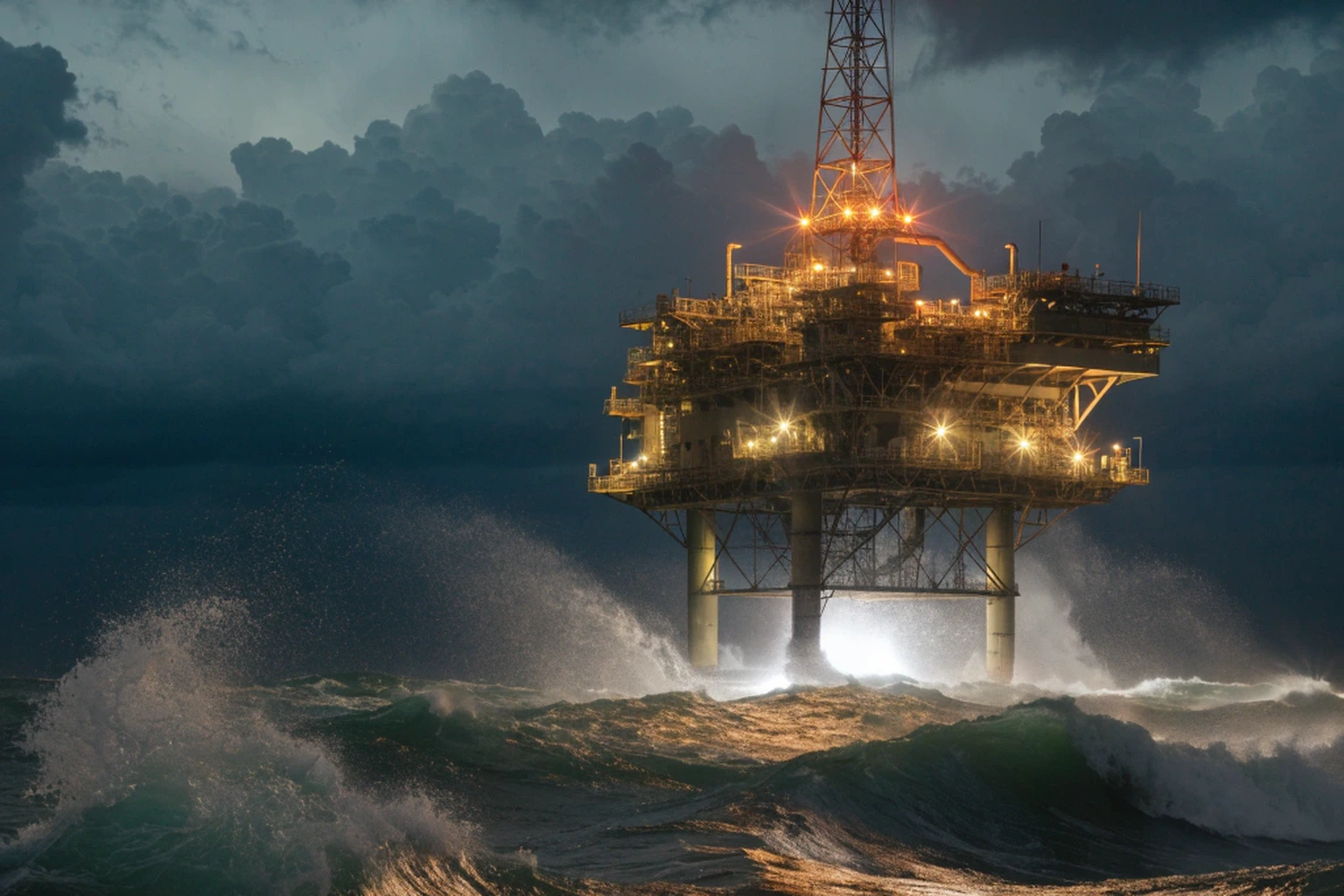
Energy in Iran
Iran is a big country. It has a lot of oil and gas. Oil and gas are types of energy. This energy is very important for the world. Many people in Iran work in the energy sector.
They work for big companies. This work helps the country's economy. The economy is how a country makes and uses money. Iran sells its oil and gas to other countries.
This makes a lot of money for Iran. The money helps the country. It is a very important part of Iran's industry.
文法スポットライト
パターン: Present Simple Tense
"It has a lot of oil and gas."
We use the present simple for facts or things that are always true. For 'he', 'she', or 'it', we add an '-s' to the verb, like 'has', 'sells', or 'helps'.
パターン: Plural Nouns
"Iran sells its oil and gas to other countries."
We usually add '-s' or '-es' to the end of a noun to talk about more than one thing. For example, one country becomes multiple countries.
理解度をチェック
10 問 · A1 初級 · 無料プレビュー 1回
この記事で学んだことをテストしよう。全問正解してXPを獲得!
What does Iran have a lot of?
問題の内訳
What does Iran have a lot of?
あなたの回答:
正解: oil and gas
The article says energy from Iran is not important for the world.
あなたの回答:
正解: 間違い
What does 'money' mean?
あなたの回答:
正解: What you use to buy things
Many people in Iran _____ in the energy sector.
あなたの回答:
正解: work
Iran's Energy: The Engine of the Economy
Iran is famous for its large energy resources. The country has vast amounts of oil and natural gas. In fact, Iran possesses the second-largest natural gas reserves in the world. It also holds the fourth-largest oil reserves. Because of this, the energy sector is bigger than any other industry in Iran. It is the engine of the national economy.
The story of this industry began a long time ago. In 1908, engineers discovered oil in a place called Masjed Soleyman. This was a very important moment because it was the first oil discovery in the Middle East. The industry grew quickly after that event.
Today, Iran does not just sell crude oil. The country also produces petrochemicals. Petrochemicals are products made from oil and gas, like plastic. This sector is more modern than the old oil wells. It helps Iran make more money. The energy industry is vital for the people and the future of the country.
文法スポットライト
パターン: 比較級 (More + 形容詞)
"This sector is more modern than the old oil wells."
形容詞が長い(2音節以上ある)場合、2つのものを比較するために、形容詞の前に 'more' を置き、後ろに 'than' を続けます。
パターン: 過去形
"In 1908, engineers discovered oil in a place called Masjed Soleyman."
過去に完了した動作について話すときは過去形を使います。'discover' のような規則動詞には、語尾に '-ed' を付けます。
理解度をチェック
10 問 · A2 初級 · 無料プレビュー 1回
この記事で学んだことをテストしよう。全問正解してXPを獲得!
イランで最初に石油が発見されたのはいつですか?
問題の内訳
イランで最初に石油が発見されたのはいつですか?
あなたの回答:
正解: 1908年
イランは世界最大の天然ガス埋蔵量を持っています。
あなたの回答:
正解: 間違い
'produce' はどういう意味ですか?
あなたの回答:
正解: 何かを作ったり生み出したりすること
エネルギー部門は国民経済の _____ です。
あなたの回答:
正解: engine
The Power of Iran: Oil, Gas, and the Future
Iran is a country that has a long history in the energy sector. For over a hundred years, oil and gas have been the main parts of its economy. The first commercial oil field was discovered in 1908 in Masjed Soleyman. Since then, the industry has seen significant growth and changed the nation.
Today, Iran possesses some of the largest natural gas and crude oil reserves in the world. These resources are managed by large companies that provide energy to many different countries. In recent years, the government has focused on the petrochemical sector. This industry converts oil and gas into products like plastic and fertilizer, which are sold in global markets.
New technology is often used to make the process more efficient. Many modern factories have been built to increase production. Engineers who work in these plants must have high skills because the machinery is very complex. Although there are challenges, the energy sector remains the engine of the Iranian economy. It has provided jobs for thousands of people and continues to support the nation's development.
文法スポットライト
パターン: Present Perfect
"Since then, the industry has seen significant growth and changed the nation."
We use the present perfect (have/has + past participle) to talk about actions that started in the past and continue to be relevant now. It often appears with words like 'since' or 'for'.
パターン: Passive Voice
"The first commercial oil field was discovered in 1908."
The passive voice is used when the action is more important than the person doing it. It is formed using 'be' + the past participle of the main verb.
理解度をチェック
11 問 · B1 中級 · 無料プレビュー 1回
この記事で学んだことをテストしよう。全問正解してXPを獲得!
When was the first commercial oil field discovered in Iran?
問題の内訳
When was the first commercial oil field discovered in Iran?
あなたの回答:
正解: 1908
Iran has some of the smallest natural gas reserves in the world.
あなたの回答:
正解: 間違い
What does 'efficient' mean?
あなたの回答:
正解: Working well without wasting time
Iran possesses some of the largest natural _____ reserves.
あなたの回答:
正解: gas
What kind of products does the petrochemical industry create?
あなたの回答:
正解: Plastic and fertilizer
Powering a Nation: The Evolution of Iran's Energy Sector
Iran’s economic landscape is inextricably linked to its energy sector, which has served as the nation’s primary engine of growth for over a century. Since the historic discovery of oil in Masjed Soleyman in 1908, the industry has undergone a remarkable evolution. Today, Iran boasts the world’s second-largest natural gas reserves and the fourth-largest proven crude oil reserves. Consequently, the country remains a pivotal player in global energy markets, despite the geopolitical complexities it faces.
While the extraction of raw resources was once the sole focus, recent decades have seen a strategic shift towards diversification. The development of the petrochemical industry is considered a strategic priority for the nation, as it seeks to move beyond the simple export of crude oil. By investing in downstream facilities, Iran aims to convert raw hydrocarbons into high-value products such as plastics, fertilizers, and polymers. This focus on value-added production is essential for mitigating the impact of global price fluctuations and ensuring long-term economic stability.
However, the sector has not been without its challenges. International sanctions have frequently hindered access to foreign capital and cutting-edge technology. Nevertheless, these hurdles have inadvertently fostered a spirit of self-sufficiency. Iranian engineers and scientists have been forced to innovate, developing domestic solutions to maintain and upgrade aging infrastructure. Had the industry not adapted to these constraints, the production levels might have plummeted significantly.
Looking ahead, the energy sector is increasingly focused on modernization and environmental considerations. Although fossil fuels remain dominant, there is a growing recognition of the need for sustainable practices. The integration of more efficient refining processes and the reduction of gas flaring are now top priorities. As the global energy map continues to change, Iran’s ability to modernize its infrastructure while navigating diplomatic waters will determine its future standing. In conclusion, the petrochemical and energy sector is more than just a source of revenue; it is a symbol of Iranian industrial resilience and a cornerstone of its national identity.
文法スポットライト
パターン: Non-defining Relative Clause
"Iran’s economic landscape is inextricably linked to its energy sector, which has served as the nation’s primary engine of growth for over a century."
This pattern adds extra information about a noun (the energy sector) that is already identified. It is separated by commas and uses 'which' for things.
パターン: The Passive Voice
"The development of the petrochemical industry is considered a strategic priority for the nation."
The passive voice is used here to create a formal, academic tone where the action (the consideration) is more important than who is performing it.
パターン: Third Conditional (Inverted)
"Had the industry not adapted to these constraints, the production levels might have plummeted significantly."
This is a formal way to express a hypothetical situation in the past. 'Had the industry not adapted' replaces 'If the industry had not adapted', focusing on a past result that did not happen.
理解度をチェック
11 問 · B2 中上級 · 無料プレビュー 1回
この記事で学んだことをテストしよう。全問正解してXPを獲得!
What is the primary reason Iran is shifting focus toward the petrochemical industry?
問題の内訳
What is the primary reason Iran is shifting focus toward the petrochemical industry?
あなたの回答:
正解: To move beyond simple exports and create high-value products
The first commercial oil discovery in Iran happened in the early 20th century.
あなたの回答:
正解: 正しい
Which word describes the physical structures like pipes and refineries needed for the industry?
あなたの回答:
正解: Infrastructure
Since 1908, the industry has undergone a remarkable _____.
あなたの回答:
正解: evolution
According to the article, how has the industry reacted to international sanctions?
あなたの回答:
正解: By fostering a spirit of self-sufficiency and domestic innovation
イランにおける石油・石油化学産業の変遷と地政学的命題
イランの経済的屋台骨として君臨し続けてきたのが、一世紀以上の歴史を紡いできた石油・エネルギー産業である。1908年、マスジェデ・ソレイマーンにおける中東初の商業的油田の発見は、まさに地域の産業史を塗り替える号砲であったと言っても過言ではない。現在、世界第2位の天然ガス埋蔵量と第4位の原油確認埋蔵量を擁するイランは、グローバルなエネルギー安全保障の盤面において、決して無視できないプレイヤーとしての地位を確立している。
しかし、その歩みは地政学的な荒波との闘いの連続であった。度重なる経済制裁という逆風に晒される中で、イランが模索してきたのは、単なる資源の切り売りから脱却し、石油化学産業を中心とした高付加価値化への構造転換である。国内で精製・加工を行う体制を整えることは、外部環境の変化に左右されにくい強靭な経済基盤を構築せんがための、国家的な至上命題であった。これは、資源の呪いとも称される経済構造からの自立を目指す、切実な試みに他ならない。
また、イランのエネルギー戦略を考察する上で、ホルムズ海峡という「世界の動脈」を管理下に置く地政学的な優位性は特筆に値する。一方で、長年にわたる投資の停滞が招いたインフラの老朽化という脆弱性も看過できない課題である。最新技術の導入が制限される中、いかにして生産効率を維持し、国際市場での競争力を担保するかが、今後の命運を分ける鍵となるだろう。
近年、世界的に加速する脱炭素社会への移行という潮流も、同国の戦略に大きな影を落としている。化石燃料への依存を続けつつも、再生可能エネルギーの導入やエネルギー効率の改善という難題に、いかにして整合性を持たせるのか。イランのエネルギー産業が直面しているのは、歴史的な遺産を継承しつつ、予測不能な未来へと適応していくという、極めて高度な舵取りが求められる局面なのである。この産業の変遷と現状を分析することは、単なる経済的考察を超え、中東の政治力学と国際社会の力関係を解き明かす一助となるに違いない。
文法スポットライト
パターン: ~に他ならない
"これは、資源依存型経済からの脱却を模索する、切実な試みに他ならない。"
「~以外のものではない」と強く断定する表現です。話し手の確信や強調を示したい時に使われます。
パターン: ~んがための
"強靭な経済基盤を構築せんがための、国家的な至上命題であった。"
「~するためだけの」という意味の非常に硬い表現です。「動詞の未然形+んがため」の形で使われ、強い目的意識を表します。
パターン: ~と言っても過言ではない
"産業史を塗り替える号砲であったと言っても過言ではない。"
「~と言い過ぎではない」という意味で、ある事柄を強調する際に用いられます。評価や重要性を際立たせる効果があります。
理解度をチェック
12 問 · C1 上級 · 無料プレビュー 1回
この記事で学んだことをテストしよう。全問正解してXPを獲得!
1908年のマスジェデ・ソレイマーンでの出来事は何を意味していましたか?
問題の内訳
1908年のマスジェデ・ソレイマーンでの出来事は何を意味していましたか?
あなたの回答:
正解: 中東における商業的油田の最初の発見
イランは現在、世界で最も多い天然ガス埋蔵量を有している。
あなたの回答:
正解: 間違い
「脆弱性」という言葉の正しい意味はどれですか?
あなたの回答:
正解: もろくて弱く、外部の影響を受けやすい性質
外部環境の変化に左右されない経済を作ることは、国家的な_____であった。
あなたの回答:
正解: 至上命題
イランが石油化学産業へのシフトを急いでいる主な理由は何ですか?
あなたの回答:
正解: 資源の切り売りから脱却し、高付加価値化を図るため
「世界の動脈」と表現されている場所はどこですか?
あなたの回答:
正解: ホルムズ海峡
Hydrocarbon Hegemony and the Imperative of Diversification: Iran’s Energy Matrix
The discovery of oil in Masjed Soleyman in 1908 did not merely represent an economic windfall; it constituted a seismic shift in the geopolitical architecture of the Middle East. Rarely has a singular event so profoundly altered the trajectory of a nation, embedding the hydrocarbon industry as the sine qua non of Iran’s modernization efforts. Today, Iran stands as a colossus in the global energy arena, boasting the world’s second-largest natural gas reserves and the fourth-largest proven crude oil reserves. Yet, to view this sector solely through the lens of extraction would be to overlook the profound transformation it has undergone. The contemporary narrative of Iranian energy is one of strategic evolution, moving from simple exportation to complex value creation via a burgeoning petrochemical industry.
The sheer magnitude of Iran's reserves provides it with a distinct form of regional hegemony, allowing it to influence market dynamics and geopolitical alliances alike. However, reliance on raw resource exportation is fraught with peril. Were Iran to remain tethered exclusively to the sale of crude oil, its economy would be perpetually vulnerable to the vicissitudes of global market prices and external political pressures. Consequently, state policy has pivoted aggressively towards the downstream sector. By converting hydrocarbons into polymers, fertilizers, and chemical feedstocks, the nation not only captures greater economic value but also insulates itself against the volatility inherent in commodity trading. This strategic shift is not merely an economic preference; it is an existential imperative for long-term stability.
Developing this downstream capacity has required overcoming substantial hurdles, particularly regarding access to advanced technology. In response to international restrictions, there has been a marked concomitant rise in indigenous engineering capabilities. Iranian firms have increasingly assumed roles previously reserved for foreign conglomerates, designing complex refineries and synthesizing proprietary catalysts. While this drive for self-sufficiency has occasionally precipitated delays due to the steep learning curve involved, the long-term result is a more resilient industrial base, less susceptible to external shocks.
Nevertheless, the sector faces significant exigencies that cannot be ignored. Much of the energy infrastructure is aging, requiring substantial capital investment to maintain efficiency and safety standards. Furthermore, the global paradigm shift towards renewable energy poses a theoretical and practical challenge to traditional petrostates. It is essential that Iran utilize its current hydrocarbon revenues to ameliorate environmental degradation and fund the transition towards a more diversified energy portfolio. The high carbon intensity of the petrochemical sector, coupled with domestic water scarcity, necessitates the adoption of greener technologies.
Ultimately, the Iranian petrochemical and energy sector represents a complex dichotomy of legacy and innovation. It is the engine of national growth and the primary source of hard currency, yet it also embodies the challenges of a resource-dependent economy striving for modernity. As the world inexorably moves towards decarbonization, the resilience of this sector will depend not on the volume of oil extracted, but on the sophistication with which it is processed and the wisdom with which its revenues are reinvested. The path forward requires a delicate balancing act: exploiting vast fossil fuel wealth while simultaneously laying the groundwork for a post-carbon future.
文法スポットライト
パターン: Inversion with Negative Adverbials
"Rarely has a singular event so profoundly altered the trajectory of a nation."
When a sentence starts with a negative or restrictive adverb (like 'Rarely', 'Never', 'Seldom'), the auxiliary verb is placed before the subject to add dramatic emphasis and rhetorical weight.
パターン: Inverted Conditional Forms
"Were Iran to remain tethered exclusively to the sale of crude oil, its economy would be perpetually vulnerable."
In formal English, 'if' can be omitted in conditional sentences by inverting the subject and auxiliary verb (e.g., 'Were Iran to...' instead of 'If Iran were to...'). This creates a more academic tone.
パターン: Subjunctive Mood
"It is essential that Iran utilize its current hydrocarbon revenues to ameliorate environmental degradation."
The subjunctive mood is used after adjectives expressing importance or necessity (like 'essential', 'imperative'). The verb remains in its base form ('utilize', not 'utilizes') regardless of the subject.
理解度をチェック
12 問 · C2 マスター · 無料プレビュー 1回
この記事で学んだことをテストしよう。全問正解してXPを獲得!
According to the article, why has Iran pivoted towards the downstream petrochemical sector?
問題の内訳
According to the article, why has Iran pivoted towards the downstream petrochemical sector?
あなたの回答:
正解: To capture greater economic value and insulate the economy from global price volatility.
The article suggests that the development of indigenous technologies was purely a matter of economic preference, not necessity.
あなたの回答:
正解: 間違い
Which word from the text implies 'an urgent need or demand'?
あなたの回答:
正解: Exigency
The development of __________ technologies has become paramount in response to international restrictions.
あなたの回答:
正解: indigenous
What does the author imply about the future of the sector?
あなたの回答:
正解: It must balance fossil fuel exploitation with investment in a post-carbon future.
The discovery of oil in Masjed Soleyman is described as a minor event with little geopolitical impact.
あなたの回答:
正解: 間違い
イラン:おおきい おかね
イラン です。ここに あぶら が あります。たくさん です。 あぶら は とても おおきい。イラン に とって、だいじ です。 あぶら は おかね です。イラン は おかね が あります。
文法スポットライト
パターン: 〜が あります
"ここに あぶら が あります。"
「あります」は「ある」の ていねいな かたち です。もの が ある こと を いいます。
理解度をチェック
9 問 · A0 プレビギナー · 無料プレビュー 1回
この記事で学んだことをテストしよう。全問正解してXPを獲得!
イラン に たくさん ある もの は なに ですか?
問題の内訳
イラン に たくさん ある もの は なに ですか?
あなたの回答:
正解: あぶら
あぶら は イラン に とって、だいじ です。
あなたの回答:
正解: 正しい
「おかね」の いみ は なに ですか?
あなたの回答:
正解: money

