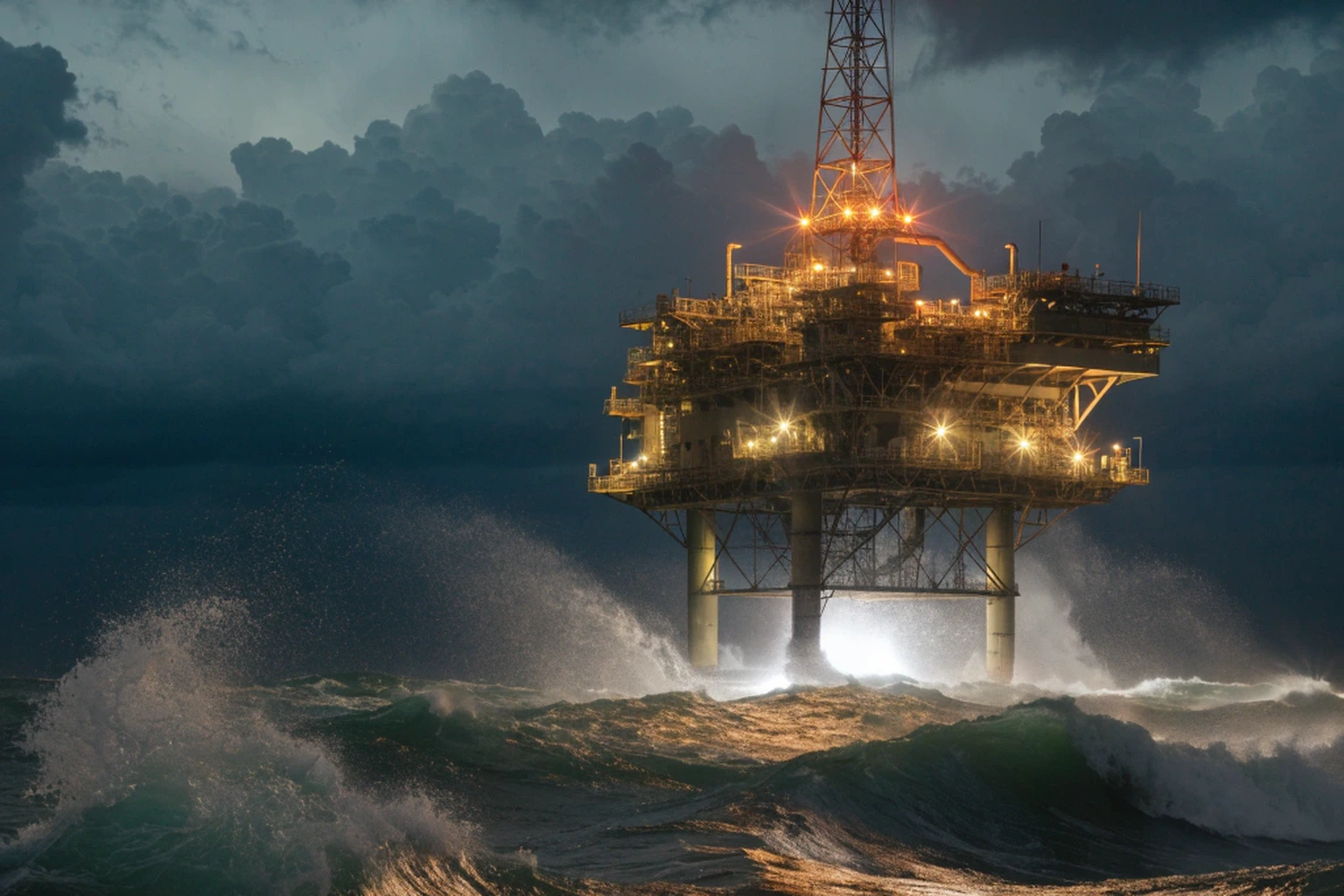
Energy in Iran
Iran is a big country. It has a lot of oil and gas. Oil and gas are types of energy. This energy is very important for the world. Many people in Iran work in the energy sector.
They work for big companies. This work helps the country's economy. The economy is how a country makes and uses money. Iran sells its oil and gas to other countries.
This makes a lot of money for Iran. The money helps the country. It is a very important part of Iran's industry.
نکته دستوری
الگو: Present Simple Tense
"It has a lot of oil and gas."
We use the present simple for facts or things that are always true. For 'he', 'she', or 'it', we add an '-s' to the verb, like 'has', 'sells', or 'helps'.
الگو: Plural Nouns
"Iran sells its oil and gas to other countries."
We usually add '-s' or '-es' to the end of a noun to talk about more than one thing. For example, one country becomes multiple countries.
درک خود را بسنجید
10 سوال · A1 مبتدی · 1 پیشنمایش رایگان
آنچه از این مقاله آموختید را بسنجید. به همه سؤالات پاسخ دهید و XP کسب کنید!
What does Iran have a lot of?
آیا میخواهید آزمون را تمام کنید؟
9 سؤال دیگر منتظر شماست. ثبتنام رایگان کنید تا آزمون کامل را باز کنید و XP کسب کنید!
ثبتنام رایگانقبلاً ثبتنام کردی؟ ورود
جزئیات سؤالات
What does Iran have a lot of?
پاسخ شما:
پاسخ درست: oil and gas
The article says energy from Iran is not important for the world.
پاسخ شما:
پاسخ درست: نادرست
What does 'money' mean?
پاسخ شما:
پاسخ درست: What you use to buy things
Many people in Iran _____ in the energy sector.
پاسخ شما:
پاسخ درست: work
Iran's Energy: The Engine of the Economy
Iran is famous for its large energy resources. The country has vast amounts of oil and natural gas. In fact, Iran possesses the second-largest natural gas reserves in the world. It also holds the fourth-largest oil reserves. Because of this, the energy sector is bigger than any other industry in Iran. It is the engine of the national economy.
The story of this industry began a long time ago. In 1908, engineers discovered oil in a place called Masjed Soleyman. This was a very important moment because it was the first oil discovery in the Middle East. The industry grew quickly after that event.
Today, Iran does not just sell crude oil. The country also produces petrochemicals. Petrochemicals are products made from oil and gas, like plastic. This sector is more modern than the old oil wells. It helps Iran make more money. The energy industry is vital for the people and the future of the country.
نکته دستوری
الگو: Comparatives (More + Adjective)
"This sector is more modern than the old oil wells."
We use 'more' plus an adjective followed by 'than' to compare two things when the adjective is long (has two or more syllables).
الگو: Past Simple
"In 1908, engineers discovered oil in a place called Masjed Soleyman."
We use the past simple tense to talk about finished actions in the past. For regular verbs like 'discover', we add '-ed' to the end.
درک خود را بسنجید
10 سوال · A2 مقدماتی · 1 پیشنمایش رایگان
آنچه از این مقاله آموختید را بسنجید. به همه سؤالات پاسخ دهید و XP کسب کنید!
When was oil first discovered in Iran?
آیا میخواهید آزمون را تمام کنید؟
9 سؤال دیگر منتظر شماست. ثبتنام رایگان کنید تا آزمون کامل را باز کنید و XP کسب کنید!
ثبتنام رایگانقبلاً ثبتنام کردی؟ ورود
جزئیات سؤالات
When was oil first discovered in Iran?
پاسخ شما:
پاسخ درست: 1908
Iran has the largest natural gas reserves in the world.
پاسخ شما:
پاسخ درست: نادرست
What does 'produce' mean?
پاسخ شما:
پاسخ درست: To make or create something
The energy sector is the _____ of the national economy.
پاسخ شما:
پاسخ درست: engine
The Power of Iran: Oil, Gas, and the Future
Iran is a country that has a long history in the energy sector. For over a hundred years, oil and gas have been the main parts of its economy. The first commercial oil field was discovered in 1908 in Masjed Soleyman. Since then, the industry has seen significant growth and changed the nation.
Today, Iran possesses some of the largest natural gas and crude oil reserves in the world. These resources are managed by large companies that provide energy to many different countries. In recent years, the government has focused on the petrochemical sector. This industry converts oil and gas into products like plastic and fertilizer, which are sold in global markets.
New technology is often used to make the process more efficient. Many modern factories have been built to increase production. Engineers who work in these plants must have high skills because the machinery is very complex. Although there are challenges, the energy sector remains the engine of the Iranian economy. It has provided jobs for thousands of people and continues to support the nation's development.
نکته دستوری
الگو: Present Perfect
"Since then, the industry has seen significant growth and changed the nation."
We use the present perfect (have/has + past participle) to talk about actions that started in the past and continue to be relevant now. It often appears with words like 'since' or 'for'.
الگو: Passive Voice
"The first commercial oil field was discovered in 1908."
The passive voice is used when the action is more important than the person doing it. It is formed using 'be' + the past participle of the main verb.
درک خود را بسنجید
11 سوال · B1 متوسط · 1 پیشنمایش رایگان
آنچه از این مقاله آموختید را بسنجید. به همه سؤالات پاسخ دهید و XP کسب کنید!
When was the first commercial oil field discovered in Iran?
آیا میخواهید آزمون را تمام کنید؟
10 سؤال دیگر منتظر شماست. ثبتنام رایگان کنید تا آزمون کامل را باز کنید و XP کسب کنید!
ثبتنام رایگانقبلاً ثبتنام کردی؟ ورود
جزئیات سؤالات
When was the first commercial oil field discovered in Iran?
پاسخ شما:
پاسخ درست: 1908
Iran has some of the smallest natural gas reserves in the world.
پاسخ شما:
پاسخ درست: نادرست
What does 'efficient' mean?
پاسخ شما:
پاسخ درست: Working well without wasting time
Iran possesses some of the largest natural _____ reserves.
پاسخ شما:
پاسخ درست: gas
What kind of products does the petrochemical industry create?
پاسخ شما:
پاسخ درست: Plastic and fertilizer
Powering a Nation: The Evolution of Iran's Energy Sector
Iran’s economic landscape is inextricably linked to its energy sector, which has served as the nation’s primary engine of growth for over a century. Since the historic discovery of oil in Masjed Soleyman in 1908, the industry has undergone a remarkable evolution. Today, Iran boasts the world’s second-largest natural gas reserves and the fourth-largest proven crude oil reserves. Consequently, the country remains a pivotal player in global energy markets, despite the geopolitical complexities it faces.
While the extraction of raw resources was once the sole focus, recent decades have seen a strategic shift towards diversification. The development of the petrochemical industry is considered a strategic priority for the nation, as it seeks to move beyond the simple export of crude oil. By investing in downstream facilities, Iran aims to convert raw hydrocarbons into high-value products such as plastics, fertilizers, and polymers. This focus on value-added production is essential for mitigating the impact of global price fluctuations and ensuring long-term economic stability.
However, the sector has not been without its challenges. International sanctions have frequently hindered access to foreign capital and cutting-edge technology. Nevertheless, these hurdles have inadvertently fostered a spirit of self-sufficiency. Iranian engineers and scientists have been forced to innovate, developing domestic solutions to maintain and upgrade aging infrastructure. Had the industry not adapted to these constraints, the production levels might have plummeted significantly.
Looking ahead, the energy sector is increasingly focused on modernization and environmental considerations. Although fossil fuels remain dominant, there is a growing recognition of the need for sustainable practices. The integration of more efficient refining processes and the reduction of gas flaring are now top priorities. As the global energy map continues to change, Iran’s ability to modernize its infrastructure while navigating diplomatic waters will determine its future standing. In conclusion, the petrochemical and energy sector is more than just a source of revenue; it is a symbol of Iranian industrial resilience and a cornerstone of its national identity.
نکته دستوری
الگو: Non-defining Relative Clause
"Iran’s economic landscape is inextricably linked to its energy sector, which has served as the nation’s primary engine of growth for over a century."
This pattern adds extra information about a noun (the energy sector) that is already identified. It is separated by commas and uses 'which' for things.
الگو: The Passive Voice
"The development of the petrochemical industry is considered a strategic priority for the nation."
The passive voice is used here to create a formal, academic tone where the action (the consideration) is more important than who is performing it.
الگو: Third Conditional (Inverted)
"Had the industry not adapted to these constraints, the production levels might have plummeted significantly."
This is a formal way to express a hypothetical situation in the past. 'Had the industry not adapted' replaces 'If the industry had not adapted', focusing on a past result that did not happen.
درک خود را بسنجید
11 سوال · B2 بالاتر از متوسط · 1 پیشنمایش رایگان
آنچه از این مقاله آموختید را بسنجید. به همه سؤالات پاسخ دهید و XP کسب کنید!
What is the primary reason Iran is shifting focus toward the petrochemical industry?
آیا میخواهید آزمون را تمام کنید؟
10 سؤال دیگر منتظر شماست. ثبتنام رایگان کنید تا آزمون کامل را باز کنید و XP کسب کنید!
ثبتنام رایگانقبلاً ثبتنام کردی؟ ورود
جزئیات سؤالات
What is the primary reason Iran is shifting focus toward the petrochemical industry?
پاسخ شما:
پاسخ درست: To move beyond simple exports and create high-value products
The first commercial oil discovery in Iran happened in the early 20th century.
پاسخ شما:
پاسخ درست: درست
Which word describes the physical structures like pipes and refineries needed for the industry?
پاسخ شما:
پاسخ درست: Infrastructure
Since 1908, the industry has undergone a remarkable _____.
پاسخ شما:
پاسخ درست: evolution
According to the article, how has the industry reacted to international sanctions?
پاسخ شما:
پاسخ درست: By fostering a spirit of self-sufficiency and domestic innovation
The Petrochemical Paradigm: Iran’s Strategic Energy Evolution
Seldom has the economic trajectory of a nation been so inextricably linked to its subterranean wealth as that of Iran. Since the epoch-making discovery of oil in Masjed Soleyman in 1908, the energy sector has constituted the backbone of the Iranian economy, dictating fiscal policy and shaping geopolitical relations. However, the contemporary narrative of Iran's energy sector represents a departure from mere resource extraction. What we are witnessing today is a paradigm shift: a strategic transition from the passive export of raw crude to the active development of a sophisticated petrochemical apparatus. This evolution is not merely an economic preference but a strategic imperative designed to ensure long-term stability.
Possessing the world’s second-largest natural gas reserves and the fourth-largest proven crude oil reserves, Iran occupies a position of formidable influence within the global energy matrix. Yet, the monetization of these vast assets requires more than simple drilling and pipeline construction. It is the maximization of the value chain that currently preoccupies policymakers and industrial planners alike. The rapid expansion of petrochemical complexes, particularly along the Persian Gulf coast, serves as a testament to this ambition. By converting raw hydrocarbons into high-value polymers, fertilizers, and plastics, the nation aims to insulate its economy from the volatile fluctuations of global oil prices, creating a buffer against external economic shocks.
Nevertheless, this industrial maturation is fraught with significant hurdles. The imposition of international sanctions has undeniably impeded the acquisition of cutting-edge foreign technology, forcing the sector to look inward. While this isolation has precipitated a reliance on indigenous engineering and domestic innovation, it has arguably constrained the pace of modernization in certain high-tech sub-sectors. Despite these constraints, the industry has demonstrated remarkable resilience, maintaining production levels and even expanding capacity in petrochemicals through reverse engineering and local adaptation.
Furthermore, a critical analysis of the sector reveals a pressing internal challenge: energy efficiency. The domestic consumption of energy in Iran is disproportionately high relative to its GDP, driven largely by historical subsidies. Were Iran to rationalize its internal energy pricing and consumption patterns, the surplus natural gas available for export and industrial feedstock would increase substantially. The nominalisation of this issue in government five-year plans indicates an awareness of the problem, though implementation remains a complex socio-political endeavor.
Ultimately, the petrochemical and energy sector acts as a catalyst for broader industrial growth and employment. The integration of upstream extraction with downstream processing facilitates a more robust, diversified economic structure. It is this value-added approach that will likely define the future of Iranian energy, transforming the nation from a traditional commodity provider into a technological hub for petrochemical excellence.
نکته دستوری
الگو: Negative Inversion (وارونگی منفی)
"Seldom has the economic trajectory of a nation been so inextricably linked to its subterranean wealth as that of Iran."
برای تاکید و بلاغت بیشتر استفاده میشه. وقتی جمله با یک قید منفی (مثل 'Seldom', 'Rarely', 'Never') شروع بشه، فعل کمکی (اینجا 'has') قبل از فاعل ('the economic trajectory') قرار میگیره.
الگو: Cleft Sentences (جملات گسسته)
"It is the maximization of the value chain that currently preoccupies policymakers and industrial planners alike."
این ساختار ('It is X that...') به نویسنده اجازه میده تا به جای فاعل، روی بخش خاصی از جمله (در این مورد 'the maximization of the value chain') تمرکز کنه.
الگو: Inverted Conditional (شرطی معکوس)
"Were Iran to rationalize its internal energy pricing and consumption patterns, the surplus natural gas available for export would increase substantially."
این یک حالت رسمیتر برای 'If Iran were to rationalize...' هست. با حذف 'if' و جابجایی فاعل و فعل کمکی ('Were Iran')، لحن جمله فرضیتر و سطحبالاتر میشه.
درک خود را بسنجید
12 سوال · C1 پیشرفته · 1 پیشنمایش رایگان
آنچه از این مقاله آموختید را بسنجید. به همه سؤالات پاسخ دهید و XP کسب کنید!
تغییر استراتژیک اصلی که در مقاله راجع به بخش انرژی ایران توضیح داده شده چیه؟
آیا میخواهید آزمون را تمام کنید؟
11 سؤال دیگر منتظر شماست. ثبتنام رایگان کنید تا آزمون کامل را باز کنید و XP کسب کنید!
ثبتنام رایگانقبلاً ثبتنام کردی؟ ورود
جزئیات سؤالات
تغییر استراتژیک اصلی که در مقاله راجع به بخش انرژی ایران توضیح داده شده چیه؟
پاسخ شما:
پاسخ درست: گذار از استخراج خام به تولید محصولات پتروشیمی با ارزش افزوده.
طبق مقاله، تحریمهای بینالمللی توسعه صنعت پتروشیمی ایران رو کاملاً متوقف کردن.
پاسخ شما:
پاسخ درست: نادرست
کدوم کلمه از نظر معنایی به 'Impede' نزدیکتره؟
پاسخ شما:
پاسخ درست: مانع تراشیدن (Obstruct)
بخش پتروشیمی به عنوان یک _____ برای رشد صنعتی گستردهتر و اشتغال عمل میکنه.
پاسخ شما:
پاسخ درست: catalyst
منطقی کردن مصرف انرژی داخلی چه تاثیری خواهد داشت؟
پاسخ شما:
پاسخ درست: مقدار گاز طبیعی اضافی موجود برای صادرات رو افزایش میده.
ایران بزرگترین ذخایر اثبات شده نفت خام در جهان رو داره.
پاسخ شما:
پاسخ درست: نادرست
Hydrocarbon Hegemony and the Imperative of Diversification: Iran’s Energy Matrix
The discovery of oil in Masjed Soleyman in 1908 did not merely represent an economic windfall; it constituted a seismic shift in the geopolitical architecture of the Middle East. Rarely has a singular event so profoundly altered the trajectory of a nation, embedding the hydrocarbon industry as the sine qua non of Iran’s modernization efforts. Today, Iran stands as a colossus in the global energy arena, boasting the world’s second-largest natural gas reserves and the fourth-largest proven crude oil reserves. Yet, to view this sector solely through the lens of extraction would be to overlook the profound transformation it has undergone. The contemporary narrative of Iranian energy is one of strategic evolution, moving from simple exportation to complex value creation via a burgeoning petrochemical industry.
The sheer magnitude of Iran's reserves provides it with a distinct form of regional hegemony, allowing it to influence market dynamics and geopolitical alliances alike. However, reliance on raw resource exportation is fraught with peril. Were Iran to remain tethered exclusively to the sale of crude oil, its economy would be perpetually vulnerable to the vicissitudes of global market prices and external political pressures. Consequently, state policy has pivoted aggressively towards the downstream sector. By converting hydrocarbons into polymers, fertilizers, and chemical feedstocks, the nation not only captures greater economic value but also insulates itself against the volatility inherent in commodity trading. This strategic shift is not merely an economic preference; it is an existential imperative for long-term stability.
Developing this downstream capacity has required overcoming substantial hurdles, particularly regarding access to advanced technology. In response to international restrictions, there has been a marked concomitant rise in indigenous engineering capabilities. Iranian firms have increasingly assumed roles previously reserved for foreign conglomerates, designing complex refineries and synthesizing proprietary catalysts. While this drive for self-sufficiency has occasionally precipitated delays due to the steep learning curve involved, the long-term result is a more resilient industrial base, less susceptible to external shocks.
Nevertheless, the sector faces significant exigencies that cannot be ignored. Much of the energy infrastructure is aging, requiring substantial capital investment to maintain efficiency and safety standards. Furthermore, the global paradigm shift towards renewable energy poses a theoretical and practical challenge to traditional petrostates. It is essential that Iran utilize its current hydrocarbon revenues to ameliorate environmental degradation and fund the transition towards a more diversified energy portfolio. The high carbon intensity of the petrochemical sector, coupled with domestic water scarcity, necessitates the adoption of greener technologies.
Ultimately, the Iranian petrochemical and energy sector represents a complex dichotomy of legacy and innovation. It is the engine of national growth and the primary source of hard currency, yet it also embodies the challenges of a resource-dependent economy striving for modernity. As the world inexorably moves towards decarbonization, the resilience of this sector will depend not on the volume of oil extracted, but on the sophistication with which it is processed and the wisdom with which its revenues are reinvested. The path forward requires a delicate balancing act: exploiting vast fossil fuel wealth while simultaneously laying the groundwork for a post-carbon future.
نکته دستوری
الگو: Inversion with Negative Adverbials
"Rarely has a singular event so profoundly altered the trajectory of a nation."
When a sentence starts with a negative or restrictive adverb (like 'Rarely', 'Never', 'Seldom'), the auxiliary verb is placed before the subject to add dramatic emphasis and rhetorical weight.
الگو: Inverted Conditional Forms
"Were Iran to remain tethered exclusively to the sale of crude oil, its economy would be perpetually vulnerable."
In formal English, 'if' can be omitted in conditional sentences by inverting the subject and auxiliary verb (e.g., 'Were Iran to...' instead of 'If Iran were to...'). This creates a more academic tone.
الگو: Subjunctive Mood
"It is essential that Iran utilize its current hydrocarbon revenues to ameliorate environmental degradation."
The subjunctive mood is used after adjectives expressing importance or necessity (like 'essential', 'imperative'). The verb remains in its base form ('utilize', not 'utilizes') regardless of the subject.
درک خود را بسنجید
12 سوال · C2 تسلط · 1 پیشنمایش رایگان
آنچه از این مقاله آموختید را بسنجید. به همه سؤالات پاسخ دهید و XP کسب کنید!
According to the article, why has Iran pivoted towards the downstream petrochemical sector?
آیا میخواهید آزمون را تمام کنید؟
11 سؤال دیگر منتظر شماست. ثبتنام رایگان کنید تا آزمون کامل را باز کنید و XP کسب کنید!
ثبتنام رایگانقبلاً ثبتنام کردی؟ ورود
جزئیات سؤالات
According to the article, why has Iran pivoted towards the downstream petrochemical sector?
پاسخ شما:
پاسخ درست: To capture greater economic value and insulate the economy from global price volatility.
The article suggests that the development of indigenous technologies was purely a matter of economic preference, not necessity.
پاسخ شما:
پاسخ درست: نادرست
Which word from the text implies 'an urgent need or demand'?
پاسخ شما:
پاسخ درست: Exigency
The development of __________ technologies has become paramount in response to international restrictions.
پاسخ شما:
پاسخ درست: indigenous
What does the author imply about the future of the sector?
پاسخ شما:
پاسخ درست: It must balance fossil fuel exploitation with investment in a post-carbon future.
The discovery of oil in Masjed Soleyman is described as a minor event with little geopolitical impact.
پاسخ شما:
پاسخ درست: نادرست

