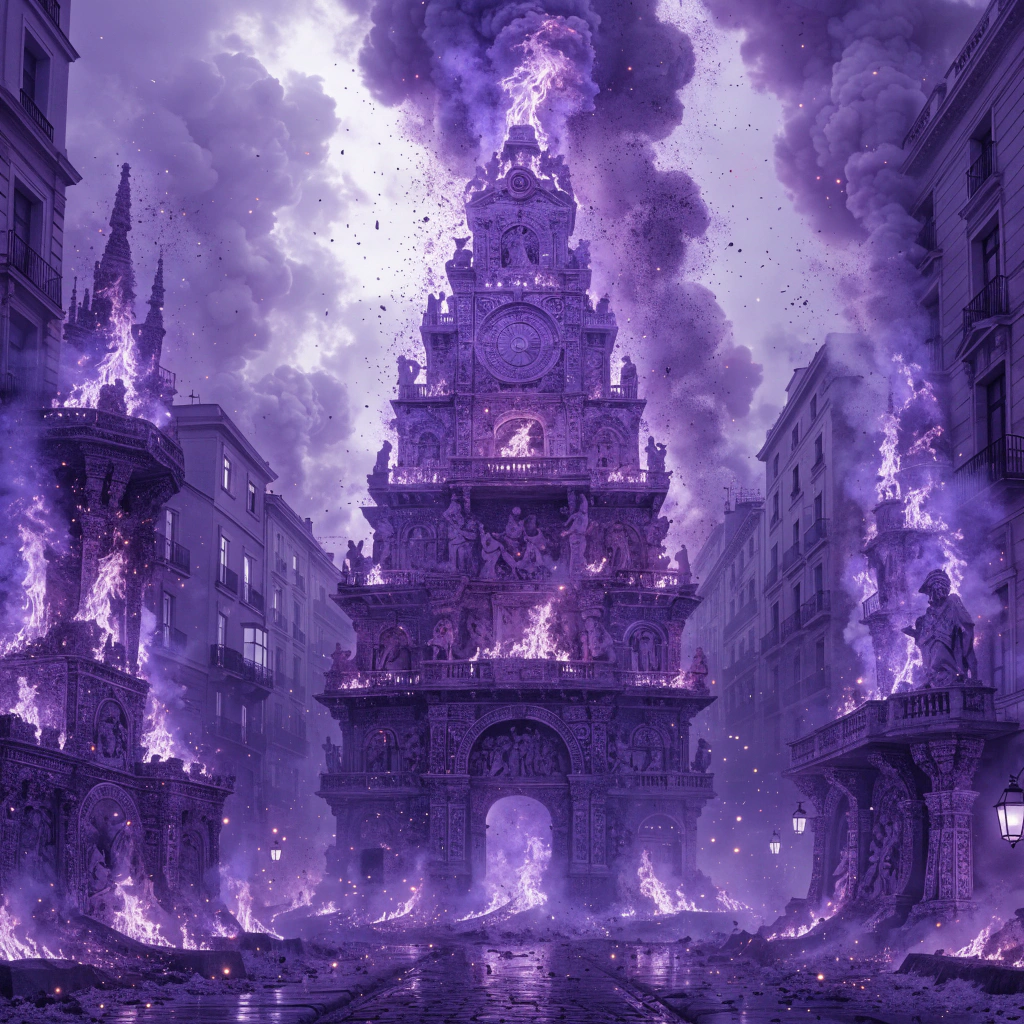
スペインのお祭り:ラス・ファヤス
スペインに「ラス・ファヤス」というお祭りがあります。これはバレンシアという町のお祭りです。 3月に行われます。人々はとても大きくてきれいな人形を作ります。この人形を「ニノット」と言います。 ニノットは木や紙でできています。とても高いニノットもあります。 お祭りの最後の日、人々はこのニノットを燃やします。春が来たことをお祝いします。 ラス・ファヤスはとてもにぎやかで、楽しいお祭りです。
文法スポットライト
パターン: 〜というN
"スペインに「ラス・ファヤス」というお祭りがあります。"
これは、物や場所の名前を説明するときに使います。例えば、「ラス・ファヤス」というお祭り、は「名前がラス・ファヤスのお祭り」という意味です。
パターン: 〜があります
"スペインに「ラス・ファヤス」というお祭りがあります。"
これは、物や場所があることを言います。例えば、「お祭りがあります」は、お祭りがあることを教えています。「〜は〜です」は、物や人の紹介に使います。
理解度をチェック
10 問 · A1 初級 · 無料プレビュー 1回
この記事で学んだことをテストしよう。全問正解してXPを獲得!
問題の内訳
「ラス・ファヤス」は何ですか。
あなたの回答:
正解: スペインのお祭り
ラス・ファヤスは3月に行われます。
あなたの回答:
正解: 正しい
「人形」は英語で何ですか。
あなたの回答:
正解: doll, figure
ニノットは木や_____でできています。
あなたの回答:
正解: 紙
バレンシアの火祭り:ファヤス
スペインには「ファヤス」という有名なお祭りがあります。これはバレンシアという美しい町で、毎年3月に開かれます。ファヤスは、聖ヨセフを祝うお祭りで、とても大きくて特別な人形を作ります。そして、その人形を最後に燃やします。
昔、冬が終わる時、木を使う職人たちは古い木材を燃やしていました。これがファヤスの始まりと言われています。長い時間が経って、この火は「ニノット」と呼ばれる大きな人形になりました。ニノットは木や紙で作られていて、とてもきれいです。高いニノットは30メートルぐらいあります。人々は家族や友達と一緒にニノットを見に行きます。
祭りでは、音楽がたくさん流れて、パレードもあります。みんなでダンスをしたり、美味しい料理を食べたりします。そして、祭りの最後の日には、夜にすべてのニノットを燃やします。火はとても大きくて、空が明るくなります。これは春の訪れを祝う、とても感動的で楽しいお祭りです。ぜひ一度見てください。
文法スポットライト
パターン: V-て + います (状態)
"ニノットは木や紙で作られていて、とてもきれいです。"
動詞の「て形」に「います」をつけます。これは、ある状態が続いていることを表すときに使います。「作られています」は「作られた状態が続いている」という意味です。
パターン: V-たり V-たりします
"みんなでダンスをしたり、美味しい料理を食べたりします。"
動詞の「ます形」から「ます」を取り、その後に「たり」をつけます。いくつかの動作を例として挙げるときに使います。「ダンスをする」や「料理を食べる」など、いくつかの楽しい活動があることを示します。
理解度をチェック
11 問 · A2 初級 · 無料プレビュー 1回
この記事で学んだことをテストしよう。全問正解してXPを獲得!
ファヤスはどこで行われますか?
問題の内訳
ファヤスはどこで行われますか?
あなたの回答:
正解: バレンシア
ファヤスは春に開かれます。
あなたの回答:
正解: 正しい
「職人」の意味は何ですか?
あなたの回答:
正解: 手で物を作る仕事の人
ニノットは木や紙で_____います。
あなたの回答:
正解: 作られて
祭りの最後の日には、何をしますか?
あなたの回答:
正解: ニノットを燃やします
The Burning Art of Valencia: Las Fallas
Every March, the city of Valencia in Spain transforms into a giant street party known as Las Fallas. This incredible festival, which honors Saint Joseph, has been celebrated for centuries. It is famous for its massive sculptures, colorful parades, and loud fireworks.
The origins of Las Fallas are found in the Middle Ages. In those days, carpenters used wooden supports, called 'parots,' to hold their candles during the dark winter months. When spring arrived, these supports were no longer needed. To celebrate the spring equinox, the carpenters burned the old wood in the streets. Over time, these simple bonfires evolved into the creation of 'ninots.' These are huge, intricate figures made of wood, wax, and papier-mâché.
Today, the festival is a major international event. The ninots are often very tall, with some reaching up to 30 meters in height. They usually represent famous people or funny scenes from daily life. For several days, the streets are filled with music and the smell of traditional food. Every afternoon, the 'mascletà' takes place, where thousands of firecrackers are set off to create a rhythmic sound that can be felt in the ground.
The most exciting moment happens on the final night, which is known as 'La Cremà.' Almost all the ninots are burned in enormous bonfires across the city. Only one small figure, which has been voted the best by the public, is saved from the flames. This tradition shows that even though the art is temporary, the spirit of the community continues every year.
文法スポットライト
パターン: Relative Clauses
"This incredible festival, which honors Saint Joseph, has been celebrated for centuries."
Non-defining relative clauses add extra information about a noun. They are separated by commas and use 'which' for things and 'who' for people.
パターン: Passive Voice
"Almost all the ninots are burned in enormous bonfires across the city."
The passive voice is used when the action is more important than the person performing it. It is formed using the verb 'to be' and the past participle.
理解度をチェック
11 問 · B1 中級 · 無料プレビュー 1回
この記事で学んだことをテストしよう。全問正解してXPを獲得!
What was the original purpose of the wooden 'parots' used by carpenters?
問題の内訳
What was the original purpose of the wooden 'parots' used by carpenters?
あなたの回答:
正解: To hold candles during winter
The festival of Las Fallas takes place in Madrid.
あなたの回答:
正解: 間違い
What does the word 'intricate' mean?
あなたの回答:
正解: Having many complex details
The festival has been _____ for centuries.
あなたの回答:
正解: celebrated
What happens during the 'mascletà'?
あなたの回答:
正解: Firecrackers create a rhythmic sound
Las Fallas: A Spectacular Blend of Tradition and Artistic Fire
Every March, the city of Valencia undergoes a dramatic transformation as it prepares for Las Fallas, a festival that seamlessly blends historical tradition with contemporary artistic expression. While it is primarily held to commemorate Saint Joseph, the patron saint of carpenters, the event has evolved into a world-renowned spectacle that attracts millions of visitors annually. The origins of this unique celebration can be traced back to the Middle Ages, when local craftsmen would burn the wooden structures used to support their lamps during the winter months. This ritual, marking the arrival of spring, eventually transitioned into the creation of elaborate monuments known as 'ninots'.
These structures, which can reach heights of up to thirty meters, are characterized by their intricate designs and satirical themes. Unlike conventional art exhibitions, Las Fallas serves as a platform for social commentary, where artists utilize their craftsmanship to critique political figures and societal trends. Despite the immense effort and ingenuity required to construct these masterpieces, their existence is inherently ephemeral. On the final night of the festival, known as 'La Cremà', all but one of the monuments are set ablaze in a breathtaking display of fire and light. This 'pardoned' ninot is preserved in the local Fallas Museum, serving as a permanent record of that year's creativity.
The festival is not merely about the final spectacle; it is deeply rooted in the communal identity of Valencia. Throughout the year, neighborhood associations work tirelessly to fund and design their respective fallas. Furthermore, the event features daily firework displays called 'Mascletà', traditional music, and the 'Ofrenda de Flores', a massive floral offering to the Virgin Mary. Consequently, the city becomes a vibrant stage where the past and present coexist in a harmonious, albeit loud, celebration. For many spectators, the most poignant moment occurs when the flames consume the wood and papier-mâché. It is a symbolic gesture of renewal, reminding participants that life is constantly evolving. Although some might view the destruction of such detailed artwork as wasteful, the Valencian people perceive it as a necessary release, allowing for the birth of new ideas in the coming year. Ultimately, Las Fallas remains a testament to human creativity and the enduring power of cultural heritage.
文法スポットライト
パターン: Passive Voice with Modal Verbs
"The origins of this unique celebration can be traced back to the Middle Ages..."
Used to focus on the action or the object rather than the subject. It is formed using 'can/must/should' + 'be' + past participle.
パターン: Non-Defining Relative Clauses
"These structures, which can reach heights of up to thirty meters, are characterized by their intricate designs."
These clauses provide extra information about a noun. They are separated by commas and use 'which' for things and 'who' for people.
パターン: Discourse Markers for Consequence
"Consequently, the city becomes a vibrant stage where the past and present coexist..."
'Consequently' is a formal transition word used to show the result or effect of a previously mentioned situation.
理解度をチェック
11 問 · B2 中上級 · 無料プレビュー 1回
この記事で学んだことをテストしよう。全問正解してXPを獲得!
What was the original practical purpose of the fires burned by medieval craftsmen?
問題の内訳
What was the original practical purpose of the fires burned by medieval craftsmen?
あなたの回答:
正解: To dispose of wooden lamp supports at the end of winter
Every single 'ninot' created for the festival is destroyed in the final fire.
あなたの回答:
正解: 間違い
Which word describes something that is intentionally designed to be temporary?
あなたの回答:
正解: Ephemeral
The festival serves as a platform for social _____, allowing artists to critique politics.
あなたの回答:
正解: commentary
How do the Valencian people generally view the destruction of the artwork?
あなたの回答:
正解: As a necessary release and symbolic renewal
The Ephemeral Splendour of Las Fallas: A Study in Creative Destruction
Every March, the Mediterranean city of Valencia undergoes a profound metamorphosis, shedding its skin as a conventional urban hub to become a sprawling gallery of fire and satire. Rarely does a city undergo such a radical metamorphosis, yet for the Valencians, Las Fallas is not merely a festival; it is a fundamental pillar of their collective identity. The origins of this spectacle are rooted in the Middle Ages, when carpenters would incinerate the wooden supports used for their winter lamps to mark the arrival of the spring equinox. What began as a pragmatic disposal of seasonal debris has evolved into an ostentatious display of artistic prowess and socio-political commentary.
At the heart of the festivities are the 'fallas'—monumental structures that can tower up to thirty meters. These are composed of numerous 'ninots', or smaller figures, which are often satirical in nature. It is through these satirical effigies that the community voices its grievances, lampooning politicians, celebrities, and global events with a sharp, irreverent verve. The craftsmanship involved is staggering, requiring a year of meticulous labor, only for the entire creation to be reduced to ashes in a single night. This transient nature of the art is central to the festival's philosophy; it represents the cathartic purging of the old to make way for the new.
However, the festival is not without its controversies. Critics often point to the environmental impact of the 'Cremà'—the final night of burning—where the combustion of materials releases significant carbon emissions. Furthermore, the relentless cacophony of the 'Mascletà', a daily rhythmic explosion of gunpowder, is frequently cited as a source of urban stress. Despite these concerns, the preservation of this intangible cultural heritage remains a priority for the local government. They argue that the economic influx and the reinforcement of communal bonds outweigh the seasonal disruptions. It is the juxtaposition of destruction and creation that defines the unique allure of Las Fallas. To the outsider, the intentional incineration of millions of euros worth of art may seem illogical, yet to the local, it is a necessary cycle of rebirth. Scarcely had the smoke cleared from the final embers when the falleros began planning the following year’s monuments, proving that the spirit of the festival is as enduring as the art is ephemeral.
文法スポットライト
パターン: Negative Inversion
"Rarely does a city undergo such a radical metamorphosis..."
When a sentence starts with a negative or restrictive adverb like 'rarely', the auxiliary verb comes before the subject. This is used in formal writing to add emphasis or dramatic effect.
パターン: Cleft Sentences
"It is through these satirical effigies that the community voices its grievances."
A cleft sentence focuses on a specific part of the information by starting with 'It is/was'. It highlights the 'how' or 'why' of a statement, making the argument more persuasive.
パターン: Nominalisation
"The preservation of this intangible cultural heritage remains a priority..."
Using a noun phrase ('The preservation of...') instead of a verb ('Preserving...') makes the writing more academic and objective. It focuses on the concept rather than the action.
理解度をチェック
12 問 · C1 上級 · 無料プレビュー 1回
この記事で学んだことをテストしよう。全問正解してXPを獲得!
What was the original pragmatic purpose of the bonfires in the Middle Ages?
問題の内訳
What was the original pragmatic purpose of the bonfires in the Middle Ages?
あなたの回答:
正解: To dispose of wooden supports for winter lamps
The article suggests that the environmental impact of the festival is universally ignored by Valencians.
あなたの回答:
正解: 間違い
Which word describes the act of mocking or satirizing public figures through art?
あなたの回答:
正解: Lampooning
The article describes the sound of the Mascletà as a _____ of gunpowder explosions.
あなたの回答:
正解: cacophony
According to the text, what is the 'Cremà'?
あなたの回答:
正解: The final night when the structures are burned
The planning for the next year's festival begins almost immediately after the current one ends.
あなたの回答:
正解: 正しい
Ephemeral Grandeur: An Ontological Analysis of Valencia’s Fallas
The Valencian Fallas represents a paradigm of cultural paradox, where the meticulous craftsmanship of months is surrendered to the flames in a single, cathartic night. While ostensibly a celebration of Saint Joseph, the festival’s ontological roots extend into the pre-Christian spring equinox, signifying a seasonal rebirth through the medium of fire. Seldom has a tradition so successfully balanced the sacred with the profane, blending religious devotion with a biting, iconoclastic spirit that permeates the city’s atmosphere. The evolution of the 'parots'—simple wooden supports for winter lamps—into the towering, sophisticated 'ninots' of today reflects the vicissitudes of Spanish history and the enduring proclivity of the Valencian people for artistic subversion.
To the uninitiated, the Fallas might appear as a mere display of pyrotechnic excess; however, a closer scholarly examination reveals a complex socio-political tapestry. Each monument, or 'falla', serves as a transient vessel for satire, often targeting the political elite or societal follies with a sharp, evocative wit. It is imperative that the 'ninot indultat'—the single figure spared from the final conflagration—represent the pinnacle of both aesthetic beauty and cultural relevance. Were one to examine the intricate details of these papier-mâché giants, one would discern a profound commentary on the human condition, rendered in a style that fluctuates between the grotesque and the sublime.
The sensory landscape of the festival is equally significant, dominated by the 'Mascletà'. This is not merely noise, but a rhythmic orchestration of gunpowder that resonates within the very bones of the spectators. This cacophony serves a ritualistic purpose, clearing the path for the vernal transition. One might argue that the auditory intensity is a quintessential component of the Valencian identity, a shared experience that binds the community through a collective vibration. Despite the inherent dangers of such a massive undertaking, the city maintains a meticulous organization, ensuring that the transience of the art does not compromise the safety of the populace.
As the festival reaches its zenith during the 'Cremà', the destruction of the monuments is not mourned but celebrated. This act of purification by fire symbolizes the shedding of the old to make way for the new. It is a moment of profound collective catharsis. The smoke that billows over the Mediterranean city is a testament to the community’s resilience and its commitment to an art form that refuses to be commodified or preserved. In an era obsessed with permanence and digital archiving, the Fallas stands as a defiant reminder of the beauty found in the temporary. The legacy of the Fallas, now recognized by UNESCO, continues to thrive, proving that some of the most enduring cultural expressions are those that are built specifically to be destroyed.
文法スポットライト
パターン: Negative Inversion
"Seldom has a tradition so successfully balanced the sacred with the profane."
When using negative adverbs like 'seldom' or 'never' at the start of a sentence for emphasis, the auxiliary verb and subject are inverted. This creates a formal, rhetorical tone common in C2 academic writing.
パターン: Subjunctive Mood
"It is imperative that the 'ninot indultat' represent the pinnacle of both aesthetic beauty and cultural relevance."
The subjunctive 'represent' (rather than 'represents') is used after adjectives of necessity or urgency like 'imperative' or 'essential'. It indicates a desired or required state rather than a factual one.
パターン: Inverted Conditional (Were... to)
"Were one to examine the intricate details of these papier-mâché giants, one would discern a profound commentary."
This structure is a highly formal alternative to 'If one were to examine'. It is used to discuss hypothetical or unlikely situations in scholarly analysis.
理解度をチェック
12 問 · C2 マスター · 無料プレビュー 1回
この記事で学んだことをテストしよう。全問正解してXPを獲得!
According to the article, what is the 'ontological' origin of Las Fallas?
問題の内訳
According to the article, what is the 'ontological' origin of Las Fallas?
あなたの回答:
正解: A pre-Christian celebration of the spring equinox.
The 'ninot indultat' is the only sculpture destroyed during the Cremà.
あなたの回答:
正解: 間違い
Which word describes a harsh, discordant mixture of sounds?
あなたの回答:
正解: Cacophony
The destruction of the monuments during the 'Cremà' is described as a moment of collective _____.
あなたの回答:
正解: catharsis
How does the author characterize the 'Mascletà'?
あなたの回答:
正解: A rhythmic orchestration of gunpowder that binds the community.
The author suggests that the festival's art form is a protest against digital archiving and permanence.
あなたの回答:
正解: 正しい
スペインの楽しいお祭り
こんにちは。これはスペインです。 スペインのバレンシアに、お祭りがあります。 名前は「ファヤス」です。 ファヤスは、とても大きいです。 たくさんの人形があります。 夜、火があります。とてもきれいです。 みんな、楽しいです。見てください。
文法スポットライト
パターン: 「〜があります」
"お祭りがあります。"
「〜があります」は「〜がある」ということを表すときに使います。物やイベントの存在を示すときに使います。例えば、「本があります」は「本がある」という意味です。
理解度をチェック
9 問 · A0 プレビギナー · 無料プレビュー 1回
この記事で学んだことをテストしよう。全問正解してXPを獲得!
問題の内訳
お祭りの名前は何ですか?
あなたの回答:
正解: ファヤス
ファヤスは小さいです。
あなたの回答:
正解: 間違い
夜、____があります。
あなたの回答:
正解: 火

