halfling 30秒で
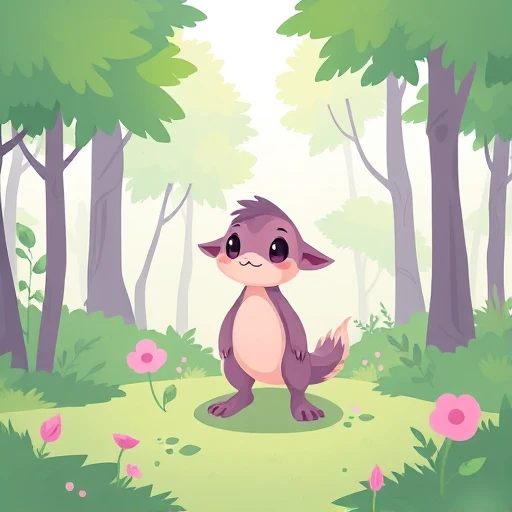
- A halfling is a small, human-like fantasy creature, roughly three feet tall, known for stealth, luck, and a love of home and food.
- In gaming and literature, 'halfling' is the standard term for the archetype popularized by J.R.R. Tolkien's Hobbits, used to avoid trademark issues.
- Halflings are characterized by their nimble nature, hairy feet, and surprising bravery, often serving as the relatable 'everyman' in epic adventures.
- They typically live in cozy hill-burrows or rural villages, valuing community and peace over the pursuit of power or glory.
The term halfling refers to a specific race of fictional humanoid creatures that are ubiquitous in modern fantasy literature, tabletop role-playing games, and video games. Standing at approximately three feet tall, or roughly half the height of an average adult human, these beings are characterized by their small stature, nimble movements, and a profound appreciation for the comforts of domestic life. The word itself is a compound, merging 'half' and the suffix '-ling', which often denotes a smaller or younger version of something. In the context of world-building, a halfling is not merely a 'short human' but a distinct species with its own cultural values, biological traits, and societal structures. They are frequently depicted as having slightly oversized feet, often covered in thick, curly hair, and they rarely wear shoes, as their soles are naturally tough and leathery. This physical trait contributes to their legendary stealth, allowing them to move across various terrains with almost supernatural silence.
- Physical Stature
- Halflings typically range from 2 feet 8 inches to 3 feet 4 inches in height, weighing between 30 and 45 pounds. Their proportions are generally similar to humans, though their heads may be slightly larger relative to their bodies.
People use the word 'halfling' most commonly when discussing fantasy media like Dungeons & Dragons, Pathfinder, or various high-fantasy novels. It serves as a generic, legally distinct alternative to the word 'Hobbit', which is a trademarked term owned by the Tolkien Estate. While J.R.R. Tolkien popularized the concept of the small, home-loving folk in The Hobbit and The Lord of the Rings, the gaming industry adopted 'halfling' to describe similar creatures without infringing on intellectual property rights. Consequently, when a gamer says they are playing a halfling rogue, they are evoking a specific archetype: a character who is small enough to hide behind a medium-sized ally, agile enough to dodge massive blows, and likely motivated by a desire to find a warm hearth and a good meal after the adventure is over.
The party's halfling managed to slip through the iron bars of the prison cell while the guards were distracted by the barbarian's shouting.
Beyond gaming, the word is used in literary analysis to describe the 'everyman' perspective in epic narratives. Because halflings are often portrayed as being uninterested in the grand politics of kings and wizards, their involvement in world-shaking events provides a relatable lens for the reader. They represent the common person thrust into extraordinary circumstances. Their culture is usually centered around community, agriculture, and storytelling. They value tradition and stability, often living in cozy, well-furnished burrows or small cottages. However, a 'halfling' in a story is often the one who discovers that even the smallest person can change the course of the future, a theme that resonates deeply with audiences across the globe.
- Cultural Temperament
- Generally peaceful and jovial, halflings avoid conflict but are fiercely protective of their homes and families. They are known for their hospitality and love of games.
In many settings, the halfling sub-races include the Stout, who are hardier, and the Lightfoot, who are more prone to wandering.
In a broader sense, the word can occasionally be used metaphorically or descriptively in non-fantasy contexts, though this is rare and often informal. For instance, someone might jokingly refer to a very short person or a child as a 'halfling' to emphasize their size in a playful, albeit sometimes sensitive, manner. However, its primary home remains firmly within the realm of the fantastic. It evokes images of rolling green hills, round doors, smoking pipes, and the unexpected bravery of the small. The halfling's role in a story is frequently to provide levity and heart, reminding the more 'serious' characters—and the audience—of what is truly worth fighting for: peace, food, and a place to call home.
The halfling village was a maze of narrow paths and low-ceilinged taverns where the ale flowed freely.
- Etymological Root
- Derived from the Scots word 'halflin', meaning a person who is half-grown, typically a teenager or adolescent boy.
Despite their small size, the halfling archers were famous for their incredible accuracy and steady nerves.
Ultimately, the halfling represents the triumph of the spirit over physical limitations. They are the quintessential underdogs of the fantasy world. While dragons are powerful and elves are immortal, the halfling relies on wit, luck, and the bonds of friendship. This makes the word 'halfling' carry a connotation of hidden strength and unassuming competence. When you use this word, you are tapping into a rich tradition of storytelling that celebrates the ordinary person's capacity for heroism. Whether they are cooking a seven-course meal or sneaking past a sleeping giant, the halfling remains one of the most beloved and enduring figures in the landscape of the human imagination.
Using the word halfling correctly requires an understanding of its grammatical role as a noun and its specific context within fantasy narratives. Most commonly, it functions as a count noun, meaning it can be singular ('a halfling') or plural ('many halflings'). Because it describes a race or species, it is often treated similarly to words like 'human', 'elf', or 'dwarf'. In descriptive writing, you can use it to establish the scale of a scene or to highlight the contrast between different characters. For example, 'The halfling stood in the shadow of the giant' immediately conveys a sense of vulnerability and vast size difference. It is also frequently used as an attributive noun to modify other nouns, such as in 'halfling culture', 'halfling architecture', or 'halfling cuisine'.
- As a Subject
- 'The halfling carefully picked the lock.' Here, the word acts as the primary actor in the sentence, performing a specific action typical of the archetype.
When constructing sentences about halflings, writers often lean into adjectives that emphasize their unique traits. Words like 'nimble', 'unassuming', 'cheerful', 'stout', and 'stealthy' are natural companions to 'halfling'. For instance, 'The nimble halfling darted between the legs of the charging orcs' uses the adjective to reinforce the creature's established lore. It is also important to consider the collective noun for halflings; while there isn't a single standard one, phrases like 'a community of halflings' or 'a gathering of halflings' are common. In some gaming contexts, you might even see 'a burbling of halflings' to reflect their talkative nature. Using the word in the possessive form ('the halfling's pipe') is also standard for indicating ownership of their characteristic items.
The halfling's ability to remain unseen in the forest was a source of constant wonder for his taller companions.
In dialogue, characters might use 'halfling' as a descriptor or even a slur, depending on the world's social dynamics. A condescending wizard might refer to a halfling as a 'mere halfling', while a friendly innkeeper might welcome a 'halfling traveler' with extra warmth. This versatility allows the word to carry emotional weight beyond its literal definition. Furthermore, when writing about halfling settlements, the word often appears alongside terms like 'shires', 'burrows', 'hamlets', and 'smials'. For example, 'The halfling hamlet was nestled in a fertile valley, far from the reach of the dark lord's influence.' This helps ground the word in a specific environment that readers will recognize as cozy and safe.
- As an Object
- 'The dragon ignored the halfling, focusing instead on the knight in shining armor.' Here, the halfling is the recipient of the (lack of) action.
Many legends tell of a brave halfling who outsmarted a riddle-loving sphinx.
Advanced usage of the word involves exploring its nuances in different fantasy settings. In Dark Sun, for example, halflings are feral cannibals, a stark contrast to the traditional jolly version. In such a case, your sentences would change drastically: 'The savage halfling sharpened his bone dagger, eyeing the caravan with hunger.' This demonstrates how the word 'halfling' acts as a vessel for the specific lore of the setting. Whether you are writing a lighthearted children's book or a gritty grimdark novel, the word provides a clear mental image that you can then subvert or reinforce through your sentence structure and word choice. Always ensure that the context makes it clear you are referring to the fantasy race to avoid confusion with the archaic Scots meaning of 'adolescent'.
The merchant was surprised to find that the halfling was actually the most skilled negotiator in the trade guild.
- Compound Usage
- 'Halfling-sized' is a useful compound adjective to describe objects made for small people, such as 'halfling-sized chairs' or 'halfling-sized doorways'.
No one expected the halfling to be the one to carry the heavy artifact across the mountains.
Finally, remember that 'halfling' can be used in the plural to describe a group as a whole. 'The halflings of the North Vale were known for their exceptional cider.' This usage establishes a sense of history and geography. By varying your sentence structures—using 'halfling' as a subject, object, possessive, and modifier—you can create a rich, immersive narrative that feels grounded in the traditions of the genre. The word is a tool for contrast, characterization, and world-building, and mastering its use is essential for any aspiring fantasy writer or enthusiast.
The word halfling is most frequently heard in environments where imagination and gaming intersect. If you walk into a local game store on a Friday night, you are almost guaranteed to hear it. Players of Dungeons & Dragons (D&D) use the word constantly during character creation and gameplay. You might hear a player say, 'I'm rolling up a halfling bard for the new campaign,' or a Dungeon Master describe a scene by saying, 'You enter a tavern filled with boisterous halflings celebrating the harvest.' In these settings, the word is as common as 'coffee' is in a cafe. It is a technical term that carries a wealth of mechanical meaning, such as the 'Halfling Luck' trait which allows players to reroll certain dice results. This specific usage has cemented the word in the lexicon of millions of gamers worldwide.
- Tabletop RPGs
- The primary 'habitat' for the word. Used to define player characters, non-player characters (NPCs), and racial abilities.
You will also encounter the word in the world of video games, particularly in Western RPGs (Role-Playing Games). Titles like Baldur's Gate 3, Neverwinter Nights, and Pillars of Eternity feature halflings as playable races. In these games, the word appears in dialogue trees, item descriptions, and character sheets. For example, a quest-giver might ask you to 'deliver this letter to the halfling elder in the next village.' Hearing the word in voice-acted games helps to solidify its pronunciation and its association with specific character archetypes. Even in games where they aren't called halflings—like the 'Lalafell' in Final Fantasy XIV or 'Gnomes' in World of Warcraft—players will often use 'halfling' as a shorthand to describe the 'small race' archetype to newcomers.
'Is your character a halfling or a gnome?' asked the DM, looking at the miniature on the table.
In the realm of literature and film, the word is a staple of high fantasy. While the most famous examples (Tolkien's works) use 'Hobbit', almost every other fantasy author uses 'halfling'. You'll hear it in audiobook narrations of series like The Legend of Drizzt by R.A. Salvatore, where the character Regis is a prominent halfling. In film and television, the word is used in adaptations of fantasy properties. Even in the Lord of the Rings films, the characters are occasionally referred to as 'halflings' by other races like the Men of Gondor or the Uruk-hai, often with a hint of disdain or curiosity. This reinforces the idea that 'halfling' is the name used by the 'big folk' to describe the smaller race, whereas 'Hobbit' is what they call themselves.
- Fantasy Conventions
- At events like Comic-Con or Gen Con, you'll hear the word in panels, during cosplay contests, and in casual conversation among fans.
'I decided to cosplay as a halfling because I didn't want to wear uncomfortable boots all day!'
Outside of these niche circles, the word is less common but still pops up in cultural discussions about fantasy tropes. Critics and scholars might use 'halfling' when discussing the evolution of the genre or the influence of Tolkien on modern myth-making. You might also hear it in podcasts dedicated to nerd culture, where hosts debate the merits of different fantasy races. In these contexts, the word is used with a high degree of specificity. It's not just a synonym for 'small person'; it's a reference to a specific set of literary and gaming traditions. Understanding where you hear the word helps you realize that it's more than just a label—it's a passport into a massive, global community of fans and creators.
The podcast host argued that the halfling is the most underrated race in fantasy literature.
- Online Communities
- On forums like Reddit or Discord, 'halfling' is used in 'theory-crafting' discussions where players optimize their character builds.
'Does the halfling racial bonus apply to this specific saving throw?'
Finally, you might hear the word in creative writing workshops or among aspiring novelists. It serves as a useful shorthand for a specific kind of character dynamic. When a writer says, 'I'm thinking of making the protagonist a halfling,' they are communicating a lot of information about the character's likely physical challenges, social standing, and narrative arc. In summary, while you won't hear 'halfling' at a typical business meeting or a grocery store, it is a vibrant and essential part of the language within the vast and growing world of fantasy fandom. It is a word that connects millions of people through shared stories and adventures.
One of the most frequent mistakes people make with the word halfling is confusing it with other small fantasy races, specifically dwarves and gnomes. While all three are short, they are distinct in fantasy lore. Dwarves are typically stocky, bearded, and associated with mining and stonecraft. Gnomes are often even smaller than halflings, with a focus on magic, technology, or whimsical nature. Halflings, by contrast, are more 'human-like' in their proportions and are defined by their stealth and love of domesticity. Calling a dwarf a halfling is a significant 'lore error' that will likely be corrected by any fantasy fan. It's important to recognize that 'halfling' implies a specific set of traits: agility, luck, and a lack of shoes, which aren't necessarily shared by gnomes or dwarves.
- Confusing with Dwarves
- Mistake: 'The halfling stroked his long, braided beard.' Correction: Halflings rarely have long beards; that is a dwarven trait.
Another common mistake involves the legal and literary distinction between 'halfling' and 'Hobbit'. Many people use them interchangeably, which is fine in casual conversation but problematic in professional writing. As mentioned before, 'Hobbit' is a trademarked term. If you are writing a book for publication, you cannot use 'Hobbit' unless you have permission from the Tolkien Estate. You must use 'halfling'. Some writers mistakenly think 'halfling' is just a nickname for a Hobbit, but in the context of games like D&D, they are the official name of the race. Failing to understand this distinction can lead to legal headaches for creators. Furthermore, some people mistakenly capitalize 'halfling' in every instance. Unless it's at the start of a sentence or used as a proper noun for a specific ethnic group in your world, it should generally be lowercase, just like 'human'.
Incorrect: 'The Halfling and the Hobbit are the same thing legally.' Correct: 'The halfling is the legally safe term for the archetype popularized by the Hobbit.'
In terms of pronunciation, some people struggle with the '-ling' suffix, sometimes pronouncing it too harshly or treating it like 'hal-flyng'. The correct pronunciation is /'hæflɪŋ/, with a short 'a' and a soft 'ng' sound. Another error is the pluralization. While 'halflings' is the standard plural, some people mistakenly try to use 'halfling' as a collective noun (e.g., 'The halfling are coming'). This is grammatically incorrect; it should always be 'The halflings are coming'. Additionally, using the word to describe real-life people with dwarfism can be seen as offensive or dehumanizing. It is a term for a fictional race and should be kept within that context to avoid being insensitive.
- Misunderstanding the Archetype
- Mistake: Assuming all halflings are thieves. While they are good at stealth, many are farmers, cooks, or scholars.
Incorrect: 'The halfling used his magic to fly.' Correct: 'The halfling used his natural agility to climb the wall.'
A more subtle mistake is failing to account for the 'half' part of the name. In some fantasy settings, 'halfling' is used to describe a person of mixed race (e.g., half-human, half-elf). However, in the vast majority of modern fantasy, this is not the case. A halfling is its own distinct race, not a hybrid. If you use the word to mean a 'half-breed', you may confuse your readers who are accustomed to the D&D or Tolkien definition. Always clarify your terminology if you are departing from the standard usage. Finally, don't forget the 'l' in the middle! It's not a 'hafling'; it's a 'halfling'. This small spelling error is surprisingly common in online forums and casual writing.
Incorrect: 'The hafling was very small.' Correct: 'The halfling was very small.'
- Over-generalization
- Mistake: Thinking 'halfling' is just another word for 'child'. In fantasy, halflings are fully grown adults, just small ones.
Incorrect: 'The halfling will grow up to be a human.' Correct: 'The halfling is an adult member of his race.'
By avoiding these common pitfalls—confusing them with other races, misusing trademarked terms, misspelling the word, or applying it inappropriately to real-world situations—you can use 'halfling' with confidence and accuracy. Whether you are a gamer, a writer, or just a fan of the genre, knowing these nuances will help you navigate the world of fantasy more effectively and respectfully.
When exploring the linguistic neighborhood of halfling, the most obvious and important alternative is 'Hobbit'. As established, these are functionally the same creature in the public consciousness, though they occupy different legal and literary spaces. If you are discussing Tolkien's work, 'Hobbit' is the only correct term. If you are discussing almost any other fantasy world, 'halfling' is the standard. Another similar word is 'gnome'. While gnomes are also small, they are usually portrayed as more eccentric, magical, or technologically inclined than the earthy, domestic halfling. In some older folklore, the two terms might have overlapped, but in modern fantasy, they are distinct 'brands' of small folk.
- Halfling vs. Hobbit
- Hobbits are specific to Middle-earth; halflings are the generic version used in D&D and other settings. Hobbits are more strictly defined by Tolkien's lore.
'Dwarf' is another related term, though it describes a very different archetype. Dwarves are known for their strength, beards, and craftsmanship, whereas halflings are known for their stealth, lack of beards (usually), and love of leisure. A 'leprechaun' is a figure from Irish folklore that shares the small stature of a halfling but is much more magical and mischievous, often associated with pots of gold and trickery. Similarly, 'brownies' or 'hobs' from British folklore are small household spirits that help with chores, which aligns with the halfling's domestic nature but lacks the 'flesh-and-blood' reality of the fantasy race. These folkloric roots are where the modern halfling finds its DNA.
While the halfling preferred the quiet of the fields, the gnome was busy in his workshop inventing a steam-powered kettle.
In some settings, you might encounter unique names for halfling-like creatures. In Final Fantasy XIV, they are called 'Lalafells'. In Dragonlance, they are called 'Kender', though Kender are notoriously more annoying and prone to 'borrowing' things than the average halfling. In The Witcher series, they are simply called halflings, but they are often treated as a marginalized minority alongside elves and dwarves. If you are looking for more descriptive alternatives, you might use phrases like 'the small folk', 'the wee folk', or 'the peck' (a derogatory term used in the movie Willow). These alternatives help to flesh out the world and show how different cultures might perceive the halfling race.
- Halfling vs. Gnome
- Gnomes are often 2-2.5 feet tall and magical; halflings are 3 feet tall and more 'mundane' or grounded.
The halfling and the leprechaun both enjoy a good pipe, but only one will lead you to a pot of gold.
From a linguistic perspective, 'halfling' is a diminutive. Other diminutives like 'duckling', 'gosling', or 'foundling' follow the same pattern. However, 'halfling' is unique because it refers to a state of being (half-sized) rather than a stage of life (young). This makes it a very effective descriptive name. If you want to avoid the word 'halfling' to create a more unique world, you could invent your own term, but you risk losing the immediate recognition that 'halfling' provides. Most readers and players see the word and instantly know what to expect: a small, brave, and perhaps slightly hungry hero. This 'shorthand' is the word's greatest strength.
The halfling was often mistaken for a human child from a distance, until one saw his weathered face and pipe.
- Halfling vs. Dwarf
- Dwarves are heavy and tough; halflings are light and quick. Dwarves live in mountains; halflings live in hills or plains.
The halfling offered the traveler a seat, while the dwarf offered him a job in the mines.
In conclusion, while there are many words for small, humanoid creatures, 'halfling' occupies a very specific niche. It balances the whimsical nature of folklore with the grounded reality of modern fantasy. By understanding its synonyms and alternatives, you can better appreciate the nuances of the word and use it more effectively in your own writing or gaming. Whether you call them halflings, hobbits, or the small folk, these characters remain a beloved part of our collective mythology, proving that greatness truly does come in small packages.
How Formal Is It?
""
""
""
""
""
豆知識
The word became the standard term in Dungeons & Dragons because the creators were sued by the Tolkien Estate for using the word 'Hobbit'. They switched to 'halfling' to keep the game legally safe!
発音ガイド
- Pronouncing it as 'ha-fling' (missing the 'l').
- Pronouncing the 'a' like 'hall' (as in 'hall-fling').
- Over-emphasizing the 'g' at the end.
- Confusing it with 'halfling' (the Scots word for a teenager), though the pronunciation is similar.
- Stress on the second syllable.
難易度
Easy to recognize in context, but requires knowledge of fantasy tropes.
Spelling the 'l' in the middle can be tricky for some learners.
Pronunciation is straightforward once the 'a' sound is mastered.
Clear phonetic structure makes it easy to hear in audiobooks or games.
次に学ぶべきこと
前提知識
次に学ぶ
上級
知っておくべき文法
Compound Adjectives with 'Sized'
A halfling-sized door.
Possessive Nouns for Species
The halfling's traits are unique.
Irregular Plurals (Not applicable here, but often confused)
Halflings (regular) vs. Dwarves (irregular).
Collective Nouns for Fantasy Races
A community of halflings.
Capitalization of Races
The halfling (lowercase) vs. The Halflings of the Vale (proper noun).
レベル別の例文
The halfling is very small.
Le halfelin est très petit.
Subject + Verb + Adjective.
A halfling lives in a hole.
Un halfelin vit dans un trou.
Present simple for a general fact.
He is a brave halfling.
C'est un brave halfelin.
Adjective before the noun.
The halfling eats many meals.
Le halfelin mange beaucoup de repas.
Third person singular 's'.
I see three halflings.
Je vois trois halfelins.
Plural form with 's'.
The halfling has hairy feet.
Le halfelin a les pieds poilus.
Has/Have for possession.
A halfling is shorter than a human.
Un halfelin est plus petit qu'un humain.
Comparative adjective 'shorter than'.
The halfling can hide well.
Le halfelin peut bien se cacher.
Modal verb 'can' for ability.
The halfling walked quietly through the forest.
Le halfelin marchait tranquillement dans la forêt.
Adverb 'quietly' modifying the verb 'walked'.
Most halflings do not like wearing shoes.
La plupart des halfelins n'aiment pas porter de chaussures.
Negative present simple.
The halfling village is very beautiful in the summer.
Le village des halfelins est très beau en été.
Noun as an adjective (halfling village).
She chose to play a halfling character in the game.
Elle a choisi de jouer un personnage halfelin dans le jeu.
Past simple 'chose'.
The halfling found a magic ring in the cave.
Le halfelin a trouvé un anneau magique dans la grotte.
Direct object 'magic ring'.
Halflings are known for their great luck.
Les halfelins sont connus pour leur grande chance.
Passive voice 'are known for'.
The halfling's house was small but very cozy.
La maison du halfelin était petite mais très douillette.
Possessive 's.
Will the halfling join the adventure?
Le halfelin rejoindra-t-il l'aventure ?
Future simple question.
The halfling used his nimble fingers to pick the lock.
Le halfelin a utilisé ses doigts agiles pour crocheter la serrure.
Infinitive of purpose 'to pick'.
Despite their size, halflings are surprisingly resilient.
Malgré leur taille, les halfelins sont étonnamment résilients.
Preposition 'despite' followed by a noun.
The halfling rogue vanished into the shadows.
Le voleur halfelin a disparu dans les ombres.
Compound noun 'halfling rogue'.
Many stories feature a halfling who saves the world.
Beaucoup d'histoires mettent en scène un halfelin qui sauve le monde.
Relative clause 'who saves the world'.
The halfling preferred a quiet life to a dangerous quest.
Le halfelin préférait une vie tranquille à une quête dangereuse.
Prefer X to Y.
The halfling's dexterity made him a valuable ally.
La dextérité du halfelin en faisait un allié précieux.
Abstract noun 'dexterity'.
They encountered a group of halfling traders on the road.
Ils ont rencontré un groupe de marchands halfelins sur la route.
Past simple 'encountered'.
Is that a halfling or just a very short human?
Est-ce un halfelin ou juste un humain très petit ?
Alternative question using 'or'.
The halfling's inherent luck allowed him to escape the dragon's fire.
La chance inhérente du halfelin lui a permis d'échapper au feu du dragon.
Adjective 'inherent' modifying 'luck'.
Halflings are often underestimated due to their diminutive stature.
Les halfelins sont souvent sous-estimés en raison de leur taille minuscule.
Passive voice with 'due to'.
The halfling community is built on mutual trust and cooperation.
La communauté des halfelins est bâtie sur la confiance mutuelle et la coopération.
Present passive 'is built on'.
He described the halfling as a master of stealth and deception.
Il a décrit le halfelin comme un maître de la furtivité et de la tromperie.
Describe X as Y.
The halfling's culture revolves around the preservation of tradition.
La culture du halfelin tourne autour de la préservation de la tradition.
Phrasal verb 'revolves around'.
If the halfling hadn't been so quiet, the guards would have caught him.
Si le halfelin n'avait pas été aussi silencieux, les gardes l'auraient attrapé.
Third conditional.
The halfling's perspective provides a unique lens on the epic conflict.
La perspective du halfelin offre un regard unique sur le conflit épique.
Metaphorical use of 'lens'.
Halflings possess a natural resistance to magical corruption.
Les halfelins possèdent une résistance naturelle à la corruption magique.
Verb 'possess' for traits.
The halfling's unassuming appearance belied a sharp and calculating mind.
L'apparence modeste du halfelin cachait un esprit vif et calculateur.
Verb 'belied' meaning to contradict.
In many settings, the halfling is the quintessential outsider.
Dans de nombreux contextes, le halfelin est l'outsider par excellence.
Adjective 'quintessential'.
The halfling's narrative arc often involves a loss of innocence.
L'arc narratif du halfelin implique souvent une perte d'innocence.
Literary term 'narrative arc'.
Halflings are frequently relegated to the role of comic relief.
Les halfelins sont fréquemment relégués au rôle de ressort comique.
Passive voice 'relegated to'.
The halfling's steadfast loyalty is his most defining characteristic.
La loyauté inébranlable du halfelin est sa caractéristique la plus marquante.
Superlative 'most defining'.
One must consider the halfling's cultural emphasis on hospitality.
Il faut considérer l'accent culturel du halfelin sur l'hospitalité.
Modal 'must' + 'consider'.
The halfling's small size is often an asset in tight spaces.
La petite taille du halfelin est souvent un atout dans les espaces restreints.
Noun 'asset'.
The halfling's journey represents a subversion of the traditional hero's journey.
Le voyage du halfelin représente une subversion du voyage du héros traditionnel.
Noun 'subversion'.
The halfling's role in the epic serves as a poignant reminder of the value of the ordinary.
Le rôle du halfelin dans l'épopée sert de rappel poignant de la valeur de l'ordinaire.
Adjective 'poignant'.
Halflings embody the pastoral ideal, standing in stark contrast to the encroaching industrialism of the dark lord.
Les halfelins incarnent l'idéal pastoral, contrastant vivement avec l'industrialisme envahissant du seigneur des ténèbres.
Participle phrase 'standing in stark contrast'.
The halfling's inherent 'luck' can be interpreted as a manifestation of their indomitable spirit.
La 'chance' inhérente du halfelin peut être interprétée comme une manifestation de leur esprit indomptable.
Modal passive 'can be interpreted as'.
Critics argue that the halfling is a literary device used to ground high-fantasy in human emotion.
Les critiques soutiennent que le halfelin est un dispositif littéraire utilisé pour ancrer la high-fantasy dans l'émotion humaine.
Noun clause 'that the halfling is...'.
The halfling's refusal to succumb to the ring's power highlights their unique psychological makeup.
Le refus du halfelin de succomber au pouvoir de l'anneau souligne leur structure psychologique unique.
Infinitive phrase 'to succumb to'.
In the sociopolitical landscape of the fantasy world, halflings often navigate a precarious existence.
Dans le paysage sociopolitique du monde fantastique, les halfelins naviguent souvent dans une existence précaire.
Adjective 'precarious'.
The halfling's connection to the earth is both literal and metaphorical.
Le lien du halfelin avec la terre est à la fois littéral et métaphorique.
Correlative conjunction 'both... and'.
The halfling's legacy is one of quiet strength and unheralded bravery.
L'héritage du halfelin est celui d'une force tranquille et d'une bravoure non célébrée.
Noun 'legacy'.
よく使う組み合わせ
よく使うフレーズ
— To be extremely silent and stealthy. Refers to the halfling's natural ability to move without being heard.
She moved through the house as quiet as a halfling.
— A very large appetite, often involving multiple meals. Refers to the halfling love of food.
After the hike, I had a halfling's appetite.
— Something that is very small or scaled down for a smaller person.
The children sat in halfling-sized chairs at the party.
— Incredible good fortune in a dangerous situation.
It was the luck of the halfling that the arrow missed him.
— A spirit that is brave and kind despite being unassuming.
He may be small, but he has a true halfling heart.
— A phrase associated with halflings (and hobbits) meaning a second morning meal.
I've already had toast, but I'm ready for second breakfast.
— A descriptive term for halflings, often used affectionately or mockingly.
The hairy-footed traveler arrived at the inn late at night.
— Common sense or simple truths that more 'important' people overlook.
The king should have listened to the small folk's wisdom.
— A long-stemmed pipe used for smoking, a common accessory for the race.
He sat on the porch, puffing on his halfling's pipe.
— A cozy, underground dwelling typical of halflings.
She longed for the comfort of her burrow-home.
よく混同される語
The same creature, but 'Hobbit' is trademarked by the Tolkien Estate.
Gnomes are usually more magical or technological; halflings are more 'earthy'.
Dwarves are stocky and bearded; halflings are slender (relatively) and clean-shaven.
慣用句と表現
— To have a secret advantage or a hidden ally who is very capable.
The negotiator was confident; he had a halfling in his pocket.
Gaming Slang— A very small or non-existent chance (ironic, given their luck).
You haven't got a halfling's chance of winning that race.
Informal— Living a life of comfort, good food, and no stress.
Since retiring, he's been living like a halfling.
Informal— A small portion of something, or conversely, a surprisingly large portion of food.
He took the halfling's share of the gold, which was more than we expected.
Informal— Very difficult to detect or catch.
The cat was as sneaky as a halfling in the kitchen.
Neutral— A distance that feels much longer to a small person, or a short distance that takes a long time because of distractions.
We've only gone a halfling's mile and you're already tired!
Informal— To disappear suddenly or to hide very effectively.
He pulled a halfling and vanished before the bill arrived.
Slang— Bravery that comes from a desire to protect one's home rather than for glory.
She showed true halfling's courage when the wolves attacked.
Literary— To be controlled by someone who seems small or unimportant.
The big warrior was completely under the halfling's thumb.
Informal— When a long streak of good fortune finally ends.
He'd been winning all night, but eventually, the halfling's luck ran out.
Neutral間違えやすい
Scots word for teenager.
The Scots word refers to a stage of human growth, while the fantasy word refers to a distinct race.
The young halfling (teenager) met a fantasy halfling in the woods.
Similar suffix '-ling'.
A changeling is a fairy child left in place of a human; a halfling is a race of people.
The mother feared her baby was a changeling, not a halfling.
Similar suffix '-ling'.
A foundling is a deserted infant; a halfling is a specific fantasy race.
The halfling couple adopted a human foundling.
Similar suffix '-ling'.
A hireling is someone who works only for money; a halfling is a race.
The halfling was a loyal friend, not just a hireling.
Similar suffix '-ling'.
An earthling is an inhabitant of Earth; a halfling is an inhabitant of a fantasy world.
The alien was confused by the small halfling earthling.
文型パターン
The [noun] is [adjective].
The halfling is small.
A [noun] lives in [place].
A halfling lives in a hill.
Despite [noun], the [noun] [verb].
Despite his size, the halfling fought bravely.
The [noun] is known for [gerund].
The halfling is known for being stealthy.
The [noun]'s [abstract noun] belies [noun].
The halfling's smallness belies his great strength.
The [noun] represents a subversion of [concept].
The halfling represents a subversion of the epic hero.
If the [noun] [past perfect], [would have].
If the halfling had stayed home, he would have been safe.
The [noun] [verb] as if [pronoun] [verb].
The halfling moved as if he were a shadow.
語族
名詞
形容詞
関連
使い方
Common in fantasy literature, gaming, and nerd culture; rare in general conversation.
-
Using 'Hobbit' in your own published book.
→
Use 'halfling'.
'Hobbit' is a trademarked term. Unless you are writing fan fiction, 'halfling' is the legally safe choice for your fantasy world.
-
Confusing halflings with dwarves.
→
Halflings are agile and clean-shaven; dwarves are stocky and bearded.
While both are short, they represent very different archetypes in fantasy. Dwarves are about strength; halflings are about stealth.
-
Capitalizing 'halfling' in the middle of a sentence.
→
Keep it lowercase: 'The halfling ran away.'
Like 'human' or 'elf', 'halfling' is a common noun and should not be capitalized unless it starts a sentence.
-
Thinking halflings are children.
→
Treat them as adults.
Halflings are a distinct race of adults who happen to be small. Treating them like children in a story can be a sign of poor world-building.
-
Spelling it 'hafling'.
→
Halfling.
The word is derived from 'half', so it must include the 'l'. This is a very common typo in online forums.
ヒント
Focus on the 'Small' Perspective
When writing from a halfling's point of view, remember that the world is much larger. A simple dog can be a terrifying beast, and a kitchen table is a high platform. This adds depth to your narrative.
Use Your Size to Your Advantage
In combat, remember that halflings can often move through the space of larger creatures. Use this to get into better positions or to escape dangerous situations that would trap a human.
Suffix Power
The '-ling' suffix often means 'small' or 'young'. Knowing this can help you understand other words like 'duckling', 'gosling', or 'underling'.
Embrace the Comforts
A great way to roleplay a halfling is to always be looking for the next meal or a comfortable place to rest. It provides a fun contrast to the 'serious' business of adventuring.
Architecture Matters
If you are designing a halfling city, think about the scale. Low ceilings, small furniture, and narrow streets will make the setting feel authentic to the race.
The Scots Connection
Remembering the Scots word 'halflin' (teenager) can help you remember that halflings are often seen as 'youthful' or 'innocent' by other races.
Don't Forget the 'L'
It's 'half' + 'ling'. If you remember that they are 'half' the size, you'll never forget the 'l' in the middle.
The Everyman Hero
Think of the halfling as the 'ordinary person' in an extraordinary world. This makes them the perfect character for readers to identify with.
Soft 'NG'
The 'ng' at the end should be soft, like in 'singing'. Avoid a hard 'g' sound at the end of the word.
Context Clues
If you see a character described as small, lucky, and fond of pipes, they are almost certainly a halfling, even if the word hasn't been used yet.
暗記しよう
記憶術
Think of a 'half' person who is 'lingering' at home. Half + Ling = Halfling.
視覚的連想
Imagine a person standing next to a giant, reaching only up to the giant's knee—exactly half the height of a normal human.
Word Web
チャレンジ
Try to describe a halfling's house using at least five adjectives and the word 'halfling' three times.
語源
The word 'halfling' comes from the Middle English 'halflyng', which literally meant 'half-part' or 'half-size'. It was later used in Scots as 'halflin' to describe a person who was half-grown, typically a teenager. J.R.R. Tolkien used the word in 'The Lord of the Rings' as a synonym for 'Hobbit', and it was subsequently adopted by the gaming industry.
元の意味: A person who is half-grown; an adolescent or youth.
Germanic (English/Scots).文化的な背景
Avoid using the term to describe people with restricted growth (dwarfism) in real life, as it is a fictional term and can be offensive.
The concept is deeply rooted in British pastoral traditions, reflecting a nostalgic view of rural England.
実生活で練習する
実際の使用場面
Playing Dungeons & Dragons
- I'm playing a halfling.
- What are the halfling racial traits?
- My halfling uses his luck.
- Is there a halfling in the party?
Reading Fantasy Novels
- The halfling hero...
- A village of halflings...
- The halfling's small stature...
- He moved like a halfling.
Writing a Story
- Describe the halfling's home.
- The halfling's nimble fingers...
- A brave halfling warrior.
- Halfling culture values peace.
Watching Fantasy Movies
- Is that a halfling?
- The halfling characters are funny.
- Look at the halfling's feet!
- The halfling is the protagonist.
Discussing Folklore
- Halflings are like brownies.
- The origin of the halfling...
- Small folk in mythology.
- Halfling-like creatures.
会話のきっかけ
"If you were a halfling, what would your favorite meal be?"
"Do you think a halfling could ever defeat a dragon in a fair fight?"
"Why do you think halflings are so popular in fantasy games like D&D?"
"Would you rather live in a halfling burrow or a tall wizard's tower?"
"What is the most important trait for a halfling: luck or stealth?"
日記のテーマ
Imagine you wake up and you are only three feet tall, a halfling in a world of giants. Describe your first hour.
Write a short story about a halfling who is forced to leave their comfortable home to save their village.
Compare and contrast the life of a halfling with the life of a modern human living in a big city.
Why does the idea of a 'small hero' like a halfling appeal to so many people around the world?
Describe the perfect halfling feast. What foods are served, and who is invited?
よくある質問
10 問Essentially, yes. In terms of physical description and personality, they are identical. However, 'Hobbit' is a trademarked term owned by the Tolkien Estate, so other writers and game designers use 'halfling' to avoid legal trouble. In Dungeons & Dragons, they are officially called halflings.
A typical halfling stands about 3 feet tall (around 90 cm). This is approximately half the height of an average human, which is why they are called halflings. They usually weigh between 30 and 45 pounds.
In most settings, halflings don't have innate 'spellcasting' abilities like elves might. However, they are often described as being naturally 'lucky' or having a resistance to fear and corruption. Some individuals can certainly become wizards or sorcerers through study or bloodline.
This is a trait popularized by J.R.R. Tolkien. The thick hair and leathery soles of their feet allow them to walk comfortably without shoes and move very quietly, which is a key part of their stealthy nature.
Halflings are famous for their love of food. They typically enjoy simple, hearty country fare: bread, cheese, ale, stews, and pastries. In many stories, they are known for eating multiple meals a day, including 'second breakfast' and 'elevenses'.
Yes! While they are small, halflings can be very brave and skilled fighters. They often rely on their agility and speed rather than brute strength. They are particularly famous as archers or slingers, using their excellent coordination to hit targets from a distance.
They usually live in peaceful, rural areas like rolling hills or fertile valleys. Their homes are often 'burrows'—cozy houses built into the sides of hills—but they also live in small cottages or human-style houses in some settings.
In most fantasy lore, halflings are a completely separate race from humans. However, they are often called 'humanoids' because they have a similar body shape. Some stories might suggest a common ancestor, but they are usually treated as distinct species.
In games like Dungeons & Dragons, 'Halfling Luck' is a special rule that allows a player to reroll a '1' on a twenty-sided die. This represents the character's supernatural ability to avoid disaster at the last moment.
Yes, many settings have sub-races. For example, 'Lightfoot' halflings are more prone to travel and stealth, while 'Stout' halflings are hardier and may have some dwarven ancestry, giving them a resistance to poison.
自分をテスト 190 問
Describe a halfling's appearance in three sentences.
Well written! Good try! Check the sample answer below.
Write a short dialogue between a human and a halfling meeting for the first time.
Well written! Good try! Check the sample answer below.
Explain why halflings are often chosen as rogues in adventuring parties.
Well written! Good try! Check the sample answer below.
Compare the lifestyle of a halfling to that of a dwarf.
Well written! Good try! Check the sample answer below.
Write a paragraph about the importance of 'home' to a halfling.
Well written! Good try! Check the sample answer below.
Describe a halfling feast using sensory details.
Well written! Good try! Check the sample answer below.
Explain the legal difference between the words 'halfling' and 'Hobbit'.
Well written! Good try! Check the sample answer below.
Create a back-story for a halfling who wants to become a famous knight.
Well written! Good try! Check the sample answer below.
Discuss the symbolic role of the halfling as the 'everyman' in epic fantasy.
Well written! Good try! Check the sample answer below.
Write a poem about a halfling's journey across a mountain.
Well written! Good try! Check the sample answer below.
Describe a halfling village from the perspective of a giant.
Well written! Good try! Check the sample answer below.
Explain how a halfling's luck might save them from a dangerous trap.
Well written! Good try! Check the sample answer below.
Write a letter from a halfling adventurer back to their family in the shire.
Well written! Good try! Check the sample answer below.
Analyze the influence of J.R.R. Tolkien on the modern concept of the halfling.
Well written! Good try! Check the sample answer below.
Describe the interior of a halfling burrow.
Well written! Good try! Check the sample answer below.
Write a short scene where a halfling uses stealth to steal a key from a guard.
Well written! Good try! Check the sample answer below.
Discuss the pros and cons of being a halfling in a world of giants.
Well written! Good try! Check the sample answer below.
Write a recipe for a 'traditional halfling stew'.
Well written! Good try! Check the sample answer below.
Explain why halflings are often underestimated by their enemies.
Well written! Good try! Check the sample answer below.
Write a character description for a halfling wizard.
Well written! Good try! Check the sample answer below.
Pronounce the word 'halfling' clearly.
Read this aloud:
あなたの回答:
Speech recognition is not supported in your browser. Try Chrome or Edge.
Describe a halfling to a partner.
Read this aloud:
あなたの回答:
Speech recognition is not supported in your browser. Try Chrome or Edge.
Explain why you would or would not want to be a halfling.
Read this aloud:
あなたの回答:
Speech recognition is not supported in your browser. Try Chrome or Edge.
Roleplay a scene where a halfling tries to convince a dragon to let him go.
Read this aloud:
あなたの回答:
Speech recognition is not supported in your browser. Try Chrome or Edge.
Discuss the popularity of halflings in modern pop culture.
Read this aloud:
あなたの回答:
Speech recognition is not supported in your browser. Try Chrome or Edge.
Give a short presentation on the origins of the word 'halfling'.
Read this aloud:
あなたの回答:
Speech recognition is not supported in your browser. Try Chrome or Edge.
Tell a short story about a halfling's lucky day.
Read this aloud:
あなたの回答:
Speech recognition is not supported in your browser. Try Chrome or Edge.
Debate: Are halflings better than elves?
Read this aloud:
あなたの回答:
Speech recognition is not supported in your browser. Try Chrome or Edge.
Describe a halfling's house using only your voice.
Read this aloud:
あなたの回答:
Speech recognition is not supported in your browser. Try Chrome or Edge.
Explain the concept of 'second breakfast' to someone who doesn't know it.
Read this aloud:
あなたの回答:
Speech recognition is not supported in your browser. Try Chrome or Edge.
How would a halfling react to a giant city?
Read this aloud:
あなたの回答:
Speech recognition is not supported in your browser. Try Chrome or Edge.
What are the three most important things for a halfling?
Read this aloud:
あなたの回答:
Speech recognition is not supported in your browser. Try Chrome or Edge.
Discuss the importance of stealth for a halfling character.
Read this aloud:
あなたの回答:
Speech recognition is not supported in your browser. Try Chrome or Edge.
Roleplay a halfling merchant selling magic items.
Read this aloud:
あなたの回答:
Speech recognition is not supported in your browser. Try Chrome or Edge.
Explain the difference between a halfling and a gnome.
Read this aloud:
あなたの回答:
Speech recognition is not supported in your browser. Try Chrome or Edge.
What is the halfling's greatest strength?
Read this aloud:
あなたの回答:
Speech recognition is not supported in your browser. Try Chrome or Edge.
How does a halfling's size affect their social life?
Read this aloud:
あなたの回答:
Speech recognition is not supported in your browser. Try Chrome or Edge.
Describe a halfling's favorite meal.
Read this aloud:
あなたの回答:
Speech recognition is not supported in your browser. Try Chrome or Edge.
Why do halflings rarely wear shoes?
Read this aloud:
あなたの回答:
Speech recognition is not supported in your browser. Try Chrome or Edge.
Discuss the theme of 'hidden heroism' in halfling stories.
Read this aloud:
あなたの回答:
Speech recognition is not supported in your browser. Try Chrome or Edge.
Listen to the description and draw the halfling.
Listen to the story and identify the halfling's name.
Listen to the dialogue: Why is the halfling angry?
Listen to the lecture: What is the legal history of the word?
Listen to the podcast: What does the host think about halfling rogues?
Listen to the sounds: Which one is a halfling walking?
Listen to the character description: What is the halfling's profession?
Listen to the song: What is the halfling singing about?
Listen to the debate: Who wins the argument about halflings?
Listen to the instructions: How do you build a halfling character?
Listen for the word 'halfling' in the following clip.
Listen to the narrator: What is the halfling's goal?
Listen to the sound of a halfling village: What noises do you hear?
Listen to the description of a halfling sub-race: Which one is it?
Listen to the interview: Why did the author create a halfling hero?
/ 190 correct
Perfect score!
Summary
The word 'halfling' describes a small, agile, and home-loving fantasy race that proves size does not determine one's capacity for heroism. Example: 'The halfling's small size allowed him to sneak past the sleeping dragon undetected.'
- A halfling is a small, human-like fantasy creature, roughly three feet tall, known for stealth, luck, and a love of home and food.
- In gaming and literature, 'halfling' is the standard term for the archetype popularized by J.R.R. Tolkien's Hobbits, used to avoid trademark issues.
- Halflings are characterized by their nimble nature, hairy feet, and surprising bravery, often serving as the relatable 'everyman' in epic adventures.
- They typically live in cozy hill-burrows or rural villages, valuing community and peace over the pursuit of power or glory.
Focus on the 'Small' Perspective
When writing from a halfling's point of view, remember that the world is much larger. A simple dog can be a terrifying beast, and a kitchen table is a high platform. This adds depth to your narrative.
Use Your Size to Your Advantage
In combat, remember that halflings can often move through the space of larger creatures. Use this to get into better positions or to escape dangerous situations that would trap a human.
Suffix Power
The '-ling' suffix often means 'small' or 'young'. Knowing this can help you understand other words like 'duckling', 'gosling', or 'underling'.
Embrace the Comforts
A great way to roleplay a halfling is to always be looking for the next meal or a comfortable place to rest. It provides a fun contrast to the 'serious' business of adventuring.