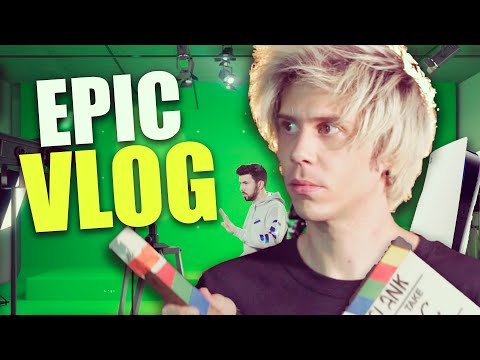
At the A1 beginner level, the word 'cámara' is introduced almost exclusively as a physical device used for taking photographs. It is one of the essential vocabulary words you learn when discussing hobbies, vacations, and personal belongings. At this stage, you will learn to identify the object and use it in very simple, straightforward sentences. You will practice saying things like 'Tengo una cámara' (I have a camera) or 'Mi cámara es nueva' (My camera is new). The focus is on basic communication, enabling you to express ownership and describe the object using simple adjectives like big (grande), small (pequeña), good (buena), or bad (mala). You will also learn the most common verb associated with it: 'tomar' (to take), allowing you to form phrases like 'tomar fotos' (to take photos). This is particularly useful for tourists who need to ask someone to take a picture of them. Understanding that 'cámara' is a feminine noun is a key grammatical point at this level, ensuring you use the correct articles ('la', 'una'). While the word has many other complex meanings, the A1 curriculum intentionally restricts the definition to the photographic device to avoid overwhelming the learner. Mastery at this level simply means recognizing the word when you hear it in the context of taking pictures and being able to use it to talk about your own device or ask someone else about theirs. It is a highly practical word that immediately enhances your ability to interact in everyday social situations, especially during travel or when sharing experiences with new Spanish-speaking friends.
As you progress to the A2 elementary level, your understanding and usage of 'cámara' expand to include more detail and functionality. You move beyond simply stating that you have a camera to describing what kind of camera it is and what you do with it. Vocabulary related to digital technology is introduced, so you will learn terms like 'cámara digital' (digital camera) and 'cámara del teléfono' (phone camera). You will be able to discuss the quality of the pictures, using phrases like 'saca buenas fotos' (it takes good photos). The context broadens to include shopping and preferences; you might practice dialogues about buying a camera in an electronics store, asking about the price ('¿Cuánto cuesta esta cámara?'), or comparing two different models. Furthermore, the concept of recording video is introduced, pairing the word with the verb 'grabar' (to record). You will learn to say 'grabar un video con la cámara'. At this level, you are also expected to handle basic troubleshooting or operational phrases, such as turning the device on ('encender la cámara') or realizing the battery is dead ('la cámara no tiene batería'). The focus remains heavily on the electronic device, but your ability to converse about it becomes much more practical and nuanced. You can recount past events, such as 'Ayer tomé muchas fotos con mi cámara' (Yesterday I took many photos with my camera), integrating the vocabulary into different verb tenses. This level builds a solid foundation for discussing modern technology and personal media creation in everyday Spanish.
At the B1 intermediate level, the usage of 'cámara' becomes significantly more sophisticated, and the contexts in which you encounter it diversify. You are no longer just talking about point-and-shoot devices; you begin to discuss photography as a serious hobby or profession. Vocabulary expands to include terms like 'cámara réflex' (DSLR camera), 'lente' (lens), and 'flash'. You can express opinions and preferences about photography techniques and equipment. Additionally, the B1 level introduces the concept of security and surveillance. You will frequently encounter the term 'cámara de seguridad' (security camera) or 'cámara de vigilancia' (surveillance camera) in news reports, discussions about city life, or when talking about crime prevention. This requires understanding the word in a more passive, societal context rather than just a personal possession. You will also learn to use the word to refer to the person operating the device, 'el cámara' (the cameraman) or 'la cámara' (the camerawoman), which introduces an important grammatical nuance regarding gender and articles. You can discuss the role of the media, saying things like 'El cámara grabó todo el incidente' (The cameraman recorded the whole incident). At this stage, you are expected to understand the word in various everyday contexts without confusion, smoothly transitioning between talking about your vacation photos, discussing the security system in your apartment building, or describing the crew of a television show. The B1 level marks the transition from using the word purely for personal needs to understanding its broader application in society and media.
Reaching the B2 upper-intermediate level means you are ready to tackle the multiple, distinct definitions of 'cámara' beyond electronics and media. This is where the Latin root of the word—meaning a room or chamber—comes into play. You will learn to use and understand 'cámara' in architectural, mechanical, and institutional contexts. A significant addition to your vocabulary is the political meaning. You will read news articles and listen to broadcasts discussing the 'Cámara de Diputados' (Chamber of Deputies) or the 'Cámara de Comercio' (Chamber of Commerce). You are expected to understand that these refer to legislative or organizational bodies, not photographic equipment. You will be able to discuss political processes, such as 'La ley fue debatida en la cámara' (The law was debated in the chamber). Furthermore, you will learn the mechanical definition, specifically 'cámara de aire' (inner tube of a tire), which is essential vocabulary if you cycle or drive. You can handle a situation at a mechanic's shop, explaining that 'se pinchó la cámara' (the inner tube punctured). In the realm of photography, your vocabulary becomes highly technical, discussing sensor sizes, apertures, and professional cinematography. You can engage in complex debates about the impact of surveillance cameras on personal privacy, using advanced vocabulary and conditional tenses. The B2 level requires a high degree of contextual awareness; you must instantly recognize which definition of 'cámara' is being used based on the surrounding words and the topic of conversation, demonstrating a flexible and comprehensive command of the language.
At the C1 advanced level, your mastery of 'cámara' is expected to be near-native, encompassing all its definitions, idiomatic uses, and subtle nuances. You are completely comfortable navigating complex political texts that discuss the intricacies of bicameral systems, referring effortlessly to the 'Cámara Alta' (Upper House/Senate) and 'Cámara Baja' (Lower House/Representatives). You understand the historical and legal weight of these terms and can discuss legislative procedures, parliamentary debates, and commercial regulations associated with the 'Cámara de Comercio'. In the artistic and cultural sphere, you will encounter and use terms like 'música de cámara' (chamber music), understanding its historical context as music intended for a small, intimate room rather than a grand concert hall. You can critique film and cinematography, discussing the 'trabajo de cámara' (camera work), 'cámara en mano' (handheld camera techniques), and 'cámara lenta' (slow motion) with the vocabulary of a film critic. You are also familiar with specialized scientific and medical terminology, such as 'cámara hiperbárica' (hyperbaric chamber) or 'cámara frigorífica' (cold storage room). At this level, you are not just translating the word; you are thinking in Spanish and understanding the conceptual link between a physical room, a legislative body that meets in a room, and a dark box that captures light (the original 'cámara oscura'). Your use of the word is precise, contextually flawless, and enriched by a deep understanding of the cultural, political, and historical realities of the Spanish-speaking world.
At the C2 proficiency level, your understanding of 'cámara' transcends standard definitions and enters the realm of deep cultural, historical, and metaphorical comprehension. You are intimately familiar with the etymological journey of the word, from the Latin 'camera' (vaulted room) to the 'cámara oscura' (dark room) that birthed modern photography. You can read classic Spanish literature and historical texts where 'cámara' refers to the private quarters of a monarch or a secret council room, understanding the implications of power, privacy, and exclusivity inherent in those historical contexts. You effortlessly navigate highly specialized jargon across multiple disciplines—law, politics, engineering, cinematography, and medicine—without missing a beat. You can appreciate and employ metaphorical uses of the word in literature or advanced rhetoric. Furthermore, you are attuned to regional variations and highly specific colloquialisms involving the word across different Spanish-speaking countries. Your command of the language allows you to play with the word's multiple meanings for rhetorical effect or humor. You understand the subtle differences in register, knowing exactly when to use 'cámara' versus a synonym like 'habitación', 'sala', or 'asamblea' to achieve the precise tone required for academic writing, legal documentation, or sophisticated literary analysis. At the C2 level, 'cámara' is not just a vocabulary item; it is a conceptual tool that you wield with absolute precision, reflecting a profound and complete internalization of the Spanish language and its cultural heritage.

cámara 30秒で

  • Most commonly means a camera for taking photos or videos.
  • Can refer to a political or commercial chamber (e.g., Chamber of Deputies).
  • Means 'inner tube' when talking about bicycles or car tires.
  • Always a feminine noun, but 'el cámara' means the cameraman.
The word 'cámara' is an incredibly versatile noun in the Spanish language, serving multiple purposes across a wide variety of contexts, ranging from everyday photography to complex political structures. When you first encounter this word as a beginner, it is almost exclusively used to refer to a device that captures photographs or records videos. This primary definition is essential for anyone traveling to a Spanish-speaking country, as you will undoubtedly want to take pictures of the beautiful landscapes, historic architecture, and vibrant cultural events you experience.
Photography
The art or practice of taking and processing photographs.
The evolution of the camera has been a fascinating journey, starting from the early days of the 'cámara oscura'—a simple optical device that projected an image of its surroundings onto a screen—to the sophisticated digital sensors we carry in our pockets today.

Compré una cámara nueva para mis vacaciones en España.

In modern times, the smartphone has revolutionized how we interact with the concept of a camera. No longer do we need to carry a separate, bulky piece of equipment; instead, the camera is integrated seamlessly into our daily communication devices. This shift has also changed the vocabulary surrounding the word. We now talk about the front camera for taking selfies, and the rear camera for high-quality landscape shots.
Videography
The process of capturing moving images on electronic media.
Furthermore, the terminology extends into the realm of video, where a video camera is used for recording moving images.

La cámara de mi teléfono tiene una resolución increíble.

Beyond the realm of photography and videography, the word possesses a secondary, yet equally important, set of meanings derived from its Latin root 'camera', which translates to a vaulted room or chamber. This historical architectural term has permeated various aspects of modern society.

El proyecto de ley fue aprobado en la cámara baja.

For instance, in the political sphere, you will frequently hear references to the Chamber of Deputies or the Chamber of Senators. These are the legislative bodies where elected officials debate and pass laws.
Legislature
A deliberative assembly with the authority to make laws.
Understanding this political context is crucial for anyone reading Spanish newspapers or watching the news, as these chambers are the epicenters of national decision-making.

La cámara de comercio local organiza el evento anual.

Additionally, the business world utilizes this term in organizations such as the Chamber of Commerce, which represents the interests of local businesses and promotes economic development. The versatility doesn't stop there. In the automotive industry, it refers to the inner tube of a tire, a critical component for maintaining air pressure and ensuring a smooth ride. In the context of security, security cameras are ubiquitous in urban environments, monitoring public spaces, commercial establishments, and private residences to deter crime and ensure safety.

Revisaron la cámara de seguridad para encontrar al ladrón.

The medical field also employs the term, such as in a hyperbaric chamber, used for specialized oxygen therapy. Even in the arts, chamber music describes a form of classical music composed for a small group of instruments, originally intended to be performed in an intimate room rather than a large concert hall. This incredible breadth of meaning makes it a fascinating word to study, as it bridges the gap between art, technology, politics, commerce, and everyday life. By mastering the various applications of this single noun, learners can significantly expand their comprehension of the Spanish language and gain deeper insights into the culture and society of the Spanish-speaking world. The journey of learning this word is a testament to the richness and adaptability of vocabulary, demonstrating how a single root concept can branch out into countless specialized fields and everyday uses.
Understanding how to properly use the word 'cámara' in a sentence requires a solid grasp of Spanish grammar, syntax, and the specific contexts in which the word appears. First and foremost, it is essential to establish that 'cámara' is a feminine noun. This means it must always be accompanied by feminine articles, such as 'la' (the), 'una' (a/an), 'las' (the, plural), or 'unas' (some).
Gender Agreement
Adjectives and articles must match the feminine gender of the noun.
For example, you would say 'la cámara nueva' (the new camera) and never 'el cámara nuevo', unless you are referring to a male cameraman, which is a specific exception we will discuss later.

Préstame tu cámara digital para la fiesta de esta noche.

When discussing the action of using a camera for photography, several verbs are commonly paired with it. The most frequent verb is 'tomar' (to take), as in 'tomar fotos con la cámara' (to take photos with the camera). Another widely used verb is 'sacar' (to take out/to take), which is very common in Spain and parts of Latin America, as in 'sacar fotos'. If you are referring to video, the verb 'grabar' (to record) is the standard choice: 'grabar un video con la cámara'.

Voy a grabar todo el concierto con mi cámara de video.

To describe the physical operation of the device, you will use verbs like 'encender' or 'prender' (to turn on) and 'apagar' (to turn off). For instance, 'No olvides encender la cámara antes de empezar a hablar' (Don't forget to turn on the camera before you start speaking).
Technical Verbs
Verbs used to describe the operation of electronic devices.
In the digital age, we also talk about 'cargar la cámara' (to charge the camera) or 'conectar la cámara' (to connect the camera) to a computer or network.

Necesito cargar la batería de la cámara porque está casi vacía.

When the word is used to mean a room or chamber, the grammatical rules remain the same, but the surrounding vocabulary changes entirely. In political contexts, it is often capitalized when referring to a specific institution, such as 'La Cámara de Diputados aprobó la nueva ley' (The Chamber of Deputies approved the new law). Here, verbs related to legislation, debate, and approval are common.

El debate en la cámara alta duró más de diez horas consecutivas.

In the context of a tire's inner tube, you might use verbs like 'pinchar' (to puncture) or 'cambiar' (to change): 'Se pinchó la cámara de la bicicleta' (The bicycle's inner tube got punctured).
Automotive Context
Vocabulary related to vehicle maintenance and repair.
Another interesting grammatical point is the use of 'cámara' to refer to a person, specifically a cameraperson or cinematographer. In this unique case, the word becomes epicene or common as to gender. You say 'el cámara' for a male cameraperson and 'la cámara' for a female cameraperson.

El cámara tropezó durante la filmación de la escena de acción.

This is a crucial distinction because using 'el cámara' changes the meaning from the device itself to the professional operating it. By paying attention to these grammatical nuances, gender agreements, and contextual verb pairings, learners can use the word accurately and naturally across its many different meanings, avoiding common pitfalls and sounding more like a native speaker in both casual conversations and formal writing.
The word 'cámara' is ubiquitous in the Spanish-speaking world, and you will hear it in a vast array of environments, from casual daily interactions to highly formal professional settings. One of the most common places you will encounter this word is in electronics stores or when discussing technology with friends.
Retail Environment
Stores selling consumer electronics and photographic equipment.
If you walk into a store looking for a new phone, the salesperson will likely highlight the specifications of its 'cámara', discussing megapixels, optical zoom, and low-light performance.

Esta tienda tiene la mejor selección de cámaras profesionales de la ciudad.

In tourist destinations, the word is constantly in the air. You will hear tourists asking locals, '¿Puede tomarme una foto con mi cámara?' (Can you take a picture of me with my camera?), or tour guides reminding groups to have their cameras ready for a spectacular view. Social media has also amplified the use of the word. Influencers and content creators frequently talk about their 'cámara' setups, discussing lenses, lighting, and recording techniques on platforms like YouTube and Instagram.

El youtuber compró una cámara nueva para mejorar la calidad de sus videos.

Moving away from photography, you will hear the word extensively in political news broadcasts and journalism.
Political Journalism
News reporting focused on government and legislative activities.
News anchors frequently report on decisions made in the 'Cámara de Representantes' or the 'Cámara de Senadores'. If you are listening to a political debate or reading a newspaper, understanding this usage is absolutely essential for following current events in countries like Mexico, Spain, Argentina, and Colombia.

La noticia principal de hoy es la votación en la cámara de diputados.

In the business sector, entrepreneurs and corporate professionals often interact with the 'Cámara de Comercio' (Chamber of Commerce) to register businesses, seek networking opportunities, or resolve commercial disputes. You will hear this term in business meetings, economic reports, and legal discussions.

La cámara de comercio organizó un seminario para pequeños empresarios locales.

Another very common context is security and surveillance. In public spaces, shopping malls, banks, and even private homes, 'cámaras de seguridad' (security cameras) are a standard feature. You might see signs that say 'Sonría, lo estamos filmando con una cámara de seguridad' (Smile, you are being filmed by a security camera).
Security Systems
Equipment used to monitor and record activities for safety purposes.
Police reports and true crime documentaries frequently mention reviewing footage from a 'cámara de vigilancia'.

La policía revisó la cámara de vigilancia del banco tras el robo.

Finally, in the context of transportation and mechanics, you will hear mechanics or cyclists talking about a 'cámara de aire' when repairing a flat tire. If you rent a bicycle in a Spanish-speaking country and get a flat, you will need to tell the repair shop that you need a new 'cámara'. The sheer variety of these contexts demonstrates why this word is considered high-frequency vocabulary. Whether you are engaging in a hobby, following national politics, running a business, ensuring your safety, or fixing a bicycle, you are bound to encounter and use this multifaceted word on a regular basis.
When learning the word 'cámara', students frequently make several common mistakes, primarily related to gender agreement, false friends, and contextual misunderstandings. The most prevalent error is incorrect gender assignment. Because the word ends in '-a', it is generally easy to remember that it is feminine ('la cámara').
Gender Errors
Using the wrong article or adjective ending with a noun.
However, confusion arises when learners try to refer to the person operating the camera. Many beginners assume they should use a completely different word for a cameraman, but in Spanish, the word itself is used with a masculine article: 'el cámara'.

El director le dio instrucciones precisas al cámara antes de rodar.

Saying 'la cámara' when referring to a male cameraman is a grammatical error that can cause momentary confusion, as the listener might think you are talking about the device itself rather than the person. Another frequent mistake involves direct translation from English, particularly with the phrase 'to take a picture'. English speakers often try to use the verb 'llevar' (to carry/take from one place to another) instead of 'tomar' or 'sacar'. Saying 'llevar una foto con la cámara' is incorrect and sounds very unnatural to native speakers.

Asegúrate de tomar muchas fotos con tu nueva cámara digital.

You must use 'tomar' or 'sacar'.
Verb Collocations
The specific verbs that naturally pair with a given noun.
Contextual mistakes are also common due to the word's multiple meanings. A learner might read a news headline about the 'Cámara de Diputados' and mistakenly believe it refers to a photography club or a surveillance system for politicians, rather than the legislative chamber.

La cámara de representantes votó a favor de la nueva reforma fiscal.

Recognizing that 'cámara' translates to 'chamber' in political, commercial, and architectural contexts is vital for reading comprehension. Furthermore, English speakers sometimes confuse 'cámara' with the English word 'camera' in terms of pronunciation. In Spanish, the stress is on the first syllable, indicated by the written accent mark (tilde) over the first 'a': CÁ-ma-ra. Pronouncing it with the stress on the second syllable (ca-MA-ra) or ignoring the crisp Spanish vowel sounds will immediately mark you as a non-native speaker.

La pronunciación correcta de cámara requiere énfasis en la primera sílaba.

Lastly, there is a minor but notable confusion regarding the inner tube of a tire. Some learners might try to use the word 'tubo' (tube) because of the English translation, saying 'el tubo de la llanta'. While 'tubo' is a word in Spanish, the correct specific term for the inflatable rubber ring inside a tire is 'cámara de aire' or simply 'cámara'.
Vocabulary Specificity
Using the precise term for a specific object rather than a general translation.

Tuve que comprar una cámara nueva para la rueda de mi bicicleta.

By being aware of these common pitfalls—mastering the gender rules for the device versus the operator, using the correct verbs for taking pictures, understanding the political and mechanical contexts, and perfecting the pronunciation—learners can confidently and accurately use this essential word in any situation.
When expanding your Spanish vocabulary around the concept of a 'cámara', it is highly beneficial to learn similar words, synonyms, and related terms that can add precision and variety to your speech. If you are referring to the photographic device, a formal and slightly older synonym is 'máquina fotográfica' (photographic machine).
Formal Synonyms
Words that mean the same thing but are used in more formal or traditional contexts.
While 'cámara' is the standard everyday term, you might encounter 'máquina fotográfica' in literature, formal writing, or when speaking with older generations.

Mi abuelo todavía usa su vieja máquina fotográfica en lugar de una cámara digital.

When discussing the components of a camera, the word 'lente' (lens) or 'objetivo' (objective lens) is crucial. The 'objetivo' is the specific optical component attached to a professional camera, and photographers often spend more money on a good 'objetivo' than on the camera body itself.

Compré un nuevo objetivo para mi cámara réflex para tomar mejores retratos.

If we shift to the meaning of 'cámara' as a room or chamber, there are several related words depending on the exact nature of the space. The most general word for a room is 'habitación' or 'cuarto'. However, 'cámara' implies a more specialized, formal, or enclosed space.
Architectural Terms
Words describing different types of rooms or spaces within a building.
For example, a 'cámara frigorífica' is a cold storage room or walk-in freezer used in restaurants and supermarkets. You wouldn't call this a 'habitación fría'; the precise technical term is required.

La carne se almacena en la cámara frigorífica para mantenerla fresca.

In the political context, where 'cámara' means a legislative body, synonyms include 'asamblea' (assembly), 'senado' (senate), or 'parlamento' (parliament). While these are not exact synonyms—as they refer to specific types of chambers or the entire legislative body—they belong to the same semantic field.

El parlamento está compuesto por la cámara alta y la cámara baja.

For the automotive meaning (inner tube), a related word is 'neumático' or 'llanta' (tire). The 'cámara' goes inside the 'neumático'. In some regions, modern tires are 'tubeless' (sin cámara), which is an important distinction when buying replacements.
Mechanical Parts
Vocabulary related to the components of vehicles and machinery.

Las bicicletas modernas a menudo usan neumáticos sin cámara para evitar pinchazos.

Finally, in the context of security, a related term is 'circuito cerrado' (closed-circuit), often used in the acronym CCTV (Circuito Cerrado de Televisión), which relies on multiple security cameras. Understanding these nuances and related terms allows a learner to navigate the Spanish language with much greater precision. Instead of relying on a single translation, you can choose the exact word that fits the context, whether you are discussing photography equipment, architectural spaces, political institutions, or bicycle maintenance. This depth of vocabulary is what separates a beginner from an advanced speaker.

How Formal Is It?

難易度

知っておくべき文法

Gender agreement with feminine nouns ending in -a.

Use of the definite article with institutions (La Cámara).

Verbs of operation (encender, apagar) with electronics.

The epicene gender rule for professions (el/la cámara).

Accentuation rules for esdrújula words.

レベル別の例文

1

Tengo una cámara nueva.

I have a new camera.

Uses the feminine indefinite article 'una'.

2

La cámara es negra.

The camera is black.

Adjective 'negra' matches the feminine noun.

3

Mi teléfono tiene una cámara.

My phone has a camera.

Basic possession using the verb 'tener'.

4

Quiero comprar una cámara.

I want to buy a camera.

Infinitive verb 'comprar' follows the conjugated verb 'quiero'.

5

¿Dónde está mi cámara?

Where is my camera?

Question word 'dónde' with the verb 'estar' for location.

6

Me gusta tu cámara.

I like your camera.

Using the verb 'gustar' with a singular noun.

7

La cámara es muy pequeña.

The camera is very small.

Adjective 'pequeña' agrees in gender with 'cámara'.

8

Tomamos fotos con la cámara.

We take photos with the camera.

The verb 'tomar' is commonly used with photos and cameras.

1

Ayer compré una cámara digital para mi viaje.

Yesterday I bought a digital camera for my trip.

Preterite tense 'compré' for a completed past action.

2

La cámara de mi celular saca fotos muy buenas.

My cell phone camera takes very good photos.

Using 'sacar fotos' as an alternative to 'tomar fotos'.

3

¿Puedes encender la cámara, por favor?

Can you turn on the camera, please?

Using the verb 'encender' for electronic devices.

4

La batería de la cámara está casi vacía.

The camera's battery is almost empty.

Expressing states using 'estar' + adjective.

5

Voy a grabar un video con esta cámara.

I am going to record a video with this camera.

Future construction 'ir a + infinitive'.

6

Esa cámara es demasiado cara para mí.

That camera is too expensive for me.

Using demonstrative adjective 'esa' and adverb 'demasiado'.

7

No sé cómo usar esta cámara profesional.

I don't know how to use this professional camera.

Using 'saber' + infinitive to express knowing how to do something.

8

Olvidé mi cámara en el hotel.

I forgot my camera at the hotel.

Preterite of 'olvidar' to express a past mistake.

1

El edificio tiene una cámara de seguridad en la entrada.

The building has a security camera at the entrance.

Introduction of the compound noun 'cámara de seguridad'.

2

El cámara tropezó mientras grababa la entrevista.

The cameraman tripped while recording the interview.

Using 'el cámara' to refer to a male cameraperson.

3

Me gustaría aprender a usar una cámara réflex.

I would like to learn how to use a DSLR camera.

Conditional tense 'gustaría' for polite desires.

4

La policía revisó las grabaciones de la cámara de vigilancia.

The police reviewed the recordings from the surveillance camera.

Vocabulary expansion with 'cámara de vigilancia'.

5

Si tuviera dinero, compraría una cámara mejor.

If I had money, I would buy a better camera.

Second conditional sentence using imperfect subjunctive and conditional.

6

Es importante que la cámara tenga un buen objetivo.

It is important that the camera has a good lens.

Subjunctive mood 'tenga' triggered by 'Es importante que'.

7

La cámara oculta reveló la verdad sobre el fraude.

The hidden camera revealed the truth about the fraud.

Adjective 'oculta' agreeing with the feminine noun.

8

Prefiero las cámaras analógicas a las digitales.

I prefer analog cameras to digital ones.

Expressing preference using 'preferir... a...'.

1

La Cámara de Diputados aprobó la nueva ley de educación.

The Chamber of Deputies approved the new education law.

Capitalized when referring to a specific political institution.

2

Se me pinchó la cámara de la bicicleta en el camino.

My bicycle's inner tube punctured on the way.

Using 'cámara' to mean inner tube, with the accidental 'se' construction.

3

La cámara de comercio local organiza eventos para emprendedores.

The local chamber of commerce organizes events for entrepreneurs.

Institutional use in a business context.

4

El director pidió que la cámara se moviera más lentamente.

The director asked that the camera move more slowly.

Imperfect subjunctive 'moviera' following a past tense request.

5

Instalaron una cámara frigorífica en el nuevo restaurante.

They installed a cold storage room in the new restaurant.

Technical vocabulary: 'cámara frigorífica'.

6

El uso de cámaras corporales por parte de la policía es un tema de debate.

The use of body cameras by the police is a topic of debate.

Compound term 'cámaras corporales' in a social context.

7

Aunque la cámara es antigua, todavía funciona perfectamente.

Although the camera is old, it still works perfectly.

Concessive clause starting with 'Aunque'.

8

Necesito cambiar la cámara de la rueda delantera.

I need to change the inner tube of the front wheel.

Mechanical context using 'cambiar'.

1

El proyecto de ley se encuentra estancado en la Cámara Alta.

The bill is currently stalled in the Upper House.

Advanced political terminology: 'Cámara Alta' (Senate).

2

Disfrutamos de un excelente concierto de música de cámara anoche.

We enjoyed an excellent chamber music concert last night.

Cultural term 'música de cámara'.

3

El paciente fue sometido a tratamiento en una cámara hiperbárica.

The patient underwent treatment in a hyperbaric chamber.

Medical terminology and passive voice construction.

4

La técnica de cámara en mano añade un gran realismo a la película.

The handheld camera technique adds great realism to the film.

Cinematography jargon: 'cámara en mano'.

5

Las resoluciones de la cámara son vinculantes para todos los miembros agremiados.

The chamber's resolutions are binding for all unionized members.

Formal legal/business register.

6

El fotógrafo ajustó la apertura del diafragma de la cámara para lograr mayor profundidad de campo.

The photographer adjusted the camera's aperture to achieve greater depth of field.

Highly technical photography vocabulary.

7

La escena fue filmada a cámara lenta para enfatizar el dramatismo del momento.

The scene was filmed in slow motion to emphasize the drama of the moment.

Cinematic term 'a cámara lenta' (in slow motion).

8

Es imperativo que la cámara legislativa llegue a un consenso antes del receso.

It is imperative that the legislative chamber reaches a consensus before the recess.

Subjunctive 'llegue' following an impersonal expression of necessity.

1

El concepto de la cámara oscura fue fundamental para el desarrollo de la óptica moderna.

The concept of the camera obscura was fundamental to the development of modern optics.

Historical and scientific terminology.

2

Las intrigas palaciegas se resolvían a menudo en la cámara del rey, lejos del escrutinio público.

Palace intrigues were often resolved in the king's chamber, far from public scrutiny.

Historical/literary use of 'cámara' as a private royal room.

3

El magistrado ordenó que la declaración del testigo se realizara en cámara para proteger su identidad.

The magistrate ordered that the witness's statement be taken in camera to protect their identity.

Legal Latinism 'en cámara' (in private/chambers).

4

La bicameralidad exige que ambas cámaras actúen como contrapeso en el ejercicio del poder.

Bicameralism requires that both chambers act as a counterweight in the exercise of power.

Advanced political theory vocabulary.

5

El virtuosismo del cuarteto elevó la interpretación de la obra de cámara a cotas insospechadas.

The quartet's virtuosity elevated the performance of the chamber piece to unsuspected heights.

Sophisticated artistic critique register.

6

La estanqueidad de la cámara de combustión es vital para el rendimiento del motor.

The tightness of the combustion chamber is vital for the engine's performance.

Advanced engineering terminology.

7

El cineasta prescindió de artificios, confiando únicamente en la elocuencia de la cámara desnuda.

The filmmaker dispensed with artifices, relying solely on the eloquence of the bare camera.

Literary and metaphorical use in film critique.

8

Se rumorea que las negociaciones a puerta cerrada en la cámara empresarial fueron sumamente tensas.

It is rumored that the closed-door negotiations in the business chamber were extremely tense.

Impersonal 'se' construction with complex business vocabulary.

よく使う組み合わせ

cámara digital
cámara de seguridad
cámara de video
cámara de aire
cámara oculta
cámara lenta
Cámara de Diputados
Cámara de Comercio
música de cámara
cámara frigorífica

よく混同される語

cámara vs camarero

cámara vs camarote

cámara vs tubo

間違えやすい

cámara vs

cámara vs

cámara vs

cámara vs

cámara vs

文型パターン

使い方

note

While 'cámara' is the standard word, younger generations often just say 'el cel' or 'el móvil' when referring to taking pictures, implying the phone's camera.

よくある間違い
  • Saying 'el cámara' when referring to the physical device instead of 'la cámara'.
  • Pronouncing the word with English vowel sounds or stressing the second syllable.
  • Translating 'to take a picture' as 'llevar una foto' instead of 'tomar/sacar una foto'.
  • Forgetting the written accent mark (tilde) over the first 'a'.
  • Using the word 'tubo' instead of 'cámara' when referring to a bicycle's inner tube.

ヒント

Gender Exception

Always use 'la cámara' for the device. Only use 'el cámara' when talking about a male professional who operates a camera. This is a common trap for learners. Remember: device = feminine, male operator = masculine.

Stress the First Syllable

The accent mark is there for a reason. Pronounce it CÁ-ma-ra. Do not pronounce it like the English word 'camera'. The Spanish vowels must be crisp and clear.

Bicycle Repairs

If you rent a bike in Spain or Latin America, remember 'cámara'. It means the inner tube. If you say 'tubo', the mechanic might not understand you immediately. Say 'Necesito una cámara nueva'.

Political News

When reading the news, 'cámara' almost always means a legislative chamber. Look for words like 'ley', 'voto', or 'diputados' nearby. Don't translate it as a photography device in these contexts.

Tomar vs. Sacar

Both verbs are correct for taking pictures. If you are in Spain, lean towards 'sacar fotos'. If you are in Mexico or Colombia, 'tomar fotos' is more standard. Both will be understood everywhere.

Don't Forget the Tilde

Writing 'camara' without the accent is a spelling mistake. In formal writing or exams, you will lose points. Always write 'cámara'.

Chamber of Commerce

If you are doing business abroad, you will deal with the 'Cámara de Comercio'. It is a crucial institution for networking and legalities. Treat it as a proper noun and capitalize it.

Chupar Cámara

In Spain, the slang phrase 'chupar cámara' means to hog the camera or seek attention. Use it when someone is always trying to be in the center of the photo. It's a fun, native-sounding expression.

Front and Rear

To sound natural when talking about phones, use 'cámara frontal' for the selfie camera. Use 'cámara trasera' or 'cámara principal' for the back camera. This is everyday modern vocabulary.

Cámara en mano

If you are discussing movies, use 'cámara en mano' to describe the shaky, handheld camera style. It shows a high level of cultural and linguistic competence to use specific art terms.

暗記しよう

記憶術

Imagine a giant CAMERA inside a political CHAMBER taking pictures of a bicycle INNER TUBE.

語源

Latin

文化的な背景

In Spain, it is very common to say 'sacar fotos' instead of 'tomar fotos'.

The 'Cámara de Diputados' is the lower house of the Mexican Congress, frequently in the news.

You might hear 'cámara' used in the context of agricultural chambers or unions due to the country's economic structure.

実生活で練習する

実際の使用場面

会話のきっかけ

"¿Qué tipo de cámara usas para tus fotos?"

"¿Viste las noticias sobre la votación en la cámara hoy?"

"¿Sabes cómo cambiar la cámara de una bicicleta?"

"¿Crees que hay demasiadas cámaras de seguridad en la ciudad?"

"¿Prefieres la cámara de tu teléfono o una cámara profesional?"

日記のテーマ

Describe la mejor foto que has tomado con tu cámara.

Escribe sobre un debate político reciente en la cámara de tu país.

Narra una experiencia en la que se te pinchó la cámara de la bicicleta.

Opina sobre el uso de cámaras de vigilancia en espacios públicos.

Explica por qué prefieres las cámaras digitales o las analógicas.

よくある質問

10 問

The word 'cámara' is a feminine noun. You must use feminine articles and adjectives with it. For example, you say 'la cámara nueva'. The only exception is when referring to a male cameraman. In that specific case, you say 'el cámara'.

The most common way is 'tomar una foto'. In Spain and some parts of Latin America, 'sacar una foto' is also very popular. You should never use the verb 'llevar' for this action. Always pair 'cámara' with 'tomar' or 'sacar'.

It translates to 'Chamber of Deputies'. It is the lower house of the bicameral legislature in many Spanish-speaking countries, similar to the House of Representatives in the US. In this context, 'cámara' means a legislative chamber or room. It has nothing to do with photography.

Yes, it means the inner tube of a tire. If you get a flat tire on a bicycle, you might need to buy a new 'cámara de aire'. It is placed inside the 'neumático' (tire). This is essential vocabulary for cyclists.

In Spanish, words stressed on the third-to-last syllable are called 'esdrújulas'. All 'esdrújula' words must have a written accent mark (tilde). Since the stress is on the first 'ca' (CÁ-ma-ra), it requires the tilde to indicate correct pronunciation.

It translates to 'chamber music'. This is a form of classical music written for a small group of instruments. Historically, it was meant to be performed in a small room or 'chamber' rather than a large concert hall. It is a cultural and artistic use of the word.

You use the word 'cámara' but change the article based on the person's gender. A male cameraman is 'el cámara'. A female camerawoman is 'la cámara'. You can also use the specific profession word 'camarógrafo' or 'camarógrafa'.

It means 'security camera' or 'surveillance camera'. These are used in stores, banks, and public spaces to monitor activity. You will frequently see signs warning that an area is protected by a 'cámara de seguridad'.

Yes, people refer to the camera function on their phones as 'la cámara'. You might hear 'la cámara de mi teléfono' or 'la cámara frontal' for selfies. Even though it's not a standalone device, the word is still used.

It means 'in slow motion'. It is a cinematic term used to describe video footage that is played back slower than it was recorded. You might say, 'Me encanta ver las repeticiones deportivas a cámara lenta'.

自分をテスト 180 問

/ 180 correct

Perfect score!

関連コンテンツ

役に立った?
まだコメントがありません。最初に考えをシェアしましょう!