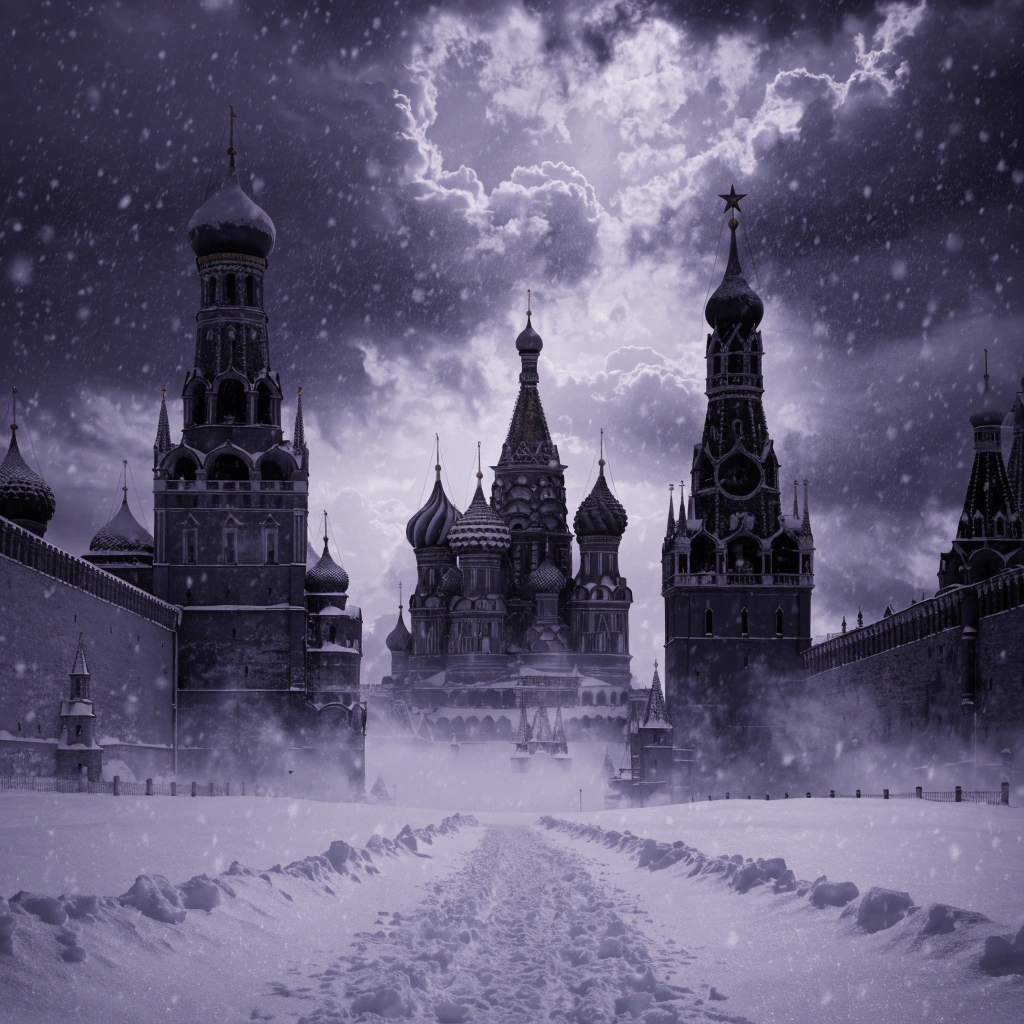
Red Square and the Kremlin
Red Square is in the center of Moscow. It is very big and beautiful. Many people visit this place every day. There are old walls and tall towers around the square. It is a special place for history.
The Kremlin is next to the square. It is a very old castle. The President of Russia works here. You can see many museums inside the Kremlin. These museums have beautiful things.
There are many famous buildings. One building is St. Basil's Cathedral. It has many bright colors. Red Square is the heart of Russia. Visitors love to take photos here.
문법 스포트라이트
패턴: Present Simple (to be)
"Red Square is in the center of Moscow."
We use 'is' with singular subjects like 'Red Square' or 'It'. It describes a fact or a state that is true now.
패턴: There are (Plural)
"There are many famous buildings."
We use 'There are' to say that more than one thing exists. We use it with plural nouns like 'buildings' or 'walls'.
이해도를 테스트하세요
10 질문 · A1 초급 · 무료 미리보기 1회
이 기사에서 배운 내용을 테스트하세요. 모든 질문에 답하여 XP를 획득하세요!
Where is Red Square?
문제별 결과
Where is Red Square?
내 답변:
정답: Moscow
The President of Russia works in the Kremlin.
내 답변:
정답: 참
What does 'famous' mean?
내 답변:
정답: Known by many people
Red Square is the _____ of Russia.
내 답변:
정답: heart
The Heart of Moscow: Red Square and the Kremlin
Red Square is the most famous place in Moscow. It is in the center of the city. Many people call it the heart of Russia. Long ago, in the 15th century, Ivan III created this open space. At first, it was a simple market for people to buy and sell things.
The name 'Red' is very interesting. In the past, the word 'Krasnaya' meant 'beautiful' in Old Russian. Today, the square is still beautiful. There are many colorful buildings around the cobblestones. St. Basil’s Cathedral is there, and it looks like a fairy tale.
Next to the square, you can see the Kremlin. It is a very big fortress with high red walls and many towers. The Kremlin is more important than other buildings because the government works there. Tourists love visiting Red Square because it is historic. They walk on the old stones and take many photos. It is a great place to learn about Russian history.
문법 스포트라이트
패턴: Past Simple
"Ivan III created this open space."
We use the past simple to talk about finished actions in the past. To form it with regular verbs, we usually add '-ed' to the base verb.
패턴: Comparatives
"The Kremlin is more important than other buildings because the government works there."
We use 'more + adjective + than' to compare two things when the adjective is long (like 'important'). It shows that one thing has more of a quality than the other.
이해도를 테스트하세요
11 질문 · A2 초등급 · 무료 미리보기 1회
이 기사에서 배운 내용을 테스트하세요. 모든 질문에 답하여 XP를 획득하세요!
What did the word 'Red' mean in Old Russian?
문제별 결과
What did the word 'Red' mean in Old Russian?
내 답변:
정답: Beautiful
Red Square was used as a market in the 15th century.
내 답변:
정답: 참
What is a 'fortress'?
내 답변:
정답: A strong building for protection
The Kremlin is a very big fortress with high red _____ and many towers.
내 답변:
정답: walls
Who created the open space of Red Square?
내 답변:
정답: Ivan III
The Heart of Moscow: Exploring Red Square and the Kremlin
Red Square is widely considered the symbolic heart of Moscow and the entire Russian nation. For centuries, this famous square has been the stage for many of the country’s most important historical events. Originally, the area was cleared by Ivan III in the 15th century to create a defensive space outside the Kremlin walls. Since then, it has evolved from a simple marketplace into a magnificent space that attracts millions of tourists every year.
The square is surrounded by impressive buildings, each with its own unique story. The most famous is St. Basil’s Cathedral, which was built in the 16th century to celebrate a military victory. With its colorful domes that look like flames, it is one of the most recognizable landmarks in the world. Next to it stands the Kremlin, a massive fortress that serves as the official residence of the Russian President. The red brick walls and towers of the Kremlin have protected the center of the city for hundreds of years.
Interestingly, the name "Red Square" does not actually refer to the color of the bricks or to political movements. In Old Russian, the word "krasnaya" meant "beautiful," and the square was named for its stunning appearance. Today, visitors can also see Lenin’s Mausoleum or go shopping at GUM, a large department store that has been open since the late 19th century.
In recent years, Red Square has become a place for both celebration and reflection. It is used for military parades, massive concerts, and holiday festivals. Because of its cultural and historical importance, the entire area has been listed as a UNESCO World Heritage site. Whether you are interested in history or architecture, Red Square remains a must-see destination for anyone visiting Russia. Walking across its historic cobblestones is like walking through the history of the nation itself.
문법 스포트라이트
패턴: Passive Voice
"The square was named for its stunning appearance."
The passive voice is used when the action is more important than who did it. It is formed using the verb 'to be' and the past participle of the main verb.
패턴: Relative Clauses
"St. Basil’s Cathedral, which was built in the 16th century to celebrate a military victory."
Relative clauses give more information about a noun. We use 'which' for things and 'who' for people to connect two ideas into one sentence.
이해도를 테스트하세요
11 질문 · B1 중급 · 무료 미리보기 1회
이 기사에서 배운 내용을 테스트하세요. 모든 질문에 답하여 XP를 획득하세요!
Who originally cleared the area that became Red Square?
문제별 결과
Who originally cleared the area that became Red Square?
내 답변:
정답: Ivan III
The name 'Red Square' originally meant 'Beautiful Square' in Old Russian.
내 답변:
정답: 참
What is a 'fortress'?
내 답변:
정답: A strong building used for defense
The entire area has been listed as a _____ World Heritage site.
내 답변:
정답: UNESCO
What do the domes of St. Basil’s Cathedral look like?
내 답변:
정답: Flames
The Pulse of Moscow: Analyzing the History of Red Square and the Kremlin
Situated at the very heart of Moscow, Red Square serves as a profound testament to the intricate layers of Russian history and its enduring national identity. Although modern tourists frequently associate the name 'Red' with the socialist ideology of the 20th century, the adjective 'Krasnaya' originally signified 'beautiful' in Old Russian. This linguistic transition mirrors the structural evolution of the square itself, which has transformed from a humble marketplace into a global landmark of immense political significance.
The origins of the square date back to the late 15th century when Ivan III ordered the demolition of wooden buildings surrounding the Kremlin. This area had been cleared to establish a defensive buffer zone against potential fires and invaders, ensuring the safety of the fortress. Over time, this open space became the center of public life, hosting everything from royal decrees to religious processions. The Kremlin, a formidable fortress adjacent to the square, remains the seat of Russian political power, housing the executive branch within its ancient, red-brick walls and golden-domed cathedrals.
Architecturally, the square is a mosaic of different eras, showcasing a blend of traditional Russian styles and later European influences. To the south stands the iconic St. Basil’s Cathedral, whose vibrant, onion-shaped domes commemorate the military victories of Ivan the Terrible. Opposite this, the State Historical Museum showcases the nation's cultural heritage, while the GUM department store represents the transition toward modern commerce. The presence of Lenin’s Mausoleum adds a somber layer to the site, representing the Soviet era's lasting impact on the collective memory. Scholars have been debating the preservation of such monuments for decades, highlighting the tension between historical recognition and modern political shifts.
Beyond its physical structures, Red Square serves as a symbolic arena where the Russian state asserts its sovereignty through grand displays of power. It has witnessed countless military parades and political demonstrations, each contributing to its status as the nation's primary stage for self-expression. By analyzing its historical trajectory, one can observe how the square has adapted to reflect the changing priorities of the Russian leadership. Ultimately, Red Square and the Kremlin are not merely tourist attractions; they are the living pulse of a nation that continues to navigate its complex past while looking toward its future. Visitors who walk across its historic cobblestones are often struck by the sheer scale of the site, realizing that every stone has likely witnessed a moment of historical transformation.
문법 스포트라이트
패턴: Past Perfect Passive
"This area had been cleared to establish a defensive buffer zone against potential fires and invaders."
This structure (had + been + past participle) is used to describe an action that was completed before another point in the past, focusing on the recipient of the action.
패턴: Non-defining Relative Clauses
"This linguistic transition mirrors the structural evolution of the square itself, which has transformed from a humble marketplace into a global landmark."
These clauses add extra information about a noun (the square). They are separated by commas and use 'which' for things.
패턴: Present Perfect Continuous
"Scholars have been debating the preservation of such monuments for decades."
This tense (have/has + been + -ing) emphasizes the duration of an activity that started in the past and is still continuing or has just finished.
이해도를 테스트하세요
11 질문 · B2 중상급 · 무료 미리보기 1회
이 기사에서 배운 내용을 테스트하세요. 모든 질문에 답하여 XP를 획득하세요!
What was the original meaning of the word 'Krasnaya' in Old Russian?
문제별 결과
What was the original meaning of the word 'Krasnaya' in Old Russian?
내 답변:
정답: Beautiful
Red Square was initially cleared by Ivan III to create a space for religious processions.
내 답변:
정답: 거짓
What does the word 'formidable' mean in the context of the Kremlin?
내 답변:
정답: Impressively powerful and large
This linguistic _____ mirrors the structural evolution of the square itself.
내 답변:
정답: transition
Which building on Red Square commemorates military victories?
내 답변:
정답: St. Basil’s Cathedral
The Palimpsest of Power: Decoding Red Square and the Kremlin
Standing at the epicenter of Moscow, Red Square serves as an architectural palimpsest, where layers of imperial grandeur, Soviet austerity, and modern commercialism coalesce into a singular, breathtaking vista. Seldom has a city square witnessed such a profound transformation from a humble 15th-century marketplace into the monolithic heart of a global superpower. To understand Red Square is to engage with the Russian soul—a complex tapestry woven from threads of resilience, piety, and an unyielding thirst for monumentalism. This space is not merely a geographical center but a symbolic stage where the nation's identity is perpetually performed and contested.
The Kremlin, a formidable bastion of political authority, looms over the square, its crenellated walls acting as a silent witness to centuries of political intrigue. It is the juxtaposition of the Kremlin’s stoic red brick and the whimsical, multi-colored domes of Saint Basil’s Cathedral that creates the square’s unique aesthetic tension. While the former represents the rigid, often impenetrable structure of the state, the latter embodies the spiritual and artistic exuberance of the Russian Orthodox tradition. This visual dichotomy serves as a poignant reminder of the nation’s historical struggle between secular power and religious devotion, a theme that resonates through the centuries of Russian governance.
The very name of the square, 'Krasnaya,' offers a fascinating insight into linguistic evolution. Originally meaning 'beautiful' in Old Russian, the term only later became synonymous with 'red' in the modern tongue. This shift in meaning mirrors the square’s own metamorphosis during the 20th century, when it became the stage for the Red Army’s formidable military parades. These spectacles were not merely displays of hardware; they were carefully choreographed performances of ideological dominance designed to project strength to both domestic and international audiences. The preservation of these traditions, even in a post-Soviet context, underscores the square's role in maintaining a sense of national continuity.
The commercial aspect of the square is represented by the GUM department store, a glass-roofed arcade that reflects the opulence of the late 19th century. Its survival through the Soviet era and its current status as a luxury shopping destination highlight the enduring nature of Russian consumerism. What remains striking is the way the square balances these disparate elements. One might argue that the square’s true power lies in its ability to absorb these contradictions without losing its cohesive identity. In the contemporary era, the square has transitioned from a site of exclusive state power to a more accessible public space, yet vestiges of its tumultuous past remain. The presence of Lenin’s Mausoleum serves as a somber anchor to the Soviet legacy, prompting ongoing debates regarding the ethics of preservation versus the necessity of moving forward. Ultimately, Red Square remains a site of constant negotiation between the past and the present, a place where the weight of history is palpable in every cobblestone.
문법 스포트라이트
패턴: Negative Inversion
"Seldom has a city square witnessed such a profound transformation from a humble 15th-century marketplace into the monolithic heart of a global superpower."
Inversion occurs when the auxiliary verb comes before the subject after a negative or restrictive adverbial. This is used in formal writing to add emphasis and dramatic flair.
패턴: Cleft Sentences
"It is the juxtaposition of the Kremlin’s stoic red brick and the whimsical, multi-colored domes of Saint Basil’s Cathedral that creates the square’s unique aesthetic tension."
Cleft sentences (It + is/was + focus + relative clause) are used to focus on specific information. Here, it emphasizes that the 'juxtaposition' is the specific cause of the tension.
패턴: Nominalisation
"The preservation of these traditions, even in a post-Soviet context, underscores the square's role in maintaining a sense of national continuity."
Nominalisation involves turning verbs or adjectives into nouns (e.g., 'preserve' to 'preservation'). This makes the writing more concise, abstract, and typical of advanced academic or analytical English.
이해도를 테스트하세요
12 질문 · C1 고급 · 무료 미리보기 1회
이 기사에서 배운 내용을 테스트하세요. 모든 질문에 답하여 XP를 획득하세요!
What does the author suggest by calling Red Square an 'architectural palimpsest'?
문제별 결과
What does the author suggest by calling Red Square an 'architectural palimpsest'?
내 답변:
정답: It consists of multiple layers reflecting different historical eras.
The name 'Krasnaya' has always exclusively meant 'red' in the Russian language.
내 답변:
정답: 거짓
Which word describes the quality of being essentially different and not allowing comparison?
내 답변:
정답: Disparate
The Kremlin is described as a formidable _____ of political authority.
내 답변:
정답: bastion
What is the primary function of the military parades mentioned in the text?
내 답변:
정답: To project ideological dominance and national strength.
The author argues that the square has lost its cohesive identity due to its many contradictions.
내 답변:
정답: 거짓
The Architectural Palimpsest: Deciphering the Symbolic Nexus of Red Square and the Kremlin
To contemplate the architectural ensemble of Moscow’s Red Square is to engage with a historical palimpsest that transcends the mere materiality of brick and mortar. Were one to stand at its center, the weight of centuries of socio-political metamorphosis would become almost palpable. Originally conceived in the late 15th century by Ivan III, the square was initially a tactical void—a defensive clearing outside the Kremlin walls designed to mitigate the perennial threat of fire and to provide a clear line of sight for the fortress’s defenders. However, it was not long before this vacuum was filled by the vibrant, chaotic energy of a marketplace, eventually evolving into the symbolic heart of the Russian state.
The etymology of the square’s nomenclature provides an intriguing insight into the Russian psyche. While the contemporary observer might associate 'Red' with the crimson banners of the Soviet era, the term 'Krasnaya' historically denoted 'beautiful.' This linguistic nuance underscores an aesthetic appreciation that predates modern political ideologies. It is imperative that the visitor perceive the Kremlin not merely as a fortress, but as an enduring palimpsest of Russian sovereignty, where the ecclesiastical splendor of the cathedrals stands in stark juxtaposition to the austere, functionalist lines of the Soviet period.
Scarcely had the defensive ramparts been established than the square began to metamorphose into a commercial hub. This transition marked the beginning of its role as a public forum, a site where the tsars’ edicts were proclaimed and where the populace gathered to witness the unfolding of national destiny. The Kremlin, a formidable citadel of power, serves as the anchor of this space. Its red-brick walls, punctuated by towers of varying architectural provenance, encapsulate the shift from medieval fortification to the seat of modern hegemony. Within these walls, the interplay of secular and sacred power is manifest, reflecting a uniquely Russian synthesis of authority.
The 20th century further layered this space with ideological significance. The construction of Lenin’s Mausoleum introduced a somber, monumental aesthetic that redefined the square’s northern axis. Here, the rituals of the Soviet state—most notably the grand military parades—transformed the cobblestones into a stage for the projection of global power. It was Ivan III who originally cleared the area, thereby laying the groundwork for what would become the nation’s symbolic epicenter, but it was the subsequent centuries of conflict and triumph that imbued it with its current gravitas. Furthermore, the State Historical Museum, with its neo-Russian revivalist style, acts as a guardian of the square’s northern entrance, bridging the gap between the medieval past and the imperial future.
Moreover, the presence of the GUM department store, with its ornate glass roof and neo-Russian façade, offers a fascinating counterpoint to the sobriety of the Kremlin. It represents the bourgeois aspirations of the late 19th century, surviving through the planned economy of the USSR to emerge once more as a temple of luxury. This idiosyncratic blend of commerce, religion, and politics makes Red Square a microcosm of the Russian experience. The juxtaposition of St. Basil’s Cathedral—a riot of color and form—against the monolithic granite of the Mausoleum serves as a visual testament to the country’s tumultuous journey through time.
In conclusion, Red Square and the Kremlin remain indispensable to any profound understanding of Russian identity. The vestiges of the past are not merely preserved here; they are actively integrated into the narrative of the present. As one traverses the square, the echoes of the past—from the clamor of medieval merchants to the rhythmic tread of soldiers—resonate with a persistent intensity. It is this enduring relevance, this capacity to absorb and reflect the changing tides of history, that ensures its status as a site of global significance. Should the visitor look closely, they will find that every stone tells a story of power, piety, and persistence.
문법 스포트라이트
패턴: Negative Inversion
"Scarcely had the defensive ramparts been established than the square began to metamorphose into a commercial hub."
Inversion is used for rhetorical emphasis. When 'scarcely' starts a sentence, the auxiliary verb 'had' precedes the subject 'the defensive ramparts'.
패턴: Mandative Subjunctive
"It is imperative that the visitor perceive the Kremlin not merely as a fortress, but as an enduring palimpsest of Russian sovereignty."
The subjunctive mood 'perceive' (base form) is used after adjectives of urgency or importance like 'imperative' or 'essential'.
패턴: It-Cleft Sentence
"It was Ivan III who originally cleared the area, thereby laying the groundwork for what would become the nation’s symbolic epicenter."
A cleft sentence focuses on a specific piece of information (Ivan III) by splitting the clause into two parts, starting with 'It was'.
이해도를 테스트하세요
12 질문 · C2 마스터 · 무료 미리보기 1회
이 기사에서 배운 내용을 테스트하세요. 모든 질문에 답하여 XP를 획득하세요!
According to the article, what was the primary reason Ivan III originally cleared the area that became Red Square?
문제별 결과
According to the article, what was the primary reason Ivan III originally cleared the area that became Red Square?
내 답변:
정답: To create a defensive space and firebreak for the Kremlin
The name 'Red Square' was originally chosen to honor the Bolshevik Revolution.
내 답변:
정답: 거짓
What does the term 'palimpsest' imply in the context of the article?
내 답변:
정답: A site that shows layers of history over time
The Kremlin's walls encapsulate the shift from medieval fortification to the seat of modern _____.
내 답변:
정답: hegemony
How does the GUM department store contrast with the Kremlin in the author's view?
내 답변:
정답: It represents bourgeois aspirations versus political sobriety
The author suggests that the square remains relevant because it reflects the changing tides of history.
내 답변:
정답: 참

