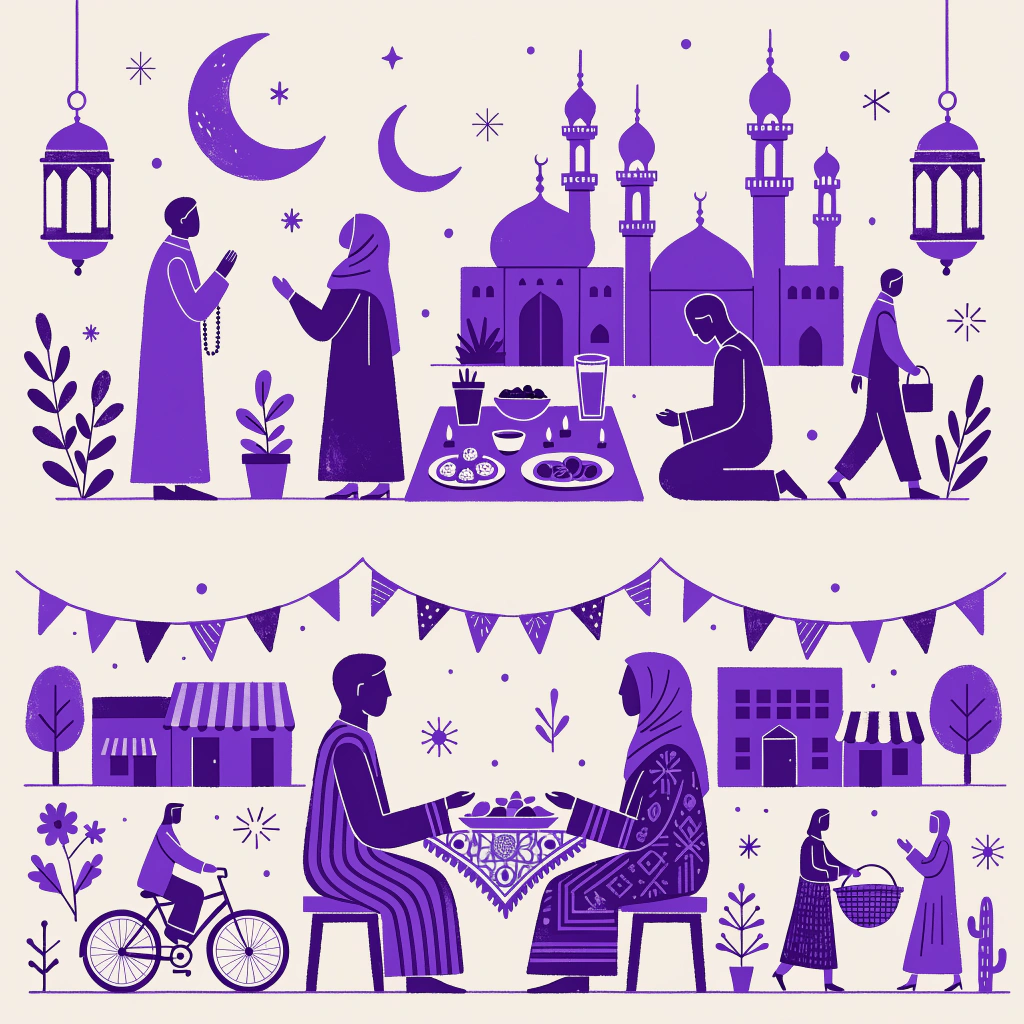
사우디아라비아의 라마단과 이드 알 피트르
이것은 라마단입니다. 라마단은 이슬람에서 아주 특별한 달입니다. 사우디아라비아 사람들은 이 달에 많이 기도합니다. 낮에는 음식을 먹지 않습니다. 물도 마시지 않습니다. 해가 뜨면 금식을 시작합니다. 해가 지면 금식을 끝냅니다. 이것을 '이프타르'라고 합니다. 이프타르 때 가족과 친구들이 함께 맛있는 음식을 먹습니다. 사람들은 서로 돕고 좋은 일을 합니다. 라마단은 한 달 동안 계속됩니다. 라마단이 끝나면 '이드 알 피트르' 축제가 옵니다. 이드 알 피트르는 아주 기쁜 날입니다. 사람들은 새 옷을 입고 선물을 주고받습니다. 모두 함께 축하합니다. 이 시간은 사우디아라비아에서 매우 중요합니다.
문법 스포트라이트
패턴: -입니다
"이것은 라마단입니다."
'-입니다'는 명사 뒤에 붙어 'A는 B이다'와 같이 무엇인지 설명할 때 사용합니다. 아주 정중하고 공손한 표현입니다. 예를 들어 '저는 학생입니다'처럼 말합니다.
패턴: -지 않습니다
"낮에는 음식을 먹지 않습니다."
동사나 형용사 뒤에 '-지 않습니다'를 붙이면 '하지 않다'라는 부정적인 의미를 나타냅니다. 예를 들어 '저는 학교에 가지 않습니다'처럼 사용합니다.
이해도를 테스트하세요
10 질문 · A1 초급 · 무료 미리보기 1회
이 기사에서 배운 내용을 테스트하세요. 모든 질문에 답하여 XP를 획득하세요!
라마단 동안 낮에 사람들은 무엇을 하지 않습니까?
문제별 결과
라마단 동안 낮에 사람들은 무엇을 하지 않습니까?
내 답변:
정답: 음식을 먹거나 물을 마시지 않습니다
이드 알 피트르는 슬픈 날입니다.
내 답변:
정답: 거짓
'축제'는 무엇을 의미합니까?
내 답변:
정답: 즐거운 행사
라마단은 이슬람에서 아주 ____ 달입니다.
내 답변:
정답: 특별한
사우디아라비아의 특별한 시간: 라마단과 이드 알피트르
라마단은 이슬람 달력에서 아주 중요한 달입니다. 이 기간 동안 사우디아라비아 사람들의 생활은 조금 달라집니다. 해가 뜰 때부터 해가 질 때까지, 사람들은 음식을 먹거나 물을 마시지 않습니다. 이것을 '금식'이라고 합니다. 금식은 기도하고, 착한 일을 하고, 자신을 돌아보는 시간입니다. 낮에는 도시가 조용하지만, 해가 진 후에는 활기가 넘칩니다.
해가 지면 사람들은 '이프타르'라는 저녁 식사를 합니다. 가족과 친구들이 함께 모여 대추야자와 물로 금식을 깹니다. 이프타르는 모두가 함께 먹는 즐거운 식사 시간입니다. 사람들은 맛있는 음식을 나누고, 서로 이야기를 나눕니다. 이 시간은 가족과 이웃의 소중함을 느끼게 합니다.
라마단이 끝나면 '이드 알피트르'라는 큰 축제가 시작됩니다. 이 날은 라마단을 잘 보낸 것을 축하하는 날입니다. 사람들은 새 옷을 입고, 가족과 친구들을 방문합니다. 아이들은 선물을 받고, 모두가 함께 맛있는 음식을 먹습니다. 이드 알피트르는 행복과 기쁨이 가득한 특별한 날입니다.
문법 스포트라이트
패턴: ~지 않습니다 (부정문)
"사람들은 음식을 먹거나 물을 마시지 않습니다."
이 문법은 동사 뒤에 붙어 '하지 않다'라는 부정의 의미를 나타냅니다. 어떤 행동을 하지 않을 때 사용합니다. 동사의 어간에 바로 '~지 않습니다'를 붙이면 됩니다.
패턴: ~고 (동사 연결)
"기도하고, 착한 일을 하고, 자신을 돌아보는 시간입니다."
이 문법은 두 개 이상의 동사나 형용사를 나란히 연결할 때 사용합니다. 앞 문장의 행동이나 상태가 끝나고 다음 행동이나 상태가 이어질 때 씁니다. 동사나 형용사 어간 뒤에 '~고'를 붙입니다.
이해도를 테스트하세요
11 질문 · A2 초등급 · 무료 미리보기 1회
이 기사에서 배운 내용을 테스트하세요. 모든 질문에 답하여 XP를 획득하세요!
라마단 기간 동안 낮에 사람들은 무엇을 하지 않습니까?
문제별 결과
라마단 기간 동안 낮에 사람들은 무엇을 하지 않습니까?
내 답변:
정답: 음식을 먹거나 물을 마십니다
낮에는 사우디아라비아 도시가 조용하지만, 해가 진 후에는 활기가 넘칩니다.
내 답변:
정답: 참
글에서 '금식'은 무엇을 의미합니까?
내 답변:
정답: 음식을 먹지 않는 것
이프타르는 가족과 친구들이 함께 모여 대추야자와 물로 금식을 _____ 시간입니다.
내 답변:
정답: 깰
이드 알피트르는 어떤 날입니까?
내 답변:
정답: 라마단을 잘 보낸 것을 축하하는 축제
사우디아라비아의 라마단과 이드 알피트르
이슬람교에서 가장 신성한 달인 라마단은 사우디아라비아의 일상생활을 크게 변화시킵니다. 이 기간 동안, 해가 뜰 때부터 해가 질 때까지 무슬림들은 음식과 음료를 금식하며, 대신 기도와 자선, 그리고 자기 수양에 집중합니다. 사우디아라비아에서는 이 시기에 특별한 영적인 분위기가 느껴집니다. 낮 동안에는 도시가 조용해지지만, 해가 진 후에는 활기로 가득 찹니다.
라마단 기간 중 매일 저녁, 금식을 깨는 식사를 ‘이프타르’라고 부릅니다. 이프타르는 가족뿐만 아니라 친구, 이웃, 때로는 낯선 사람들과도 함께 나누는 공동체적인 행사입니다. 사람들은 대추야자와 물로 금식을 시작한 후, 푸짐한 식사를 함께 합니다. 이 시간은 공동체의 유대감을 강화하고 서로에게 감사하는 중요한 기회가 되어 왔습니다. 많은 사우디아라비아 사람들은 이 기간에 어려운 이웃을 돕기 위해 자선 활동에도 적극적으로 참여합니다.
한 달간의 라마단이 끝나면, 이슬람의 중요한 명절 중 하나인 ‘이드 알피트르’가 시작됩니다. 이는 금식 기간이 끝났음을 축하하는 기쁨의 날입니다. 이드 알피트르에는 특별한 아침 기도를 드리고, 새 옷을 입으며, 가족과 친지를 방문하여 선물을 교환합니다. 특히 아이들은 어른들로부터 ‘이디야’라는 용돈을 받으며 즐거운 시간을 보냅니다. 이드 알피트르는 한 달간의 영적인 노력을 마무리하고, 모두가 함께 기쁨을 나누는 축제의 시간입니다.
문법 스포트라이트
패턴: ~아/어 왔다
"이 시간은 공동체의 유대감을 강화하고 서로에게 감사하는 중요한 기회가 되어 왔습니다."
이 문법은 과거부터 현재까지 어떤 상태나 행동이 계속 이어져 왔음을 나타낼 때 사용합니다. 동사나 형용사 뒤에 붙여서 과거의 시작점에서 현재까지의 지속을 표현합니다.
패턴: ~(으)며
"무슬림들은 음식과 음료를 금식하며, 대신 기도와 자선, 그리고 자기 수양에 집중합니다."
이 문법은 두 가지 이상의 행동이나 상태가 동시에 일어날 때 사용합니다. 앞 절과 뒤 절의 내용이 함께 진행되거나 앞 절이 뒤 절의 수단이나 방법이 될 때 쓰입니다.
이해도를 테스트하세요
11 질문 · B1 중급 · 무료 미리보기 1회
이 기사에서 배운 내용을 테스트하세요. 모든 질문에 답하여 XP를 획득하세요!
라마단 기간 동안 사우디아라비아 도시의 낮과 밤 분위기는 어떻게 변합니까?
문제별 결과
라마단 기간 동안 사우디아라비아 도시의 낮과 밤 분위기는 어떻게 변합니까?
내 답변:
정답: 낮에는 조용하고 밤에는 활기차집니다.
이드 알피트르는 라마단 금식 기간의 시작을 축하하는 명절입니다.
내 답변:
정답: 거짓
'유대감'은 무엇을 의미합니까?
내 답변:
정답: 서로 연결되어 있다는 느낌
라마단 기간 중 매일 저녁, 금식을 깨는 식사를 ‘_______’라고 부릅니다.
내 답변:
정답: 이프타르
라마단 기간 동안 무슬림들이 집중하는 것은 무엇입니까?
내 답변:
정답: 기도와 자선, 자기 수양
사우디아라비아의 라마단과 이드 알피트르: 영적 성찰과 공동체의 달
이슬람력에서 가장 신성한 달인 라마단은 사우디아라비아를 비롯한 이슬람권 국가들의 일상에 극적인 변화를 가져오는 시기입니다. 이 기간 동안 무슬림들은 해가 뜰 때부터 해 질 때까지 음식과 음료를 금하는 금식을 실천하며, 대신 기도, 자선 활동, 그리고 내면의 자제력 함양에 집중합니다. 사우디아라비아에서는 이러한 라마단이 독특하고 경건한 분위기 속에서 진행됩니다. 낮 시간에는 도시 전체가 평소보다 훨씬 조용해지는 경향이 있지만, 일몰과 함께 도시는 활기 넘치는 모습으로 변모합니다.
라마단 기간의 가장 중요한 의례 중 하나는 바로 '이프타르'입니다. 이프타르는 금식을 마치는 저녁 식사를 의미하며, 해가 지는 즉시 대추야자와 물로 시작하는 것이 전통입니다. 사우디아라비아에서는 이프타르가 단순한 개인적인 식사를 넘어선 공동체 의식을 강화하는 중요한 매개체 역할을 합니다. 가족과 친지들이 한자리에 모이는 것은 물론, 때로는 낯선 이들도 함께 음식을 나누며 따뜻한 정을 교환합니다. 이프타르는 모든 사람이 평등하게 배고픔을 느끼고, 함께 식사를 통해 유대감을 형성하는 소중한 시간입니다.
밤이 되면 도시는 낮 동안의 고요함을 벗어나 활기로 가득 찹니다. 모스크에서는 특별한 밤 예배인 '타라위흐'가 드려지며, 많은 신자들이 모여 밤늦도록 기도를 이어갑니다. 시장과 상점들은 밤늦게까지 문을 열고, 가족들은 함께 외출하여 쇼핑을 하거나 친목을 도모합니다. 이처럼 라마단은 단순히 금식하는 기간이 아니라, 개인의 영적 성장을 도모할 뿐만 아니라 공동체 구성원 간의 유대감을 돈독히 하고, 자선 활동을 통해 나눔의 가치를 실천하는 사회적 축제의 성격을 지닙니다. 이 기간 동안 무슬림들은 소외된 이웃을 돌아보고, 기부를 통해 사회에 기여하고자 노력합니다.
라마단이 끝나는 날은 '이드 알피트르'라는 큰 축제로 이어집니다. 이드 알피트르는 아랍어로 '금식의 종식을 알리는 축제'를 의미하며, 온 가족이 모여 맛있는 음식을 나누고, 새 옷을 입으며, 아이들에게 선물을 주는 등 즐거운 시간을 보냅니다. 또한, 이 날에는 '자카트 알피트르'라는 특별한 자선 기부를 통해 어려운 이웃들이 함께 축제를 즐길 수 있도록 돕는 것이 중요하게 여겨집니다. 이드 알피트르는 라마단 한 달 동안의 영적 노력과 인내에 대한 보상과도 같으며, 기쁨과 감사의 종교적 의미가 깊이 담겨 있습니다.
결론적으로, 사우디아라비아의 라마단과 이드 알피트르는 단순한 종교적 의례를 넘어선 문화적, 사회적 현상으로 이해될 수 있습니다. 이 시기는 자기 성찰과 영적 정화는 물론, 공동체의 결속력을 강화하고 나눔의 미덕을 실천하는 중요한 기회를 제공합니다. 이는 이슬람 신앙의 핵심 가치를 삶 속에서 구현하는 아름다운 전통이라고 할 수 있습니다.
문법 스포트라이트
패턴: -을/를 통해
"자선 활동을 통해 나눔의 가치를 실천하는 사회적 축제의 성격을 지닙니다."
이 문법은 어떤 수단이나 방법을 거쳐 특정 결과를 얻거나 행위를 할 때 사용합니다. '무엇을 통하여'라는 의미로, 명사 뒤에 붙어 '명사를 수단으로'라는 뜻을 나타냅니다.
패턴: -고자 하다
"이 기간 동안 무슬림들은 소외된 이웃을 돌아보고, 기부를 통해 사회에 기여하고자 노력합니다."
이 문법은 어떤 행동을 하려는 의도나 목적을 나타낼 때 동사 뒤에 붙여 사용합니다. '무엇을 하려고 하다', '무엇을 할 생각이다'와 비슷한 의미로 쓰입니다.
패턴: -는 경향이 있다
"낮 시간에는 도시 전체가 평소보다 훨씬 조용해지는 경향이 있지만, 일몰과 함께 도시는 활기 넘치는 모습으로 변모합니다."
이 문법은 어떤 현상이나 행동이 자주 반복되거나 그렇게 될 가능성이 높다는 것을 나타낼 때 사용합니다. 동사 뒤에 붙어 '어떤 경향이 있다'는 의미를 전달합니다.
이해도를 테스트하세요
11 질문 · B2 중상급 · 무료 미리보기 1회
이 기사에서 배운 내용을 테스트하세요. 모든 질문에 답하여 XP를 획득하세요!
라마단 기간 동안 무슬림들이 주로 집중하는 활동이 아닌 것은 무엇입니까?
문제별 결과
라마단 기간 동안 무슬림들이 주로 집중하는 활동이 아닌 것은 무엇입니까?
내 답변:
정답: 밤샘 파티
이프타르는 개인적으로 혼자 식사하는 것을 의미하며, 공동체 의식과는 관련이 없습니다.
내 답변:
정답: 거짓
'신성한'의 의미로 가장 적절한 것은 무엇입니까?
내 답변:
정답: 종교적으로 중요하고 존경받는
라마단 기간 동안 무슬림들은 해 뜰 때부터 해 질 때까지 음식과 음료를 금하는 ____을/를 실천합니다.
내 답변:
정답: 금식
사우디아라비아에서 라마단 기간 일몰 후에 일어나는 현상으로 가장 적절한 것은 무엇입니까?
내 답변:
정답: 도시는 활기를 되찾고 이프타르와 특별 예배가 진행된다.
The Metamorphosis of the Kingdom: Navigating the Spiritual and Social Fabric of Ramadan in Saudi Arabia
Seldom does a geographical entity undergo such a profound temporal shift as Saudi Arabia during the month of Ramadan. As the holiest period in the Islamic calendar, Ramadan necessitates a total reconfiguration of the circadian rhythm for millions. The intensification of spiritual devotion is mirrored by a significant deceleration in the pace of commerce during daylight hours. This daytime austerity, characterized by the practice of abstinence from all sustenance, creates a hushed atmosphere across the Kingdom's urban centers. However, to view this period merely as a time of withdrawal would be a reductionist perspective; rather, it is a period of internal recalibration and communal reinforcement.
Not only does the sun's descent signal the end of the daily fast, but it also triggers a remarkable nocturnal vibrancy. The streets of Riyadh and Jeddah, formerly quiet under the scorching sun, transform into bustling hubs of social reciprocity. It is the communal breaking of the fast, known as Iftar, that truly encapsulates the spirit of the month. Families, friends, and even complete strangers congregate to share dates and water, a tradition that transcends socioeconomic boundaries and fosters a pervasive sense of altruism. The sheer scale of these gatherings reflects a deep-seated cultural commitment to hospitality, where the individual's needs are subsumed by the welfare of the collective.
As the month progresses, the spiritual atmosphere reaches a crescendo during the final ten nights, leading toward the anticipation of Eid al-Fitr. This transition is not merely a return to normalcy but a celebratory culmination of a month-long journey of self-discipline. What defines the Saudi experience of Eid is the juxtaposition of traditional customs with modern festivities. The ephemeral nature of the month’s quietude gives way to grand celebrations, where the exchange of gifts and the wearing of new clothes symbolize a spiritual and social renewal. This cyclical pattern of restraint followed by celebration provides a unique insight into the resilience of tradition within a rapidly modernizing state. Despite the influx of global influences, the core tenets of Ramadan and Eid remain the bedrock of Saudi social cohesion, proving that even in a high-tech era, the values of faith and community continue to dictate the rhythm of life.
문법 스포트라이트
패턴: Inversion with negative/restrictive adverbs
"Seldom does a geographical entity undergo such a profound temporal shift as Saudi Arabia during the month of Ramadan."
When 'seldom' or other restrictive adverbs start a sentence, the auxiliary verb comes before the subject. This is used for formal emphasis and to vary sentence structure.
패턴: Cleft Sentences
"It is the communal breaking of the fast, known as Iftar, that truly encapsulates the spirit of the month."
Cleft sentences (It + is/was + [noun phrase] + that/who) are used to focus on specific information, highlighting 'Iftar' as the most important element of the statement.
패턴: Nominalisation
"The intensification of spiritual devotion is mirrored by a significant deceleration in the pace of commerce during daylight hours."
Using nouns (intensification, deceleration) instead of verbs (intensify, decelerate) creates a more academic, formal tone and allows for denser information delivery.
이해도를 테스트하세요
12 질문 · C1 고급 · 무료 미리보기 1회
이 기사에서 배운 내용을 테스트하세요. 모든 질문에 답하여 XP를 획득하세요!
What is the primary focus of the first paragraph regarding the shift in Saudi Arabia?
문제별 결과
What is the primary focus of the first paragraph regarding the shift in Saudi Arabia?
내 답변:
정답: The change in the daily rhythm and spiritual focus.
The author argues that the quietness of the day should be seen as a form of social withdrawal.
내 답변:
정답: 거짓
Which word describes the state of lasting for a very short time?
내 답변:
정답: Ephemeral
The streets transform into hubs of social _____ after sunset.
내 답변:
정답: reciprocity
According to the text, what does Iftar represent in Saudi society?
내 답변:
정답: A communal act that transcends socioeconomic levels.
The article suggests that modern global influences have completely replaced traditional Saudi values.
내 답변:
정답: 거짓
The Socio-Spiritual Dialectic: Navigating Ramadan and Eid al-Fitr in the Saudi Context
The observance of Ramadan within the Kingdom of Saudi Arabia transcends mere religious adherence, manifesting instead as a profound reconfiguration of the socio-temporal fabric. Were one to traverse the urban landscapes of Riyadh or Jeddah during this sacred hiatus, one would encounter a diurnal quiescence that borders on the ethereal. This stillness, however, is but a prelude to the nocturnal resurgence that characterizes the month. The fast, or Sawm, serves as a catalyst for a collective introspection, necessitating a temporary departure from the mundane preoccupations of material existence. Not only does the month facilitate spiritual growth, but it also fosters a unique sense of national identity through shared sacrifice.
Central to this experience is the concept of Iftar. Far from being a mere nutritional replenishment, it serves as a cornerstone of communal solidarity. It is imperative that the observer acknowledge the egalitarian spirit pervading these gatherings; whether in the opulent halls of the elite or the modest confines of the disenfranchised, the breaking of bread—or more traditionally, the consumption of dates—acts as a leveling mechanism. Should the observer scrutinize the underlying socio-economic dynamics, they might discern a deliberate subversion of hierarchy in favor of a unified spiritual identity. This period represents an ontological shift, where the needs of the soul are prioritized over the demands of the body.
Furthermore, the philanthropic impulse, or Zakat, reaches its zenith during this period. It is not merely a matter of obligation but an ontological commitment to the welfare of the 'Ummah'. The generosity displayed is often so pervasive that it challenges conventional economic theories of rational self-interest. One might argue that the Saudi context provides a unique laboratory for observing the intersection of traditional piety and modern urbanity. The city becomes a living organism, breathing in rhythm with the call to prayer, and exhaling the tensions of the previous year.
As the month wanes, the anticipation of Eid al-Fitr begins to permeate the atmosphere. This transition is marked by a shift from the contemplative to the celebratory. It is as though the collective psyche, having been purified by the rigors of abstinence, seeks a jubilant outlet. The festivities are characterized by a lavish display of hospitality, yet they remain anchored in the spiritual gains of the preceding weeks. To suggest that Eid is merely a hedonistic release would be to overlook the profound sense of gratitude and renewal that underpins the celebration. The intricate tapestry of social visits and the exchange of gifts are inextricably linked to the previous month's discipline.
In essence, the cycle of Ramadan and Eid in Saudi Arabia represents a sophisticated negotiation between the temporal and the transcendent, ensuring that the spiritual remains inextricably linked to the social. The experience is both a personal journey and a collective affirmation, a time when the boundaries between the self and the community are blurred in the pursuit of a higher purpose. Through this annual metamorphosis, the Kingdom reaffirms its cultural heritage while navigating the complexities of the modern world, proving that tradition and progress are not mutually exclusive but are, in fact, complementary forces.
문법 스포트라이트
패턴: Subjunctive Mood in Hypothetical Conditionals
"Were one to traverse the urban landscapes of Riyadh or Jeddah during this sacred hiatus, one would encounter a diurnal quiescence."
The 'were' subjunctive is used here to express a hypothetical or formal conditional situation. It replaces 'if one were to traverse' to achieve a more academic and sophisticated tone.
패턴: Negative Inversion
"Not only does the month facilitate spiritual growth, but it also fosters a unique sense of national identity."
This structure places a negative or restrictive adverbial at the start of the sentence, requiring the auxiliary verb to come before the subject. It is used for rhetorical emphasis.
패턴: Academic Hedging with Modals
"One might argue that the Saudi context provides a unique laboratory for observing the intersection of traditional piety and modern urbanity."
Hedging is a crucial C2 skill used to avoid over-generalization. Using 'might argue' instead of 'argues' acknowledges that the statement is an interpretation rather than an absolute fact.
이해도를 테스트하세요
12 질문 · C2 마스터 · 무료 미리보기 1회
이 기사에서 배운 내용을 테스트하세요. 모든 질문에 답하여 XP를 획득하세요!
What is the primary focus of the author's analysis regarding Ramadan in Saudi Arabia?
문제별 결과
What is the primary focus of the author's analysis regarding Ramadan in Saudi Arabia?
내 답변:
정답: The profound socio-temporal and spiritual reconfiguration of life.
The author suggests that the communal nature of Iftar helps to dissolve social hierarchies temporarily.
내 답변:
정답: 참
Which word best describes a state of inactivity or stillness as mentioned in the text?
내 답변:
정답: Quiescence
The fast serves as a _____ for collective introspection, necessitating a departure from material preoccupations.
내 답변:
정답: catalyst
How does the author characterize the transition from Ramadan to Eid al-Fitr?
내 답변:
정답: As a move from contemplative discipline to a jubilant yet grounded celebration.
According to the article, the philanthropic impulse during Ramadan is driven solely by rational self-interest.
내 답변:
정답: 거짓

