









feta 30초 만에
- Feta is a traditional Greek white cheese made from sheep's or goat's milk, aged in brine, and known for its salty, tangy flavor and crumbly texture.
- It holds Protected Designation of Origin (PDO) status, meaning authentic feta must be produced in specific regions of Greece using traditional methods and specific milk ratios.
- Commonly used in Mediterranean dishes, feta is a versatile ingredient for salads, pastries like spanakopita, and modern viral recipes like baked feta pasta.
- Nutritionally, it is a good source of calcium and protein but is high in sodium due to the brining process, making it a flavorful but salty dietary choice.
Feta is much more than just a simple dairy product; it is a cultural icon of Mediterranean gastronomy. Originating from Greece, this brined curd white cheese is traditionally manufactured from sheep's milk or a specific mixture of sheep and goat's milk (usually no more than 30% goat's milk). The word itself, derived from the Italian word 'fetta' meaning 'slice,' entered the Greek language in the 17th century, likely referring to the practice of slicing the cheese to pack it into barrels. When you encounter feta, you are engaging with a foodstuff that has Protected Designation of Origin (PDO) status in the European Union, meaning only cheese produced in specific areas of Greece using traditional methods can legally be labeled as 'feta'.
- Texture and Profile
- Feta is characterized by its grainy, crumbly texture. It lacks a skin or rind and is typically formed into large square blocks. Its flavor is a complex interplay of saltiness from the brine and a sharp, tangy acidity that comes from the fermentation of the milk.
The chef decided to crumble a generous amount of feta over the watermelon and mint salad to provide a salty contrast to the fruit's sweetness.
People use the word 'feta' in various contexts, most commonly in culinary settings. Whether you are at a high-end restaurant or a local deli, feta is a staple ingredient. It is frequently mentioned in the context of healthy eating, specifically the Mediterranean diet, which is lauded for its cardiovascular benefits. In a domestic setting, you might hear someone ask to 'pass the feta' during a family dinner, or a recipe might instruct you to 'mash the feta with a fork' to create a spread. Its versatility allows it to be used in salads, pastries like spanakopita, or even grilled as a standalone appetizer known as 'saganaki'.
For an authentic Greek experience, always look for feta that is stored in its original brine to maintain its moisture and sharp flavor profile.
- Culinary Versatility
- Beyond the classic Greek salad, feta is used in 'Horiatiki', omelets, and stuffed peppers. Its ability to soften but not completely melt makes it unique among cheeses used in baking.
The bakery's most popular item is a savory pastry filled with spinach and feta, known traditionally as spanakopita.
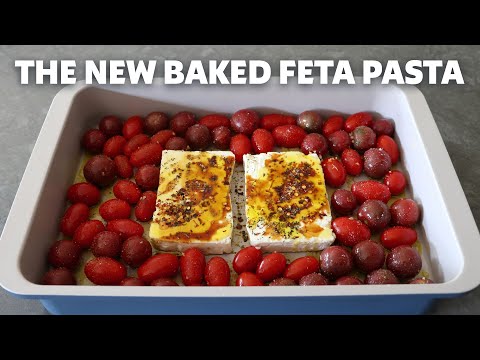
In modern food trends, feta gained massive viral popularity through 'uunifetavuoka' or 'baked feta pasta,' where a whole block of the cheese is baked with cherry tomatoes and olive oil to create a creamy sauce. This phenomenon highlighted the cheese's adaptability to contemporary cooking styles. When discussing feta, speakers often emphasize its 'tang' or 'bite,' adjectives that describe the sharp sensory experience it provides. It is a word that evokes the sun-drenched landscapes of the Aegean and the rich traditions of pastoral life in the Greek mountains.
While some prefer cow's milk alternatives, true connoisseurs insist that only sheep's milk feta possesses the necessary depth of flavor.
- Storage and Longevity
- Feta must be kept submerged in brine (a solution of salt and water) to prevent it from drying out and becoming overly bitter. When stored correctly, it can last for several weeks in the refrigerator.
The merchant at the market sliced a fresh piece of feta directly from the wooden barrel for the customer to taste.
Using the word 'feta' correctly involves understanding its grammatical nature as an uncountable noun in most culinary contexts, though it can be treated as a countable noun when referring to specific varieties or types. When you are cooking, you generally refer to 'some feta' or 'a block of feta' rather than 'a feta'. For example, you might say, 'I need to buy some feta for the salad,' which treats the cheese as a mass noun. However, if you are a cheese expert discussing different regional productions, you might say, 'We sampled several different fetas from across the Peloponnese,' where the plural form indicates different types or brands.
- Common Verbs with Feta
- Typical actions associated with feta include: crumble, sprinkle, dice, cube, marinate, mash, and bake. These verbs describe the physical manipulation of the cheese's unique texture.
Please feta the top of the roasted vegetables before serving them to the guests.
Adjectives often used to modify 'feta' include 'creamy,' 'crumbly,' 'tangy,' 'salty,' 'sharp,' 'authentic,' and 'barrel-aged.' These descriptors help specify the quality and age of the cheese. For instance, 'barrel-aged feta' usually implies a more robust and complex flavor compared to 'tin-aged feta.' In a sentence, these adjectives usually precede the noun: 'The recipe specifically calls for a creamy feta to ensure the sauce has a smooth consistency.' Notice how the adjective provides essential information about the expected culinary outcome.
The feta provided a sharp contrast to the mildness of the roasted chickpeas.
- Prepositional Phrases
- We often use 'with' or 'of' when talking about feta: 'a salad with feta,' 'a block of feta,' 'the tanginess of the feta,' or 'feta in brine.'
I prefer the taste of feta made from pure sheep's milk over the mixed varieties.
In more advanced usage, 'feta' can act as a noun adjunct, modifying another noun directly. Examples include 'feta cheese,' 'feta salad,' 'feta brine,' and 'feta production.' In these cases, 'feta' functions like an adjective to describe the type of the following noun. For example, 'The feta production in Greece is strictly regulated by the government.' This structure is very common in technical or descriptive writing about food and agriculture. Furthermore, when comparing cheeses, you might use 'feta' as a benchmark: 'This Bulgarian white cheese is similar to feta but has a much stronger, more pungent aroma.'
The feta industry contributes significantly to the economy of rural Greek regions.
- Syntactic Placement
- Feta can serve as the subject of a sentence ('Feta is a staple of Greek cuisine'), the object ('He loves feta'), or the object of a preposition ('The secret is in the feta').
Because feta is so salty, you rarely need to add extra salt to the dishes it accompanies.
The word 'feta' is ubiquitous in the modern world, transcending its Greek origins to become a household name globally. You will most frequently hear it in grocery stores and supermarkets, specifically in the deli section or the refrigerated cheese aisle. Shoppers often ask staff, 'Where is the feta kept?' or 'Do you have any organic feta in stock?' The word is also a mainstay in the language of hospitality. In restaurants, particularly those serving Mediterranean, Middle Eastern, or fusion cuisine, 'feta' appears on almost every menu. Waiters might describe a dish as being 'topped with crumbled feta' or ask if you would like 'extra feta' on your salad.
- Media and Pop Culture
- Cooking shows on networks like Food Network or YouTube channels often feature feta. Chefs discuss its 'briny' quality and demonstrate how to incorporate it into various dishes, from pasta to pastries.
During the cooking competition, the judge remarked that the feta was the star of the plate, providing much-needed acidity.
Social media has also played a massive role in the auditory and visual presence of the word. Platforms like TikTok and Instagram have seen trends like the 'Baked Feta Pasta' go viral, leading to millions of people saying and searching for the word 'feta'. In these digital spaces, you'll hear influencers and home cooks alike discussing the 'feta hack' or sharing their 'feta-based' recipes. This has led to a surge in the word's usage among younger generations who might not have been as familiar with traditional Greek cooking. Furthermore, in health and fitness circles, 'feta' is often mentioned as a lower-calorie alternative to harder cheeses like cheddar or parmesan, making it a frequent topic in nutrition podcasts and blogs.
The viral video showed how a simple block of feta could be transformed into a creamy pasta sauce in under thirty minutes.
- Travel and Tourism
- Travelers in Greece will hear 'feta' constantly—at breakfast buffets, in local 'tavernas', and at street food stalls selling 'tyropita' (cheese pie).
While hiking through the mountains of Epirus, we stopped at a small dairy where they were making feta using traditional methods.
In academic and legal discussions, 'feta' is a key term in debates about intellectual property and geographical indications. You might hear it in news reports about trade agreements between the EU and other nations, where the protection of the name 'feta' is a point of contention. This legal dimension adds a layer of formality to the word that goes beyond the kitchen. Finally, in agricultural contexts, 'feta' is discussed in terms of livestock management—specifically the breeding of sheep and goats and the quality of the milk they produce. Whether it's a farmer in Thessaly or a food scientist in a lab, the word 'feta' is central to their professional vocabulary.
The European Court of Justice ruled that the name feta is a traditional name that cannot be used for cheeses produced outside of Greece.
- Everyday Conversations
- 'Do you want feta on your pizza?' or 'I'm making a spinach and feta omelet' are common phrases you'll hear in kitchens around the world.
My roommate always keeps a container of feta in the fridge for a quick snack with crackers.
One of the most frequent mistakes learners make with the word 'feta' is its pronunciation. While it looks straightforward, the 'e' is a short sound /ɛ/ as in 'pet,' and the 'a' is a neutral /ə/ or a short /ɑː/ depending on the regional accent. Some people mistakenly pronounce it as 'fee-ta' or 'fay-ta,' but the correct standard English pronunciation is 'feh-tuh.' Another common error is confusing feta with other white cheeses, particularly goat cheese (chèvre). While feta can contain goat's milk, it is a distinct category defined by its brining process and sheep's milk base. Calling any white, crumbly cheese 'feta' is technically incorrect and can lead to confusion in culinary contexts.
- Grammatical Errors
- Learners often treat 'feta' as a countable noun when it should be uncountable. Saying 'I bought three fetas' is usually incorrect unless you mean three different brands or types. Instead, say 'three blocks of feta' or 'three packages of feta'.
Incorrect: I put a feta in the salad. Correct: I put some feta in the salad.
Storage mistakes are also linked to the word's usage. Many people buy 'feta' and then drain the liquid (brine) from the container, thinking it's just packaging waste. However, the brine is essential for the cheese's survival. In conversation, if you say 'the feta is dry,' it usually implies a negative quality or a mistake in storage. Another mistake is assuming all feta is the same. There is a significant difference between 'Danish-style feta' (often made from cow's milk and much creamier/milder) and 'Greek feta' (sheep's milk, tangier, and more crumbly). Using the word 'feta' to describe cow's milk versions in the EU is actually a legal error due to PDO regulations.
She made the mistake of buying 'feta-style' cheese, which lacked the authentic tang of real feta.
- Contextual Misuse
- Don't use feta in dishes where you need a cheese that melts completely, like a grilled cheese sandwich or a pizza topping where you want a 'stretch.' Feta softens but maintains its shape.
The recipe failed because he used feta instead of mozzarella, and it didn't melt over the lasagna.
Lastly, there's a common misconception about the 'goat' aspect. Many people say, 'I can't eat feta because I'm allergic to goat's milk,' without realizing that many fetas are 100% sheep's milk. Conversely, some think feta is *only* goat cheese. When using the word, it's helpful to be specific if the milk source matters. In terms of spelling, 'feta' is sometimes misspelled as 'fetta' (the Italian spelling for slice), but in English and Greek contexts, the single 't' version is the standard. Ensuring you use the correct spelling and understand the milk composition will make your culinary and linguistic use of 'feta' much more accurate.
Always check the label to see if the feta is made from sheep's milk, goat's milk, or a blend of both.
- Overuse of Adjectives
- Avoid using 'salty' and 'feta' redundantly unless you are emphasizing an unusually high salt content. Feta is inherently salty by definition.
Instead of saying 'salty feta', you might describe it as 'briny' or 'sharp' to be more descriptive.
When you are looking for alternatives to feta or words that describe similar products, several options come to mind depending on the desired texture and flavor. The most direct relatives are other 'white brined cheeses' found throughout the Balkans and the Middle East. For example, 'Bulgarian Sirene' is very similar to feta but often has a higher fat content and a more pungent, 'funky' flavor. In Turkey, 'Beyaz Peynir' (white cheese) is the local equivalent, used in much the same way for breakfast and salads. These cheeses share the same fundamental production method: curdling milk, pressing it into blocks, and aging it in brine.
- Feta vs. Ricotta
- While both are white and can be crumbly, Ricotta is a whey cheese that is much milder, sweeter, and softer. Feta is aged in brine and has a sharp, salty bite that Ricotta lacks.
If you want a less salty option for your salad, you could substitute feta with fresh ricotta salata.
Another common comparison is with 'Halloumi'. While both are iconic Greek/Cypriot cheeses, they behave very differently. Halloumi has a much higher melting point and a 'squeaky' texture when bitten. It is designed for grilling or frying, whereas feta is more commonly eaten raw or baked into dishes where it softens but stays in place. For those seeking a Mexican alternative, 'Cotija' is often called 'the feta of Mexico.' It is a dry, firm, salty cow's milk cheese that is crumbled over tacos and corn, providing a similar salty punch and crumbly texture to feta, though its flavor profile is more aged and nutty.
The recipe suggests using feta, but Cotija is a fantastic substitute if you're making Mexican street corn.
- Feta vs. Goat Cheese (Chèvre)
- Chèvre is usually softer, creamier, and has a distinct 'earthy' or 'goaty' flavor. Feta is firmer, saltier, and usually dominated by the tang of sheep's milk.
Some people find the taste of feta too sharp and prefer the milder, earthier notes of a fresh goat cheese.
In terms of culinary function, 'Queso Fresco' is another substitute. It is a mild, fresh Mexican cheese that crumbles easily. It lacks the intense brine of feta, making it a good choice for those who find feta too salty. If you are looking for a cheese that melts better but still has some tang, 'mild goat cheese' or even a 'young Manchego' might be considered, though they are quite different in texture. When discussing these alternatives, it's important to note that feta's unique combination of being crumbly yet creamy, and salty yet tangy, makes it difficult to replace perfectly in traditional recipes like Greek salad or spanakopita.
While Queso Fresco provides a similar look, it doesn't have the same fermented 'kick' that defines a high-quality feta.
- Summary of Substitutes
- 1. Sirene (closest flavor), 2. Beyaz Peynir (closest usage), 3. Cotija (closest texture), 4. Ricotta Salata (milder alternative).
When Sirene is unavailable, most chefs will reach for a block of feta as the most reliable substitute.
How Formal Is It?
재미있는 사실
The name 'feta' only became common in the 19th century. Before that, Greeks simply called it 'prosphatos' (meaning 'recent' or 'fresh') or just 'tyri' (cheese).
발음 가이드
- Pronouncing it as 'fee-ta'
- Pronouncing it as 'fay-ta'
- Over-emphasizing the 'a' at the end
- Using a long 'e' sound
- Making the 't' too heavy
난이도
Easy to recognize in menus and recipes.
Simple spelling but often confused with 'fetta'.
Pronunciation of the 'e' and 'a' can be tricky for some.
Clear, distinct sound in most accents.
다음에 무엇을 배울까
선수 학습
다음에 배울 것
고급
알아야 할 문법
Uncountable Nouns
We say 'some feta', not 'a feta'.
Adjective Placement
The 'salty, white' feta (order of adjectives).
Noun Adjuncts
Using 'feta' to modify 'cheese' in 'feta cheese'.
Prepositional Phrases
A salad 'with' feta.
Capitalization
Do not capitalize 'feta' unless it starts a sentence.
수준별 예문
I like feta cheese.
I enjoy this Greek cheese.
Subject + Verb + Object
Feta is white.
The color of the cheese is white.
Noun + linking verb + adjective
This is a Greek salad with feta.
A salad from Greece that has feta.
Prepositional phrase 'with feta'
Do you eat feta?
Are you a person who eats this cheese?
Question form
I have some feta in my bag.
The cheese is inside my bag.
Uncountable use with 'some'
Feta is salty.
The cheese has a lot of salt.
Adjective 'salty'
She buys feta every week.
She goes to the store for cheese regularly.
Present simple for habit
Bread and feta are good.
Eating these two things together is nice.
Compound subject
Can you crumble the feta for me?
Break the cheese into small pieces.
Verb 'crumble'
I bought a block of feta yesterday.
A whole square piece of cheese.
Measure word 'block of'
Feta is kept in salty water called brine.
The liquid that preserves the cheese.
Passive voice 'is kept'
Is this feta made from sheep's milk?
The animal source of the cheese.
Possessive 'sheep's'
Put the feta on top of the tomatoes.
Place the cheese over the vegetables.
Preposition 'on top of'
I don't like very salty feta.
Cheese with too much salt is not my favorite.
Adverb 'very' modifying 'salty'
There is some feta in the fridge.
The cheese is in the refrigerator.
There is + uncountable noun
Feta is a famous Greek cheese.
Many people know this cheese from Greece.
Adjective 'famous'
The tangy flavor of feta goes well with watermelon.
The sharp taste matches the sweet fruit.
Noun phrase 'tangy flavor of feta'
You should drain the feta before adding it to the pastry.
Remove the liquid from the cheese.
Modal verb 'should'
Authentic feta must be produced in specific regions of Greece.
Real feta has geographical rules.
Adjective 'authentic'
I'm making a spinach and feta pie for dinner.
A savory baked dish with these ingredients.
Compound noun 'spinach and feta pie'
Feta has a much sharper taste than mozzarella.
Comparing the intensity of two cheeses.
Comparative 'sharper than'
Crumble the feta generously over the roasted vegetables.
Use a lot of cheese on the veggies.
Adverb 'generously'
The feta was so salty that I had to rinse it.
The salt was too much, so I washed it.
So...that construction
Many people use feta as a healthy alternative to harder cheeses.
A better choice for health.
As a... alternative to
The Protected Designation of Origin ensures the quality of Greek feta.
Legal status protects the cheese name.
Technical term 'Protected Designation of Origin'
Barrel-aged feta typically possesses a more complex and robust aroma.
Cheese aged in wood has a stronger smell.
Compound adjective 'barrel-aged'
Despite its saltiness, feta is surprisingly low in calories compared to cheddar.
Even though it's salty, it's not very fattening.
Concession 'Despite'
The chef demonstrated how to whip feta into a creamy dip.
Making the cheese smooth and spreadable.
Verb 'whip' in culinary context
Feta's unique texture is a result of the specific ratio of sheep to goat milk.
The mix of milks creates the feel of the cheese.
Possessive 'Feta's'
If the feta is too dry, it may have been stored without enough brine.
Lack of liquid makes the cheese lose quality.
Conditional Type 1
The tanginess of the feta perfectly complements the sweetness of the roasted beets.
The sharp and sweet flavors work well together.
Verb 'complements'
Consumer demand for artisanal feta has grown significantly in recent years.
People want high-quality, handmade cheese more now.
Present perfect tense
The artisanal feta exhibited subtle notes of wild thyme and rosemary.
The handmade cheese had faint flavors of herbs.
Verb 'exhibited' in descriptive context
The legal battle over the 'feta' trademark lasted for several decades in the EU.
A long court case about the name of the cheese.
Noun 'trademark'
Feta acts as a versatile component in both savory and occasionally sweet dishes.
It can be used in many different types of food.
Adverb 'occasionally'
The organoleptic properties of barrel-matured feta are highly prized by connoisseurs.
Experts value the sensory qualities of the cheese.
Technical term 'organoleptic'
The crumbly nature of feta makes it difficult to slice uniformly without specialized tools.
It breaks easily, so it's hard to cut evenly.
Adverb 'uniformly'
The high salt content in feta serves as a natural preservative, extending its shelf life.
Salt keeps the cheese fresh for longer.
Participle phrase 'extending its shelf life'
One must distinguish between authentic Greek feta and the various 'white cheeses' produced elsewhere.
You need to see the difference between real and fake.
Formal pronoun 'One'
The traditional method of producing feta in wooden barrels is becoming increasingly rare.
Old ways of making cheese are disappearing.
Progressive aspect 'is becoming'
The hegemony of feta in the Greek dairy market is undisputed, reflecting its deep cultural roots.
Feta dominates the market because of history.
Advanced noun 'hegemony'
The nuanced acidity of the feta was further accentuated by the crispness of the Assyrtiko wine.
The wine made the cheese's sharp taste stand out more.
Passive voice 'was accentuated'
The PDO regulations for feta represent a significant victory for geographical indication protections.
The rules are a big win for protecting local food names.
Complex noun phrase
Artisanal producers argue that industrial feta lacks the 'terroir' present in mountain-made varieties.
Mass-produced cheese doesn't have the taste of the land.
French loanword 'terroir'
The evocative power of feta in the diaspora serves as a potent link to the Greek homeland.
Feta helps Greeks living abroad feel connected to home.
Abstract noun 'evocative power'
The biochemical transformation of sheep's milk into feta involves a complex sequence of lactic acid fermentation.
The science of making cheese is very complicated.
Scientific terminology
The interplay between the brine's salinity and the cheese's inherent creaminess is the hallmark of a superior feta.
The balance of salt and cream defines good feta.
Noun 'interplay'
To speak of feta is to invoke a millennia-old tradition of pastoralism and communal food production.
Feta represents thousands of years of history.
Infinitive as subject
자주 쓰는 조합
자주 쓰는 구문
— A classic flavor combination used in many pastries and dishes.
The feta and spinach filling was delicious.
— The most famous dish featuring this cheese.
No Greek salad is complete without a large slice of feta.
— A cooking method where the cheese is heated in the oven.
Baked feta becomes soft and spreadable.
— Feta blended with other ingredients to make a smooth dip.
The whipped feta dip was the highlight of the party.
— Small pieces of feta cheese often sold pre-packaged.
I prefer buying a block rather than feta crumbles.
— Cheese made like feta but not in Greece.
This feta-style cheese is made from cow's milk.
— A traditional Greek pastry (tyropita).
I had a warm feta cheese pie for breakfast.
— To soak the cheese in seasoned liquid.
Marinate the feta for at least two hours.
자주 혼동되는 단어
Feta is often a mix of sheep and goat milk, but 'goat cheese' (chèvre) is 100% goat milk and much softer.
Ricotta is sweet and creamy; feta is salty and crumbly.
Halloumi is for grilling and is 'squeaky'; feta is for crumbling and is 'tangy'.
관용어 및 표현
— A humorous variation of 'the big cheese,' meaning an important person.
He thinks he's the big feta in this small town.
informal— Extremely pale or white in color.
After seeing the ghost, his face was as white as feta.
informal— To fall apart easily or lose composure under pressure.
The defense started to crumble like feta in the second half.
informal— Used to describe someone who is very bitter or annoyed.
She was salty as feta after losing the game.
slang— A playful way to call someone forgetful or soft-headed.
I'm so feta-brained today; I forgot my keys again.
slang— Very valuable or useful (Greek-themed variation).
A good translator is worth their weight in feta.
humorous— To be in a small, salty, or complicated situation.
We're in a bit of a feta pickle with these reservations.
informal— A share of the profits or benefits.
Everyone wants a slice of the feta when the business succeeds.
informal— A pun on 'food for thought,' something to consider.
That documentary gave me some feta for thought.
humorous— Very calm and composed.
He stayed cool as feta in brine during the interview.
informal혼동하기 쉬운
Spelling
'Fetta' is Italian for slice; 'feta' is the cheese.
I want a fetta of bread with my feta cheese.
Similar product
Sirene is Bulgarian; feta is Greek. Sirene is often creamier.
This Sirene tastes almost like feta.
Appearance
Paneer is unsalted and doesn't melt; feta is very salty.
Use paneer for curry, but use feta for salad.
Texture
Cotija is Mexican and made from cow's milk; feta is Greek.
Cotija is the 'feta of Mexico'.
Appearance
Queso Fresco is much milder and less tangy than feta.
Queso Fresco crumbles like feta but tastes different.
문장 패턴
I like [feta].
I like feta.
Can I have some [feta]?
Can I have some feta?
Crumble the [feta] over the [dish].
Crumble the feta over the salad.
The [feta] is too [adjective].
The feta is too salty.
Authentic [feta] is made from [milk].
Authentic feta is made from sheep's milk.
The [feta] provides a [contrast] to [something].
The feta provides a tangy contrast to the beets.
The [quality] of the [feta] is [description].
The crumbly texture of the feta is its defining feature.
To [verb] [feta] is to [verb] [tradition].
To eat feta is to taste Greek tradition.
어휘 가족
명사
동사
형용사
관련
사용법
Very high in culinary and health contexts.
-
Using feta in a grilled cheese sandwich.
→
Use a melting cheese like cheddar or mozzarella.
Feta does not melt; it only softens, so it won't give you that stretchy cheese effect.
-
Draining the brine and storing the cheese dry.
→
Always keep feta submerged in its brine.
Without brine, feta dries out, becomes hard, and loses its signature tangy flavor.
-
Saying 'I bought two fetas'.
→
Say 'I bought two blocks of feta'.
Feta is an uncountable noun. You need a measure word like 'block' or 'piece'.
-
Pronouncing it 'fay-tah'.
→
Pronounce it 'feh-tuh'.
The first syllable should have a short 'e' sound, like in 'pet'.
-
Assuming all white crumbly cheese is feta.
→
Check the label for 'Greek Feta' or the PDO seal.
Many 'white cheeses' are made from cow's milk and lack the specific taste of real feta.
팁
Rinse for Less Salt
If you find feta too salty, rinse the block under cold water for a few seconds before crumbling it into your dish.
Keep the Brine
Never throw away the liquid in the feta container. It keeps the cheese moist and preserves its flavor.
Pair with Herbs
Feta pairs beautifully with dried oregano, fresh mint, and dill. Sprinkle these over the cheese for an authentic taste.
Check the Milk
For the best flavor, look for feta made from 100% sheep's milk or a sheep and goat blend. Avoid cow's milk versions if you want authenticity.
Bake it Whole
Try baking a whole block of feta with olive oil and chili flakes for a delicious, warm appetizer.
Portion Control
Because feta is so flavorful, a little goes a long way. You don't need much to add a big punch to your meal.
Crumble by Hand
For the best texture in salads, crumble the feta by hand rather than cutting it with a knife.
Tofu Feta
Vegans can mimic feta by marinating firm tofu in lemon juice, salt, and nutritional yeast.
Wine Match
Feta goes perfectly with crisp, acidic white wines like Greek Assyrtiko or Sauvignon Blanc.
The Slab Method
In Greece, feta is often served as one large slab on top of the salad rather than crumbled. It looks very impressive!
암기하기
기억법
Feta is 'Fine Eating To Appreciate'. Remember the 'F' for Fresh, 'E' for Easy to crumble, 'T' for Tangy, and 'A' for Authentic Greek.
시각적 연상
Imagine a bright white square block floating in a sea of blue (the Greek flag and the brine). The block has small cracks where it is starting to crumble.
Word Web
챌린지
Try to use the word 'feta' in three different sentences today: one about shopping, one about taste, and one about a recipe.
어원
The word 'feta' comes from the Modern Greek 'feta' (φέτα), which means 'slice'. This was borrowed from the Italian word 'fetta', meaning 'a slice of food'. It was adopted into Greek in the 17th century.
원래 의미: A slice or a piece cut from a larger whole.
Indo-European (via Italian and Greek).문화적 맥락
Be aware that while 'feta' is a common term, some people may have strong opinions on 'authentic' vs. 'imitation' feta.
In the US and UK, feta is often seen as a 'gourmet' or 'healthy' addition to salads and is widely available in supermarkets.
실생활에서 연습하기
실제 사용 상황
Grocery Shopping
- Where is the feta?
- Is this feta on sale?
- I'll take a block of feta.
- Do you have sheep's milk feta?
Restaurant Ordering
- Does the salad come with feta?
- Can I have extra feta?
- Is the feta pasteurized?
- I'd like the baked feta.
Cooking at Home
- Crumble the feta.
- Drain the brine from the feta.
- Mash the feta with a fork.
- Top with feta.
Health/Nutrition
- Feta is high in calcium.
- Is feta lower in fat?
- Watch the sodium in feta.
- Feta is part of the Mediterranean diet.
Travel in Greece
- This feta is delicious.
- Is this local feta?
- How is this feta made?
- I love Greek feta.
대화 시작하기
"Do you prefer your feta crumbled in a salad or baked in the oven?"
"Have you ever tried making that viral baked feta pasta from TikTok?"
"What's your favorite type of cheese, and does feta make the top three?"
"Do you find feta too salty, or do you like that sharp, briny taste?"
"In your country, do you have a cheese that is similar to Greek feta?"
일기 주제
Describe the first time you ever tasted feta cheese. What did you think of the texture and flavor?
Write a recipe for a perfect summer salad that features feta as the main ingredient.
If you had to choose only one cheese to eat for the rest of your life, would it be feta? Why or why not?
Research the history of feta and write a short paragraph about how it is traditionally made in Greece.
Imagine you are a food critic. Write a review of a dish where the feta was either the star or the disappointment.
자주 묻는 질문
10 질문Feta is a good source of calcium and protein, making it a healthy addition to a balanced diet. However, it is high in sodium because it is stored in brine. If you are watching your salt intake, you should eat it in moderation or rinse it before consumption.
Feta does not melt in the same way that mozzarella or cheddar does. When heated, it becomes soft and creamy but generally maintains its shape. This makes it ideal for baking in pastries or on top of vegetables where you want the cheese to stay put.
Yes, you can freeze feta, but it may change the texture slightly, making it even more crumbly once thawed. It is best to freeze it in its brine or tightly wrapped in plastic. Thawed feta is better used in cooked dishes rather than fresh salads.
The best substitute depends on the recipe. For a similar flavor, try Bulgarian Sirene or Turkish Beyaz Peynir. For a similar texture, try Mexican Cotija or Ricotta Salata. For a milder option, fresh goat cheese or Queso Fresco can work.
Feta can become bitter if it is not stored correctly in brine or if it has passed its expiration date. Sometimes, low-quality feta made with too much rennet or poor-quality milk can also have a bitter aftertaste.
No, traditional Greek feta is primarily made from sheep's milk. According to PDO rules, it must contain at least 70% sheep's milk, with the remaining 30% or less being goat's milk. Some commercial 'feta-style' cheeses are made from cow's milk.
If kept in its brine, feta can last for 3 to 4 weeks in the refrigerator. If it is not in brine, it will dry out and spoil much faster, usually within a week. Always check for signs of mold or an 'off' smell.
Not always. Traditional feta is made using animal rennet (an enzyme from the stomach of calves or lambs) to curdle the milk. However, many modern brands use microbial or vegetable rennet, making them suitable for vegetarians. Check the label.
Feta generally has lower lactose levels than fresh milks or soft cheeses because the fermentation and aging process breaks down some of the lactose. Many people with mild lactose intolerance can tolerate feta, but it is not lactose-free.
Whipped feta is a popular dip made by blending feta cheese with a creamy base like Greek yogurt, cream cheese, or olive oil until it reaches a smooth, spreadable consistency. It is often seasoned with garlic, lemon, and herbs.
셀프 테스트 180 질문
Write a sentence using the word 'feta'.
Well written! Good try! Check the sample answer below.
Describe what feta looks like.
Well written! Good try! Check the sample answer below.
Explain how to use feta in a salad.
Well written! Good try! Check the sample answer below.
Compare feta to another type of cheese.
Well written! Good try! Check the sample answer below.
Discuss the importance of PDO status for feta.
Well written! Good try! Check the sample answer below.
Write a short essay on the cultural history of feta.
Well written! Good try! Check the sample answer below.
Do you like feta? Why?
Well written! Good try! Check the sample answer below.
Where can you buy feta?
Well written! Good try! Check the sample answer below.
What does feta taste like?
Well written! Good try! Check the sample answer below.
How is feta stored?
Well written! Good try! Check the sample answer below.
Describe the texture of feta.
Well written! Good try! Check the sample answer below.
What color is feta?
Well written! Good try! Check the sample answer below.
Is feta salty?
Well written! Good try! Check the sample answer below.
Name a dish with feta.
Well written! Good try! Check the sample answer below.
Why is feta in brine?
Well written! Good try! Check the sample answer below.
What milk is in feta?
Well written! Good try! Check the sample answer below.
Feta is from where?
Well written! Good try! Check the sample answer below.
Is feta soft?
Well written! Good try! Check the sample answer below.
Do you cook feta?
Well written! Good try! Check the sample answer below.
Is feta healthy?
Well written! Good try! Check the sample answer below.
Say the word: 'Feta'.
Read this aloud:
당신의 답변:
Speech recognition is not supported in your browser. Try Chrome or Edge.
Say: 'I like feta cheese.'
Read this aloud:
당신의 답변:
Speech recognition is not supported in your browser. Try Chrome or Edge.
Describe the taste of feta.
Read this aloud:
당신의 답변:
Speech recognition is not supported in your browser. Try Chrome or Edge.
Explain how to store feta.
Read this aloud:
당신의 답변:
Speech recognition is not supported in your browser. Try Chrome or Edge.
Discuss the PDO status of feta.
Read this aloud:
당신의 답변:
Speech recognition is not supported in your browser. Try Chrome or Edge.
Say: 'Feta is white.'
Read this aloud:
당신의 답변:
Speech recognition is not supported in your browser. Try Chrome or Edge.
Say: 'Feta is salty.'
Read this aloud:
당신의 답변:
Speech recognition is not supported in your browser. Try Chrome or Edge.
Say: 'Feta is tangy.'
Read this aloud:
당신의 답변:
Speech recognition is not supported in your browser. Try Chrome or Edge.
Say: 'Feta is Greek.'
Read this aloud:
당신의 답변:
Speech recognition is not supported in your browser. Try Chrome or Edge.
Say: 'Feta is brined.'
Read this aloud:
당신의 답변:
Speech recognition is not supported in your browser. Try Chrome or Edge.
Say: 'I eat feta.'
Read this aloud:
당신의 답변:
Speech recognition is not supported in your browser. Try Chrome or Edge.
Say: 'Feta is soft.'
Read this aloud:
당신의 답변:
Speech recognition is not supported in your browser. Try Chrome or Edge.
Say: 'Feta is crumbly.'
Read this aloud:
당신의 답변:
Speech recognition is not supported in your browser. Try Chrome or Edge.
Say: 'Feta is legal.'
Read this aloud:
당신의 답변:
Speech recognition is not supported in your browser. Try Chrome or Edge.
Say: 'Feta is artisanal.'
Read this aloud:
당신의 답변:
Speech recognition is not supported in your browser. Try Chrome or Edge.
Say: 'Feta cheese.'
Read this aloud:
당신의 답변:
Speech recognition is not supported in your browser. Try Chrome or Edge.
Say: 'Greek feta.'
Read this aloud:
당신의 답변:
Speech recognition is not supported in your browser. Try Chrome or Edge.
Say: 'Salty feta.'
Read this aloud:
당신의 답변:
Speech recognition is not supported in your browser. Try Chrome or Edge.
Say: 'Tangy feta.'
Read this aloud:
당신의 답변:
Speech recognition is not supported in your browser. Try Chrome or Edge.
Say: 'Authentic feta.'
Read this aloud:
당신의 답변:
Speech recognition is not supported in your browser. Try Chrome or Edge.
Listen and write the word: 'Feta'.
Listen and write: 'I bought some feta.'
Listen and write: 'Crumble the feta over the salad.'
Listen and write: 'Feta is a Protected Designation of Origin product.'
Listen and write: 'The organoleptic properties of the feta were exceptional.'
Listen: 'Feta is white.' What color is it?
Listen: 'Feta is salty.' How does it taste?
Listen: 'Feta is Greek.' Where is it from?
Listen: 'Feta is brined.' How is it kept?
Listen: 'Feta is sharp.' Is it mild?
Listen: 'I like feta.' Do I like it?
Listen: 'Feta is soft.' Is it hard?
Listen: 'Feta is crumbly.' Does it break?
Listen: 'Feta is legal.' Is it fake?
Listen: 'Feta is old.' Is it fresh?
/ 180 correct
Perfect score!
Summary
Feta is the quintessential Greek cheese, defined by its brined aging process and crumbly texture. It provides a sharp, salty contrast to many dishes. Example: 'The addition of crumbled feta transformed the simple tomato salad into a gourmet Mediterranean experience.'
- Feta is a traditional Greek white cheese made from sheep's or goat's milk, aged in brine, and known for its salty, tangy flavor and crumbly texture.
- It holds Protected Designation of Origin (PDO) status, meaning authentic feta must be produced in specific regions of Greece using traditional methods and specific milk ratios.
- Commonly used in Mediterranean dishes, feta is a versatile ingredient for salads, pastries like spanakopita, and modern viral recipes like baked feta pasta.
- Nutritionally, it is a good source of calcium and protein but is high in sodium due to the brining process, making it a flavorful but salty dietary choice.
Rinse for Less Salt
If you find feta too salty, rinse the block under cold water for a few seconds before crumbling it into your dish.
Keep the Brine
Never throw away the liquid in the feta container. It keeps the cheese moist and preserves its flavor.
Pair with Herbs
Feta pairs beautifully with dried oregano, fresh mint, and dill. Sprinkle these over the cheese for an authentic taste.
Check the Milk
For the best flavor, look for feta made from 100% sheep's milk or a sheep and goat blend. Avoid cow's milk versions if you want authenticity.
관련 콘텐츠
Food 관련 단어
additive
B2첨가물은 특성을 개선하기 위해 소량으로 첨가되는 물질입니다.
additives
B2첨가물은 식품의 보존성을 높이거나 맛을 좋게 하기 위해 넣는 물질입니다.
almond
B2그녀는 아름다운 아몬드형 눈을 가지고 있습니다.
annatto
B1아나토는 아키오테 나무의 씨앗에서 추출한 천연 오렌지 레드 식용 색소입니다. 치즈와 버터의 색을 내는 데 사용됩니다.
appetite
C1식욕은 음식을 먹고 싶어하는 자연스러운 욕구입니다. 또한 모험이나 지식과 같은 다른 것에 대한 강한 욕구를 의미할 수도 있습니다.
appetizer
C1에피타이저는 식욕을 돋우기 위해 본 식사 전에 제공되는 적은 양의 음식입니다.
appetizing
B2매우 좋아 보이거나 냄새가 나서 배고프게 만드는 것. / 갓 구운 빵 냄새가 아주 식욕을 돋웠습니다.
apple
C1그녀는 자신의 생각을 'apple' 하게 정리했다. 아주 명확하고 깔끔하게.
apples
A1사과는 둥글고 먹을 수 있는 과일입니다.
apricot
C1노을 진 하늘은 아름다운 살구색으로 물들었습니다.

