









hotel 30초 만에
- A hotel is a commercial building providing rooms and services for travelers and tourists.
- It typically offers private bedrooms, bathrooms, and amenities like Wi-Fi, meals, and gyms.
- Hotels range from basic budget options to high-end luxury establishments with many stars.
- Commonly used with verbs like 'book,' 'stay,' 'check in,' and 'check out.'
The word hotel represents more than just a building; it is a cornerstone of the global hospitality industry. At its most fundamental level, a hotel is a commercial establishment providing lodging, meals, and other services for travelers and tourists. However, the linguistic and cultural depth of the term extends into the concepts of sanctuary, temporary residence, and the 'service economy.' Historically derived from the French word hôtel, which referred to a French version of a townhouse, it has evolved to signify a wide range of accommodations from the budget-friendly to the ultra-luxurious.
- The Core Concept
- A hotel serves as a 'home away from home,' offering private rooms that typically include a bed, a bathroom, and increasingly, modern amenities like high-speed internet and climate control.
- Functional Diversity
- Modern hotels are multifunctional hubs. They are not merely for sleeping; they host international conferences, weddings, and high-stakes business negotiations, making the 'hotel lobby' a significant social and professional space.
After a long day of traveling across the continent, the sight of the neon hotel sign was a welcome relief to the exhausted family.
In a broader sociological context, hotels represent the mobility of modern life. They are 'non-places' (as described by Marc Augé)—spaces where people remain anonymous and transience is the norm. Yet, for the traveler, the hotel is the primary anchor in an unfamiliar city. The quality of a hotel is often categorized by a 'star rating' system, which provides a standardized expectation of service quality, cleanliness, and facilities.
The grand hotel on the corner has been a landmark of the city for over a century.
- Economic Impact
- Hotels are major employers, ranging from housekeeping and maintenance staff to executive chefs and general managers, driving local tourism economies.
We need to find a hotel that allows pets, as we are traveling with our golden retriever.
Using the word hotel correctly involves understanding its role as a countable noun and its common collocations. Whether you are booking a stay or describing a building, the context determines the accompanying verbs and prepositions. Most commonly, we 'stay at' a hotel or 'stay in' a hotel, though 'at' is generally preferred when referring to the establishment as a functional place.
- Common Verbs
- You book a hotel (reserve it), check into a hotel (arrive and get your key), and check out of a hotel (pay and leave).
- Descriptive Adjectives
- Hotels are often described by their quality: luxury, boutique, budget, five-star, run-down, or upscale.
I highly recommend hotel hopping if you want to experience different neighborhoods of Tokyo.
In professional writing, 'hotel' can also function as an adjective (a noun adjunct), as in 'hotel management' or 'hotel industry.' When discussing the location, you might say the hotel is 'centrally located' or 'situated on the outskirts.' Pay attention to the definite article: 'the hotel' refers to a specific one already mentioned, while 'a hotel' refers to any generic establishment.
The hotel staff went above and beyond to ensure our anniversary was special.
- Compound Nouns
- Common compounds include hotel room, hotel guest, hotel suite, and hotel lobby.
Is there a hotel nearby with a 24-hour gym?
The word hotel is ubiquitous in travel-related conversations, media, and business environments. You will hear it most frequently at transportation hubs like airports and train stations, where shuttle announcements and information desks constantly reference local accommodations. In the digital age, 'hotel' is a primary keyword on booking platforms and review sites like TripAdvisor or Booking.com.
"Welcome to the Grand hotel; do you have a reservation under 'Smith'?"
In pop culture, hotels serve as iconic settings for storytelling. From the haunting corridors of the Overlook Hotel in The Shining to the whimsical charm of The Grand Budapest Hotel, the word evokes specific atmospheres—sometimes luxury, sometimes isolation, sometimes adventure. In news broadcasts, hotels are often mentioned as venues for international summits (e.g., 'The G7 leaders met at a seaside hotel').
The conference will be held in the main ballroom of the hotel.
- Service Industry Jargon
- In the industry, you'll hear terms like 'RevPAR' (Revenue Per Available Room) or 'front of house,' all centered around the hotel's operation.
One of the most frequent errors involving hotel is pronunciation. Many learners incorrectly place the stress on the first syllable (HO-tel). In English, the primary stress is on the second syllable: /hoʊˈtɛl/ (ho-TEL). This distinction is crucial for being understood clearly by native speakers.
- Hotel vs. Hostel
- Learners often confuse these two. A hotel is generally private and more expensive, while a hostel usually involves shared dormitory-style rooms and is aimed at budget travelers.
- Preposition Errors
- Avoid saying 'I am staying to a hotel.' The correct forms are 'staying at' or 'staying in.'
Incorrect: We booked a hostel but expected a private pool and room service.
Correct: We booked a luxury hotel for our honeymoon.
While hotel is the standard term, several synonyms and related words offer more specific meanings depending on the level of service and location.
- Inn
- Typically smaller than a hotel, often located in the countryside, and providing a more rustic or traditional atmosphere.
- Resort
- A full-service hotel that includes extensive recreational facilities like pools, golf courses, and spas, often intended as the primary destination of the trip.
- Boutique Hotel
- A small, stylish hotel, usually situated in a fashionable urban location, known for personalized service and unique decor.
While a hotel is just for sleeping, a resort is for the whole vacation experience.
How Formal Is It?
난이도
알아야 할 문법
Articles (a vs. the hotel)
Prepositions of place (at/in)
Compound nouns
Present perfect for travel experiences
Conditionals for booking
수준별 예문
The hotel is very tall.
Le bâtiment est très haut.
Subject + Verb 'to be' + Adjective.
I have a key for the hotel room.
J'ai une clé.
Possessive 'have' + object.
Where is the hotel?
Où est l'hôtel ?
Question word 'Where'.
The hotel has a big bed.
L'hôtel a un grand lit.
Third person singular 'has'.
We stay at a hotel.
Nous logeons dans un hôtel.
Present simple for general facts.
The hotel is near the beach.
L'hôtel est près de la plage.
Preposition 'near'.
Is the hotel expensive?
L'hôtel est-il cher ?
Inversion for question.
I like this hotel.
J'aime cet hôtel.
Verb 'like' + demonstrative 'this'.
We booked the hotel online yesterday.
Nous avons réservé l'hôtel en ligne.
Past simple of 'book'.
Does the hotel have free Wi-Fi?
L'hôtel a-t-il le Wi-Fi gratuit ?
Auxiliary 'does' for questions.
The hotel breakfast starts at 7 AM.
Le petit-déjeuner commence à 7h.
Noun as a modifier (hotel breakfast).
I want a hotel with a swimming pool.
Je veux un hôtel avec une piscine.
Prepositional phrase 'with a swimming pool'.
The hotel is more expensive than the hostel.
L'hôtel est plus cher que l'auberge.
Comparative adjective.
Can you call the hotel for me?
Peux-tu appeler l'hôtel ?
Modal verb 'can' for requests.
We are staying at a small hotel in Paris.
Nous séjournons dans un petit hôtel.
Present continuous for temporary actions.
The hotel staff are very friendly.
Le personnel de l'hôtel est très sympathique.
Collective noun 'staff' with plural verb.
If the hotel is full, we will find another one.
Si l'hôtel est complet...
First conditional.
I've been staying at this hotel for three days.
Je séjourne dans cet hôtel depuis trois jours.
Present perfect continuous.
The hotel provides a shuttle service to the airport.
L'hôtel propose une navette.
Verb 'provides' for services.
We were disappointed with the hotel's location.
Nous avons été déçus par l'emplacement.
Possessive 's.
The hotel was built in the 19th century.
L'hôtel a été construit au 19ème siècle.
Passive voice.
Could you tell me how to get to the hotel?
Pourriez-vous me dire comment aller à l'hôtel ?
Indirect question.
The hotel is famous for its excellent restaurant.
L'hôtel est célèbre pour son restaurant.
Adjective + preposition 'famous for'.
I'd rather stay in a hotel than go camping.
Je préférerais loger à l'hôtel.
Structure 'would rather... than'.
The hotel industry has seen significant growth this year.
L'industrie hôtelière a connu une croissance.
Noun adjunct 'hotel industry'.
Despite the high price, the hotel was worth every penny.
Malgré le prix élevé...
Concession clause with 'despite'.
The hotel manager handled the complaint professionally.
Le directeur de l'hôtel a géré la plainte.
Adverbial modification.
We chose this hotel because of its proximity to the station.
Nous avons choisi cet hôtel à cause de sa proximité.
Complex preposition 'because of'.
The hotel offers a wide range of facilities, including a spa.
L'hôtel propose une large gamme d'installations.
Participle phrase 'including a spa'.
I suggest that you book the hotel well in advance.
Je suggère que vous réserviez...
Subjunctive mood after 'suggest'.
The hotel's reputation was damaged by poor reviews.
La réputation de l'hôtel a été entachée.
Passive voice with agent.
Having checked out of the hotel, we went to the museum.
Après avoir quitté l'hôtel...
Perfect participle clause.
The hotel exudes an atmosphere of old-world elegance.
L'hôtel dégage une atmosphère d'élégance.
Sophisticated verb 'exudes'.
Sustainability is becoming a priority for many hotel chains.
La durabilité devient une priorité.
Gerund as subject.
The hotel's architecture seamlessly blends modern and traditional styles.
L'architecture de l'hôtel mélange les styles.
Adverb 'seamlessly'.
The hotel caters primarily to high-end business travelers.
L'hôtel s'adresse principalement aux voyageurs d'affaires.
Phrasal verb 'caters to'.
The hotel was fully booked due to the international film festival.
L'hôtel était complet à cause du festival.
Compound preposition 'due to'.
The hotel's amenities are second to none in this city.
Les équipements de l'hôtel sont inégalés.
Idiomatic expression 'second to none'.
The hotel serves as a focal point for the local community.
L'hôtel sert de point focal.
Functional verb 'serves as'.
Hardly had we entered the hotel when the power went out.
À peine étions-nous entrés dans l'hôtel...
Negative inversion.
The hotel's opulent decor is a testament to the Gilded Age.
Le décor opulent de l'hôtel témoigne...
Abstract noun 'testament'.
The hotelier sought to redefine the concept of experiential luxury.
L'hôtelier a cherché à redéfinir...
Infinitive of purpose.
The hotel remains an island of tranquility amidst the urban chaos.
L'hôtel reste un îlot de tranquillité.
Metaphorical usage.
The hotel's fiscal performance is contingent upon seasonal trends.
La performance fiscale de l'hôtel dépend...
Adjective 'contingent' + preposition 'upon'.
The hotel underwent a multi-million dollar renovation last year.
L'hôtel a subi une rénovation de plusieurs millions.
Compound adjective 'multi-million dollar'.
The hotel's history is inextricably linked with that of the city.
L'histoire de l'hôtel est inextricablement liée...
Adverb 'inextricably'.
The hotel's lobby functions as a liminal space for weary travelers.
Le hall de l'hôtel fonctionne comme un espace liminaire.
Academic term 'liminal space'.
The hotel's commitment to excellence is evident in every detail.
L'engagement de l'hôtel envers l'excellence...
Noun 'commitment' + preposition 'to'.
자주 쓰는 조합
자주 쓰는 구문
자주 혼동되는 단어
관용어 및 표현
혼동하기 쉬운
Hostels are for budget travelers and often have shared dorms.
Motels are designed for motorists and usually have rooms opening to the parking lot.
Inns are usually smaller and more traditional than hotels.
문장 패턴
사용법
Available rooms.
The process of arriving.
The process of leaving.
The hotel is full.
- Saying 'HO-tel' instead of 'ho-TEL'.
- Confusing 'hotel' with 'hostel'.
- Using 'to' instead of 'at' (e.g., 'I stay to a hotel').
- Forgetting the 'h' sound (saying 'otel').
- Thinking all hotels include free breakfast.
팁
Book in Advance
Always book your hotel early to get the best prices and ensure availability.
Pronunciation
Practice saying 'ho-TEL' with the stress on the second part to sound more natural.
Use the Safe
Most hotels provide a small safe in the room for your passport and valuables.
Be Polite
Being kind to the hotel staff can often lead to better service or even room upgrades.
Check Reviews
Read recent reviews to see if the hotel's current condition matches the photos.
Request a Quiet Room
If you are a light sleeper, ask for a room away from the elevator or the street.
Wi-Fi Check
Check if the hotel Wi-Fi is free or if there is a daily charge before connecting.
Join Programs
Many hotel chains offer loyalty programs that give you free nights or perks.
Location Matters
A cheaper hotel far from the city center might cost you more in transport fees.
Breakfast Hours
Check the breakfast hours when you check in so you don't miss out.
암기하기
어원
French
문화적 맥락
Motels are common along highways for road trips.
Ryokans are traditional Japanese inns, distinct from Western-style hotels.
Many hotels are converted from historic buildings like palaces or old townhouses.
실생활에서 연습하기
실제 사용 상황
대화 시작하기
"What is the best hotel you have ever stayed in?"
"Do you prefer small boutique hotels or large hotel chains?"
"What is the first thing you look for in a hotel room?"
"Have you ever had a bad experience at a hotel?"
"If you could live in a hotel forever, would you?"
일기 주제
Describe your dream hotel.
Write about a time you stayed in a hotel in a foreign country.
What are the pros and cons of staying in a hotel versus an Airbnb?
Imagine you are a hotel manager; what changes would you make?
Describe the atmosphere of a busy hotel lobby.
자주 묻는 질문
10 질문A hotel is usually a large building with interior hallways, while a motel is designed for motorists with room doors facing the parking lot.
Stars indicate the level of luxury and services. One star is basic, while five stars represent the highest luxury.
It means the price includes the room, meals, drinks, and sometimes activities.
It depends on the hotel's policy and room availability. Some may charge an extra fee.
A boutique hotel is a small, stylish, and often unique hotel that offers personalized service.
A suite is a larger room that usually includes a separate living area or multiple rooms.
Tipping customs vary by country, but it is common to tip porters and housekeeping in many places.
It is a light breakfast typically consisting of bread, pastries, fruit, and coffee.
The front desk is the main reception area where guests check in and ask for help.
A concierge is a staff member who helps guests with bookings, directions, and recommendations.
셀프 테스트 180 질문
Write a short paragraph describing a hotel you stayed in.
Well written! Good try! Check the sample answer below.
Write an email to a hotel to book a room for two nights.
Well written! Good try! Check the sample answer below.
Write a review of a hotel that had very bad service.
Well written! Good try! Check the sample answer below.
Compare staying in a hotel with staying in an apartment (like Airbnb).
Well written! Good try! Check the sample answer below.
Describe the perfect hotel room.
Well written! Good try! Check the sample answer below.
Write a formal complaint to a hotel manager about a noisy room.
Well written! Good try! Check the sample answer below.
Explain the importance of the hotel industry to a city's economy.
Well written! Good try! Check the sample answer below.
Write a short story set in a mysterious hotel.
Well written! Good try! Check the sample answer below.
List five things you expect to find in a 5-star hotel.
Well written! Good try! Check the sample answer below.
Describe the duties of a hotel receptionist.
Well written! Good try! Check the sample answer below.
Write a dialogue between a guest and a concierge.
Well written! Good try! Check the sample answer below.
What are the advantages of a hotel located near an airport?
Well written! Good try! Check the sample answer below.
Write a blog post about 'The Best Hotels in the World'.
Well written! Good try! Check the sample answer below.
How has technology changed the hotel experience?
Well written! Good try! Check the sample answer below.
Describe a traditional inn in your country.
Well written! Good try! Check the sample answer below.
Write a sentence using the word 'hotel' and 'expensive'.
Well written! Good try! Check the sample answer below.
Write a sentence using 'check-in' and 'reservation'.
Well written! Good try! Check the sample answer below.
Discuss the pros and cons of 'all-inclusive' hotels.
Well written! Good try! Check the sample answer below.
Write a creative advertisement for a new luxury hotel.
Well written! Good try! Check the sample answer below.
Summarize the history of the word 'hotel'.
Well written! Good try! Check the sample answer below.
Describe your favorite hotel stay.
Read this aloud:
당신의 답변:
Speech recognition is not supported in your browser. Try Chrome or Edge.
Roleplay: Check into a hotel at the front desk.
Read this aloud:
당신의 답변:
Speech recognition is not supported in your browser. Try Chrome or Edge.
Roleplay: Complain about a dirty room.
Read this aloud:
당신의 답변:
Speech recognition is not supported in your browser. Try Chrome or Edge.
Discuss: Are hotels better than Airbnbs?
Read this aloud:
당신의 답변:
Speech recognition is not supported in your browser. Try Chrome or Edge.
Describe the amenities of a 5-star hotel.
Read this aloud:
당신의 답변:
Speech recognition is not supported in your browser. Try Chrome or Edge.
Give directions to a hotel from a train station.
Read this aloud:
당신의 답변:
Speech recognition is not supported in your browser. Try Chrome or Edge.
Explain how to book a hotel online.
Read this aloud:
당신의 답변:
Speech recognition is not supported in your browser. Try Chrome or Edge.
Talk about a famous hotel in your country.
Read this aloud:
당신의 답변:
Speech recognition is not supported in your browser. Try Chrome or Edge.
Discuss the impact of COVID-19 on the hotel industry.
Read this aloud:
당신의 답변:
Speech recognition is not supported in your browser. Try Chrome or Edge.
Roleplay: Ask the concierge for restaurant recommendations.
Read this aloud:
당신의 답변:
Speech recognition is not supported in your browser. Try Chrome or Edge.
Pronounce the word 'hotel' correctly five times.
Read this aloud:
당신의 답변:
Speech recognition is not supported in your browser. Try Chrome or Edge.
Describe a hotel lobby you have seen.
Read this aloud:
당신의 답변:
Speech recognition is not supported in your browser. Try Chrome or Edge.
Discuss: What makes a hotel 'luxury'?
Read this aloud:
당신의 답변:
Speech recognition is not supported in your browser. Try Chrome or Edge.
Roleplay: Call a hotel to change your reservation date.
Read this aloud:
당신의 답변:
Speech recognition is not supported in your browser. Try Chrome or Edge.
Explain the concept of 'overbooking' to a friend.
Read this aloud:
당신의 답변:
Speech recognition is not supported in your browser. Try Chrome or Edge.
Debate: Should hotels be allowed to charge for Wi-Fi?
Read this aloud:
당신의 답변:
Speech recognition is not supported in your browser. Try Chrome or Edge.
Talk about the history of a specific grand hotel.
Read this aloud:
당신의 답변:
Speech recognition is not supported in your browser. Try Chrome or Edge.
Describe the differences between a hotel and a hostel.
Read this aloud:
당신의 답변:
Speech recognition is not supported in your browser. Try Chrome or Edge.
Give a short presentation on 'sustainable hotels'.
Read this aloud:
당신의 답변:
Speech recognition is not supported in your browser. Try Chrome or Edge.
Tell a story about a funny thing that happened in a hotel.
Read this aloud:
당신의 답변:
Speech recognition is not supported in your browser. Try Chrome or Edge.
Listen to a hotel announcement and write down the room number.
Listen to a dialogue and identify if the guest is happy or sad.
Listen to a hotel's automated phone menu and select the right option.
Listen to a description of a hotel and draw a simple floor plan.
Listen to a news report about a hotel opening.
Listen to a podcast about the history of hospitality.
Listen to a guest complaining and summarize their three points.
Listen for specific amenities mentioned in a radio ad.
Listen to a lecture on hotel management.
Listen to a conversation about booking a suite.
Listen to the pronunciation of 'hotel' and 'hostel' and distinguish them.
Listen to a bellhop explaining the room features.
Listen to a travel guide describing a historic hotel.
Listen to an interview with a famous chef in a hotel.
Listen to a series of hotel names and write them down.
/ 180 correct
Perfect score!
Summary
A hotel is the standard term for professional paid accommodation. Whether you are traveling for business or pleasure, a hotel provides the necessary infrastructure for a comfortable temporary stay away from home. Example: 'I'll be staying at the hotel until Friday.'
- A hotel is a commercial building providing rooms and services for travelers and tourists.
- It typically offers private bedrooms, bathrooms, and amenities like Wi-Fi, meals, and gyms.
- Hotels range from basic budget options to high-end luxury establishments with many stars.
- Commonly used with verbs like 'book,' 'stay,' 'check in,' and 'check out.'
Book in Advance
Always book your hotel early to get the best prices and ensure availability.
Pronunciation
Practice saying 'ho-TEL' with the stress on the second part to sound more natural.
Use the Safe
Most hotels provide a small safe in the room for your passport and valuables.
Be Polite
Being kind to the hotel staff can often lead to better service or even room upgrades.
예시
We're staying at a nice hotel near the beach.
관련 콘텐츠
영상에서 보기
![Inception [2010] A Dream Within A Dream (HD) | Başlangıç Rüya İçinde Rüya | Türkçe Altyazılı](https://sublearn.com/storage/thumbnails/y0jZ3HCEc-Q.jpg) 3:19
3:19
Inception [2010] A Dream Within A Dream (HD) | Başlangıç Rüya İçinde Rüya | Türkçe Altyazılı
"We're staying at a nice hotel near the beach."
 2:00
2:00
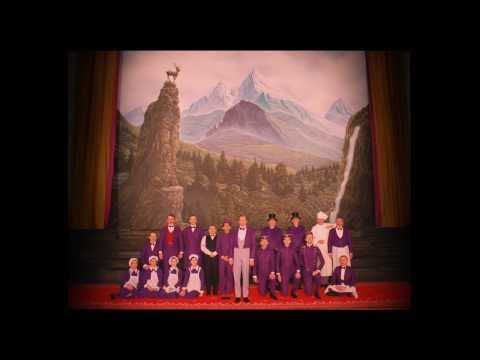
THE GRAND BUDAPEST HOTEL: Official Red Band Trailer
"We're staying at a nice hotel near the beach."
 2:36
2:36
The Grand Budapest Hotel | #TBT Trailer | 20th Century FOX
"We're staying at a nice hotel near the beach."
맥락에서 배우기
travel 관련 단어
abroad
B1자기 나라를 떠나 다른 나라로 가거나 그곳에 머무르는 것을 말해요.
aeroplane
A2비행기는 고정된 날개가 있는 동력 비행체입니다. 비행기가 구름 사이로 사라졌습니다.
airport
A1비행기가 이착륙하는 곳입니다. 승객들은 비행기를 타기 위해 그곳에 갑니다.
avenue
A2애비뉴는 보통 가로수가 늘어선 넓은 도로를 말합니다.
baggage
A2수하물은 여행 갈 때 가져가는 여행 가방과 가방을 말합니다. (수하물은 여행 시 가지고 다니는 여행 가방, 가방 및 기타 용기를 의미합니다.)
bike
A2자전거 또는 오토바이; 두 개의 바퀴가 달린 탈것. 운동이나 이동 수단으로 사용됩니다.
bus stop
A2버스가 승객을 태우거나 내려주기 위해 멈추는 장소야.
cabin
A2오두막은 특히 시골에 있는 작고 소박한 집을 말해.
came
A1'came'은 'come'의 과거형입니다. 누군가나 무언가가 과거에 어떤 장소에 왔다는 것을 의미합니다.
camp
A2캠프는 사람들이 텐트나 임시 숙소에서 머무는 곳입니다.

