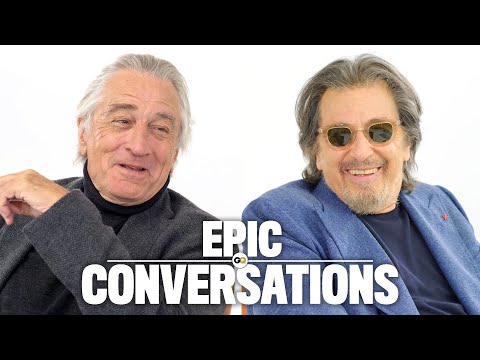
interviewer 30초 만에
- The person who asks questions in a formal setting like a job interview.
- A professional who evaluates candidates or gathers information for media or research.
- The individual responsible for directing the flow of an interview conversation.
- A role that requires active listening, objectivity, and strong communication skills.
- The Facilitator
- The interviewer is not merely a question-asker; they are a facilitator who must create an environment where the interviewee feels comfortable enough to share honest and detailed information. This involves building rapport quickly and maintaining a professional yet approachable demeanor.
The interviewer leaned forward, showing genuine interest in the candidate's explanation of their project management style.
- Information Gatherer
- In research settings, the interviewer follows a strict protocol to ensure that data collection is consistent across different subjects. They must avoid leading the participant toward specific answers, which would compromise the integrity of the study.
As an interviewer for the local news, Sarah had to remain neutral even when her subjects became emotional.
- The Evaluator
- In a legal or forensic context, the interviewer (often a detective or lawyer) uses specific techniques to verify the truthfulness of a statement. Their role is to identify inconsistencies in a narrative through strategic questioning.
The lead interviewer at the tech firm was known for her difficult logic puzzles that tested a candidate's problem-solving speed.
The documentary interviewer spent months building trust with the community before filming began.
Every interviewer has a different style, ranging from the 'good cop' approach to a more rigorous, data-driven interrogation.
- Subject Position
- When the interviewer is the one performing the action. Example: 'The interviewer asked a series of challenging questions about my previous experience.'
The interviewer smiled warmly as I entered the room, which immediately calmed my nerves.
- Object Position
- When the interviewer is receiving the action or being referred to. Example: 'I tried to maintain eye contact with the interviewer throughout the conversation.'
It is always a good idea to send a thank-you note to your interviewer within twenty-four hours of the meeting.
- Descriptive Adjectives
- You can use adjectives to describe the interviewer's style or personality. Common pairings include: 'tough interviewer,' 'experienced interviewer,' 'friendly interviewer,' or 'unbiased interviewer.'
The interviewer's stone-faced expression made it difficult to tell if my answers were hitting the mark.
A panel interviewer might focus on a specific technical niche while the others assess your soft skills.
The interviewer for the census arrived at the door with a tablet and a badge.
- In Media and Journalism
- Television hosts like Oprah Winfrey or Howard Stern are often described as legendary interviewers because of their ability to get celebrities to open up. In this context, the word carries a connotation of skill and psychological insight.
The celebrity's publicist requested a list of questions from the interviewer before the live broadcast.
- In Academic and Market Research
- When universities or marketing firms conduct surveys, the people who call you or meet you in person to ask questions are called interviewers. They are trained to remain neutral to avoid influencing the data.
The field interviewer collected responses from over two hundred residents for the urban planning study.
- In Legal and Police Work
- While 'interrogator' is used for suspects, 'interviewer' is often used when speaking with witnesses or victims to imply a more supportive and less aggressive questioning style.
The police interviewer was specially trained to work with children who had witnessed crimes.
The talk show interviewer managed to keep the conversation lighthearted despite the serious topic.
I was surprised when the interviewer turned out to be the CEO of the company.
- Spelling Errors
- Many people accidentally write 'interviewar' or 'intervewer'. Remember that it follows the standard pattern of 'verb + er' (interview + er).
Incorrect: The interviewee asked me why I wanted the job. (Unless the candidate is asking the boss!)
- Misusing 'Recruiter'
- While a recruiter often acts as an interviewer, not every interviewer is a recruiter. An interviewer could be a future manager, a peer, or a technical expert. Using 'interviewer' is more accurate when referring to the specific person in the meeting.
Correct: I thanked the interviewer for their time and left the office.
- Confusion with 'Interview'
- Sometimes learners use the noun 'interview' when they mean the person. You cannot say 'The interview was very nice to me.' You must say 'The interviewer was very nice to me.'
The interviewer's role is to remain objective throughout the process.
Don't interrupt the interviewer while they are explaining the job requirements.
The interviewer provided a detailed overview of the company's five-year plan.
- Questioner
- A general term for someone who asks questions. It is less professional than 'interviewer' and can sometimes sound a bit more aggressive or persistent.
The interviewer (or questioner) at the press conference was very persistent.
- Examiner
- Used primarily in academic or official testing contexts. An examiner evaluates your knowledge or performance against a set standard, like a driving examiner or a medical examiner.
Unlike a job interviewer, a thesis examiner focuses purely on the academic merit of the work.
- Moderator / Host
- In media or panel discussions, the person asking questions is often called the host or moderator. Their role is to manage the flow of conversation between multiple people.
The talk show interviewer is also the host of the program.
The interviewer was actually a panel of three different department heads.
As a research interviewer, you must follow the script exactly to avoid bias.
How Formal Is It?
재미있는 사실
The word 'interview' was originally used to describe a formal meeting between high-ranking officials or royalty before it became a common term for job seeking.
발음 가이드
- Pronouncing it as 'inter-VIEW-er' (wrong stress).
- Adding an extra 'e' sound at the end like 'interviewer-ee'.
- Confusing the 't' sound in American English.
난이도
The word is common in news and job descriptions.
Spelling and suffix distinction can be tricky.
Easy to pronounce once the stress is learned.
Can be confused with 'interviewee' in fast speech.
다음에 무엇을 배울까
선수 학습
다음에 배울 것
고급
알아야 할 문법
The -er/-ee suffix rule
Interviewer (doer) vs Interviewee (receiver).
Possessive nouns
The interviewer's notebook was full.
Reported speech
The interviewer asked where I lived.
Passive voice in professional writing
The candidate was evaluated by the interviewer.
Articles with occupations
She is an interviewer.
수준별 예문
The interviewer is in the office.
The person asking questions is in the room.
Simple subject-verb-prepositional phrase.
I see the interviewer now.
I can see the person who will ask me questions.
Present simple with a direct object.
The interviewer has a pen.
The person asking questions is holding a writing tool.
Use of 'has' for possession.
Is the interviewer nice?
Is the person asking questions a kind person?
Question form of the verb 'to be'.
The interviewer says hello.
The person asking questions greets me.
Third person singular 's' on the verb.
The interviewer asks my name.
The person wants to know who I am.
Subject-verb-object structure.
Wait for the interviewer.
Stay here until the person comes.
Imperative mood.
The interviewer is a woman.
The person asking questions is female.
Simple identification.
The interviewer asked me about my school.
The person wanted to know about my education.
Past simple tense.
I need to meet the interviewer at ten o'clock.
My appointment with the person is at 10:00.
Modal verb 'need to' + infinitive.
The interviewer was very friendly today.
The person was kind during our meeting.
Past tense of 'to be' with an adjective.
She is a famous interviewer on TV.
Many people know her for her TV shows.
Adjective 'famous' modifying the noun.
The interviewer wrote my phone number down.
The person recorded my contact information.
Phrasal verb 'write down'.
Did the interviewer give you the job?
Did the person say you can work there?
Past simple question form with 'did'.
The interviewer works for a big company.
The person's employer is a large business.
Prepositional phrase 'for a big company'.
I sent a message to the interviewer.
I wrote an email or text to the person.
Past simple with an indirect object.
You should arrive early to impress the interviewer.
Getting there before the time makes a good impression.
Modal verb 'should' for advice.
The interviewer wanted to know why I left my last job.
The person asked about my previous employment history.
Infinitive phrase as an object.
It is important to listen carefully to the interviewer.
Paying attention to the person's questions is vital.
It + is + adjective + to-infinitive.
The interviewer took many notes during our conversation.
The person wrote down a lot of what I said.
Quantifier 'many' with a countable noun.
I prepared some questions to ask the interviewer.
I have my own questions for the person.
Purpose clause 'to ask'.
The interviewer explained the company's benefits.
The person told me about health insurance and vacation.
Possessive 'company's'.
The interviewer seemed impressed with my portfolio.
The person liked the work I showed them.
Linking verb 'seemed' + adjective.
I thanked the interviewer for the opportunity.
I said thank you for the chance to speak.
Verb + object + for + noun.
The interviewer maintained a neutral expression throughout the meeting.
The person didn't show their feelings on their face.
Advanced vocabulary 'maintained' and 'neutral'.
An experienced interviewer can spot a lie very quickly.
Someone who has done this a lot knows when you aren't being honest.
Modal verb 'can' for ability.
The interviewer's questions were designed to test my stress levels.
The person asked hard things to see if I would get upset.
Passive voice 'were designed'.
I felt that the interviewer was being a bit too aggressive.
The person was asking questions in a very forceful way.
Past continuous for a temporary state.
The interviewer asked a follow-up question about my leadership style.
The person asked a second question based on my first answer.
Compound noun 'follow-up question'.
The interviewer provided constructive feedback at the end.
The person gave me helpful advice on how to improve.
Adjective 'constructive' modifying 'feedback'.
It's crucial to research your interviewer on LinkedIn beforehand.
Looking up the person online is very important.
Gerund as a subject or 'It is' construction.
The interviewer apologized for the slight delay in starting.
The person said sorry for being late.
Verb + preposition 'apologized for'.
The interviewer skillfully navigated the celebrity's attempt to avoid the topic.
The person was very good at keeping the talk on track.
Adverb 'skillfully' modifying a past tense verb.
A panel of three interviewers conducted the final round of assessments.
Three people together asked the questions.
Collective noun 'panel of'.
The interviewer's rapport-building techniques were exceptionally effective.
The way the person made me feel comfortable worked well.
Possessive noun with a compound modifier.
She has established herself as a formidable interviewer in political circles.
People are afraid of her because she asks very hard questions.
Present perfect for a current status.
The interviewer remained unfazed by the candidate's outburst.
The person stayed calm even when the other person got angry.
Adjective 'unfazed' as a complement.
The interviewer must remain cognizant of their own implicit biases.
The person needs to be aware of their hidden prejudices.
Modal 'must' + adjective 'cognizant'.
The interviewer's probing questions unearthed details previously unknown.
The deep questions found out new information.
Participle phrase 'previously unknown'.
The interviewer's demeanor was a perfect blend of professional and personable.
The person was both serious and friendly.
Noun 'demeanor' with a parallel structure.
The interviewer’s mastery of the Socratic method forced the subject into a logical corner.
The person used a specific style of questioning to win the argument.
Complex noun phrase as a subject.
One must account for the interviewer effect when analyzing qualitative data.
The person asking the questions changes the results.
Impersonal 'one' as a subject.
The interviewer’s silence was a calculated tactic to elicit a more candid response.
The person didn't speak on purpose so the other person would talk.
Adjective 'calculated' modifying 'tactic'.
As an interviewer, her ability to synthesize complex narratives in real-time is unparalleled.
She is the best at understanding hard stories quickly.
Appositive phrase 'As an interviewer'.
The interviewer’s line of questioning was deemed overly intrusive by the ethics committee.
The questions were too personal according to the rules.
Passive voice with 'deemed'.
The interviewer’s subtle non-verbal cues provided a subtext to the entire exchange.
The person's body language said more than their words.
Compound adjective 'non-verbal'.
The interviewer’s role is often that of a catalyst for self-reflection in the interviewee.
The person makes the other person think about themselves.
Metaphorical use of 'catalyst'.
The interviewer navigated the ethical quagmire of the confidential leak with poise.
The person handled a very difficult moral situation well.
Prepositional phrase 'with poise'.
자주 쓰는 조합
자주 쓰는 구문
— To meet and answer questions from the person in charge.
I felt ready to face the interviewer after practicing for hours.
— To make the person asking questions think highly of you.
He wore his best suit to impress the interviewer.
— To show gratitude to the person for their time.
Don't forget to thank the interviewer before you leave the room.
— To let the person asking questions control the direction of the talk.
It is best to follow the interviewer's lead during the first few minutes.
— The way the person asking questions sees the situation.
Try to understand the interviewer's perspective on the company's needs.
— A comment or statement made by the person asking questions.
We are waiting for a final word from the interviewer regarding the next steps.
— The written records made by the person during the meeting.
The interviewer's notes were used to compare the different candidates.
— To pose your own questions to the person in charge.
You should always have two or three questions to ask the interviewer.
— The specific way a person conducts their interviews.
Her interviewer style is very conversational and relaxed.
— To have a scheduled appointment with the person.
I am going to meet with the interviewer at their downtown office.
자주 혼동되는 단어
The person answering the questions.
Someone who finds candidates, while an interviewer is anyone asking questions.
A more aggressive role, usually in police or military contexts.
관용어 및 표현
— To ask someone many difficult questions for a long time.
The interviewer really grilled me about my past mistakes.
informal— To ask a difficult question that requires an immediate answer.
The interviewer put me on the spot by asking about my salary expectations.
neutral— To question someone in a very intense and detailed way.
I felt like the interviewer was giving me the third degree.
informal— To ask someone questions to get their ideas or information.
The interviewer wanted to pick my brain about the new market trends.
informal— To be the person who has to answer difficult questions.
When it was my turn for the interview, I was officially in the hot seat.
informal— To understand the hidden meaning in what the interviewer is saying.
I tried to read between the lines to see if the interviewer liked my answer.
neutral— To say something to make the interviewer feel more relaxed.
The interviewer told a joke to break the ice at the start of the meeting.
neutral— To be in the position of power (usually the interviewer).
In a job interview, the interviewer usually holds all the cards.
neutral— To talk too much to the interviewer.
Be careful not to talk the interviewer's ear off; keep your answers short.
informal— To get an interview so you have a chance at a job.
Meeting the interviewer is the first step to getting a foot in the door.
neutral혼동하기 쉬운
Similar spelling and sound.
The interviewer asks; the interviewee answers.
The interviewer asked the interviewee a question.
Both involve hiring.
A recruiter manages the whole hiring process; an interviewer just does the meeting.
The recruiter found me, but the interviewer hired me.
Both manage conversations.
A moderator manages a group; an interviewer usually talks to one person.
The moderator asked the interviewer to wait.
Both evaluate people.
An examiner usually checks for a pass/fail grade (like a test).
The driving examiner was a tough interviewer.
Both lead media shows.
A host is the owner of the show; an interviewer is the role they play.
The host is a great interviewer.
문장 패턴
The interviewer is [adjective].
The interviewer is nice.
I met the interviewer at [time].
I met the interviewer at three o'clock.
The interviewer asked me about [topic].
The interviewer asked me about my experience.
I want to impress the interviewer.
I want to impress the interviewer today.
The interviewer's goal is to [verb].
The interviewer's goal is to find a leader.
Being an interviewer requires [noun].
Being an interviewer requires patience.
The interviewer skillfully [verb] the [noun].
The interviewer skillfully managed the conflict.
The interviewer's [noun] was a catalyst for [noun].
The interviewer's silence was a catalyst for the truth.
어휘 가족
명사
동사
형용사
관련
사용법
Very common in professional and media English.
-
Saying 'I am the interviewer' when applying for a job.
→
'I am the interviewee' or 'I am the candidate.'
The interviewer is the person who is already working at the company.
-
Spelling it 'interviewar'.
→
'Interviewer'.
The suffix for a person doing an action is usually -er.
-
Using 'the interview' to refer to the person.
→
'The interviewer was nice.'
'Interview' is the event; 'interviewer' is the person.
-
Confusing 'interviewer' with 'employer'.
→
'The interviewer' (specifically for the meeting).
An employer is the company or owner; the interviewer is the specific person you talk to.
-
Thinking only HR people are interviewers.
→
'The technical interviewer' or 'The manager'.
Anyone who asks questions in a formal meeting is an interviewer.
팁
Research your interviewer
Look up your interviewer on professional sites like LinkedIn to understand their background and role.
Be polite
Always treat the interviewer with respect, from the moment you say hello to the final thank you.
Listen first
Let the interviewer finish their question before you start answering to show you are a good listener.
Maintain eye contact
Keeping steady eye contact with the interviewer shows confidence and honesty.
Send a thank you
A quick email to the interviewer after the meeting can make a very positive lasting impression.
Ask them questions
An interviewer likes it when you have your own questions; it shows you are truly interested.
Be truthful
An experienced interviewer can usually tell if you are exaggerating, so stay honest.
Don't be late
Being late is the fastest way to upset an interviewer and lose the opportunity.
Be concise
Don't ramble. The interviewer has a schedule to keep, so keep your answers clear and to the point.
Stay calm
Remember that the interviewer is just a person doing their job. They want you to succeed!
암기하기
기억법
An interVIEWer is the person who VIEWS you from the inside by asking questions.
시각적 연상
Imagine a person holding a large magnifying glass over a candidate's resume.
Word Web
챌린지
Try to describe three different types of interviewers (e.g., a mean one, a kind one, a fast one) using only three sentences for each.
어원
Derived from the verb 'interview', which comes from the Middle French word 'entrevoir' meaning 'to see each other' or 'to visit each other briefly'.
원래 의미: A mutual sight or meeting between people.
Romance / Germanic (via French)문화적 맥락
Be aware that an interviewer should avoid asking personal questions about religion, age, or marital status in many countries due to labor laws.
In the US and UK, the interviewer usually starts with 'small talk' to make the candidate feel comfortable.
실생활에서 연습하기
실제 사용 상황
Job Search
- Thank the interviewer
- Research the interviewer
- Follow the interviewer's lead
- Impress the interviewer
Journalism
- The interviewer's scoop
- Ask a follow-up
- Maintain neutrality
- The celebrity interviewer
Police Investigation
- The police interviewer
- Question the witness
- Detailed statement
- The interviewer's report
Market Research
- The survey interviewer
- Collect data
- Follow the script
- The field interviewer
Podcasting
- The podcast interviewer
- Welcome the guest
- Great interviewer skills
- The host as an interviewer
대화 시작하기
"What is the hardest question an interviewer has ever asked you?"
"Do you prefer a friendly interviewer or a very serious one?"
"Have you ever had to be the interviewer for a job?"
"What should an interviewer do to make a candidate feel comfortable?"
"Who is your favorite TV interviewer and why?"
일기 주제
Describe a time you met an interviewer. How did you feel?
If you were an interviewer, what three questions would you always ask?
Write about a famous interviewer you admire.
How has the role of the interviewer changed with video calls?
What are the most important qualities of a good interviewer?
자주 묻는 질문
10 질문An interviewer is anyone who asks questions in an interview, while a recruiter is a specific professional whose job is to find and hire people. A recruiter often acts as the first interviewer.
Yes, this is called a panel interview. You might have two, three, or even more interviewers asking you questions at the same time.
In modern times, some companies use AI or automated systems. These are often called 'AI interviewers' or 'digital interviewers.'
You should usually use their formal title (Mr., Ms., or Dr.) and their last name unless they ask you to use their first name.
A tough interviewer is someone who asks very difficult, deep, or challenging questions to see how you react under pressure.
Their main goal is to gather enough information to make a decision, whether that is hiring someone or writing a story.
They take notes so they can remember your answers accurately when they compare you to other candidates later.
Yes, sometimes a company will have a future teammate act as an interviewer to see if you will work well together.
Interviewer bias is when an interviewer makes a judgment based on personal feelings rather than the candidate's actual skills.
To be a better interviewer, you should practice active listening, prepare your questions in advance, and try to remain as objective as possible.
셀프 테스트 190 질문
Write a sentence using the word 'interviewer' and the word 'professional'.
Well written! Good try! Check the sample answer below.
Describe what an interviewer does in three simple sentences.
Well written! Good try! Check the sample answer below.
Write a short thank-you note to an interviewer.
Well written! Good try! Check the sample answer below.
What are three qualities of a good interviewer?
Well written! Good try! Check the sample answer below.
Write a sentence about a famous interviewer you know.
Well written! Good try! Check the sample answer below.
Explain the difference between an interviewer and an interviewee.
Well written! Good try! Check the sample answer below.
Write a sentence using 'interviewer' in the past tense.
Well written! Good try! Check the sample answer below.
Describe a 'tough interviewer' using two adjectives.
Well written! Good try! Check the sample answer below.
Write a sentence about a panel of interviewers.
Well written! Good try! Check the sample answer below.
How would you prepare to meet an interviewer?
Well written! Good try! Check the sample answer below.
Write a sentence about an interviewer's notes.
Well written! Good try! Check the sample answer below.
Use the word 'interviewer' in a question.
Well written! Good try! Check the sample answer below.
Write a sentence about an interviewer in a news setting.
Well written! Good try! Check the sample answer below.
What should an interviewer avoid doing?
Well written! Good try! Check the sample answer below.
Write a sentence about an interviewer's first impression.
Well written! Good try! Check the sample answer below.
Describe an interviewer's office.
Well written! Good try! Check the sample answer below.
Write a sentence using 'interviewer' and 'bias'.
Well written! Good try! Check the sample answer below.
Write a sentence about a 'friendly interviewer'.
Well written! Good try! Check the sample answer below.
How does an interviewer help a company?
Well written! Good try! Check the sample answer below.
Write a sentence about an interviewer's follow-up.
Well written! Good try! Check the sample answer below.
Say the word 'interviewer' out loud three times.
Read this aloud:
당신의 답변:
Speech recognition is not supported in your browser. Try Chrome or Edge.
Introduce yourself to an imaginary interviewer.
Read this aloud:
당신의 답변:
Speech recognition is not supported in your browser. Try Chrome or Edge.
Describe your ideal interviewer.
Read this aloud:
당신의 답변:
Speech recognition is not supported in your browser. Try Chrome or Edge.
What would you say to an interviewer at the end of a meeting?
Read this aloud:
당신의 답변:
Speech recognition is not supported in your browser. Try Chrome or Edge.
Explain why an interviewer takes notes.
Read this aloud:
당신의 답변:
Speech recognition is not supported in your browser. Try Chrome or Edge.
Ask an imaginary interviewer a question about the job.
Read this aloud:
당신의 답변:
Speech recognition is not supported in your browser. Try Chrome or Edge.
Pronounce the US version of 'interviewer' (soft 't').
Read this aloud:
당신의 답변:
Speech recognition is not supported in your browser. Try Chrome or Edge.
Describe a time you met an interviewer.
Read this aloud:
당신의 답변:
Speech recognition is not supported in your browser. Try Chrome or Edge.
How would you handle a tough interviewer?
Read this aloud:
당신의 답변:
Speech recognition is not supported in your browser. Try Chrome or Edge.
What is the role of an interviewer in a documentary?
Read this aloud:
당신의 답변:
Speech recognition is not supported in your browser. Try Chrome or Edge.
Roleplay: You are the interviewer. Ask a candidate why they want the job.
Read this aloud:
당신의 답변:
Speech recognition is not supported in your browser. Try Chrome or Edge.
Explain 'interviewer bias' in your own words.
Read this aloud:
당신의 답변:
Speech recognition is not supported in your browser. Try Chrome or Edge.
How do you build rapport with an interviewer?
Read this aloud:
당신의 답변:
Speech recognition is not supported in your browser. Try Chrome or Edge.
What should you do if the interviewer is late?
Read this aloud:
당신의 답변:
Speech recognition is not supported in your browser. Try Chrome or Edge.
Describe the difference between an interviewer and an interrogator.
Read this aloud:
당신의 답변:
Speech recognition is not supported in your browser. Try Chrome or Edge.
Say: 'The interviewer was impressed with my skills.'
Read this aloud:
당신의 답변:
Speech recognition is not supported in your browser. Try Chrome or Edge.
What is a panel interviewer?
Read this aloud:
당신의 답변:
Speech recognition is not supported in your browser. Try Chrome or Edge.
Why is the interviewer called a 'gatekeeper'?
Read this aloud:
당신의 답변:
Speech recognition is not supported in your browser. Try Chrome or Edge.
Give an example of a follow-up question an interviewer might ask.
Read this aloud:
당신의 답변:
Speech recognition is not supported in your browser. Try Chrome or Edge.
How do you thank an interviewer for their time?
Read this aloud:
당신의 답변:
Speech recognition is not supported in your browser. Try Chrome or Edge.
Listen and identify the word: 'The interviewer is waiting for you.'
Listen for the stress: IN-ter-view-er. Which syllable is loudest?
Listen to the sentence: 'I spoke with the interviewer for an hour.' How long was the talk?
Listen: 'The interviewer's name is Mr. Smith.' What is the name?
Listen: 'The interviewer was very experienced.' Was the interviewer new?
Listen: 'An interviewer should be objective.' What quality is mentioned?
Listen: 'The interviewer grilled the suspect.' What does this imply?
Listen: 'I sent an email to the interviewer.' How did they communicate?
Listen: 'The interviewer asked about my background.' What was the topic?
Listen: 'The interviewer smiled at me.' Was the interviewer friendly?
Listen: 'The interviewer's notes were lost.' What happened to the notes?
Listen: 'The interviewer's style is unique.' What is unique?
Listen: 'The interviewer works in HR.' Where do they work?
Listen: 'The interviewer was a woman.' What was the gender?
Listen: 'The interviewer's feedback was helpful.' Was it good?
/ 190 correct
Perfect score!
Summary
An interviewer is the person in charge of asking questions and evaluating responses in a formal meeting. For example, 'The interviewer was impressed by the candidate's confidence and clear communication.'
- The person who asks questions in a formal setting like a job interview.
- A professional who evaluates candidates or gathers information for media or research.
- The individual responsible for directing the flow of an interview conversation.
- A role that requires active listening, objectivity, and strong communication skills.
Research your interviewer
Look up your interviewer on professional sites like LinkedIn to understand their background and role.
Be polite
Always treat the interviewer with respect, from the moment you say hello to the final thank you.
Listen first
Let the interviewer finish their question before you start answering to show you are a good listener.
Maintain eye contact
Keeping steady eye contact with the interviewer shows confidence and honesty.