









wedding 30초 만에
- A formal ceremony joining two people in marriage.
- Includes the exchange of vows and rings.
- Often followed by a celebratory party called a reception.
- A significant cultural and personal life event.
The beautiful wedding brought tears of joy to everyone present.
- Ceremony
- The formal act of getting married.
- Vows
- The promises made by the couple.
They danced all night at the wedding reception.
- Reception
- The party after the ceremony.
- Toast
- A speech honoring the couple.
The best man gave a hilarious speech at the wedding.
The flowers at the wedding were absolutely breathtaking.
- Marriage License
- The legal document authorizing the marriage.
Their wedding was a perfect reflection of their love story.
We are planning our wedding for next spring.
- Plan a wedding
- To organize the details of the ceremony and reception.
- Attend a wedding
- To go to the event as a guest.
They decided to have a small, intimate wedding on the beach.
- At a wedding
- Used for location or presence during the event.
- In a wedding
- Used when someone is part of the official wedding party.
Her wedding dress was made of beautiful white lace.
The wedding invitations were sent out six weeks in advance.
- Wedding party
- The group of people assisting the couple, like bridesmaids and groomsmen.
He forgot his speech for the wedding reception.
Did you hear that Sarah is planning her wedding for October?
- Social Media
- Platforms where people share photos and updates about their ceremonies.
- Workplace
- Conversations regarding time off or gifts for a marrying colleague.
The movie ends with a spectacular, over-the-top wedding scene.
- Entertainment
- Movies and books frequently use weddings as major plot devices.
- News Media
- Coverage of high-profile or celebrity marriage ceremonies.
The hotel is a very popular venue for a summer wedding.
She bought a beautiful gown at the local wedding boutique.
- Invitations
- Formal requests sent to guests to attend the event.
The priest has officiated many a wedding in this old church.
Their wedding was beautiful, and their marriage has lasted for fifty years.
- Wedding
- The one-day event and ceremony.
- Marriage
- The lifelong relationship and legal union.
I met a lot of interesting people at the wedding reception.
- Ceremony
- The formal exchange of vows.
- Reception
- The celebratory party afterward.
She spent months looking for the perfect wedding dress.
They decided to hold their wedding in a historic castle.
- Get married
- The action of entering into a marriage.
Are you going to the wedding this weekend?
The celebrity couple celebrated their wedding with lavish nuptials in Italy.
- Nuptials
- A formal term for a wedding ceremony.
- Matrimony
- The state or ceremony of being married, often religious.
Instead of a big wedding, they decided on a quiet elopement in the mountains.
- Elopement
- A small, often secret, marriage ceremony.
- Union
- The joining of two people, often used in civil contexts.
The bridal party stood beside the couple during the wedding ceremony.
Everyone was thrilled when they announced they were tying the knot in a summer wedding.
- Tie the knot
- An informal idiom meaning to get married.
The wedding ceremony was brief but incredibly moving.
How Formal Is It?
난이도
알아야 할 문법
Using 'at' for events (at the wedding).
Compound nouns (wedding dress, wedding cake).
Present continuous for future plans (We are having a wedding next year).
Possessive 's (My brother's wedding).
Countable nouns (one wedding, two weddings).
수준별 예문
I am going to a wedding today.
I travel to the marriage party.
'Wedding' is a singular countable noun here.
The wedding is very big.
The party has many people.
Used as the subject of the sentence.
She has a white wedding dress.
Her dress for the party is white.
'Wedding' acts as an adjective modifying 'dress'.
They sing at the wedding.
People make music at the party.
Use the preposition 'at' for location/event.
We eat cake at the wedding.
We have sweet food at the party.
Simple present tense for general facts.
My brother's wedding is on Saturday.
The marriage party of my brother is Saturday.
Possessive 's used before the noun.
It is a happy wedding.
The party is full of joy.
Adjective 'happy' describes the noun.
I like the wedding music.
The songs at the party are good.
Compound noun structure.
We attended a beautiful wedding in the countryside last week.
We went to a nice marriage party in nature.
Past tense verb 'attended' used with the noun.
Did you receive the wedding invitation in the mail?
Did you get the card asking you to come?
Question form using a compound noun.
They are planning their wedding for next summer.
They are organizing the party for next year.
Present continuous for future plans.
The wedding ring is made of gold.
The circle for the finger is gold.
Subject of the sentence, specific item.
She was a bridesmaid in her best friend's wedding.
She helped her friend at the party.
Preposition 'in' used for participation.
The food at the wedding reception was delicious.
The meal after the ceremony was very good.
Specifying the 'reception' part of the event.
He took many photos during the wedding.
He used his camera a lot at the party.
Preposition 'during' shows time frame.
They want a small wedding with only family.
They want a party with not many people.
Adjective 'small' modifying the noun.
Planning a wedding can be incredibly stressful but also very rewarding.
Organizing the event is hard but good.
Gerund phrase acting as the subject.
They decided to postpone the wedding because of the bad weather.
They moved the date later due to rain.
Infinitive verb 'to postpone' taking 'wedding' as object.
In many cultures, the wedding traditions are passed down through generations.
Old customs for the party are kept alive.
Plural form used in a general sense.
We bought them a toaster as a wedding gift.
We gave them a machine for bread for their marriage.
Compound noun 'wedding gift'.
The wedding venue was decorated with hundreds of white roses.
The place for the party had many flowers.
Passive voice describing the location.
She has been dreaming about her perfect wedding day since she was a little girl.
She thought about this day for a long time.
Present perfect continuous tense.
They hired a professional photographer to capture the wedding memories.
They paid someone to take pictures of the event.
Infinitive of purpose.
The priest who officiated the wedding gave a very moving speech.
The man who led the ceremony spoke well.
Relative clause defining the priest.
The couple opted for a destination wedding in Hawaii to escape the winter cold.
They traveled far away for their ceremony.
Use of the specific collocation 'destination wedding'.
Despite the meticulous planning, a few minor things went wrong on the wedding day.
Even with good organization, some mistakes happened.
Contrastive clause using 'despite'.
The exorbitant cost of the average wedding has led many young couples to elope instead.
Because parties are expensive, people marry secretly.
Complex sentence showing cause and effect.
As the maid of honor, it was her responsibility to organize the pre-wedding festivities.
The main helper had to plan the parties before the main event.
Use of the prefix 'pre-' to form an adjective.
The signing of the marriage register is the legal climax of the wedding ceremony.
Putting names on paper makes it official.
Abstract noun phrase as subject.
They celebrated their golden wedding anniversary with a lavish party for all their friends.
They had a big party for 50 years of marriage.
Specific collocation for a 50-year milestone.
The documentary explored the cultural significance of traditional wedding garments in South Asia.
The film showed why special clothes are important.
Academic/formal vocabulary context.
He gave a hilarious, albeit slightly inappropriate, toast at his brother's wedding reception.
He spoke funny but maybe rude words at the party.
Use of the conjunction 'albeit'.
The societal pressure to host an extravagant wedding often eclipses the true meaning of the marital union.
People care too much about a big party, forgetting the love.
Complex sentence with abstract nouns and advanced vocabulary.
Her novel is a satirical take on the wedding industry and its exploitation of romantic ideals.
The book makes fun of businesses that sell marriage dreams.
Literary critique context.
They managed to pull off a spectacular wedding on a shoestring budget through sheer ingenuity.
They had a great party with very little money by being clever.
Idiomatic expression 'on a shoestring budget'.
The prenuptial agreement was signed discreetly, days before the highly publicized wedding took place.
The legal contract was done quietly before the famous party.
Passive voice and legal terminology.
The sudden downpour threatened to derail the outdoor wedding, but the guests took it in stride.
Rain almost ruined the party, but people stayed happy.
Phrasal verbs and idiomatic expressions.
As an event planner, she is adept at navigating the fraught family dynamics that inevitably surface during wedding preparations.
She is good at handling family arguments before the party.
Advanced adjectives and relative clauses.
The juxtaposition of ancient rituals with modern sensibilities made their wedding a truly unique spectacle.
Mixing old and new things made the party special.
Sophisticated vocabulary 'juxtaposition'.
He felt a profound sense of melancholy after the wedding, a common phenomenon known as the post-wedding blues.
He was sad after the party ended, which is normal.
Psychological terminology and appositive phrase.
The anthropologist's seminal work deconstructs the wedding as a performative rite of passage designed to reinforce patriarchal paradigms.
The scientist explains the party as a show that keeps men in power.
Highly academic and theoretical language.
Stripped of its commercial veneer, the wedding remains a poignant, albeit fleeting, testament to the human yearning for enduring connection.
Without the money aspect, the party shows people want love.
Poetic phrasing and participial phrase.
The sheer logistical nightmare of coordinating a high-society wedding across three continents is not for the faint of heart.
Planning a rich person's party worldwide is very difficult.
Hyperbolic and idiomatic expressions.
In his memoirs, he reflects on his wedding day not with nostalgia, but with a profound sense of existential trepidation.
He remembers his marriage day with fear, not happiness.
Philosophical vocabulary and contrastive structure.
The bespoke wedding gown, an ephemeral masterpiece of haute couture, was archived immediately after the nuptials.
The custom dress was saved right after the ceremony.
Specialized fashion and archival terminology.
The legislation aims to curb the predatory practices of vendors operating within the unregulated fringes of the wedding industry.
The law tries to stop bad businesses in the marriage market.
Legal and economic discourse.
Her cinematic portrayal of a wedding descends into a chaotic, surrealist farce, mocking bourgeois conventions.
The movie shows a crazy party to make fun of rich people's rules.
Artistic and critical analysis vocabulary.
The archaic language of the traditional wedding liturgy, though largely incomprehensible to the modern ear, retains a certain hypnotic solemnity.
The old words of the ceremony are hard to understand but sound serious.
Concessive clause with advanced adjectives.
자주 쓰는 조합
자주 쓰는 구문
자주 혼동되는 단어
관용어 및 표현
혼동하기 쉬운
문장 패턴
사용법
Emphasizes the event and celebration, unlike 'marriage' which emphasizes the legal/spiritual state.
Neutral. Can be used in both highly formal contexts (invitations) and casual speech.
Universally understood across all English dialects. Specific traditions (and thus related vocabulary) vary by region.
- Saying 'I am going to a marriage' instead of 'I am going to a wedding.'
- Using the preposition 'in' (I was in the wedding) when meaning 'at' (I was at the wedding as a guest).
- Saying 'Happy Wedding' instead of 'Congratulations on your wedding.'
- Saying 'dress of wedding' instead of the compound noun 'wedding dress.'
- Using 'wedding' as a verb, like 'They will wedding tomorrow' instead of 'They will get married tomorrow.'
팁
Use 'At' for Guests
Always use the preposition 'at' when you are talking about being a guest. Say 'I had fun at the wedding.' Do not use 'in' unless you are a bridesmaid or groomsman. This is a very common mistake for beginners. Remember: 'at' equals location/event.
Wedding vs. Marriage
Keep these two words separate in your mind. The wedding is the party (one day). The marriage is the relationship (many years). You plan a wedding, but you work on a marriage. Never say 'I attended a beautiful marriage.'
Use 'Tie the Knot'
To sound more like a native speaker, use the idiom 'tie the knot' in casual conversations. Instead of saying 'They are getting married,' say 'They are tying the knot.' It shows a higher level of vocabulary comfort. Use it with friends, not in formal writing.
Capitalization Rules
The word 'wedding' is a common noun and should not be capitalized unless it is the first word of a sentence. Do not write 'I am going to a Wedding.' Even in compound nouns like 'wedding cake', keep it lowercase. Only capitalize it in specific titles.
Master Compound Nouns
Learn the word 'wedding' with its partners. Practice saying 'wedding dress', 'wedding ring', and 'wedding cake' as single units. English speakers use these compounds constantly. Do not try to translate 'dress of marriage' from your native language.
Listen for 'I Do'
When watching English movies, the climax of the wedding scene is usually when the couple says 'I do.' This is the standard English response to the vows. If you hear 'I do' in a romantic context, a wedding is happening. It is a key cultural phrase.
Saying Congratulations
When speaking to a newly married couple, say 'Congratulations!' Do not say 'Happy Wedding.' While 'Happy Birthday' and 'Happy Anniversary' are correct, 'Happy Wedding' sounds very unnatural. Stick to 'Congratulations on your beautiful wedding.'
Learn the Wedding Party
Expand your vocabulary by learning the roles. The woman is the 'bride', the man is the 'groom'. Her helpers are 'bridesmaids', his helpers are 'groomsmen'. Knowing these words helps you understand stories about weddings much better.
Formal Invitations
Wedding invitations use very formal English. You will see phrases like 'request the honor of your presence.' Reading real English wedding invitations online is a great way to learn formal register and polite phrasing. Notice how they structure the dates and times.
Understand the Reception
Remember that the event has two parts. The 'ceremony' is the serious, legal part. The 'reception' is the fun party with food and dancing. If an English speaker says 'We skipped the ceremony and went to the reception,' you now know exactly what they mean.
암기하기
기억법
Think of 'WED' (We Eat Dessert) at the WEDding. A wedding is where you WED and have a big party.
어원
문화적 맥락
Focus on the white dress, exchanging rings, and a single-day event with a ceremony followed by a reception.
Often multi-day events with bright colors, henna (mehndi), and significant family involvement in rituals.
Increasing popularity of smaller 'micro-weddings', destination weddings, and highly personalized vows.
실생활에서 연습하기
실제 사용 상황
대화 시작하기
"Have you ever been to a really memorable wedding?"
"What is the most common wedding tradition in your country?"
"Do you prefer big, traditional weddings or small, intimate ones?"
"What do you think is the best age to get married?"
"If you were planning a wedding, where would you want it to be?"
일기 주제
Describe the best wedding you have ever attended. What made it special?
Write about the differences between weddings in your culture and those in movies.
Imagine your dream wedding. Where is it, and who is there?
Do you think people spend too much money on weddings today? Why or why not?
Write a short story about a wedding where everything goes wrong but ends happily.
자주 묻는 질문
10 질문A wedding is the specific event, ceremony, and party that happens on one day. Marriage is the long-term relationship and legal union that begins after the wedding. You attend a wedding, but you are in a marriage. The wedding is the celebration of the start of the marriage. Do not say 'I am going to a marriage' when you mean the party.
Use 'at the wedding' if you are a guest attending the event. For example, 'I ate cake at the wedding.' Use 'in the wedding' only if you have an official role, like a bridesmaid or groomsman. For example, 'My sister asked me to be in her wedding.' Most of the time, 'at' is the correct choice for guests.
No, 'wedding' is a noun. You cannot say 'I will wedding you.' The correct verb is 'marry' or the phrase 'get married.' You can say 'We are getting married' or 'We are having a wedding.' The word 'wed' is a verb, but it is quite formal or old-fashioned.
A destination wedding is a wedding that takes place in a location far from where the couple lives. It usually requires the couple and the guests to travel and stay in a hotel. Popular locations include tropical beaches, historic castles, or foreign countries. It combines a wedding and a vacation for the attendees. They are often smaller than traditional local weddings.
'Tie the knot' is a very common informal idiom that means to get married. It comes from ancient traditions where a couple's hands were literally tied together with ribbon or cloth during the ceremony. You can use it in casual conversation, like 'They are finally tying the knot next month.' It means the exact same thing as having a wedding.
The wedding reception is the party that happens immediately after the formal wedding ceremony. While the ceremony is where the vows and rings are exchanged, the reception is for celebrating. It usually includes a meal, drinks, music, dancing, and speeches. It is the social and festive part of the wedding day. Some people only attend the reception and not the ceremony.
The most common and polite way is to say, 'Congratulations on your wedding!' You can also say, 'Wishing you a lifetime of happiness.' It is a common mistake for learners to say 'Happy wedding,' which sounds unnatural in English. You can also say, 'Your wedding was beautiful' if you are speaking to them after the event.
A 'shotgun wedding' is an informal and somewhat old-fashioned slang term. It refers to a wedding that is arranged very quickly, usually because the bride is pregnant. The joke is that the father of the bride is holding a shotgun to force the groom to marry her. Today, it just means any wedding that is planned in a major hurry.
Because 'wedding' acts as an adjective, there are many compound nouns. The most common are wedding dress, wedding ring, wedding cake, wedding day, and wedding invitation. You also have wedding planner, wedding party, and wedding anniversary. You should memorize these as fixed phrases because they are used constantly in English.
In Western cultures, it is traditionally considered very bad etiquette for a female guest to wear a white dress to a wedding. White is reserved exclusively for the bride. Wearing white might look like you are trying to compete with the bride or steal her attention. However, cultural norms vary, and in some cultures, guests might wear white or the bride might wear a different color, like red.
셀프 테스트 180 질문
/ 180 correct
Perfect score!
Summary
A wedding is the specific event and celebration of getting married, distinct from the long-term state of marriage itself. It involves ceremonies, traditions, and gatherings of loved ones.
- A formal ceremony joining two people in marriage.
- Includes the exchange of vows and rings.
- Often followed by a celebratory party called a reception.
- A significant cultural and personal life event.
Use 'At' for Guests
Always use the preposition 'at' when you are talking about being a guest. Say 'I had fun at the wedding.' Do not use 'in' unless you are a bridesmaid or groomsman. This is a very common mistake for beginners. Remember: 'at' equals location/event.
Wedding vs. Marriage
Keep these two words separate in your mind. The wedding is the party (one day). The marriage is the relationship (many years). You plan a wedding, but you work on a marriage. Never say 'I attended a beautiful marriage.'
Use 'Tie the Knot'
To sound more like a native speaker, use the idiom 'tie the knot' in casual conversations. Instead of saying 'They are getting married,' say 'They are tying the knot.' It shows a higher level of vocabulary comfort. Use it with friends, not in formal writing.
Capitalization Rules
The word 'wedding' is a common noun and should not be capitalized unless it is the first word of a sentence. Do not write 'I am going to a Wedding.' Even in compound nouns like 'wedding cake', keep it lowercase. Only capitalize it in specific titles.
예시
My brother is having a large wedding in the summer.
관련 콘텐츠
영상에서 보기
 13:02
13:02
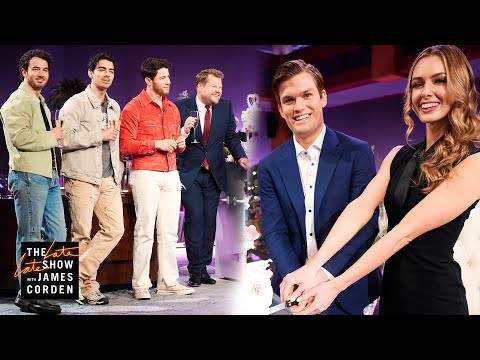
We Set Up a Couple in 2015 & They Got MARRIED! w/ The Jonas Brothers & Norah Jones
"My brother is having a large wedding in the summer."
 4:51
4:51
Jimmy Conway Tells His Crew To Lay Low | Goodfellas | Max
"My brother is having a large wedding in the summer."
![Iron Man/Tony Stark but only Best Scenes [4K 60FPS]](https://sublearn.com/storage/thumbnails/naSe2x0-VUw.jpg) 20:11
20:11
Iron Man/Tony Stark but only Best Scenes [4K 60FPS]
"My brother is having a large wedding in the summer."
맥락에서 배우기
Family 관련 단어
relative
A1친척은 혈연이나 결혼을 통해 가족의 일원이 된 사람을 말합니다.
gather
A1사람들의 작은 모임이나 천의 주름. 모임이나 바느질 기법을 의미합니다.
reunion
A1십 년 만에 열린 동창회에서 옛 친구들을 다시 만나니 학창 시절로 돌아간 것 같아 정말 기뻤습니다.
grandma
A1‘grandma’는 할머니(어머니 또는 아버지의 어머니)를 부르는 비격식적이고 다정한 표현입니다. 일상 대화에서 흔히 사용됩니다.
father’s
B1아버지의 소유를 나타내는 '아버지의'라는 뜻입니다. 예를 들어 '아버지의 자동차'와 같이 사용됩니다.
mom
A1'엄마'는 어머니를 부르는 친근한 표현입니다.
grandparent
A1조부모는 자신의 아버지나 어머니의 부모를 말합니다. 할아버지나 할머니를 통칭하는 일반적인 용어입니다.
daughter
A1딸은 부모에 대한 여성 아이를 의미합니다.
sibling
A1형제자매. 형제자매가 있습니까?
forgive
A1누군가의 실수를 용서하다.

