









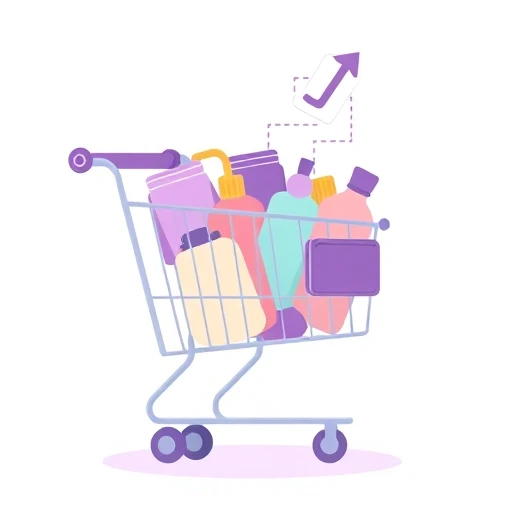
inflation in 30 Seconds
- Inflation is the process where prices for goods and services rise across the whole economy, reducing the amount you can buy with your money.
- It is measured as a percentage rate, showing how much more expensive a standard basket of goods has become compared to the previous year.
- Common causes include high demand for products, rising costs for businesses to produce goods, and an increase in the total supply of money.
- Central banks try to manage inflation by adjusting interest rates to keep the economy stable and prevent prices from rising too quickly or falling.
Inflation is an economic phenomenon that describes the gradual increase in the prices of goods and services across an entire economy. It is not just about one specific item becoming more expensive, like the price of a single avocado rising due to a bad harvest; rather, it is a broad-based rise in the cost of living. When inflation occurs, each unit of currency—whether it is a dollar, a euro, or a yen—buys fewer goods and services than it did in the past. This erosion of purchasing power is often described as the 'invisible tax' because it reduces the value of the money you have saved in your bank account without you ever spending a cent. Economists typically measure this by looking at a 'basket of goods,' which includes everyday essentials like bread, milk, fuel, rent, and healthcare. If the total cost of this basket goes up over a year, we say that inflation is present. People use this word most frequently when discussing the economy, personal budgeting, and government policy. You will hear it in news reports when the government releases new data, or in casual conversation when someone notices that their weekly grocery bill has jumped significantly despite buying the same items as before.
- Purchasing Power
- The financial ability to buy goods and services. Inflation directly reduces this power by making items more expensive relative to the currency.
- Consumer Price Index (CPI)
- A common measure used to track inflation by monitoring the price changes of a representative basket of goods and services purchased by households.
There are several causes of inflation, often categorized into 'demand-pull' and 'cost-push' inflation. Demand-pull inflation happens when the demand for goods and services exceeds the supply, essentially 'pulling' prices higher as consumers compete for limited products. Cost-push inflation occurs when the costs of production—such as wages or raw materials like oil—increase, forcing companies to raise their prices to maintain profit margins. A third type, known as 'built-in inflation,' occurs when workers demand higher wages to keep up with rising living costs, which then leads businesses to raise prices further, creating a cycle. Understanding inflation is crucial because it influences interest rates set by central banks. If inflation is too high, central banks might raise interest rates to cool down the economy; if it is too low, they might lower rates to encourage spending.
The central bank is closely monitoring the inflation rate to decide whether to adjust interest rates next month.
Historically, inflation has seen extreme peaks, known as hyperinflation, where prices rise so rapidly that a currency becomes practically worthless. Famous examples include the Weimar Republic in the 1920s or Zimbabwe in the 2000s, where people needed wheelbarrows of cash just to buy a loaf of bread. While moderate inflation (usually around 2%) is often seen as a sign of a healthy, growing economy, high inflation can lead to social unrest and economic instability. It forces families to make tough choices about their spending and can wipe out the value of fixed-income pensions. Therefore, inflation is a constant topic of debate among politicians, business leaders, and everyday citizens who are trying to make their paychecks stretch further.
Using the word 'inflation' correctly requires understanding its role as a noun that describes a general state or a specific rate. It is most commonly used in economic contexts, but it can also be used metaphorically to describe the expansion or exaggeration of something. When talking about the economy, you will often see it paired with verbs like 'rise,' 'fall,' 'curb,' 'tame,' or 'hedge against.' For example, an investor might 'hedge against inflation' by buying gold or real estate, which are assets that typically retain value when the currency loses its worth. You can also use 'inflation' as a modifier in compound nouns, such as 'inflation rate,' 'inflation target,' or 'inflation hedge.'
- The Inflation Rate
- This refers to the percentage at which prices increase over a specific period, usually a year. Example: 'The annual inflation rate hit a forty-year high.'
Many families are struggling to keep up with the rising cost of living due to rampant inflation.
In academic or professional writing, you might encounter more specific terms like 'core inflation,' which excludes volatile items like food and energy to give a clearer picture of long-term trends. Or 'headline inflation,' which includes everything. When using 'inflation' in a sentence, ensure you are referring to the general trend rather than a single price hike. You wouldn't say 'the inflation of milk prices' as often as you would say 'the increase in milk prices contributed to overall inflation.' The word implies a systemic change. In a metaphorical sense, you might hear about 'grade inflation' in schools, where higher grades are given for work that would have received lower marks in the past, thereby reducing the 'value' of an 'A' grade.
Economists fear that wage inflation could lead to a price-spiral that is difficult to control.
The word 'inflation' is ubiquitous in modern life, appearing in diverse settings from high-level policy meetings to the dinner table. In the media, it is a staple of financial news networks like Bloomberg, CNBC, or the Wall Street Journal. News anchors often lead with segments about 'inflationary pressures' or 'the battle against inflation.' During election cycles, politicians frequently use the term to either criticize the current administration's economic management or to promise relief to voters who are feeling the pinch at the gas pump and the supermarket. You will hear it in political speeches where candidates talk about 'bringing down inflation' to make life more affordable for the middle class.
- The Grocery Store
- Shoppers often discuss inflation without using the technical term, saying things like 'everything is so expensive now' or 'my money doesn't go as far.' These are direct observations of inflation in action.
In the corporate world, business leaders discuss inflation during quarterly earnings calls. They might explain that their profit margins are being squeezed by 'input cost inflation'—meaning the materials they buy to make their products have become more expensive. They might also mention 'passing on costs to consumers,' which is a polite way of saying they are raising prices because of inflation. In the workplace, employees might bring up inflation during salary negotiations, arguing that they need a 'cost-of-living adjustment' (COLA) to ensure their real wages don't decline as inflation rises. If your salary stays the same while inflation is 5%, you have effectively taken a 5% pay cut in terms of what you can actually buy.
During the press conference, the Chairman of the Federal Reserve addressed concerns about persistent inflation in the service sector.
Social media is another place where the word is frequently used, often accompanied by memes showing the shrinking size of products (a phenomenon known as 'shrinkflation') or comparing the price of a burger today to its price ten years ago. Podcasts focused on personal finance or macroeconomics will spend entire episodes dissecting inflation data, explaining how it affects mortgage rates, stock market performance, and retirement planning. Whether you are listening to a serious economic debate or just complaining about the price of coffee with a friend, 'inflation' is the technical term for that shared experience of money losing its punch.
One of the most common mistakes people make is confusing 'inflation' with a simple 'price increase.' While they are related, they are not identical. A price increase refers to a single item or category (like 'the price of eggs went up'), whereas inflation refers to a sustained, broad-based increase across the entire economy. If only one thing gets more expensive, it is not inflation; if almost everything gets more expensive, it is. Another frequent error is misunderstanding the relationship between inflation and the value of money. Some people mistakenly think inflation means the economy is 'growing' in a positive sense, but while some inflation is healthy, high inflation actually signals that the currency is weakening.
- Inflation vs. Deflation
- Deflation is the opposite—when prices fall. Some people use 'inflation' to mean any change in price, but it specifically refers to the upward direction.
Another mistake is the 'inflation vs. interest rates' confusion. People often think inflation and interest rates are the same thing because they are often mentioned together. In reality, inflation is the problem (prices rising), and changing interest rates is often the tool used by central banks to solve it. High inflation usually leads to higher interest rates, not the other way around. Additionally, learners often struggle with the prepositional use of the word. You don't usually say 'inflation on the economy'; instead, you say 'inflation in the economy' or 'the impact of inflation on consumers.' Metaphorically, 'grade inflation' is often misused to mean students are getting smarter, when it actually means the standards for grading have dropped.
Incorrect: 'The inflation of the car was too high.' Correct: 'The price of the car increased due to inflation.'
To speak about the economy with precision, it is helpful to know words that are similar to 'inflation' but carry different nuances. 'Hyperinflation' is the most extreme version, where prices spiral out of control, often by more than 50% per month. On the other end, 'disinflation' refers to a slowing of the rate of inflation—prices are still rising, but not as fast as they were before. This is different from 'deflation,' which is when prices actually drop. Another related term is 'stagflation,' a particularly difficult economic situation where inflation is high, but economic growth is slow and unemployment is high.
- Cost-of-living increase
- A more personal way to describe the effects of inflation on an individual's budget.
- Price escalation
- Often used in business contracts to describe how prices might rise over time.
In casual conversation, you might use 'price hikes' or 'rising costs' as simpler alternatives. However, in a formal economic report, 'inflationary pressures' or 'monetary expansion' might be more appropriate. 'Purchasing power erosion' is a sophisticated way to describe the result of inflation. If you are talking about the physical act of filling something with air, synonyms would include 'expansion,' 'swelling,' or 'distension,' though these are rarely used in economic contexts. Understanding these distinctions helps you choose the right word for the right audience, whether you are writing a university essay or chatting with a neighbor about the price of gas.
While inflation refers to rising prices, stagflation is a much more complex and damaging economic condition.
How Formal Is It?
Fun Fact
The economic use of 'inflation' didn't become common until the mid-19th century. Before that, it mostly referred to physical swelling or vanity (an 'inflated' ego).
Pronunciation Guide
- Pronouncing it as 'infalation' (adding an extra 'a').
- Stressing the first syllable (IN-flation).
- Confusing the 'sh' sound with a 't' sound.
- Making the 'a' sound too short.
- Mumbling the final 'n' sound.
Difficulty Rating
The concept is abstract, but the word itself is common in news.
Requires understanding of economic context to use accurately.
Easy to pronounce, but requires confidence in economic topics.
Very frequently heard in media and news broadcasts.
What to Learn Next
Prerequisites
Learn Next
Advanced
Grammar to Know
Uncountable Nouns
We don't say 'many inflations'; we say 'high inflation' or 'a lot of inflation'.
Noun as Adjective
In 'inflation rate', the word inflation acts as an adjective modifying 'rate'.
Passive Voice with Economic Trends
Inflation is often caused by an increase in the money supply.
Prepositional Phrases
The effect *of* inflation *on* the economy.
Cause and Effect Structures
Due to inflation, prices have risen significantly.
Examples by Level
Prices are high because of inflation.
Prices are up.
Noun as a cause.
Inflation makes food expensive.
Food costs more.
Subject of the sentence.
My money buys less due to inflation.
Money value down.
Prepositional phrase 'due to'.
Is inflation bad for us?
Is it a problem?
Question form.
The shop raised prices for inflation.
Higher prices.
Purpose of action.
Inflation is a big word for high prices.
Definition.
Simple definition.
We have inflation this year.
Current state.
Present tense.
I don't like inflation.
Opinion.
Negative statement.
The inflation rate is very high this month.
The percentage is up.
Compound noun 'inflation rate'.
Inflation affects how much we spend on gas.
It changes spending.
Verb 'affects' with noun.
Because of inflation, my savings are worth less.
Savings value dropped.
Cause and effect.
The news says inflation is going down.
Prices rising slower.
Reported speech.
We need to talk about inflation at home.
Family discussion.
Topic of discussion.
Inflation is a problem for many families.
Social issue.
Predicate nominative.
Does inflation happen every year?
Frequency.
Interrogative.
The government wants to stop inflation.
Political goal.
Infinitive phrase.
The central bank is trying to control inflation by raising interest rates.
Managing the economy.
Gerund phrase.
Annual inflation reached 5% last year, which surprised many experts.
Yearly data.
Relative clause.
Consumers are feeling the pinch of inflation at the supermarket.
Feeling the pressure.
Idiomatic expression 'feel the pinch'.
Inflation erodes the purchasing power of your money over time.
Value disappears.
Transitive verb 'erodes'.
If wages don't keep up with inflation, workers will struggle.
Salary vs prices.
Conditional sentence.
The report highlighted the impact of inflation on small businesses.
Business impact.
Past tense 'highlighted'.
Many people invest in property as a hedge against inflation.
Protection.
Noun phrase 'hedge against'.
Inflation is often measured by the Consumer Price Index.
Measurement tool.
Passive voice.
The sudden surge in energy prices has fueled global inflation.
Energy causing price rises.
Present perfect tense.
Economists are debating whether this inflation is transitory or permanent.
Short-term vs long-term.
Whether/or construction.
Hyperinflation can lead to the total collapse of a nation's currency.
Extreme inflation.
Modal verb 'can'.
The government implemented new policies to curb rampant inflation.
Stopping fast inflation.
Adjective 'rampant'.
Inflationary pressures are building up in the manufacturing sector.
Rising costs in factories.
Adjective form 'inflationary'.
Fixed-income earners are the hardest hit by rising inflation.
People with set salaries.
Superlative 'hardest hit'.
The central bank's primary mandate is to maintain price stability and low inflation.
Bank's main job.
Infinitive as complement.
Inflation expectations can become a self-fulfilling prophecy.
Thinking it makes it happen.
Compound adjective 'self-fulfilling'.
The wage-price spiral is a classic example of how inflation can become entrenched.
Cycle of raises and price hikes.
Complex noun phrase.
The decoupling of productivity and wages has exacerbated the effects of inflation.
Made things worse.
Advanced verb 'exacerbated'.
Monetary tightening is often necessary to dampen inflationary expectations.
Reducing spending.
Gerund 'tightening'.
The country experienced a period of stagflation, with high inflation and stagnant growth.
High prices, no growth.
Appositive phrase.
Hedonic adjustments are used to ensure that inflation data reflects quality improvements.
Adjusting for quality.
Technical terminology.
The fiscal stimulus package was criticized for potentially stoking inflation.
Starting a fire.
Participle phrase 'stoking'.
Inflation targeting has been the cornerstone of monetary policy for decades.
Setting a goal.
Metaphorical use.
The real interest rate is calculated by subtracting inflation from the nominal rate.
Actual profit.
Mathematical context.
The central bank must navigate the narrow corridor between deflationary risks and runaway inflation.
Finding a balance.
Complex metaphor.
The persistence of supply-side shocks has rendered traditional inflation models less predictive.
Old models don't work.
Causative structure.
Quantitative easing was initially thought to be inflationary, but the velocity of money remained low.
Money moving slowly.
Contrastive conjunction 'but'.
The nuances of core inflation versus headline inflation are often lost in political discourse.
Details ignored.
Passive voice with 'lost'.
Inflation serves as a mechanism for the redistribution of wealth from creditors to debtors.
Moving money around.
Abstract philosophical use.
The Phillips Curve suggests a trade-off between inflation and unemployment, though this is contested.
Economic theory.
Subordinate clause 'though'.
Hyper-inflationary episodes often coincide with periods of profound political upheaval.
Political chaos.
Academic register.
The central bank's credibility is paramount in anchoring long-term inflation expectations.
Trust is key.
Metaphorical verb 'anchoring'.
Synonyms
Antonyms
Common Collocations
Common Phrases
— To increase at the same rate as prices are rising.
My salary hasn't kept pace with inflation.
— To have the value gradually destroyed by rising prices.
Savings can be quickly eroded by inflation.
— Inflation that is getting out of control and rising faster and faster.
The war led to spiraling inflation in the region.
— Connected to the rate of inflation, often regarding pensions or bonds.
She has an inflation-linked pension plan.
— Inflation that is 10% or higher.
The 1970s were characterized by double-digit inflation.
— To bring inflation under control.
The new policy aims to tame inflation within six months.
— To cause inflation to increase further.
Higher oil prices will only fuel inflation.
— An investment intended to protect against the loss of value.
Real estate is a classic inflation hedge.
— Changed to reflect the current value of money.
These are inflation-adjusted figures.
Often Confused With
A price hike is for one thing; inflation is for everything.
Deflation is prices going down; inflation is prices going up.
Interest rates are the cost of borrowing; inflation is the rise in prices.
Idioms & Expressions
— To experience hardship because of a lack of money, often due to inflation.
Families are starting to feel the pinch as food prices rise.
Informal— Money being wasted, which can feel like what happens during high inflation.
With this inflation, keeping cash in a drawer is just money down the drain.
Informal— A very small amount compared to what is needed, often said of small wage increases during inflation.
A 1% raise is a drop in the ocean when inflation is 10%.
Neutral— To spend less money because you have less available.
We'll have to tighten our belts to survive this inflation.
Idiomatic— Used to describe prices that seem to keep rising without end.
With inflation like this, the sky's the limit for house prices.
Informal— To pay much more than something is worth.
We are paying through the nose for basic groceries now.
Informal— To be extremely expensive.
A simple dinner out costs an arm and a leg these days.
Informal— The quality of what you get compared to what you pay, which decreases with inflation.
It's getting harder to find good value for money.
Neutral— To cost more than one can afford.
Buying a new car right now would break the bank.
Informal— Spending more money than you are earning, often caused by rising costs.
Inflation has put many small businesses in the red.
BusinessEasily Confused
Sounds like deflation.
Disinflation means inflation is slowing down but still happening. Deflation means prices are actually falling.
The country is seeing disinflation, as the rate dropped from 10% to 5%.
Both involve inflation.
Stagflation is inflation plus a stagnant economy and high unemployment. Regular inflation can happen in a growing economy.
The 1970s were a period of painful stagflation.
Both are price rises.
Hyperinflation is extreme and out of control (usually >50% per month). Inflation is usually much lower (2-10% per year).
Zimbabwe suffered from hyperinflation.
Sounds like inflation.
Reflation is a deliberate government policy to increase inflation to stimulate the economy after a recession.
The central bank used reflation tactics to avoid a depression.
A type of inflation.
Shrinkflation is when the price stays the same but the product size gets smaller. Inflation is when the price goes up.
This chocolate bar is smaller than last year—that's shrinkflation!
Sentence Patterns
Prices are high because of [Noun].
Prices are high because of inflation.
The [Noun] rate is [Percentage].
The inflation rate is five percent.
[Noun] erodes the value of [Noun].
Inflation erodes the value of savings.
The government aims to [Verb] [Noun].
The government aims to curb inflation.
[Adjective] pressures are [Verb] the economy.
Inflationary pressures are destabilizing the economy.
Adjusted for [Noun], the [Noun] is [Adjective].
Adjusted for inflation, the growth is minimal.
The [Noun] of [Noun] has [Verb] [Noun].
The persistence of inflation has anchored expectations.
[Noun] serves as a [Noun] for [Noun].
Inflation serves as a mechanism for wealth redistribution.
Word Family
Nouns
Verbs
Adjectives
Related
How to Use It
Extremely high in news, finance, and political contexts.
-
Using 'inflation' for a single item.
→
The price of bread increased.
Inflation refers to a general rise across the whole economy, not just one product.
-
Saying 'The inflation is high'.
→
Inflation is high.
As an uncountable noun referring to a general concept, 'inflation' usually doesn't need 'the'.
-
Confusing inflation with interest rates.
→
Inflation is rising, so the bank raised interest rates.
Inflation is the price rise; interest rates are the tool used to control it.
-
Using 'inflated' to mean 'expensive'.
→
The prices are high.
'Inflated' usually means something is unnaturally or falsely high, like an 'inflated ego' or 'inflated grades'.
-
Thinking inflation means money is being created.
→
Inflation is the result of money supply growth.
Inflation is the effect (rising prices), while printing money is one of the causes.
Tips
Watch the Central Bank
If you want to know where inflation is going, listen to the speeches of central bank leaders. They signal their plans for interest rates based on inflation data.
Invest Wisely
To protect your wealth from inflation, consider investing in assets like stocks or real estate, which historically tend to grow faster than the inflation rate.
Compare Unit Prices
To spot shrinkflation, look at the price per gram or per ounce rather than just the total price of the package.
Use the Adjective
Use 'inflationary' when describing things that cause inflation, like 'inflationary policies' or 'inflationary pressures'.
Negotiate Salaries
When asking for a raise, always mention the current inflation rate to justify why you need a cost-of-living adjustment.
Check Exchange Rates
High inflation in one country usually leads to its currency becoming weaker compared to other currencies.
Learn the CPI
Understanding how the Consumer Price Index is calculated will give you a much deeper insight into how inflation is reported in the news.
Study the 70s
The 1970s is the most famous modern period of high inflation in the West. Studying it helps you understand current economic debates.
Inflation Expectations
Remember that if people *expect* inflation, they often act in ways that cause it, like demanding higher wages or buying things now before prices rise.
Countability
Treat 'inflation' as uncountable unless you are specifically comparing different 'inflations' in a historical or academic context.
Memorize It
Mnemonic
Think of an 'Inflatable' balloon. When you blow air 'IN', the balloon gets bigger. 'IN-flation' is when prices get bigger and bigger like a balloon.
Visual Association
Imagine a dollar bill physically shrinking in your hand while a loaf of bread grows to the size of a car.
Word Web
Challenge
Try to explain inflation to a ten-year-old using only the example of a candy bar and a playground economy.
Word Origin
Derived from the Latin word 'inflatio', which means 'a blowing into' or 'swelling'. It comes from the verb 'inflare', meaning 'to blow into'.
Original meaning: Originally used in a medical context to describe the swelling of the body or the presence of gas in the digestive system.
Indo-European (Latin branch).Cultural Context
Be sensitive when discussing inflation with people from countries currently experiencing hyperinflation, as it is a source of genuine trauma and poverty.
In the US and UK, the 'cost of living crisis' is the most common way people talk about the effects of inflation today.
Practice in Real Life
Real-World Contexts
News/Politics
- Inflation figures released
- Government vows to fight inflation
- Inflationary spiral
- Political fallout of inflation
Personal Finance
- Beating inflation
- Inflation-protected savings
- Cost of living
- Real value of money
Business
- Input cost inflation
- Passing costs to customers
- Profit margin squeeze
- Wage inflation
History
- Post-war inflation
- Hyperinflationary period
- Economic collapse
- Currency reform
Academic/Economics
- Demand-pull inflation
- Cost-push inflation
- Monetary expansion
- CPI basket
Conversation Starters
"Have you noticed how much the price of groceries has gone up lately because of inflation?"
"Do you think the government is doing enough to control the current inflation rate?"
"How has inflation changed your spending habits over the last year?"
"Do you believe that gold is still a good way to protect your money from inflation?"
"What do you think is the main cause of the inflation we are seeing right now?"
Journal Prompts
Write about a time you went to buy something and were shocked by how much the price had increased due to inflation.
How would your life change if the inflation rate suddenly jumped to 50%? Describe your daily routine.
Explain the concept of inflation to a younger sibling or friend who doesn't understand economics.
Do you think a small amount of inflation is good for a country? Why or why not?
Research a historical period of hyperinflation and write a short summary of its causes and effects.
Frequently Asked Questions
10 questionsNot necessarily. Most economists believe a small amount of inflation (around 2%) is healthy because it encourages people to spend and invest rather than just hoarding cash. However, high inflation is generally considered bad because it erodes savings and creates uncertainty.
People with a lot of debt, like a fixed-rate mortgage, can benefit because they pay back their loans with money that is worth less than when they borrowed it. Governments with high debt also benefit for the same reason.
The most common way is for the central bank to raise interest rates. This makes borrowing more expensive, which slows down spending and reduces the demand that drives prices up. They can also reduce the money supply.
The CPI is a tool used to measure inflation. It tracks the prices of a 'basket' of goods and services that a typical family buys. By comparing the cost of this basket over time, we can calculate the inflation rate.
Not always. While inflation can happen during periods of high growth (demand-pull), it can also happen when the economy is struggling (cost-push or stagflation). It is a measure of price change, not necessarily economic health.
If your savings account pays 1% interest but inflation is 5%, you are effectively losing 4% of your money's value every year. Your 'real' return is negative.
Hyperinflation is usually caused by a government printing massive amounts of money to pay for spending (like war or debt) because they cannot raise enough money through taxes.
Core inflation is a measure that ignores the prices of food and energy. These prices change very quickly (volatile), so removing them helps economists see the long-term trend of inflation.
Yes, if inflation is very high, the central bank might raise interest rates so much that it causes people to stop spending and businesses to stop investing, which can lead to a recession.
In a healthy economy, central banks target positive inflation. This means they want prices to rise slowly. Prices going down (deflation) can actually be more dangerous for an economy than slow inflation.
Test Yourself 180 questions
Write a sentence about why milk is expensive.
Well written! Good try! Check the sample answer below.
Explain what happens to your pocket money during inflation.
Well written! Good try! Check the sample answer below.
Describe the impact of inflation on a family's budget.
Well written! Good try! Check the sample answer below.
Discuss how central banks use interest rates to fight inflation.
Well written! Good try! Check the sample answer below.
Analyze the difference between core and headline inflation.
Well written! Good try! Check the sample answer below.
What is inflation? (Use simple words)
Well written! Good try! Check the sample answer below.
Why do people worry about inflation?
Well written! Good try! Check the sample answer below.
What is the CPI?
Well written! Good try! Check the sample answer below.
Give an example of cost-push inflation.
Well written! Good try! Check the sample answer below.
Explain the wage-price spiral.
Well written! Good try! Check the sample answer below.
Is inflation good for you?
Well written! Good try! Check the sample answer below.
How do you know inflation is happening?
Well written! Good try! Check the sample answer below.
Why is 2% inflation considered good?
Well written! Good try! Check the sample answer below.
How can you protect your savings from inflation?
Well written! Good try! Check the sample answer below.
What are the social effects of hyperinflation?
Well written! Good try! Check the sample answer below.
Write 'inflation' three times.
Well written! Good try! Check the sample answer below.
What is the opposite of inflation?
Well written! Good try! Check the sample answer below.
Use 'inflation' in a sentence about a car.
Well written! Good try! Check the sample answer below.
Define 'purchasing power'.
Well written! Good try! Check the sample answer below.
What is 'inflation targeting'?
Well written! Good try! Check the sample answer below.
Say: 'Inflation makes prices go up.'
Read this aloud:
You said:
Speech recognition is not supported in your browser. Try Chrome or Edge.
Say: 'The inflation rate is high this year.'
Read this aloud:
You said:
Speech recognition is not supported in your browser. Try Chrome or Edge.
Say: 'Inflation erodes the value of our savings.'
Read this aloud:
You said:
Speech recognition is not supported in your browser. Try Chrome or Edge.
Say: 'Central banks raise interest rates to combat inflation.'
Read this aloud:
You said:
Speech recognition is not supported in your browser. Try Chrome or Edge.
Say: 'We need to account for inflationary pressures in our budget.'
Read this aloud:
You said:
Speech recognition is not supported in your browser. Try Chrome or Edge.
Pronounce 'inflation'.
Read this aloud:
You said:
Speech recognition is not supported in your browser. Try Chrome or Edge.
Ask a question about inflation.
Read this aloud:
You said:
Speech recognition is not supported in your browser. Try Chrome or Edge.
Explain inflation in one sentence.
Read this aloud:
You said:
Speech recognition is not supported in your browser. Try Chrome or Edge.
Talk about the cost of living.
Read this aloud:
You said:
Speech recognition is not supported in your browser. Try Chrome or Edge.
Discuss hyperinflation.
Read this aloud:
You said:
Speech recognition is not supported in your browser. Try Chrome or Edge.
Say: 'I don't like inflation.'
Read this aloud:
You said:
Speech recognition is not supported in your browser. Try Chrome or Edge.
Say: 'Everything is expensive.'
Read this aloud:
You said:
Speech recognition is not supported in your browser. Try Chrome or Edge.
Say: 'The CPI is rising.'
Read this aloud:
You said:
Speech recognition is not supported in your browser. Try Chrome or Edge.
Say: 'We need a hedge.'
Read this aloud:
You said:
Speech recognition is not supported in your browser. Try Chrome or Edge.
Say: 'Core inflation is stable.'
Read this aloud:
You said:
Speech recognition is not supported in your browser. Try Chrome or Edge.
Say: 'More money, more inflation.'
Read this aloud:
You said:
Speech recognition is not supported in your browser. Try Chrome or Edge.
Say: 'Prices are up 2%.'
Read this aloud:
You said:
Speech recognition is not supported in your browser. Try Chrome or Edge.
Say: 'My pay is the same.'
Read this aloud:
You said:
Speech recognition is not supported in your browser. Try Chrome or Edge.
Say: 'The bank is acting.'
Read this aloud:
You said:
Speech recognition is not supported in your browser. Try Chrome or Edge.
Say: 'Expectations are anchored.'
Read this aloud:
You said:
Speech recognition is not supported in your browser. Try Chrome or Edge.
Listen: 'Inflation is here.' What is here?
Listen: 'The rate is 4%.' What is 4%?
Listen: 'Prices rose by five percent.' How much did they rise?
Listen: 'The bank raised rates to fight inflation.' Why did they raise rates?
Listen: 'Core inflation remains steady.' Is core inflation changing?
Listen: 'Prices are high.' Are they low?
Listen: 'Inflation is bad for savers.' Who is it bad for?
Listen: 'The CPI is up.' What is up?
Listen: 'Rampant inflation hit the city.' What hit the city?
Listen: 'Stagflation is a risk.' What is the risk?
Listen: 'Money buys less.' Why?
Listen: 'Inflation is a percentage.' What is it?
Listen: 'The cost of living is up.' What is up?
Listen: 'Hedge against inflation.' What should you do?
Listen: 'Inflationary pressures.' What kind of pressures?
/ 180 correct
Perfect score!
Summary
Inflation is the gradual erosion of your money's value; as prices rise, your purchasing power falls. For example, if inflation is 10%, a $100 grocery bill will cost $110 next year, meaning your $100 bill is effectively worth less than it was before.
- Inflation is the process where prices for goods and services rise across the whole economy, reducing the amount you can buy with your money.
- It is measured as a percentage rate, showing how much more expensive a standard basket of goods has become compared to the previous year.
- Common causes include high demand for products, rising costs for businesses to produce goods, and an increase in the total supply of money.
- Central banks try to manage inflation by adjusting interest rates to keep the economy stable and prevent prices from rising too quickly or falling.
Watch the Central Bank
If you want to know where inflation is going, listen to the speeches of central bank leaders. They signal their plans for interest rates based on inflation data.
Invest Wisely
To protect your wealth from inflation, consider investing in assets like stocks or real estate, which historically tend to grow faster than the inflation rate.
Compare Unit Prices
To spot shrinkflation, look at the price per gram or per ounce rather than just the total price of the package.
Use the Adjective
Use 'inflationary' when describing things that cause inflation, like 'inflationary policies' or 'inflationary pressures'.
Example
The government is struggling to bring down high inflation.
Related Content
This Word in Other Languages
More Money words
finance
C1The management, creation, and study of money, banking, credit, investments, assets, and liabilities that make up financial systems. It encompasses both the professional industry dedicated to capital management and the academic discipline exploring market dynamics.
worth
B1The value or importance of something, often measured by money, quality, or the benefit it provides. It also describes whether an action is useful or enjoyable enough to justify the time, effort, or money spent on it.
debt
B1Debt is a sum of money that is owed or due to another person, bank, or entity. It represents an obligation to repay something, typically money, that has been borrowed.
broke
B2To be without money; experiencing a complete lack of funds, often used to describe a temporary state before one receives a paycheck or more money. In a broader context, it can describe a business that has become insolvent or bankrupt.
budget
B2A budget is a formal financial plan that estimates the amount of money earned and spent over a specific period of time. It acts as a guide for managing resources, ensuring that expenditures do not exceed the available funds for a project, household, or organization.
richer
B1The comparative form of 'rich', indicating a greater degree of wealth, resources, or valuable possessions. It also describes something that has more of a particular quality, such as being more intense in flavor, color, or detail.
deflation
B2The reduction of the general level of prices in an economy, often associated with a contraction in the supply of money. It also refers to the physical process of air or gas escaping from a container like a tire or balloon.
costs
B1The amount of money needed to buy, do, or make something, often used in the plural to refer to business expenses or legal fees. It can also refer to the third-person singular form of the verb 'cost', meaning to require a payment or sacrifice.
prices
B1The plural of 'price', which is the amount of money expected, required, or given in payment for something. 'Prices' is used when referring to the cost of multiple goods or services, or to the general level of cost in a market or store.
bill
B1A statement of money owed for goods or services supplied, or a draft of a proposed law presented to parliament. It can also refer to a piece of paper money.

