









prime in 30 Seconds
- Prime describes the absolute best quality or the most important example of something.
- As a noun, it refers to the peak period of a person's life or career.
- As a verb, it means to prepare something, like a wall for painting or an engine.
- In mathematics, it refers to numbers that can only be divided by 1 and themselves.
The word prime is a multifaceted gem in the English language, functioning as an adjective, a noun, and a verb. At its core, the adjective 'prime' signifies the highest quality, the most important, or the most significant. When you describe something as prime, you are placing it at the very top of its category. It is not merely 'good' or 'excellent'; it is the standard by which others are measured. For instance, in the world of commerce, 'prime real estate' refers to property in the most desirable locations, usually where foot traffic is highest or the view is most spectacular. In the realm of mathematics, a 'prime number' is a fundamental building block, a number greater than 1 that cannot be formed by multiplying two smaller natural numbers. This mathematical definition mirrors the linguistic sense of something being 'first' or 'foundational.'
- Quality and Excellence
- In this context, prime suggests the absolute best. A 'prime cut of beef' is the most tender and flavorful part. A 'prime example' is the most illustrative and clear instance of a concept.
As a noun, 'prime' refers to the period in life when a person is at their most successful, active, or vigorous. We often hear the phrase 'in their prime,' which suggests a peak state of physical health, professional achievement, or creative output. It is the summer of one's existence, before the inevitable autumn of decline. Transitioning to its role as a verb, 'to prime' means to prepare something for a particular purpose or operation. This could be physical, like 'priming a wall' with a base coat of paint so the final color adheres better, or psychological, such as 'priming a witness' by giving them information before they testify. It involves setting the stage for success.
The athlete knew she was in her prime and ready to break the world record.
- Preparation and Readiness
- The verb form is essential in technical and psychological contexts. To prime a pump is to pour liquid into it to make it start working. In psychology, priming is an effect where exposure to one stimulus influences a response to a subsequent stimulus.
Historically, the word derives from the Latin 'primus,' meaning first. This 'firstness' is the thread that connects all its meanings. The first in quality is 'prime' (adjective). The first (best) years of life are your 'prime' (noun). The first step in a process is to 'prime' (verb) the system. Understanding this root helps learners grasp why the word is used in such diverse fields as mathematics, construction, and sociology. Whether you are talking about 'prime time' television—the hours when the most people are watching—or a 'prime suspect' in a criminal investigation, you are always dealing with the concept of primacy and importance.
He had to prime the engine several times before it would start in the cold weather.
In modern usage, 'prime' has also become synonymous with certain brands, most notably Amazon Prime. This has reinforced the idea of 'prime' as a service that is faster, better, and more exclusive. However, in academic and professional settings, the word maintains its traditional gravity. A 'prime motive' is the main reason behind an action, and a 'prime minister' is the head of a government, literally the 'first minister.' The versatility of 'prime' makes it an essential word for B1 learners to master, as it bridges the gap between everyday conversation and specialized terminology.
The gallery is located in a prime spot right in the heart of the city's art district.
- Mathematical Significance
- In mathematics, prime numbers (2, 3, 5, 7, 11...) are the 'atoms' of arithmetic. Every whole number greater than 1 is either a prime or can be made by multiplying primes together.
The detective identified the business partner as the prime suspect in the fraud case.
Using 'prime' correctly requires an understanding of its grammatical flexibility. As an adjective, it is predominantly used to emphasize the importance or quality of a noun. It functions as a powerful intensifier. For example, 'This is a prime example of why we need better security.' Here, 'prime' elevates 'example' to mean the most clear and indisputable one. It is often used in professional contexts to describe resources, locations, or candidates. If a recruiter says you are a 'prime candidate,' they mean you are their top choice. Notice that 'prime' does not typically take comparative or superlative forms; something is rarely 'primer' or 'primest' because 'prime' already implies the highest level.
- Adjective Placement
- Place 'prime' directly before the noun it modifies. 'A prime investment,' 'prime seating,' 'prime importance.' It acts as a classifier, defining the category of the noun.
When 'prime' is used as a noun, it often follows a possessive pronoun or the definite article. 'He is in his prime' or 'The prime of her career.' It describes a state of being rather than a physical object. It is a temporal concept, marking the zenith of a timeline. In literature and film, you might see characters struggling with the realization that their prime has passed. This usage is poignant and evocative, often carrying a sense of nostalgia or urgency. It is also used in the phrase 'the prime of life,' which generally refers to the ages between 30 and 50, though this is subjective.
The chef insisted on using only prime ingredients for the signature dish.
- Verb Conjugation
- The verb 'to prime' is regular: prime, primed, priming. It often takes an object: 'to prime the wood,' 'to prime the audience.' It can also be used with 'with': 'They primed the students with practice questions.'
The verb 'prime' is particularly useful in technical instructions and psychological discussions. If you are painting a room, the first step is to 'prime' the walls. This involves applying a 'primer' (the noun form of the action). In a social context, you might 'prime' a friend for a difficult conversation by giving them a heads-up or some background information. This usage implies a strategic preparation, ensuring that the 'surface' (whether literal or metaphorical) is ready for the main action. It is a proactive verb, focused on future outcomes.
The coach spent the week priming the team for the championship game.
In formal writing, 'prime' is a sophisticated alternative to 'main' or 'chief.' Instead of saying 'The main reason for the change,' you could say 'The prime motivation for the policy shift.' This elevates the tone of the sentence. In academic papers, 'prime' is frequently used to denote the primary variable or the most significant factor in an experiment. In business, 'prime' is used to describe interest rates (the prime rate) which is the rate banks charge their most creditworthy customers. Understanding these specific contexts allows you to use 'prime' with precision and authority.
The company's prime objective is to expand into the European market by next year.
- Common Collocations
- Prime target, prime suspect, prime time, prime location, prime example, prime importance, prime candidate, prime rib, prime number, prime rate.
You will encounter 'prime' in a variety of real-world scenarios, ranging from the mundane to the highly specialized. In the world of media and entertainment, 'prime time' is a term you will hear constantly. It refers to the peak viewing hours when television networks air their most popular shows. Advertisers pay a premium for these slots because they reach the largest audience. If a show is moved out of prime time, it is often a sign of declining popularity. Similarly, in the music industry, an artist might be described as being 'in their prime' when they are releasing their most influential and commercially successful work.
- Real Estate and Business
- Walk into any real estate office, and you'll hear about 'prime locations.' These are properties in the city center, near major landmarks, or in prestigious neighborhoods. In finance, the 'prime rate' is a benchmark interest rate that influences everything from credit cards to mortgages.
In the culinary world, 'prime' is a specific grade of meat. In the United States, the USDA (Department of Agriculture) grades beef, and 'Prime' is the highest grade, given to meat with the most marbling (fat distribution), which makes it the most tender and flavorful. If you go to a high-end steakhouse, you will see 'Prime Rib' or 'Prime Steaks' on the menu, and you can expect to pay a higher price for them. Here, 'prime' is a literal label of quality and luxury. It tells the consumer exactly what they are getting: the best of the best.
The news anchor announced that the president would give a prime time address to the nation.
- Science and Mathematics
- In a math class, you'll hear about 'prime numbers.' In biology or psychology, researchers might talk about 'priming' subjects—preparing them with certain information to see how it affects their later behavior or choices.
In everyday conversation, 'prime' is often used to describe people or situations. You might hear someone say, 'That’s a prime example of why I don’t like Mondays,' using it to highlight a particularly frustrating event. Or, in a sports commentary, 'The quarterback is in his prime, showing incredible vision and arm strength.' It is a word that conveys respect and recognition of high performance. Even in the tech world, 'Amazon Prime' has become a household name, using the word to signify a premium, all-encompassing service that includes shipping, streaming, and more.
The real estate agent emphasized that the apartment was in a prime location for commuting to the city.
Finally, you might hear 'prime' in the context of DIY and home improvement. 'Did you prime the wood before painting?' a hardware store employee might ask. Here, it’s a verb meaning to apply a base coat. This is a very practical, hands-on use of the word. Whether you are discussing the highest levels of government (Prime Minister), the best cuts of meat, or the preparation of a surface for painting, 'prime' is a word that signifies importance, quality, and readiness across many different domains of life.
The mathematician spent years searching for the next largest prime number.
- Politics
- In many countries, the Prime Minister is the head of the executive branch. The title literally means 'First Minister,' indicating their status as the leader of the cabinet.
One of the most common mistakes learners make with 'prime' is confusing it with 'primary.' While they share the same root and are often synonyms, they are not always interchangeable. 'Primary' usually refers to the first in a sequence or the most basic level (like primary school or primary colors). 'Prime,' on the other hand, emphasizes quality or importance (like prime rib or a prime example). You wouldn't say 'primary rib' or 'prime school.' Understanding this nuance is key to sounding natural. 'Primary' is about order and foundation; 'prime' is about excellence and peak status.
- Prime vs. Primary
- Use 'primary' for the first stage or the main cause (primary reason). Use 'prime' for the best quality or the most important example (prime suspect, prime location).
Another mistake is using 'prime' as a gradable adjective. As mentioned before, 'prime' is an absolute. Something is either prime or it isn't. Saying something is 'more prime' or 'the most prime' is grammatically incorrect in formal English. If you want to compare quality, use words like 'better' or 'superior.' However, in very informal speech, you might hear people say 'that's so prime' to mean 'that's so cool,' but this is slang and should be avoided in professional or academic writing. Stick to using 'prime' as a definitive marker of the highest status.
Incorrect: This is the most prime spot in the park. Correct: This is a prime spot in the park.
- Verb Usage Errors
- Learners sometimes forget that 'prime' as a verb requires an object. You don't just 'prime'; you 'prime something.' For example, 'I need to prime before I paint' is incomplete. It should be 'I need to prime the walls before I paint.'
In the context of the noun 'prime,' a common error is using the wrong preposition. The standard phrase is 'in one's prime.' Some learners mistakenly say 'at one's prime' or 'on one's prime.' While 'at' is occasionally used in specific contexts (like 'at the prime of his life'), 'in' is much more common and safer to use. Additionally, remember that 'prime' as a noun usually refers to a period of time, not a specific point. It’s a duration of peak performance, not a single moment of success.
He is in his prime as a professional athlete, not 'at his prime'.
Lastly, learners often overlook the technical meanings of 'prime.' In a mathematical context, 'prime' has a very specific meaning. Calling a number like 9 'prime' is a factual error (since 3x3=9). Similarly, in the context of 'priming a pump' or 'priming an engine,' it refers to a specific mechanical preparation. Using the word vaguely in these contexts can lead to confusion. Always ensure that if you are using 'prime' in a technical sense, you understand the specific process or definition it refers to. This precision will make your English much more effective and professional.
The student mistakenly thought that 1 was a prime number, but primes must be greater than 1.
- Slang Usage
- Avoid using 'prime' as a general synonym for 'cool' or 'awesome' in formal settings. While common in some youth subcultures, it can sound unprofessional in a business or academic environment.
When you want to express the idea of 'prime,' there are several alternatives you can use depending on the context. If you are focusing on quality, words like 'superior,' 'first-rate,' 'top-tier,' or 'premium' are excellent choices. 'Superior' suggests something is better than others in its class. 'First-rate' is a more casual but still professional way to say something is of high quality. 'Top-tier' is often used in business or academic contexts to describe institutions or individuals who are at the very top of their field. 'Premium' is best used when there is a sense of extra cost or luxury involved.
- Prime vs. Optimal
- 'Prime' means the best quality or most important. 'Optimal' means the most favorable or best possible for a specific result. You have a 'prime location,' but you look for 'optimal conditions' for growth.
If you are using 'prime' to mean 'main' or 'most important,' consider alternatives like 'principal,' 'chief,' 'paramount,' or 'foremost.' 'Principal' is very common in formal and legal writing (e.g., the principal reason). 'Chief' is often used in titles (e.g., Chief Executive Officer) or to describe the most important part of something. 'Paramount' is a very strong word meaning more important than anything else. 'Foremost' suggests being at the front or most prominent in a group. Choosing the right word can add nuance and variety to your writing, preventing the repetitive use of 'prime.'
While 'prime' is a great word, using paramount can emphasize that something is of the utmost importance.
- Prime vs. Peak
- 'Prime' often refers to a period of quality or success (in his prime). 'Peak' refers to the absolute highest point of something (peak performance, peak season). They are very similar but 'peak' is more about a specific point in time.
In the context of the verb 'to prime,' you might use 'prepare,' 'ready,' 'brief,' or 'pre-treat.' 'Prepare' is the most general and common alternative. 'Ready' is slightly more informal. 'Brief' is specific to providing information (e.g., briefing a team). 'Pre-treat' is often used in technical or chemical contexts, similar to priming a surface before painting. Using these alternatives can help you be more specific about the *kind* of preparation you are doing. For example, 'briefing' a witness is a very specific type of 'priming.'
The foremost expert in the field gave a lecture on the importance of prime numbers.
Finally, when discussing the noun 'prime' (as in a period of life), you could use 'heyday,' 'zenith,' 'pinnacle,' or 'bloom.' 'Heyday' has a slightly more nostalgic feel, often referring to a past period of great success. 'Zenith' and 'pinnacle' are more formal and suggest the absolute highest point of achievement. 'Bloom' is a more poetic way to describe a period of health and beauty. Each of these words carries a slightly different emotional weight, allowing you to tailor your language to the specific tone of your conversation or writing.
The band reached its heyday in the late 1990s, which was truly their prime.
- Register Comparison
- Formal: Paramount, Principal, Zenith. Neutral: Prime, Main, Best. Informal: Top-notch, First-rate, In one's heyday.
How Formal Is It?
Fun Fact
The term 'prime minister' was originally used as an insult in the 18th century, implying that the person was a 'favorite' of the king who had too much power. It wasn't an official title until much later!
Pronunciation Guide
- Pronouncing it like 'primm' (short i).
- Adding an extra syllable like 'pry-um'.
- Confusing it with 'primary' (three syllables).
- Not closing the lips fully for the 'm' sound.
- Over-emphasizing the 'r' sound.
Difficulty Rating
Easy to recognize in context but has many different meanings.
Requires care to use the correct part of speech and collocations.
Common in phrases like 'prime time' and 'prime example'.
Clearly pronounced but can be confused with 'primary'.
What to Learn Next
Prerequisites
Learn Next
Advanced
Grammar to Know
Non-gradable Adjectives
You cannot say 'more prime'. Use 'absolutely prime'.
Attributive Adjectives
Prime usually comes before the noun: 'prime location'.
Transitive Verbs
The verb 'prime' needs an object: 'prime the pump'.
Possessive + Noun
Used in the phrase 'in his/her/their prime'.
Zero Article in Phrases
Sometimes used in 'of prime importance' without 'the'.
Examples by Level
This is a prime apple.
This is a very good apple.
Adjective before noun.
He is a prime student.
He is a top student.
Used to show high quality.
I have Amazon Prime.
I have a special service.
Proper noun usage.
Is 7 a prime number?
Is 7 a special math number?
Mathematical term.
The meat is prime quality.
The meat is the best quality.
Compound adjective.
It is prime time for TV.
It is the best time for TV.
Common phrase.
She is in her prime.
She is at her best age.
Noun phrase.
This is a prime spot.
This is a very good place.
Adjective describing location.
The Prime Minister is visiting.
The leader of the country is coming.
Capitalized title.
This is a prime example of art.
This is a very good example of art.
Collocation: prime example.
The hotel is in a prime location.
The hotel is in a very good place.
Collocation: prime location.
He was in his prime as a runner.
He was at his best when he was a runner.
Noun phrase: in his prime.
We need prime ingredients for the cake.
We need the best ingredients.
Adjective for quality.
The show airs during prime time.
The show is on during the best TV hours.
Compound noun.
The prime reason for the party is her birthday.
The main reason for the party is her birthday.
Synonym for 'main'.
They sell prime cuts of meat.
They sell the best pieces of meat.
Adjective for quality.
You need to prime the wall before you paint it.
You must prepare the wall first.
Verb: to prime.
The detective said he is the prime suspect.
The detective thinks he is the main person who did it.
Collocation: prime suspect.
The athlete is currently in the prime of his career.
The athlete is at the peak of his career.
Noun phrase: prime of his career.
This is a prime opportunity to learn English.
This is a very good chance to learn.
Adjective: prime opportunity.
The prime objective is to finish the project on time.
The main goal is to finish on time.
Adjective: prime objective.
She primed the engine before starting the car.
She prepared the engine.
Verb: past tense.
The house is in prime condition despite its age.
The house is in excellent condition.
Collocation: prime condition.
The prime rate has increased this month.
The bank interest rate has gone up.
Financial term.
The teacher primed the students with a few hints.
The teacher prepared the students by giving hints.
Verb: metaphorical preparation.
It is of prime importance that we act now.
It is very important that we act now.
Phrase: of prime importance.
The company is a prime candidate for a merger.
The company is a very likely choice for a merger.
Collocation: prime candidate.
He reached his prime in his late thirties.
He was at his best when he was nearly forty.
Noun: time period.
The pump needs to be primed before it can draw water.
The pump must be prepared first.
Passive voice: to be primed.
The prime motive for the crime was revenge.
The main reason for the crime was revenge.
Adjective: prime motive.
The apartment offers prime views of the harbor.
The apartment has the best views of the water.
Adjective: prime views.
They are priming the market for the new smartphone.
They are preparing the market for the new phone.
Verb: continuous tense.
The experiment explored the effects of semantic priming.
The study looked at how words influence thoughts.
Psychological term.
The prime mover behind the initiative was the CEO.
The person who started the whole thing was the CEO.
Idiom: prime mover.
The document highlights the prime factors of the crisis.
The paper shows the main causes of the crisis.
Adjective: prime factors.
She was carefully primed on what to say to the press.
She was given specific instructions on what to say.
Verb: to be primed on.
The building occupies a prime site in the financial district.
The building is in a very important location.
Adjective: prime site.
The prime of her life was spent traveling the world.
The best years of her life were spent traveling.
Noun phrase.
The artist used a special primer to prime the canvas.
The artist prepared the canvas with a base coat.
Verb and noun usage.
The prime interest rate is a key economic indicator.
The main interest rate shows how the economy is doing.
Economic term.
The concept of a prime mover dates back to Aristotle.
The idea of a first cause is from ancient philosophy.
Philosophical term.
The politician was past his prime and struggling to connect.
The politician was no longer at his best.
Idiom: past one's prime.
The prime objective remains the preservation of peace.
The most important goal is still keeping peace.
Formal adjective usage.
The study suggests that early experiences prime later behavior.
The research shows early life prepares how we act later.
Verb: psychological influence.
The prime suspect's alibi was eventually proven false.
The main suspect's story was found to be a lie.
Collocation: prime suspect.
The land was sold as prime development property.
The land was sold as the best place for building.
Adjective: prime development.
The engine was primed and ready for the long journey.
The engine was prepared and ready.
Passive voice: was primed.
The prime numbers are the building blocks of arithmetic.
Prime numbers are the foundation of math.
Mathematical definition.
Synonyms
Antonyms
Common Collocations
Common Phrases
— At the best and most productive stage of one's life.
He was in his prime when he won the Olympic gold.
— No longer at the peak of one's abilities or health.
The old actor felt he was past his prime.
— Something that is more important than anything else.
Good communication is of prime importance in a marriage.
— To take action to get something started or moving.
The government lowered taxes to prime the pump of the economy.
— To prepare an engine for starting by injecting fuel.
You have to prime the engine before you pull the cord.
— To apply a base coat to a canvas before painting.
The artist spent the morning priming the canvas.
— The most likely or suitable person for something.
He is a prime candidate for a promotion.
— The person most likely to have committed a crime.
The police have identified a prime suspect.
— Property that is in a very desirable location.
The waterfront is prime real estate.
— The main person or thing that is being aimed at.
The CEO was the prime target of the criticism.
Often Confused With
Primary is about order (first grade); Prime is about quality (first class).
Premium implies a higher price; Prime implies a higher status or quality.
Primal refers to basic, animal instincts; Prime refers to excellence or importance.
Idioms & Expressions
— To stimulate or encourage the growth or action of something, especially the economy.
The new subsidies are designed to prime the pump for renewable energy.
Business/Political— During the period of life when one is strongest and most successful.
He was tragically taken in the prime of life.
General— The person or thing that is the main cause of an activity or process.
She was the prime mover behind the new environmental law.
Formal— No longer as good, strong, or successful as one used to be.
Some say the athlete is past his prime, but he still wins races.
General— The time when the largest audience is watching or listening.
The interview was aired during prime time.
Media— A person or thing that is very likely to experience or do something.
That old bridge is a prime candidate for collapse.
General— The most likely person to have committed a crime.
The butler was the prime suspect in the mystery novel.
General— The best possible place for a specific purpose.
The restaurant's prime location helped it succeed.
Business— A very typical or excellent instance of something.
This building is a prime example of Gothic architecture.
General— Extremely important; essential.
Confidentiality is of prime importance in this matter.
FormalEasily Confused
Both mean 'first' or 'main'.
Primary is used for stages or basic levels. Prime is used for the best quality or most important example.
Primary school vs. Prime rib.
Both come from the same root.
Primal relates to the earliest stages of development or basic instincts. Prime relates to the best or most important.
Primal fear vs. Prime suspect.
It is the noun form of the verb 'to prime'.
A primer is a substance or a basic book. Prime is the adjective or verb itself.
Apply the primer vs. Prime the wall.
Sounds similar and also means 'first'.
Premier usually means 'first in time' or 'leading'. Prime means 'best in quality'.
The premier showing of a movie vs. A prime location.
Same root.
Primitive means simple or old-fashioned. Prime means high quality or peak.
Primitive tools vs. Prime condition.
Sentence Patterns
This is a prime [noun].
This is a prime example.
[Subject] is in [possessive] prime.
He is in his prime.
To prime the [noun] before [verb-ing].
To prime the wall before painting.
It is of prime importance that [clause].
It is of prime importance that we arrive early.
[Subject] primed [object] with [information].
She primed the team with the latest data.
The prime mover behind [event] was [person].
The prime mover behind the project was John.
[Noun] acts as a prime [noun].
This case acts as a prime example of the problem.
Past [possessive] prime, [subject] [verb].
Past his prime, the singer struggled to hit the notes.
Word Family
Nouns
Verbs
Adjectives
Related
How to Use It
Common in news, business, and daily life.
-
He is at his prime.
→
He is in his prime.
The standard preposition for this phrase is 'in'.
-
This is a primary example of the problem.
→
This is a prime example of the problem.
While 'primary' isn't strictly wrong, 'prime example' is the standard collocation for a perfect illustration.
-
I need to prime before painting.
→
I need to prime the walls before painting.
The verb 'prime' is transitive and needs an object.
-
That is the most prime spot.
→
That is a prime spot.
'Prime' is an absolute adjective and cannot be used in the superlative form.
-
The prime reason of the accident...
→
The primary reason for the accident...
For causes and reasons, 'primary' is more common than 'prime'.
Tips
Use with Collocations
Prime is most effective when used in its common pairings like 'prime location' or 'prime example'. This makes your English sound more natural.
Don't Compare
Remember that 'prime' is an absolute. Avoid saying 'more prime' or 'very prime'. Use 'truly' or 'absolutely' if you need to emphasize it.
Prime vs. Primary
If you are talking about a sequence or a basic level, use 'primary'. If you are talking about quality or importance, use 'prime'.
Object Required
When using 'prime' as a verb, always remember to include what you are priming. You 'prime the engine', you don't just 'prime'.
Prime the Pump
Use this idiom in business or economic discussions to describe starting a process with a small investment or action.
Priming People
You can 'prime' people by giving them information before an event. This is a very useful verb for professional coordination.
Real Estate
In real estate, 'prime' is the most common word for a good location. Use it when describing property value.
Prime Objective
In essays, 'prime objective' is a sophisticated way to state your main goal. It sounds better than 'main aim'.
Prime Beef
If you see 'prime' on a menu, expect it to be expensive and high quality. It's a specific grade of meat.
The Number 1
Always associate 'prime' with the number 1. It is the first, the best, and the most important.
Memorize It
Mnemonic
Think of 'Prime' as 'P-R-I-M-E': Primary, Rich, Important, Main, Excellent. These five words cover almost all its meanings.
Visual Association
Imagine a number '1' wearing a gold crown. This represents 'prime' as being the first and the best.
Word Web
Challenge
Try to use 'prime' as an adjective, a noun, and a verb in a single short paragraph about a hobby you enjoy.
Word Origin
The word 'prime' comes from the Old French 'prime' and directly from the Latin 'primus', meaning 'first'. It entered the English language in the late 14th century. Initially, it referred to the first hour of the day or the first of the canonical hours in the church.
Original meaning: First in order, time, or rank.
Indo-European (Latin branch)Cultural Context
No specific sensitivities, but be careful when describing someone as 'past their prime' as it can be seen as ageist or rude.
The term 'Prime Minister' is used in the UK, Canada, Australia, and NZ, but not in the USA, where the equivalent is the President.
Practice in Real Life
Real-World Contexts
Real Estate
- prime location
- prime real estate
- prime site
- prime development
Crime/Law
- prime suspect
- prime target
- prime evidence
- prime witness
Business
- prime rate
- prime objective
- prime candidate
- prime the pump
Media
- prime time
- prime slot
- prime audience
- prime coverage
DIY/Art
- prime the wall
- prime the canvas
- apply a primer
- priming coat
Conversation Starters
"Do you think most people are in their prime during their 20s or 30s?"
"What do you consider a prime location to live in your city?"
"Can you give me a prime example of a movie that everyone should see?"
"Have you ever had to prime an engine or a pump before?"
"Do you think prime time television is still important in the age of Netflix?"
Journal Prompts
Describe a time when you felt you were in your prime. What were you doing?
What is the prime motivation for your current studies or career path?
If you were to buy prime real estate anywhere in the world, where would it be and why?
Write about a situation where you had to prime someone for bad news. How did it go?
Reflect on the 'prime objectives' you have for your life over the next five years.
Frequently Asked Questions
10 questionsUsually, yes. It denotes high quality or importance. However, 'prime suspect' is neutral/negative as it identifies a person in a crime investigation. Also, 'past one's prime' can be seen as a negative comment on someone's aging or decline.
A prime number is a whole number greater than 1 that cannot be divided exactly by any other number except 1 and itself. Examples include 2, 3, 5, 7, 11, and 13. They are the 'atoms' of the number system.
You use it when you are preparing something for a later action. For example, 'I need to prime the wood before I paint it.' Or, 'I will prime my friend before the meeting so he knows what to expect.' It always takes an object.
It is an idiom that means to do something to get a process started. In economics, it often means the government spending money to help the economy grow. In general, it means giving a little help to get a big result.
Amazon uses the word 'Prime' to brand its service as high-quality, fast, and exclusive. It uses the existing meaning of the word to give its service a sense of being the 'best' or 'first' choice for customers.
No, 'prime' is an absolute adjective. Something is either prime or it isn't. Instead of 'most prime', you can say 'the absolute best' or 'the most desirable'. In informal speech, people might say it, but it is not correct.
Prime time refers to the hours in the evening (usually 8 PM to 11 PM) when the most people are watching television. It is the most important time for TV networks and advertisers.
Primary refers to the first stage or the most basic part of something (primary school). Prime refers to the highest quality or the most important example (prime suspect). They are close but used in different collocations.
It means a person is at the best stage of their life, usually when they are strongest, most successful, or most beautiful. It is often used to describe athletes or artists at the peak of their careers.
In American English, the paint is 'prim-er' and the book is 'pry-mer'. In British English, both are usually 'pry-mer'. The word 'prime' is always pronounced 'praɪm'.
Test Yourself 200 questions
Write a sentence using 'prime' as an adjective to describe a location.
Well written! Good try! Check the sample answer below.
Write a sentence using 'prime' as a verb about painting.
Well written! Good try! Check the sample answer below.
Write a sentence using the phrase 'in his prime'.
Well written! Good try! Check the sample answer below.
Explain what a 'prime suspect' is in your own words.
Well written! Good try! Check the sample answer below.
Write a sentence using 'prime' to mean 'most important'.
Well written! Good try! Check the sample answer below.
Write a sentence about 'prime time' television.
Well written! Good try! Check the sample answer below.
Use 'prime' as a verb in a metaphorical sense (preparing someone).
Well written! Good try! Check the sample answer below.
Write a sentence about 'prime numbers'.
Well written! Good try! Check the sample answer below.
Describe a 'prime opportunity' you have had.
Well written! Good try! Check the sample answer below.
Write a sentence using 'prime' to describe a quality of food.
Well written! Good try! Check the sample answer below.
Write a sentence using 'prime mover'.
Well written! Good try! Check the sample answer below.
Write a sentence using 'past his prime'.
Well written! Good try! Check the sample answer below.
Write a sentence using 'prime rate'.
Well written! Good try! Check the sample answer below.
Write a sentence using 'prime candidate'.
Well written! Good try! Check the sample answer below.
Write a sentence using 'of prime importance'.
Well written! Good try! Check the sample answer below.
Write a sentence using 'prime condition'.
Well written! Good try! Check the sample answer below.
Write a sentence using 'prime the pump'.
Well written! Good try! Check the sample answer below.
Write a sentence using 'prime example'.
Well written! Good try! Check the sample answer below.
Write a sentence using 'prime target'.
Well written! Good try! Check the sample answer below.
Write a sentence using 'prime objective'.
Well written! Good try! Check the sample answer below.
Describe someone you know who is 'in their prime'. What makes you say that?
Read this aloud:
You said:
Speech recognition is not supported in your browser. Try Chrome or Edge.
Talk about a 'prime location' in your city. Why is it so popular?
Read this aloud:
You said:
Speech recognition is not supported in your browser. Try Chrome or Edge.
Have you ever had to 'prime' something (a wall, an engine, a person)? Explain.
Read this aloud:
You said:
Speech recognition is not supported in your browser. Try Chrome or Edge.
Do you think 'prime time' TV is still relevant today? Why or why not?
Read this aloud:
You said:
Speech recognition is not supported in your browser. Try Chrome or Edge.
Give a 'prime example' of a good habit. Why is it important?
Read this aloud:
You said:
Speech recognition is not supported in your browser. Try Chrome or Edge.
What is your 'prime objective' for learning English?
Read this aloud:
You said:
Speech recognition is not supported in your browser. Try Chrome or Edge.
Would you rather live in a 'prime location' or a quiet, far-away place?
Read this aloud:
You said:
Speech recognition is not supported in your browser. Try Chrome or Edge.
Discuss the importance of 'prime numbers' in modern technology (like encryption).
Read this aloud:
You said:
Speech recognition is not supported in your browser. Try Chrome or Edge.
What does it mean to be 'past one's prime'? Is it always a bad thing?
Read this aloud:
You said:
Speech recognition is not supported in your browser. Try Chrome or Edge.
If you were a 'Prime Minister', what would be your first law?
Read this aloud:
You said:
Speech recognition is not supported in your browser. Try Chrome or Edge.
Explain the idiom 'prime the pump' to a friend.
Read this aloud:
You said:
Speech recognition is not supported in your browser. Try Chrome or Edge.
What are some 'prime ingredients' for a successful career?
Read this aloud:
You said:
Speech recognition is not supported in your browser. Try Chrome or Edge.
How do you 'prime' yourself for a difficult task or a long day?
Read this aloud:
You said:
Speech recognition is not supported in your browser. Try Chrome or Edge.
Talk about a 'prime suspect' in a movie or book you enjoyed.
Read this aloud:
You said:
Speech recognition is not supported in your browser. Try Chrome or Edge.
Is 'prime rib' something you would like to eat? Why or why not?
Read this aloud:
You said:
Speech recognition is not supported in your browser. Try Chrome or Edge.
What is of 'prime importance' to you in a friendship?
Read this aloud:
You said:
Speech recognition is not supported in your browser. Try Chrome or Edge.
Describe a 'prime opportunity' you missed. How did you feel?
Read this aloud:
You said:
Speech recognition is not supported in your browser. Try Chrome or Edge.
How does 'priming' work in psychology, as you understand it?
Read this aloud:
You said:
Speech recognition is not supported in your browser. Try Chrome or Edge.
Who is the 'prime mover' in your family or friend group?
Read this aloud:
You said:
Speech recognition is not supported in your browser. Try Chrome or Edge.
Why is 'prime real estate' so expensive?
Read this aloud:
You said:
Speech recognition is not supported in your browser. Try Chrome or Edge.
Listen to the sentence: 'The prime suspect was seen in a prime location.' Which word means 'main'?
Listen to the sentence: 'He's in his prime.' Does this mean he is old or at his best?
Listen to the sentence: 'Prime the pump before you start.' Is 'prime' a verb or a noun?
Listen to the sentence: 'It's a prime example.' Does this mean a good or bad example?
Listen to the sentence: 'The Prime Minister is here.' Is 'Prime' part of a name or a quality?
Listen to the sentence: 'The wall needs priming.' What is the base word?
Listen to the sentence: 'Seven is prime.' What subject are we talking about?
Listen to the sentence: 'Safety is of prime importance.' Is safety very important or not important?
Listen to the sentence: 'The prime rate went up.' What is 'prime rate' related to?
Listen to the sentence: 'He's past his prime.' Is he young or old?
Listen to the sentence: 'They primed the market.' Did they prepare it or destroy it?
Listen to the sentence: 'A prime candidate was chosen.' Was the candidate suitable?
Listen to the sentence: 'Prime time starts at eight.' What starts at eight?
Listen to the sentence: 'The prime mover was identified.' Was this the main cause?
Listen to the sentence: 'Prime the engine first.' Is this a step in a process?
/ 200 correct
Perfect score!
Summary
The word 'prime' is all about being 'first'—whether it's the first in quality, the first in importance, or the first step in preparation. Example: 'A prime location is the first choice for a business.'
- Prime describes the absolute best quality or the most important example of something.
- As a noun, it refers to the peak period of a person's life or career.
- As a verb, it means to prepare something, like a wall for painting or an engine.
- In mathematics, it refers to numbers that can only be divided by 1 and themselves.
Use with Collocations
Prime is most effective when used in its common pairings like 'prime location' or 'prime example'. This makes your English sound more natural.
Don't Compare
Remember that 'prime' is an absolute. Avoid saying 'more prime' or 'very prime'. Use 'truly' or 'absolutely' if you need to emphasize it.
Prime vs. Primary
If you are talking about a sequence or a basic level, use 'primary'. If you are talking about quality or importance, use 'prime'.
Object Required
When using 'prime' as a verb, always remember to include what you are priming. You 'prime the engine', you don't just 'prime'.
Example
The hotel's prime location makes it a favorite for tourists.
Related Content
See it in Videos
 15:35
15:35
Why Thailand and Cambodia are fighting
"The hotel's prime location makes it a favorite for tourists."
 9:03
9:03
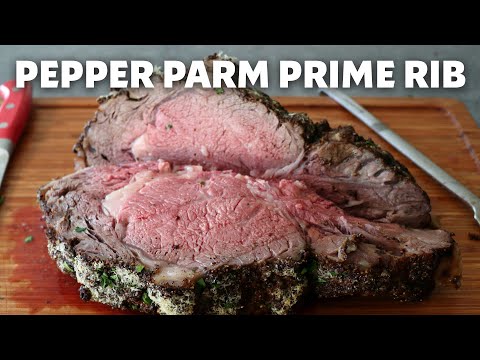
Pepper Parm Prime Rib | Perfectly Juicy Prime Rib Method | Food Wishes
 24:10
24:10
Inside Malaysia’s Controversial Anti-Corruption Commission | Bloomberg Investigates
"The hotel's prime location makes it a favorite for tourists."
Learn it in Context
This Word in Other Languages
More Language words
humanus
C2A Latin adjective meaning 'human', 'kind', or 'refined', serving as the etymological root for English words such as 'human', 'humane', and 'humanity'. It is often cited in academic, biological, or philosophical contexts to discuss the nature of mankind.
transferable
B2A quality, skill, or asset that can be moved from one person, place, or situation to another. In academic and professional contexts, it often refers to 'transferables'—competencies gained in one environment that are applicable in a different field or role.
overall
B2Describing the total or general nature of something when all parts or factors are considered together. It refers to the whole of a situation rather than specific details or individual components.
code
B2A system of words, letters, figures, or other symbols used to represent others, especially for the purposes of secrecy or computer programming. It also refers to a set of rules or principles that a group of people agree to follow.
roughly
B1Used to indicate that a number or amount is approximate rather than exact; also describes actions done with force or without care, or something done in a preliminary way.
definite
B2To be clearly stated, certain, or fixed in nature. It describes something that is not vague and leaves no room for doubt or confusion.
omni
B1A prefix and combining form used in the English language to mean 'all' or 'every.' It is derived from the Latin word 'omnis' and is typically used to describe things that are universal, all-encompassing, or present in every possible way.
limit
B1A point or level beyond which something does not or may not extend or pass. It also refers to a restriction on the size or amount of something permissible or possible.
topic
B2A topic is a specific subject that is being discussed, written about, or studied. It serves as the central focus or theme of a conversation, book, or academic paper.
modifier
B2A word, phrase, or clause that functions as an adjective or adverb to describe another word or group of words. It provides additional details about the head word.

