









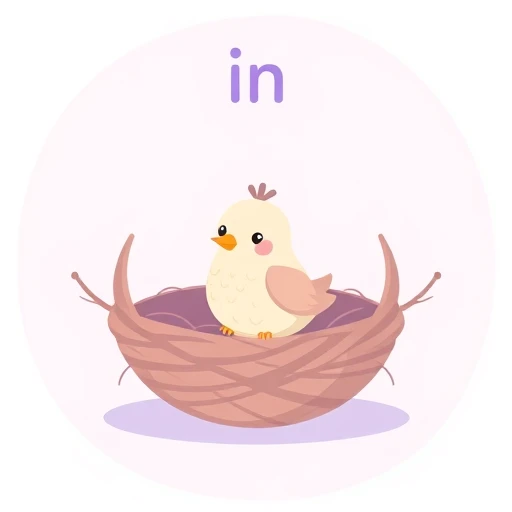
En in 30 Seconds
- A versatile preposition translating to 'in', 'on', or 'at' in English.
- Used for static locations, months, years, and modes of transportation.
- Required by certain verbs like 'pensar en' (think about) and 'confiar en' (trust).
- Never used for days of the week or as a preposition for destinations.
The Spanish preposition en is perhaps one of the most versatile and frequently used words in the entire Spanish language. For English speakers, it serves as a linguistic 'Swiss Army knife' because it simultaneously covers the territory of three distinct English prepositions: in, on, and at. This lack of differentiation can be a source of confusion for beginners, but once mastered, it simplifies the mental mapping of spatial and temporal relationships. When you want to describe something being contained within a space, resting upon a surface, or located at a specific point, en is your primary tool. It is the foundational building block for establishing context in nearly every sentence involving location, time, or state of being.
- Spatial Containment (In)
- This is the most direct translation. When an object is inside a box, a room, or a country, Spanish uses en. For example, 'El libro está en la caja' (The book is in the box). Unlike English, which might distinguish between being 'inside' a building and just 'at' the building, Spanish often uses en for both unless specific emphasis on the interior is required.
Mis llaves están en mi bolso.
- Surface Location (On)
- In English, we distinguish between being 'in' a drawer and 'on' a table. In Spanish, en handles both. 'El vaso está en la mesa' means 'The glass is on the table.' While 'sobre' or 'encima de' can be used for 'on top of,' en is the most common way to express general surface contact in everyday speech.
Hay un cuadro muy bonito en la pared.
- Specific Point (At)
- When referring to being 'at' a location like the supermarket, the airport, or a party, Spanish defaults to en. 'Nos vemos en el cine' (We'll see each other at the cinema). This is a frequent pitfall for English speakers who try to use 'a' for 'at,' but 'a' implies direction or movement toward the cinema, whereas en indicates the meeting point itself.
Te espero en la entrada del restaurante.
Beyond physical space, en is the standard preposition for time periods like months, years, and seasons. You will hear it in 'en enero' (in January), 'en 2024' (in 2024), and 'en verano' (in summer). It also extends to modes of transportation; while English says 'by bus' or 'on a plane,' Spanish consistently uses 'en autobús' or 'en avión.' This uniformity makes it a powerful word to learn early on. Whether you are discussing a state of mind ('en paz'), a professional status ('en huelga'), or a language ('en español'), en provides the necessary context to ground your sentence in reality.
Prefiero viajar en tren porque es más relajante.
Estamos en una situación muy complicada ahora mismo.
Using en correctly requires understanding its relationship with the words that follow it. Structurally, it is a preposition, meaning it usually precedes a noun or a noun phrase to show a relationship between that noun and another part of the sentence. One of the most common structures is Verb + en + Noun. For instance, 'Vivo en Madrid' (I live in Madrid). Here, en links the action of living to the specific geographic location. Unlike some other prepositions in Spanish, en does not contract with the definite articles 'el' or 'la'. You will always write 'en el' or 'en la' as separate words.
- Transportation Phrases
- Spanish is remarkably consistent with transportation. If you are inside a vehicle, you use en. This applies to 'en coche' (by car), 'en metro' (by subway), 'en bicicleta' (by bicycle), and even 'en barco' (by boat). The only major exception is 'a pie' (on foot) and 'a caballo' (on horseback), where 'a' is used because you are not 'inside' the mode of transport.
Llegamos a la oficina en taxi porque llovía mucho.
- Temporal Expressions
- When talking about when something happens, en is used for months ('en agosto'), years ('en 1492'), and seasons ('en invierno'). However, be careful with days of the week. In English, we say 'on Monday,' but in Spanish, we say 'el lunes.' Using en with days of the week is a common beginner error. Use en for larger blocks of time but not for specific days.
Nací en octubre, justo cuando empieza el otoño.
- Verbs Requiring 'En'
- Some Spanish verbs are 'married' to the preposition en. To express 'to think about something,' you use 'pensar en'. To 'trust someone,' you use 'confiar en'. To 'insist on,' you use 'insistir en'. These are fixed patterns that don't always match English logic, so they must be memorized as units.
Siempre pienso en mi familia cuando estoy lejos de casa.
Another important usage is expressing the language something is written or spoken in. We say 'Hablo en español' (I speak in Spanish) or 'El libro está escrito en inglés' (The book is written in English). It also appears in many adverbial phrases that describe the manner of an action, such as 'en silencio' (in silence), 'en voz alta' (out loud), or 'en serio' (seriously). These phrases act as modifiers to the verb, providing depth to how an action is performed. Finally, en is used to indicate a state or condition, like 'en venta' (for sale) or 'en construcción' (under construction). Its role in these functional labels is vital for navigating daily life in a Spanish-speaking environment.
¿Lo dices en serio o es una broma?
Confío plenamente en tus habilidades para este trabajo.
Because en is a fundamental preposition, you will hear it in almost every auditory environment in the Spanish-speaking world. From the moment you step onto a plane or bus, the announcements will use en to indicate your location or the next stop. In a city like Madrid or Mexico City, the automated voice on the subway might say, 'Próxima parada: Sol. Correspondencia con líneas 1 y 2. Salida en calle Mayor.' Here, en is providing the precise location of the exit. It is the language of navigation and logistics, essential for anyone trying to find their way around.
- In the Marketplace
- If you are shopping in a traditional 'mercado,' you will hear vendors shouting prices or describing their goods. '¡Tomates en oferta!' (Tomatoes on sale!) or 'Pescado fresco en el mostrador' (Fresh fish on the counter). It is used to draw attention to where things are and what state they are in. Customers might ask, '¿Lo tiene en otro color?' (Do you have it in another color?), showing how en is used for attributes and variations.
¿Tienen estas zapatillas en la talla cuarenta?
- In Media and News
- News broadcasts are saturated with en. Reporters will say, 'Estamos en directo desde Bogotá' (We are live from Bogota) or 'El accidente ocurrió en la autopista' (The accident occurred on the highway). It provides the 'where' and 'when' of every news story. You will also see it in headlines: 'Crisis en el sector energético' or 'Cambios en el gobierno,' where it functions to narrow the scope of the topic being discussed.
El presidente habló en cadena nacional sobre la economía.
- Social and Casual Settings
- In casual conversation, en is everywhere. Friends will ask, '¿Dónde estás?' and the answer will almost always start with en: 'En el bar,' 'En casa de mi madre,' 'En el trabajo.' It is also used in common fillers and idiomatic expressions that pepper daily speech, like 'en fin' (anyway/in short) or 'en realidad' (actually). These phrases help manage the flow of conversation and provide nuance to the speaker's intent.
En realidad, no me gusta mucho la comida picante.
In literature and music, en is used to create atmosphere and setting. Songs often use it to place the listener in a specific emotional or physical state: 'En el muelle de San Blas' (on the pier of San Blas) or 'En un rincón del alma' (in a corner of the soul). Its simplicity allows the surrounding nouns and adjectives to carry the poetic weight. Whether you are reading a high-brow novel by Gabriel García Márquez or listening to a reggaeton hit, en is the invisible thread that connects characters to their world. It is so common that native speakers barely notice it, yet without it, the Spanish language would lose its ability to ground itself in time and space.
Todo cambió en un abrir y cerrar de ojos.
Nos vemos en la fiesta esta noche, ¡no faltes!
For English speakers, the most frequent mistakes with en stem from the fact that English uses multiple prepositions (in, on, at, by) where Spanish uses just one. However, the reverse is also true: there are times when English uses 'in' or 'at' but Spanish requires a different preposition entirely. The most significant area of confusion is the distinction between en (location) and a (destination). Beginners often say 'Voy en el parque' when they mean 'I am going to the park.' In Spanish, 'Voy en el parque' would mean you are already inside the park and are walking around within it. To express movement toward a destination, you must use 'a': 'Voy al parque.'
- Days of the Week
- This is a classic 'Spanglish' error. English speakers want to say 'En lunes' because they say 'On Monday.' In Spanish, the definite article 'el' or 'los' acts as the preposition for days. 'El lunes' means 'on Monday.' Using en here sounds very unnatural to native ears. Remember: en for months and years, but el for days.
Incorrecto: En sábado voy a la playa. Correcto: El sábado voy a la playa.
- Entering a Place
- The verb 'entrar' (to enter) is a tricky one. In English, we 'enter the room' (no preposition). In Spanish, you 'entrar en' or 'entrar a' the room. Many learners forget the preposition entirely. 'Entré la habitación' is incorrect; it must be 'Entré en la habitación.' While 'entrar a' is common in Latin America, 'entrar en' is the standard in Spain and formal writing.
El gato entró en la cocina buscando comida.
- Thinking and Dreaming
- Verbs like 'pensar' (to think) and 'soñar' (to dream) use en and con respectively, which often confuses English speakers. You 'pensar en' (think about) someone, but you 'soñar con' (dream about) someone. Using 'pensar sobre' is possible but much less common than 'pensar en'. Using 'soñar en' is a direct translation from English 'dream in' (like 'dream in Spanish') but doesn't work for 'dream about'.
No puedo dejar de pensar en el examen de mañana.
Another subtle mistake involves 'en' versus 'de' when describing what something is made of. In English, we might say 'the man in the hat,' but in Spanish, it's often 'el hombre del sombrero' (the man of the hat) or 'el hombre con el sombrero' (the man with the hat). However, if you are describing a person 'in' a certain state or 'in' a uniform, en is correct: 'el hombre en pijama.' Finally, avoid using en for 'by' when referring to an author or creator. 'Un libro en Cervantes' is wrong; it must be 'Un libro de Cervantes.' En is for location, time, and mode, not for authorship or origin.
Vi a un hombre en uniforme militar en la estación.
¿Estás en casa o sigues en la oficina?
While en is the general-purpose preposition for location, Spanish offers several more specific alternatives that allow for greater precision. Understanding when to use en versus these more descriptive terms is key to achieving a higher level of fluency. If en is a wide-angle lens, words like 'dentro de,' 'sobre,' and 'dentro' are the zoom lenses that focus on specific spatial relationships.
- En vs. Dentro de
- En is general; dentro de is specific. 'Estoy en la casa' means 'I am at/in the house.' 'Estoy dentro de la casa' emphasizes that you are specifically inside the interior space, perhaps contrasting with being in the garden or on the porch. Use dentro de when the 'insideness' is the most important part of your message.
El dinero está en el sobre, dentro de aquel cajón.
- En vs. Sobre / Encima de
- While en can mean 'on,' sobre and encima de are more explicit. 'El libro está en la mesa' is common. 'El libro está sobre la mesa' is slightly more formal. 'El libro está encima de la mesa' is very common in spoken Spanish to emphasize the physical position on top of the surface. If you want to say something is 'on' a topic (like a book 'on' history), you must use sobre, never en.
Puse las llaves sobre el mueble que está en la entrada.
- En vs. A
- As mentioned in common mistakes, en is static (location), while a is dynamic (direction). However, with time, a is used for specific hours ('a las cinco'), while en is used for months and years. Also, 'a' is used for distances: 'El pueblo está a diez kilómetros.' You cannot use en for distance.
Llegamos a Madrid en el tren de las diez.
Another alternative is 'por,' which can mean 'through' or 'around.' 'Camino en el parque' means you are walking inside the park. 'Camino por el parque' means you are walking through or around the park. 'Por' suggests a route or a less defined area of movement. Finally, 'entre' means 'between' or 'among.' If you are not just 'in' a group but 'among' them, 'entre' is the word. 'Estoy entre amigos' (I am among friends) is more descriptive than 'Estoy en un grupo de amigos.' Mastering these distinctions allows you to paint a much clearer picture of the world around you in Spanish.
Hay un pequeño error entre la línea cinco y la seis.
La película empieza dentro de media hora.
How Formal Is It?
Fun Fact
Unlike English, which kept 'in' and 'on' as separate words from Old English, Spanish merged the Latin 'in' (into/in) and 'super' (on) functions into 'en' for general use, though 'sobre' remains for specific 'on' meanings.
Pronunciation Guide
- Pronouncing it like the English word 'in' (with an 'i' sound).
- Over-nasalizing the 'n' so it sounds like 'em' before 'p' or 'b'.
- Stressing the word too much; it should be short and quick.
- Merging it with the next word's vowel incorrectly.
- Pronouncing the 'e' like 'ay' (as in 'say').
Difficulty Rating
Very easy to recognize as it is short and appears frequently.
Easy, but requires care with prepositional verbs like 'pensar en'.
Requires practice to avoid using English 'on' or 'at' logic.
Very common, though it can blend into the following article.
What to Learn Next
Prerequisites
Learn Next
Advanced
Grammar to Know
Prepositional Verbs
Pensar en, confiar en, insistir en.
Static Location
Estar en + place (not for movement).
Time Periods
En + month/year/season (not for days).
Transportation
En + vehicle (except 'a pie').
No Contraction
En el (never 'el' or 'en' merging like 'al' or 'del').
Examples by Level
El gato está en la cocina.
The cat is in the kitchen.
Uses 'en' for a physical location inside a room.
Vivo en una ciudad grande.
I live in a big city.
Uses 'en' for living in a geographic area.
El libro está en la mesa.
The book is on the table.
In this context, 'en' translates to 'on'.
Estamos en el restaurante.
We are at the restaurant.
Uses 'en' for being 'at' a specific establishment.
Viajo en tren.
I travel by train.
Uses 'en' for a mode of transportation.
Mi cumpleaños es en agosto.
My birthday is in August.
Uses 'en' for months of the year.
Hay mucha gente en la calle.
There are many people in the street.
Uses 'en' for location in a public space.
Pongo la ropa en el armario.
I put the clothes in the closet.
Uses 'en' for putting something inside a container.
Nieve mucho en invierno.
It snows a lot in winter.
Uses 'en' for seasons.
Hablamos en voz baja en la biblioteca.
We speak in a low voice in the library.
Uses 'en' for the manner or state of an action.
Entramos en el cine tarde.
We entered the cinema late.
The verb 'entrar' is followed by 'en'.
Ella trabaja en una oficina.
She works in an office.
Uses 'en' for workplace location.
Nací en el año dos mil.
I was born in the year 2000.
Uses 'en' for specific years.
El hotel está en el centro.
The hotel is in the center.
Uses 'en' for location within a city district.
Me gusta leer en la cama.
I like to read in bed.
Uses 'en' for location on/in furniture.
Esperamos en la cola.
We wait in line.
Uses 'en' for being part of a formation.
Pienso en ti todos los días.
I think about you every day.
The verb 'pensar' requires 'en' when it means 'to think about'.
Confío en mi mejor amigo.
I trust my best friend.
The verb 'confiar' requires 'en'.
En realidad, no quiero ir.
Actually, I don't want to go.
'En realidad' is a common adverbial phrase meaning 'actually'.
Insistió en pagar la cuenta.
He insisted on paying the bill.
The verb 'insistir' requires 'en'.
Me fijé en su nuevo peinado.
I noticed her new hairstyle.
The verb 'fijarse' (to notice) requires 'en'.
El libro está escrito en francés.
The book is written in French.
Uses 'en' for the language of a medium.
Estamos en huelga por mejores salarios.
We are on strike for better salaries.
Uses 'en' to describe a professional or social state.
Se convirtió en un gran actor.
He became a great actor.
The verb 'convertirse' (to become) requires 'en'.
En cuanto a los planes, ya veremos.
As for the plans, we'll see.
'En cuanto a' is a connector meaning 'as for' or 'regarding'.
Se empeñó en terminar el proyecto solo.
He persisted in finishing the project alone.
The verb 'empeñarse' (to persist/insist) requires 'en'.
Quedamos en vernos a las ocho.
We agreed to meet at eight.
The verb 'quedar' (to agree/arrange) requires 'en' in this context.
Tardó en llegar por el tráfico.
It took him a while to arrive because of traffic.
The verb 'tardar' (to take time) is followed by 'en' + infinitive.
En absoluto estoy de acuerdo contigo.
I don't agree with you at all.
'En absoluto' is a strong negation meaning 'not at all'.
En vista de los resultados, cancelamos el plan.
In view of the results, we cancelled the plan.
'En vista de' is a formal connector meaning 'given' or 'considering'.
Todo ocurrió en un abrir y cerrar de ojos.
Everything happened in the blink of an eye.
An idiom for something happening very quickly.
Se basa en hechos reales.
It is based on real events.
The verb 'basarse' (to be based) requires 'en'.
La belleza reside en la sencillez.
Beauty lies in simplicity.
Uses 'en' for abstract residence or location of a quality.
En sí mismo, el problema no es grave.
In itself, the problem is not serious.
'En sí mismo' is a formal phrase meaning 'in and of itself'.
Actuó en calidad de representante legal.
He acted in the capacity of a legal representative.
'En calidad de' is a formal phrase for roles or capacities.
En su defecto, usaremos la otra opción.
Failing that, we will use the other option.
'En su defecto' is a formal way to say 'if that is not possible'.
El éxito consiste en perseverar.
Success consists in persevering.
The verb 'consistir' requires 'en'.
Lo dijo en tono de burla.
He said it in a mocking tone.
Uses 'en' to describe the tone or manner of speech.
Estamos en vísperas de un gran cambio.
We are on the eve of a great change.
'En vísperas de' means 'on the eve of' or 'just before'.
Se deleita en la lectura de clásicos.
He delights in reading classics.
The verb 'deleitarse' (to delight) requires 'en'.
Su discurso abundó en metáforas complejas.
His speech abounded in complex metaphors.
The verb 'abundar' (to abound) is followed by 'en'.
Se halla en un estado de postración absoluta.
He is in a state of absolute prostration.
Highly formal use of 'en' for physical/mental states.
El contrato se firmó en triplicado.
The contract was signed in triplicate.
Legal/administrative use for document copies.
En resumidas cuentas, hemos fracasado.
In short, we have failed.
A sophisticated way to summarize a situation.
La ley entró en vigor el mes pasado.
The law came into force last month.
'Entrar en vigor' is the standard phrase for laws becoming active.
Se obstinó en su error a pesar de las pruebas.
He persisted in his error despite the evidence.
The verb 'obstinarse' (to be stubborn/persist) requires 'en'.
En última instancia, la decisión es tuya.
Ultimately, the decision is yours.
'En última instancia' means 'as a last resort' or 'ultimately'.
El artista se recrea en los detalles mínimos.
The artist dwells on the smallest details.
The verb 'recrearse' (to dwell on/enjoy) requires 'en'.
Synonyms
Antonyms
Common Collocations
Common Phrases
— Used to wrap up a conversation or express resignation. Similar to 'anyway' or 'all in all'.
En fin, tendremos que esperar.
— Used to introduce a topic. Similar to 'as for' or 'regarding'.
En cuanto a la comida, estaba deliciosa.
— Used to describe being in the middle of a place or situation.
Estamos en medio de una tormenta.
— Used to summarize a point. Similar to 'in summary'.
En resumen, el proyecto fue un éxito.
— Used to say something is underway or moving. Similar to 'on the go'.
El plan ya está en marcha.
Often Confused With
Confused when expressing destination vs location.
Confused when expressing origin vs location.
Confused when expressing movement through vs location inside.
Idioms & Expressions
— In the blink of an eye; very quickly.
Se fue en un abrir y cerrar de ojos.
informal/neutral— To have one's head in the clouds; to be distracted.
Juan siempre está en las nubes.
informal— To be in its infancy; to be very new or undeveloped.
El proyecto aún está en pañales.
informal— To be the talk of the town; something everyone is talking about.
Su divorcio está en boca de todos.
neutral— Very far away; in the middle of nowhere.
Su casa está en el quinto pino.
informal (Spain)Easily Confused
Both can translate to 'at' in English.
'A' is for time of day and destination; 'en' is for general location and months/years.
Voy a la escuela (destination) vs Estoy en la escuela (location).
Both can mean 'on'.
'En' is general; 'sobre' is specifically 'on top of' or 'about' a topic.
El libro está en la mesa vs El libro es sobre historia.
Both can mean 'in'.
'En' is general; 'dentro de' specifically emphasizes being inside an interior.
Estoy en el coche vs Estoy dentro del coche.
Both can describe location.
'En' is a fixed point; 'por' is a general area or movement through.
Camino en el parque (inside) vs Camino por el parque (through).
English 'dream about' uses 'about', but Spanish 'soñar con' uses 'con', while 'pensar en' uses 'en'.
These are fixed prepositional verbs that must be learned individually.
Pienso en ti vs Sueño con un viaje.
Sentence Patterns
Sujeto + estar + en + lugar
Yo estoy en la tienda.
Sujeto + vivir + en + ciudad
Ellos viven en Barcelona.
Sujeto + viajar + en + transporte
Nosotros viajamos en autobús.
Evento + ser + en + mes
La fiesta es en junio.
Sujeto + pensar + en + algo/alguien
Pienso en mis vacaciones.
Sujeto + confiar + en + alguien
Confío en mi hermana.
En cuanto a + tema, + opinión
En cuanto al precio, es caro.
En calidad de + rol, + acción
Habló en calidad de experto.
Word Family
Related
How to Use It
Extremely high; one of the top 10 most common words in Spanish.
-
Voy en el cine.
→
Voy al cine.
You use 'a' for destination. 'En' is only for being already at the location.
-
En lunes voy a trabajar.
→
El lunes voy a trabajar.
Days of the week use the definite article, not 'en'.
-
Pienso de ti.
→
Pienso en ti.
The verb 'pensar' requires 'en' to mean 'to think about someone'.
-
Entré la habitación.
→
Entré en la habitación.
The verb 'entrar' usually requires the preposition 'en' (or 'a' in some regions).
-
Un libro en Gabriel García Márquez.
→
Un libro de Gabriel García Márquez.
Use 'de' for authorship, not 'en'.
Tips
Static vs Dynamic
Use 'en' for where you are (static) and 'a' for where you are going (dynamic). Never say 'Voy en la playa' unless you are already on the sand walking around.
Transport Rule
If it has an engine or you sit inside it, use 'en'. If you are using your own legs or an animal, use 'a'. This covers 99% of travel situations.
Avoid Overuse
While 'en' is versatile, try using 'dentro de' or 'encima de' in your writing to sound more descriptive and advanced.
The Short E
Make sure the 'e' in 'en' is short and crisp, like in the English word 'egg'. Don't let it slide into an 'i' or 'ay' sound.
En Serio
Use '¿En serio?' as a response to surprising news. it's the equivalent of 'Really?' or 'Seriously?' and makes you sound very natural.
Months and Years
Always use 'en' for months and years. 'En enero', 'en 2025'. It's one of the most consistent rules in the language.
Verb Pairings
Memorize 'pensar en' and 'confiar en' as single units. Don't try to translate the 'about' or 'in' from English; just learn the Spanish pair.
Regional Time
If you are in Spain, use 'por la mañana'. If you are in Mexico, 'en la mañana' is perfectly fine. Observe the locals and adapt!
The Container Concept
Think of 'en' as a container. Whether it's a physical box, a month of time, or a state of mind, 'en' puts you inside that container.
No Contractions
Double-check your 'en el' and 'en la'. Ensure they are separate. It's a small detail that makes a big difference in writing quality.
Memorize It
Mnemonic
Think of 'EN' as 'Everywhere Now'. It's the word you use for where you are right now, whether you are IN a room, ON a chair, or AT a party.
Visual Association
Imagine a giant circle. Anything inside the circle, on the line of the circle, or at a point on the circle is 'EN'.
Word Web
Challenge
Try to describe your entire morning routine using only sentences that contain the word 'en'. For example: 'Me despierto en la cama. Desayuno en la cocina. Voy al trabajo en metro.'
Word Origin
Derived from the Latin preposition 'in', which served similar functions of location and time.
Original meaning: In, within, into.
Romance (Indo-European)Cultural Context
No specific sensitivities, but be aware of regional preferences for 'en' vs 'por' in time expressions.
English speakers often struggle with 'en' because they overthink the difference between 'in', 'on', and 'at'.
Practice in Real Life
Real-World Contexts
At home
- en la cocina
- en el baño
- en el salón
- en el jardín
Traveling
- en avión
- en tren
- en coche
- en la estación
Time
- en verano
- en Navidad
- en un momento
- en el futuro
Work/Study
- en la oficina
- en clase
- en el ordenador
- en huelga
Abstract
- en serio
- en broma
- en realidad
- en paz
Conversation Starters
"¿Dónde estás en este momento?"
"¿Prefieres viajar en tren o en avión?"
"¿En qué mes es tu cumpleaños?"
"¿Qué piensas en hacer este fin de semana?"
"¿Confías en las noticias que ves en la televisión?"
Journal Prompts
Describe tres objetos que tienes en tu mochila ahora mismo.
Escribe sobre un viaje que hiciste en tren o en barco.
¿En qué país te gustaría vivir en el futuro y por qué?
Describe cómo te sientes cuando estás en paz.
Escribe sobre algo en lo que crees profundamente.
Frequently Asked Questions
10 questionsYes, especially with verbs of movement like 'entrar'. For example, 'Entrar en la casa' means 'To enter into the house'. In this context, it shows the transition from outside to inside.
Spanish uses the definite article 'el' or 'los' to act as the preposition for days of the week. 'El lunes' literally means 'the Monday' but translates to 'on Monday'. Using 'en' here is a direct translation error from English.
Yes, it is very common in Latin America. However, in Spain, people prefer to say 'por la mañana'. Both are grammatically correct and widely understood across the Spanish-speaking world.
'En' is the general word for 'on' or 'in'. 'Sobre' is more specific, meaning 'on top of' or 'about' (a topic). If you say 'El libro está en la mesa', it's perfectly fine. If you say 'El libro está sobre la mesa', it's slightly more formal or precise.
Use 'en' for any vehicle you are inside of: 'en coche', 'en tren', 'en avión', 'en autobús', 'en metro', 'en barco'. The only exceptions are 'a pie' (on foot) and 'a caballo' (on horseback).
No. Unlike 'a + el = al' and 'de + el = del', 'en' never contracts. You must always write and say 'en el' as two separate words.
Yes, you say 'en casa de [nombre]'. For example, 'Estoy en casa de María' means 'I am at Maria's house'. You can also just say 'en lo de María' in some regions like Argentina.
The most precise way is 'dentro de cinco minutos'. While some people use 'en cinco minutos' due to English influence, 'dentro de' is the traditional and more correct way to express 'in' for future duration.
Yes, 'pensar en' is the standard way to express focusing your thoughts on someone or something. 'Pensar de' is used to ask for an opinion ('¿Qué piensas de esto?'), and 'pensar sobre' is less common but used for deep reflection on a topic.
'En fin' is a very common filler phrase. It can mean 'anyway', 'in short', or 'oh well'. It is used to transition between topics or to conclude a thought when you don't want to elaborate further.
Test Yourself 180 questions
Translate: I am in the house.
Well written! Good try! Check the sample answer below.
Translate: The book is on the table.
Well written! Good try! Check the sample answer below.
Translate: We travel by bus.
Well written! Good try! Check the sample answer below.
Translate: I think about you.
Well written! Good try! Check the sample answer below.
Translate: It is in January.
Well written! Good try! Check the sample answer below.
Translate: I live in Spain.
Well written! Good try! Check the sample answer below.
Translate: Are you serious?
Well written! Good try! Check the sample answer below.
Translate: Actually, I don't know.
Well written! Good try! Check the sample answer below.
Translate: He is at work.
Well written! Good try! Check the sample answer below.
Translate: I trust my friends.
Well written! Good try! Check the sample answer below.
Translate: We are on strike.
Well written! Good try! Check the sample answer below.
Translate: The car is for sale.
Well written! Good try! Check the sample answer below.
Translate: I was born in 2005.
Well written! Good try! Check the sample answer below.
Translate: Speak in a low voice.
Well written! Good try! Check the sample answer below.
Translate: Regarding the plan...
Well written! Good try! Check the sample answer below.
Translate: I agree to meet you.
Well written! Good try! Check the sample answer below.
Translate: In short, it's good.
Well written! Good try! Check the sample answer below.
Translate: I noticed the car.
Well written! Good try! Check the sample answer below.
Translate: He became a doctor.
Well written! Good try! Check the sample answer below.
Translate: In the blink of an eye.
Well written! Good try! Check the sample answer below.
Describe where you are right now using 'en'.
Read this aloud:
You said:
Speech recognition is not supported in your browser. Try Chrome or Edge.
Say what month you were born in.
Read this aloud:
You said:
Speech recognition is not supported in your browser. Try Chrome or Edge.
Tell me how you travel to work or school.
Read this aloud:
You said:
Speech recognition is not supported in your browser. Try Chrome or Edge.
Ask someone if they are serious.
Read this aloud:
You said:
Speech recognition is not supported in your browser. Try Chrome or Edge.
Say that you think about your future.
Read this aloud:
You said:
Speech recognition is not supported in your browser. Try Chrome or Edge.
Tell someone to leave you in peace.
Read this aloud:
You said:
Speech recognition is not supported in your browser. Try Chrome or Edge.
Say that you trust your best friend.
Read this aloud:
You said:
Speech recognition is not supported in your browser. Try Chrome or Edge.
Describe a book you read in Spanish.
Read this aloud:
You said:
Speech recognition is not supported in your browser. Try Chrome or Edge.
Say that you are in a hurry.
Read this aloud:
You said:
Speech recognition is not supported in your browser. Try Chrome or Edge.
Say that you agree to help.
Read this aloud:
You said:
Speech recognition is not supported in your browser. Try Chrome or Edge.
Summarize your day using 'en resumen'.
Read this aloud:
You said:
Speech recognition is not supported in your browser. Try Chrome or Edge.
Say that something happened very fast.
Read this aloud:
You said:
Speech recognition is not supported in your browser. Try Chrome or Edge.
Say that you don't like something at all.
Read this aloud:
You said:
Speech recognition is not supported in your browser. Try Chrome or Edge.
Ask where the keys are.
Read this aloud:
You said:
Speech recognition is not supported in your browser. Try Chrome or Edge.
Say that you are live (on TV/Radio).
Read this aloud:
You said:
Speech recognition is not supported in your browser. Try Chrome or Edge.
Say that you are in love.
Read this aloud:
You said:
Speech recognition is not supported in your browser. Try Chrome or Edge.
Say that you are in a bad mood.
Read this aloud:
You said:
Speech recognition is not supported in your browser. Try Chrome or Edge.
Say that you are in the center of the city.
Read this aloud:
You said:
Speech recognition is not supported in your browser. Try Chrome or Edge.
Say that you are on the team.
Read this aloud:
You said:
Speech recognition is not supported in your browser. Try Chrome or Edge.
Say that you are in silence.
Read this aloud:
You said:
Speech recognition is not supported in your browser. Try Chrome or Edge.
Listen and write: 'Estamos en el cine.'
Listen and write: 'Viajo en tren.'
Listen and write: 'Pienso en ti.'
Listen and write: '¿En serio?'
Listen and write: 'En realidad, no.'
Listen and write: 'Confío en él.'
Listen and write: 'En fin, adiós.'
Listen and write: 'Vivo en España.'
Listen and write: 'Es en verano.'
Listen and write: 'Está en venta.'
Listen and write: 'En absoluto.'
Listen and write: 'En un momento.'
Listen and write: 'Habla en voz baja.'
Listen and write: 'En cuanto a eso...'
Listen and write: 'En un abrir y cerrar de ojos.'
/ 180 correct
Perfect score!
Summary
The word 'en' is the universal marker for location and time blocks in Spanish. Unlike English, which splits these concepts into 'in', 'on', and 'at', Spanish uses 'en' for almost all static positions. Example: 'Estoy en el coche' (I am in the car).
- A versatile preposition translating to 'in', 'on', or 'at' in English.
- Used for static locations, months, years, and modes of transportation.
- Required by certain verbs like 'pensar en' (think about) and 'confiar en' (trust).
- Never used for days of the week or as a preposition for destinations.
Static vs Dynamic
Use 'en' for where you are (static) and 'a' for where you are going (dynamic). Never say 'Voy en la playa' unless you are already on the sand walking around.
Transport Rule
If it has an engine or you sit inside it, use 'en'. If you are using your own legs or an animal, use 'a'. This covers 99% of travel situations.
Avoid Overuse
While 'en' is versatile, try using 'dentro de' or 'encima de' in your writing to sound more descriptive and advanced.
The Short E
Make sure the 'e' in 'en' is short and crisp, like in the English word 'egg'. Don't let it slide into an 'i' or 'ay' sound.
Related Content
Learn it in Context
This Word in Other Languages
Related Phrases
More general words
abajo
A1Down, downstairs, below.
abandonar
B1To leave a place or person, often permanently.
abierta
A1Open (female); not closed or restricted.
abierto
A1Open.
abierto/a
A2Not closed or sealed; open.
Abrir
A1To open
absolutamente
A2Completely, totally, or without qualification.
abstención
B2Abstention, the act of refraining from voting or participation.
abstenerse
B2To abstain, refrain, or hold oneself back from doing something.
Abundancia
B2A large quantity or ample supply of something; plentifulness.

