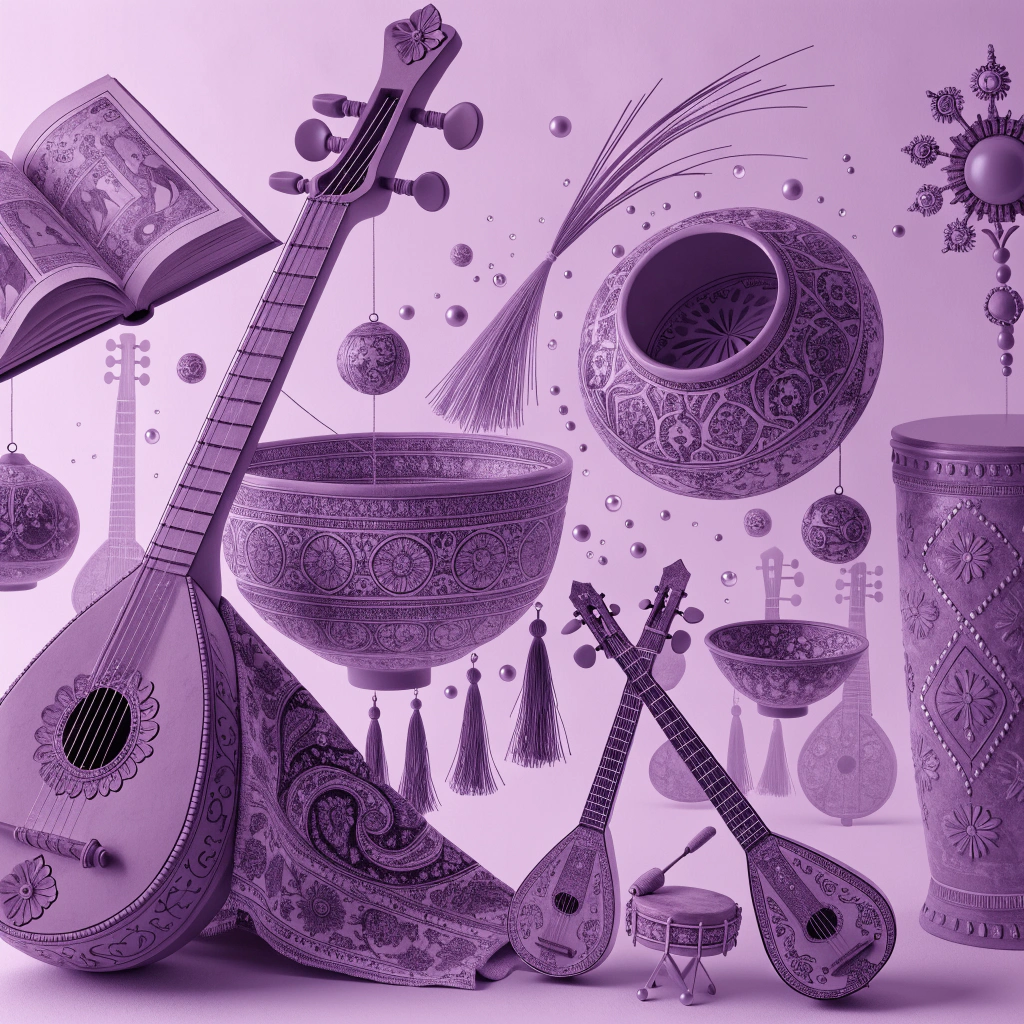
Beautiful Music from Iran
Iran has a special type of music. It is called the Radif. This music is very old. It is the heart of Iranian culture. Teachers show this music to their students. They do not use books in the classroom. Students listen and learn every day. There are twelve main parts in this musical system. People play instruments like the tar or the setar. The music is soft and beautiful. Many people in Iran love the Radif. It is very important for the people.
Gramática em destaque
Padrão: Present Simple 'to be'
"This music is very old."
We use 'is' for one thing. It describes a fact or a state in the present.
Padrão: Present Simple (Plural)
"Students listen and learn every day."
With plural subjects like 'students', we use the base form of the verb without an 's'.
Teste sua compreensão
10 perguntas · A1 Iniciante · 1 pré-visualização grátis
Teste o que aprendeu neste artigo. Responda todas as perguntas para ganhar XP!
Where is this music from?
Quer finalizar o quiz?
9 perguntas a mais estão esperando por você. Cadastre-se grátis para desbloquear o quiz completo e ganhar XP!
Cadastrar grátisJá tem conta? Entrar
Detalhamento das perguntas
Where is this music from?
Sua resposta:
Resposta correta: Iran
Students use books to learn the Radif.
Sua resposta:
Resposta correta: Falso
What does 'students' mean?
Sua resposta:
Resposta correta: People who learn
The music is soft and _____.
Sua resposta:
Resposta correta: beautiful
The Beautiful Music of the Radif
Iranian music is very old and famous. The most important part of this music is called the Radif. It is a large collection of traditional melodies. This system is the heart of Persian culture.
The Radif has twelve main parts. These parts are called Dastgahs. Each Dastgah has a different feeling. Some are sad, and others are happy. Musicians must study for many years to learn them all.
In the past, students did not use books. They learned from a teacher, or Ostad. The student listened to the teacher and repeated the music. This was more difficult than reading music from a page, but it helped students remember every note.
Today, the Radif is still very popular in Iran. It is more important than other types of music because it connects people to their history. Many people go to concerts to hear these beautiful sounds. It is a special treasure for the whole world.
Gramática em destaque
Padrão: Past Simple (Negative)
"In the past, students did not use books."
To make a negative sentence in the past simple, we use 'did not' (or 'didn't') followed by the base form of the verb. This rule is the same for all subjects.
Padrão: Comparatives (Long Adjectives)
"This was more difficult than reading music from a page."
For adjectives with two or more syllables, we use 'more' + adjective + 'than' to compare two things. It shows one thing has a higher degree of a quality.
Teste sua compreensão
11 perguntas · A2 Elementar · 1 pré-visualização grátis
Teste o que aprendeu neste artigo. Responda todas as perguntas para ganhar XP!
What is the Radif?
Quer finalizar o quiz?
10 perguntas a mais estão esperando por você. Cadastre-se grátis para desbloquear o quiz completo e ganhar XP!
Cadastrar grátisJá tem conta? Entrar
Detalhamento das perguntas
What is the Radif?
Sua resposta:
Resposta correta: A collection of traditional melodies
The Radif has ten main parts.
Sua resposta:
Resposta correta: Falso
What does 'popular' mean?
Sua resposta:
Resposta correta: Something liked by many people
Each _____ has a different feeling.
Sua resposta:
Resposta correta: Dastgah
How did students learn music in the past?
Sua resposta:
Resposta correta: By listening to a teacher
The Heart of Persian Sound: Understanding the Radif
Iranian music has a very long history that has been preserved for centuries. At the center of this tradition is the Radif, which is a collection of many melodies and musical structures. It is often described as the 'backbone' of Persian classical music. The Radif is not just a list of songs; it is a complex system which has been taught by masters to their students through oral tradition.
The system is organized into twelve different modal structures called Dastgahs. These include seven main groups, such as Shur and Homayun. For hundreds of years, these melodies have been passed down from one generation to the next. Students, who are known as Shagerds, must spend many years studying with an Ostad, or master, to learn the Radif perfectly.
In the past, nothing was written down on paper. Instead, the music was memorized by the students. This oral tradition has ensured that the unique soul of the music remains alive. Today, the Radif has been recognized by UNESCO as an important part of the world's cultural heritage. Many modern musicians still use these ancient patterns to create new and exciting songs.
The Radif is more than just entertainment. It represents the identity of the Iranian people. Because the music has been protected by so many dedicated artists, people can still enjoy the same beautiful sounds that were played centuries ago. It is a living tradition that continues to inspire people around the world.
Gramática em destaque
Padrão: Passive Voice
"Instead, the music was memorized by the students."
The passive voice is used when the action is more important than the person doing it. It is formed using the verb 'to be' and the past participle.
Padrão: Present Perfect
"For hundreds of years, these melodies have been passed down from one generation to the next."
The present perfect connects the past to the present. It is used here to show an action that started in the past and continues to be true today.
Teste sua compreensão
11 perguntas · B1 Intermediário · 1 pré-visualização grátis
Teste o que aprendeu neste artigo. Responda todas as perguntas para ganhar XP!
What is the Radif described as in the article?
Quer finalizar o quiz?
10 perguntas a mais estão esperando por você. Cadastre-se grátis para desbloquear o quiz completo e ganhar XP!
Cadastrar grátisJá tem conta? Entrar
Detalhamento das perguntas
What is the Radif described as in the article?
Sua resposta:
Resposta correta: The backbone of Persian classical music
In the past, the Radif was primarily taught using written books.
Sua resposta:
Resposta correta: Falso
What does 'heritage' mean?
Sua resposta:
Resposta correta: Traditions from the history of a group
Students must study with a _____ to learn the Radif perfectly.
Sua resposta:
Resposta correta: master
How many main modal structures (Dastgahs) are there in the system?
Sua resposta:
Resposta correta: Twelve
The Radif of Iranian Music: A Masterpiece of Intangible Heritage
The Radif of Iranian music serves as the foundational repertoire of Persian classical music, acting as a melodic and modal framework that defines the nation's cultural identity. Far from being a mere collection of individual songs, the Radif represents an intricate system of musical knowledge that has been meticulously preserved over centuries. This tradition is typically conveyed through an oral transmission process from a master, known as an 'Ostad', to a dedicated student, or 'Shagerd'. This rigorous method ensures that not only the notes but also the emotional nuances of the music are maintained. Consequently, the Radif was officially recognized by UNESCO as part of the Intangible Cultural Heritage of Humanity in 2009.
At the heart of the Radif lies the Dastgah system, which categorizes musical pieces into twelve primary modal structures. These include seven main Dastgahs, such as Shur and Homayun, alongside five secondary modes known as Avaz. Each Dastgah consists of numerous melodic sequences called 'Gousheh', which provide the basis for improvisation. For a musician to master the Radif, they must spend years internalizing these sequences until the music becomes an extension of their own creative expression. This internalisation allows for a sophisticated level of improvisation, which is the hallmark of a true Persian virtuoso. Without this deep understanding, a performer would struggle to navigate the complex emotional landscapes required by the tradition.
Furthermore, the Radif is deeply intertwined with Persian poetry and philosophy. The melodies often mirror the rhythms of classical poems, creating a seamless blend of word and sound. This connection highlights the intellectual depth of the tradition, as performers are expected to be well-versed in literary works to truly convey the intended mood. Despite the rise of modern musical genres, the Radif continues to be the primary source of inspiration for contemporary Iranian composers, who often blend these ancient structures with modern styles.
In conclusion, the Radif is more than just a musical curriculum; it is a living testament to the resilience of Iranian culture. While the learning process is demanding, the rewards are profound, offering musicians a pathway to spiritual and artistic maturity. As long as the relationship between master and student remains intact, the echoes of the Radif will continue to resonate through the halls of history, preserving the soul of a civilization.
Gramática em destaque
Padrão: Passive Voice
"This tradition is typically conveyed through an oral transmission process from a master..."
The passive voice is used here to focus on the tradition itself rather than the person conveying it, which is common in formal and academic writing.
Padrão: Non-defining Relative Clauses
"The Dastgah system, which categorizes musical pieces into twelve primary modal structures, lies at the heart of the Radif."
This clause adds extra information about the Dastgah system. It is separated by commas because the sentence would still make sense without it.
Padrão: Concessive Clauses (While/Despite)
"While the learning process is demanding, the rewards are profound..."
The word 'while' is used to contrast two ideas in the same sentence, showing that despite the difficulty, there is a significant benefit.
Teste sua compreensão
11 perguntas · B2 Intermediário superior · 1 pré-visualização grátis
Teste o que aprendeu neste artigo. Responda todas as perguntas para ganhar XP!
What is the primary role of the Radif in Persian music?
Quer finalizar o quiz?
10 perguntas a mais estão esperando por você. Cadastre-se grátis para desbloquear o quiz completo e ganhar XP!
Cadastrar grátisJá tem conta? Entrar
Detalhamento das perguntas
What is the primary role of the Radif in Persian music?
Sua resposta:
Resposta correta: It serves as the modal and melodic framework for classical music.
The Radif was recognized by UNESCO in 2009.
Sua resposta:
Resposta correta: Verdadeiro
Which word describes a person with exceptional musical skill?
Sua resposta:
Resposta correta: Virtuoso
The Radif is organized into twelve primary modal structures known as the _____ system.
Sua resposta:
Resposta correta: Dastgah
How is the Radif traditionally taught?
Sua resposta:
Resposta correta: Through oral transmission from an Ostad to a Shagerd.
Resonance of the Ages: Deciphering the Radif of Iranian Classical Music
The preservation of Iranian cultural identity is inextricably linked to the Radif, a comprehensive repertoire that serves as the modal backbone of Persian classical music. Not merely a collection of melodies, the Radif represents a sophisticated system of musical knowledge passed down through the centuries. It is through the intricate tapestry of the twelve primary modal structures, known as the Dastgah system, that the emotional landscape of the Persian soul is articulated. This system provides a framework for both composition and performance, ensuring that the essence of the tradition remains intact while allowing for individual expression.
Seldom does a tradition demand such rigorous dedication as that required of the Shagerd, or student, under the tutelage of an Ostad. This pedagogical lineage is predicated on an oral tradition where nuances—the subtle microtones and rhythmic inflections—are transmitted without the crutch of Western notation. Indeed, what the Radif offers is a blueprint for improvisation, a framework within which the performer can navigate the delicate balance between discipline and creative spontaneity. To master the Radif is to internalize thousands of melodic fragments, known as Goushehs, until they become a second language for the musician.
Central to this system is the concept of the 'Gousheh'. These melodic motifs act as the building blocks of a performance, allowing for a gradual progression through various modal shifts. Nominalization of these musical concepts often fails to capture their ephemeral nature; they are lived experiences rather than static rules. The seven main Dastgahs, including Shur and Homayun, provide distinct emotional environments, ranging from the contemplative to the ecstatic. Each Dastgah creates a unique atmosphere that guides the listener through a specific psychological journey.
It was the formalization of the Radif in the 19th century that ensured its survival against the encroaching tides of modernization. By categorizing these melodies, masters like Mirza Abdollah provided a definitive canon for future generations. However, this codification presents a paradox: can a tradition rooted in fluid oral transmission survive the rigidity of a fixed repertoire? Critics argue that while the Radif preserves the essence of Persian music, it must not become a museum piece, devoid of the improvisational vitality that once defined it. The challenge for modern practitioners lies in maintaining authenticity while embracing evolution.
Furthermore, the inclusion of the Radif on the UNESCO Representative List of the Intangible Cultural Heritage of Humanity underscores its global significance. It is not just a national treasure but a testament to the resilience of human creativity. As contemporary musicians grapple with the pressures of globalization, the Radif remains a quintessential reference point, offering a sense of continuity in a rapidly changing world. Only by engaging deeply with its complexities can one truly appreciate the profound philosophical undercurrents that define this ancient art form.
Gramática em destaque
Padrão: Cleft Sentences
"It is through the intricate tapestry of the twelve primary modal structures, known as the Dastgah system, that the emotional landscape of the Persian soul is articulated."
Cleft sentences are used to focus on a specific part of the sentence. Here, 'It is... that...' emphasizes the method (the Dastgah system) used to achieve the result (articulating the soul).
Padrão: Inversion with Negative/Restrictive Adverbs
"Seldom does a tradition demand such rigorous dedication as that required of the Shagerd."
When starting a sentence with 'Seldom', the auxiliary verb 'does' comes before the subject 'a tradition' to create emphasis. This is common in formal, advanced English.
Padrão: Nominalisation
"The preservation of Iranian cultural identity is inextricably linked to the Radif."
Nominalisation involves turning verbs (preserve) into nouns (preservation). This creates a more formal, academic tone suitable for C1 level analysis.
Teste sua compreensão
12 perguntas · C1 Avançado · 1 pré-visualização grátis
Teste o que aprendeu neste artigo. Responda todas as perguntas para ganhar XP!
What is the primary function of the Radif as described in the article?
Quer finalizar o quiz?
11 perguntas a mais estão esperando por você. Cadastre-se grátis para desbloquear o quiz completo e ganhar XP!
Cadastrar grátisJá tem conta? Entrar
Detalhamento das perguntas
What is the primary function of the Radif as described in the article?
Sua resposta:
Resposta correta: A modal backbone and comprehensive system of musical knowledge.
The transmission of the Radif relies heavily on written musical notation.
Sua resposta:
Resposta correta: Falso
What does the word 'ephemeral' suggest about musical concepts in the text?
Sua resposta:
Resposta correta: They are short-lived and experienced in the moment.
The _____ of Iranian cultural identity is inextricably linked to the Radif.
Sua resposta:
Resposta correta: preservation
What paradox is mentioned regarding the formalization of the Radif?
Sua resposta:
Resposta correta: Fixing the repertoire might stifle the tradition's original improvisational nature.
The Radif is recognized by UNESCO as Intangible Cultural Heritage.
Sua resposta:
Resposta correta: Verdadeiro
The Ontological Resonance of the Radif: Deciphering the Modal Architecture of Persian Classical Music
Rarely has a musical system achieved such a profound synthesis of mathematical precision and emotive fluidity as the Radif of Iranian music. Serving as the quintessential repository of the nation's sonic identity, the Radif is far more than a mere collection of melodies; it represents an epistemological framework through which the Persian spirit contemplates the divine and the mundane. To engage with the Radif is to enter a labyrinthine architecture of twelve primary modal structures, comprising seven main Dastgahs and five auxiliary Avazes, each offering a distinct emotional landscape. This system, which solidified in its current form during the 19th-century Qajar era, marked a significant departure from the more expansive medieval Maqam system, distilling the essence of Persian melody into a structured yet fluid canon.
The technical intricacies of the Radif are manifested through the Dastgah system, where each Dastgah—such as the melancholic Shur or the regal Homayun—functions as a modal 'home.' Within these structures lie hundreds of Goushehs, or short melodic movements, which the performer must master with granular precision. Were one to scrutinize the pedagogical lineage of this tradition, the 'Sina-be-Sina' (chest-to-chest) method would emerge as the cornerstone of its survival. This oral transmission requires that the student, or 'Shagerd,' immerse themselves in the presence of an 'Ostad' for decades, internalizing the nuances of each Gousheh. It is imperative that the student immerse themselves not just in the technical execution, but in the ethico-philosophical ethos that underpins the performance. This master-disciple relationship ensures that the music remains a living entity, resisting the potential ossification that often accompanies rigid written notation.
Furthermore, one might posit that the Radif functions as a hermeneutic tool, allowing the performer to interpret and re-interpret melodic archetypes through the lens of improvisation. While the structures are rigorous, they provide a scaffolding for an evanescent creativity. The beauty of a performance lies in the tension between the fixed nature of the Radif and the ineffable quality of the 'Hal'—a state of spiritual ecstasy and total presence achieved during improvisational flight. In this state, the performer is not merely playing notes but is undergoing a process of spiritual transubstantiation, where the physical sound becomes a bridge to the metaphysical. This improvisational aspect is deeply intertwined with Persian poetry; the melismatic lines of the singer often mirror the rhythmic and emotional contours of verses by Hafez or Rumi, creating a symbiotic relationship between word and sound.
The intangible nature of this heritage, officially recognized by UNESCO, faces unique challenges in the contemporary era. As globalization accelerates, the traditional pedagogical models are being supplemented, and sometimes supplanted, by institutionalized education and digital archives. While these tools aid in the preservation of the Radif's formal structure, some scholars express concern that the 'Hal' cannot be captured in a database. They argue that the evanescent spirit of the music requires the physical and temporal proximity of the Ostad-Shagerd bond to truly flourish. However, the Radif has historically proven to be remarkably resilient. Its ability to absorb external influences while maintaining its quintessential core suggests that it will continue to evolve.
Ultimately, the Radif is not a static relic of the past, but a vibrant, melismatic testament to the enduring power of Persian artistic expression. It serves as a mirror to the Iranian soul, reflecting a history of resilience, a deep-seated love for poetic metaphor, and a sophisticated understanding of the relationship between order and chaos. Whether performed in a grand concert hall or an intimate private gathering, the Radif continues to evoke a sense of timelessness, proving that even in a rapidly changing world, some truths remain as ineffable and profound as they were centuries ago.
Gramática em destaque
Padrão: Negative Inversion
"Rarely has a musical system achieved such a profound synthesis of mathematical precision and emotive fluidity as the Radif of Iranian music."
When a sentence starts with a negative or restrictive adverb like 'Rarely', the auxiliary verb comes before the subject. This is used in formal or academic English to emphasize the rarity or importance of the statement.
Padrão: Subjunctive Mood
"It is imperative that the student immerse themselves not just in the technical execution, but in the ethico-philosophical ethos that underpins the performance."
The subjunctive is used after verbs or adjectives of necessity or requirement (e.g., 'imperative that'). The base form of the verb ('immerse') is used regardless of the subject.
Padrão: Modal Verbs for Academic Hedging
"One might posit that the Radif functions as a hermeneutic tool, allowing the performer to interpret and re-interpret melodic archetypes through the lens of improvisation."
The modal verb 'might' combined with the academic verb 'posit' allows the author to propose a theory or interpretation without stating it as an absolute, indisputable fact, which is a hallmark of scholarly writing.
Teste sua compreensão
12 perguntas · C2 Domínio · 1 pré-visualização grátis
Teste o que aprendeu neste artigo. Responda todas as perguntas para ganhar XP!
What is the primary organizational structure of the Radif system?
Quer finalizar o quiz?
11 perguntas a mais estão esperando por você. Cadastre-se grátis para desbloquear o quiz completo e ganhar XP!
Cadastrar grátisJá tem conta? Entrar
Detalhamento das perguntas
What is the primary organizational structure of the Radif system?
Sua resposta:
Resposta correta: The Dastgah system
The current structure of the Radif was primarily solidified during the 19th-century Qajar era.
Sua resposta:
Resposta correta: Verdadeiro
What does 'ossification' refer to in the context of the article?
Sua resposta:
Resposta correta: The process of becoming rigid or fixed in form
In the traditional pedagogical lineage, the student is referred to as the _____.
Sua resposta:
Resposta correta: Shagerd
What does the term 'Hal' represent in a performance?
Sua resposta:
Resposta correta: A state of spiritual ecstasy and total presence
The article suggests that written notation is the most effective way to preserve the 'Hal' of a performance.
Sua resposta:
Resposta correta: Falso

