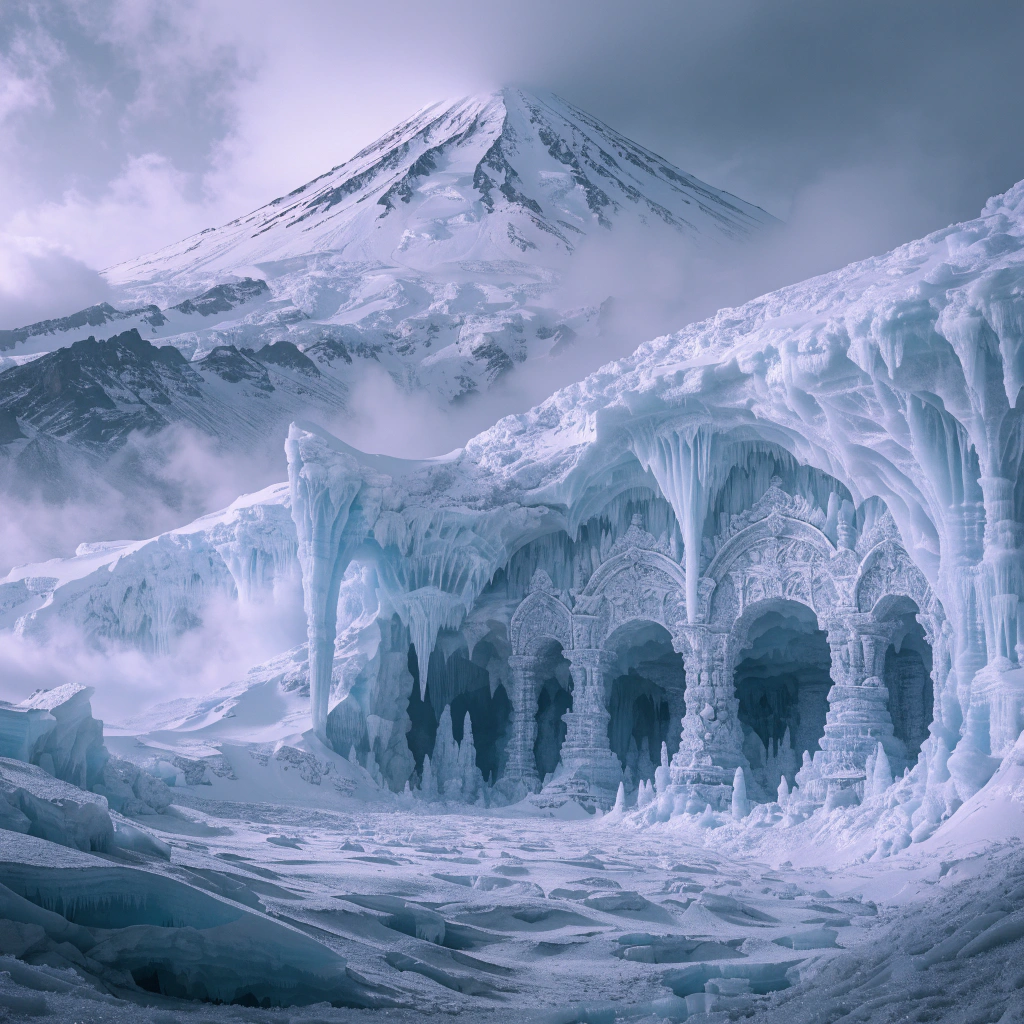
Mount Damavand: The Tallest Mountain in Iran
Mount Damavand is a very big mountain in Iran. It is in the Alborz mountains. It is a volcano. It is 5,610 meters high. It is the highest mountain in the Middle East.
The mountain is very beautiful. It has a white top because there is snow all year. It looks like a cone. Many people like to look at it.
On a clear day, you can see the mountain from Tehran. Tehran is the capital city of Iran. The mountain is a special symbol for the Iranian people. It is very famous.
Gramática em destaque
Padrão: Present Simple (To Be)
"Mount Damavand is a very big mountain in Iran."
We use 'is' for singular subjects to describe facts or states. It is the most common verb for descriptions in English.
Padrão: Prepositions of Place
"It is in the Alborz mountains."
We use 'in' to talk about a location inside a larger area or range. It helps us say exactly where something is located.
Teste sua compreensão
10 perguntas · A1 Iniciante · 1 pré-visualização grátis
Teste o que aprendeu neste artigo. Responda todas as perguntas para ganhar XP!
Where is Mount Damavand located?
Quer finalizar o quiz?
9 perguntas a mais estão esperando por você. Cadastre-se grátis para desbloquear o quiz completo e ganhar XP!
Cadastrar grátisJá tem conta? Entrar
Detalhamento das perguntas
Where is Mount Damavand located?
Sua resposta:
Resposta correta: Iran
Mount Damavand is a volcano.
Sua resposta:
Resposta correta: Verdadeiro
What does 'high' mean?
Sua resposta:
Resposta correta: Tall or far up
The mountain has a white top because there is _____.
Sua resposta:
Resposta correta: snow
The Giant Mountain of Iran: Mount Damavand
Mount Damavand is a very special mountain in Iran. It is the highest peak in the country and also the highest volcano in the Middle East. It is located in the Alborz mountains, near the city of Tehran. On clear days, people in the capital can see its beautiful, white top from their windows.
This mountain is more than 5,600 meters tall. It is an active volcano, but it is not dangerous now. It has a perfect shape like a cone. Because it is very high, there is snow on the top all year. Many people visit the mountain because they love nature and fresh air.
In the past, many poets wrote stories and poems about Damavand. It is an important symbol for Iranian people. Some brave people try to climb to the top. It is difficult because the air is thin, but the view is amazing. Damavand is more famous than other mountains in the region because of its long history and great size.
Gramática em destaque
Padrão: Comparatives with 'more than'
"Damavand is more famous than other mountains in the region."
We use 'more' with long adjectives (like famous) to compare two things. Always use 'than' after the adjective to show the second thing.
Padrão: Connectors: Because
"Many people visit the mountain because they love nature."
Use 'because' to give a reason for an action. It connects a result with its cause in the same sentence.
Teste sua compreensão
11 perguntas · A2 Elementar · 1 pré-visualização grátis
Teste o que aprendeu neste artigo. Responda todas as perguntas para ganhar XP!
Where is Mount Damavand located?
Quer finalizar o quiz?
10 perguntas a mais estão esperando por você. Cadastre-se grátis para desbloquear o quiz completo e ganhar XP!
Cadastrar grátisJá tem conta? Entrar
Detalhamento das perguntas
Where is Mount Damavand located?
Sua resposta:
Resposta correta: In the Alborz mountains
Mount Damavand is the highest volcano in the Middle East.
Sua resposta:
Resposta correta: Verdadeiro
What is the meaning of 'peak'?
Sua resposta:
Resposta correta: The top of a mountain
The mountain has a perfect _____ like a cone.
Sua resposta:
Resposta correta: shape
Why is it difficult to climb to the top?
Sua resposta:
Resposta correta: Because the air is thin
Mount Damavand: The Sleeping Giant of Iran
Mount Damavand is a spectacular mountain located in northern Iran. Standing at 5,610 meters, it is the highest peak in the Middle East and the highest volcano in Asia. It is part of the Alborz mountain range, which stretches across the north of the country. On clear days, the mountain can be seen from Tehran, the capital city of Iran, where it serves as a beautiful backdrop to the busy city life.
This mountain is a stratovolcano that is potentially active, though it has not erupted for thousands of years. Its beautiful conical shape is often covered in snow, even during the summer months. Because of its unique height and shape, it has become a national symbol for the Iranian people. In Persian literature and mythology, Damavand is often described as a place of power and magic. Many famous poems have been written about its strength and beauty over the centuries.
For those who enjoy outdoor activities, Damavand is a popular destination. Every year, thousands of hikers from all over the world visit Iran to climb its slopes. Several different routes have been established for climbers, ranging from easy paths to very difficult rocky areas. Professional guides often help tourists who have never climbed such a high mountain before.
However, the climb is not easy. The air becomes very thin at the summit, and climbers must be careful of the sulfur gases that are released from the crater near the top. Despite these challenges, many people have successfully reached the top. When they stand at the summit, they are rewarded with an incredible view of the surrounding landscape. Mount Damavand remains a natural wonder that continues to inspire everyone who sees it.
Gramática em destaque
Padrão: Passive Voice
"Several different routes have been established for climbers."
The passive voice is used here because the action (establishing routes) is more important than who did it. It is formed using the verb 'to be' and the past participle.
Padrão: Relative Clauses
"It is part of the Alborz mountain range, which stretches across the north of the country."
A relative clause provides extra information about a noun. In this sentence, 'which' introduces details about the Alborz mountain range.
Teste sua compreensão
11 perguntas · B1 Intermediário · 1 pré-visualização grátis
Teste o que aprendeu neste artigo. Responda todas as perguntas para ganhar XP!
Where is Mount Damavand located?
Quer finalizar o quiz?
10 perguntas a mais estão esperando por você. Cadastre-se grátis para desbloquear o quiz completo e ganhar XP!
Cadastrar grátisJá tem conta? Entrar
Detalhamento das perguntas
Where is Mount Damavand located?
Sua resposta:
Resposta correta: In northern Iran
Mount Damavand is the highest volcano in the world.
Sua resposta:
Resposta correta: Falso
What does 'destination' mean?
Sua resposta:
Resposta correta: A place where someone is going
The air becomes very _____ at the summit, making it difficult to breathe.
Sua resposta:
Resposta correta: thin
Why is Mount Damavand important in Persian culture?
Sua resposta:
Resposta correta: It is mentioned in literature and mythology as a place of power.
Mount Damavand: The Majestic Peak of the Alborz
Standing at a staggering altitude of 5,610 meters, Mount Damavand is not merely a geological formation; it is a profound symbol of Iranian identity. Located within the Alborz mountain range, this potentially active stratovolcano holds the prestigious title of the highest peak in the Middle East. Despite its proximity to the bustling metropolis of Tehran, the mountain maintains an aura of ancient mystery, often shrouded in thick clouds or crowned with a permanent layer of glistening snow. Furthermore, its near-perfect conical shape has made it a subject of intense fascination for both scientists and poets throughout the centuries.
Historically, the mountain has been immortalized in Persian literature, most notably in the epic poem, the Shahnameh. Within its verses, it is said that the legendary tyrant Zahhak was imprisoned within the mountain's depths, a tale that continues to resonate in the cultural psyche of the Iranian people. Consequently, the peak is often regarded as a silent, eternal guardian of the nation's history and sovereignty. For modern adventurers and mountaineers, the ascent of Damavand represents a significant physical and mental challenge that requires extensive preparation. Although several established routes exist, the climb demands careful acclimatization due to the thinning oxygen levels and the presence of pungent sulfuric fumes near the summit.
Scientific monitoring of the mountain is also a priority for researchers. Because Damavand is classified as a potentially active volcano, geologists frequently analyze seismic activity and gas emissions to predict any future eruptions. While the last major eruption occurred thousands of years ago, the constant steam vents near the crater serve as a reminder of the heat still trapped beneath the surface. This intersection of geological instability and majestic beauty makes the mountain a unique laboratory for studying the Earth's crust in Western Asia.
From an ecological perspective, the slopes of Mount Damavand are home to a diverse range of flora and fauna, some of which are endemic to the region. However, the increasing popularity of trekking and tourism has raised serious concerns regarding environmental degradation. If conservation efforts were not prioritized, the delicate alpine ecosystem could face irreversible damage from pollution and over-exploitation. Therefore, sustainable tourism practices are being encouraged by local authorities to ensure that future generations can witness the mountain's natural splendor. In conclusion, whether viewed through the lens of geology, mythology, or environmental science, Mount Damavand remains an indispensable icon of the Iranian landscape, demanding both our profound admiration and our collective protection.
Gramática em destaque
Padrão: Present Perfect Passive
"Historically, the mountain has been immortalized in Persian literature..."
This pattern combines the present perfect 'has been' with a past participle to show that an action was performed on the subject in the past and remains relevant now. It is used here because the writers are less important than the fact that the mountain is famous.
Padrão: Second Conditional
"If conservation efforts were not prioritized, the delicate alpine ecosystem could face irreversible damage."
This structure uses 'if' + past simple followed by 'could' + base verb to discuss a hypothetical situation in the present or future. It evaluates the potential negative outcome of failing to protect the environment.
Padrão: Present Continuous Passive
"sustainable tourism practices are being encouraged by local authorities"
Formed using 'am/is/are' + 'being' + past participle, this pattern describes an action currently in progress. It emphasizes the ongoing effort of the authorities to change tourism habits.
Teste sua compreensão
11 perguntas · B2 Intermediário superior · 1 pré-visualização grátis
Teste o que aprendeu neste artigo. Responda todas as perguntas para ganhar XP!
In which mountain range is Mount Damavand located?
Quer finalizar o quiz?
10 perguntas a mais estão esperando por você. Cadastre-se grátis para desbloquear o quiz completo e ganhar XP!
Cadastrar grátisJá tem conta? Entrar
Detalhamento das perguntas
In which mountain range is Mount Damavand located?
Sua resposta:
Resposta correta: Alborz
Mount Damavand is classified as an extinct volcano that will never erupt again.
Sua resposta:
Resposta correta: Falso
What is the meaning of 'ascent' as used in the text?
Sua resposta:
Resposta correta: A climb to the top
The mountain is famous for its near-perfect _____ shape, which fascinates scientists.
Sua resposta:
Resposta correta: conical
Who was the legendary tyrant said to be imprisoned in the mountain?
Sua resposta:
Resposta correta: Zahhak
Damavand: A Majestade Vulcânica e o Coração Mítico do Irã
É no coração da cordilheira Alborz que se ergue o Monte Damavand, uma silhueta imponente que não apenas domina a paisagem iraniana, mas também se firma como um símbolo arquetípico da resiliência e da identidade nacional. Com seus 5.610 metros de altitude, não é apenas o pico mais alto do Irã, mas também o vulcão mais elevado de todo o Oriente Médio, um gigante adormecido cuja coroa de neve perene é visível de Teerã em dias claros, agindo como um guardião silencioso da capital.
Geologicamente, o Damavand é um estratovulcão potencialmente ativo, caracterizado por sua forma cônica quase perfeita. Esta maravilha natural, apesar de seu estado de dormência, está sujeita a constante escrutínio científico, posto que sua atividade geotérmica, manifestada por fumarolas e fontes termais, serve como um lembrete sutil de seu poder latente. A persistência da neve em seu cume, mesmo nos meses mais quentes, e a caldeira vulcânica que coroa seu topo, são testemunhos de uma formação geológica complexa e de uma beleza natural indomável. A imponência de sua silhueta é um convite irrefutável a alpinistas e aventureiros de todo o mundo, que buscam desafiar suas encostas íngremes e experimentar a vista panorâmica de tirar o fôlego.
Contudo, o Damavand transcende sua mera significância geofísica. É um dos pilares da mitologia persa e da literatura iraniana, um cenário onde se contam histórias de dragões e heróis. Referenciado em epopeias como o Shahnameh, o Livro dos Reis, de Ferdowsi, o monte é a prisão de figuras míticas, e sua imagem é intrínseca à alma do povo iraniano. Sua presença é um elo ininterrupto com o passado, um repositório de lendas que continuam a reverberar na cultura contemporânea. Não é raro que poetas e artistas iranianos o evoquem como metáfora para a perseverança e a dignidade, elevando-o de um mero acidente geográfico a um monumento vivo da história e da psique nacional.
O Damavand é, portanto, uma confluência de fenômenos naturais e culturais, um paradigma de beleza selvagem e um repositório de narrativas milenares. Para além de seu valor científico e turístico, possui um valor intrínseco que transcende sua mera existência física, tornando-o um patrimônio inestimável. A escalada de suas encostas ou a simples contemplação à distância oferece uma conexão profunda com a natureza e com a rica tapeçaria da cultura persa. Assim, o Monte Damavand permanece, inabalável, não só como o pico mais alto do Irã, mas como um legado que se entrelaça com a própria fibra da nação, um farol de inspiração e um testemunho da grandiosidade da natureza e do espírito humano.
Gramática em destaque
Padrão: Inversão do Sujeito com Ênfase (Cleft Sentence com 'É que')
"É no coração da cordilheira Alborz que se ergue o Monte Damavand..."
Esta estrutura, conhecida como 'oração clivada' ou 'cleft sentence', é usada para dar ênfase a uma parte específica da frase. O verbo 'ser' ('É') seguido de 'que' realça o elemento que vem entre eles, neste caso, o local onde o monte se ergue, tornando a informação mais proeminente.
Padrão: Nominalização
"A imponência de sua silhueta é um convite irrefutável..."
A nominalização consiste em transformar um verbo ou adjetivo em um substantivo, como 'imponente' (adjetivo) em 'imponência' (substantivo). Isso permite uma linguagem mais formal e concisa, condensando ideias e tornando o texto mais denso e abstrato.
Padrão: Voz Passiva Sintética
"...um cenário onde se contam histórias de dragões e heróis."
A voz passiva sintética é formada com o verbo na terceira pessoa (singular ou plural) e o pronome 'se'. Ela é usada quando o agente da ação é desconhecido ou não é relevante, focando-se na ação em si ('histórias são contadas') de forma impessoal e elegante.
Teste sua compreensão
12 perguntas · C1 Avançado · 1 pré-visualização grátis
Teste o que aprendeu neste artigo. Responda todas as perguntas para ganhar XP!
Qual é a altitude aproximada do Monte Damavand?
Quer finalizar o quiz?
11 perguntas a mais estão esperando por você. Cadastre-se grátis para desbloquear o quiz completo e ganhar XP!
Cadastrar grátisJá tem conta? Entrar
Detalhamento das perguntas
Qual é a altitude aproximada do Monte Damavand?
Sua resposta:
Resposta correta: 5.610 metros
O Monte Damavand é o vulcão mais alto da Ásia.
Sua resposta:
Resposta correta: Falso
O que significa a palavra 'perene' no contexto do artigo?
Sua resposta:
Resposta correta: Que dura o ano inteiro ou por muito tempo
O Damavand é um ___________ potencialmente ativo, caracterizado por sua forma cônica.
Sua resposta:
Resposta correta: estratovulcão
Além de sua importância geológica, qual é outro aspecto fundamental do Damavand, segundo o texto?
Sua resposta:
Resposta correta: Seu papel na mitologia e literatura persa
A visibilidade do Damavand de Teerã é rara e só ocorre em condições climáticas extremas.
Sua resposta:
Resposta correta: Falso
The Sentinel of the Alborz: A Multi-Disciplinary Analysis of Mount Damavand
Mount Damavand, the preeminent summit of the Alborz range, stands not merely as a topographical anomaly but as a profound testament to the intricate interplay between geological upheaval and the human psyche. Rising to a staggering 5,610 meters, this dormant stratovolcano serves as the highest peak in the Middle East, its near-perfect conical silhouette casting a long, symbolic shadow over the Iranian plateau. To the casual observer, it is a formidable challenge for the mountaineer; to the scholar of Persianate culture, however, it is a repository of mythopoeic significance, an inexorable sentinel that has witnessed the rise and fall of empires. Its presence is so pervasive that it functions as a visual anchor for the inhabitants of Tehran, appearing on clear days as a ghostly, snow-clad titan against the horizon.
Geologically, Damavand is a product of the complex tectonic interactions characteristic of the Alpine-Himalayan orogenic belt. Its formation, primarily during the Holocene epoch, resulted in a stratovolcano composed of lava flows and pyroclastic deposits. While currently classified as dormant, the presence of active fumaroles near its summit crater suggests a subterranean restlessness—a reminder that the earth beneath remains volatile. Were one to examine the chemical composition of the sulfurous gases emitted, one would find evidence of the mountain’s enduring geothermal vitality. It is this very volatility that has, perhaps, fueled the mountain’s reputation as a site of supernatural incarceration and divine intervention. The mountain’s thermal springs, such as those at Larijan, further exemplify the tangible link between deep-earth processes and human utility.
In the realm of literature and folklore, Damavand is most famously associated with the Shahnameh, the Persian Book of Kings. It is here that the malevolent tyrant Zahhak was purportedly bound by Fereydun, imprisoned within the mountain’s cavernous depths until the end of time. This narrative transformation of a geological feature into a prison for cosmic evil underscores the mountain’s role in the Iranian moral imagination. Not only does the peak represent physical sublimity, but it also embodies the triumph of justice over tyranny. Rarely has a geological formation so thoroughly permeated the collective consciousness of a nation, transitioning from a mere landmark to an eponymous symbol of resilience and national identity. It is frequently invoked in modern poetry as a symbol of endurance against oppression.
The aesthetic allure of the mountain is equally compelling. Visible from the sprawling metropolis of Tehran on clear days, its snow-capped peak offers a stark, ephemeral contrast to the smog-choked urbanity below. This visual juxtaposition serves as a poignant reminder of the natural world’s enduring presence amidst rapid modernization. However, the mountain is not immune to the anthropogenic pressures of the twenty-first century. Overgrazing, unregulated tourism, and the inexorable retreat of glaciers due to climate change threaten the delicate alpine ecosystem. It is not without some justification that environmentalists express concern regarding the preservation of this icon, as the degradation of its slopes would constitute an irreparable loss to both biodiversity and cultural heritage.
Lest the mountain be perceived merely as a physical entity, one must consider its metaphysical weight. It is the axis mundi, a focal point where the terrestrial meets the celestial. For the poet, it is a muse; for the patriot, a bulwark. The apotheosis of Damavand in Persian thought ensures that it remains more than a destination for tectonic study. As long as its peak pierces the clouds, it will continue to serve as a silent guardian of Iranian identity, a monument to both the fragility of the environment and the permanence of cultural memory. Ultimately, understanding Damavand requires a multi-disciplinary approach, synthesizing volcanology with semiotics to grasp the full magnitude of its existence.
Gramática em destaque
Padrão: Inversion with negative/restrictive adverbs
"Rarely has a geological formation so thoroughly permeated the collective consciousness of a nation."
When a sentence begins with a restrictive adverb like 'rarely', 'seldom', or 'never', the subject and auxiliary verb are inverted to create emphasis. This is a hallmark of formal, high-level English prose.
Padrão: Subjunctive mood with 'Lest'
"Lest the mountain be perceived merely as a physical entity, one must consider its metaphysical weight."
The word 'lest' is used to express a negative purpose (meaning 'for fear that') and is followed by the base form of the verb (subjunctive). It adds a formal, cautionary tone to the analysis.
Padrão: Inverted Conditionals (Subjunctive)
"Were one to examine the chemical composition of the sulfurous gases emitted, one would find evidence of the mountain’s enduring geothermal vitality."
This structure replaces 'If one were to examine...' by inverting the verb 'were' and the subject. It is used in formal writing to hypothesize about unlikely or theoretical situations.
Teste sua compreensão
12 perguntas · C2 Domínio · 1 pré-visualização grátis
Teste o que aprendeu neste artigo. Responda todas as perguntas para ganhar XP!
What does the author suggest about Damavand's current volcanic status?
Quer finalizar o quiz?
11 perguntas a mais estão esperando por você. Cadastre-se grátis para desbloquear o quiz completo e ganhar XP!
Cadastrar grátisJá tem conta? Entrar
Detalhamento das perguntas
What does the author suggest about Damavand's current volcanic status?
Sua resposta:
Resposta correta: It is dormant but shows signs of subterranean restlessness.
The mountain is mentioned in the Shahnameh as the place where the tyrant Zahhak was imprisoned.
Sua resposta:
Resposta correta: Verdadeiro
What does 'anthropogenic' mean in the context of the article?
Sua resposta:
Resposta correta: Resulting from human activity
The mountain acts as an inexorable _____ that has watched over the rise and fall of empires.
Sua resposta:
Resposta correta: sentinel
Which metropolitan city is frequently contrasted with the mountain's natural beauty?
Sua resposta:
Resposta correta: Tehran
The author argues that understanding Damavand only requires a geological perspective.
Sua resposta:
Resposta correta: Falso

