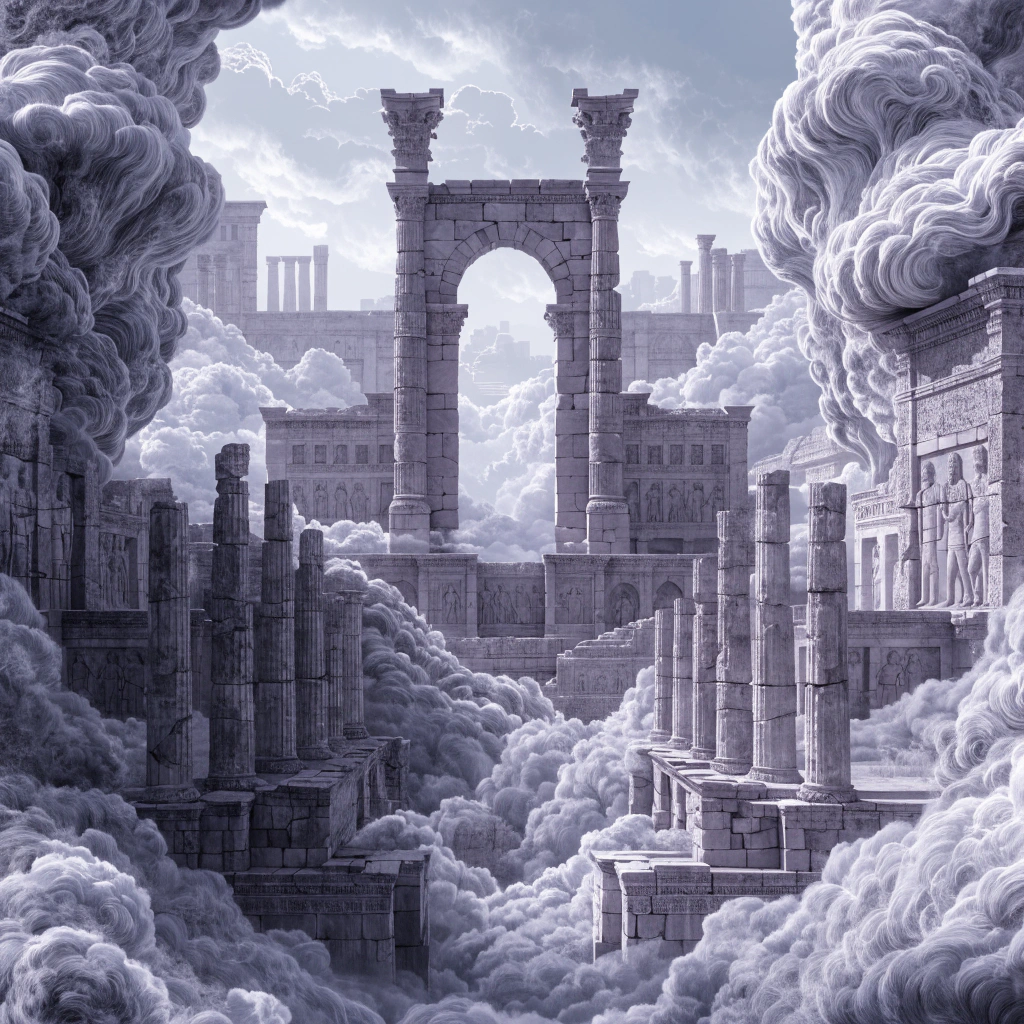
Persepolis: A Great Old City
Persepolis is an old city in Iran. It is very beautiful. King Darius built the city a long time ago. It is a very important place in history.
The city has many big stone walls and tall columns. There are beautiful carvings on the walls. These carvings show people from different countries.
Today, many people visit Persepolis. They take photos of the ruins. It is a famous place for tourists. You can learn about the history of Iran here.
Gramática em destaque
Padrão: Present Simple 'to be'
"Persepolis is an old city in Iran."
We use 'is' for singular subjects like 'Persepolis'. It describes facts or states that are true now.
Padrão: Plural Nouns with -s
"The city has many big stone walls and tall columns."
To talk about more than one thing, we usually add '-s' to the end of the noun. 'Wall' becomes 'walls' and 'column' becomes 'columns'.
Teste sua compreensão
10 perguntas · A1 Iniciante · 1 pré-visualização grátis
Teste o que aprendeu neste artigo. Responda todas as perguntas para ganhar XP!
Where is Persepolis located?
Quer finalizar o quiz?
9 perguntas a mais estão esperando por você. Cadastre-se grátis para desbloquear o quiz completo e ganhar XP!
Cadastrar grátisJá tem conta? Entrar
Detalhamento das perguntas
Where is Persepolis located?
Sua resposta:
Resposta correta: Iran
Persepolis is a very new city.
Sua resposta:
Resposta correta: Falso
What does 'visit' mean?
Sua resposta:
Resposta correta: To go and see a place
They take _____ of the ruins.
Sua resposta:
Resposta correta: photos
Persepolis: The Ancient Heart of Iran
Persepolis is a very famous place in Iran. Its Persian name is Takht-e Jamshid, which means "The Throne of Jamshid." King Darius the Great started building this city around 518 BCE. It was the ceremonial capital of the Persian Empire. This empire was very big and powerful.
The city was built on a large stone platform. Workers used heavy stones to make beautiful buildings and tall columns. Some buildings were bigger than others because they were for the king. There are many carvings on the walls. These carvings show people from different countries bringing gifts to the king.
Persepolis was not a place for everyday living. It was a place for special parties and celebrations. Today, Persepolis is a UNESCO World Heritage site. Many tourists visit the ruins every year because they want to see the ancient glory of Iran. It is more beautiful than many other old cities in the world.
Gramática em destaque
Padrão: Past Simple
"King Darius the Great started building this city around 518 BCE."
We use the past simple to talk about actions that finished in the past. For regular verbs, we usually add -ed to the end of the word.
Padrão: Comparatives
"It is more beautiful than many other old cities in the world."
We use comparatives to look at the differences between two things. For long adjectives like 'beautiful', we use 'more' before the adjective and 'than' after it.
Teste sua compreensão
11 perguntas · A2 Elementar · 1 pré-visualização grátis
Teste o que aprendeu neste artigo. Responda todas as perguntas para ganhar XP!
Who started building Persepolis?
Quer finalizar o quiz?
10 perguntas a mais estão esperando por você. Cadastre-se grátis para desbloquear o quiz completo e ganhar XP!
Cadastrar grátisJá tem conta? Entrar
Detalhamento das perguntas
Who started building Persepolis?
Sua resposta:
Resposta correta: Darius the Great
Persepolis was a place where people lived every day.
Sua resposta:
Resposta correta: Falso
What does 'ancient' mean?
Sua resposta:
Resposta correta: Very old
The city was built on a large stone _____.
Sua resposta:
Resposta correta: platform
What do the carvings on the walls show?
Sua resposta:
Resposta correta: People bringing gifts
Persépolis: Uma Janela para o Passado Glorioso do Irã
Persépolis, também conhecida como Takht-e Jamshid em persa, é um dos locais arqueológicos mais importantes do Irã e do mundo. Foi fundada por Dario, o Grande, por volta de 518 a.C., e serviu como a capital cerimonial do Império Aquemênida. Este império, que se estendia por três continentes, foi a primeira superpotência global da história. Persépolis nunca foi uma capital administrativa como Susa ou Babilônia, mas sim um palco espetacular para mostrar o poder, a riqueza e a diversidade de uma civilização antiga.
Durante séculos, Persépolis tem sido um símbolo da grandeza persa. A cidade foi construída em um grande terraço artificial, com palácios magníficos, salas de audiência e escadarias decoradas. As esculturas nas paredes mostram representantes de diferentes povos do império, trazendo presentes para o rei. Isso demonstrava como o império era vasto e diversificado. A arquitetura e a arte de Persépolis são impressionantes e refletem a habilidade dos artesãos da época.
Infelizmente, por volta de 330 a.C., Persépolis foi conquistada e queimada por Alexandre, o Grande. Muitos de seus tesouros foram perdidos, e a cidade ficou em ruínas por muito tempo. No entanto, o que restou ainda nos permite imaginar sua antiga glória. Hoje, Persépolis é um Patrimônio Mundial da UNESCO e atrai visitantes de todo o mundo, que vêm admirar a história e a cultura que este lugar representa. É um lembrete fascinante de um império que moldou grande parte do mundo antigo.
Gramática em destaque
Padrão: Voz Passiva (Passive Voice)
"Foi fundada por Dario, o Grande, por volta de 518 a.C."
A voz passiva é usada quando o foco da frase está na ação sofrida pelo sujeito, e não em quem a realiza. É formada com o verbo 'ser' no tempo verbal adequado + o particípio passado do verbo principal. Neste exemplo, Persépolis (o sujeito) sofreu a ação de ser fundada.
Padrão: Pronomes Relativos (Relative Pronouns)
"Este império, que se estendia por três continentes, foi a primeira superpotência global da história."
Os pronomes relativos ('que', 'onde', 'cujo', etc.) servem para conectar duas orações, evitando a repetição e adicionando informações sobre um termo já mencionado. O 'que' é muito comum e pode se referir a pessoas ou coisas. Na frase, 'que' se refere a 'este império' e introduz uma informação adicional sobre ele.
Teste sua compreensão
11 perguntas · B1 Intermediário · 1 pré-visualização grátis
Teste o que aprendeu neste artigo. Responda todas as perguntas para ganhar XP!
Quem fundou Persépolis?
Quer finalizar o quiz?
10 perguntas a mais estão esperando por você. Cadastre-se grátis para desbloquear o quiz completo e ganhar XP!
Cadastrar grátisJá tem conta? Entrar
Detalhamento das perguntas
Quem fundou Persépolis?
Sua resposta:
Resposta correta: Dario, o Grande
Persépolis foi principalmente uma capital administrativa, como Susa ou Babilônia.
Sua resposta:
Resposta correta: Falso
O que significa 'diversidade'?
Sua resposta:
Resposta correta: A presença de muitas coisas ou pessoas distintas
Hoje, Persépolis é um ______ Mundial da UNESCO.
Sua resposta:
Resposta correta: Patrimônio
O que aconteceu com Persépolis por volta de 330 a.C.?
Sua resposta:
Resposta correta: Foi conquistada e queimada por Alexandre, o Grande
Persepolis: The Ceremonial Heart of the Achaemenid Empire
Persepolis, known in Persian as Takht-e Jamshid, stands as a monumental testament to the grandeur of the ancient Achaemenid Empire. Situated in the plains of Marvdasht, this architectural marvel was founded by Darius the Great around 518 BCE. Unlike the administrative centers of the empire, such as Susa or Babylon, Persepolis was specifically designed as a ceremonial capital. It was intended to showcase the unprecedented power and wealth of an empire that, at its peak, spanned three continents.
The construction of Persepolis was an immense undertaking that required decades to complete. Built upon a massive man-made terrace, the site features a series of palatial buildings characterized by their sophisticated engineering and artistic detail. One of the most striking features is the Apadana Palace, where the King of Kings received delegations from across the globe. The walls are adorned with intricate bas-reliefs depicting subjects from various nations—ranging from Ethiopians to Indians—bringing gifts to the Persian monarch. These carvings serve as a fascinating historical record of the diverse cultures unified under Persian rule. Furthermore, the innovative drainage systems and the precision of the stone masonry reflect a level of technological advancement that was rarely seen elsewhere during that era.
Despite its architectural resilience, the glory of Persepolis was eventually diminished. In 330 BCE, Alexander the Great captured the city during his conquest of the Persian Empire. According to historical accounts, a devastating fire broke out, destroying much of the wooden structures and leaving only the stone skeletons we see today. Whether this act was intentional or accidental remains a subject of debate among historians; nonetheless, the ruins continue to evoke a sense of awe. Many believe the fire was a symbolic act of revenge for the destruction of Athens years earlier.
Today, Persepolis is recognized as a UNESCO World Heritage site and remains a profound symbol of Iranian identity. It offers invaluable insights into the social and political structures of antiquity. For visitors, walking through the Gate of All Nations is not merely a tourist activity but an immersive journey into a past where different civilizations converged. Consequently, preserving such a site is essential for understanding the shared heritage of humanity and the complex history of the Middle East.
Gramática em destaque
Padrão: Passive Voice for Formal Tone
"this architectural marvel was founded by Darius the Great around 518 BCE."
The passive voice is used here to focus on the object (the marvel) rather than the subject. It is common in historical and academic writing to maintain a formal register.
Padrão: Non-defining Relative Clauses
"the Apadana Palace, where the King of Kings received delegations from across the globe."
This clause provides extra information about the Apadana Palace. It is separated by a comma and uses the relative adverb 'where' to refer to a location.
Padrão: Discourse Markers for Consequence
"Consequently, preserving such a site is essential for understanding the shared heritage of humanity."
The word 'Consequently' is a transition marker used to show a result or effect. It helps connect the importance of historical insights to the necessity of preservation.
Teste sua compreensão
11 perguntas · B2 Intermediário superior · 1 pré-visualização grátis
Teste o que aprendeu neste artigo. Responda todas as perguntas para ganhar XP!
What was the primary function of Persepolis according to the text?
Quer finalizar o quiz?
10 perguntas a mais estão esperando por você. Cadastre-se grátis para desbloquear o quiz completo e ganhar XP!
Cadastrar grátisJá tem conta? Entrar
Detalhamento das perguntas
What was the primary function of Persepolis according to the text?
Sua resposta:
Resposta correta: A ceremonial capital
The construction of Persepolis was completed in less than ten years.
Sua resposta:
Resposta correta: Falso
What does the word 'depicting' mean in the context of the article?
Sua resposta:
Resposta correta: Representing through art
The walls of the palace are _____ with intricate bas-reliefs.
Sua resposta:
Resposta correta: adorned
Who was responsible for the capture and eventual fire at Persepolis?
Sua resposta:
Resposta correta: Alexander the Great
Persépolis: O Esplendor Efêmero de um Império Universal
Persépolis, ou Takht-e Jamshid, como é conhecida na Pérsia, transcende a mera denominação de sítio arqueológico; ela é, antes de tudo, a materialização pétrea da ambição e do poderio de um império que, outrora, se estendia por três continentes. Fundada por Dario I por volta de 518 a.C., não foi por acaso que esta cidade monumental se ergueu no planalto iraniano. Longe de ser uma capital administrativa com as funções cotidianas de Susa ou Babilônia, Persépolis foi concebida como o palco cerimonial por excelência, um local onde a magnificência aquemênida seria exibida em sua plenitude, servindo como a culminância de uma hegemonia sem precedentes.
É na arquitetura que reside a eloquência de Persépolis, cujas ruínas ainda hoje atestam a grandiosidade de um projeto que levou gerações para ser concluído. Os relevos esculpidos nas escadarias e nos muros do Palácio de Apadana, por exemplo, não são meramente decorativos; eles são narrativas visuais da diversidade e da unidade do império. Neles, podemos observar a procissão de delegados de diversas satrapias, cada qual trazendo oferendas e vestindo seus trajes típicos, uma representação vívida da confluência de povos e culturas sob o domínio persa. A complexidade dos detalhes e a precisão das formas revelam um domínio técnico e artístico que poucas civilizações da época poderiam igualar.
O que mais fascina em Persépolis é a sua intrínseca conexão com a ideologia imperial. Cada coluna, cada sala, cada portal monumental — como o Portão de Todas as Nações — foi edificado com um propósito: reforçar a autoridade divina do rei e a ordem universal que ele representava. A escolha do local, distante de centros urbanos e comerciais, sublinha a sua natureza sacra e cerimonial. Ali, celebravam-se o Nowruz, o Ano Novo persa, e outras festividades que cimentavam a lealdade e a identidade imperial.
Contudo, nem mesmo a mais robusta das construções está imune à efemeridade do poder. Foi Alexandre, o Grande, quem, em 330 a.C., pôs fim ao esplendor de Persépolis, incendiando-a e saqueando-a. As razões para tal ato permanecem objeto de debate entre historiadores: vingança pela destruição ateniense pelos persas, um ato deliberado para simbolizar o fim da hegemonia aquemênida, ou talvez um acidente durante as celebrações da vitória. Independentemente da causa, o incêndio marcou o ocaso de uma era e a transformação de um centro vibrante em ruínas enigmáticas.
Hoje, os vestígios de Persépolis, Patrimônio Mundial da UNESCO, continuam a evocar a memória de um passado glorioso. A despeito da devastação, a resiliência das estruturas remanescentes, como as colunas do Palácio de Cem Colunas e os túmulos reais escavados na rocha, fala por si. A visita a este sítio arqueológico não é apenas uma jornada através da história; é uma reflexão sobre a ascensão e queda dos impérios, sobre a capacidade humana de edificar maravilhas e sobre a fragilidade de tudo o que é grandioso. É um testemunho silencioso de uma civilização que, embora desvanecida, deixou um legado cultural e arquitetônico cuja relevância persiste, instigando admiração e estudo até os dias atuais.
Gramática em destaque
Padrão: Orações Cindidas (Cleft Sentences) com "É/Foi que"
"É na arquitetura que reside a eloquência de Persépolis, cujas ruínas ainda hoje atestam a grandiosidade de um projeto."
Esta estrutura serve para dar ênfase a uma parte específica da frase (neste caso, "na arquitetura"). É formada por "É/Foi" + a parte enfatizada + "que" + o restante da frase, realçando a informação como se fosse a única ou a mais importante.
Padrão: Nominalização
"ela é, antes de tudo, a materialização pétrea da ambição e do poderio de um império que, outrora, se estendia por três continentes."
A nominalização é o processo de transformar verbos ou adjetivos em substantivos (ex: materializar -> materialização; ambicioso -> ambição). Ela confere maior formalidade e densidade ao texto, sendo muito comum em contextos acadêmicos e jornalísticos de alto nível.
Padrão: Inversão do Sujeito para Ênfase (com "Foi quem")
"Foi Alexandre, o Grande, quem, em 330 a.C., pôs fim ao esplendor de Persépolis, incendiando-a e saqueando-a."
A inversão do sujeito ocorre quando o sujeito de uma oração não aparece antes do verbo, mas sim depois, ou em uma posição diferente da usual. Neste caso, o uso de "Foi... quem" serve para enfatizar o agente da ação, Alexandre, o Grande.
Teste sua compreensão
12 perguntas · C1 Avançado · 1 pré-visualização grátis
Teste o que aprendeu neste artigo. Responda todas as perguntas para ganhar XP!
Qual era a principal função de Persépolis, segundo o texto?
Quer finalizar o quiz?
11 perguntas a mais estão esperando por você. Cadastre-se grátis para desbloquear o quiz completo e ganhar XP!
Cadastrar grátisJá tem conta? Entrar
Detalhamento das perguntas
Qual era a principal função de Persépolis, segundo o texto?
Sua resposta:
Resposta correta: Atuar como palco cerimonial e de exibição do poder.
Os relevos do Palácio de Apadana mostram apenas cenas de guerra e conquistas militares.
Sua resposta:
Resposta correta: Falso
No contexto do texto, o que significa 'outrora'?
Sua resposta:
Resposta correta: Antigamente
Persépolis foi concebida como o palco ______ por excelência.
Sua resposta:
Resposta correta: cerimonial
Que evento marcou o fim do esplendor de Persépolis?
Sua resposta:
Resposta correta: O incêndio e saque por Alexandre, o Grande.
Persépolis é considerada Patrimônio Mundial da UNESCO.
Sua resposta:
Resposta correta: Verdadeiro
The Ephemeral Grandeur of Persepolis: An Ontological Inquiry into Achaemenid Hegemony
To contemplate the ruins of Persepolis, known to the Persian world as Takht-e Jamshid, is to engage with the very concept of imperial permanence and its inherent fragility. Founded by Darius I in approximately 518 BCE, this ceremonial capital was never intended for the mundane exigencies of daily administration; rather, it functioned as a sophisticated stage for the 'King of Kings' to receive the tribute of a myriad of subject nations. Seldom has the world witnessed such a deliberate fusion of architectural grandiosity and political propaganda, designed to project an image of a harmonious, albeit stratified, global superpower. The site, constructed upon a massive artificial terrace, remains a profound vestige of an empire that once spanned three continents, bridging the cultural interstices between the Mediterranean and the Indus Valley.
The Apadana, or Audience Hall, with its once-towering columns and intricate bas-reliefs, serves as a historical palimpsest of the empire’s cultural diversity. These carvings depict delegations from twenty-three subject nations, each rendered with meticulous attention to their distinct vestments and offerings. It is essential that the scholar perceive these depictions not merely as artistic flourishes, but as a paradigm of Achaemenid hegemony—a system that preferred the appearance of voluntary subjugation over the raw application of force. The intricate carvings suggest a proclivity for inclusivity, whereby the sovereignty of the Great King was acknowledged through a ritualized exchange of gifts, rather than the mere extraction of plunder. This ideological framework allowed the empire to maintain a degree of stability hitherto unseen in the ancient Near East.
However, the apogee of Persian influence was to be met with a cataclysmic end. Had the Macedonian forces under Alexander the Great not razed the site in 330 BCE, one might only imagine the further architectural refinements that could have ensued. The burning of Persepolis remains a point of historical contention; whether it was a calculated act of symbolic retribution for the destruction of Athens or a drunken whim of conquest is still debated by contemporary historians. Regardless of the impetus, the scorched cedar beams and calcined limestone paradoxically preserved the very records they were meant to destroy. The irony is palpable: the destruction of the city ensured the survival of the Persepolis Fortification Archive, providing modern researchers with an unparalleled glimpse into the socio-economic stratification of the Achaemenid world.
In the modern era, the ruins have transitioned from a site of imperial ritual to a symbol of national identity and a UNESCO World Heritage site. Yet, the transience of the empire is palpable among the fallen lintels and the hollow eyes of the lamassu at the Gate of All Nations. Despite its ostentatious display of power, the site now whispers of the inevitable decay that haunts all monolithic structures. Be it the result of intentional arson or the slow erosion of time, the site serves as a poignant reminder of the ephemeral nature of political sovereignty. It is through the study of such sites that we grasp the stratification of history, where each layer of dust obscures a former glory, and each column stands as a defiant, if crumbling, witness to a past that sought to defy the very concept of time itself. The scholarly pursuit of understanding Persepolis thus becomes an exercise in humility, acknowledging that even the most grandiose paradigms are subject to the inexorable march of history.
Gramática em destaque
Padrão: Negative Inversion
"Seldom has the world witnessed such a deliberate fusion of architectural grandiosity and political propaganda."
Inversion occurs when a negative adverbial (like 'seldom') starts the sentence. The auxiliary verb 'has' moves before the subject 'the world' to add rhetorical emphasis and formality.
Padrão: Inverted Third Conditional
"Had the Macedonian forces under Alexander the Great not razed the site in 330 BCE, one might only imagine the further architectural refinements that could have ensued."
This structure replaces 'If the Macedonian forces had not...' with an inverted auxiliary. It is used in formal writing to express a hypothetical situation in the past and its imaginary outcome.
Padrão: Present Subjunctive
"It is essential that the scholar perceive these depictions not merely as artistic flourishes, but as a paradigm of Achaemenid hegemony."
The subjunctive mood is used after adjectives of necessity (like 'essential'). The base form of the verb 'perceive' is used regardless of the subject, omitting the typical '-s' for third-person singular.
Teste sua compreensão
12 perguntas · C2 Domínio · 1 pré-visualização grátis
Teste o que aprendeu neste artigo. Responda todas as perguntas para ganhar XP!
What was the primary function of Persepolis according to the text?
Quer finalizar o quiz?
11 perguntas a mais estão esperando por você. Cadastre-se grátis para desbloquear o quiz completo e ganhar XP!
Cadastrar grátisJá tem conta? Entrar
Detalhamento das perguntas
What was the primary function of Persepolis according to the text?
Sua resposta:
Resposta correta: A ceremonial stage for imperial propaganda
The destruction of Persepolis by Alexander the Great resulted in the total loss of Achaemenid socio-economic records.
Sua resposta:
Resposta correta: Falso
Which word describes the quality of being short-lived or impermanent?
Sua resposta:
Resposta correta: Ephemeral
The site remains a profound _____ of an empire that once spanned three continents.
Sua resposta:
Resposta correta: vestige
What does the author suggest about the Achaemenid approach to rule?
Sua resposta:
Resposta correta: It utilized a facade of voluntary cooperation and ritual exchange.
The bas-reliefs in the Apadana depict twenty-three different subject nations.
Sua resposta:
Resposta correta: Verdadeiro

