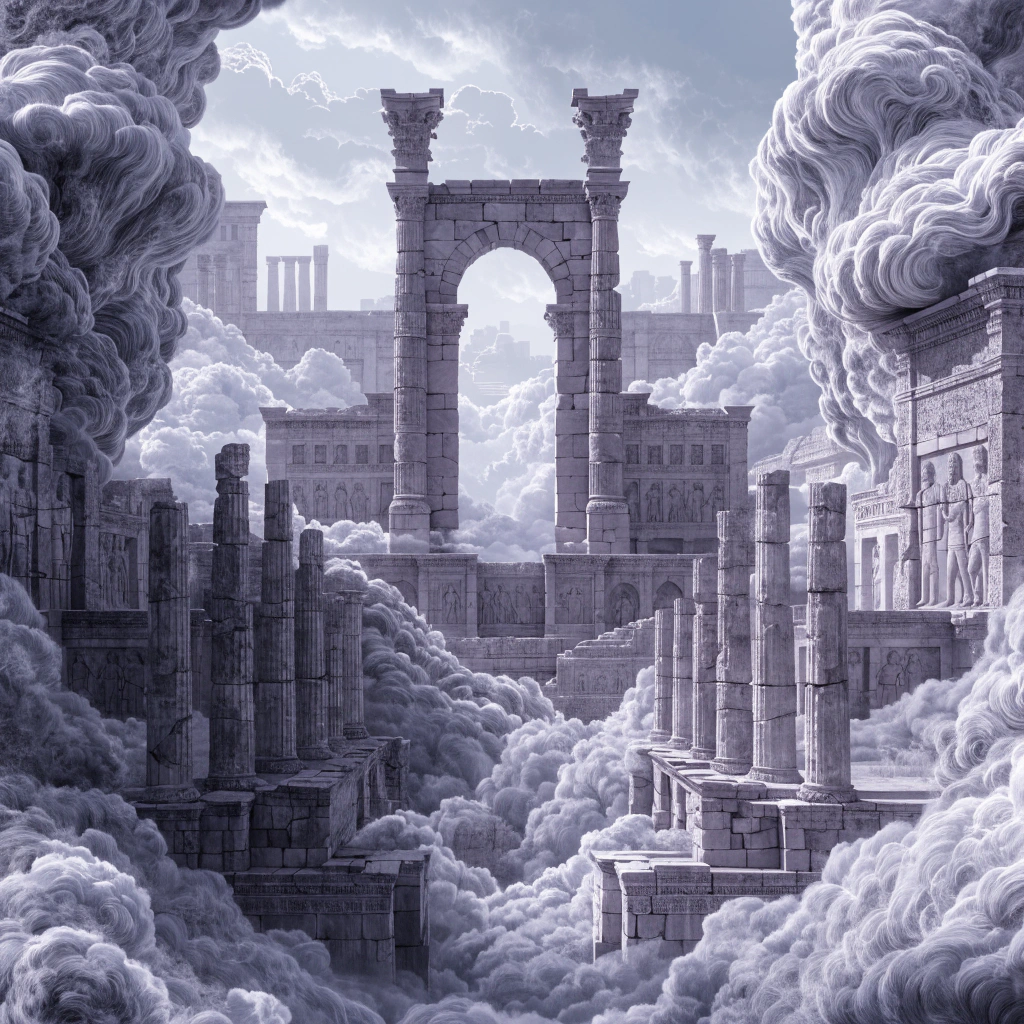
Persepolis: A Great Old City
Persepolis is an old city in Iran. It is very beautiful. King Darius built the city a long time ago. It is a very important place in history.
The city has many big stone walls and tall columns. There are beautiful carvings on the walls. These carvings show people from different countries.
Today, many people visit Persepolis. They take photos of the ruins. It is a famous place for tourists. You can learn about the history of Iran here.
نکته دستوری
الگو: Present Simple 'to be'
"Persepolis is an old city in Iran."
We use 'is' for singular subjects like 'Persepolis'. It describes facts or states that are true now.
الگو: Plural Nouns with -s
"The city has many big stone walls and tall columns."
To talk about more than one thing, we usually add '-s' to the end of the noun. 'Wall' becomes 'walls' and 'column' becomes 'columns'.
درک خود را بسنجید
10 سوال · A1 مبتدی · 1 پیشنمایش رایگان
آنچه از این مقاله آموختید را بسنجید. به همه سؤالات پاسخ دهید و XP کسب کنید!
Where is Persepolis located?
آیا میخواهید آزمون را تمام کنید؟
9 سؤال دیگر منتظر شماست. ثبتنام رایگان کنید تا آزمون کامل را باز کنید و XP کسب کنید!
ثبتنام رایگانقبلاً ثبتنام کردی؟ ورود
جزئیات سؤالات
Where is Persepolis located?
پاسخ شما:
پاسخ درست: Iran
Persepolis is a very new city.
پاسخ شما:
پاسخ درست: نادرست
What does 'visit' mean?
پاسخ شما:
پاسخ درست: To go and see a place
They take _____ of the ruins.
پاسخ شما:
پاسخ درست: photos
Persepolis: The Ancient Heart of Iran
Persepolis is a very famous place in Iran. Its Persian name is Takht-e Jamshid, which means "The Throne of Jamshid." King Darius the Great started building this city around 518 BCE. It was the ceremonial capital of the Persian Empire. This empire was very big and powerful.
The city was built on a large stone platform. Workers used heavy stones to make beautiful buildings and tall columns. Some buildings were bigger than others because they were for the king. There are many carvings on the walls. These carvings show people from different countries bringing gifts to the king.
Persepolis was not a place for everyday living. It was a place for special parties and celebrations. Today, Persepolis is a UNESCO World Heritage site. Many tourists visit the ruins every year because they want to see the ancient glory of Iran. It is more beautiful than many other old cities in the world.
نکته دستوری
الگو: Past Simple
"King Darius the Great started building this city around 518 BCE."
We use the past simple to talk about actions that finished in the past. For regular verbs, we usually add -ed to the end of the word.
الگو: Comparatives
"It is more beautiful than many other old cities in the world."
We use comparatives to look at the differences between two things. For long adjectives like 'beautiful', we use 'more' before the adjective and 'than' after it.
درک خود را بسنجید
11 سوال · A2 مقدماتی · 1 پیشنمایش رایگان
آنچه از این مقاله آموختید را بسنجید. به همه سؤالات پاسخ دهید و XP کسب کنید!
Who started building Persepolis?
آیا میخواهید آزمون را تمام کنید؟
10 سؤال دیگر منتظر شماست. ثبتنام رایگان کنید تا آزمون کامل را باز کنید و XP کسب کنید!
ثبتنام رایگانقبلاً ثبتنام کردی؟ ورود
جزئیات سؤالات
Who started building Persepolis?
پاسخ شما:
پاسخ درست: Darius the Great
Persepolis was a place where people lived every day.
پاسخ شما:
پاسخ درست: نادرست
What does 'ancient' mean?
پاسخ شما:
پاسخ درست: Very old
The city was built on a large stone _____.
پاسخ شما:
پاسخ درست: platform
What do the carvings on the walls show?
پاسخ شما:
پاسخ درست: People bringing gifts
Persepolis: The Magnificent Heart of Ancient Persia
Persepolis, which is also known as Takht-e Jamshid, is one of the most famous historical sites in the world. It was founded by Darius the Great around 518 BCE. This incredible city has been visited by thousands of tourists who want to see the glory of the ancient Achaemenid Empire.
The city was built on a massive stone platform. It was designed to show the power and wealth of an empire that stretched across three continents. Unlike other cities that were used for daily business, Persepolis was a ceremonial capital. This means it was used for special celebrations, such as the Persian New Year, Nowruz. The kings wanted to impress their guests with the scale of the architecture and the beauty of the decorations.
Many beautiful buildings have been preserved over the centuries, although some parts are now in ruins. For example, the Apadana Palace has huge columns and detailed carvings on the walls. These carvings show people from different nations bringing gifts to the King. These images tell us that the empire was very diverse and organized. Scientists have studied these carvings to learn about the clothes and customs of ancient people.
Unfortunately, much of the city was destroyed by Alexander the Great in 330 BCE. However, the ruins that remain are still breathtaking. Since 1979, Persepolis has been recognized as a UNESCO World Heritage site. It is a place where history comes alive, allowing visitors to imagine the grand life of ancient Persian kings. Visitors who walk through the Gate of All Nations often feel small compared to the giant statues. If you are interested in history, you should definitely visit this Iranian treasure.
نکته دستوری
الگو: Passive Voice
"The city was built on a massive stone platform."
The passive voice is used when the action is more important than who did it. It is formed using 'to be' + past participle.
الگو: Relative Clauses
"Persepolis, which is also known as Takht-e Jamshid, is one of the most famous historical sites."
Relative clauses provide extra information about a noun. We use 'which' for things and 'who' for people.
درک خود را بسنجید
11 سوال · B1 متوسط · 1 پیشنمایش رایگان
آنچه از این مقاله آموختید را بسنجید. به همه سؤالات پاسخ دهید و XP کسب کنید!
Who was the founder of Persepolis?
آیا میخواهید آزمون را تمام کنید؟
10 سؤال دیگر منتظر شماست. ثبتنام رایگان کنید تا آزمون کامل را باز کنید و XP کسب کنید!
ثبتنام رایگانقبلاً ثبتنام کردی؟ ورود
جزئیات سؤالات
Who was the founder of Persepolis?
پاسخ شما:
پاسخ درست: Darius the Great
Persepolis was mainly used for daily business and administration.
پاسخ شما:
پاسخ درست: نادرست
What does 'diverse' mean?
پاسخ شما:
پاسخ درست: Including many different types
The city was built on a massive stone _____.
پاسخ شما:
پاسخ درست: platform
When did Persepolis become a UNESCO World Heritage site?
پاسخ شما:
پاسخ درست: 1979
Persepolis: The Ceremonial Heart of the Achaemenid Empire
Persepolis, known in Persian as Takht-e Jamshid, stands as a monumental testament to the grandeur of the ancient Achaemenid Empire. Situated in the plains of Marvdasht, this architectural marvel was founded by Darius the Great around 518 BCE. Unlike the administrative centers of the empire, such as Susa or Babylon, Persepolis was specifically designed as a ceremonial capital. It was intended to showcase the unprecedented power and wealth of an empire that, at its peak, spanned three continents.
The construction of Persepolis was an immense undertaking that required decades to complete. Built upon a massive man-made terrace, the site features a series of palatial buildings characterized by their sophisticated engineering and artistic detail. One of the most striking features is the Apadana Palace, where the King of Kings received delegations from across the globe. The walls are adorned with intricate bas-reliefs depicting subjects from various nations—ranging from Ethiopians to Indians—bringing gifts to the Persian monarch. These carvings serve as a fascinating historical record of the diverse cultures unified under Persian rule. Furthermore, the innovative drainage systems and the precision of the stone masonry reflect a level of technological advancement that was rarely seen elsewhere during that era.
Despite its architectural resilience, the glory of Persepolis was eventually diminished. In 330 BCE, Alexander the Great captured the city during his conquest of the Persian Empire. According to historical accounts, a devastating fire broke out, destroying much of the wooden structures and leaving only the stone skeletons we see today. Whether this act was intentional or accidental remains a subject of debate among historians; nonetheless, the ruins continue to evoke a sense of awe. Many believe the fire was a symbolic act of revenge for the destruction of Athens years earlier.
Today, Persepolis is recognized as a UNESCO World Heritage site and remains a profound symbol of Iranian identity. It offers invaluable insights into the social and political structures of antiquity. For visitors, walking through the Gate of All Nations is not merely a tourist activity but an immersive journey into a past where different civilizations converged. Consequently, preserving such a site is essential for understanding the shared heritage of humanity and the complex history of the Middle East.
نکته دستوری
الگو: Passive Voice for Formal Tone
"this architectural marvel was founded by Darius the Great around 518 BCE."
The passive voice is used here to focus on the object (the marvel) rather than the subject. It is common in historical and academic writing to maintain a formal register.
الگو: Non-defining Relative Clauses
"the Apadana Palace, where the King of Kings received delegations from across the globe."
This clause provides extra information about the Apadana Palace. It is separated by a comma and uses the relative adverb 'where' to refer to a location.
الگو: Discourse Markers for Consequence
"Consequently, preserving such a site is essential for understanding the shared heritage of humanity."
The word 'Consequently' is a transition marker used to show a result or effect. It helps connect the importance of historical insights to the necessity of preservation.
درک خود را بسنجید
11 سوال · B2 بالاتر از متوسط · 1 پیشنمایش رایگان
آنچه از این مقاله آموختید را بسنجید. به همه سؤالات پاسخ دهید و XP کسب کنید!
What was the primary function of Persepolis according to the text?
آیا میخواهید آزمون را تمام کنید؟
10 سؤال دیگر منتظر شماست. ثبتنام رایگان کنید تا آزمون کامل را باز کنید و XP کسب کنید!
ثبتنام رایگانقبلاً ثبتنام کردی؟ ورود
جزئیات سؤالات
What was the primary function of Persepolis according to the text?
پاسخ شما:
پاسخ درست: A ceremonial capital
The construction of Persepolis was completed in less than ten years.
پاسخ شما:
پاسخ درست: نادرست
What does the word 'depicting' mean in the context of the article?
پاسخ شما:
پاسخ درست: Representing through art
The walls of the palace are _____ with intricate bas-reliefs.
پاسخ شما:
پاسخ درست: adorned
Who was responsible for the capture and eventual fire at Persepolis?
پاسخ شما:
پاسخ درست: Alexander the Great
Persepolis: The Architectural Manifestation of Achaemenid Hegemony
Seldom does a historical site encapsulate the zenith of an empire as poignantly as Persepolis, the ceremonial heart of the Achaemenid Empire. Founded by Darius the Great around 518 BCE, this architectural marvel served as a testament to the unprecedented hegemony of the world’s first global superpower. Known in Persian as Takht-e Jamshid, or the 'Throne of Jamshid,' the site was never intended for administrative routine; rather, it was a meticulously crafted stage designed to project the wealth and cultural diversity of a realm spanning three continents. It was built upon a massive artificial terrace, a feat of engineering that elevated the palace complex above the surrounding plains, physically and symbolically asserting the dominance of the King of Kings.
What the Achaemenids sought to establish was not merely a military stronghold, but a cosmopolitan hub where diverse ethnicities converged. This is most vividly illustrated in the Apadana, a colossal audience hall capable of housing thousands. Here, the bas-reliefs depict delegations from twenty-three subject nations, each rendered with distinct attire, hairstyles, and offerings. Such a juxtaposition of varied cultures under a single sovereign suggests an imperial ideology that, while rooted in subjugation, also celebrated a degree of cultural pluralism. Unlike the brutal imagery found in Neo-Assyrian art, Achaemenid iconography often emphasized the peaceful cooperation of the empire’s constituents, albeit within a rigid hierarchical framework. The sheer grandeur of the stone carvings, depicting everything from Median nobles to Ethiopian gift-bearers, underscores the empire's vast reach and its ability to mobilize resources from the furthest corners of the known world.
The architectural sophistication of Persepolis is characterized by its opulent use of dark grey limestone and the seamless integration of diverse artistic styles—Egyptian, Mesopotamian, and Ionian. This synthesis of traditions was a deliberate choice, reflecting the empire's identity as a multi-ethnic entity. However, the systematic destruction of the site in 330 BCE by Alexander the Great remains a subject of intense historical debate. Whether the burning of the palace was a calculated political act of revenge for the destruction of the Acropolis or a tragic, drunken accident, the cataclysmic fire marked the end of an era. The heat was so intense that it melted the silver and gold stored in the treasuries, yet paradoxically, it baked the clay tablets of the Persepolis Fortification Archive, preserving crucial administrative records for future historians.
Despite this devastation, the enduring vestiges of the Great Staircase and the Gate of All Nations continue to evoke a sense of awe. In contemporary discourse, Persepolis is viewed not just as a relic of Iranian heritage but as a symbol of human ingenuity and the fragile nature of power. The preservation of these ruins is paramount, as they offer a window into an ancient world that valued monumental aesthetics as a form of political communication. To walk through the ruins today is to witness the intersection of past glory and the inevitable passage of time, a reminder that even the most formidable empires eventually succumb to the currents of history. The site remains a potent cultural icon, representing a period when the Iranian plateau was the undisputed center of the civilized world.
نکته دستوری
الگو: Inversion with Negative Adverbials
"Seldom does a historical site encapsulate the zenith of an empire as poignantly as Persepolis."
When a sentence starts with a negative or restrictive adverbial like 'seldom' or 'never', the auxiliary verb comes before the subject. This is used in formal writing to add emphasis and dramatic effect.
الگو: Cleft Sentences
"What the Achaemenids sought to establish was not merely a military stronghold, but a cosmopolitan hub."
A 'What-cleft' sentence focuses on specific information by moving it to the end of the clause. It is formed using 'What' + subject + verb + 'is/was' + the emphasized part.
الگو: Nominalization
"The systematic destruction of the site in 330 BCE by Alexander the Great remains a subject of intense historical debate."
Nominalization involves turning verbs (destroy) into nouns (destruction). This makes the writing more academic and allows the writer to pack more information into a single sentence.
درک خود را بسنجید
12 سوال · C1 پیشرفته · 1 پیشنمایش رایگان
آنچه از این مقاله آموختید را بسنجید. به همه سؤالات پاسخ دهید و XP کسب کنید!
What was the primary purpose of Persepolis according to the article?
آیا میخواهید آزمون را تمام کنید؟
11 سؤال دیگر منتظر شماست. ثبتنام رایگان کنید تا آزمون کامل را باز کنید و XP کسب کنید!
ثبتنام رایگانقبلاً ثبتنام کردی؟ ورود
جزئیات سؤالات
What was the primary purpose of Persepolis according to the article?
پاسخ شما:
پاسخ درست: To act as a ceremonial stage for imperial display
Achaemenid art typically emphasized the brutal subjugation of its subjects through violent imagery.
پاسخ شما:
پاسخ درست: نادرست
What does 'cataclysmic' mean in the context of the fire?
پاسخ شما:
پاسخ درست: Extremely destructive and transformative
The fire paradoxically helped preserve administrative records by baking the clay _____.
پاسخ شما:
پاسخ درست: tablets
Which artistic styles were integrated into the architecture of Persepolis?
پاسخ شما:
پاسخ درست: Egyptian, Mesopotamian, and Ionian
The site was built on a natural mountain peak to show dominance.
پاسخ شما:
پاسخ درست: نادرست
The Ephemeral Grandeur of Persepolis: An Ontological Inquiry into Achaemenid Hegemony
To contemplate the ruins of Persepolis, known to the Persian world as Takht-e Jamshid, is to engage with the very concept of imperial permanence and its inherent fragility. Founded by Darius I in approximately 518 BCE, this ceremonial capital was never intended for the mundane exigencies of daily administration; rather, it functioned as a sophisticated stage for the 'King of Kings' to receive the tribute of a myriad of subject nations. Seldom has the world witnessed such a deliberate fusion of architectural grandiosity and political propaganda, designed to project an image of a harmonious, albeit stratified, global superpower. The site, constructed upon a massive artificial terrace, remains a profound vestige of an empire that once spanned three continents, bridging the cultural interstices between the Mediterranean and the Indus Valley.
The Apadana, or Audience Hall, with its once-towering columns and intricate bas-reliefs, serves as a historical palimpsest of the empire’s cultural diversity. These carvings depict delegations from twenty-three subject nations, each rendered with meticulous attention to their distinct vestments and offerings. It is essential that the scholar perceive these depictions not merely as artistic flourishes, but as a paradigm of Achaemenid hegemony—a system that preferred the appearance of voluntary subjugation over the raw application of force. The intricate carvings suggest a proclivity for inclusivity, whereby the sovereignty of the Great King was acknowledged through a ritualized exchange of gifts, rather than the mere extraction of plunder. This ideological framework allowed the empire to maintain a degree of stability hitherto unseen in the ancient Near East.
However, the apogee of Persian influence was to be met with a cataclysmic end. Had the Macedonian forces under Alexander the Great not razed the site in 330 BCE, one might only imagine the further architectural refinements that could have ensued. The burning of Persepolis remains a point of historical contention; whether it was a calculated act of symbolic retribution for the destruction of Athens or a drunken whim of conquest is still debated by contemporary historians. Regardless of the impetus, the scorched cedar beams and calcined limestone paradoxically preserved the very records they were meant to destroy. The irony is palpable: the destruction of the city ensured the survival of the Persepolis Fortification Archive, providing modern researchers with an unparalleled glimpse into the socio-economic stratification of the Achaemenid world.
In the modern era, the ruins have transitioned from a site of imperial ritual to a symbol of national identity and a UNESCO World Heritage site. Yet, the transience of the empire is palpable among the fallen lintels and the hollow eyes of the lamassu at the Gate of All Nations. Despite its ostentatious display of power, the site now whispers of the inevitable decay that haunts all monolithic structures. Be it the result of intentional arson or the slow erosion of time, the site serves as a poignant reminder of the ephemeral nature of political sovereignty. It is through the study of such sites that we grasp the stratification of history, where each layer of dust obscures a former glory, and each column stands as a defiant, if crumbling, witness to a past that sought to defy the very concept of time itself. The scholarly pursuit of understanding Persepolis thus becomes an exercise in humility, acknowledging that even the most grandiose paradigms are subject to the inexorable march of history.
نکته دستوری
الگو: Negative Inversion
"Seldom has the world witnessed such a deliberate fusion of architectural grandiosity and political propaganda."
Inversion occurs when a negative adverbial (like 'seldom') starts the sentence. The auxiliary verb 'has' moves before the subject 'the world' to add rhetorical emphasis and formality.
الگو: Inverted Third Conditional
"Had the Macedonian forces under Alexander the Great not razed the site in 330 BCE, one might only imagine the further architectural refinements that could have ensued."
This structure replaces 'If the Macedonian forces had not...' with an inverted auxiliary. It is used in formal writing to express a hypothetical situation in the past and its imaginary outcome.
الگو: Present Subjunctive
"It is essential that the scholar perceive these depictions not merely as artistic flourishes, but as a paradigm of Achaemenid hegemony."
The subjunctive mood is used after adjectives of necessity (like 'essential'). The base form of the verb 'perceive' is used regardless of the subject, omitting the typical '-s' for third-person singular.
درک خود را بسنجید
12 سوال · C2 تسلط · 1 پیشنمایش رایگان
آنچه از این مقاله آموختید را بسنجید. به همه سؤالات پاسخ دهید و XP کسب کنید!
What was the primary function of Persepolis according to the text?
آیا میخواهید آزمون را تمام کنید؟
11 سؤال دیگر منتظر شماست. ثبتنام رایگان کنید تا آزمون کامل را باز کنید و XP کسب کنید!
ثبتنام رایگانقبلاً ثبتنام کردی؟ ورود
جزئیات سؤالات
What was the primary function of Persepolis according to the text?
پاسخ شما:
پاسخ درست: A ceremonial stage for imperial propaganda
The destruction of Persepolis by Alexander the Great resulted in the total loss of Achaemenid socio-economic records.
پاسخ شما:
پاسخ درست: نادرست
Which word describes the quality of being short-lived or impermanent?
پاسخ شما:
پاسخ درست: Ephemeral
The site remains a profound _____ of an empire that once spanned three continents.
پاسخ شما:
پاسخ درست: vestige
What does the author suggest about the Achaemenid approach to rule?
پاسخ شما:
پاسخ درست: It utilized a facade of voluntary cooperation and ritual exchange.
The bas-reliefs in the Apadana depict twenty-three different subject nations.
پاسخ شما:
پاسخ درست: درست

