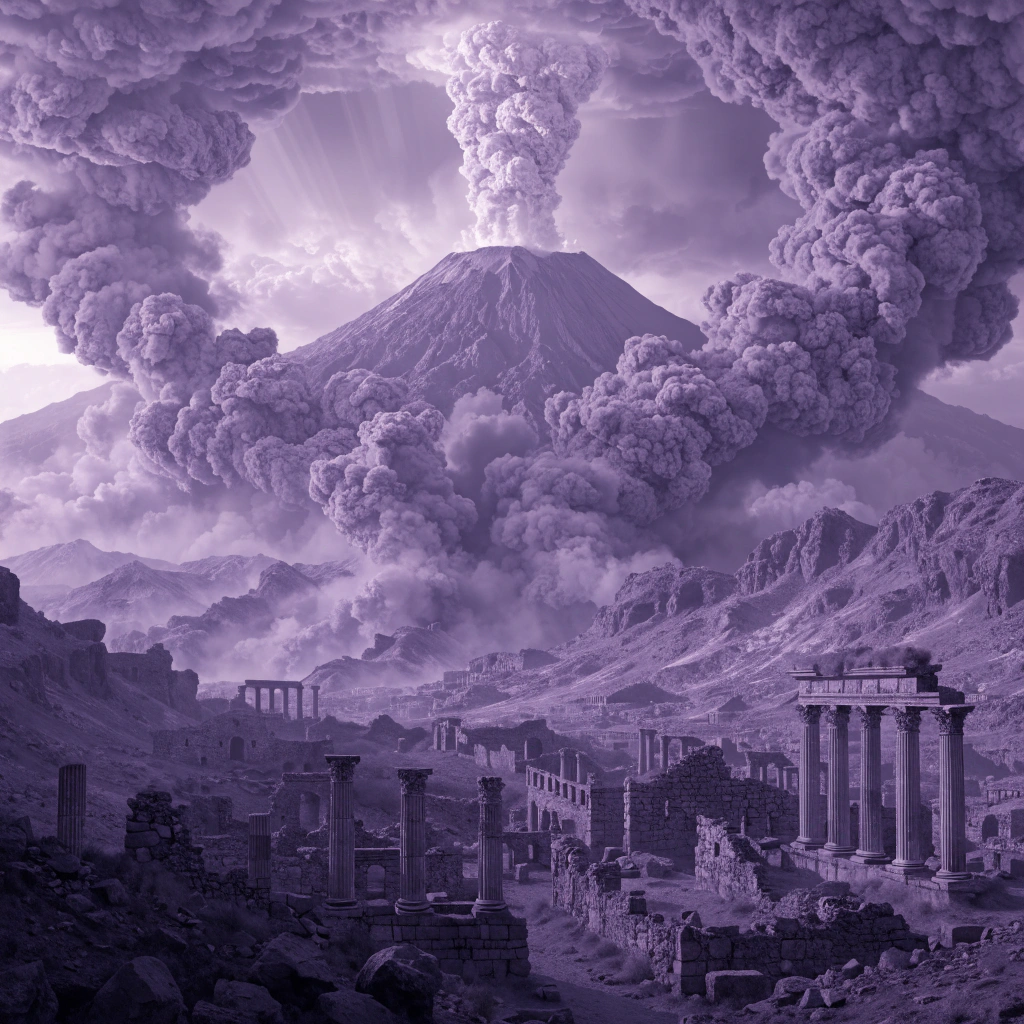
The Old City of Pompeii
Pompeii is a very old city in Italy. It is near a big mountain. This mountain is a volcano. Its name is Mount Vesuvius. Long ago, the volcano exploded. Hot ash covered the city.
Today, Pompeii is a famous park. Many people visit the park every year. You can see old houses and streets. You can see beautiful paintings on the walls. It is like a museum.
The city is very quiet now. It is a special place. You can learn about history here. It is very interesting for everyone.
语法聚焦
句型: Present Simple of 'to be'
"Pompeii is a very old city in Italy."
We use 'is' with singular subjects like 'Pompeii' to describe facts. It connects the subject to an adjective or a noun.
句型: Modal Verb 'can'
"You can see old houses and streets."
We use 'can' followed by a verb to talk about what is possible. It does not change based on the person (I can, you can, he can).
测试你的理解
10 个问题 · A1 初学 · 1 次免费预览
测试你从这篇文章中学到的知识。回答所有问题即可获得经验值!
题目详情
Where is the city of Pompeii?
你的回答:
正确答案: Italy
Pompeii is a new city built recently.
你的回答:
正确答案: 错误
What does the word 'famous' mean?
你的回答:
正确答案: Known by many people
This mountain is a _____.
你的回答:
正确答案: volcano
The Frozen City of Pompeii
Pompeii is a very famous city in Italy. It is near the city of Naples and a big volcano called Mount Vesuvius. A long time ago, in the year 79 AD, the volcano erupted. It was a very scary day for the people because hot ash and stones fell from the sky. The ash covered the whole city and everyone had to leave or hide.
For many years, the city was hidden under the ground. Archaeologists discovered the city again in the 18th century. They were surprised because the city was very well-preserved. Today, you can walk on the old Roman streets. You can see beautiful houses, shops, and even a large theater.
Pompeii is more interesting than many modern museums because you can see how people lived 2,000 years ago. It is a big park now, and millions of tourists visit it every year. It is a sad place, but it is also very important for history.
语法聚焦
句型: Past Simple
"Archaeologists discovered the city again in the 18th century."
We use the past simple for actions that finished in the past. To make regular verbs, we usually add '-ed' to the end of the word.
句型: Comparatives
"Pompeii is more interesting than many modern museums."
We use comparatives to compare two things. For long adjectives like 'interesting', we use 'more' before the adjective and 'than' after it.
测试你的理解
11 个问题 · A2 基础 · 1 次免费预览
测试你从这篇文章中学到的知识。回答所有问题即可获得经验值!
题目详情
Where is Pompeii located?
你的回答:
正确答案: Italy
The volcano erupted in the year 79 AD.
你的回答:
正确答案: 正确
What is a volcano?
你的回答:
正确答案: A mountain with fire and ash
The ash _____ the whole city.
你的回答:
正确答案: covered
When did archaeologists find the city again?
你的回答:
正确答案: In the 18th century
A Journey Back in Time: The Secrets of Pompeii
Pompeii is an incredible archaeological park located near the city of Naples in Italy. It has become one of the most famous historical sites in the world because it offers a unique window into the past. In 79 AD, the Roman city was suddenly destroyed when Mount Vesuvius, which is a large volcano, erupted violently.
The city was buried under several meters of volcanic ash and pumice. Although this was a terrible tragedy for the people who lived there, the ash actually protected the buildings and objects. For centuries, Pompeii remained hidden and forgotten until it was discovered again in the 18th century. Since then, archaeologists have worked hard to uncover the streets, houses, and even the beautiful wall paintings that have survived for nearly 2,000 years.
When you walk through the park today, you can see exactly how the Romans lived their daily lives. You can visit the forum, which was the center of public life, or explore the private villas that belonged to wealthy citizens. Many of these structures have been restored so that visitors can understand the ancient architecture. Walking on the original stone streets makes you feel like you have traveled back in time to the Roman Empire.
Pompeii is a place that everyone should visit at least once in their lives. It is not just a collection of ruins; it is a city that has been frozen in time. This site allows us to learn about history in a way that books cannot provide. It is a powerful reminder of the force of nature and the impressive beauty of ancient Roman culture. Today, millions of tourists visit the park every year to witness this historical wonder.
语法聚焦
句型: Passive Voice
"The city was buried under several meters of volcanic ash and pumice."
The passive voice is used when the focus is on the action or the object receiving the action. It is formed using the verb 'to be' + the past participle.
句型: Present Perfect
"It has become one of the most famous historical sites in the world."
The present perfect connects the past to the present. It is used here to describe a state that started in the past and is still true today.
测试你的理解
11 个问题 · B1 中级 · 1 次免费预览
测试你从这篇文章中学到的知识。回答所有问题即可获得经验值!
What caused the destruction of Pompeii in 79 AD?
题目详情
What caused the destruction of Pompeii in 79 AD?
你的回答:
正确答案: A volcanic eruption
Pompeii was rediscovered in the 18th century.
你的回答:
正确答案: 正确
What is the meaning of 'architecture'?
你的回答:
正确答案: The design of buildings
Pompeii is located near the city of _____.
你的回答:
正确答案: Naples
Why did the buildings and paintings survive for so long?
你的回答:
正确答案: The ash protected them
Frozen in Time: The Legacy of Pompeii Archaeological Park
The Pompeii Archaeological Park stands today not merely as a graveyard of a lost civilization, but as a vibrant museum that continues to reveal the complexities of Roman society. When Mount Vesuvius erupted with unprecedented fury in 79 AD, it blanketed the flourishing city in a thick layer of volcanic ash and pumice. Although the event was a poignant tragedy for the thousands who lived there, the preservation that resulted from this catastrophic event is unparalleled in the field of archaeology. Had the ash not sealed the city so effectively, the organic materials, wooden furniture, and intricate frescoes would have perished long ago.
Subsequent excavations, which began in the mid-18th century and continue to this day, have meticulously unearthed streets, villas, and even the remains of the inhabitants themselves. These archaeological efforts provide a window into a world that was inadvertently frozen in time. Inhabitants were caught in their final moments, and the plaster casts made from the voids left by their bodies offer a hauntingly direct connection to the past. Despite the passage of centuries, the layout of the city remains remarkably intact, allowing historians to analyze the urban planning, commerce, and social hierarchies of the Roman era. While the impending disaster was unknown to most residents until it was too late, the physical record they left behind is incredibly detailed.
Furthermore, the site offers more than just architectural ruins; it provides a comprehensive look at Roman domestic life. From the grand House of the Vettii to the humble bakeries and laundry shops, every corner of Pompeii tells a story of a society that was highly organized and culturally sophisticated. Archaeologists have discovered graffiti on the walls, ranging from political slogans to personal messages, which suggests a high level of literacy among the general population.
However, the park faces significant modern challenges that require constant attention. The sheer volume of tourists, combined with the harsh effects of climate change and erosion, threatens the site's delicate structures. Preservation efforts are now considered just as crucial as the excavation itself, with international teams working to stabilize crumbling walls and protect the vivid pigments of the murals. If authorities do not implement sustainable management strategies, the very history we seek to protect may be lost to the elements. Consequently, Pompeii serves as a poignant reminder of nature's power and the absolute necessity of safeguarding our shared cultural heritage for future generations. Visitors who walk through the stone-paved streets can almost hear the echoes of a bustling marketplace, making Pompeii an evocative bridge between the past and the present.
语法聚焦
句型: Inverted Third Conditional
"Had the ash not sealed the city so effectively, the organic materials and intricate frescoes would have perished long ago."
This is a formal way to express a hypothetical situation in the past. It replaces 'If the ash had not...' with the auxiliary verb 'had' at the beginning of the sentence.
句型: Non-defining Relative Clause
"Subsequent excavations, which began in the mid-18th century and continue to this day, have meticulously unearthed streets..."
This pattern adds extra information about a noun (excavations). It is separated by commas and uses 'which' because the information is not essential to identify the noun.
句型: Passive Voice (Present)
"Preservation efforts are now considered just as crucial as the excavation itself..."
The passive voice is used here to focus on the action (preservation efforts) rather than the people performing the action. It is formed using 'to be' + past participle.
测试你的理解
11 个问题 · B2 中高级 · 1 次免费预览
测试你从这篇文章中学到的知识。回答所有问题即可获得经验值!
What primary factor allowed Pompeii to be preserved so well?
题目详情
What primary factor allowed Pompeii to be preserved so well?
你的回答:
正确答案: The thick layer of volcanic ash
Archaeological excavations at Pompeii were completed in the 18th century.
你的回答:
正确答案: 错误
What does 'inadvertently' mean?
你的回答:
正确答案: Accidentally
The archaeological efforts provide a window into a world that was inadvertently _____ in time.
你的回答:
正确答案: frozen
What is one of the significant modern challenges facing the park today?
你的回答:
正确答案: The impact of high tourist volumes
Frozen in Time: The Paradoxical Legacy of the Pompeii Archaeological Park
Seldom in the annals of human history has a catastrophe yielded such an unparalleled archaeological windfall as the burial of Pompeii. In 79 AD, the looming presence of Mount Vesuvius transitioned from a backdrop of pastoral tranquility to an engine of absolute devastation. What historians now recognize as a seminal moment in Roman studies was, for the inhabitants of the time, an inescapable nightmare. The sheer velocity of the pyroclastic surges ensured that the city was not merely destroyed, but meticulously preserved under a thick shroud of lapilli and ash. This sudden interment acted as a geological vacuum, shielding the city from the erosive forces of time and the scavenging of later generations.
It is this paradox of destruction and preservation that continues to captivate the global imagination. Nominalisation of the event—the 'Vesuvius Event'—hardly captures the granular detail found within the ruins. Walking through the Decumanus Maximus, one is struck by the juxtaposition of mundane domesticity and monumental civic pride. It was the suddenness of the interment that facilitated the survival of ephemeral artifacts: carbonized loaves of bread, delicate frescoes, and the haunting voids left by decomposing bodies. These voids, when filled with plaster, offer a visceral, three-dimensional record of the victims' final moments, bridging the gap between historical data and human empathy.
Archaeological methodology at Pompeii has undergone a radical transformation in recent decades. No longer is the site viewed merely as a source of aesthetic plunder or a gallery for high-status art; rather, it is treated as a complex laboratory for urban sociology. The meticulous excavation of the Regio V district has unveiled nuances of Roman social stratification previously obscured by less rigorous techniques. Not only do the grand villas of the elite provide insight into ostentatious displays of wealth, but the cramped thermopolia—ancient snack bars—also offer a glimpse into the subsistence and dietary habits of the urban poor. Through these findings, the city speaks of a society that was remarkably stratified yet deeply interconnected.
However, the stewardship of Pompeii is fraught with contemporary challenges. The perpetual battle against erosion, coupled with the staggering annual influx of tourists, necessitates a delicate equilibrium between accessibility and conservation. It is the preservation of this fragility that remains the greatest burden for modern curators. Rarely have the tensions between economic exploitation and cultural heritage been so palpable. As climate change increases the frequency of extreme weather events, the vulnerability of the site's open-air structures becomes even more pronounced, demanding innovative engineering solutions to prevent the collapse of ancient masonry.
Ultimately, Pompeii serves as a memento mori on a grand scale. It invites us to reflect on the transience of civilization and the enduring power of historical memory. Through the lens of this silent city, we gain a profound appreciation for the intricacies of Roman life, forever suspended in a state of tragic animation. The site remains not just a relic of the past, but a living dialogue between antiquity and the modern world, reminding us that even the most robust empires are subject to the whims of nature.
语法聚焦
句型: Negative Inversion
"Seldom in the annals of human history has a catastrophe yielded such an unparalleled archaeological windfall as the burial of Pompeii."
Inversion is used with negative or restrictive adverbs like 'seldom' to add emphasis. The auxiliary verb 'has' moves before the subject 'a catastrophe'.
句型: Cleft Sentences
"It was the suddenness of the interment that facilitated the survival of ephemeral artifacts."
This structure uses 'It is/was... that' to focus on a specific piece of information (the suddenness). It emphasizes the cause of the preservation.
句型: Nominalisation
"The meticulous excavation of the Regio V district has unveiled nuances of Roman social stratification previously obscured."
Verbs like 'excavate' and 'stratify' are turned into nouns ('excavation', 'stratification'). This is common in academic C1 English to make the text more concise and formal.
测试你的理解
12 个问题 · C1 高级 · 1 次免费预览
测试你从这篇文章中学到的知识。回答所有问题即可获得经验值!
What does the author describe as the 'paradox' of Pompeii?
题目详情
What does the author describe as the 'paradox' of Pompeii?
你的回答:
正确答案: The destruction of the city led to its perfect preservation.
Archaeologists today view Pompeii primarily as a place to find valuable art for galleries.
你的回答:
正确答案: 错误
What is the meaning of 'ephemeral' as used in the text?
你的回答:
正确答案: Lasting for a very short time
The sheer _____ of the pyroclastic surges ensured that the city was meticulously preserved.
你的回答:
正确答案: velocity
What information do 'thermopolia' provide to modern researchers?
你的回答:
正确答案: Information on the dietary habits of the urban poor.
Climate change is mentioned as a threat to the site's structural integrity.
你的回答:
正确答案: 正确
Resurrecting the Vesuvian Necropolis: An Ontological Inquiry into the Pompeii Archaeological Park
The Pompeii Archaeological Park stands not merely as a monument to antiquity but as a profound intersection of cataclysm and preservation, offering a singular hermeneutic challenge to the modern historian. The eruption of Mount Vesuvius in 79 AD, while a harrowing human catastrophe of unprecedented proportions, effectively vacuum-sealed a thriving Roman municipality, providing an unparalleled window into the socio-political fabric of the first century. Were the ash not to have descended with such relentless celerity, the granular details of Roman domesticity—from the ephemeral graffiti on tavern walls to the carbonized remains of a simple loaf of bread—would have been irrevocably lost to the entropic forces of time. The site functions as a palimpsest, where layers of sedimented history are meticulously peeled back to reveal the ossified remains of a civilization interrupted in its prime.
Paradoxically, the very event that annihilated the population served to immortalize their environment. This preservation paradox necessitates a sophisticated analytical framework; one must view Pompeii not as a static museum but as a dynamic, albeit desiccated, organism. The archaeological endeavors initiated in the 18th century were, by modern standards, rudimentary and often motivated by the acquisition of aesthetic trophies rather than scientific inquiry. However, the paradigm shifted significantly with the introduction of systematic stratigraphic excavation. It is paramount that the contemporary visitor recognize the site as a living laboratory where interdisciplinary research—ranging from bioarchaeology to digital mapping—strives to fill the lacunae in our understanding of Roman urbanism.
Yet, the site is fraught with ethical complexities and conservationist dilemmas. The exposure of the city to the elements, after centuries of subterranean protection, has initiated a second, slower destruction. The 'Great Pompeii Project' represents a monumental effort to mitigate this decay, utilizing cutting-edge engineering to stabilize the fragile structures. One might argue that the act of excavation is itself a form of destruction; once a layer is removed, its original context is forever altered. Furthermore, the display of plaster casts—those haunting hollows left by decomposed bodies—raises questions regarding the voyeurism of tragedy. Seldom does a site evoke such visceral reactions while simultaneously demanding such detached scholarly rigor.
The ontological status of Pompeii is therefore one of transition. It is neither fully of the past nor entirely of the present. As we navigate the Decumanus Maximus, we are confronted with the vestige of a world that is inextricably linked to our own through its architectural legacies and civic structures. The lessons of Pompeii are not confined to the annals of history; they serve as a sobering reminder of human vulnerability in the face of geological instability. It is imperative that we continue to safeguard this fragile heritage, lest the remaining secrets of the Vesuvian plain be consumed by the very modernity that seeks to uncover them.
语法聚焦
句型: Inverted Conditional (Third/Mixed Variation)
"Were the ash not to have descended with such relentless celerity, the granular details of Roman domesticity... would have been irrevocably lost."
This formal structure replaces 'If the ash had not descended'. It uses 'Were' + subject + 'to have' to express a hypothetical past condition with a high degree of formality and literary style.
句型: The Subjunctive Mood
"It is paramount that the contemporary visitor recognize the site as a living laboratory."
The subjunctive 'recognize' (rather than 'recognizes') is used after adjectives expressing importance or necessity, such as 'paramount', 'imperative', or 'essential'.
句型: Negative Inversion
"Seldom does a site evoke such visceral reactions while simultaneously demanding such detached scholarly rigor."
When a negative or restrictive adverb like 'seldom' starts a sentence, the auxiliary verb 'does' precedes the subject 'a site' for rhetorical emphasis.
测试你的理解
12 个问题 · C2 精通 · 1 次免费预览
测试你从这篇文章中学到的知识。回答所有问题即可获得经验值!
What does the author suggest about the 18th-century excavations of Pompeii?
题目详情
What does the author suggest about the 18th-century excavations of Pompeii?
你的回答:
正确答案: They were primarily focused on gathering beautiful objects.
The author argues that modern excavation is a purely constructive process with no negative impact on the site.
你的回答:
正确答案: 错误
Which word describes the gaps or missing parts in our historical knowledge?
你的回答:
正确答案: Lacunae
The author notes that the site's preservation is a _____, as the event that destroyed the people also saved their city.
你的回答:
正确答案: paradox
According to the text, what is the 'Great Pompeii Project'?
你的回答:
正确答案: A large-scale effort to prevent the further decay of the ruins.
The author believes that the lessons of Pompeii are only relevant to those studying the first century.
你的回答:
正确答案: 错误

