Grammar Rule in 30 Seconds
Use the Zero Conditional to talk about things that are always true, like scientific facts or your daily habits.
- Use Present Simple in both the 'if' clause and the result clause: 'If I sleep late, I feel tired.'
- You can replace 'if' with 'when' or 'whenever' without changing the meaning of the sentence.
- Use a comma if the 'if' clause comes first; no comma is needed if the result comes first.

Overview
How This Grammar Works
Present Simple。这让重点保持在动作的规律性上。你不是在预测一次性事件;你是在描述你宇宙中的永恒法则。如果你是玩家,你懂这种感觉:如果你耗尽了 HP,这关你就输了。这就是 Zero Conditional。这不是也许;游戏代码就是这么写的。在现实生活中,你用它向朋友解释你的日常习惯或者 APP 是如何工作的。這是你个性的“说明书”。如果我下午 4 点后喝咖啡,我就睡不着。我就是这样的人!
Formation Pattern
if 或 when 开头。在 Zero Conditional 中,它们基本就是双胞胎。你可以互换它们而不改变意思。
Present Simple 添加条件。(例如,If you heat water to 100 degrees...)
if 或 when 开头,请使用逗号。如果 if 在中间,跳过逗号!
Present Simple。(...it boils.)
If/When + Present Simple, + Present Simple
When I see a dog, I smile.
Present Simple + if/when + Present Simple
I smile when I see a dog.
he/she/it)的 s。即使在自动事实的世界里,语法规则仍然适用!

When To Use It
If you mix red and blue, you get purple. 无聊?也许吧。但很必要。第二,General Truths。这些是对每个人都适用的事情,或者至少对你是这样。If you don't eat, you get hungry. 惊天动地的发现,我知道。第三,Habits and Routines。这就是个性化的地方了。When I get home, I take off my shoes. 这是你的自动驾驶模式。最后,Instructions and Rules。想想 APP 设置或者桌游。If the light turns red, you stop. 或者 When you click this icon, the menu opens. 这很适合用来给有点技术障碍的人解释事情。“如果你点击‘订阅’按钮,你就会收到通知。” 看?你已经是这方面的专家了。这就是我们生活的 'if-this-then-that' (IFTTT) 世界的语言。
Common Mistakes
- The 'Will' Trap:不要在句子的任何一部分使用
will。
If I see her, I will say hello. (这是 First Conditional —— 一个具体的未来事件)。If I see her, I say hello. (这是 Zero Conditional —— 我每次见到她都这么做)。- The Comma Drama:人们经常在
if开头时忘记逗号,或者在if在中间时加逗号。
I get tired if, I work too much.I get tired if I work too much.- Mixing Tenses:保持简单。Present + Present。除非你真的知道自己在做什么,否则不要试图偷偷塞进一个
Past Simple或Present Continuous。如果你把它搞复杂了,你就失去了那种“普遍真理”的感觉。 - Pronoun Confusion:记住,即使你在谈论普遍真理,你仍然需要一个主语。
If rains, get wet.If it rains, things get wet.Contrast With Similar Patterns
- Zero Conditional: 100% 确定 / 总是真实的 / 普遍习惯。
If it rains, I wear a raincoat. (每次下雨我都这么做。这是我的规则。)- First Conditional: 真正的可能性 / 具体的未来事件。
If it rains tomorrow, I will wear a raincoat. (我具体在谈论明天的天气预报。)Whenever。在 Zero Conditional 中,你经常可以用 whenever 替换 if,来强调它每次都发生。Whenever I listen to lo-fi music, I focus better. 这给你的句子增加了一点风味,而不会改变核心逻辑。Quick FAQ
我可以用 when 代替 if 吗?
绝对可以!在 Zero Conditional 中,它们是可以互换的。When I'm happy, I sing 的意思和 If I'm happy, I sing. 是一样的。
可以用 Zero Conditional 来描述坏习惯吗?
必须的。If I start a new show, I binge-watch the whole season. 我们都经历过。
我总是需要逗号吗?
只有当 if/when 部分在最前面时才需要。如果它在中间,不需要逗号!
我可以用它来描述社交媒体规则吗?
是的!If you double-tap a photo on Instagram, you like it. 这是使用这个语法的完美语境。
如果结果不 *总是* 真的怎么办?
那么它就不是 Zero Conditional。如果它只是有时发生,你可能需要不同的结构,或者加上像 usually 或 often 这样的副词。但对于纯粹的 Zero Conditional,我们假设它是一个固定的规则。如果你摔了手机,它就碎了。(好吧,希望不会,但你懂那个意思!)
Conjugation Table
| 主语 | If-Clause (Present Simple) | Result Clause (Present Simple) |
|---|---|---|
| --- | --- | --- |
| I | If I work out, | I feel great. |
| You | When you cook, | it smells amazing. |
| He/She/It | If it rains, | the ground gets wet. |
| We | When we study, | we learn fast. |
| They | If they play, | they win. |
Memory Trick
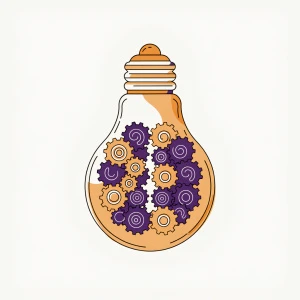
试试 Light Switch Analogy(电灯开关类比法)。
Switch UP (If) -> Light ON (Result)。
这是一个直接的、机械的连接。不需要思考。不需要等待未来。只要按下开关,结果立即发生。If Input, then Output。

Real Conversations
At a Café
Sam
Alex
Sam
Tech Support
User
Support
User
Support
Progressive Practice
识别习惯:
I drink water. I feel better.→ 组合它们:
If I drink water, I feel better.
加上 s:
She drinks water. She feels better.→
When she drinks water, she feels better.
交换顺序:
She feels better when she drinks water.(注意:没有逗号!)
把它变成坏习惯:"If I don't sleep, I get grumpy."
应用到科技场景:
When you swipe left, you delete the message.
Zero Conditional Structure
| Clause Type | Conjunction | Subject | Verb Tense | Example |
|---|---|---|---|---|
|
Condition Clause
|
If / When
|
I / You / We / They
|
Present Simple
|
If you exercise,
|
|
Result Clause
|
(None)
|
I / You / We / They
|
Present Simple
|
you feel better.
|
|
Condition Clause
|
If / When
|
He / She / It
|
Present Simple (+s)
|
If it rains,
|
|
Result Clause
|
(None)
|
He / She / It
|
Present Simple (+s)
|
the grass gets wet.
|
|
Negative Condition
|
If
|
I / You / We / They
|
do not + verb
|
If you don't eat,
|
|
Negative Result
|
(None)
|
I / You / We / They
|
do not + verb
|
you don't grow.
|
Common Contractions in Zero Conditional
| Full Form | Contraction | Usage Example |
|---|---|---|
|
do not
|
don't
|
If I don't sleep, I'm grumpy.
|
|
does not
|
doesn't
|
If it doesn't rain, plants die.
|
|
I am
|
I'm
|
If I'm late, I call.
|
|
it is
|
it's
|
If it's hot, I swim.
|
Meanings
The Zero Conditional describes situations where one action always causes another. It is used for facts, rules, and personal routines.
Scientific Facts
Describing universal truths or laws of nature that never change.
“If water reaches 100 degrees, it boils.”
“If you mix red and blue, you get purple.”
Personal Habits
Describing things you regularly do in response to a specific situation.
“If I wake up early, I go for a jog.”
“If I'm stressed, I listen to classical music.”
Rules and Instructions
Explaining how things work or giving commands based on conditions.
“If the light is red, you stop.”
“If you have a question, please raise your hand.”
Reference Table
| 类型 | 条件 (If/When 从句) | 结果 (主句) | 例子 |
|---|---|---|---|
|
My Routine
|
If I wake up early
|
I go for a run.
|
If I wake up early, I go for a run.
|
|
Her Habit
|
When she studies at night
|
she drinks strong tea.
|
When she studies at night, she drinks strong tea.
|
|
Your Reaction
|
If you watch horror movies
|
you can't sleep well.
|
You can't sleep well if you watch horror movies.
|
|
Their Routine
|
When they have a day off
|
they visit their family.
|
When they have a day off, they visit their family.
|
|
Our Habit
|
If we eat too much sugar
|
we feel sluggish.
|
If we eat too much sugar, we feel sluggish.
|
|
My Preference
|
When I cook dinner
|
I always play music.
|
When I cook dinner, I always play music.
|
正式程度
If one lacks sufficient sleep, one experiences fatigue. (General health)
If you don't sleep, you get tired. (General health)
No sleep makes you a zombie. (General health)
If you pull an all-nighter, you're wrecked. (General health)
零条件句:习惯与日常概念图
结构
- If/When 从句 Simple Present
- 主句 Simple Present
- 逗号使用 Only if 'If/When' clause comes first
核心思想
- 总是真的 For a specific person/group
- 可预测的 Consistent cause & effect
- 非未来 States a present reality
用法
- 日常活动 Morning routines, work tasks
- 个人怪癖 Unique habits, reactions
- 常见场景 Texting, online meetings, gaming
避免
- 'Will' 时态 Don't use future simple
- 混合时态 Keep both clauses simple present
- 第一条件句 Not for specific future events
零条件句中 'If' 与 'When' 的对比 (习惯)
这是一个零条件句习惯吗?
你描述的是一个普遍事实,还是一个“总是”发生的日常(针对特定个人/群体)?
条件和结果中的动作是否在现在时中持续发生?
在不显著改变日常含义的情况下,你能用 'when' 替换 'if'(反之亦然)吗?
日常习惯:零条件句的应用
早晨日常
- • If I wake up late, I skip breakfast.
- • When my alarm rings, I hit snooze.
学习习惯
- • If I study with friends, I learn faster.
- • When I listen to music, I focus better.
工作与科技
- • If I get an urgent email, I reply immediately.
- • When the Wi-Fi is bad, I use my hotspot.
社交与休闲
- • If I play games online, I lose track of time.
- • When friends call, I always answer.
按水平分级的例句
If I am cold, I wear a coat.
If I am cold, I wear a coat.
If you heat ice, it melts.
If you heat ice, it melts.
I cry if I am sad.
I cry if I am sad.
If it is 10:00, I go to bed.
If it is 10:00, I go to bed.
If I don't eat breakfast, I get hungry.
If I don't eat breakfast, I get hungry.
When it rains, the ground gets wet.
When it rains, the ground gets wet.
Does the machine work if you press this?
Does the machine work if you press this?
If my cat is hungry, she meows.
If my cat is hungry, she meows.
If I have a lot of work, I usually stay late.
If I have a lot of work, I usually stay late.
Whenever I travel by plane, I feel nervous.
Whenever I travel by plane, I feel nervous.
If you mix oil and water, they don't blend.
If you mix oil and water, they don't blend.
If children don't exercise, they become unhealthy.
If children don't exercise, they become unhealthy.
If the temperature drops below zero, water freezes.
If the temperature drops below zero, water freezes.
If you don't have a ticket, you can't enter the stadium.
If you don't have a ticket, you can't enter the stadium.
When people get older, their memory often declines.
When people get older, their memory often declines.
If you use a credit card, the bank charges interest.
If you use a credit card, the bank charges interest.
If a company fails to innovate, it quickly loses its market share.
If a company fails to innovate, it quickly loses its market share.
If the law is ambiguous, judges interpret it based on precedent.
If the law is ambiguous, judges interpret it based on precedent.
When carbon dioxide levels rise, the global temperature increases.
When carbon dioxide levels rise, the global temperature increases.
If one lacks discipline, success remains elusive.
If one lacks discipline, success remains elusive.
Should the system encounter an error, it automatically generates a report.
Should the system encounter an error, it automatically generates a report.
If the premise is false, the entire argument collapses.
If the premise is false, the entire argument collapses.
When a language dies, a unique worldview disappears with it.
When a language dies, a unique worldview disappears with it.
If power corrupts, absolute power corrupts absolutely.
If power corrupts, absolute power corrupts absolutely.
容易混淆
Learners use 'will' in Zero Conditional or vice versa. They struggle to decide if a situation is a 'general truth' or a 'specific future event'.
Learners aren't sure which word to use to start the sentence.
Learners think they must always have a subject in the second clause.
常见错误
If it rain, the grass gets wet.
If it rains, the grass gets wet.
If I am hungry I eat.
If I am hungry, I eat.
If I will be tired, I sleep.
If I am tired, I sleep.
I am happy if I see you.
I am happy when I see you.
If you don't water plants, they will die.
If you don't water plants, they die.
If I not have money, I don't shop.
If I don't have money, I don't shop.
When I am having a cold, I drink tea.
When I have a cold, I drink tea.
If I would be late, my boss gets angry.
If I am late, my boss gets angry.
If you mix blue and yellow, you got green.
If you mix blue and yellow, you get green.
Whenever I will go to London, I visit the British Museum.
Whenever I go to London, I visit the British Museum.
If the system fails, it would restart.
If the system fails, it restarts.
句型
If I ___, I always ___.
When it ___, the ___ ___.
If you don't ___, you don't ___.
Whenever ___, it ___.
Real World Usage
If the pressure increases, the volume decreases.
If the sauce thickens too much, add a tablespoon of water.
If I lift heavy weights, I rest for two minutes between sets.
If you work on a Sunday, you get a day off during the week.
If you don't finish your vegetables, you don't get dessert.
If the screen stays black, press the reset button.
If you follow me, I follow back.
If the alarm sounds, please exit the train immediately.
想想是不是“总是这样”?
If I get up early, I feel energetic.
别用“will”!
If I drink coffee, I *get* energized,而不是
I *will get* energized。
用频率副词让表达更自然
If I go to the gym, I usually feel great.
社交礼仪也是习惯
When people meet for the first time, they often shake hands.这也是一种文化习惯呢!
Smart Tips
Always use the Zero Conditional. Using 'will' makes it sound like a prediction rather than a law of nature.
Use 'whenever' instead of 'if' to emphasize that the habit happens every single time.
Use the imperative in the second clause to be clear and concise.
Read the sentence out loud. If you naturally pause after the first part, you need a comma.
发音
The Comma Pause
When the 'if' clause comes first, there is a slight rising intonation at the end of the clause, followed by a brief pause.
Contraction Stress
In the negative form, the word 'don't' or 'doesn't' is usually stressed to emphasize the condition.
Conditional Rise-Fall
If you heat ice ⤴, it melts ⤵.
The rise indicates the condition is being set, and the fall indicates the certain result.
记住它
记忆技巧
Zero = Zero doubt. If it's a fact, keep the tense intact (Present + Present).
视觉联想
Imagine a light switch. If you flip the switch (condition), the light turns on (result). It happens every single time without fail.
Rhyme
When the fact is always true, Present Simple is what you do.
Story
Think of a robot named 'Zero'. Zero only follows rules. If Zero sees a red light, Zero stops. If Zero hears a command, Zero obeys. Zero doesn't think about the future; he only reacts to the present.
Word Web
挑战
Write down 5 things that are always true about your morning routine using 'If... I...'. For example: 'If I wake up, I check my phone.'
文化笔记
British speakers often use the Zero Conditional to discuss the weather as an absolute fact of life. 'If the sun comes out, everyone goes to the park.'
In US business culture, Zero Conditionals are used to state company policies clearly and firmly. 'If you are late three times, you receive a warning.'
Scientists globally use this structure to describe laws of nature in English, emphasizing that the result is universal and not subject to opinion.
The term 'Zero Conditional' is a pedagogical label created by grammarians in the 20th century to categorize conditional types for English learners.
对话开场白
What do you usually do if you can't sleep at night?
How does your body react if you drink too much caffeine?
If you have a disagreement with a friend, how do you usually handle it?
What are some 'unwritten rules' in your country? (e.g., If you visit someone's house...)
日记主题
常见错误
Test Yourself
If I ___ (forget) my umbrella, I always ___ (get) wet.
Find and fix the mistake:
When she will travel, she always buys souvenirs.
Arrange the words in the correct order:
All words placed
Click words above to build the sentence
Score: /3
练习题
8 exercisesIf you ___ (mix) red and white, you ___ (get) pink.
Find and fix the mistake:
If it rains, I will usually take the bus.
___ I am late for work, my boss gets very angry.
melts / hot / it / ice / if / gets
Si no bebo agua, me duele la cabeza.
1. If you freeze water... / 2. If you touch a snake... / 3. If you don't sleep...
A: What do you do if you have a fever? B: ___
Select the sentence that describes a general truth.
Score: /8
Practice Bank
12 exercisesIf you ___ (eat) too much sugar, you usually ___ (feel) sluggish.
Choose the correct sentence:
When my phone rings, I always will answer it.
Translate into English: 'Cuando hace frío, me pongo un suéter.'
Match the sentence halves:
Arrange these words into a sentence:
When my laptop ___ (run) slow, I usually ___ (restart) it.
Which sentence is correct?
If I am hungry, I will snack between meals.
Translate into English: 'Si escuchas música mientras trabajas, el tiempo vuela.'
Arrange these words into a sentence:
Match the conditions with their typical results:
Score: /12
常见问题 (8)
Yes! In the Zero Conditional, `when` and `if` are usually interchangeable because the result is a certainty. 'When it rains, I stay home' is just as correct as 'If it rains, I stay home.'
It's called 'Zero' because there is zero doubt about the result. It describes a 100% certain cause-and-effect relationship.
Only if the `if` clause comes first. If you say 'I get sick if I eat nuts,' you don't need a comma. If you say 'If I eat nuts, I get sick,' the comma is required.
Yes. Modals like `can`, `must`, or `should` can replace the Present Simple in the result clause to express rules. 'If you are 18, you can vote.'
Technically, no. For past habits, we use 'used to' or the Past Simple. The Zero Conditional is strictly for things that are true `now` and `always`.
Zero is for `general truths` (If I eat, I feel better). First is for `specific future possibilities` (If I eat this sandwich now, I will feel better later).
Yes. `Unless` means 'if not'. 'Plants die unless they get water' is the same as 'Plants die if they don't get water.'
It is neutral. It is used in everything from casual conversations about habits to formal scientific papers.
Scaffolded Practice
1
2
3
4
Mastery Progress
Needs Practice
Improving
Strong
Mastered
In Other Languages
Si + presente + presente
Virtually no difference in structure.
Si + présent + présent
French speakers might accidentally use the future tense where English requires the present.
Wenn + Präsens + Präsens
Word order: the verb in the second clause must come immediately after the comma.
~to (~と)
Japanese has multiple conditional forms (~tara, ~ba) that are used in different contexts where English just uses 'if'.
Idha (إذا) + Present
Arabic has a separate word 'In' (إن) for more hypothetical conditions.
Ruguo (如果) ... jiu (就) ...
No verb conjugation means the 'tense' is understood from context rather than the verb itself.
Learning Path
Prerequisites
Learn These First
相关视频
Related Grammar Rules
第一条件句:Unless = If Not
你有没有试过向朋友解释,你肯定会去参加他们的乔迁派对,但前提是你的老板不让你加班?你可以说,`I will come if I don't have...
Can: 表达能力 (Can)
Overview 你会做后空翻吗?或者哪怕只是烤出个还凑合的酸种面包?不管怎样,你都会用到 `can`。这个小词在英语里简直就是终极超...
混合条件句:过去的行为,现在的结果 (Type 2)
### Overview 混合条件句(Mixed Conditionals)是英语语法中一种非常高级的表达方式,它能让你在不同时间维度之间建立假设性联...
Suppose & Supposing: '假如'游戏
### Overview 在英语语法中,`suppose` 和 `supposing` 充当着特殊的“条件连词”角色,它们邀请听者参与到一场“思想实验”中。虽...
正式转折语:'尽管如此'及其他
### Overview 在 C2 阶段,沟通早已超越了单纯的“正确”,而进入了“修辞策略”的领域。而“形式性转折语”(Formal Pivots)正是这...

