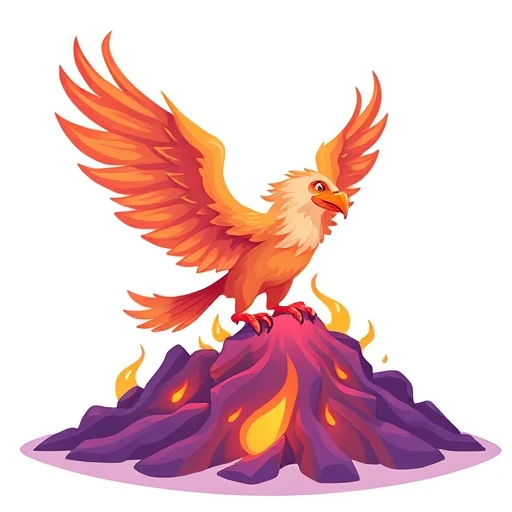
anka 30秒了解
- A mythical bird of immense size from Middle Eastern folklore, symbolizing rebirth and immortality.
- Often used as a metaphor for something rare, magnificent, or unattainable in literature and poetry.
- Similar to the Phoenix, it is known for rising from its own destruction to start a new life.
- A high-register noun frequently found in fantasy stories, spiritual texts, and cultural discussions.
The word anka is a fascinating noun that bridges the gap between literal ornithology and the ethereal realms of mythology. At its core, an anka is a mythical bird of immense proportions and legendary significance, primarily rooted in Middle Eastern, specifically Arabic and Persian, folklore. When people use this word today, they are rarely talking about a creature they expect to see at a local park; instead, they are invoking a powerful symbol of rebirth, immortality, and the unattainable. The term is often synonymous with the Western concept of the Phoenix, though it carries its own unique cultural baggage and physical descriptions that set it apart in the tapestry of world legends. In literature and high-level discourse, calling something an 'anka' suggests that it is a rare, magnificent entity that has survived through the ages or has been reborn from its own destruction. It is a word of high register, often found in poetry, historical texts, and fantasy literature where the boundaries of reality are blurred. The anka is said to be so large that it could carry off an elephant, and its plumage is described as possessing every color imaginable, shimmering with a celestial light that reflects its divine origin. Historically, the word derives from the Arabic root meaning 'long-necked,' highlighting the bird's majestic and swan-like grace despite its predatory power.
- Symbolic Weight
- The anka represents the human soul's journey toward perfection and the cyclical nature of time and existence.
The poet compared the fallen city to a weary anka, waiting for the fire that would grant it new life.
In modern contexts, the word is frequently used metaphorically. For instance, a startup that recovers from a total bankruptcy to become a market leader might be described as an anka rising from the ashes of the old economy. This usage mirrors the 'Phoenix' metaphor but adds a layer of exoticism and historical depth. It is also a popular name in various cultures, signifying strength and longevity. When you encounter this word in a B1 or B2 level text, it is usually within the context of a story or a discussion about cultural heritage. Understanding the anka requires looking beyond the feathers and beak; one must see the bird as a vessel for human aspirations. It is the 'unseen bird,' often mentioned in Sufi mysticism as a metaphor for God or the ultimate truth—something that exists but cannot be easily perceived or captured by the physical senses. This elusive nature is a key component of its definition. If someone refers to a 'quest for the anka,' they are likely talking about a pursuit of something noble but perhaps impossible to fully attain in the material world.
- Cultural Origin
- Originating in pre-Islamic Arabian mythology, the anka later became a staple of Persian 'Simurgh' legends.
Ancient scrolls describe the anka as having the face of a human and the wings of a storm.
Furthermore, the anka serves as a bridge between different mythological traditions. While the Greek Phoenix is focused on the fire and the sun, the anka is often associated with the mountains and the vast, unreachable peaks of the Qaf mountain range. This geographical anchor gives the word a grounded yet mystical quality. In contemporary fantasy gaming and literature, the anka often appears as a high-level creature or a guardian of sacred knowledge. Its use in these contexts reinforces its status as a symbol of wisdom. When writing about the anka, authors often employ vivid sensory language—the heat of its flames, the thunder of its wings, and the piercing clarity of its gaze. It is a word that demands descriptive richness. In a sentence, it functions as a standard countable noun, though it is often preceded by definite articles or possessive adjectives to emphasize its unique, singular status in a given narrative.
The shadow of the anka passed over the desert, bringing a momentary cool to the parched earth.
- Literary Usage
- Often used in 'The Conference of the Birds' by Attar to represent the Simurgh/Anka as the Divine.
Legend says the anka lives for seventeen hundred years before consuming itself in fire.
To find the anka is to find the secret of eternal life.
Using the word anka correctly requires an understanding of its noun status and its mythological weight. Because it refers to a specific type of creature, it is treated like other animal names but often carries a 'proper noun' feel in specific stories. You can use it as a subject, an object, or within prepositional phrases. For example, 'The anka soared above the clouds' uses it as a simple subject. To make your writing more evocative, pair anka with adjectives that emphasize its size and splendor, such as 'majestic,' 'colossal,' 'mythic,' or 'resplendent.' When discussing themes of recovery or transformation, the anka is an excellent metaphorical tool. You might say, 'Her career, once thought dead, rose like an anka from the ruins of the scandal.' This creates a vivid image of triumph over adversity. It is important to remember that anka is a countable noun; you can have one anka or multiple ankas, though in most myths, the bird is a singular, unique entity, much like the Phoenix. Therefore, using the definite article 'the' is very common when referring to the legendary creature itself.
- Grammatical Role
- Functions as a common noun (a bird) or a proper-leaning noun (The Anka) in mythological contexts.
The tapestry depicted a golden anka entwined with silver vines.
In more academic or descriptive writing, you might use anka to compare different mythological traditions. 'While the Western Phoenix is associated with solar cycles, the Middle Eastern anka is frequently linked to the wisdom of the mountains.' Here, the word acts as a specific identifier. It is also useful in creative writing to avoid repeating the word 'bird' or 'phoenix.' By using anka, you signal to the reader a specific cultural setting or a more nuanced understanding of legendary creatures. In possessive forms, you would write 'the anka's wings' or 'the anka's cry.' The word does not have a common verb or adjective form in English, so it remains strictly within the noun category. However, you can create compound modifiers like 'anka-like' to describe something that shares its characteristics, such as 'an anka-like resilience.' This flexibility allows the word to permeate various parts of a sentence while maintaining its core meaning. When teaching this word to B1 learners, focus on the 'Rebirth' aspect, as it is the most common way the word is utilized in modern English contexts.
- Common Verbs
- Ankas are often said to 'soar,' 'rise,' 'burn,' 'vanish,' or 'reappear.'
No one has seen the anka for a thousand years, yet its name remains in every song.
Furthermore, the word can be used in the plural to describe a group of these creatures in a fantasy setting. 'The sky was filled with a dozen ankas, their wings beating like drums.' This usage is less common but perfectly valid. In dialogue, the word can be used to express disbelief or wonder. 'You might as well be looking for an anka in a haystack!' This idiomatic-style usage plays on the bird's legendary rarity. It is also worth noting that in some translations of Middle Eastern literature, the word is paired with 'Zümrüd' (emerald), as in the 'Emerald Anka' (Zümrüd-ü Anka), which adds a specific color descriptor that has become nearly inseparable from the noun itself in certain cultures. When using this full title, it is treated as a single conceptual unit. Overall, the word anka provides a rich, evocative alternative to more common mythological terms, allowing for greater precision and cultural depth in both spoken and written English.
The king's shield bore the image of a silver anka with its wings spread wide.
- Prepositional Phrases
- 'Like an anka,' 'of the anka,' 'beyond the anka's reach.'
He spoke of the anka as if he had seen it with his own eyes.
The legend of the anka is told differently in every village.
While anka might not be a word you hear in a grocery store or at a typical business meeting, it has several specific 'natural habitats' in the modern world. The most common place to encounter it is in the realm of literature and storytelling. Authors of epic fantasy and historical fiction often use the word to add a layer of authentic Middle Eastern or Central Asian flavor to their worlds. If you are reading a book set in a fictionalized version of the Silk Road, the anka is almost certain to make an appearance as a mount for a hero or a symbol of a fallen dynasty. Secondly, you will hear this word in cultural and academic discussions regarding mythology and folklore. Scholars of comparative literature use anka when discussing the evolution of the Phoenix myth across different civilizations. It is a key term in the study of Arabic and Persian poetry, particularly the works of Rumi and Attar, where the bird serves as a profound spiritual metaphor. In these contexts, the word is spoken with a sense of reverence and intellectual curiosity.
- Gaming & Media
- Found in RPGs like Final Fantasy or tabletop games like Dungeons & Dragons as a rare creature type.
'To summon the anka, you must first find the feather of truth,' the wizard explained.
Another modern arena for the word is video games and tabletop RPGs. Game designers often look for unique creatures to populate their digital worlds, and the anka provides a perfect template for a powerful, fire-based or wind-based boss. Players might hear the word in cutscenes or read it in 'bestiary' entries. In these settings, the word is associated with high-level challenges and rare loot. Furthermore, in Middle Eastern communities and among people of Turkish or Persian descent, the word is much more common. It appears in names of businesses (e.g., 'Anka Travel' or 'Anka Tech'), as it conveys a sense of rising above and succeeding. In Turkey, specifically, the 'Zümrüdüanka' is a household name, appearing in children's cartoons, fairy tales, and even political rhetoric as a symbol of national resilience. If you are traveling in these regions or engaging with their media, you will hear the word used with much higher frequency than in the West.
- Art & Design
- Used in jewelry and textile design to describe patterns featuring the mythical bird.
The museum exhibit featured a 14th-century vase with a detailed engraving of an anka.
Finally, you might encounter the word in poetry slams or creative writing workshops. Because of its phonetic beauty—the soft 'a' sounds and the sharp 'nk'—it is a favorite for poets looking for evocative imagery. It sounds more ancient and mysterious than 'phoenix,' making it a popular choice for those wanting to create a specific mood. In summary, while not a 'utility' word for daily chores, anka is a 'prestige' word that appears in high-fantasy media, cultural studies, and regional business branding. Hearing it usually signals that the conversation has moved into the realm of the extraordinary, the historical, or the deeply symbolic. For a B1 learner, recognizing it in these contexts is a sign of expanding cultural literacy and a deeper grasp of the English language's ability to absorb and utilize global mythological concepts.
During the festival, a giant puppet of the anka was paraded through the streets.
- Scientific Naming
- Occasionally used in the naming of prehistoric bird species or astronomical features.
The astronomer named the newly discovered nebula after the anka due to its fiery shape.
The documentary explored the origins of the anka in ancient cave paintings.
One of the most frequent mistakes learners make with the word anka is a linguistic one, specifically for those who speak Turkish. In Turkish, 'ördek' means duck, but 'anka' is the mythical bird. However, in some very specific dialects or through confusion with other bird names, learners sometimes mix up these categories. It is vital to remember that in English, anka never refers to a common duck; it is always the legendary creature. Another common error is over-generalization. Because it is similar to the Phoenix, some people use them interchangeably without acknowledging the cultural nuance. While they share the 'rebirth' theme, the anka has a specific Middle Eastern context. Using 'anka' when describing a Greek myth would be technically incorrect and might confuse a well-read audience. You should use 'Phoenix' for Greek/Roman contexts and 'Anka' or 'Simurgh' for Persian/Arabic contexts.
- Pronunciation Pitfall
- Do not pronounce it like 'anchor.' The 'a' is short as in 'apple,' and the 'nk' is a sharp transition, followed by a soft 'a'.
Incorrect: 'The anka swam in the pond.' (Confusing it with a duck). Correct: 'The anka soared over the mountains.'
Spelling is another area where mistakes occur. Some might try to spell it 'Anqa' (which is the more direct transliteration from Arabic) or 'Angka.' While 'Anqa' is acceptable in academic transliteration, in general English literature, anka is the standard spelling. Mixing these up in a single piece of writing can look inconsistent. Additionally, learners often struggle with the article usage. Since it is a unique mythical creature, it almost always requires 'the' when referring to the legend ('The anka is a symbol...'). However, if you are using it as a general noun for a species in a fantasy world, you would use 'an' ('I saw an anka yesterday'). Using 'a anka' is a common grammatical slip; because 'anka' starts with a vowel sound, it must always be 'an anka.'
- Contextual Error
- Using 'anka' in a very casual, low-stakes conversation (e.g., 'My cat is like an anka') can sound overly dramatic or confusing.
Incorrect: 'He is a anka.' Correct: 'He is an anka among men.'
Lastly, there is the mistake of misunderstanding the symbolism. Some might think the anka is a bird of ill omen or death because it is associated with fire. In reality, it is almost universally a positive symbol of endurance and spiritual height. Describing a villain as an 'anka' might be confusing unless that villain specifically has a theme of rebirth or immortality. To avoid these mistakes, always think of the anka as the 'High-End Phoenix'—more ancient, more culturally specific, and always majestic. By keeping these distinctions in mind, you will use the word with the precision of a native speaker and the depth of a scholar. Always double-check the cultural setting of your writing to ensure anka is the most appropriate choice for the legendary bird you are describing.
The student mistakenly called the anka a 'fire-eagle,' missing its deeper mythical identity.
- Pluralization
- The plural is 'ankas.' Avoid 'ankae' or other pseudo-Latin endings.
The story mentions two ankas guarding the gates of the celestial palace.
Don't confuse the anka with the Roc; the Roc is just big, but the anka is magical.
When you want to describe a legendary bird or a symbol of rebirth but feel that anka isn't quite the right fit, there are several alternatives, each with its own flavor. The most obvious is the Phoenix. This is the universal term in Western culture. Use 'Phoenix' if you want your audience to immediately understand the 'rising from the ashes' metaphor without needing any cultural explanation. It is the 'safe' choice for general communication. Another close relative is the Simurgh. In Persian mythology, the Simurgh and the Anka are often treated as the same creature, but the Simurgh is sometimes depicted with more mammalian features, like the head of a dog or the claws of a lion. Use 'Simurgh' if you want to be even more specific to Persian literature or if you are referencing the 'Thirty Birds' story by Attar. It carries a more 'ancient sage' vibe compared to the fiery nature of the anka.
- Anka vs. Roc
- The Roc is a giant bird of prey from the Arabian Nights, known for its physical strength. The Anka is smaller than the Roc but possesses magical and immortal properties.
While the sailor feared the Roc, the mystic sought the anka.
If you are looking for a word that emphasizes the 'immortality' aspect without the bird imagery, you might use everlasting or undying. However, these lack the visual power of the anka. In East Asian contexts, the Fenghuang is the equivalent. It is often called the 'Chinese Phoenix.' It symbolizes high virtue and grace and is often paired with the dragon. Use 'Fenghuang' if your context is Chinese or East Asian. For a more aggressive, storm-related legendary bird, the Thunderbird from Indigenous North American mythologies is a great alternative. It shares the 'immense size' of the anka but is associated with weather and power rather than rebirth and fire. Choosing between these words depends entirely on the 'mythological geography' of your writing. Using anka specifically signals a connection to the Islamic Golden Age, Persian poetry, or Middle Eastern folklore.
- Anka vs. Garuda
- Garuda (Hindu/Buddhist) is a humanoid bird and a mount for Vishnu. The Anka is more purely avian and less involved in direct combat.
The artist struggled to choose between painting a anka or a Fenghuang for the mural.
In metaphorical terms, if you want to describe something rare, you could use rarity, unicorn, or black swan. 'Unicorn' is very common in business for rare startups, but 'anka' could be a more sophisticated alternative for a company that has successfully pivoted or recovered. 'Black swan' refers to an unpredictable, high-impact event, which is different from the anka's predictable cycle of rebirth. By understanding these nuances, you can select the word that perfectly matches the 'vibe' of your sentence. Whether you want the fiery rebirth of the Phoenix, the wise mountain-dwelling of the Simurgh, or the sheer physical power of the Roc, knowing where the anka fits in this hierarchy of legendary creatures is key to masterful English usage.
The anka remains the most elusive of all the legendary birds.
- Synonym Summary
- Phoenix (General), Simurgh (Persian), Fenghuang (Chinese), Firebird (Slavic).
In the world of myths, the anka has no equal in beauty.
Some scholars argue that the anka is merely a poetic exaggeration of the eagle.
How Formal Is It?
趣味小知识
In some ancient texts, the anka was said to be so large that it could carry off a rhinoceros, not just an elephant! It was also believed to live on a mountain that no human could ever climb, making it the ultimate symbol of the 'unreachable.'
发音指南
- Pronouncing it like 'anchor' (with an 'r' at the end).
- Pronouncing the 'a' like 'ah' (Ahn-ka) instead of 'ae' (An-ka).
- Making the 'k' sound too soft.
- Adding a 'u' sound like 'An-koo'.
- Treating the 'nk' as two separate sounds without the nasal 'n'.
难度评级
Easy to recognize in context but requires some cultural knowledge.
Using it metaphorically requires a good grasp of imagery.
Pronunciation is straightforward once learned.
Can be confused with other words if not heard clearly.
接下来学什么
前置知识
接下来学习
高级
需要掌握的语法
Using 'an' before vowel sounds
It is **an** anka, not **a** anka.
Capitalization of mythical beings
The **Anka** (specific) vs. an **anka** (general).
Similes with 'like'
She rose **like an anka** from the ashes.
Possessive nouns
The **anka's** feathers are golden.
Collective nouns for mythical creatures
A **flight** of ankas soared overhead.
按水平分级的例句
The anka is a big bird.
Anka büyük bir kuştur.
Simple subject-verb-object structure.
I like the story of the anka.
Anka hikayesini seviyorum.
Use of definite article 'the'.
An anka can fly very high.
Bir anka çok yükseğe uçabilir.
Use 'an' before 'anka'.
The anka has gold feathers.
Anka'nın altın tüyleri var.
Possessive 'has'.
Is the anka real?
Anka gerçek mi?
Question form.
The anka lives in the mountains.
Anka dağlarda yaşar.
Present simple tense.
Look at the beautiful anka!
Şu güzel anka kuşuna bak!
Imperative sentence.
The anka is a magic bird.
Anka sihirli bir kuştur.
Adjective 'magic' modifying 'bird'.
The anka is a famous bird in old legends.
Anka, eski efsanelerde ünlü bir kuştur.
Adjective 'famous' and prepositional phrase.
Many people believe the anka brings good luck.
Birçok insan ankanın şans getirdiğine inanır.
Present simple with a plural subject.
The anka rises from the fire.
Anka ateşten yükselir.
Action verb 'rises'.
It is difficult to find an anka.
Bir anka bulmak zordur.
It is + adjective + to-infinitive.
The anka is stronger than an eagle.
Anka bir kartaldan daha güçlüdür.
Comparative adjective 'stronger than'.
The anka's wings are very long.
Anka'nın kanatları çok uzundur.
Possessive noun 'anka's'.
We saw a movie about a brave anka.
Cesur bir anka hakkında bir film izledik.
Past simple tense.
The anka sleeps for a hundred years.
Anka yüz yıl boyunca uyur.
Preposition 'for' indicating duration.
The anka symbolizes rebirth and new beginnings in many cultures.
Anka, birçok kültürde yeniden doğuşu ve yeni başlangıçları simgeler.
Verb 'symbolizes' used with abstract nouns.
According to the myth, the anka lives on the top of Mount Qaf.
Efsaneye göre anka, Kaf Dağı'nın tepesinde yaşar.
Introductory phrase 'According to'.
The artist painted a magnificent anka on the palace wall.
Sanatçı saray duvarına muhteşem bir anka resmi yaptı.
Past simple with a descriptive adjective.
She felt like an anka rising from the ruins of her old life.
Eski hayatının yıkıntılarından yükselen bir anka gibi hissetti.
Simile using 'like'.
The anka is often confused with the Phoenix, but they have different origins.
Anka genellikle Anka kuşu (Phoenix) ile karıştırılır, ancak kökenleri farklıdır.
Passive voice 'is often confused'.
Legends say the anka can speak the language of humans.
Efsaneler ankanın insan dilini konuşabildiğini söyler.
Reported speech structure.
The anka's feathers were said to have healing powers.
Anka'nın tüylerinin iyileştirici güçlere sahip olduğu söylenirdi.
Passive reporting verb 'were said to'.
Finding the anka was the main goal of the young prince's journey.
Ankayı bulmak, genç prensin yolculuğunun ana hedefiydi.
Gerund 'Finding' as the subject.
The poet used the anka as a metaphor for the unattainable nature of true love.
Şair, ankayı gerçek aşkın ulaşılamaz doğası için bir metafor olarak kullandı.
Complex sentence with a prepositional phrase of purpose.
In Sufi literature, the anka represents the ultimate spiritual goal that few can reach.
Tasavvuf edebiyatında anka, az kişinin ulaşabileceği nihai manevi hedefi temsil eder.
Relative clause 'that few can reach'.
The anka's legendary status has persisted for centuries across the Middle East.
Anka'nın efsanevi statüsü Orta Doğu'da yüzyıllardır devam etmektedir.
Present perfect tense with 'for'.
Despite being a creature of myth, the anka feels real to those who study its history.
Efsanevi bir yaratık olmasına rağmen, anka tarihini inceleyenlere gerçek gibi gelir.
Concession clause starting with 'Despite'.
The anka is depicted as having the wisdom of the ages in its eyes.
Anka, gözlerinde çağların bilgeliğine sahip olarak tasvir edilir.
Participial phrase 'having the wisdom...'.
No other mythical creature captures the imagination quite like the anka.
Başka hiçbir efsanevi yaratık hayal gücünü anka kadar etkileyemez.
Negative subject 'No other' for emphasis.
The anka's flight was described as a storm that shook the very foundations of the earth.
Anka'nın uçuşu, dünyanın temellerini sarsan bir fırtına olarak tanımlandı.
Passive voice with a relative clause.
She wrote a thesis on the comparative symbolism of the anka and the Simurgh.
Anka ve Simurg'un karşılaştırmalı sembolizmi üzerine bir tez yazdı.
Prepositional phrase 'on the comparative symbolism'.
The anka serves as a poignant reminder of the cyclical nature of empires and civilizations.
Anka, imparatorlukların ve medeniyetlerin döngüsel doğasının dokunaklı bir hatırlatıcısıdır.
Metaphorical usage with 'serves as'.
Scholars argue that the anka is an archetypal representation of the human desire for transcendence.
Bilim insanları, ankanın insanın aşkınlık arzusunun arketipsel bir temsili olduğunu savunuyorlar.
Noun clause 'that the anka is...'.
The elusive anka remains a central figure in the tapestry of Persian mystical poetry.
Ele avuç gelmez anka, İran mistik şiirinin dokusunda merkezi bir figür olmaya devam ediyor.
Attributive adjective 'elusive' and 'central'.
To invoke the name of the anka is to call upon the forces of ancient wisdom and rebirth.
Anka'nın adını zikretmek, kadim bilgelik ve yeniden doğuş güçlerini çağırmaktır.
Infinitive phrase as subject and complement.
The anka's absence from the physical world only serves to heighten its spiritual presence.
Anka'nın fiziksel dünyadaki yokluğu, yalnızca manevi varlığını artırmaya hizmet eder.
Noun phrase 'The anka's absence' as subject.
The manuscript provides a detailed, albeit fantastical, account of the anka's nesting habits.
Yazma eser, ankanın yuvalama alışkanlıklarına dair ayrıntılı, her ne kadar fantastik olsa da, bir anlatı sunmaktadır.
Use of 'albeit' to introduce a concession.
The anka's cry was said to be a melody that could heal the most broken of hearts.
Anka'nın çığlığının, en kırık kalpleri bile iyileştirebilecek bir melodi olduğu söylenirdi.
Relative clause 'that could heal...'.
By adopting the anka as their crest, the family signaled their intent to rise above their humble origins.
Aile, ankayı arması olarak benimseyerek, mütevazı kökenlerinin üzerine çıkma niyetlerini belli etti.
Participial phrase 'By adopting...' showing means.
The anka, in its sublime inaccessibility, functions as a cipher for the Absolute in Neoplatonic thought.
Anka, yüce erişilemezliği içinde, Yeni Platoncu düşüncede Mutlak olan için bir şifre görevi görür.
Appositive phrase 'in its sublime inaccessibility'.
The ontological status of the anka oscillates between a literal biological possibility and a purely allegorical construct.
Anka'nın ontolojik statüsü, gerçek bir biyolojik olasılık ile tamamen alegorik bir kurgu arasında gidip gelir.
Complex vocabulary like 'ontological' and 'oscillates'.
Attar’s depiction of the anka necessitates a radical re-evaluation of the relationship between the seeker and the sought.
Attar'ın anka tasviri, arayan ile aranan arasındaki ilişkinin radikal bir şekilde yeniden değerlendirilmesini gerektirir.
Subject-verb agreement with a complex subject.
The anka’s mythos is inextricably linked to the geographical and spiritual topography of the pre-modern Islamic world.
Anka'nın mitosu, modern öncesi İslam dünyasının coğrafi ve manevi topografyasına ayrılmaz bir şekilde bağlıdır.
Adverb 'inextricably' modifying the verb 'linked'.
To deconstruct the legend of the anka is to uncover the layers of cultural synthesis that define the Silk Road.
Anka efsanesini yapıbozuma uğratmak, İpek Yolu'nu tanımlayan kültürel sentez katmanlarını ortaya çıkarmaktır.
Infinitive phrase used to define a concept.
The anka remains an enduring testament to the power of myth to survive the disenchantment of the modern era.
Anka, mitin modern çağın hayal kırıklığından kurtulma gücünün kalıcı bir kanıtı olmaya devam ediyor.
Complex noun phrase 'enduring testament to...'.
In the lexicon of the soul, the anka is the word for that which cannot be named but must be experienced.
Ruhun sözlüğünde anka, adlandırılamayan ancak deneyimlenmesi gereken şeyin adıdır.
Relative clause 'that which cannot be named'.
The anka’s fiery immolation is not an end, but a transformative threshold into a higher state of being.
Anka'nın ateşli kurban edilişi bir son değil, daha yüksek bir varlık durumuna geçiş sağlayan dönüştürücü bir eşiktir.
Not X, but Y structure for contrast.
常见搭配
常用短语
— To be someone who recovers from failure in a spectacular way.
He failed twice, but now he is an anka in the business world.
— Engaging in a task that is impossible or futile.
Trying to find a perfect person is like hunting the anka.
— A place that is very high up or impossible to reach.
The castle was built like an anka's nest on the cliff.
— Something that is almost never seen.
Honesty in this town is as rare as an anka.
— A brief moment of protection or a passing blessing.
We rested for a moment under the anka's shadow.
— The process of painful but necessary change.
She had to go through the fire of the anka to find herself.
— A way to refer to the Phoenix when comparing cultures.
The Phoenix is simply the anka of the West.
— A sound or message that brings hope or wisdom.
His speech was the voice of the anka to the tired workers.
— The ability to bounce back from any disaster.
The city showed anka-like resilience after the earthquake.
— A specific reference to the most beautiful version of the bird.
The emerald anka is the king of all birds.
容易混淆的词
A heavy metal object for ships. Sounds similar but unrelated.
The joint between the foot and the leg. Different vowel sound.
In some contexts, learners might confuse it with common birds.
习语与表达
— To succeed again after a complete disaster.
The team rose from the ashes like an anka to win the trophy.
Metaphorical— Searching for something that does not exist.
You are looking for an anka's egg if you think he will change.
Informal— To have great ambition or the power to achieve big things.
That young girl has the wings of an anka; she will go far.
Poetic— The opportunity has passed and will not return.
I'm afraid the anka has flown; the deal is off.
Informal— Under the protection of someone very powerful.
The small village felt safe under the anka's wing.
Literary— To go through a period of intense struggle before being reborn.
The artist had to burn like an anka to create his masterpiece.
Poetic— A period of waiting before a great change.
The city was quiet, the anka's silence before the revolution.
Literary— To find a solution to a very difficult problem.
He finally found the anka's feather for his research.
Informal— A goal that is very high and difficult to reach.
Graduating from medical school was his anka's mountain.
Metaphorical— A look that sees the truth behind appearances.
The old judge had the anka's gaze.
Literary容易混淆
They are functionally the same creature.
Phoenix is Greek/Western; Anka is Arabic/Persian/Middle Eastern.
The Phoenix is in Harry Potter, but the Anka is in the Arabian Nights.
Often used interchangeably in Persian myth.
Simurgh often has a dog's head or lion's claws; Anka is more bird-like.
The Simurgh is a wise teacher, while the Anka is a symbol of the unattainable.
Both are giant birds from the same region.
The Roc is just a giant predator; the Anka is magical and immortal.
Sinbad fought the Roc, but the mystic sought the Anka.
Both are mythical winged creatures.
A Griffin is half-lion, half-eagle; an Anka is entirely a bird.
The Griffin guarded the gold, but the Anka lived in the clouds.
Both are mythical birds.
Harpies are ugly and mean; the Anka is beautiful and noble.
The Harpy stole the food, while the Anka brought a blessing.
句型
The anka is [adjective].
The anka is big.
The anka can [verb].
The anka can fly.
The anka represents [abstract noun].
The anka represents rebirth.
Rising like an anka, [subject] [verb].
Rising like an anka, the city rebuilt itself.
The anka, a symbol of [noun], [verb].
The anka, a symbol of immortality, haunts the desert.
In its [adjective] [noun], the anka [verb].
In its sublime inaccessibility, the anka eludes the seeker.
If I were an anka, I would [verb].
If I were an anka, I would fly to the sun.
There is no [noun] like the anka.
There is no bird like the anka.
词族
名词
动词
形容词
相关
如何使用
Rare in daily speech, common in specific genres (Fantasy, Poetry).
-
Using 'a anka'
→
an anka
Since 'anka' starts with a vowel sound, the indefinite article must be 'an'.
-
Thinking it's a real bird
→
a mythical bird
The anka only exists in stories and legends, not in nature.
-
Confusing it with a duck
→
a mythical phoenix-like bird
In some languages, similar sounds refer to ducks, but in English, 'anka' is always the mythical bird.
-
Using it for Greek myths
→
using 'Phoenix' for Greek myths
The anka is specifically Middle Eastern. Use 'Phoenix' for Greek or Roman contexts.
-
Spelling it 'Anker'
→
Anka
'Anker' is not a word; 'Anchor' is for ships. 'Anka' is the bird.
小贴士
Metaphorical Power
Use 'anka' to describe someone who has overcome a massive challenge. It sounds more unique than 'phoenix.'
Pair with 'Legendary'
When introducing the word for the first time in a story, use 'the legendary anka' to help readers understand it's a myth.
Check Your Articles
Always use 'an' before 'anka' because it starts with a vowel sound. 'An anka' is correct; 'A anka' is not.
Know the Origin
Remember that 'anka' connects your writing to Middle Eastern culture. Use it if your story has an Oriental or desert theme.
Color Words
When describing an anka, use words like 'resplendent,' 'iridescent,' and 'fiery' to match its legendary status.
Stress the First Syllable
Say 'AN-ka.' If you stress the second part, it might sound like a different word.
Avoid Overuse
Because it's a powerful word, don't use it too many times in one page. Let it be a 'special' word in your text.
Look for Context
If you see 'anka' in a poem, think about 'rebirth' or 'the Divine' rather than just a big bird.
The 'A' Rule
Anka = Ancient. It's an ancient bird. This will help you remember it's from old legends.
Anka vs. Roc
Remember: Roc = Strong, Anka = Magic. This distinction is important for fans of mythology.
记住它
记忆技巧
Think of 'Anka' as 'An-Ka'. 'An' like 'Ancient' and 'Ka' like the sound a bird makes. The 'Ancient Bird' that never dies.
视觉联想
Imagine a giant bird with golden feathers sitting on the very top of a mountain made of clouds. The bird is glowing like a small sun.
Word Web
挑战
Try to write a short paragraph about a time you failed at something but then succeeded later, using the word 'anka' as a metaphor for yourself.
词源
The word 'anka' originates from the Arabic word 'anqā' (عنقاء), which literally means 'long-necked.' This refers to the bird's majestic and elongated physical appearance in early descriptions. It entered the Persian language and later English through translations of Middle Eastern folklore and mystical poetry.
原始含义: A long-necked bird of prey.
Semitic (Arabic) to Indo-European (via Persian/English).文化背景
When using 'anka,' be respectful of its spiritual roots in Sufism and Middle Eastern traditions.
In English-speaking countries, 'Anka' is less common than 'Phoenix' but is highly respected in literary and fantasy circles.
在生活中练习
真实语境
Reading a fantasy novel
- The anka's nest
- A feather from an anka
- The anka's flight
- Ancient anka lore
Discussing poetry
- Metaphorical anka
- The anka as the Divine
- Symbol of the anka
- Poetic anka imagery
Playing a video game
- Summon the anka
- Anka boss fight
- Anka mount
- Anka egg item
Learning about history
- The anka in Persian art
- Arabic legends of the anka
- The anka on the Silk Road
- Historical anka symbols
Talking about personal growth
- My anka moment
- Rising like an anka
- The anka within
- Anka-like recovery
对话开场白
"Have you ever read a story about the legendary anka bird?"
"If you could have any mythical creature as a pet, would you choose an anka?"
"Why do you think the symbol of the anka is so popular in different cultures?"
"In what ways is a person's life similar to the cycle of the anka?"
"Do you prefer the name 'Phoenix' or 'Anka' for the mythical bird of fire?"
日记主题
Write about a time you felt like an anka rising from a difficult situation.
Describe what you think an anka's nest looks like at the top of a mountain.
If the anka could speak, what wisdom do you think it would share with the world?
Compare the anka to another mythical creature you know well.
Write a short legend about how the first anka was created.
常见问题
10 个问题No, the anka is a mythical creature from folklore and legends. It does not exist in the real world, although it may have been inspired by large birds like eagles or the extinct elephant bird.
The main difference is cultural. The Phoenix comes from Greek and Roman mythology, while the anka comes from Arabic and Persian traditions. They both symbolize rebirth, but the anka is often associated with the mountains and Sufi mysticism.
It is pronounced 'AN-ka,' with a short 'a' like in 'apple' and the stress on the first part. It rhymes with 'Bianca.'
In most myths, the anka is immortal because it is reborn from its own ashes or fire. It 'dies' only to become young again, so it never truly disappears.
According to legend, the anka lives on the top of Mount Qaf, a mythical mountain range that surrounds the world. It is a place that humans cannot reach.
Yes, in some cultures, especially in Turkey and parts of the Middle East, Anka is used as a name for people or businesses to symbolize strength and success.
The anka is usually described as having very colorful feathers, often including gold, red, emerald green, and silver. It is said to glow with light.
The word 'Anqa' is not in the Quran itself, but it appears in various Islamic commentaries and literature (Hadith-related stories) as a creature created by God that later became extinct or hidden.
In Sufi poetry, the anka is a metaphor for God or the Truth. Just as the anka is famous but never seen, the Divine is present but hidden from our physical eyes.
You can use it metaphorically if you are talking about a company's recovery (e.g., 'Our project rose like an anka'), but it is quite poetic, so use it only if the tone is appropriate.
自我测试 200 个问题
Write a sentence using 'anka' to describe a person who recovered from a difficult time.
Well written! Good try! Check the sample answer below.
Describe the appearance of an anka using at least three adjectives.
Well written! Good try! Check the sample answer below.
Write a short paragraph about why the anka is a good symbol for a new business.
Well written! Good try! Check the sample answer below.
Compare the anka to a phoenix in three sentences.
Well written! Good try! Check the sample answer below.
Create a short dialogue between two people who are looking for an anka.
Well written! Good try! Check the sample answer below.
Write a poem of four lines featuring the anka.
Well written! Good try! Check the sample answer below.
Explain the meaning of 'hunting the anka' in your own words.
Well written! Good try! Check the sample answer below.
Write a sentence using 'anka' as a proper noun.
Well written! Good try! Check the sample answer below.
Describe where the anka lives according to legend.
Well written! Good try! Check the sample answer below.
Write a diary entry from the perspective of someone who just saw an anka.
Well written! Good try! Check the sample answer below.
Use the phrase 'rise like an anka' in a formal context.
Well written! Good try! Check the sample answer below.
Write a sentence about the anka's feathers.
Well written! Good try! Check the sample answer below.
Explain why the anka is important in Sufi literature.
Well written! Good try! Check the sample answer below.
Write a story title that includes the word 'anka'.
Well written! Good try! Check the sample answer below.
Describe the sound of an anka's cry.
Well written! Good try! Check the sample answer below.
Write a sentence using the plural form 'ankas'.
Well written! Good try! Check the sample answer below.
How would you describe the anka to a child?
Well written! Good try! Check the sample answer below.
Write a sentence using 'anka' and 'mountain'.
Well written! Good try! Check the sample answer below.
Use 'anka' as a metaphor for a historical event.
Well written! Good try! Check the sample answer below.
Write a sentence about the anka's immortality.
Well written! Good try! Check the sample answer below.
Pronounce the word 'anka' clearly three times.
Read this aloud:
你说的:
Speech recognition is not supported in your browser. Try Chrome or Edge.
Explain the meaning of 'anka' to a friend in your own words.
Read this aloud:
你说的:
Speech recognition is not supported in your browser. Try Chrome or Edge.
Describe a mythical bird you know, using the word 'anka'.
Read this aloud:
你说的:
Speech recognition is not supported in your browser. Try Chrome or Edge.
Discuss why the anka is a good symbol for rebirth.
Read this aloud:
你说的:
Speech recognition is not supported in your browser. Try Chrome or Edge.
Tell a short story about an anka living on a mountain.
Read this aloud:
你说的:
Speech recognition is not supported in your browser. Try Chrome or Edge.
Compare the anka and the phoenix aloud.
Read this aloud:
你说的:
Speech recognition is not supported in your browser. Try Chrome or Edge.
Use 'anka' in a sentence about a successful person.
Read this aloud:
你说的:
Speech recognition is not supported in your browser. Try Chrome or Edge.
Talk about the cultural importance of the anka in the Middle East.
Read this aloud:
你说的:
Speech recognition is not supported in your browser. Try Chrome or Edge.
Explain the etymology of 'anka' as if you were a teacher.
Read this aloud:
你说的:
Speech recognition is not supported in your browser. Try Chrome or Edge.
Describe the colors of an anka's feathers.
Read this aloud:
你说的:
Speech recognition is not supported in your browser. Try Chrome or Edge.
Use the phrase 'rise like an anka' in a speech.
Read this aloud:
你说的:
Speech recognition is not supported in your browser. Try Chrome or Edge.
Explain why the anka is called the 'unseen bird'.
Read this aloud:
你说的:
Speech recognition is not supported in your browser. Try Chrome or Edge.
Discuss the difference between an anka and a Roc.
Read this aloud:
你说的:
Speech recognition is not supported in your browser. Try Chrome or Edge.
Give an example of 'anka-like' resilience in history.
Read this aloud:
你说的:
Speech recognition is not supported in your browser. Try Chrome or Edge.
Explain the grammar of 'an anka' vs 'a anka'.
Read this aloud:
你说的:
Speech recognition is not supported in your browser. Try Chrome or Edge.
Describe the anka's cry and what it might sound like.
Read this aloud:
你说的:
Speech recognition is not supported in your browser. Try Chrome or Edge.
Talk about the anka's role in a fantasy video game.
Read this aloud:
你说的:
Speech recognition is not supported in your browser. Try Chrome or Edge.
Explain the symbolism of fire in the anka myth.
Read this aloud:
你说的:
Speech recognition is not supported in your browser. Try Chrome or Edge.
Describe the anka's nest.
Read this aloud:
你说的:
Speech recognition is not supported in your browser. Try Chrome or Edge.
Summarize the legend of the anka in one minute.
Read this aloud:
你说的:
Speech recognition is not supported in your browser. Try Chrome or Edge.
Listen to the sentence: 'The anka soared high.' What did the anka do?
Listen to the phrase: 'An anka's golden wing.' What color is the wing?
Listen to the description: 'The anka is a bird of rebirth.' What is it a bird of?
Listen to the sentence: 'Searching for the anka is a difficult task.' Is the task easy?
Listen to the word: 'Anka.' Does it rhyme with 'Bianca' or 'Anchor'?
Listen to the story: 'The anka burned in the fire and became young again.' What happened to the anka?
Listen to the phrase: 'The cry of the anka.' What part of the bird is mentioned?
Listen to the sentence: 'The anka lives on Mount Qaf.' Where does it live?
Listen to the metaphor: 'He is an anka in the business world.' What does this mean?
Listen to the plural: 'The ankas are flying.' How many birds are there?
Listen to the academic note: 'The anka is an archetype of the soul.' What is the anka an archetype of?
Listen to the warning: 'Don't confuse the anka with a duck.' What should you not confuse it with?
Listen to the detail: 'The anka has a long neck.' What physical feature is described?
Listen to the quote: 'The anka is the king of birds.' What is the anka's title?
Listen to the word: 'Anka-like.' Is this an adjective or a noun?
/ 200 correct
Perfect score!
Summary
The word 'anka' refers to a legendary bird that represents the power of rebirth and the search for the unattainable. For example: 'After the total collapse of the industry, the company rose like an anka, stronger than ever before.'
- A mythical bird of immense size from Middle Eastern folklore, symbolizing rebirth and immortality.
- Often used as a metaphor for something rare, magnificent, or unattainable in literature and poetry.
- Similar to the Phoenix, it is known for rising from its own destruction to start a new life.
- A high-register noun frequently found in fantasy stories, spiritual texts, and cultural discussions.
Metaphorical Power
Use 'anka' to describe someone who has overcome a massive challenge. It sounds more unique than 'phoenix.'
Pair with 'Legendary'
When introducing the word for the first time in a story, use 'the legendary anka' to help readers understand it's a myth.
Check Your Articles
Always use 'an' before 'anka' because it starts with a vowel sound. 'An anka' is correct; 'A anka' is not.
Know the Origin
Remember that 'anka' connects your writing to Middle Eastern culture. Use it if your story has an Oriental or desert theme.