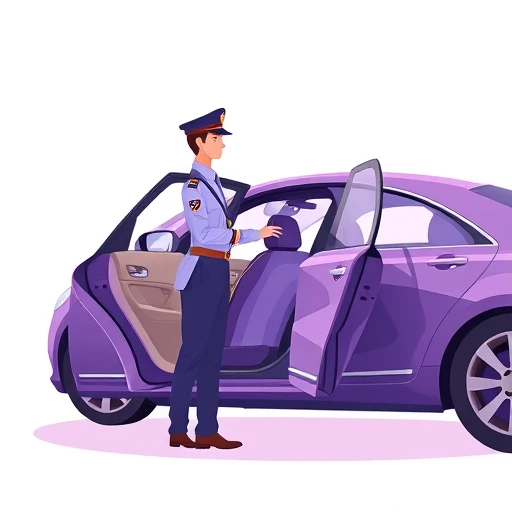
valet 30秒了解
- A valet is primarily known today as a service worker who parks cars for guests at hotels, restaurants, and upscale events, providing convenience and luxury.
- Historically, the term referred to a gentleman's personal servant who managed his wardrobe, grooming, and travel needs, a role often seen in period literature.
- In British English, the word can also function as a verb meaning to professionally clean a car's interior and exterior to a very high standard.
- The word carries connotations of high-end service, professionalism, and social status, whether in a modern commercial context or a traditional domestic setting.
The word valet is a multifaceted noun that has evolved significantly from its aristocratic origins to its modern-day service industry application. At its core, it describes a person whose job is to provide personal service, but the nature of that service depends entirely on the setting. In a historical or ultra-luxury context, a valet is a gentleman's personal attendant—the male equivalent of a lady's maid. In contemporary daily life, however, you are most likely to encounter the word in the context of 'valet parking,' where an employee at a hotel, restaurant, or airport takes charge of your vehicle. Understanding the distinction between these roles is crucial for using the word correctly in various social and professional environments.
- The Domestic Valet
- This role is steeped in tradition. A domestic valet is responsible for an employer's wardrobe, grooming, and personal belongings. They ensure that suits are perfectly pressed, shoes are shined to a mirror finish, and travel trunks are packed with precision. Unlike a butler, who oversees the entire household, the valet is a personal shadow, often traveling with the employer to ensure seamless transitions between locations. This usage is common in period dramas like Downton Abbey or when discussing the lifestyles of the extremely wealthy.
The Duke's valet spent three hours preparing the formal evening attire for the gala, ensuring every cufflink was perfectly aligned.
- The Modern Service Valet
- In the 21st century, the word most frequently refers to a service provided by high-end establishments. When you arrive at a luxury hotel or a busy metropolitan restaurant, a valet greets you at the entrance, takes your keys, and parks your car in a secure area. This service provides convenience and a touch of prestige, allowing guests to avoid the hassle of finding parking. It is also common in hospitals and airports to assist those with mobility issues or time constraints.
We decided to use the valet service because the parking garage was several blocks away from the theater.
- Etymological Nuance
- The word comes from Middle French, originally meaning a 'young man' or 'squire.' This history explains why the term carries an air of service and assistance. Over centuries, the 'squire' became a 'servant,' and eventually, the term branched out into the hospitality industry. Today, the word retains a sense of professionalism and high-tier service, whether it involves a car or a closet.
The hotel offers a 24-hour valet service for guests who need their laundry cleaned and pressed overnight.
He handed his keys to the valet and walked confidently into the five-star restaurant.
Ultimately, the word is used to signal a specific level of luxury and convenience. Whether you are reading a 19th-century novel or booking a stay at a modern resort, the presence of a valet indicates that personal needs—be they sartorial or logistical—are being handled by a professional. It is a word that bridges the gap between old-world class and modern-day efficiency.
Using the word valet correctly requires an understanding of its grammatical role as a noun and its occasional use as a verb. As a noun, it can refer to a person or a service. When referring to a person, it follows standard count noun rules (one valet, two valets). When referring to a service, it is often used as a modifier, as in 'valet parking' or 'valet service.' This section explores the various ways to integrate this word into your vocabulary across different contexts.
- As a Subject or Object
- When the valet is the person performing the action, they are the subject. When you are interacting with them, they are the object. For example: 'The valet parked the car' (Subject) or 'I tipped the valet' (Object). It is important to remember that in modern settings, the 'valet' is often an employee of a larger company, so you might also say 'The hotel's valet service was excellent.'
The valet was incredibly polite and even offered to help us with our heavy luggage.
- In Compound Nouns
- 'Valet' frequently combines with other nouns to describe specific services. 'Valet parking' is the most common. 'Valet service' can refer to car parking, laundry, or general personal assistance in a hotel. A 'valet stand' is a piece of furniture designed to hold a man's suit and accessories overnight. Using these compounds correctly helps specify exactly which type of service you are discussing.
Does this hotel provide a valet for guests arriving after midnight?
- Formal vs. Informal Contexts
- In formal writing, 'valet' usually refers to the personal servant. In informal or business contexts, it almost always refers to car parking. If you are writing a story set in the 1800s, you would use 'valet' to describe a character's job. If you are writing a Yelp review for a restaurant, you would use it to describe the parking experience. Context is the primary driver of meaning here.
The valet parking fee was twenty dollars, which seemed a bit expensive for a two-hour dinner.
He was so wealthy that he never even tied his own shoes; his valet took care of everything.
By mastering these sentence structures, you can use 'valet' to describe everything from a high-stakes car hand-off to the intricate life of a historical servant. Pay attention to whether you are using it as a noun (the person) or a modifier (the service) to ensure your meaning is clear to your audience.
The word valet resonates in specific environments that emphasize luxury, convenience, and high-end hospitality. While you might not hear it in a fast-food drive-thru or a casual office setting, it is a staple of the 'luxury lexicon.' From the silver screen to the streets of major cities, 'valet' is a word that signals a certain level of social and economic activity. This section explores the real-world locations and media where the term is most prevalent.
- High-End Hospitality
- The most common place to hear this word today is at the entrance of luxury hotels (like the Ritz-Carlton or the Four Seasons) and fine-dining restaurants. You will hear staff ask, 'Would you like to use our valet parking today?' or 'The valet will bring your car around shortly.' In these settings, the word is synonymous with ease and premium service. It is also heard in upscale shopping malls and private clubs where parking is limited or the clientele expects a higher level of service.
At the entrance of the casino, a sign clearly stated: 'Complimentary valet for Diamond members.'
- Literature and Period Dramas
- If you are a fan of historical fiction or television shows like Downton Abbey, The Crown, or Bridgerton, you will hear 'valet' used in its traditional sense. Characters like Thomas Barrow or Mr. Bates are valets. In literature, P.G. Wodehouse's famous character Jeeves is often mistakenly called a butler, but he is actually a 'gentleman's personal gentleman'—a valet. In these contexts, the word is spoken with a tone of respect and professional distance, highlighting the rigid class structures of the past.
In the movie, the protagonist's valet was the only person who knew his true identity.
- The Automotive Industry
- In the UK and Commonwealth countries, 'valeting' is a common term for professional car cleaning. You will see signs for 'Full Valet' or 'Interior Valet' at car washes and dealerships. This refers to a deep clean that goes beyond a simple wash, including waxing the exterior and steam-cleaning the upholstery. Hearing 'I'm taking the car in for a valet' is very common in these regions, whereas an American might say 'detailing.'
The car dealership offered a free full valet with every annual service appointment.
We were running late for our flight, so we used the airport valet to save time.
Whether you are navigating the streets of Los Angeles, watching a British period drama, or getting your car cleaned in London, the word 'valet' will appear. It is a term that consistently points toward specialized service, whether that service is directed at a person, their clothes, or their vehicle.
Despite its relative simplicity, the word valet is a frequent source of confusion for English learners and native speakers alike. These mistakes usually fall into three categories: pronunciation, role confusion, and spelling/homophone errors. Understanding these pitfalls will help you use the word with the confidence of a native speaker and avoid potentially embarrassing social blunders.
- The Pronunciation Trap
- The most common mistake is mispronouncing the word. In American English, the 't' is silent, and the stress is on the second syllable (val-AY). In British English, both (val-AY) and (val-ET) are used, but (val-ET) is traditionally used for the personal servant. Many learners mistakenly pronounce the 't' in a modern American parking context, which sounds incorrect to local ears. Conversely, pronouncing it (val-AY) when discussing a 19th-century British servant might be seen as a minor historical inaccuracy in certain circles.
Incorrect: I handed my keys to the valet (pronounced like 'wallet'). Correct: I handed my keys to the valet (pronounced like 'ballet').
- Valet vs. Butler
- In the context of domestic service, people often use 'valet' and 'butler' interchangeably, but they are distinct roles. A butler is the head of the household staff and manages the dining room, wine cellar, and pantry. A valet is a personal attendant to one specific person. Calling a valet a butler is like calling a personal assistant a general manager. While they both serve, their scopes of duty are very different. In modern usage, calling a car parker a 'butler' would be nonsensical.
Mistake: He asked the valet to serve dinner to the twelve guests. (This is a butler's job.)
- Spelling and Homophones
- Because of its French origin, the spelling can be tricky. Some people confuse it with 'wallet' (a small case for money) because they look somewhat similar on the page. Others might confuse it with 'varlet' (an archaic term for a dishonest man). Additionally, in some dialects, 'valet' and 'valley' can sound slightly similar if the speaker is not careful with the 't' or the 'ey' sound. Always double-check the context: if it involves cars or clothes, it's 'valet.'
Spelling Error: I left my valet in the car. (Unless you left your servant in the car, you probably meant 'wallet'.)
Context Error: The valet swept the garden path. (A gardener or groundskeeper does this.)
By being mindful of these common errors, you can ensure that your use of 'valet' is both accurate and sophisticated. Remember: pronunciation depends on the region and the specific meaning, and the role is always tied to personal items or vehicles, never to general household management.
The English language is rich with terms for service roles, and while valet is specific, there are several synonyms and related words that might be more appropriate depending on the context. Whether you are looking for a more formal term, a more modern alternative, or a word that describes a slightly different role, this section provides a comprehensive guide to the alternatives for 'valet.'
- Personal Attendant
- This is the most direct modern synonym for the traditional valet. It is gender-neutral and describes someone who assists a person with their daily needs. In the world of celebrities or high-level executives, this person might also be called a 'Personal Assistant' (PA), although a PA usually handles more administrative tasks than a valet would.
The CEO's personal attendant ensured that his travel itinerary and wardrobe were perfectly synchronized.
- Parking Attendant
- This is the functional synonym for a modern valet. While 'valet' sounds more upscale and implies that the person will park the car for you, a 'parking attendant' might simply be someone who works in a booth or directs traffic in a lot. If you are at a standard public parking garage, 'attendant' is more accurate. Use 'valet' when the service involves taking the keys and driving the car away.
The parking attendant pointed us toward the available spaces on the third level.
- Butler
- As discussed in the common mistakes section, a butler is a related but different role. A butler manages the household. However, in smaller households or modern luxury settings, one person might perform both roles. In such cases, 'butler' is often the preferred title as it carries more prestige. If you are describing someone who manages a house and also helps the owner dress, 'butler' is a suitable, broader term.
The butler greeted the guests at the door and then went to assist the master with his coat.
- Groom / Footman
- These are historical terms. A 'groom' originally looked after horses but later became a general term for a male servant. A 'footman' was a servant who ran alongside a carriage or served at the table. While a valet was a higher-ranking servant who worked closely with the master, grooms and footmen were more general laborers. These words are rarely used today except in historical contexts.
The footman opened the carriage door, while the valet waited inside the house with a warm robe.
I hired a professional detailer to restore the shine to my vintage sports car.
Choosing the right word depends on whether you are focusing on the person, the service, or the historical era. Use 'valet' for car parking and personal attendants in luxury settings, 'attendant' for general service, and 'butler' for household management. This precision will make your English sound more natural and contextually appropriate.
How Formal Is It?
趣味小知识
The word 'valet' is actually a double of the word 'vassal.' Both come from the same Celtic root meaning 'servant,' but 'vassal' came through Medieval Latin and 'valet' through Old French.
发音指南
- Pronouncing the 't' in the US (sounds like 'wallet').
- Confusing the pronunciation with 'valley'.
- Over-emphasizing the 'v' sound.
- Using a hard 'a' like in 'apple' for the second syllable.
- Stress on the wrong syllable in formal British contexts.
难度评级
Easy to recognize in context, but has multiple meanings.
Spelling can be tricky due to French origin.
Pronunciation varies by region and meaning, which can be confusing.
Usually clear in context, though can be confused with 'wallet'.
接下来学什么
前置知识
接下来学习
高级
需要掌握的语法
Countable Nouns
There were three valets waiting at the curb.
Compound Nouns
Valet parking is a very convenient service.
Causative Verbs (UK)
I had my car valeted yesterday.
Silent Letters
In 'valet' (US), the 't' is silent.
Possessive Nouns
The valet's uniform was bright red.
按水平分级的例句
The valet parked my car.
The car helper parked my car.
Subject + Verb + Object.
Where is the valet?
Where is the car helper?
Question form with 'where'.
I gave the valet a tip.
I gave the car helper some money.
Indirect object (valet) + Direct object (tip).
Valet parking is free here.
Parking help is free here.
Compound noun as a subject.
The valet is very nice.
The car helper is very kind.
Subject + Linking verb + Adjective.
He works as a valet.
His job is a car helper.
Prepositional phrase 'as a valet'.
The valet has my keys.
The car helper has my keys.
Present simple tense.
Wait for the valet.
Wait for the car helper.
Imperative sentence.
The hotel offers a valet service.
The hotel has a car parking service.
Verb 'offers' with a noun phrase.
Please call the valet for my car.
Please ask the worker to bring my car.
Polite request using 'please'.
The valet was waiting at the door.
The worker was standing at the entrance.
Past continuous tense.
I forgot my bag with the valet.
I left my bag with the car helper.
Prepositional phrase 'with the valet'.
How much should I tip the valet?
How much money should I give the worker?
Modal verb 'should' for advice.
The valet drove the car carefully.
The worker drove the car in a safe way.
Adverb 'carefully' modifying the verb.
There are two valets at the restaurant.
There are two car helpers at the restaurant.
Plural noun 'valets'.
The valet service is very fast.
The car parking service is very quick.
Adjective 'fast' describing the service.
In the old movie, the hero had a loyal valet.
In the film, the main character had a personal servant.
Historical context usage.
The valet is responsible for parking all the guests' cars.
The worker must park every guest's car.
Adjective phrase 'responsible for'.
He decided to valet his car before the long trip.
He decided to have his car professionally cleaned.
Using 'valet' as a verb (British English).
The valet's uniform was clean and professional.
The worker's clothes looked very good.
Possessive form 'valet's'.
We used the valet parking to avoid the rain.
We let someone else park the car so we didn't get wet.
Infinitive of purpose 'to avoid'.
A valet usually earns most of his money from tips.
The worker gets most of his pay from extra money guests give.
Adverb of frequency 'usually'.
The valet carefully folded the gentleman's suits.
The personal servant neatly put away the clothes.
Traditional meaning of personal attendant.
Is the valet service included in the room price?
Do I have to pay extra for the car parking service?
Passive voice in a question.
The distinction between a butler and a valet is often misunderstood.
People often don't know the difference between these two jobs.
Complex subject with 'distinction between'.
The hotel's valet parking is a major selling point for business travelers.
The car service is a reason why business people choose this hotel.
Noun phrase as a complement.
He spent years working as a valet in a prestigious London hotel.
He worked as a car helper in a very famous hotel for a long time.
Participial phrase 'working as a valet'.
The valet meticulously shined the shoes until they gleamed.
The servant cleaned the shoes very carefully until they were shiny.
Adverb 'meticulously' for detail.
Valet services are becoming increasingly common in luxury apartment buildings.
More and more expensive apartments are offering car parking help.
Present continuous for a changing situation.
The valet was discreet and never spoke of his employer's private life.
The servant was quiet and kept secrets.
Adjective 'discreet' describing professional behavior.
I'll have the car valeted while we are at the meeting.
I will pay someone to clean the car while we work.
Causative 'have something done'.
The valet handed the keys back with a polite nod.
The worker gave the keys back and moved his head to show respect.
Prepositional phrase 'with a polite nod'.
The role of the valet has transitioned from a domestic necessity to a commercial luxury.
The job has changed from a home need to a business extra.
Present perfect tense for historical change.
In Wodehouse's novels, Jeeves is the quintessential valet, always one step ahead of his master.
In these books, Jeeves is the perfect example of a personal servant.
Appositive phrase 'the quintessential valet'.
The valet's primary duty was to maintain the impeccable appearance of his employer.
The servant's main job was to keep his boss looking perfect.
Infinitive phrase as a subject complement.
The restaurant's reputation was marred by the poor conduct of its valet staff.
The restaurant's good name was hurt by the bad behavior of the car helpers.
Passive voice with 'marred by'.
He treated his valet more like a confidant than a mere employee.
He talked to his servant like a close friend.
Comparative structure 'more like... than'.
The intricate protocols of a 19th-century valet are fascinating to modern historians.
The complicated rules for old servants are interesting to people who study history.
Complex noun phrase as a subject.
A professional valet must possess exceptional driving skills and a calm demeanor.
A good car helper needs to be a great driver and stay very quiet and relaxed.
Modal 'must' for requirements.
The valet's silence was bought with a generous severance package.
The servant was paid a lot of money to keep quiet when he left the job.
Metaphorical use of 'bought'.
The valet's existence in the modern world is a vestige of a bygone era of extreme social stratification.
The fact that valets still exist is a small sign of an old time when people were very unequal.
Abstract vocabulary like 'vestige' and 'stratification'.
To valet a car in the British sense involves a level of detail that borders on the obsessive.
Cleaning a car very thoroughly requires so much work it's almost crazy.
Gerund phrase as a subject.
The valet's proximity to power often granted him an unofficial influence over his master's decisions.
Because the servant was always near powerful people, he could sometimes change their minds.
Causal relationship expressed through noun phrases.
The literature of the period often portrays the valet as the true intellect behind the master's façade.
Books from that time often show the servant as the smart one, while the boss only looks smart.
Complex prepositional phrase 'behind the master's façade'.
The commodification of the valet role has led to a standardized, yet impersonal, service experience.
Turning the valet job into a business has made it the same everywhere but less personal.
Noun 'commodification' for social analysis.
He navigated the social landscape with the grace of a seasoned valet, always present but never intrusive.
He moved through social situations very well, like an experienced servant who is there but not in the way.
Simile 'with the grace of a seasoned valet'.
The valet's memoirs provided a scathing critique of the aristocracy he had served for decades.
The servant's book about his life was very critical of the rich people he worked for.
Adjective 'scathing' for intense criticism.
The term 'valet' encapsulates a specific intersection of servitude, trust, and luxury.
The word 'valet' represents a mix of being a servant, being trusted, and being part of a rich lifestyle.
Verb 'encapsulates' for summarizing complex ideas.
常见搭配
常用短语
— A sign indicating that you cannot park your own car; you must use the service.
The sign at the club said 'Valet Parking Only'.
— The valet service is provided for free by the establishment.
Guests at the wedding enjoyed complimentary valet.
— To have a car professionally cleaned (British) or to have it parked by a valet.
I'll valet the car while we're in the mall.
— To request that the valet bring your car to the entrance.
We should call for the valet now so the car is ready when we leave.
— To give a small amount of money to the valet as a thank you.
Make sure you have some cash to tip the valet.
— An announcement that the service is offered at a location.
There is valet service available at the side entrance.
— Doing something with the level of care or service a valet would provide.
The hotel offers valet-style luggage handling.
— A traditional term for a male personal servant.
He was hired as a gentleman's valet for the Earl.
— The cost of using the valet service.
The valet parking fee is not included in the dinner price.
— The area where you wait for the valet to bring your car.
Meet me at the valet pick-up in ten minutes.
容易混淆的词
A wallet is for money; a valet is a person or service.
A valley is a low area between hills; a valet is a person.
An archaic term for a rascal or a low-ranking servant.
习语与表达
— Even the greatest people have flaws that are obvious to those who know them intimately.
The politician's scandals proved the old saying that no man is a hero to his valet.
literary— A poetic or metaphorical way to describe someone who serves in secret or in the background.
He acted as a valet of the shadows, managing the spy's affairs.
literary— To be looked after very carefully or to have one's car cleaned (British).
The celebrity arrived to be valeted by a team of assistants.
informal— A person who provides high-end services to famous people.
He became the valet to the stars, parking Ferraris every night.
informal— Information known only to those in a position of close service.
He kept the valet's secret about the king's late-night visitors.
literary— Receiving extremely high-quality, personal service.
They gave us the full valet treatment during our stay.
informal— A setting on a car that limits its performance when someone else is driving it.
I put the car in valet-key mode before handing it over.
technical— A historical title for a high-ranking servant in a royal court.
He was appointed as the Valet of the Chamber to the King.
historical— To act in a submissive or overly helpful way to someone else.
He spent the whole evening playing the valet to his boss.
informal— A keen eye for detail, especially regarding clothing or appearance.
He looked over the suit with a valet's eye for wrinkles.
literary容易混淆
Both are domestic servants.
A butler manages the house; a valet manages the person.
The butler opened the door, but the valet helped him dress.
Both work in hotels.
A concierge helps with bookings and info; a valet helps with cars or clothes.
Ask the concierge for dinner tips and the valet for your car.
Both provide service.
Attendant is a general term; valet is a specific, higher-tier service.
The flight attendant served drinks, but the hotel valet parked the car.
Both are service roles.
Stewards are usually on transport; valets are in homes or hotels.
The steward on the train acted as a valet for the night.
Both involve cars.
A chauffeur drives you; a valet only parks your car.
The chauffeur drove them to the gala, where the valet took the car.
句型
The [valet] [verb] the [noun].
The valet parked the car.
Is there a [valet] at [place]?
Is there a valet at the hotel?
I used the [valet] to [verb].
I used the valet to save time.
He works as a [valet].
He works as a valet at the Ritz.
The [valet] is responsible for [gerund].
The valet is responsible for parking the cars.
I'll have the [noun] [valeted].
I'll have the car valeted.
The [valet]'s [noun] was [adjective].
The valet's discretion was legendary.
The [noun] of the [valet] [verb] [noun].
The evolution of the valet role reflects social changes.
词族
名词
动词
形容词
相关
如何使用
Common in urban areas and luxury hospitality.
-
Pronouncing the 't' in the US.
→
val-AY
In American English, the 't' is silent, following the French origin of the word.
-
Using 'valet' for a female servant.
→
lady's maid
Historically, 'valet' specifically referred to a male attendant for a man.
-
Confusing 'valet' with 'wallet'.
→
valet
A valet parks your car; a wallet holds your money. They look similar but are very different.
-
Asking a valet to serve food.
→
waiter or butler
A valet's duties are limited to personal items or vehicles, not food service.
-
Spelling it 'valay'.
→
valet
The spelling is French, so it keeps the 'et' ending even if the 't' is silent.
小贴士
Parking Tip
Always check if there is a fee for valet parking before you hand over your keys, as it can be expensive in big cities.
Tipping Tip
Keep small bills handy when using valet service so you can easily tip the driver when they bring your car back.
British vs US
Remember that in the UK, 'valeting' is about cleaning the car, while in the US, it's almost always about parking it.
Verb Usage
If you use 'valet' as a verb, it follows regular conjugation: valet, valeted, valeting.
Key Tip
If your car has a 'valet mode' or a 'valet key,' use it to keep your personal items in the trunk safe.
Historical Context
When reading old books, a 'valet' is a high-ranking servant, not a car parker. Don't let the modern meaning confuse you.
Silent T
In most modern contexts, the 't' is silent. Think of the word 'ballet' to help you remember.
Spelling
The word ends in '-et.' Even though you don't hear the 't,' you must write it.
Professionalism
A valet is a professional. Treating them with courtesy often results in better and faster service.
Airport Valet
Airport valet is the most convenient but also the most expensive parking option. Book in advance if possible.
记住它
记忆技巧
Think of a 'Valet' as someone who takes care of your 'Vehicle' and your 'Vest' (clothes). The 'V' links them all together.
视觉联想
Imagine a man in a crisp white shirt holding a silver tray with car keys on it. He is standing in front of a grand hotel.
Word Web
挑战
Try to use the word 'valet' in three different sentences today: one about a car, one about a hotel, and one about a historical movie.
词源
The word 'valet' originated in Middle French as a variant of 'vaslet,' which meant a 'young nobleman' or 'squire.' It entered the English language in the 16th century. Over time, the meaning shifted from a young man of noble birth to a male servant who performed personal tasks for a master.
原始含义: A young man, specifically a squire or an attendant to a knight.
Indo-European > Italic > Romance > French > English.文化背景
Be aware that 'valet' is a service role; always treat valets with respect and follow local tipping customs.
In the US, valet parking is a common convenience. In the UK, 'valeting' a car is a common weekend activity or professional service.
在生活中练习
真实语境
At a Hotel
- Is valet parking included?
- Where is the valet stand?
- Please call the valet.
- I need my car from the valet.
In a Restaurant
- Do you have a valet?
- How much is the valet?
- I'll use the valet.
- The valet has my keys.
Historical Context
- The valet packed the trunk.
- He spoke to his valet.
- A loyal personal valet.
- The valet shined the shoes.
Car Cleaning (UK)
- A full interior valet.
- The car needs a valet.
- Where can I get a valet?
- He valeted the car.
Airport
- Valet parking terminal 1.
- Drop off at the valet.
- Pick up from the valet.
- Valet parking reservations.
对话开场白
"Do you usually use valet parking when you go to a fancy restaurant?"
"If you were very rich, would you want a personal valet to help you get dressed?"
"Have you ever had your car professionally valeted? Was it worth the money?"
"What do you think is the hardest part of being a valet at a busy hotel?"
"In movies, why do you think the valet is often the one who knows all the secrets?"
日记主题
Imagine you are a valet at a luxury hotel. Describe a typical day and the most interesting car you parked.
Write a story about a historical valet who is much smarter than the master he serves.
Discuss the pros and cons of valet parking versus parking your own car in a busy city.
How has the role of the valet changed from the 19th century to today?
Describe the feeling of handing your keys to a valet for the first time.
常见问题
10 个问题Yes, in most cultures where valet parking is common, it is expected to tip the valet. Usually, you tip when they return the car to you. The amount varies, but $2 to $5 is standard in the US.
It is primarily a noun (the person or service), but in British English, it is also a verb meaning to clean a car thoroughly. For example, 'I need to valet my car before I sell it.'
In American English, it's 'val-AY' (silent t). In British English, it can be 'val-AY' or 'val-ET,' especially when referring to a personal servant.
A valet key is a special car key that only opens the driver's door and starts the engine. It usually won't open the trunk or the glove box, which protects your privacy when a valet parks your car.
A butler is the head of the household staff and manages the house. A valet is a personal assistant to one person, focusing on their clothes and grooming.
Historically, the role was almost always male (the female equivalent was a lady's maid). Today, in the parking industry, both men and women work as valets.
It means you are not allowed to park your own car in that area. You must stop at the entrance and let a valet park it for you.
A valet stand is a piece of furniture, also called a 'silent valet,' designed to hold a suit, tie, and shoes so they stay neat overnight.
Not exactly. A parking attendant might just watch a lot or take money. A valet actually drives and parks your car for you.
It comes from the Old French word 'vaslet,' which meant a young man or a squire. It has always implied a role of service and assistance.
自我测试 180 个问题
Describe the duties of a modern valet in three sentences.
Well written! Good try! Check the sample answer below.
Write a short dialogue between a hotel guest and a valet.
Well written! Good try! Check the sample answer below.
Explain the difference between a valet and a butler.
Well written! Good try! Check the sample answer below.
Why is it important to tip a valet?
Well written! Good try! Check the sample answer below.
Write a sentence using 'valet' as a verb.
Well written! Good try! Check the sample answer below.
Describe a 'valet stand' and its purpose.
Well written! Good try! Check the sample answer below.
How has the word 'valet' evolved over time?
Well written! Good try! Check the sample answer below.
What are the benefits of using a valet service at an airport?
Well written! Good try! Check the sample answer below.
Write a formal sentence about a historical valet.
Well written! Good try! Check the sample answer below.
What qualities make a good valet?
Well written! Good try! Check the sample answer below.
Write a short review of a restaurant's valet service.
Well written! Good try! Check the sample answer below.
Explain the term 'valet key'.
Well written! Good try! Check the sample answer below.
Describe a scene in a movie where a valet is important.
Well written! Good try! Check the sample answer below.
Why do some people prefer to park their own cars instead of using a valet?
Well written! Good try! Check the sample answer below.
Write a sentence using 'valet' in a historical context.
Well written! Good try! Check the sample answer below.
What does the phrase 'no man is a hero to his valet' mean?
Well written! Good try! Check the sample answer below.
How do you think technology will change the valet industry?
Well written! Good try! Check the sample answer below.
Write a sentence about a 'valet tray'.
Well written! Good try! Check the sample answer below.
Describe the uniform of a valet at a high-end hotel.
Well written! Good try! Check the sample answer below.
What is the most important rule for a valet?
Well written! Good try! Check the sample answer below.
Say: 'The valet parked my car.'
Read this aloud:
你说的:
Speech recognition is not supported in your browser. Try Chrome or Edge.
Say: 'Is there a valet at this hotel?'
Read this aloud:
你说的:
Speech recognition is not supported in your browser. Try Chrome or Edge.
Say: 'I need to tip the valet.'
Read this aloud:
你说的:
Speech recognition is not supported in your browser. Try Chrome or Edge.
Say: 'The valet service was excellent.'
Read this aloud:
你说的:
Speech recognition is not supported in your browser. Try Chrome or Edge.
Say: 'Where is the valet stand?'
Read this aloud:
你说的:
Speech recognition is not supported in your browser. Try Chrome or Edge.
Say: 'He works as a valet.'
Read this aloud:
你说的:
Speech recognition is not supported in your browser. Try Chrome or Edge.
Say: 'I'll use the valet parking.'
Read this aloud:
你说的:
Speech recognition is not supported in your browser. Try Chrome or Edge.
Say: 'The valet has my keys.'
Read this aloud:
你说的:
Speech recognition is not supported in your browser. Try Chrome or Edge.
Say: 'Call for the valet, please.'
Read this aloud:
你说的:
Speech recognition is not supported in your browser. Try Chrome or Edge.
Say: 'The valet shined my shoes.'
Read this aloud:
你说的:
Speech recognition is not supported in your browser. Try Chrome or Edge.
Say: 'I'm getting the car valeted.'
Read this aloud:
你说的:
Speech recognition is not supported in your browser. Try Chrome or Edge.
Say: 'The valet was very discreet.'
Read this aloud:
你说的:
Speech recognition is not supported in your browser. Try Chrome or Edge.
Say: 'Is valet parking included?'
Read this aloud:
你说的:
Speech recognition is not supported in your browser. Try Chrome or Edge.
Say: 'The valet folded the shirts.'
Read this aloud:
你说的:
Speech recognition is not supported in your browser. Try Chrome or Edge.
Say: 'I lost my valet ticket.'
Read this aloud:
你说的:
Speech recognition is not supported in your browser. Try Chrome or Edge.
Say: 'The valet brought the car around.'
Read this aloud:
你说的:
Speech recognition is not supported in your browser. Try Chrome or Edge.
Say: 'He is a gentleman's valet.'
Read this aloud:
你说的:
Speech recognition is not supported in your browser. Try Chrome or Edge.
Say: 'The valet key is in the glove box.'
Read this aloud:
你说的:
Speech recognition is not supported in your browser. Try Chrome or Edge.
Say: 'We used the airport valet.'
Read this aloud:
你说的:
Speech recognition is not supported in your browser. Try Chrome or Edge.
Say: 'The valet's uniform was red.'
Read this aloud:
你说的:
Speech recognition is not supported in your browser. Try Chrome or Edge.
Listen and identify the word: 'The valet took the keys.'
Listen and identify the word: 'We need valet parking.'
Listen and identify the word: 'He is a loyal valet.'
Listen and identify the word: 'Tip the valet.'
Listen and identify the word: 'The valet service is fast.'
Listen and identify the word: 'Valet the car today.'
Listen and identify the word: 'Where is the valet?'
Listen and identify the word: 'The valet shined the shoes.'
Listen and identify the word: 'A valet stand for suits.'
Listen and identify the word: 'The valet was polite.'
Listen and identify the word: 'Call the valet.'
Listen and identify the word: 'The valet key.'
Listen and identify the word: 'Historical valet.'
Listen and identify the word: 'Valet parking fee.'
Listen and identify the word: 'The valet ticket.'
/ 180 correct
Perfect score!
Summary
The word 'valet' bridges the gap between historical domestic service and modern hospitality. Whether it's a personal attendant in a novel or a car parker at a hotel, a valet's role is always centered on providing specialized, high-quality personal assistance. Example: 'Using the valet service saved us twenty minutes of searching for a parking spot.'
- A valet is primarily known today as a service worker who parks cars for guests at hotels, restaurants, and upscale events, providing convenience and luxury.
- Historically, the term referred to a gentleman's personal servant who managed his wardrobe, grooming, and travel needs, a role often seen in period literature.
- In British English, the word can also function as a verb meaning to professionally clean a car's interior and exterior to a very high standard.
- The word carries connotations of high-end service, professionalism, and social status, whether in a modern commercial context or a traditional domestic setting.
Parking Tip
Always check if there is a fee for valet parking before you hand over your keys, as it can be expensive in big cities.
Tipping Tip
Keep small bills handy when using valet service so you can easily tip the driver when they bring your car back.
British vs US
Remember that in the UK, 'valeting' is about cleaning the car, while in the US, it's almost always about parking it.
Verb Usage
If you use 'valet' as a verb, it follows regular conjugation: valet, valeted, valeting.