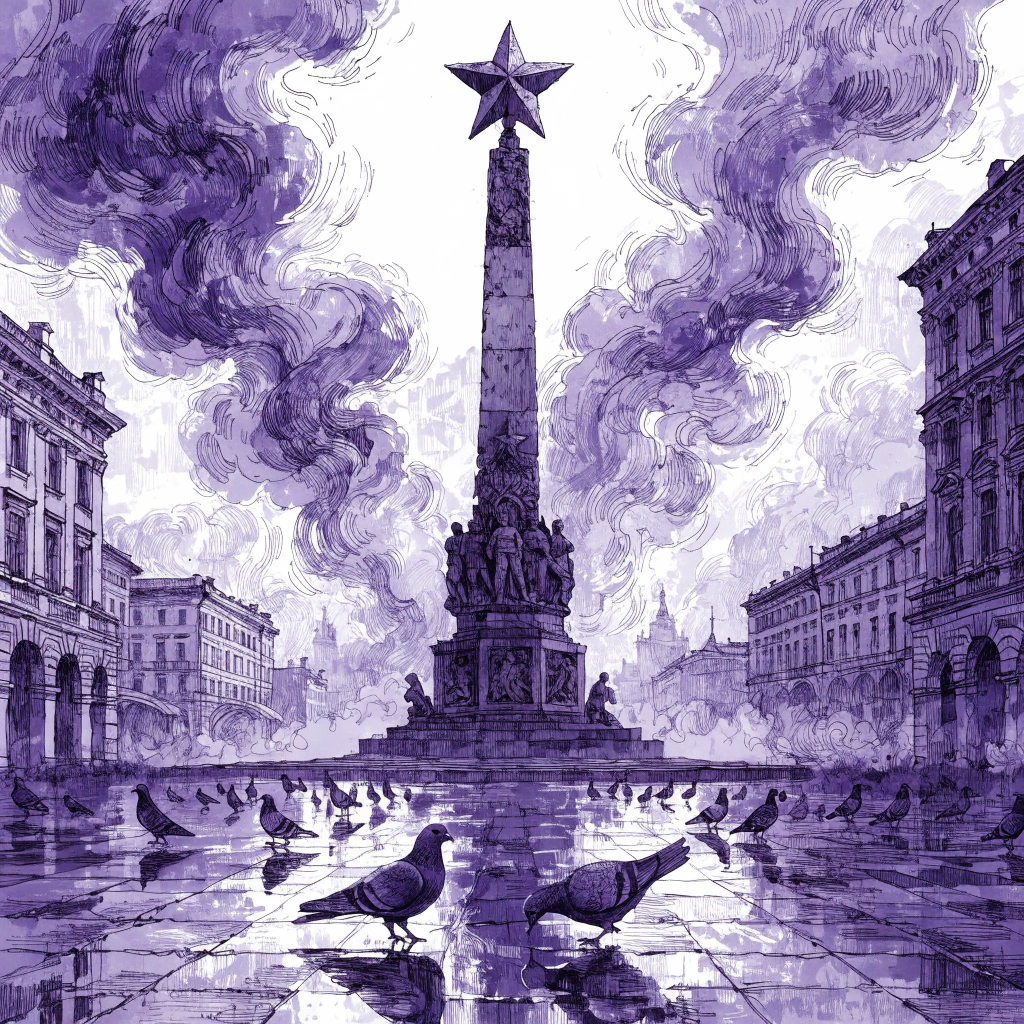
Victory Day in Russia
May 9th is a very important day in Russia. It is Victory Day. People remember the end of the Great Patriotic War in 1945. It is a big holiday for every family.
In the morning, there is a big parade in Moscow. Soldiers march and tanks move through the streets. People watch the parade on television or outside. They wear orange and black ribbons.
Many people carry photos of their grandfathers. This is called the Immortal Regiment. People say 'thank you' to veterans. In the evening, there are beautiful fireworks in the sky. It is a day of memory and peace.
تسليط الضوء على القواعد
نمط: Present Simple 'To Be'
"May 9th is a very important day in Russia."
We use 'is' for singular subjects like dates and holidays. It describes a fact or a permanent state.
نمط: Present Simple Plural
"Soldiers march and tanks move through the streets."
For plural subjects like 'soldiers' and 'tanks', we use the base form of the verb without an 's'.
اختبر فهمك
10 أسئلة · A1 مبتدئ · معاينة مجانية واحدة
اختبر ما تعلمته من هذا المقال. أجب على جميع الأسئلة لكسب نقاط خبرة!
When is Victory Day in Russia?
هل تريد إنهاء الاختبار؟
9 أسئلة أخرى بانتظارك. سجّل مجاناً لفتح الاختبار الكامل وكسب نقاط خبرة!
سجل مجاناًلديك حساب بالفعل؟ دخول
تفصيل الأسئلة
When is Victory Day in Russia?
إجابتك:
الإجابة الصحيحة: May 9th
There is a big parade in Moscow in the morning.
إجابتك:
الإجابة الصحيحة: صحيح
What does 'peace' mean?
إجابتك:
الإجابة الصحيحة: A time with no war
In the evening, there are beautiful _____ in the sky.
إجابتك:
الإجابة الصحيحة: fireworks
يوم النصر في روسيا: ذكرى مهمة
يوم النصر هو يوم خاص ومهم جداً في روسيا. تحتفل روسيا بهذا اليوم في التاسع من شهر مايو كل عام. هذا اليوم يذكر الناس بنهاية الحرب العالمية الثانية، التي تسمى في روسيا "الحرب الوطنية العظمى". انتهت هذه الحرب الكبيرة في عام 1945.
الحرب كانت صعبة جداً وقاسية على الشعب الروسي. مات أكثر من سبعة وعشرين مليون شخص في هذه الحرب، وكان لكل عائلة تقريباً قصة حزن كبيرة. لهذا السبب، يوم النصر ليس فقط يوم احتفال بالنصر، بل هو أيضاً يوم حزين للذكرى وتذكر الأجداد والأحباب الذين ضحوا بحياتهم.
في هذا اليوم، يرى الناس عروضاً عسكرية كبيرة في الشوارع، خاصة في العاصمة موسكو. يضعون الزهور على النصب التذكارية ويكرمون الجنود الذين دافعوا عن بلادهم. إنه يوم يجمع بين الفرح بالنصر الكبير والحزن العميق على الخسائر الكبيرة. روسيا لا تنسى أبداً هذا اليوم المهم وتاريخه العظيم.
تسليط الضوء على القواعد
نمط: الفعل الماضي (Past Tense Verb)
"انتهت هذه الحرب الكبيرة في عام 1945."
الفعل الماضي يصف حدثاً وقع وانتهى في الزمن الماضي. تتغير نهاية الفعل حسب الفاعل (مذكر أو مؤنث، مفرد أو جمع). هنا "انتهت" للمؤنث لأن "الحرب" مؤنث.
نمط: الصفة والموصوف (Adjective and Noun)
"يوم النصر هو يوم خاص ومهم جداً في روسيا."
الصفة تصف الاسم (الموصوف) وتأتي بعده غالباً. يجب أن تتطابق الصفة مع الاسم في الجنس (مذكر/مؤنث) والعدد (مفرد/جمع) والتعريف (مع أل/بدون أل). هنا "خاص" و "مهم" يصفان "يوم".
اختبر فهمك
11 أسئلة · A2 ابتدائي · معاينة مجانية واحدة
اختبر ما تعلمته من هذا المقال. أجب على جميع الأسئلة لكسب نقاط خبرة!
متى تحتفل روسيا بيوم النصر؟
هل تريد إنهاء الاختبار؟
10 أسئلة أخرى بانتظارك. سجّل مجاناً لفتح الاختبار الكامل وكسب نقاط خبرة!
سجل مجاناًلديك حساب بالفعل؟ دخول
تفصيل الأسئلة
متى تحتفل روسيا بيوم النصر؟
إجابتك:
الإجابة الصحيحة: في التاسع من مايو
يوم النصر هو يوم فرح فقط، وليس فيه حزن.
إجابتك:
الإجابة الصحيحة: خطأ
ما معنى كلمة "الجنود"؟
إجابتك:
الإجابة الصحيحة: المقاتلون في الجيش
يوم النصر يذكر الناس بـ _____ الحرب العالمية الثانية.
إجابتك:
الإجابة الصحيحة: نهاية
في هذا اليوم، يضع الناس _____ على النصب التذكارية.
إجابتك:
الإجابة الصحيحة: الزهور
A Day of Remembrance and Pride: Victory Day in Russia
Victory Day, which is celebrated on May 9th, is the most important secular holiday in Russia. This date marks the end of the Great Patriotic War, a conflict that has changed the lives of millions. For many Russians, this is not just a historical event but a deeply personal day. Almost every family has lost a relative during the war, and these sacrifices are never forgotten. In the Soviet Union, there were an estimated 27 million casualties, which is why the atmosphere is often somber.
The celebrations start with a huge military parade in Moscow’s Red Square. Modern tanks and soldiers are seen by the whole country on television. However, the most touching part of the day is the 'Immortal Regiment' march. During this event, thousands of people walk through the streets carrying portraits of their ancestors who fought or died. It is a powerful way to commemorate those who served.
Veterans are also a central part of the holiday. They are given flowers and thanked by strangers in the streets. People often wear the Ribbon of Saint George, which is a symbol of military honor. While the morning is filled with loud music and parades, the evening is usually quieter. Families gather together to share stories and remember their loved ones.
In conclusion, Victory Day is a complex blend of mourning and pride. It is a day when the past is brought into the present. By remembering the horrors of the past, Russians hope to value the peace they have today. It remains a tradition that unites different generations across the country.
تسليط الضوء على القواعد
نمط: Passive Voice
"Modern tanks and soldiers are seen by the whole country on television."
The passive voice is used when the action is more important than the person doing it. It is formed using 'be' + the past participle.
نمط: Relative Clauses
"Victory Day, which is celebrated on May 9th, is the most important secular holiday in Russia."
Relative clauses give more information about a noun. We use 'which' for things and 'who' for people.
اختبر فهمك
11 أسئلة · B1 متوسط · معاينة مجانية واحدة
اختبر ما تعلمته من هذا المقال. أجب على جميع الأسئلة لكسب نقاط خبرة!
Why is Victory Day considered a personal holiday for many Russians?
هل تريد إنهاء الاختبار؟
10 أسئلة أخرى بانتظارك. سجّل مجاناً لفتح الاختبار الكامل وكسب نقاط خبرة!
سجل مجاناًلديك حساب بالفعل؟ دخول
تفصيل الأسئلة
Why is Victory Day considered a personal holiday for many Russians?
إجابتك:
الإجابة الصحيحة: Because almost every family lost a relative in the war.
The 'Immortal Regiment' involves people carrying pictures of their ancestors.
إجابتك:
الإجابة الصحيحة: صحيح
What does 'somber' mean in the context of the article?
إجابتك:
الإجابة الصحيحة: Serious and sad.
The atmosphere is often _____ because of the millions of casualties.
إجابتك:
الإجابة الصحيحة: somber
What do strangers often give to veterans on the street?
إجابتك:
الإجابة الصحيحة: Flowers
Victory Day: A Tapestry of Triumph and Remembrance in Modern Russia
Every year on May 9th, Russia pauses to commemorate Victory Day, a date that marks the formal signing of the German Instrument of Surrender in 1945. Known domestically as the Great Patriotic War, the conflict has left an indelible mark on the nation's psyche. While the day is celebrated with grand military parades, it is fundamentally a period of profound reflection on the resilience of the human spirit and the immense costs of war.
The sheer scale of the conflict is difficult to comprehend. It is estimated that approximately 27 million Soviet citizens became a casualty of the war, a statistic that translates into a personal tragedy for nearly every Russian family. Consequently, the holiday serves as a vital bridge between generations. Grandparents share stories of hardship and bravery, ensuring that the sacrifices made by their ancestors are never forgotten. This oral history is vital for maintaining the collective memory of the nation, especially as the number of living veterans continues to dwindle.
In Moscow, the festivities are characterized by a massive display of military hardware in Red Square. However, the most moving aspect of the day is often the 'Immortal Regiment' march. During this event, millions of people walk through the streets holding portraits of relatives who fought or died. This act of collective memory transforms a state-sanctioned event into a deeply personal tribute. The atmosphere is notably solemn, yet it remains a source of national pride.
Despite the passage of time, the importance of Victory Day has not diminished. On the contrary, it has become a cornerstone of national identity. The government utilizes the occasion to emphasize national unity and strength. Furthermore, the day is marked by a unique emotional atmosphere where veterans are treated with the utmost respect, often receiving flowers from strangers. The contrast between the loud roar of tanks and the quiet, tearful moments at memorials illustrates the multifaceted nature of the occasion.
In conclusion, Victory Day is a complex phenomenon. It is a day where the somber atmosphere of mourning meets the jubilant spirit of triumph. Russia not only honors its past but also seeks to define its legacy through the lens of historical perseverance. By remembering the fallen, the nation reinforces its cultural narrative of survival and strength.
تسليط الضوء على القواعد
نمط: Passive Voice
"the festivities are characterized by a massive display of military hardware"
The passive voice is used here to focus on the celebrations themselves rather than the people organizing them. It is formed using the verb 'to be' plus the past participle.
نمط: Present Perfect Simple
"the conflict has left an indelible mark on the nation's psyche"
This tense is used to describe a past action that has a strong result or relevance in the present. It emphasizes the ongoing impact of the war.
نمط: Correlative Conjunctions
"Russia not only honors its past but also seeks to define its legacy"
The 'not only... but also' structure is used to join two related ideas, giving extra emphasis to the second point. It is common in formal B2 level writing.
اختبر فهمك
11 أسئلة · B2 فوق المتوسط · معاينة مجانية واحدة
اختبر ما تعلمته من هذا المقال. أجب على جميع الأسئلة لكسب نقاط خبرة!
What is the primary historical event celebrated on Victory Day?
هل تريد إنهاء الاختبار؟
10 أسئلة أخرى بانتظارك. سجّل مجاناً لفتح الاختبار الكامل وكسب نقاط خبرة!
سجل مجاناًلديك حساب بالفعل؟ دخول
تفصيل الأسئلة
What is the primary historical event celebrated on Victory Day?
إجابتك:
الإجابة الصحيحة: The surrender of Nazi Germany in 1945
Victory Day is considered a purely political event with no personal connection for Russian families.
إجابتك:
الإجابة الصحيحة: خطأ
Which word describes the capacity to recover quickly from extreme hardship?
إجابتك:
الإجابة الصحيحة: Resilience
The 'Immortal Regiment' march is described as an act of _____ memory.
إجابتك:
الإجابة الصحيحة: collective
What does the term 'Great Patriotic War' specifically refer to in Russia?
إجابتك:
الإجابة الصحيحة: The Eastern Front of World War II
يوم النصر في روسيا: ذكرى تتجاوز التاريخ إلى الوجدان
يُعدّ يوم النصر، الذي تحتفل به روسيا في التاسع من مايو/أيار كل عام، مناسبةً لا تُضاهى في أهميتها، فهو ليس مجرد تاريخ يُخلّد في الذاكرة الجمعية، بل هو تجسيدٌ حيٌّ للتضحية والصمود، ورمزٌ متجذّرٌ في الهوية الوطنية الروسية. إن ما يميز هذا اليوم عن سائر الأعياد هو طابعه المزدوج؛ إذ يجمع بين مرارة الحزن على الفجائع التي خلّفتها الحرب، وبهجة الاحتفال بالنصر الذي وُصف بالعظيم.
تكمن رمزية هذا اليوم في كونه إحياءً لذكرى توقيع وثيقة الاستسلام الألمانية غير المشروط في عام 1945، والتي آذنَت بانتهاء ما يُعرف في روسيا بـ"الحرب الوطنية العظمى" – تسميةٌ تُطلق على الجزء الشرقي من الحرب العالمية الثانية. لم تكن تلك الحرب مجرد صراع عسكري عابر، بل كانت كارثةً إنسانيةً لا مثيل لها، حصدت أرواح ملايين البشر ودمّرت مدنًا بأكملها. إن تداعيات تلك الحقبة لا تزال تلقي بظلالها على الأجيال الحالية، مذكّرةً إياهم بالثمن الباهظ الذي دُفع في سبيل الحرية والسلام.
للملايين من الروس، يحمل هذا اليوم معنى يفوق مجرد كونه عطلة رسمية؛ فهو ذكرى شخصية وعائلية عميقة. لا تكاد توجد عائلة روسية واحدة لم تفقد قريبًا أو عزيزًا في تلك الحرب المدمرة. تشير التقديرات إلى أن الاتحاد السوفيتي قد تكبّد خسائر بشرية مذهلة بلغت حوالي 27 مليون قتيل، وهو رقم يندر أن تجد له نظيرًا في تاريخ النزاعات المسلحة. هذا الواقع المرير هو ما يضفي على الاحتفالات نبرةً من الجلال والوقار، ممزوجةً بالفخر بالصمود والتغلّب على أعتى التحديات.
إن التعبير عن هذه المشاعر المتناقضة يتجلى في الطقوس المميزة ليوم النصر. فإلى جانب العروض العسكرية المهيبة التي تُقام في الساحات الرئيسية، وعلى رأسها الساحة الحمراء في موسكو، والتي تستعرض القوة العسكرية للبلاد، هناك مسيرة "الفوج الخالد" الشعبية. في هذه المسيرة، يحمل الآلاف من المواطنين صورًا لأقاربهم الذين قاتلوا في الحرب، مجسدين بذلك الرابط العميق بين الماضي والحاضر، ومؤكدين على أن ذكرى أولئك الأبطال لن تُنسى أبدًا. لا شك أن هذا التقليد يمثل استذكارًا مؤثرًا للتضحيات الفردية التي شكّلت مجتمعةً النصر الكبير.
يُعدّ يوم النصر فرصةً لتعزيز الوحدة الوطنية وتلقين الأجيال الجديدة دروسًا في الوطنية والصمود. إنه يومٌ للتأمل في بشاعة الحرب وأهمية الحفاظ على السلام، وفي الوقت ذاته، هو احتفاءٌ بقوة الروح البشرية وقدرتها على النهوض من تحت الركام. إن ما يجب أن يُدرك هو أن هذا الاحتفال ليس مجرد استعراض للقوة، بل هو شهادةٌ حيةٌ على مرونة شعبٍ صمد في وجه أهوال غير مسبوقة، وحوّل مرارة الهزيمة المحتملة إلى نصرٍ مؤزرٍ غيّر مجرى التاريخ.
في الختام، يظل يوم النصر في روسيا أكثر من مجرد تاريخ عابر؛ إنه نبضٌ حيٌّ في قلب الأمة، يذكّرها دائمًا بقيمة الحرية والسلام، وبالتضحيات الجسيمة التي بُذلت للحفاظ عليهما. إنه يومٌ يُحتفى فيه بالماضي بكل تعقيداته، ويُستلهم منه القوة للمستقبل.
تسليط الضوء على القواعد
نمط: المصدر المؤول
"إن ما يجب أن يُدرك هو أن هذا الاحتفال ليس مجرد استعراض للقوة، بل هو شهادةٌ حيةٌ على مرونة شعبٍ صمد في وجه أهوال غير مسبوقة."
المصدر المؤول هو تركيب يتكون عادةً من حرف مصدري (مثل أن، ما، لو، كي) يليه فعل، ويمكن تأويله بمصدر صريح. في المثال، "أن يُدرك" يمكن تأويله بـ "الإدراك"، و"أن هذا الاحتفال ليس..." يمكن تأويله بـ "كون هذا الاحتفال ليس...". يُستخدم لإضفاء طابع رسمي أو لغوي متقدم على الجملة.
نمط: أسلوب الحصر (إنما / ما... إلا)
"إن ما يميز هذا اليوم عن سائر الأعياد هو طابعه المزدوج؛ إذ يجمع بين مرارة الحزن على الفجائع التي خلّفتها الحرب، وبهجة الاحتفال بالنصر الذي وُصف بالعظيم."
يُستخدم أسلوب الحصر لتحديد أو قصر معنى الجملة على شيء معين، وهو من أساليب التوكيد. هنا، "إن ما يميز هذا اليوم هو..." يؤكد على أن هذه الصفة بالذات هي ما يجعله فريدًا. يمكن استخدامه أيضًا بـ "إنما" أو "ما... إلا" للتأكيد على المعنى المقصود وحصره.
نمط: تقديم وتأخير (جار ومجرور مقدم)
"للملايين من الروس، يحمل هذا اليوم معنى يفوق مجرد كونه عطلة رسمية؛ فهو ذكرى شخصية وعائلية عميقة."
تقديم الجار والمجرور (للملايين من الروس) على الفعل أو الاسم الذي يتعلق به (يحمل هذا اليوم) يُستخدم للتركيز على المقدم، أو لإضفاء جمالية على الأسلوب. في هذا المثال، يُبرز أهمية هذا اليوم بالنسبة للروس قبل ذكر تفاصيل المعنى الذي يحمله.
اختبر فهمك
12 أسئلة · C1 متقدم · معاينة مجانية واحدة
اختبر ما تعلمته من هذا المقال. أجب على جميع الأسئلة لكسب نقاط خبرة!
ما هو التاريخ الذي تحتفل فيه روسيا بيوم النصر؟
هل تريد إنهاء الاختبار؟
11 أسئلة أخرى بانتظارك. سجّل مجاناً لفتح الاختبار الكامل وكسب نقاط خبرة!
سجل مجاناًلديك حساب بالفعل؟ دخول
تفصيل الأسئلة
ما هو التاريخ الذي تحتفل فيه روسيا بيوم النصر؟
إجابتك:
الإجابة الصحيحة: التاسع من مايو/أيار
يُعدّ يوم النصر في روسيا مجرد عطلة رسمية لا تحمل أي معنى شخصي.
إجابتك:
الإجابة الصحيحة: خطأ
ماذا تعني كلمة "تجسيد" في سياق المقال؟
إجابتك:
الإجابة الصحيحة: تحويل الفكرة إلى شكل ملموس
يُعرف الجزء الشرقي من الحرب العالمية الثانية في روسيا باسم "الحرب الوطنية _____".
إجابتك:
الإجابة الصحيحة: العظمى
ما هو التقليد الذي يحمل فيه المواطنون صور أقاربهم الذين قاتلوا في الحرب؟
إجابتك:
الإجابة الصحيحة: الفوج الخالد
تشير التقديرات إلى أن الاتحاد السوفيتي تكبّد خسائر بشرية بلغت حوالي 27 مليون قتيل في الحرب.
إجابتك:
الإجابة الصحيحة: صحيح
The Dialectics of Remembrance: Victory Day and the Architecture of Russian National Identity
To the uninitiated observer, the annual iteration of Victory Day in Russia, observed on the ninth of May, might appear as a mere display of militaristic bravado. However, to frame it thus would be to overlook the profound ontological significance this date holds for the Russian populace. Commemorating the signing of the German Instrument of Surrender in 1945, which effectively terminated the Great Patriotic War, the holiday serves as the quintessential cornerstone of contemporary Russian identity. It is a day where the hagiography of the Soviet state and the visceral bereavement of the individual family converge into a singular, epochal narrative of survival and sacrifice. Were one to traverse the vast expanse of the Russian Federation on this day, one would find that the scars of the mid-twentieth century remain remarkably fresh, etched into the collective consciousness of a nation that lost an estimated twenty-seven million lives.
The juxtaposition of the grand military parade on Red Square with the silent, mournful rituals of private remembrance creates a complex semiotic landscape. For decades, the holiday's prominence ebbed and flowed; Stalin initially feared the prestige of victorious generals might eclipse his own authority, leading to a period where the day was not even a public holiday. It was only under Brezhnev that the celebration assumed its current form of state-sponsored solemnity. Today, the parade is not merely a retrospective look at past glories but a potent tool for geopolitical signaling. The display of sophisticated weaponry serves as a reminder of an indomitable spirit, intended as much for foreign chancelleries as for the domestic electorate. Lest the magnitude of the sacrifice be forgotten, the state employs these displays to reinforce a sense of historical continuity and national resilience.
Perhaps the most poignant development in recent years has been the 'Immortal Regiment' movement. What began as a grassroots initiative in Tomsk, where citizens marched with portraits of their veteran ancestors, has since undergone significant state appropriation. This phenomenon illustrates the tension between genuine, bottom-up memorialization and the top-down curation of history. Nevertheless, for the participants, the act remains deeply personal. Each portrait represents a narrative of hardship, a life interrupted by the machinery of total war. It is this interweaving of the personal and the political that ensures the holiday’s enduring relevance. One might argue that the holiday functions as a secular religion, providing a unifying mythos in a post-Soviet era often characterized by ideological fragmentation.
Furthermore, the discourse surrounding Victory Day often involves a rigorous defense of the Soviet role in the defeat of Nazism, a stance frequently at odds with Western historiography. Russian officials and scholars alike emphasize that the Eastern Front was the primary theater of operations, where the Wehrmacht’s backbone was shattered. In this context, any perceived revisionism from abroad is met with fierce academic and diplomatic resistance. The holiday thus becomes a site of contestation, where the past is actively utilized to justify current policy and to assert a specific moral standing on the global stage. Ultimately, Victory Day is less about the finality of 1945 and more about the ongoing construction of a national self-image that prizes sovereignty and the capacity to endure unimaginable hardship. It remains a day of 'tears in the eyes,' a phrase from a popular Soviet song that encapsulates the duality of triumph and tragedy, a sentiment that continues to resonate with indomitable force across the generations.
تسليط الضوء على القواعد
نمط: Inverted Conditional (Were...)
"Were one to traverse the vast expanse of the Russian Federation on this day, one would find that the scars of the mid-twentieth century remain remarkably fresh."
This structure replaces 'if' with an inverted word order (verb-subject) to express a hypothetical or formal conditional. It is common in C2 academic prose to add a layer of sophistication and distance.
نمط: Negative Purpose Clause with 'Lest'
"Lest the magnitude of the sacrifice be forgotten, the state employs these displays to reinforce a sense of historical continuity."
'Lest' is used to express the intention of preventing something undesirable. It is followed by the subjunctive mood ('be forgotten'), which is a hallmark of formal and scholarly English.
نمط: Hedging with Modal Verbs and Passive Voice
"One might argue that the holiday functions as a secular religion, providing a unifying mythos."
C2 writing utilizes 'hedging' to avoid over-generalization. Using 'One might argue' softens the claim, acknowledging it as a perspective rather than an absolute fact, which is essential in analytical discourse.
اختبر فهمك
12 أسئلة · C2 إتقان · معاينة مجانية واحدة
اختبر ما تعلمته من هذا المقال. أجب على جميع الأسئلة لكسب نقاط خبرة!
What does the author suggest about the 'Immortal Regiment' movement?
هل تريد إنهاء الاختبار؟
11 أسئلة أخرى بانتظارك. سجّل مجاناً لفتح الاختبار الكامل وكسب نقاط خبرة!
سجل مجاناًلديك حساب بالفعل؟ دخول
تفصيل الأسئلة
What does the author suggest about the 'Immortal Regiment' movement?
إجابتك:
الإجابة الصحيحة: It represents a tension between personal memory and state narrative.
Victory Day has been a major public holiday consistently since 1945.
إجابتك:
الإجابة الصحيحة: خطأ
What is the meaning of 'hagiography' in the context of the article?
إجابتك:
الإجابة الصحيحة: An idealized or overly heroic biographical account.
The author describes the Russian national spirit as _____, meaning it is impossible to defeat.
إجابتك:
الإجابة الصحيحة: indomitable
According to the article, how does the Russian view of WWII history differ from Western historiography?
إجابتك:
الإجابة الصحيحة: Russians emphasize the Eastern Front as the primary theater of operations.
The military parade serves a dual purpose: honoring the past and signaling strength to foreign nations.
إجابتك:
الإجابة الصحيحة: صحيح

