









octlantis في 30 ثانية
- Octlantis is a portmanteau of 'octopus' and 'Atlantis', referring to a real or mythical underwater city inhabited by intelligent cephalopods, particularly gloomy octopuses.
- The term gained fame after the 2017 discovery of a site in Australia where octopuses live in high-density communities, challenging the idea that they are solitary.
- It is used in both scientific contexts to describe biological aggregation sites and in creative contexts to imagine sophisticated, non-human underwater civilizations.
- As a proper noun, it captures the imagination by blending hard marine science with the ancient mystery of the legendary sunken city of Atlantis.
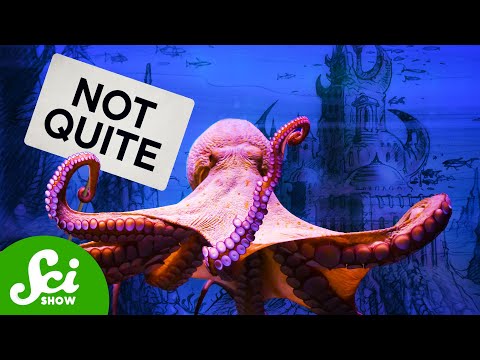
The term Octlantis is a fascinating linguistic creation that blends the biological world with ancient mythology. At its core, it is a portmanteau—a word formed by combining the sounds and meanings of two other words: 'octopus' and 'Atlantis'. While the word 'octopus' refers to the eight-armed cephalopod known for its intelligence and camouflage, 'Atlantis' refers to the legendary sunken city first described by the Greek philosopher Plato. When these two concepts merge, they create a vivid image of a sophisticated, underwater civilization built not by humans, but by octopuses. This word captures the imagination of scientists, writers, and internet users alike, serving as a bridge between hard science and speculative fiction. In a literal sense, Octlantis is used to describe a specific site in Jervis Bay, Australia, where researchers discovered a group of gloomy octopuses (Octopus tetricus) living in close proximity, building dens out of shells, and interacting in complex ways that were previously thought impossible for such solitary creatures.
- Biological Context
- In marine biology, Octlantis refers to a site where octopuses exhibit social behaviors, challenging the long-held belief that these animals are strictly solitary hunters. The discovery of Octlantis proved that under certain environmental conditions, octopuses can form dense communities.
Scientists were stunned to find the complex social structures at Octlantis, where octopuses were seen communicating and even evicting one another from dens.
Beyond the scientific discovery, the word is used in speculative fiction and digital art to describe a utopian or dystopian underwater city. It evokes a sense of wonder and mystery, suggesting a world where non-human intelligence has reached a level of architectural and social complexity comparable to human civilizations. People use this word when they want to emphasize the alien-like intelligence of cephalopods or when they are discussing the possibility of alternative evolutionary paths. It is a word that thrives in the intersection of marine biology, science fiction, and environmental philosophy. When someone mentions Octlantis, they are often inviting a conversation about the hidden depths of the ocean and the surprising capabilities of the creatures that inhabit it. It is not just a place; it is a symbol of the 'otherness' of the deep sea and the potential for complex life to exist in forms we are only beginning to understand.
- Pop Culture Usage
- In online forums and social media, Octlantis is often used to describe any impressive underwater structure or a gathering of sea creatures that looks suspiciously organized, often accompanied by memes about octopuses taking over the world.
The artist's depiction of Octlantis featured towering coral skyscrapers and glowing bioluminescent pathways used by cephalopod citizens.
The word also carries a certain environmental weight. By naming a real biological site after a legendary city, scientists have elevated the status of the octopus in the public consciousness. It reminds us that the ocean is not just a resource or a void, but a place of profound complexity and history. The use of 'Atlantis' in the name suggests that these sites are precious, fragile, and perhaps legendary in their own right. Whether used by a marine biologist describing shell-midden dens or a novelist describing a high-tech cephalopod metropolis, Octlantis serves as a powerful linguistic tool to describe the intersection of nature and myth. It is a word that is relatively new, having gained prominence after the 2017 discovery, but it has quickly become a staple in the vocabulary of those who love the sea and its many mysteries.
- Linguistic Structure
- The word follows the 'portmanteau' pattern where the 'Oct-' prefix (meaning eight) is grafted onto the '-lantis' suffix, which has become a productive morpheme in English to denote any legendary or sunken city (e.g., 'Aqualantis').
I read an article about how Octlantis might be the first step toward understanding non-human urban planning.
Is Octlantis a real place or just a fairy tale for divers?
The documentary explored the rocky outcrops of Octlantis to see how the cephalopods defended their territory.
Using the word Octlantis requires an understanding of its dual nature as both a scientific proper noun and a creative concept. When using it in a sentence, you must decide if you are referring to the actual site in Australia or the broader, mythical idea. Because it is a proper noun in most contexts, it is almost always capitalized. It functions as a noun and can serve as the subject, object, or part of a prepositional phrase. For example, you might say, 'Octlantis represents a shift in our understanding of marine biology.' Here, the word is the subject, and it carries the weight of a significant scientific discovery. Alternatively, in a more casual or creative context, you might say, 'The children imagined they were swimming through the gates of Octlantis.' In this case, the word is used as a metaphorical destination, much like one would use 'Heaven' or 'El Dorado'.
- Scientific Precision
- When writing for a scientific audience, use Octlantis to refer specifically to the Jervis Bay site. Example: 'The population density at Octlantis was found to be significantly higher than in surrounding areas.'
The discovery of Octlantis has forced biologists to rewrite the textbooks on cephalopod behavior.
In creative writing, Octlantis can be used to describe any complex underwater environment. You can use it as a descriptor for a setting that feels organized and inhabited. For instance, 'The reef, with its intricate tunnels and busy inhabitants, looked like a miniature Octlantis.' Here, the word is used as a common noun (though still often capitalized) to evoke a specific imagery. It is also common to see the word used in titles of articles, videos, or books. Because it is catchy and evocative, it serves as an excellent 'hook'. You might see a headline like 'Is Octlantis the Future of the Ocean?' This uses the word to spark curiosity about marine conservation and the intelligence of sea life. When using the word in conversation, it is often helpful to provide a brief explanation if your audience is not familiar with marine biology, as it is still a relatively niche term.
- Metaphorical Use
- Use Octlantis to describe a place that is surprisingly organized or busy. Example: 'My desk is an Octlantis of sticky notes and half-finished projects.'
Walking into the crowded aquarium felt like entering a real-life Octlantis.
Furthermore, the word can be used in the possessive form to describe things belonging to this mythical city. 'Octlantis's architecture' or 'the secrets of Octlantis' are common constructions. In more advanced usage, you might use it to discuss the 'Octlantis effect'—a hypothetical scenario where animals evolve social structures due to environmental constraints. This demonstrates the word's versatility; it can move from a simple name to a complex conceptual framework. Whether you are writing a poem about the deep sea, a blog post about strange news, or a formal essay on ethology, Octlantis provides a rich, evocative way to talk about the intersection of nature and society. Always consider the tone of your writing; while the word is scientifically grounded, its mythical roots make it feel slightly more whimsical than terms like 'aggregation site' or 'communal habitat'.
- Comparative Use
- Comparing Octlantis to Octopolis can help clarify the specific site you are discussing. Example: 'While Octopolis was the first site found, Octlantis is even more complex.'
The legends of Octlantis inspired a whole generation of marine illustrators.
Many people believe that Octlantis is just a clever name for a pile of shells, but it's much more than that.
The researchers spent months filming the daily life of the inhabitants of Octlantis.
You are most likely to encounter the word Octlantis in specific intellectual and creative niches. One of the primary places is in nature documentaries and science news outlets. Since the discovery of the real Octlantis in 2017, major publications like National Geographic, The New York Times, and the BBC have used the term to grab the attention of readers. In these contexts, the word is used to make a complex biological discovery accessible and exciting. You might hear a narrator with a deep, authoritative voice say, 'Deep beneath the waves of Jervis Bay lies a place that scientists have dubbed Octlantis.' This usage highlights the word's role as a bridge between the academic world and the general public. It turns a study on 'Octopus tetricus sociality' into a compelling story about a hidden city.
- Science Communication
- In podcasts like 'Science Vs' or 'Radiolab', Octlantis is often discussed as a case study for how our understanding of the natural world is constantly evolving.
I first heard about Octlantis on a nature podcast while I was driving to work.
Another common environment for this word is within the 'speculative biology' and science fiction communities. On websites like Reddit (specifically subreddits like r/marinebiology or r/speculativeevolution), users frequently discuss Octlantis. Here, the word is often used to speculate about what a more advanced version of such a city might look like. Artists post digital paintings of glowing underwater metropolises, labeling them as Octlantis. In these spaces, the word is a shorthand for 'cephalopod civilization'. You might also hear it in gaming circles, especially in games that involve underwater exploration or base-building, where players might name their underwater bases 'Octlantis' as a nod to the real-world discovery. It has become a meme of sorts, representing the idea that octopuses are secretly more advanced than we realize.
- Online Communities
- On platforms like Tumblr or Pinterest, Octlantis is a popular tag for aesthetic posts featuring octopuses, shells, and deep-sea imagery.
The concept of Octlantis went viral on Twitter after a video showed octopuses throwing shells at each other.
In educational settings, teachers might use Octlantis to engage students in lessons about the ocean. It is a perfect example of how science can be as exciting as a movie. A teacher might ask, 'What if I told you that Octlantis isn't just a myth, but a real place in Australia?' This immediately captures the students' attention. Furthermore, in environmental activism, the word is sometimes used to emphasize the need to protect the ocean. By framing the ocean floor as a place of 'cities' like Octlantis, activists can make the destruction of marine habitats feel more like the loss of a civilization, which can be a more powerful emotional appeal. Whether it's in a high-tech lab, a creative writing workshop, or a primary school classroom, Octlantis is a word that brings the wonders of the deep sea to life.
- Educational Context
- Teachers use Octlantis to teach students about portmanteaus and the importance of scientific naming conventions.
The museum exhibit on deep-sea life featured a large interactive map of Octlantis.
Is Octlantis mentioned in the latest issue of Nature magazine?
The YouTuber made a 20-minute video explaining why Octlantis is so important for science.
One of the most frequent mistakes people make with the word Octlantis is confusing it with its predecessor, 'Octopolis'. While both refer to sites where octopuses live in communities, they are two distinct locations in Jervis Bay. Octopolis was the first site discovered, characterized by a central man-made object (a piece of scrap metal) around which the octopuses built their dens. Octlantis, on the other hand, is a completely natural site with no human-made objects, which makes it even more scientifically significant. Using the names interchangeably can lead to confusion in scientific discussions. Another common error is failing to capitalize the word. Because it is the name of a specific, unique site (even if that site is mythical in some contexts), it should be treated as a proper noun. Writing 'octlantis' with a lowercase 'o' is technically incorrect in most formal and semi-formal contexts.
- Confusion with Atlantis
- Some people mistakenly think Octlantis is just another name for Atlantis or a specific part of the Atlantis myth. It is important to clarify that Octlantis is a modern term specifically related to octopuses.
Incorrect: We are studying the behavior of octopuses in octlantis. (Capitalization error)
A more subtle mistake is over-anthropomorphizing the site. While the name 'Octlantis' suggests a city with streets and government, the real site is a collection of dens and shell middens. Some people describe it as if the octopuses are building complex architecture like humans do, which can be misleading. It is better to use the term as a metaphor or a catchy name rather than a literal description of octopus engineering. Additionally, some people use the word to refer to any group of octopuses they see while diving. However, a true 'Octlantis' requires a specific level of density and social interaction that is quite rare. Using the word too loosely can diminish its scientific value. Finally, there is the spelling error of 'Octolantis' (adding an extra 'o'). While 'octopus' has an 'o', the portmanteau is specifically 'Octlantis', following the rhythm of 'Atlantis'.
- Spelling Errors
- Common misspellings include 'Octolantis', 'Octlantas', and 'Octalantis'. Always remember: Oct + lantis.
Incorrect: The diver found a small Octolantis near the reef. (Spelling error)
In academic writing, another mistake is using Octlantis without defining it first. Since it is a relatively new and somewhat 'pop-science' term, it is good practice to introduce it alongside its formal description (e.g., 'the high-density Octopus tetricus site known as Octlantis'). This ensures that your readers understand you are referring to a specific biological phenomenon and not just making up a word. Lastly, avoid using Octlantis as a verb. While English is flexible, 'octlantising' or 'to octlantis' doesn't have a clear meaning and can make your writing sound confusing. Stick to using it as a noun to describe the place or the concept. By avoiding these common pitfalls, you can use the word effectively and accurately in both scientific and creative contexts.
- Misunderstanding the Species
- Octlantis is specifically associated with the 'gloomy octopus'. Using it to describe a group of giant Pacific octopuses would be biologically inaccurate.
Correct: The gloomy octopuses at Octlantis were observed fighting over the best dens.
Don't confuse Octlantis with a simple coral reef; it's a social hub for cephalopods.
Is Octlantis the only site of its kind in the world?
When exploring the vocabulary surrounding Octlantis, it is helpful to look at both its scientific synonyms and its mythical counterparts. The most direct scientific alternative is 'Octopolis'. As mentioned before, Octopolis is a similar site but was discovered earlier and contains human-made materials. If you are looking for a more formal, academic term, you might use 'high-density octopus settlement' or 'communal cephalopod habitat'. These terms lack the poetic flair of Octlantis but are more appropriate for peer-reviewed journals. Another related term is 'midden', which refers to the piles of shells and debris that octopuses leave outside their dens. While a midden is just a pile of trash, in the context of Octlantis, these middens serve as the 'bricks' of the city, providing structure and protection for the inhabitants.
- Octopolis vs Octlantis
- Octopolis is like a small village built around a shipwreck, while Octlantis is like a natural city built entirely from the environment.
The researchers compared the social dynamics of Octlantis with those found at Octopolis.
In the realm of mythology and fiction, the most obvious alternative is 'Atlantis'. While Atlantis is for humans (or Atlanteans), Octlantis is for octopuses. Other similar fictional underwater cities include 'R'lyeh' from H.P. Lovecraft's Cthulhu Mythos (though R'lyeh is much more sinister) or 'Otoh Gunga' from Star Wars. If you are writing a story and want a different name for an octopus city, you could experiment with other portmanteaus like 'Cephalopolis' (Cephalopod + Polis) or 'Tentaculia'. However, none of these have the same scientific recognition as Octlantis. For a more descriptive approach, you could use phrases like 'the sunken metropolis of the eight-armed' or 'the cephalopod stronghold'. These alternatives allow you to vary your language while maintaining the same core concept of a sophisticated underwater society.
- Formal Alternatives
- Use 'aggregation site' when you want to be purely objective. Example: 'The aggregation site in Jervis Bay provides unique data on octopus interactions.'
Instead of calling it Octlantis, the lead scientist preferred the term 'high-density settlement'.
When discussing the 'vibe' of Octlantis, words like 'ethereal', 'submerged', 'alien', and 'intricate' are often used as adjectives. These words help build the world around the name. For example, 'The ethereal beauty of Octlantis was captured in the high-definition footage.' If you are looking for antonyms, you might consider words that describe the typical, solitary life of an octopus, such as 'solitude', 'isolation', or 'nomadic'. These words represent the opposite of the communal, settled life found at Octlantis. By understanding these similar and contrasting words, you can better position Octlantis within your vocabulary and use it to create more nuanced and interesting descriptions. Whether you are aiming for scientific accuracy or creative flair, having a range of alternatives ensures that your writing remains engaging and precise.
- Creative Alternatives
- 'The Ink-City', 'The Eight-Fold Kingdom', or 'The Shell-Citadel' can be used in fantasy writing to avoid using the specific term Octlantis.
The poet described the site as a 'Shell-Citadel', a more lyrical name than Octlantis.
Is there a difference between a 'colony' and Octlantis?
The term Octlantis has more emotional resonance than 'aggregation site'.
How Formal Is It?
حقيقة ممتعة
The scientists who named it wanted to convey that this wasn't just a random gathering, but a structured 'city' that had been built up over time by generations of octopuses. The name helped the story go viral globally.
دليل النطق
- Pronouncing it as 'Oct-o-lantis' (adding an extra 'o').
- Putting the stress on the first syllable: 'OC-tlantis'.
- Confusing the 'tlan' sound with 'klan'.
- Making the 'i' in 'tis' too long, like 'teese'.
- Mumbling the 't' in the middle, making it sound like 'Oclantis'.
مستوى الصعوبة
Easy to read if you know 'octopus' and 'Atlantis', but requires some context.
Requires correct capitalization and understanding of the portmanteau structure.
Pronunciation is straightforward but the stress must be on the second syllable.
Can be confused with 'Atlantis' if the first syllable is missed.
ماذا تتعلّم بعد ذلك
المتطلبات الأساسية
تعلّم لاحقاً
متقدم
قواعد يجب معرفتها
Portmanteau Formation
Octopus + Atlantis = Octlantis; Breakfast + Lunch = Brunch.
Proper Noun Capitalization
Always capitalize Octlantis as it refers to a specific, unique location.
Compound Adjectives
The Octlantis-based research was published last month.
Prepositional Phrases with Locations
The octopuses live *at* Octlantis or *in* Octlantis.
Possessive Proper Nouns
Octlantis's discovery was a major event in 2017.
أمثلة حسب المستوى
Octlantis is a city for octopuses.
Octlantis est une ville pour les poulpes.
Subject + Verb + Complement
The octopuses live in Octlantis.
Les poulpes vivent à Octlantis.
Present simple tense for a general fact.
Is Octlantis under the water?
Est-ce qu'Octlantis est sous l'eau ?
Question form using 'Is'.
I like the name Octlantis.
J'aime le nom Octlantis.
Simple subject-verb-object structure.
Octlantis is in Australia.
Octlantis est en Australie.
Proper noun 'Australia' takes the preposition 'in'.
Look at the houses in Octlantis!
Regardez les maisons à Octlantis !
Imperative mood for giving a command or suggestion.
Octlantis is a real place.
Octlantis est un endroit réel.
Adjective 'real' modifying the noun 'place'.
The octopuses are happy in Octlantis.
Les poulpes sont heureux à Octlantis.
Plural subject 'octopuses' with the verb 'are'.
Scientists found Octlantis in 2017.
Les scientifiques ont trouvé Octlantis en 2017.
Past simple tense 'found'.
They use shells to build Octlantis.
Ils utilisent des coquillages pour construire Octlantis.
Infinitive of purpose 'to build'.
Octlantis is a very busy underwater city.
Octlantis est une ville sous-marine très animée.
Adverb 'very' modifying the adjective 'busy'.
Do octopuses talk to each other in Octlantis?
Est-ce que les poulpes se parlent à Octlantis ?
Question form using 'Do' for the present simple.
Octlantis is different from other places in the sea.
Octlantis est différent des autres endroits de la mer.
Adjective 'different' followed by the preposition 'from'.
Many people want to visit Octlantis.
Beaucoup de gens veulent visiter Octlantis.
Verb 'want' followed by the to-infinitive.
Octlantis is famous because octopuses live together there.
Octlantis est célèbre parce que les poulpes y vivent ensemble.
Conjunction 'because' introducing a reason.
The name Octlantis is a mix of two words.
Le nom Octlantis est un mélange de deux mots.
Noun phrase 'a mix of two words'.
The discovery of Octlantis changed how we think about octopuses.
La découverte d'Octlantis a changé notre façon de penser aux poulpes.
Noun clause 'how we think about octopuses'.
Octlantis is a portmanteau of 'octopus' and 'Atlantis'.
Octlantis est un mot-valise composé de 'poulpe' et 'Atlantis'.
Use of the technical term 'portmanteau'.
Researchers observed octopuses fighting over dens in Octlantis.
Les chercheurs ont observé des poulpes se battre pour des terriers à Octlantis.
Verb 'observed' followed by an object and a present participle.
While octopuses are usually solitary, they are social in Octlantis.
Alors que les poulpes sont habituellement solitaires, ils sont sociaux à Octlantis.
Contrastive conjunction 'while'.
Octlantis provides a unique opportunity to study animal behavior.
Octlantis offre une occasion unique d'étudier le comportement animal.
Adjective 'unique' modifying 'opportunity'.
The site known as Octlantis is located in Jervis Bay.
Le site connu sous le nom d'Octlantis est situé à Jervis Bay.
Passive voice 'is located'.
If you were an octopus, would you live in Octlantis?
Si vous étiez un poulpe, vivriez-vous à Octlantis ?
Second conditional for a hypothetical situation.
The legend of Octlantis has inspired many artists.
La légende d'Octlantis a inspiré de nombreux artistes.
Present perfect tense 'has inspired'.
The high population density at Octlantis suggests that environmental factors play a role.
La forte densité de population à Octlantis suggère que les facteurs environnementaux jouent un rôle.
Noun clause 'that environmental factors play a role' as the object of 'suggests'.
Octlantis is often compared to Octopolis, which was discovered earlier.
Octlantis est souvent comparé à Octopolis, qui a été découvert plus tôt.
Non-defining relative clause starting with 'which'.
The octopuses at Octlantis were seen evicting their neighbors from their homes.
Les poulpes d'Octlantis ont été vus en train d'expulser leurs voisins de leurs maisons.
Passive voice 'were seen' followed by a present participle.
Despite the lack of human-made objects, Octlantis is a complex structure.
Malgré l'absence d'objets fabriqués par l'homme, Octlantis est une structure complexe.
Preposition 'despite' followed by a noun phrase.
Octlantis has become a symbol of the unexpected intelligence of cephalopods.
Octlantis est devenu un symbole de l'intelligence inattendue des céphalopodes.
Present perfect tense 'has become'.
Scientists are still debating the long-term implications of the Octlantis discovery.
Les scientifiques débattent encore des implications à long terme de la découverte d'Octlantis.
Present continuous tense 'are still debating'.
The term Octlantis captures the public's imagination more than 'aggregation site'.
Le terme Octlantis captive plus l'imagination du public que 'site d'agrégation'.
Comparative structure 'more than'.
Octlantis serves as a natural laboratory for observing social evolution.
Octlantis sert de laboratoire naturel pour observer l'évolution sociale.
Verb 'serves as' followed by a noun phrase.
The architectural complexity of Octlantis is evidenced by the deliberate arrangement of shell middens.
La complexité architecturale d'Octlantis est mise en évidence par la disposition délibérée des amas de coquillages.
Passive voice 'is evidenced by' with a complex subject.
Octlantis challenges the traditional ethological paradigm that octopuses are inherently solitary.
Octlantis remet en question le paradigme éthologique traditionnel selon lequel les poulpes sont intrinsèquement solitaires.
Noun clause 'that octopuses are inherently solitary' as an appositive.
The emergence of sociality at Octlantis may be a response to the scarcity of suitable denning sites.
L'émergence de la socialité à Octlantis peut être une réponse à la rareté des sites de nidification appropriés.
Modal verb 'may be' expressing possibility.
Octlantis provides a fascinating case study in the behavioral plasticity of cephalopods.
Octlantis constitue une étude de cas fascinante sur la plasticité comportementale des céphalopodes.
Prepositional phrase 'in the behavioral plasticity of cephalopods'.
The cultural resonance of the name Octlantis facilitates broader public engagement with marine science.
La résonance culturelle du nom Octlantis facilite un engagement plus large du public envers les sciences marines.
Complex subject 'The cultural resonance of the name Octlantis'.
By naming the site Octlantis, researchers have effectively mythologized a biological phenomenon.
En nommant le site Octlantis, les chercheurs ont efficacement mythifié un phénomène biologique.
Gerund phrase 'By naming the site Octlantis' acting as an adverbial.
The social dynamics observed at Octlantis include complex signaling and territorial defense.
Les dynamiques sociales observées à Octlantis incluent une signalisation complexe et une défense territoriale.
Past participle 'observed' acting as an adjective.
Octlantis stands as a testament to the sophisticated and often hidden lives of marine creatures.
Octlantis témoigne de la vie sophistiquée et souvent cachée des créatures marines.
Metaphorical use of 'stands as a testament to'.
The discovery of Octlantis necessitates a fundamental re-evaluation of the evolutionary drivers of sociality.
La découverte d'Octlantis nécessite une réévaluation fondamentale des moteurs évolutifs de la socialité.
Verb 'necessitates' followed by a highly formal noun phrase.
Octlantis serves as a poignant reminder that human concepts of 'civilization' are often too narrowly defined.
Octlantis nous rappelle de manière poignante que les concepts humains de « civilisation » sont souvent définis de manière trop étroite.
Noun clause 'that human concepts... are often too narrowly defined'.
The spatial configuration of Octlantis suggests a level of environmental engineering previously unrecorded in cephalopods.
La configuration spatiale d'Octlantis suggère un niveau d'ingénierie environnementale jamais enregistré auparavant chez les céphalopodes.
Past participle 'unrecorded' modifying 'environmental engineering'.
In the discourse of speculative biology, Octlantis is a cornerstone for imagining non-human urbanism.
Dans le discours de la biologie spéculative, Octlantis est une pierre angulaire pour imaginer l'urbanisme non humain.
Prepositional phrase 'In the discourse of speculative biology'.
The nomenclature 'Octlantis' cleverly bridges the gap between empirical observation and cultural archetype.
La nomenclature « Octlantis » comble habilement le fossé entre l'observation empirique et l'archétype culturel.
Adverb 'cleverly' modifying the verb 'bridges'.
Octlantis exemplifies how ecological constraints can catalyze the emergence of complex social structures.
Octlantis illustre comment les contraintes écologiques peuvent catalyser l'émergence de structures sociales complexes.
Interrogative clause 'how ecological constraints can catalyze...' as the object of 'exemplifies'.
The intricate web of interactions at Octlantis reveals a sophisticated social hierarchy among the resident octopuses.
Le réseau complexe d'interactions à Octlantis révèle une hiérarchie sociale sophistiquée parmi les poulpes résidents.
Noun phrase 'The intricate web of interactions at Octlantis'.
To study Octlantis is to confront the profound 'otherness' of intelligence in the deep sea.
Étudier Octlantis, c'est se confronter à la profonde « altérité » de l'intelligence dans les profondeurs marines.
Infinitive phrase 'To study Octlantis' as the subject.
تلازمات شائعة
العبارات الشائعة
— Referring to the heart or most crowded part of the octopus settlement.
Deep in Octlantis, the competition for the best dens is fierce.
— A metaphorical way to describe the entrance to the underwater city.
The camera finally reached the gates of Octlantis.
— Describing the daily activities and behaviors of the octopuses there.
Life in Octlantis is full of drama and social interaction.
— Referring to the scientific mysteries still waiting to be solved at the site.
Researchers are still uncovering the secrets of Octlantis.
— A phrase used to describe the growing fame or importance of the discovery.
With more sites being found, we are seeing the era of Octlantis rising.
— Referring to other parts of the ocean or other scientific discoveries.
What lies beyond Octlantis in the deep trenches of the bay?
— Describing the way the dens and shell mounds are organized.
The architecture of Octlantis is surprisingly efficient.
— A playful way to refer to the octopuses that live there.
The citizens of Octlantis are busy defending their territory.
— The act of discovering or locating the site.
Finding Octlantis was a major milestone for marine biology.
— The lasting impact of the discovery on our understanding of nature.
The legacy of Octlantis will be felt for generations of scientists.
يُخلط عادةً مع
Octopolis is a similar site but contains human-made metal; Octlantis is purely natural.
Atlantis is the mythical human city; Octlantis is for octopuses.
Octopus is the animal; Octlantis is the place where they live together.
تعبيرات اصطلاحية
— A place or mind that is crowded with many complex and interacting thoughts.
Her notebook was an Octlantis of ideas, all competing for attention.
Informal/Metaphorical— Creating a complex and safe environment for oneself using available resources.
He's building his own Octlantis in the tech world with his new startup.
Slang/Metaphorical— Being overwhelmed by the complexity of a social situation or a deep-sea mystery.
I got lost in Octlantis trying to understand the new social media trends.
Informal— When environmental pressure forces a group to become more social or organized.
The remote work policy created an Octlantis effect among the team.
Academic/Metaphorical— Extremely crowded and full of activity.
The train station at 5 PM was as busy as Octlantis.
Informal— A small or less impressive version of something grand.
My fish tank is basically Octlantis on a budget.
Humorous— Someone who is very popular or influential in a niche community.
She's basically the mayor of Octlantis in the marine biology department.
Slang— A feeling of being underwater, mysterious, or cleverly organized.
This restaurant has major Octlantis vibes with all the blue lights.
Slang— Starting a deep and complex project or investigation.
We are diving into Octlantis with this new research paper.
Informal— Something that is very difficult to find but amazing once discovered.
The small cafe was hidden like Octlantis in the back alley.
Literaryسهل الخلط
People often add an extra 'o' because of the word 'octopus'.
Octlantis is the correct portmanteau; Octolantis is a common misspelling.
The correct spelling is Octlantis, not Octolantis.
Both are portmanteaus involving 'Atlantis'.
Aqualantis is a generic term for any water city; Octlantis is specifically for octopuses.
Octlantis is a type of Aqualantis, but more specific.
Both start with 'Octo'.
Octopoda is the scientific order name for octopuses; Octlantis is a specific site name.
The members of the order Octopoda live in Octlantis.
Middens are a key feature of Octlantis.
A midden is a pile of shells; Octlantis is the entire settlement made of many middens.
Each den in Octlantis is surrounded by a large midden.
Octlantis is a type of aggregation.
Aggregation is a general scientific term; Octlantis is a specific, catchy name.
The Octlantis aggregation is unique because of its social complexity.
أنماط الجُمل
Octlantis is [adjective].
Octlantis is big.
There are [noun] in Octlantis.
There are many shells in Octlantis.
Scientists discovered Octlantis [prepositional phrase].
Scientists discovered Octlantis in Jervis Bay.
The discovery of Octlantis suggests that [clause].
The discovery of Octlantis suggests that octopuses are social.
Octlantis, which is [relative clause], offers [noun].
Octlantis, which is a natural site, offers insights into sociality.
To analyze Octlantis is to [infinitive phrase].
To analyze Octlantis is to reconsider the evolution of intelligence.
Octlantis is a portmanteau of [word] and [word].
Octlantis is a portmanteau of octopus and Atlantis.
Unlike [noun], Octlantis is [adjective].
Unlike Octopolis, Octlantis is entirely natural.
عائلة الكلمة
الأسماء
الأفعال
الصفات
مرتبط
كيفية الاستخدام
Low (Specialized vocabulary)
-
Writing 'octlantis' with a small 'o'.
→
Octlantis
Since it is the name of a specific location, it must be capitalized as a proper noun.
-
Spelling it 'Octolantis'.
→
Octlantis
The portmanteau removes the 'o' from 'octopus' to flow better with 'Atlantis'.
-
Using Octlantis to refer to Octopolis.
→
Use the correct name for the specific site.
Octopolis and Octlantis are two different sites in Jervis Bay with different characteristics.
-
Thinking Octlantis is a fictional place only.
→
Recognize it as a real biological site.
While it sounds mythical, it is a real place discovered by scientists in 2017.
-
Using 'Octlantis' as a verb.
→
Use it as a noun.
Octlantis is a place or a concept, not an action. You can't 'octlantis' something.
نصائح
Capitalize It
Always remember that Octlantis is a proper noun. Just like you capitalize 'London' or 'Mars', you should capitalize 'Octlantis' to show it is a specific place.
Use for Sociality
Use the word specifically when talking about octopuses living together. If you just see one octopus, don't call it Octlantis!
Check the 'O'
Don't add an extra 'o' after the 't'. It's Oct-lantis, not Octo-lantis. Think of the rhythm: Oc-tlan-tis.
Paint a Picture
When using Octlantis in a story, describe the shells and the bioluminescence to make the 'city' feel real to your readers.
Be Precise
If you are writing a school report, mention that Octlantis is located in Jervis Bay, Australia, to show you've done your research.
Octopolis vs Octlantis
Remember: Octopolis = man-made metal center. Octlantis = 100% natural. This is a key detail for experts.
The Atlantis Link
Keep the 'Atlantis' myth in mind. It helps you remember that the word refers to a 'sunken city'.
Stress the Middle
Say it out loud: oc-TLAN-tis. The middle part is the strongest. Practice it a few times to get it right.
Listen for the 'Oct'
In documentaries, the word can go by fast. Listen for that 'Oct' sound at the beginning to know they are talking about octopuses.
The Eight-Armed City
Think: 'Eight arms in a sunken city'. It's a quick way to bring the definition to mind whenever you see the word.
احفظها
وسيلة تذكّر
Think of an 'Octopus' living in 'Atlantis'. Oct + lantis = Octlantis. It's the city where eight-armed legends live.
ربط بصري
Imagine a tiny underwater city where the skyscrapers are made of giant sea shells and the residents are all octopuses wearing tiny hats.
Word Web
تحدٍّ
Try to use the word Octlantis in a sentence about a busy place you visited recently. For example: 'The mall during the holiday sale was a total Octlantis!'
أصل الكلمة
The word was coined by marine biologists around 2017 following the discovery of the site in Jervis Bay, Australia. It was designed to be a catchy, media-friendly name that would highlight the surprising social nature of the octopuses found there. It follows the pattern of 'Octopolis', a similar site found earlier.
المعنى الأصلي: A portmanteau of 'octopus' (from Greek 'oktōpus', meaning eight-footed) and 'Atlantis' (the legendary island mentioned in Plato's dialogues).
English (Modern), with Greek and Latin roots.السياق الثقافي
Be careful not to imply that octopuses have a literal government or human-like culture, as this can be seen as scientifically inaccurate 'anthropomorphizing'.
The word is a classic example of the English love for portmanteaus (like 'brunch' or 'podcast') to describe new phenomena.
تدرّب في الحياة الواقعية
سياقات واقعية
Marine Biology
- High-density settlement
- Social interaction
- Den construction
- Species behavior
Science Fiction
- Sunken civilization
- Cephalopod intelligence
- Alien-like society
- Underwater metropolis
Environmental News
- Protecting habitats
- Rare discovery
- Ocean conservation
- Ecosystem health
Creative Writing
- Shell-strewn streets
- Bioluminescent glow
- Eight-armed citizens
- Mysterious depths
Internet Culture
- Octopus takeover
- Smart animals
- Viral science
- Meme potential
بدايات محادثة
"Have you ever heard of Octlantis, the real underwater city for octopuses?"
"Do you think octopuses in Octlantis are more intelligent than solitary ones?"
"If you could visit Octlantis, what would you want to see the most?"
"How does the discovery of Octlantis change your view of the ocean?"
"Do you think there are other 'cities' like Octlantis that we haven't found yet?"
مواضيع للكتابة اليومية
Imagine you are a diver who just discovered a new Octlantis. Describe what you see.
Write a short story about a day in the life of an octopus living in Octlantis.
Do you think the name 'Octlantis' is a good choice for a scientific site? Why or why not?
Reflect on how the social structure of Octlantis compares to human cities.
If octopuses eventually built a high-tech Octlantis, how would it look different from our cities?
الأسئلة الشائعة
10 أسئلةYes, Octlantis is a real biological site located in Jervis Bay, Australia. It was discovered by marine researchers who found a high-density population of gloomy octopuses living together. While the name sounds mythical, the site itself is a tangible location used for scientific study.
The name is a portmanteau of 'octopus' and 'Atlantis'. It was coined by the scientists who discovered the site to describe the city-like structure of the octopus settlement. It follows the naming convention of 'Octopolis', a similar site found earlier in the same region.
At its peak, researchers have observed up to 15 octopuses living in very close proximity at the Octlantis site. This is a high number for a species that was previously thought to be strictly solitary and territorial.
In Octlantis, octopuses engage in social behaviors such as communicating through color changes and postures, fighting over the best dens, and even evicting each other from their homes. They also build and maintain their dens using piles of discarded shells, known as middens.
Octlantis itself is not inherently dangerous, but it is located in the open ocean and requires proper diving equipment and training to reach. Furthermore, it is a sensitive scientific site, and divers are encouraged not to disturb the animals or their habitat.
Octlantis is important because it challenges the long-held belief that octopuses are solitary animals. It shows that under certain conditions, such as a lack of natural shelter and a high abundance of food, octopuses can evolve social structures and live in communities.
Octopolis was the first site discovered and was built around a man-made object (a piece of scrap metal). Octlantis is a second, entirely natural site discovered later. Both are located in Jervis Bay and show similar social behaviors among octopuses.
While the general location of Jervis Bay is on any map of Australia, the exact coordinates of Octlantis are usually kept private by researchers to protect the site from over-visitation and potential damage. However, many documentaries show its general appearance.
While the site is dominated by gloomy octopuses, other marine life like fish, crabs, and rays are often seen in the area. Some of these animals are prey for the octopuses, while others are simply passing through the busy 'city'.
Scientists believe it is very likely that more sites like Octlantis exist. As underwater camera technology improves and more of the ocean floor is explored, we may find that octopus 'cities' are more common than we ever imagined.
اختبر نفسك 200 أسئلة
Describe Octlantis in your own words. Why is it significant?
Well written! Good try! Check the sample answer below.
Write a short dialogue between two scientists who have just discovered Octlantis.
Well written! Good try! Check the sample answer below.
Imagine you are an octopus living in Octlantis. Write a journal entry about your day.
Well written! Good try! Check the sample answer below.
Explain the etymology of the word 'Octlantis' and how it relates to its meaning.
Well written! Good try! Check the sample answer below.
Compare and contrast Octlantis with the mythical city of Atlantis.
Well written! Good try! Check the sample answer below.
Discuss the implications of Octlantis for our understanding of animal sociality.
Well written! Good try! Check the sample answer below.
Write a news headline and a short lead paragraph about the discovery of a new Octlantis.
Well written! Good try! Check the sample answer below.
Create a mnemonic or a poem to help someone remember the meaning of Octlantis.
Well written! Good try! Check the sample answer below.
Argue for or against the use of catchy names like 'Octlantis' in scientific research.
Well written! Good try! Check the sample answer below.
Describe the physical structure of Octlantis based on what you have learned.
Well written! Good try! Check the sample answer below.
Write a creative story set in a futuristic, high-tech version of Octlantis.
Well written! Good try! Check the sample answer below.
How does Octlantis challenge the 'solitary' label often given to octopuses?
Well written! Good try! Check the sample answer below.
Write a description of Octlantis for a children's book about the ocean.
Well written! Good try! Check the sample answer below.
What role do 'middens' play in the formation of Octlantis?
Well written! Good try! Check the sample answer below.
Reflect on how the discovery of Octlantis makes you feel about the mysteries of the ocean.
Well written! Good try! Check the sample answer below.
Write a formal definition of Octlantis for a scientific encyclopedia.
Well written! Good try! Check the sample answer below.
How might the 'Octlantis effect' be applied to other species in nature?
Well written! Good try! Check the sample answer below.
Describe the social hierarchy that researchers have observed in Octlantis.
Well written! Good try! Check the sample answer below.
Write a social media post (e.g., a tweet) about Octlantis using appropriate hashtags.
Well written! Good try! Check the sample answer below.
Explain why Octlantis is considered a 'natural' site compared to Octopolis.
Well written! Good try! Check the sample answer below.
Pronounce the word 'Octlantis' correctly. Where is the stress?
Read this aloud:
قلت:
Speech recognition is not supported in your browser. Try Chrome or Edge.
Explain what Octlantis is to a friend who has never heard of it.
Read this aloud:
قلت:
Speech recognition is not supported in your browser. Try Chrome or Edge.
Describe the social behavior of octopuses at Octlantis.
Read this aloud:
قلت:
Speech recognition is not supported in your browser. Try Chrome or Edge.
Discuss why the name 'Octlantis' is more effective than 'aggregation site'.
Read this aloud:
قلت:
Speech recognition is not supported in your browser. Try Chrome or Edge.
Give a short presentation on the discovery of Octlantis.
Read this aloud:
قلت:
Speech recognition is not supported in your browser. Try Chrome or Edge.
Debate whether octopuses in Octlantis are truly 'social' or just 'crowded'.
Read this aloud:
قلت:
Speech recognition is not supported in your browser. Try Chrome or Edge.
Tell a short story about a diver visiting Octlantis.
Read this aloud:
قلت:
Speech recognition is not supported in your browser. Try Chrome or Edge.
Explain the difference between Octlantis and Octopolis.
Read this aloud:
قلت:
Speech recognition is not supported in your browser. Try Chrome or Edge.
How would you use the word Octlantis in a creative sentence?
Read this aloud:
قلت:
Speech recognition is not supported in your browser. Try Chrome or Edge.
What are the environmental factors that lead to the creation of Octlantis?
Read this aloud:
قلت:
Speech recognition is not supported in your browser. Try Chrome or Edge.
Describe the physical appearance of Octlantis as if you were looking at it.
Read this aloud:
قلت:
Speech recognition is not supported in your browser. Try Chrome or Edge.
Why do you think the media was so interested in Octlantis?
Read this aloud:
قلت:
Speech recognition is not supported in your browser. Try Chrome or Edge.
How does Octlantis change our perception of 'solitary' animals?
Read this aloud:
قلت:
Speech recognition is not supported in your browser. Try Chrome or Edge.
What would you ask a scientist who studies Octlantis?
Read this aloud:
قلت:
Speech recognition is not supported in your browser. Try Chrome or Edge.
Discuss the potential for other 'cities' like Octlantis to exist in the ocean.
Read this aloud:
قلت:
Speech recognition is not supported in your browser. Try Chrome or Edge.
Explain the etymology of Octlantis in a simple way.
Read this aloud:
قلت:
Speech recognition is not supported in your browser. Try Chrome or Edge.
How does Octlantis relate to the concept of 'animal architecture'?
Read this aloud:
قلت:
Speech recognition is not supported in your browser. Try Chrome or Edge.
What are some common mistakes people make when using the word Octlantis?
Read this aloud:
قلت:
Speech recognition is not supported in your browser. Try Chrome or Edge.
Describe a day in the life of an Octlantis researcher.
Read this aloud:
قلت:
Speech recognition is not supported in your browser. Try Chrome or Edge.
Why is the capitalization of Octlantis important?
Read this aloud:
قلت:
Speech recognition is not supported in your browser. Try Chrome or Edge.
Listen to the word: 'Octlantis'. Identify the number of syllables.
Listen to a sentence: 'The octopuses built Octlantis out of shells.' What did they use?
Listen to a short clip about Octlantis. Where is it located?
Listen to the pronunciation of 'Octopolis' and 'Octlantis'. Which one has more syllables?
Listen to a scientist talk about sociality. How does she refer to Octlantis?
Listen for the word 'Octlantis' in a nature documentary segment.
Listen to a description of Octlantis. Is it a natural or man-made site?
Listen to the stress pattern of Octlantis. Which syllable is the loudest?
Listen to a podcast excerpt about cephalopods. What does Octlantis represent?
Listen to a list of words: Octopus, Atlantis, Octlantis. Which one is a portmanteau?
Listen to a news report about Octlantis. What was the main discovery?
Listen to a child describing Octlantis. What words does he use?
Listen to a debate about Octlantis. What are the two main viewpoints?
Listen to the spelling of Octlantis. Write it down correctly.
Listen to a poem about Octlantis. What is the overall mood?
/ 200 correct
Perfect score!
Summary
Octlantis is a unique word that bridges the gap between science and myth, describing a place where octopuses defy their solitary nature to live in complex, social communities. For example: 'The discovery of Octlantis proved that octopuses are capable of building organized societies.'
- Octlantis is a portmanteau of 'octopus' and 'Atlantis', referring to a real or mythical underwater city inhabited by intelligent cephalopods, particularly gloomy octopuses.
- The term gained fame after the 2017 discovery of a site in Australia where octopuses live in high-density communities, challenging the idea that they are solitary.
- It is used in both scientific contexts to describe biological aggregation sites and in creative contexts to imagine sophisticated, non-human underwater civilizations.
- As a proper noun, it captures the imagination by blending hard marine science with the ancient mystery of the legendary sunken city of Atlantis.
Capitalize It
Always remember that Octlantis is a proper noun. Just like you capitalize 'London' or 'Mars', you should capitalize 'Octlantis' to show it is a specific place.
Use for Sociality
Use the word specifically when talking about octopuses living together. If you just see one octopus, don't call it Octlantis!
Check the 'O'
Don't add an extra 'o' after the 't'. It's Oct-lantis, not Octo-lantis. Think of the rhythm: Oc-tlan-tis.
Paint a Picture
When using Octlantis in a story, describe the shells and the bioluminescence to make the 'city' feel real to your readers.
مثال
The fantasy novel's hero searched for the legendary city of Octlantis.
محتوى ذو صلة
شاهدها في الفيديوهات
مزيد من كلمات Other
abate
C1بدأت العاصفة تخف حدتها عند الفجر.
abcarndom
C1قرر المهندس abcarndom تسلسل الاختبار للعثور على الأخطاء الخفية.
abcenthood
C1حالة الغياب، خاصة عندما يكون وجودك متوقعًا أو مهمًا. (The state of being absent, especially when your presence is expected or important.) الغياب الطويل للقائد أثر على المعنويات. (The leader's long absence affected morale.)
abcitless
C1يصف شيئًا يفتقر إلى جزء أساسي ضروري يجعله كاملاً أو منطقيًا. (Describes something missing a basic, necessary part that makes something complete or logical.)
abcognacy
C1حالة عدم المعرفة أو عدم الوعي بموضوع معين، لا سيما في سياق متخصص أو أكاديمي. ناقش الباحثون حالة الـ "abcognacy" التاريخية للمجتمع فيما يتعلق بتغير المناخ.
abdocion
C1يصف حركة أو قوة تبتعد عن المحور المركزي أو المعيار المعمول به.
abdocly
C1يصف شيئاً مطوياً، أو غائراً، أو يحدث بطريقة خفية لا تظهر للعيان فوراً. يُستخدم بشكل أساسي في السياقات التقنية أو الأكاديمية للإشارة إلى العناصر الهيكلية أو العمليات البيولوجية المخبأة داخل نظام أكبر.
aberration
B2الانحراف هو خروج عما هو طبيعي أو معتاد أو متوقع.
abfacible
C1يعمل خبراء الترميم على <strong>إزالة الواجهة</strong> (abfacible) بعناية للكشف عن النقوش الأصلية، مع الحفاظ على سلامة الجدار الأساسي.
abfactency
C1تصف كلمة 'abfactency' صفة أو حالة من الانفصال الجذري عن الحقائق التجريبية أو الواقع الموضوعي.

