The video owner has disabled playback on external websites.
This video is no longer available on YouTube.
This video cannot be played right now.
Watch on YouTube
افتح أدوات التعلم بالذكاء الاصطناعي
سجّل للوصول إلى أدوات قوية تساعدك على التعلم أسرع من كل فيديو.
The End of Oil, Explained | FULL EPISODE | Vox + Netflix
إحصائيات التعلم
مستوى CEFR
الصعوبة
الترجمة (347 مقاطع)
In 1856, a scientist, named Eunice Foote, conducted an experiment.
She filled one tube with regular air, and another with carbon dioxide,
put thermometers in them, and placed them in the sun.
And she noticed, the tube of carbon dioxide got a lot hotter, and stayed hot longer.
She published her results noting that "an atmosphere of that gas
would give to our earth a high temperature".
Three years later, Edwin Drake struck oil in Western Pennsylvania.
A hundred years after that first well, the American oil industry celebrated its centennial.
And they invited the physicist Edward Teller, one of the inventors of the atomic bomb,
to make a speech about the future of energy.
“We probably have to look for additional fuel supplies,” he told the crowd.
“Because the extra carbon emitted from burning fossil fuels causes a greenhouse effect.”
Which, he believed, would be sufficient to melt the ice cap and submerge New York.
By 1965, scientists were confident enough to formally warn U.S. President Lyndon B. Johnson
A decade later, Exxon’s own scientists were making grim predictions.
By 1988, it was front page news.
And since then, we’ve kept pumping carbon dioxide into the atmosphere
at an accelerating rate.
We have a world economy today that depends on fossil fuels for most of its energy.
A third of it from oil.
It's a tremendous irony that the very substances that helped us achieve this level of development
today are, now, the very substances that endanger the future of civilization as we know it.
Governments are starting to agree that we shouldn't let the world warm more than one-point-five
degrees centigrade, and we're on track to blow past that by twenty-thirty.
So, why is it so hard to turn off the tap?
And can we do it in time?
Industrial nations have developed a great dependency on oil.
It has added a new freedom to our lives.
The invaluable stocks of oil in these exotic islands.
Their wealth is cracking the old life of Arabia wide open.
Nigerian government love the oil more than our lives.
Increasing amounts of carbon dioxide surround us.
If man continues to abuse his environment, Earth too may become barren.
The story of oil is a story of geopolitical clash, technological advancement
and intense competition.
The story of oil is a story of inequality.
It’s a story of dominance.
The Nigeria in which I was born in was just a couple of years before the ending of
the British colonial rule.
At the time, it was an agricultural economy.
Cotton from the north, cacao from the west, and rubber from the mid-west.
And in the area where Nnimmo grew up, fishing.
The Niger Delta is an area that is crisscrossed by water bodies, creek streams, rivers, estuaries
which is the breeding ground for most fish in the Gulf of Guinea.
It was so fertile, fishermen could just leave their traps at high tide
and pick them up at low tide.
And in the evenings...
Children would sit around in the moonlight, and the elders would share stories.
They didn’t know they were sitting on one of the most oil-rich regions on Earth.
Until the British granted Shell and BP an exclusive permit to explore for oil.
They struck black gold in 1956.
Nigerians were extremely hopeful that the discovery of oil in their would bring about
positive changes in their economic wellbeing, in the health conditions of the people
in terms of employment and everything.
And just a few years later, Nigeria won independence.
The future looked bright.
After all, fossil fuels had transformed other countries.
The world’s wealthiest nations had once been much poorer.
The amount of work a person could do was the amount they could do with their hands
possibly helped by a horse or mule.
Coal was the first discovery that changed all that.
Ancient organisms in oceans and swamps had soaked up the power of the sun.
Their fossils compressed over millions of years into coal, and a mile or more down
into natural gas and crude oil.
Burning coal, this time-capsule of the sun’s energy, helped Britain become
the first industrialized nation
and the most powerful empire the word had ever seen.
And then, oil came along.
And that stared off this kind of boom.
It was discovered that gasoline, which had been kind of this waste product
الترجمة الكاملة متاحة في مشغل الفيديو
تدرّب مع التمارين
أنشئ تمارين مفردات وقواعد وفهم من هذا الفيديو
التعليقات (0)
تسجيل الدخول للتعليقالوضع التفاعلي
اختبار
الإجابة الصحيحة:
فيديوهات ذات صلة

Up - Mailbox Scene (HD)
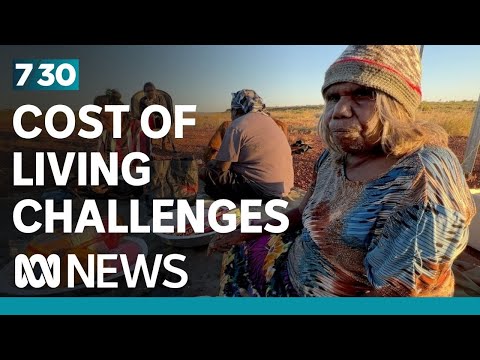
Regional Australians who are struggling with the increased cost of living | 7.30

Captain America vs Crossbones - Fight Scene - Captain America: Civil War (2016) Movie CLIP HD

Mind-Blowing Magic Magnets - Smarter Every Day 153

The Mandalorian Civil War [4K HDR] - Star Wars: The Clone Wars

Vox
اختبار
الإجابة الصحيحة:
تظهر الاختبارات أثناء مشاهدة الفيديو
نصيحة للحفظ
من هذا الفيديو
ابدأ تعلم اللغات مجاناً

