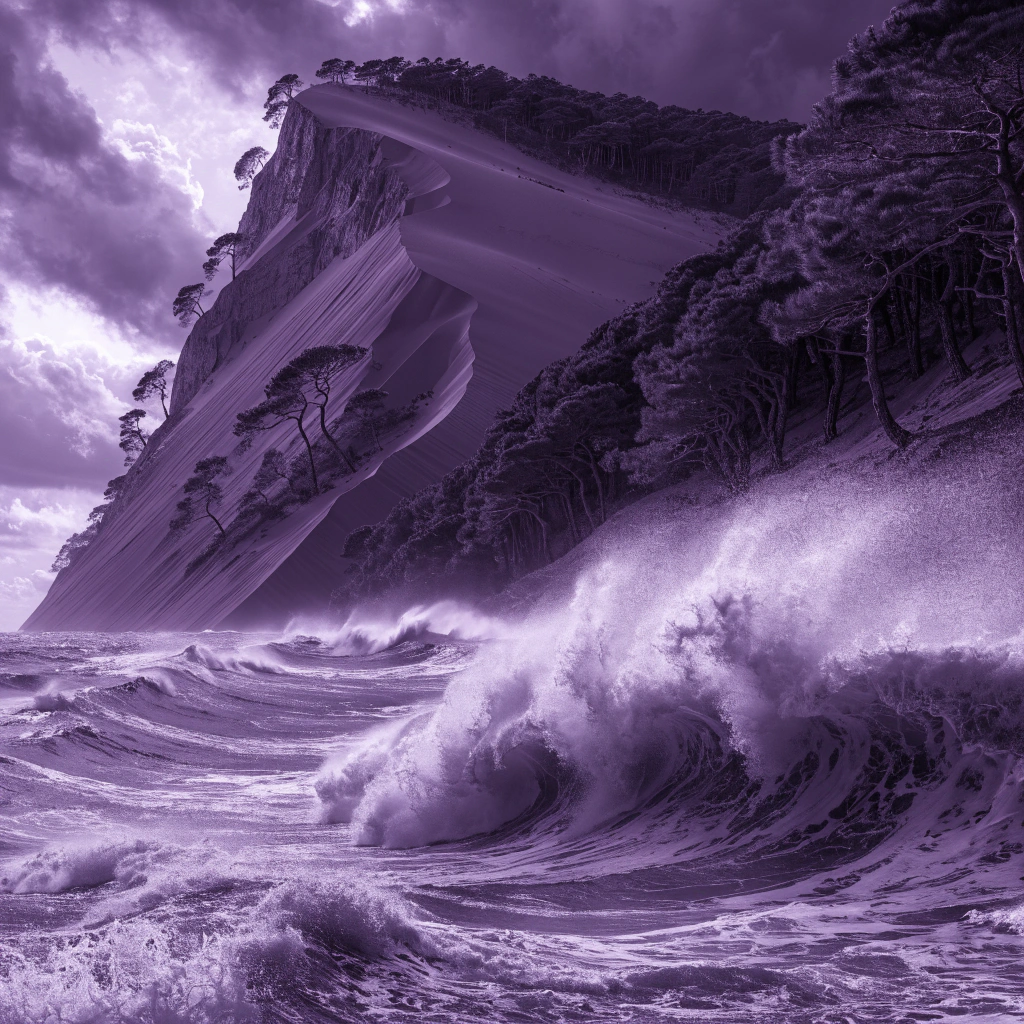
The Big Sand Mountain in France
The Dune of Pilat is in France. It is a very big mountain of sand. It is near the ocean and the city of Bordeaux. This dune is the tallest in Europe. It is more than 100 meters high.
The sand is beautiful and yellow. Many people visit the dune every year. They walk to the top and look at the sea. From the top, you can see green trees and blue water.
The dune is special because it moves. Every year, the wind moves the sand. It moves a few meters into the forest. It is a very interesting place in nature.
نکته دستوری
الگو: Present Simple (to be)
"The Dune of Pilat is in France."
We use 'is' with singular subjects to state facts. It describes what something is or where it is located.
الگو: Superlative Adjectives
"This dune is the tallest in Europe."
We add '-est' to short adjectives to show that something is 'the most' of a group. We always use 'the' before the adjective.
درک خود را بسنجید
10 سوال · A1 مبتدی · 1 پیشنمایش رایگان
آنچه از این مقاله آموختید را بسنجید. به همه سؤالات پاسخ دهید و XP کسب کنید!
Where is the Dune of Pilat?
آیا میخواهید آزمون را تمام کنید؟
9 سؤال دیگر منتظر شماست. ثبتنام رایگان کنید تا آزمون کامل را باز کنید و XP کسب کنید!
ثبتنام رایگانقبلاً ثبتنام کردی؟ ورود
جزئیات سؤالات
Where is the Dune of Pilat?
پاسخ شما:
پاسخ درست: France
The dune is in Italy.
پاسخ شما:
پاسخ درست: نادرست
What is a 'forest'?
پاسخ شما:
پاسخ درست: A large area with trees
The dune is _____ than 100 meters high.
پاسخ شما:
پاسخ درست: more
The Tallest Sand Dune in Europe
The Dune of Pilat is a famous place in southwest France. It is near the city of Bordeaux and the Arcachon Bay. It is the tallest sand dune in Europe. Currently, the dune is more than 100 meters high. From the top, you can see the green forest on one side and the blue Atlantic Ocean on the other side.
This dune is very special because it is always moving. Every year, the wind moves the sand inland by about five meters. Because of this movement, the dune is slowly covering the trees in the forest. Scientists say it is like a living thing.
Many tourists visit the Dune of Pilat every year. They like to climb to the top because the view is amazing. Climbing the sand is more difficult than walking on a road, but there are stairs in the summer to help people. It is a beautiful natural wonder that everyone should see.
نکته دستوری
الگو: Superlative Adjectives
"It is the tallest sand dune in Europe."
We use the + adjective + -est to compare one thing with all others in a group. For short adjectives like 'tall', we add -est.
الگو: Comparative Adjectives
"Climbing the sand is more difficult than walking on a road."
We use 'more' + long adjective + 'than' to compare two things. 'Difficult' is a long word, so we do not add -er.
درک خود را بسنجید
11 سوال · A2 مقدماتی · 1 پیشنمایش رایگان
آنچه از این مقاله آموختید را بسنجید. به همه سؤالات پاسخ دهید و XP کسب کنید!
Where is the Dune of Pilat located?
آیا میخواهید آزمون را تمام کنید؟
10 سؤال دیگر منتظر شماست. ثبتنام رایگان کنید تا آزمون کامل را باز کنید و XP کسب کنید!
ثبتنام رایگانقبلاً ثبتنام کردی؟ ورود
جزئیات سؤالات
Where is the Dune of Pilat located?
پاسخ شما:
پاسخ درست: In southwest France
The Dune of Pilat is the tallest sand dune in Europe.
پاسخ شما:
پاسخ درست: درست
What does the word 'difficult' mean?
پاسخ شما:
پاسخ درست: Not easy to do
Every year, the wind moves the _____ inland.
پاسخ شما:
پاسخ درست: sand
What can you see from the top of the dune?
پاسخ شما:
پاسخ درست: A forest and the ocean
تپه شنی پیلا: غول متحرک فرانسه
در جنوب غربی فرانسه، در نزدیکی خلیج زیبای آرکاشون و حدود ۶۰ کیلومتری شهر بوردو، یک پدیده طبیعی بسیار منحصر به فرد وجود دارد: "تپه شنی پیلا" (Dune du Pilat). این تپه شنی، که در کنار اقیانوس اطلس قرار گرفته است، بلندترین تپه شنی اروپا محسوب میشود. ارتفاع آن در حال حاضر به بیش از ۱۰۰ متر میرسد، اما این عدد دائماً در حال تغییر است، زیرا تپه پیلا یک موجود زنده و متحرک است.
هر سال، این تپه شنی عظیم چند متر به سمت خشکی جابهجا میشود. این حرکت مداوم و بیوقفه توسط بادهای قوی اقیانوس اطلس هدایت میشود که شنها را به آرامی حرکت میدهند. این ویژگی باعث شده است که تپه پیلا همیشه شکل و اندازه خود را تغییر دهد و هرگز در یک مکان ثابت نماند. این پدیده طبیعی در طول سالیان متمادی توجه بسیاری از دانشمندان و گردشگران را به خود جلب کرده است.
بازدیدکنندگان زیادی از سراسر جهان برای دیدن این منظره شگفتانگیز و تجربه این طبیعت خاص به اینجا میآیند. از بالای تپه، که بالا رفتن از آن ممکن است کمی دشوار به نظر برسد اما پلههایی برای کمک به بازدیدکنندگان نصب شده است، میتوان چشماندازی فوقالعاده از اقیانوس بیپایان، جنگلهای کاج سرسبز و خلیج آرام آرکاشون را مشاهده کرد. بسیاری از مردم از این فرصت برای عکاسی و لذت بردن از هوای تازه استفاده میکنند.
این منطقه فقط برای تماشای منظره نیست؛ فعالیتهای مختلفی مانند پاراسل، پیادهروی در مسیرهای مشخص و لذت بردن از سواحل اطراف نیز در اینجا بسیار محبوب است. تپه شنی پیلا نه تنها یک جاذبه گردشگری مهم برای فرانسه است، بلکه یک نمونه عالی از قدرت و زیبایی طبیعت نیز به شمار میرود. این تپه در طول تاریخ، توسط نیروهای طبیعی شکل گرفته و همچنان به حرکت و تغییر خود ادامه میدهد و هر ساله هزاران نفر را به سوی خود میکشاند.
نکته دستوری
الگو: ساختار مجهول (Passive Voice)
"این تپه شنی توسط بادهای قوی اقیانوس اطلس هدایت میشود."
برای نشان دادن اینکه فاعل کاری را انجام نمیدهد، بلکه عملی بر روی آن انجام میشود، از ساختار مجهول استفاده میکنیم. در فارسی، این ساختار معمولاً با فعل "شدن" همراه با صفت مفعولی (بن ماضی + ـه) ساخته میشود، یا گاهی با فعل "میشود" که به فعل اصلی اضافه میشود.
الگو: جمله واره موصولی با "که" (Relative Clause with "ke")
"این تپه شنی، که در کنار اقیانوس اطلس قرار گرفته است، بلندترین تپه شنی اروپا محسوب میشود."
از کلمه "که" برای اضافه کردن اطلاعات بیشتر درباره یک اسم یا ضمیر در جمله استفاده میکنیم. این جملهوارهها مانند صفت عمل میکنند و اطلاعاتی را فراهم میکنند که برای درک بهتر جمله اصلی لازم است یا آن را کاملتر میکند.
درک خود را بسنجید
11 سوال · B1 متوسط · 1 پیشنمایش رایگان
آنچه از این مقاله آموختید را بسنجید. به همه سؤالات پاسخ دهید و XP کسب کنید!
تپه شنی پیلا در کدام قسمت فرانسه قرار دارد؟
آیا میخواهید آزمون را تمام کنید؟
10 سؤال دیگر منتظر شماست. ثبتنام رایگان کنید تا آزمون کامل را باز کنید و XP کسب کنید!
ثبتنام رایگانقبلاً ثبتنام کردی؟ ورود
جزئیات سؤالات
تپه شنی پیلا در کدام قسمت فرانسه قرار دارد؟
پاسخ شما:
پاسخ درست: جنوب غربی
ارتفاع تپه شنی پیلا همیشه ثابت است و تغییر نمیکند.
پاسخ شما:
پاسخ درست: نادرست
معنی کلمه "پدیده" چیست؟
پاسخ شما:
پاسخ درست: چیزی خاص و غیرمعمول در طبیعت
تپه شنی پیلا هر سال چند متر به سمت _______ جابهجا میشود.
پاسخ شما:
پاسخ درست: خشکی
چه چیزی باعث حرکت تپه شنی پیلا میشود؟
پاسخ شما:
پاسخ درست: بادهای قوی اقیانوس اطلس
The Shifting Giant: Understanding the Dune of Pilat
Situated at the entrance of the Arcachon Bay, the Dune of Pilat stands as a testament to the dynamic forces of nature. Rising to a height of over 100 meters, it is officially recognized as the tallest sand dune in Europe. However, what makes this site truly remarkable is its status as a mobile geological phenomenon. Rather than remaining static, the dune is constantly migrating inland, a process driven by the prevailing westerly winds that sweep across the Atlantic Ocean.
This movement, while visually stunning, presents significant environmental challenges. As the sand advances, it gradually consumes the adjacent maritime pine forests, burying trees that have stood for decades. This relentless encroachment has been documented for over a century, with researchers estimating that the dune moves between one and five meters every year. Consequently, the landscape is in a state of perpetual fluctuation, meaning that the maps drawn today may become obsolete within a generation.
The dune’s height is also subject to change. Depending on weather conditions and wind patterns, the summit can fluctuate by several meters annually. Despite its shifting nature, or perhaps because of it, the Dune of Pilat attracts millions of tourists each year. Visitors are often overwhelmed by the sheer scale of the golden slopes, which offer a panoramic view of the Atlantic on one side and a vast emerald forest on the other.
Nevertheless, the popularity of the site necessitates a delicate balance between tourism and conservation. The local authorities have implemented measures to protect the fragile ecosystem from erosion caused by human activity. While the dune itself is resilient, the surrounding flora and fauna are increasingly vulnerable to the shifting sands. In conclusion, the Dune of Pilat is far more than a mere tourist attraction; it is a living entity that challenges our perception of stability. It serves as a powerful reminder that our planet is characterized by constant change, allowing us to appreciate the intricate relationship between the elements and the natural world.
نکته دستوری
الگو: Passive Voice
"it is officially recognized as the tallest sand dune in Europe."
Used here to focus on the object (the dune) rather than the person recognizing it. Formed with the verb 'to be' and the past participle.
الگو: Present Perfect Passive
"This relentless encroachment has been documented for over a century."
Used to describe an action that began in the past and continues to the present, focusing on the result. Formed with 'has/have been' + past participle.
الگو: Non-defining Relative Clauses
"the golden slopes, which offer a panoramic view of the Atlantic."
Provides extra information about the 'slopes' without being essential to the sentence's meaning. It is separated by commas and starts with 'which'.
درک خود را بسنجید
11 سوال · B2 بالاتر از متوسط · 1 پیشنمایش رایگان
آنچه از این مقاله آموختید را بسنجید. به همه سؤالات پاسخ دهید و XP کسب کنید!
What is the primary cause of the dune's inland migration?
آیا میخواهید آزمون را تمام کنید؟
10 سؤال دیگر منتظر شماست. ثبتنام رایگان کنید تا آزمون کامل را باز کنید و XP کسب کنید!
ثبتنام رایگانقبلاً ثبتنام کردی؟ ورود
جزئیات سؤالات
What is the primary cause of the dune's inland migration?
پاسخ شما:
پاسخ درست: Prevailing westerly winds
The height of the Dune of Pilat remains constant throughout the year.
پاسخ شما:
پاسخ درست: نادرست
What does 'encroachment' mean in the context of the article?
پاسخ شما:
پاسخ درست: A gradual advance beyond limits
The dune is constantly _____ inland toward the pine forests.
پاسخ شما:
پاسخ درست: migrating
Why are maps of the area likely to become obsolete?
پاسخ شما:
پاسخ درست: Because the landscape is in perpetual fluctuation
The Aeolian Majesty: Deciphering the Shifting Sands of the Dune of Pilat
Nestled at the mouth of the Arcachon Bay, the Dune of Pilat stands as a testament to the raw, unbridled power of geomorphological forces. To the uninitiated, it might appear as a static monument of silica; however, beneath its serene exterior lies a restless giant. Rarely in the European landscape does one encounter such a dramatic juxtaposition of maritime and terrestrial ecosystems. The dune, currently soaring to heights exceeding 100 meters, represents the pinnacle of aeolian processes in the region. The relentless migration of this sand mass—moving inland by several meters annually—poses a significant challenge to local infrastructure. It is the persistent action of the prevailing westerly winds that drives this encroachment, effectively swallowing the adjacent pine forests of the Landes. Such is the scale of this geological phenomenon that it necessitates constant recalibration of topographical maps. The encroachment is not merely a physical shift but a profound ecological transformation, where the verdant canopy of the forest is gradually replaced by a sterile, yet mesmerizing, desert-like expanse. What makes the Dune of Pilat particularly compelling for scholars is the complexity of its formation. It is not merely the wind that dictates its form, but a delicate equilibrium between tidal cycles and sediment supply. The accretion of sand is an ongoing process, influenced by the oscillation of the Atlantic tides. Through the lens of nominalisation, we can view the migration and accumulation not as simple verbs, but as complex conceptual entities that define the region's identity. Seldom has a natural landmark evoked such a blend of awe and apprehension. While tourists flock to its summit to witness the panoramic vista of the Atlantic, local authorities grapple with the dune's appetite for land. The economic benefits of tourism are undeniable, yet they are tethered to a landscape that refuses to remain stationary. It is this inherent instability that underscores the dune’s allure. Furthermore, the dune serves as a stratigraphic record of the past. Beneath the layers of sand lie ancient soils, known as paleosols, which offer a glimpse into the climatic conditions of millennia past. The preservation of these layers is a testament to the unique environmental conditions of the Aquitaine coast. Ultimately, the Dune of Pilat is a living laboratory, a place where the ephemeral nature of our world is laid bare against the backdrop of the eternal ocean.
نکته دستوری
الگو: Inversion with Negative Adverbials
"Rarely in the European landscape does one encounter such a dramatic juxtaposition of maritime and terrestrial ecosystems."
When using negative or restrictive adverbs like 'rarely' or 'seldom' at the beginning of a sentence for emphasis, the auxiliary verb comes before the subject.
الگو: Cleft Sentences
"It is the persistent action of the prevailing westerly winds that drives this encroachment."
Cleft sentences (It is + [noun] + that...) are used to focus on a specific piece of information, highlighting the cause (the winds) rather than the action.
الگو: Nominalisation
"The relentless migration of this sand mass poses a significant challenge."
Nominalisation turns verbs (migrate) into nouns (migration) to create a more formal, academic tone and to pack more information into a single noun phrase.
درک خود را بسنجید
12 سوال · C1 پیشرفته · 1 پیشنمایش رایگان
آنچه از این مقاله آموختید را بسنجید. به همه سؤالات پاسخ دهید و XP کسب کنید!
What is the primary driver of the dune's movement inland?
آیا میخواهید آزمون را تمام کنید؟
11 سؤال دیگر منتظر شماست. ثبتنام رایگان کنید تا آزمون کامل را باز کنید و XP کسب کنید!
ثبتنام رایگانقبلاً ثبتنام کردی؟ ورود
جزئیات سؤالات
What is the primary driver of the dune's movement inland?
پاسخ شما:
پاسخ درست: Westerly winds
The height of the Dune of Pilat remains constant throughout the year.
پاسخ شما:
پاسخ درست: نادرست
Which word describes something that lasts for a very short duration?
پاسخ شما:
پاسخ درست: Ephemeral
The dune is described as a _____ giant because it is constantly moving.
پاسخ شما:
پاسخ درست: restless
What are 'paleosols' as mentioned in the text?
پاسخ شما:
پاسخ درست: Ancient soils buried under sand
The dune is moving toward the Atlantic Ocean.
پاسخ شما:
پاسخ درست: نادرست
The Dune of Pilat: A Study in Aeolian Impermanence and Geomorphological Flux
Situated at the hiatus between the maritime expanse of the Atlantic and the verdant density of the Landes forest, the Dune of Pilat stands as a testament to the inexorable power of wind-driven transformation. To characterize this colossal sand structure as a mere landmark would be to ignore its ontological essence as a living entity. It is an ephemeral monument, one that undergoes constant reconfiguration through aeolian processes, migrating landward with a persistence that challenges human notions of topographical permanence. Should an observer stand atop its crest, they might perceive the dune as a geological palimpsest, where layers of history are perpetually overwritten by the shifting sands. This geomorphological giant, soaring over a hundred meters, is not a static relic of a bygone era but a dynamic system in a state of precarious equilibrium.
The accretion of sand, facilitated by the prevailing westerly winds, ensures that the dune’s silhouette remains in a state of flux. Were the wind to cease its rhythmic dance, the dune’s identity as a 'living' structure would vanish, yet the likelihood of such a cessation is virtually non-existent in this climatic corridor. Beneath the undulating surface of the sand lie several paleosols—ancient soil horizons that provide a chronological record of the region’s environmental history. These buried layers reveal that the dune’s current iteration is but the latest chapter in a long saga of climatic shifts and anthropogenic influence. Archaeological excavations have unearthed vestiges of human presence dating back to the Bronze Age, suggesting that our ancestors also grappled with the dune’s capricious nature. This historical depth transforms the Dune of Pilat into a vertical archive, where the passage of time is measured not in years, but in the depth of the sand.
The encroachment of the dune upon the adjacent forest is a phenomenon of significant scholarly interest. As the sand advances, it consumes the pine canopies, leaving behind a skeletal landscape that serves as a memento mori for the vegetation. This relentless march, averaging several meters per annum, underscores the futility of anthropogenic efforts to tether the dune to a fixed coordinate. While engineering interventions have been contemplated, the sheer scale of the dune’s mass renders most mitigation strategies largely ineffective. It is, perhaps, this very refusal to be domesticated that elevates the Dune of Pilat from a mere tourist attraction to a subject of profound philosophical inquiry.
Furthermore, the dune’s existence is inextricably linked to the complex hydrology of the Arcachon Bay. The interplay between tidal currents and wind patterns dictates the supply of sediment, creating a feedback loop that sustains the dune’s stature. Rarely has a natural formation so elegantly illustrated the intersection of disparate environmental forces. The topographical variance observed from year to year serves as a reminder that the Earth is not a finished product but an ongoing process. In an age of increasing environmental anxiety, the Dune of Pilat offers a unique perspective on the beauty of change, provided that we are willing to accept the transitory nature of our surroundings. Ultimately, the Dune of Pilat demands a shift in our perceptual framework. It requires us to acknowledge that stability is often an illusion and that the most enduring structures are those that are most amenable to change. Lest we forget our own insignificance in the face of such geological grandeur, the dune continues its silent, sandy odyssey, an inexorable force of nature that mocks the rigid boundaries of human cartography.
نکته دستوری
الگو: Inverted Conditional with 'Should'
"Should an observer stand atop its crest, they might perceive the dune as a geological palimpsest..."
This is a formal alternative to 'If an observer should stand...'. It is used in C2 academic writing to express a hypothetical situation with a touch of elegance and detachment.
الگو: Second Conditional with Subjunctive 'Were'
"Were the wind to cease its rhythmic dance, the dune’s identity as a 'living' structure would vanish..."
The 'Were + subject + to-infinitive' structure is a highly formal way of expressing a hypothetical future or present condition. It emphasizes the unlikely or purely theoretical nature of the condition.
الگو: Negative Inversion
"Rarely has a natural formation so elegantly illustrated the intersection of disparate environmental forces."
When a negative or restrictive adverbial (like 'Rarely') starts a sentence, the auxiliary verb and subject are inverted. This provides rhetorical emphasis and is a hallmark of sophisticated literary style.
درک خود را بسنجید
12 سوال · C2 تسلط · 1 پیشنمایش رایگان
آنچه از این مقاله آموختید را بسنجید. به همه سؤالات پاسخ دهید و XP کسب کنید!
What does the author suggest by calling the dune an 'ontological living entity'?
آیا میخواهید آزمون را تمام کنید؟
11 سؤال دیگر منتظر شماست. ثبتنام رایگان کنید تا آزمون کامل را باز کنید و XP کسب کنید!
ثبتنام رایگانقبلاً ثبتنام کردی؟ ورود
جزئیات سؤالات
What does the author suggest by calling the dune an 'ontological living entity'?
پاسخ شما:
پاسخ درست: Its constant movement and change define its very existence.
The author believes that human engineering can effectively stop the dune's landward migration.
پاسخ شما:
پاسخ درست: نادرست
Which word describes the gradual intrusion of the sand into the forest?
پاسخ شما:
پاسخ درست: Encroachment
The ______ power of the wind makes the dune's movement impossible to prevent.
پاسخ شما:
پاسخ درست: inexorable
What is the significance of the 'paleosols' mentioned in the text?
پاسخ شما:
پاسخ درست: They serve as a historical record of past climates and human presence.
The dune's height remains constant despite the wind.
پاسخ شما:
پاسخ درست: نادرست

