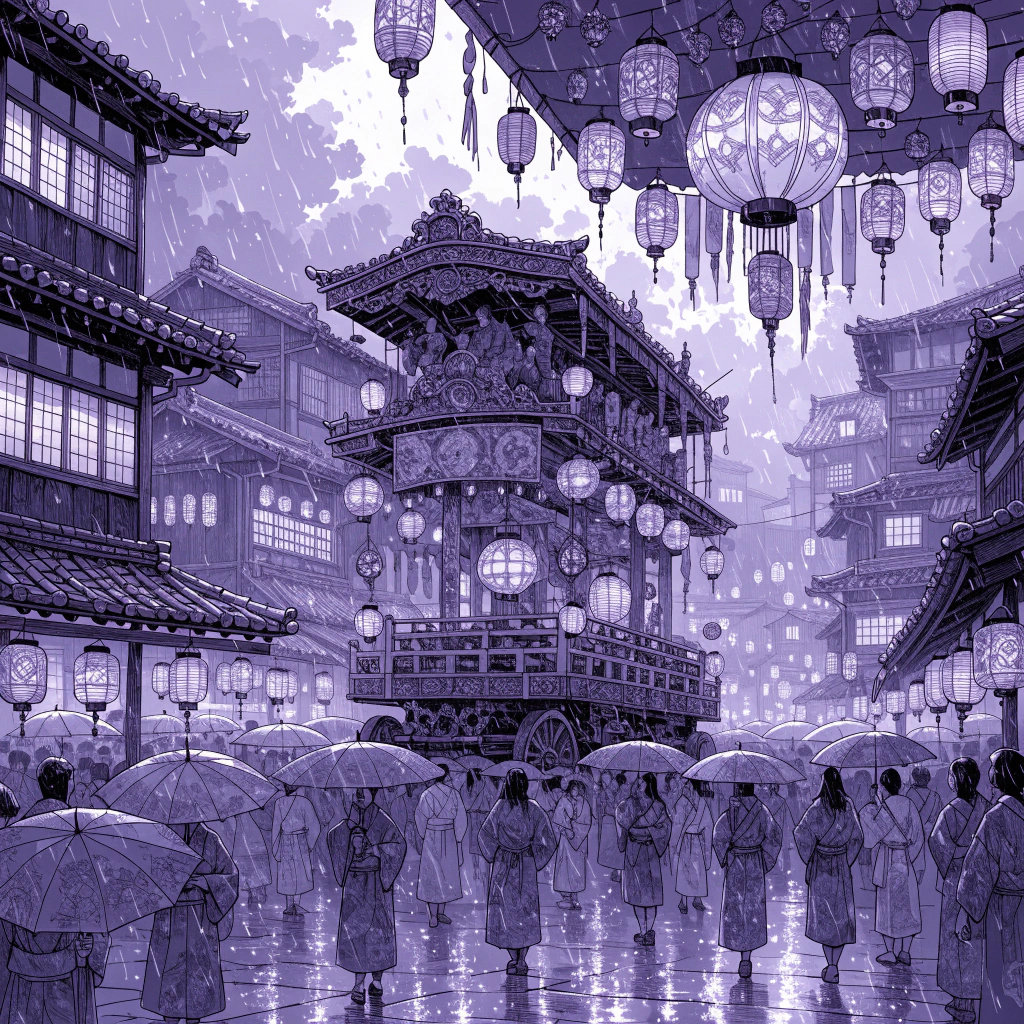
A Big Festival in Kyoto
Gion Matsuri is a famous festival in Japan. It is in Kyoto. This festival is very old. It starts in July. The festival is one month long.
People see big floats in the streets. The floats are beautiful. There is traditional music and food. Many people wear special clothes. They are called Yukata.
Families walk together and look at the lights. It is a happy time. Visitors from many countries come to Kyoto. They like the history and the art. The festival is very special for the city.
نکته دستوری
الگو: Present Simple (to be)
"Gion Matsuri is a famous festival in Japan."
We use 'is' with singular nouns to describe facts. It shows what something is like.
الگو: Present Simple (Regular Verbs)
"Many people wear special clothes."
We use the base form of the verb (wear) with plural subjects (people) for general truths.
درک خود را بسنجید
10 سوال · A1 مبتدی · 1 پیشنمایش رایگان
آنچه از این مقاله آموختید را بسنجید. به همه سؤالات پاسخ دهید و XP کسب کنید!
Where is Gion Matsuri?
آیا میخواهید آزمون را تمام کنید؟
9 سؤال دیگر منتظر شماست. ثبتنام رایگان کنید تا آزمون کامل را باز کنید و XP کسب کنید!
ثبتنام رایگانقبلاً ثبتنام کردی؟ ورود
جزئیات سؤالات
Where is Gion Matsuri?
پاسخ شما:
پاسخ درست: Kyoto
The festival is in December.
پاسخ شما:
پاسخ درست: نادرست
What does 'famous' mean?
پاسخ شما:
پاسخ درست: Many people know it
People see big _____ in the streets.
پاسخ شما:
پاسخ درست: floats
Gion Matsuri: A Famous Festival in Kyoto
Gion Matsuri is a very famous festival in Kyoto, Japan. It is one of the biggest festivals in the country. It happens every July and lasts for the whole month. People from all over the world visit Kyoto to see the colorful parades and beautiful decorations.
The festival started a long time ago in the year 869. In those days, many people were sick because of a terrible disease. The people of Kyoto wanted to stop the sickness, so they had a special religious ceremony. They prayed to the gods for health and safety.
Today, the most exciting part is the giant parade. Large wooden carts, called floats, move through the streets. These floats are very heavy, and many men pull them with long ropes. Some floats are taller than houses! There is also traditional music and people wear beautiful clothes called yukata.
Gion Matsuri is important because it shows the history of Kyoto. It is more popular now than in the past, but it still keeps its old traditions. It is a wonderful time to visit Japan.
نکته دستوری
الگو: Past Simple
"The festival started a long time ago in the year 869."
We use the past simple to talk about finished actions in the past. To form it for regular verbs, we usually add '-ed' to the base verb.
الگو: Comparatives
"Some floats are taller than houses!"
We use comparatives to compare two things. For short adjectives, we add '-er' and use the word 'than' after the adjective.
درک خود را بسنجید
11 سوال · A2 مقدماتی · 1 پیشنمایش رایگان
آنچه از این مقاله آموختید را بسنجید. به همه سؤالات پاسخ دهید و XP کسب کنید!
Where does Gion Matsuri take place?
آیا میخواهید آزمون را تمام کنید؟
10 سؤال دیگر منتظر شماست. ثبتنام رایگان کنید تا آزمون کامل را باز کنید و XP کسب کنید!
ثبتنام رایگانقبلاً ثبتنام کردی؟ ورود
جزئیات سؤالات
Where does Gion Matsuri take place?
پاسخ شما:
پاسخ درست: Kyoto
The festival lasts for only one day.
پاسخ شما:
پاسخ درست: نادرست
What does 'floats' mean in the text?
پاسخ شما:
پاسخ درست: Large decorated carts for parades
The festival started because many people were _____ in 869.
پاسخ شما:
پاسخ درست: sick
Why did the people first have the ceremony?
پاسخ شما:
پاسخ درست: To pray for health and stop a disease
Gion Matsuri: Kyoto's Magnificent Summer Festival
Gion Matsuri is one of the most famous festivals in Japan, which takes place in the city of Kyoto every July. This incredible event has been celebrated for over a thousand years, making it one of the oldest festivals in the country. It originally began in the year 869 as a religious ceremony to stop a terrible plague that was affecting the city at that time. Since then, it has evolved into a massive celebration of Kyoto’s rich culture and merchant history.
The festival is hosted by the Yasaka Shrine, and various events are held throughout the entire month. However, the most exciting highlight is the Yamaboko Junko, which is a grand parade of massive wooden floats. These floats, which are often called "moving museums," are decorated with beautiful tapestries and traditional ornaments from all over the world. Some of them are so large and heavy that they require dozens of people to pull them through the narrow streets.
During the evenings before the main parade, known as Yoiyama, the city center is closed to motorized traffic. The streets are filled with food stalls selling delicious local snacks, and many people can be seen wearing traditional summer kimonos called yukata. Hundreds of lanterns are lit, and traditional flute music is played, which creates a truly magical atmosphere for the visitors.
Because the festival has been preserved so well by the local community, it is recognized by UNESCO as an important part of world cultural heritage. Visitors from all over the world travel to Kyoto to experience this unique tradition. It is a special time when the ancient past and the modern present come together, showing that the spirit of Kyoto has stayed strong for centuries.
نکته دستوری
الگو: Present Perfect
"This incredible event has been celebrated for over a thousand years."
We use the present perfect (have/has + past participle) to talk about an action that started in the past and continues into the present.
الگو: Passive Voice
"These floats... are decorated with beautiful tapestries."
The passive voice is used when the action is more important than the person doing it. It is formed with 'be' + past participle.
درک خود را بسنجید
11 سوال · B1 متوسط · 1 پیشنمایش رایگان
آنچه از این مقاله آموختید را بسنجید. به همه سؤالات پاسخ دهید و XP کسب کنید!
Why did the Gion Matsuri originally begin in 869?
آیا میخواهید آزمون را تمام کنید؟
10 سؤال دیگر منتظر شماست. ثبتنام رایگان کنید تا آزمون کامل را باز کنید و XP کسب کنید!
ثبتنام رایگانقبلاً ثبتنام کردی؟ ورود
جزئیات سؤالات
Why did the Gion Matsuri originally begin in 869?
پاسخ شما:
پاسخ درست: To stop a terrible plague
The Gion Matsuri events only take place on a single day in July.
پاسخ شما:
پاسخ درست: نادرست
What does the word 'tapestries' mean?
پاسخ شما:
پاسخ درست: Thick fabrics with decorative designs
The festival is _____ by the Yasaka Shrine.
پاسخ شما:
پاسخ درست: hosted
What are the massive floats in the parade often called?
پاسخ شما:
پاسخ درست: Moving museums
The Gion Matsuri: A Millennium of Tradition and Resilience in Kyoto
The Gion Matsuri is not merely a local festival; it represents a profound intersection of historical resilience and artistic opulence. Spanning the entire month of July, this Kyoto-based celebration transforms the ancient capital into a living tapestry of Japanese heritage. While many contemporary festivals prioritize entertainment, the Gion Matsuri has maintained its spiritual core for over a millennium, tracing its origins back to a catastrophic plague in 869 AD. At that time, the ritual was established to appease the deities who were believed to be responsible for the devastating illness.
Historically, the event began as a religious ceremony known as Gion-go-ryo-e. Over the centuries, however, the festival underwent a significant transformation. As Kyoto’s merchant class grew in wealth and influence during the Edo period, they began to sponsor the construction of increasingly elaborate floats. Consequently, what started as a somber plea for health evolved into a magnificent showcase of community prestige and artisanal skill. This evolution reflects the shifting social dynamics of Japan, where the power of the merchant class became visible through public displays of grandeur.
The undisputed highlight of the festivities is the Yamaboko Junko, a grand procession of massive floats that navigate the narrow streets of downtown Kyoto. These structures, often referred to as 'moving museums', are adorned with exquisite tapestries from across the globe, some of which were imported via the Silk Road centuries ago. The sheer scale of these floats is breathtaking, with some weighing up to twelve tons. Remarkably, they are assembled without the use of a single nail, relying instead on traditional rope-binding techniques that have been passed down through generations. This architectural feat demonstrates the sophisticated engineering knowledge possessed by ancient craftsmen.
Furthermore, the festival serves as a vital link between the past and the present. Despite the challenges of urbanization and modernity, the local communities—known as 'yamaboko-cho'—continue to meticulously maintain these treasures. Participation in the festival is a matter of great pride, requiring months of preparation and coordination. In conclusion, the Gion Matsuri is more than just a tourist attraction; it is a testament to the enduring power of tradition and the collective spirit of a city that has survived numerous hardships throughout its long history.
نکته دستوری
الگو: Present Perfect Simple
"the Gion Matsuri has maintained its spiritual core for over a millennium"
The present perfect is used here to describe an action that started in the past (869 AD) and continues up to the present moment.
الگو: Passive Voice
"These structures... are adorned with exquisite tapestries"
The passive voice is used to focus on the objects (the floats) rather than the people who decorated them, which is common in formal descriptions.
الگو: Relative Clauses
"the local communities—known as 'yamaboko-cho'—continue to meticulously maintain these treasures."
The phrase 'known as yamaboko-cho' acts as a non-defining relative clause, providing extra information about the subject without changing the basic meaning of the sentence.
درک خود را بسنجید
11 سوال · B2 بالاتر از متوسط · 1 پیشنمایش رایگان
آنچه از این مقاله آموختید را بسنجید. به همه سؤالات پاسخ دهید و XP کسب کنید!
What was the original purpose of the Gion Matsuri in 869 AD?
آیا میخواهید آزمون را تمام کنید؟
10 سؤال دیگر منتظر شماست. ثبتنام رایگان کنید تا آزمون کامل را باز کنید و XP کسب کنید!
ثبتنام رایگانقبلاً ثبتنام کردی؟ ورود
جزئیات سؤالات
What was the original purpose of the Gion Matsuri in 869 AD?
پاسخ شما:
پاسخ درست: To appease deities during a plague
The floats used in the procession are constructed using modern metal nails for stability.
پاسخ شما:
پاسخ درست: نادرست
What does the word 'opulence' mean in the context of the article?
پاسخ شما:
پاسخ درست: Great wealth and luxuriousness
How did the festival change during the Edo period?
پاسخ شما:
پاسخ درست: It became a display of merchant wealth and skill
The Gion Matsuri is described as a _____ to the enduring power of tradition.
پاسخ شما:
پاسخ درست: testament
The Living Tapestry: Deciphering the Cultural Resilience of Gion Matsuri
Rarely does a festival encapsulate a millennium of urban identity as poignantly as Kyoto’s Gion Matsuri. While many contemporary celebrations have succumbed to the hollow artifice of commercial tourism, Gion Matsuri remains a profound testament to the historical resilience of the Japanese spirit. Its inception dates back to 869 AD, a period when the capital was besieged by a devastating plague. What began as a desperate religious ceremony, known as 'Gion-go-ryo-e', was intended to appease the deities and seek divine intercession. Through the ritualistic parade of portable shrines, the populace sought the mitigation of celestial wrath.
Over the centuries, the festival underwent a significant metamorphosis. It was the burgeoning merchant class of the Muromachi period that transformed a somber religious rite into a flamboyant display of economic prowess. The introduction of the 'Yamaboko' floats—towering structures often described as 'moving museums'—marked the transition toward secular grandeur. These floats are adorned with exquisite tapestries from as far afield as Persia and Belgium, reflecting Kyoto's historical role as a terminal for the Silk Road. The opulence of these decorations served not merely as aesthetic adornment but as a calculated manifestation of the guilds' wealth and social standing.
Crucial to the festival’s enduring appeal is the meticulous preservation of its ancestral traditions. The construction of the floats, which involves intricate joinery techniques without the use of a single nail, highlights a sophisticated level of craftsmanship. This veneration for traditional methods ensures that the festival remains an authentic link to the past, rather than a mere reenactment. However, the modern iteration of Gion Matsuri faces a nuanced dichotomy. On one hand, the festival provides a vital sense of continuity in an increasingly ephemeral digital age. On the other, the sheer scale of global tourism threatens to dilute the sanctity of the event, turning a sacred pilgrimage into a commodified spectacle.
Furthermore, the amalgamation of Shinto and Buddhist influences within the festival’s structure offers a fascinating insight into Japan’s syncretic religious history. The month-long series of events, culminating in the Yamaboko Junko, requires an extraordinary level of community coordination. This communal effort fosters a unique social cohesion, as neighborhoods compete to present the most auspicious display. Despite the inevitable pressures of modernization, the festival’s ability to adapt while maintaining its core spiritual essence is remarkable. Ultimately, Gion Matsuri is not just a relic of antiquity; it is a dynamic, evolving entity that continues to define the cultural landscape of Kyoto. To witness the procession is to observe the very heartbeat of a city that refuses to let its heritage fade into obscurity.
نکته دستوری
الگو: Negative Inversion
"Rarely does a festival encapsulate a millennium of urban identity as poignantly as Kyoto’s Gion Matsuri."
Inversion is used here by placing 'Rarely' at the beginning of the sentence for emphasis. This requires the auxiliary verb 'does' to come before the subject 'a festival', creating a formal and dramatic tone.
الگو: Cleft Sentences
"It was the burgeoning merchant class of the Muromachi period that transformed a somber religious rite into a flamboyant display of economic prowess."
This 'It + be + subject + that' structure is used to focus on the specific group responsible for the change. It emphasizes 'the burgeoning merchant class' rather than the action itself.
الگو: Nominalisation
"The introduction of the 'Yamaboko' floats marked the transition toward secular grandeur."
Instead of saying 'When people introduced the floats', the author uses the noun 'introduction'. This creates a more academic and concise style, focusing on the concepts rather than the actors.
درک خود را بسنجید
12 سوال · C1 پیشرفته · 1 پیشنمایش رایگان
آنچه از این مقاله آموختید را بسنجید. به همه سؤالات پاسخ دهید و XP کسب کنید!
What was the primary purpose of the original Gion-go-ryo-e ceremony in 869 AD?
آیا میخواهید آزمون را تمام کنید؟
11 سؤال دیگر منتظر شماست. ثبتنام رایگان کنید تا آزمون کامل را باز کنید و XP کسب کنید!
ثبتنام رایگانقبلاً ثبتنام کردی؟ ورود
جزئیات سؤالات
What was the primary purpose of the original Gion-go-ryo-e ceremony in 869 AD?
پاسخ شما:
پاسخ درست: To appease deities during a plague
The Yamaboko floats are built using modern steel nails to ensure structural integrity.
پاسخ شما:
پاسخ درست: نادرست
Which word is synonymous with 'luxuriousness and great wealth' as used in the text?
پاسخ شما:
پاسخ درست: Opulence
The festival's origins are described as a desperate religious _____ to seek divine help.
پاسخ شما:
پاسخ درست: ceremony
According to the article, why are the Yamaboko floats referred to as 'moving museums'?
پاسخ شما:
پاسخ درست: They display exquisite international tapestries and crafts
The author suggests that global tourism may negatively impact the festival's sanctity.
پاسخ شما:
پاسخ درست: درست
گیون ماتسوری: جشن باشکوه کیوتو و میراثی از اعماق تاریخ
در میان انبوهی از جشنها و آیینهای کهن ژاپن، «گیون ماتسوری» بیشک یکی از درخشانترین و پرنفوذترین آنهاست که هر ساله در ماه ژوئیه، شهر کیوتو را به کانون شور و هیجان بدل میسازد. این جشن که ریشههای آن به قرن نهم میلادی، دقیقاً سال ۸۶۹ پس از میلاد، بازمیگردد، در ابتدا صرفاً یک مراسم مذهبی با عنوان «گیون-گو-ریو-ئه» بود که با هدف تسکین خدایان و دفع بلایای طبیعی، به ویژه طاعون ویرانگر آن دوران، برگزار میشد. در آن زمان، مردم کیوتو بر این باور بودند که بیماریها و فجایع، نتیجه خشم ارواح شیطانی و خدایان ناخشنود است و لذا، برگزاری چنین آیینی برای بقا و آرامش جامعه، امری اجتنابناپذیر مینمود. این باور عمیق، زیربنای شکلگیری یکی از پایدارترین و باشکوهترین جشنهای فرهنگی جهان شد.
با گذشت قرون متمادی، گیون ماتسوری از کارکرد صرفاً مذهبی خود فراتر رفته و به تدریج به نمادی از شکوه اقتصادی و میراث هنری غنی کیوتو تبدیل گشت. تجار ثروتمند و صنعتگران ماهر، هر یک در رقابتی پنهان اما پرشور، به تزئین ارابههای عظیم و باشکوهی موسوم به «یاما» و «هوکو» همت میگماردند. این ارابهها، که برخی از آنها بیش از ۱۲ متر ارتفاع و چندین تن وزن دارند، با ظرافت بینظیری از پارچههای ابریشمی گرانبها، منسوجات دستباف، و مجسمههای چوبی حکاکیشده آراسته میشوند. هر ارابه، خود به تنهایی یک شاهکار هنری متحرک است که داستانها و اساطیر ژاپنی را روایت میکند و نمایشگر توانمندیهای بیبدیل استادکاران کیوتو در طول تاریخ بوده است.
میزبانی این جشن عظیم بر عهده معبد «یاساکا» است که نقش محوری در حفظ و تداوم این سنت دیرینه ایفا میکند. اگرچه رویدادهای مربوط به گیون ماتسوری در طول تمام ماه ژوئیه به وقوع میپیوندند و شور و نشاط خاصی به شهر میبخشند، اما اوج شکوه و جذابیت آن در دو رویداد اصلی و تاریخی متمرکز است: رژه بزرگ ارابهها یا «یامابوکو جونکو» که در تاریخ ۱۷ ژوئیه برگزار میشود و به دنبال آن، رژه کوچکتر اما به همان اندازه دیدنی «آتو ماتسوری» در ۲۴ ژوئیه. این رژهها نه تنها جلوهای از زیباییشناسی ژاپنی را به نمایش میگذارند، بلکه به مثابه یک موزه متحرک، تاریخ و فرهنگ غنی این دیار را پیش روی بازدیدکنندگان میگسترانند. در این ایام، خیابانهای کیوتو مملو از جمعیت میشود و صدای فلوت، طبل و زنگولههای سنتی فضایی سحرآمیز خلق میکند.
علیرغم تغییرات بیشمار اجتماعی و اقتصادی که ژاپن در طول تاریخ تجربه کرده است، گیون ماتسوری با پایبندی به اصول و اشکال سنتی خود، همچنان به حیات پربار خویش ادامه میدهد. این استمرار، خود گواهی است بر اهمیت عمیق فرهنگی و هویتی که این جشن برای مردم کیوتو و در سطح وسیعتر، برای تمام ژاپن دارد. میتوان گفت که گیون ماتسوری نه تنها یک جشن سالانه، بلکه تجلی زندهای از روح جمعی و ارادهای تاریخی برای حفظ میراث گذشتگان است. این جشنواره، فرصتی مغتنم برای تأمل در پیوستگی ناگسستنی گذشته، حال و آینده است، جایی که سنتهای باستانی در بستر زندگی مدرن، معنایی تازه مییابند و همواره الهامبخش نسلهای آتی خواهند بود. به راستی، اگر قرار باشد تنها یک رویداد فرهنگی ژاپن را برای درک عمق تمدن آن برگزید، چه انتخابی بهتر از گیون ماتسوری میتواند وجود داشته باشد؟
این جشنواره، با تمام جزئیات پیچیده و نمادینش، فراتر از یک نمایش صرف است؛ آن یک تجربه زیسته است که بازدیدکنندگان را به قلب تاریخ و فرهنگ ژاپن میکشاند. از آمادگیهای طولانی مدت و دقیق برای ساخت و تزئین ارابهها گرفته تا مراسمهای تطهیر و دعاهای مذهبی که پیش از رژهها انجام میشود، هر جزء از گیون ماتسوری با معنا و هدف خاصی همراه است. این رویداد نه تنها یک جاذبه توریستی، بلکه یک آیین مقدس است که ریشههای آن عمیقاً در خاک باورها و سنتهای مردم ژاپن فرو رفته است. هر ساله، هزاران نفر از سراسر جهان گرد هم میآیند تا شاهد این پدیده فرهنگی بینظیر باشند و از نزدیک، پایداری و شکوه تمدنی را لمس کنند که علیرغم گذر زمان، همچنان به اصالت خود وفادار مانده است. این جشن، به واقع، یک درس زنده از پویایی فرهنگ و اهمیت حفظ آن برای نسلهای آینده است.
نکته دستوری
الگو: عبارات موصولی پیچیده (Complex Relative Clauses)
"این جشن که ریشههای آن به قرن نهم میلادی، دقیقاً سال ۸۶۹ پس از میلاد، بازمیگردد، در ابتدا صرفاً یک مراسم مذهبی با عنوان «گیون-گو-ریو-ئه» بود که با هدف تسکین خدایان و دفع بلایای طبیعی، به ویژه طاعون ویرانگر آن دوران، برگزار میشد."
در فارسی، عبارات موصولی با استفاده از «که» برای افزودن اطلاعات بیشتر به اسم یا ضمیر پیشین به کار میروند. در سطح C2، این عبارات میتوانند بسیار طولانی و دارای چندین جزء توضیحی باشند که اطلاعات مفصلی را در مورد موصوف ارائه میدهند و پیچیدگی جمله را افزایش میدهند.
الگو: استفاده از مصدر مرخم و اسم مصدر در جملات پیچیده
"میزبانی این جشن عظیم بر عهده معبد «یاساکا» است که نقش محوری در حفظ و تداوم این سنت دیرینه ایفا میکند."
مصدر مرخم (مانند «حفظ» و «تداوم») و اسم مصدر (مانند «میزبانی») به عنوان اسم عمل یا حالت به کار میروند و امکان فشردهسازی اطلاعات و ایجاد جملات با ساختار پیچیدهتر را فراهم میکنند. این ساختارها برای بیان مفاهیم انتزاعی و افزایش بلاغت کلام در سطح C2 بسیار رایج هستند.
الگو: کاربرد «به مثابه» برای تشبیه و استعاره
"این رژهها نه تنها جلوهای از زیباییشناسی ژاپنی را به نمایش میگذارند، بلکه به مثابه یک موزه متحرک، تاریخ و فرهنگ غنی این دیار را پیش روی بازدیدکنندگان میگسترانند."
«به مثابه» یک حرف اضافه مرکب است که برای تشبیه کردن چیزی به چیز دیگر یا بیان نقش و جایگاه آن به کار میرود. این ساختار، به جای «مانند» یا «همچون» که سادهتر هستند، برای افزودن رسمیت و ادبیات به متن در سطح C2 استفاده میشود و قدرت توصیفی جمله را افزایش میدهد.
درک خود را بسنجید
12 سوال · C2 تسلط · 1 پیشنمایش رایگان
آنچه از این مقاله آموختید را بسنجید. به همه سؤالات پاسخ دهید و XP کسب کنید!
هدف اصلی برگزاری گیون ماتسوری در قرن نهم میلادی چه بود؟
آیا میخواهید آزمون را تمام کنید؟
11 سؤال دیگر منتظر شماست. ثبتنام رایگان کنید تا آزمون کامل را باز کنید و XP کسب کنید!
ثبتنام رایگانقبلاً ثبتنام کردی؟ ورود
جزئیات سؤالات
هدف اصلی برگزاری گیون ماتسوری در قرن نهم میلادی چه بود؟
پاسخ شما:
پاسخ درست: تسکین خدایان و دفع بلایا
رویدادهای گیون ماتسوری فقط در یک روز خاص از ماه ژوئیه برگزار میشوند.
پاسخ شما:
پاسخ درست: نادرست
کدام گزینه بهترین تعریف برای واژه «اجتنابناپذیر» است؟
پاسخ شما:
پاسخ درست: حتمی و غیرقابل گریز
میزبانی جشن گیون ماتسوری بر عهده معبد __________ است.
پاسخ شما:
پاسخ درست: یاساکا
کدام یک از موارد زیر به تزئین ارابههای «یاما» و «هوکو» کمک میکردند؟
پاسخ شما:
پاسخ درست: تجار ثروتمند و صنعتگران ماهر
گیون ماتسوری در طول تاریخ تغییرات اجتماعی و اقتصادی ژاپن، اصالت خود را از دست داده است.
پاسخ شما:
پاسخ درست: نادرست

