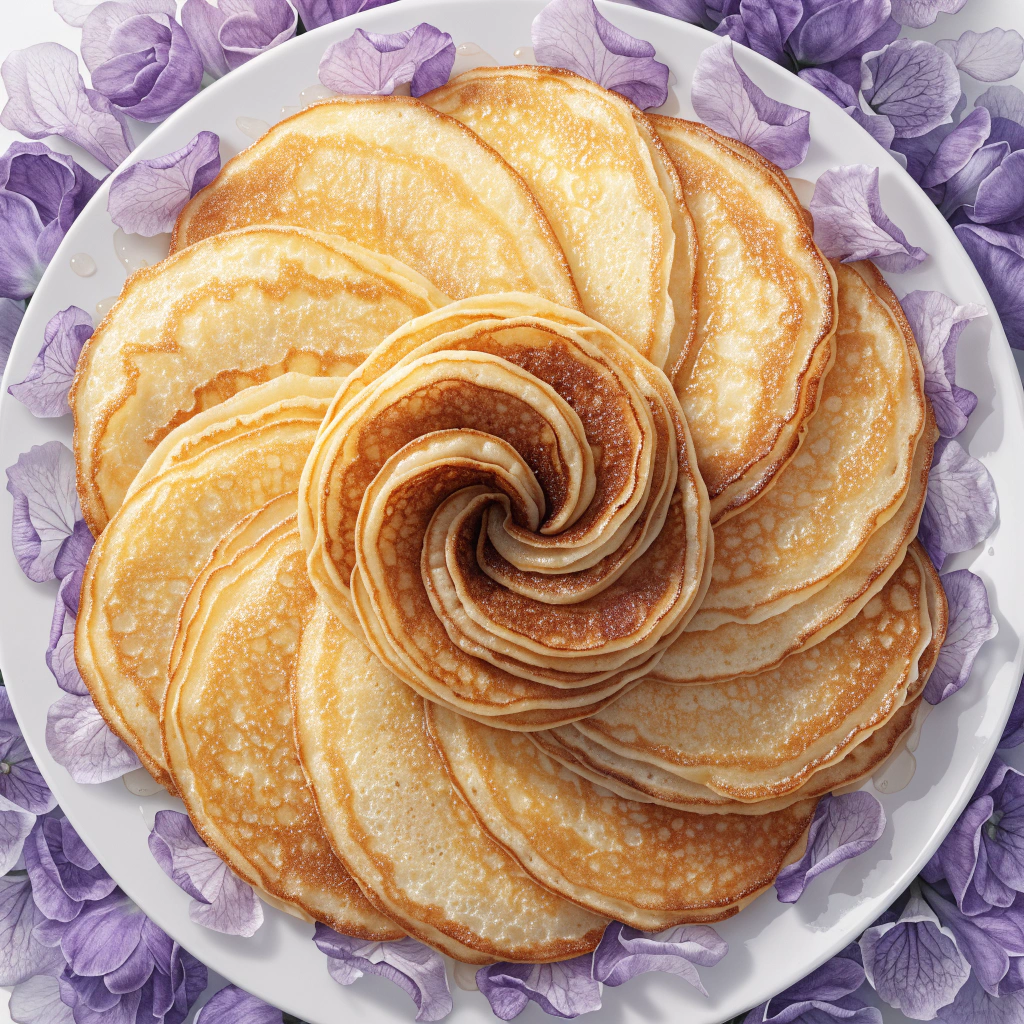
Russian Blini: The Sun Pancakes
Blini are special pancakes from Russia. They are very old. Blini are round and yellow. They look like the sun. In the past, people ate blini to welcome the spring.
Today, Russian people still love blini. They have a big party called Maslenitsa. It is a pancake week. People eat many blini with butter, honey, or jam. They are very delicious and hot. Families eat together at home. Children like blini very much. It is a happy time for everyone.
نکته دستوری
الگو: Present Simple of 'Be'
"Blini are special pancakes from Russia."
We use 'are' with plural subjects like 'Blini' to describe what things are. It is the most common way to state facts.
الگو: Present Simple for Habits
"Families eat together at home."
We use the base form of the verb 'eat' for plural subjects to talk about regular actions or traditions.
درک خود را بسنجید
10 سوال · A1 مبتدی · 1 پیشنمایش رایگان
آنچه از این مقاله آموختید را بسنجید. به همه سؤالات پاسخ دهید و XP کسب کنید!
What are blini?
آیا میخواهید آزمون را تمام کنید؟
9 سؤال دیگر منتظر شماست. ثبتنام رایگان کنید تا آزمون کامل را باز کنید و XP کسب کنید!
ثبتنام رایگانقبلاً ثبتنام کردی؟ ورود
جزئیات سؤالات
What are blini?
پاسخ شما:
پاسخ درست: Russian pancakes
Blini are from Russia.
پاسخ شما:
پاسخ درست: درست
What does 'delicious' mean?
پاسخ شما:
پاسخ درست: Tastes very good
They look like the _____.
پاسخ شما:
پاسخ درست: sun
Blini: The Golden Pancakes of Russia
Blini are very popular in Russia. They are thin, round pancakes. They are an ancient food with a long history. In the past, Russian people thought blini looked like the sun because they are golden and hot. People ate them to welcome the warmth of spring after a long, dark winter.
Today, Russians still love this tradition. Every year, they celebrate a festival called 'Maslenitsa.' It is also known as Pancake Week. During this week, families cook many blini. They are thinner than American pancakes, but they are larger than some other snacks.
Blini are delicious because you can eat them with many things. Some people like sweet blini with honey or jam. Other people prefer salty blini with butter or fish. It is a festive time for everyone. Russians believe that eating blini brings good luck and a happy spring. This traditional food is a big part of Russian culture.
نکته دستوری
الگو: Comparatives
"They are thinner than American pancakes, but they are larger than some other snacks."
We use 'adjective + er + than' to compare two things. For short adjectives like 'thin' and 'large', we add '-er' to show the difference.
الگو: Past Simple
"In the past, Russian people thought blini looked like the sun because they are golden and hot."
The past simple is used for finished actions in the past. 'Thought' is the irregular past form of 'think'.
درک خود را بسنجید
11 سوال · A2 مقدماتی · 1 پیشنمایش رایگان
آنچه از این مقاله آموختید را بسنجید. به همه سؤالات پاسخ دهید و XP کسب کنید!
What did blini represent to people in the past?
آیا میخواهید آزمون را تمام کنید؟
10 سؤال دیگر منتظر شماست. ثبتنام رایگان کنید تا آزمون کامل را باز کنید و XP کسب کنید!
ثبتنام رایگانقبلاً ثبتنام کردی؟ ورود
جزئیات سؤالات
What did blini represent to people in the past?
پاسخ شما:
پاسخ درست: The sun
Maslenitsa is also called Pancake Week.
پاسخ شما:
پاسخ درست: درست
What does 'delicious' mean?
پاسخ شما:
پاسخ درست: Tasting very good
Blini are _____ than American pancakes.
پاسخ شما:
پاسخ درست: thinner
Why do people eat blini during Maslenitsa?
پاسخ شما:
پاسخ درست: To welcome the warmth of spring
The Golden Circles: Why Blini Matter in Russia
Blini are famous Russian pancakes that have been part of the local culture for centuries. Although they look like French crepes, they have a very different history. For many people in Russia, blini are not just a delicious breakfast; they represent the heart of their traditions.
In ancient times, before Christianity arrived, blini were seen as powerful symbols of the sun. Because they are round, golden, and hot, people believed that eating them would bring back warmth after the long, dark winter. This pagan tradition has survived for hundreds of years and is still celebrated today during a special festival called Maslenitsa.
Maslenitsa, which is also known as 'Pancake Week,' is a joyful holiday that takes place just before the start of Great Lent. During this week, many blini are cooked and shared with friends and family. It is a time when people say goodbye to the cold weather. In many cities, large dolls made of straw are burned to signal the end of winter, which is a tradition that many tourists find fascinating.
Blini are usually made from flour, eggs, and milk, but there are many different recipes. They can be served with sweet toppings like honey or jam, or savory ones like sour cream and caviar. In modern Russia, blini have become a popular street food that can be found in almost every city. Whether they are eaten at home or at a festival, blini remain a symbol of hospitality and history.
نکته دستوری
الگو: Passive Voice
"In ancient times, before Christianity arrived, blini were seen as powerful symbols of the sun."
The passive voice is used when the focus is on the action or the object rather than the person performing the action. It is formed using the verb 'to be' (were) and the past participle (seen).
الگو: Present Perfect
"This pagan tradition has survived for hundreds of years and is still celebrated today..."
The present perfect is used for actions that started in the past and continue to the present. It is formed using 'has' or 'have' plus the past participle of the verb.
درک خود را بسنجید
11 سوال · B1 متوسط · 1 پیشنمایش رایگان
آنچه از این مقاله آموختید را بسنجید. به همه سؤالات پاسخ دهید و XP کسب کنید!
Why were blini considered symbols of the sun in ancient times?
آیا میخواهید آزمون را تمام کنید؟
10 سؤال دیگر منتظر شماست. ثبتنام رایگان کنید تا آزمون کامل را باز کنید و XP کسب کنید!
ثبتنام رایگانقبلاً ثبتنام کردی؟ ورود
جزئیات سؤالات
Why were blini considered symbols of the sun in ancient times?
پاسخ شما:
پاسخ درست: Because they are round, golden, and hot
The Maslenitsa festival takes place after Great Lent has finished.
پاسخ شما:
پاسخ درست: نادرست
What does the word 'ancient' mean?
پاسخ شما:
پاسخ درست: Something from a very long time ago
Blini are usually made from _____, eggs, and milk.
پاسخ شما:
پاسخ درست: flour
What is burned during Maslenitsa to signal the end of winter?
پاسخ شما:
پاسخ درست: Straw dolls
The Cultural Significance of Blini: More Than Just a Russian Pancake
In the vast landscape of global culinary traditions, few dishes carry as much historical and symbolic weight as the Russian blini. While they may appear to be simple thin pancakes, blini are widely regarded as a cultural cornerstone that bridges the gap between ancient pagan beliefs and modern social customs. To understand the importance of this dish, one must look beyond the kitchen and into the spiritual history of the Slavic people.
Historically, blini were seen as symbols of the sun due to their round shape, golden color, and warmth. In pre-Christian Russia, they played a vital role in ritualistic celebrations intended to welcome the return of light after the long, grueling winter. This ancient symbolism has survived through the centuries and is most visible today during 'Maslenitsa,' a festive holiday also known as Butter Week or Pancake Week. This event, which occurs during the week before Great Lent begins, marks a significant transition period between the seasons. During Maslenitsa, blini are consumed in large quantities as a final indulgence before the period of fasting and reflection.
From a culinary perspective, the diversity of blini reflects the geographic and social breadth of Russia. They can be served with a variety of accompaniments, ranging from the traditional sour cream and caviar to contemporary sweet fillings like honey or jam. Despite the modernization of Russian society, the preparation of blini remains a deeply personal and familial activity. Traditional recipes have been passed down through generations, ensuring that the essence of the dish remains unchanged even as tastes evolve.
Furthermore, the consumption of blini serves as a powerful tool for social unification. Whether shared among family members at home or purchased from street vendors during public festivals, they encourage communal gathering and celebration. In an era where globalization often threatens local customs, the continued popularity of blini demonstrates how traditional food can maintain a nation's cultural identity. By analyzing the role of blini, we can see that they are not merely a dietary staple but a living link to a shared past, representing resilience, hospitality, and the cyclical nature of life.
نکته دستوری
الگو: Passive Voice
"In pre-Christian Russia, they played a vital role in ritualistic celebrations intended to welcome the return of light."
The passive form 'intended' is used here as a past participle to describe the celebrations. It focuses on the purpose of the event rather than who specifically intended it.
الگو: Non-defining Relative Clauses
"This event, which occurs during the week before Great Lent begins, marks a significant transition period."
The clause starting with 'which' provides extra information about Maslenitsa. It is separated by commas because the sentence remains grammatically correct even without it.
الگو: Present Perfect Passive
"Traditional recipes have been passed down through generations."
This pattern is used to describe an action that started in the past and continues to have an effect today. It uses 'have been' + past participle to show the recipes are the receiver of the action.
درک خود را بسنجید
11 سوال · B2 بالاتر از متوسط · 1 پیشنمایش رایگان
آنچه از این مقاله آموختید را بسنجید. به همه سؤالات پاسخ دهید و XP کسب کنید!
What did blini represent in ancient Russian culture?
آیا میخواهید آزمون را تمام کنید؟
10 سؤال دیگر منتظر شماست. ثبتنام رایگان کنید تا آزمون کامل را باز کنید و XP کسب کنید!
ثبتنام رایگانقبلاً ثبتنام کردی؟ ورود
جزئیات سؤالات
What did blini represent in ancient Russian culture?
پاسخ شما:
پاسخ درست: The sun and the return of light
Maslenitsa takes place after the period of Great Lent has finished.
پاسخ شما:
پاسخ درست: نادرست
What does 'culinary' mean?
پاسخ شما:
پاسخ درست: Related to cooking
Blini are considered a cultural _____ that connects the past with the present.
پاسخ شما:
پاسخ درست: cornerstone
According to the article, why are blini still popular despite globalization?
پاسخ شما:
پاسخ درست: They help maintain a nation's cultural identity.
The Solar Legacy: Decoding the Cultural Semantics of Russian Blini
Seldom has a culinary staple been so inextricably linked to the metaphysical as the Russian blini. To the uninitiated, these thin, golden disks might appear to be mere precursors to the French crepe. However, within the Slavic consciousness, the blini represents a poignant manifestation of historical continuity and cosmic cycles. Rooted in pre-Christian paganism, the blini was originally conceived as a solar symbol. Its circularity, warmth, and golden hue were intended to invoke the sun, marking the ephemeral transition from the harshness of winter to the vitality of spring.
It is this solar association that underscores the blini’s central role during Maslenitsa, or 'Butter Week.' Occurring immediately before the austerity of Great Lent, Maslenitsa serves as a festive precursor where the consumption of blini is not merely for sustenance but is a ritualistic act of welcoming the light. The ubiquitous nature of the dish during this period highlights a fascinating dichotomy between the sacred and the profane. While the festivities are often boisterous, the underlying vestige of ancient belief remains palpable.
Furthermore, the cultural weight of the blini extends far beyond the confines of a single festival. Historically, blini accompanied a person from birth to the grave, being served at both christenings and funeral feasts. In the latter context, they were intended to provide sustenance for the souls of the departed, illustrating the deep-rooted connotations of the dish as a bridge between the physical and spiritual realms. The preservation of these customs, even in the face of rapid urbanization, demonstrates the enduring power of culinary heritage.
Linguistically, the blini has permeated the Russian vernacular, most notably in the idiom 'the first blini is always a lump.' This phrase, used to describe an initial failure or a clumsy start to a new endeavor, reflects the pragmatic wisdom inherent in the culture. The commodification of the blini in contemporary urban environments, through fast-food chains and gourmet iterations, has not entirely eroded its spiritual essence. Modern Russians may consume blini for their gastronomic appeal, yet the collective memory of their ritualistic origins persists.
In conclusion, the blini is much more than a simple batter-based foodstuff. It is a complex cultural artifact that encapsulates the history, philosophy, and social dynamics of Russia. Through the lens of the blini, one can observe the synthesis of pagan tradition and Orthodox practice, the celebration of seasonal change, and the resilience of national identity. To eat a blini is to partake in a tradition that has survived centuries of upheaval, remaining as constant and vital as the sun it once sought to emulate.
نکته دستوری
الگو: Negative Inversion
"Seldom has a culinary staple been so inextricably linked to the metaphysical as the Russian blini."
This structure places a negative adverbial at the beginning of the sentence for emphasis, requiring the auxiliary verb to come before the subject. It is common in formal C1 writing to highlight rarity or significance.
الگو: It-Cleft Sentence
"It is this solar association that underscores the blini’s central role during Maslenitsa."
Cleft sentences are used to focus on specific information, in this case, the cause of the blini's importance. The formula is 'It + is/was + [focused element] + that/who...'
الگو: Nominalization
"The preservation of these customs, even in the face of rapid urbanization, demonstrates the enduring power of culinary heritage."
Nominalization involves turning verbs (preserve) into nouns (preservation). This creates a more objective, academic tone by focusing on concepts and processes rather than actions.
درک خود را بسنجید
12 سوال · C1 پیشرفته · 1 پیشنمایش رایگان
آنچه از این مقاله آموختید را بسنجید. به همه سؤالات پاسخ دهید و XP کسب کنید!
According to the article, what was the primary symbolic meaning of blini in pre-Christian Russia?
آیا میخواهید آزمون را تمام کنید؟
11 سؤال دیگر منتظر شماست. ثبتنام رایگان کنید تا آزمون کامل را باز کنید و XP کسب کنید!
ثبتنام رایگانقبلاً ثبتنام کردی؟ ورود
جزئیات سؤالات
According to the article, what was the primary symbolic meaning of blini in pre-Christian Russia?
پاسخ شما:
پاسخ درست: A representation of the sun
Blini were historically served only during festive celebrations like Maslenitsa.
پاسخ شما:
پاسخ درست: نادرست
Which word describes the quality of being found everywhere?
پاسخ شما:
پاسخ درست: Ubiquitous
The author notes a fascinating _____ between the sacred and the profane aspects of Maslenitsa.
پاسخ شما:
پاسخ درست: dichotomy
What does the idiom 'the first blini is always a lump' imply?
پاسخ شما:
پاسخ درست: Initial attempts at something often fail.
The author argues that modern urbanization has completely destroyed the spiritual meaning of blini.
پاسخ شما:
پاسخ درست: نادرست
The Solar Semiotics of the Blini: A Gastronomic Inquiry into Russian Ontogeny
To perceive the blini merely as a Slavic iteration of the crêpe is to fundamentally misunderstand its ontological significance within the Russian cultural apparatus. Far from being a pedestrian breakfast staple, the blini serves as a vestigial link to a pre-Christian epoch, wherein the sun was not merely an astronomical body but a deity demanding veneration. Were one to examine the historical trajectory of this dish, one would find its roots deeply embedded in the vernal equinox rituals of the early Slavs. The round, golden, and incandescent nature of the blini was intended to mimic the sun, effectively internalizing the warmth of the solar deity to expedite the departure of the Siberian winter. This solar primacy remains sacrosanct, even as the dish was later subsumed into the liturgical calendar of the Orthodox Church.
The most salient manifestation of this tradition is 'Maslenitsa,' colloquially referred to as 'Butter Week.' This period of revelry precedes the Great Lent, acting as a liminal space between the indulgence of the flesh and the asceticism of the fast. It is during Maslenitsa that the blini attains its zenith of importance. One might argue that the consumption of blini during this week is an act of collective defiance against the ephemeral nature of warmth. The sheer conviviality of the festival, marked by the burning of a straw effigy to represent winter’s demise, underscores the blini’s role as a catalyst for communal bonding. Rarely has a culinary object been so burdened with the weight of eschatological transition; it is the bridge between the death of winter and the rebirth of spring.
From a sociological perspective, the preparation of blini is an exercise in precision and inherited wisdom. The batter, often fermented to achieve a subtle tang, requires a nuanced understanding of chemistry and patience. It stands to reason that the textural complexity—at once porous and resilient—reflects the multifaceted nature of the Russian soul. Furthermore, academic hedging is necessary when discussing the 'authentic' blini, as regional variations offer a kaleidoscope of interpretations, from the thick, yeasted varieties of the north to the more diaphanous versions found elsewhere. Nevertheless, the underlying symbolism remains constant. The blini is not merely eaten; it is performed.
In contemporary Russia, while the pagan origins may have receded into the subconscious, the blini continues to exert a hegemony over the national palate. It is a dish that refuses to be relegated to the annals of history. Whether served with the opulence of caviar or the simplicity of soured cream, the blini remains a testament to the enduring power of myth. Had the early Slavs not imbued this simple mixture of flour and milk with such profound solar symbolism, it is unlikely that the dish would have survived the seismic shifts of Russian history. Ultimately, the blini stands as a culinary palimpsest, where layers of pagan ritual, Orthodox tradition, and modern identity are perpetually overlaid, yet never fully erased. It remains, quite literally, a taste of the eternal return.
نکته دستوری
الگو: Inversion for emphasis
"Rarely has a culinary object been so burdened with the weight of eschatological transition."
When negative or restrictive adverbs like 'rarely' start a sentence, the auxiliary verb and subject are inverted. This creates a formal, dramatic, and scholarly tone.
الگو: The Subjunctive Mood
"Were one to examine the historical trajectory of this dish, one would find its roots deeply embedded..."
The 'were' subjunctive is used here to explore a hypothetical scenario in a formal manner. It replaces the 'If I were/If one were' structure to increase academic sophistication.
الگو: Conditional Type 3 (Hypothetical Past)
"Had the early Slavs not imbued this simple mixture of flour and milk with such profound solar symbolism, it is unlikely that the dish would have survived."
This structure uses 'Had + Subject + Past Participle' to discuss a past condition that did not happen. It is a hallmark of C2 level writing for analyzing historical causality.
درک خود را بسنجید
12 سوال · C2 تسلط · 1 پیشنمایش رایگان
آنچه از این مقاله آموختید را بسنجید. به همه سؤالات پاسخ دهید و XP کسب کنید!
What is the primary argument regarding the blini's comparison to the French crêpe?
آیا میخواهید آزمون را تمام کنید؟
11 سؤال دیگر منتظر شماست. ثبتنام رایگان کنید تا آزمون کامل را باز کنید و XP کسب کنید!
ثبتنام رایگانقبلاً ثبتنام کردی؟ ورود
جزئیات سؤالات
What is the primary argument regarding the blini's comparison to the French crêpe?
پاسخ شما:
پاسخ درست: Comparing them purely as food ignores the blini's deep cultural and solar significance.
The blini's association with the sun was a creation of the Orthodox Church to facilitate conversion.
پاسخ شما:
پاسخ درست: نادرست
Which word describes something that is 'too important to be changed or interfered with'?
پاسخ شما:
پاسخ درست: Sacrosanct
The burning of a straw _____ during Maslenitsa symbolizes the end of winter.
پاسخ شما:
پاسخ درست: effigy
The text describes Maslenitsa as a 'liminal space.' What does this imply?
پاسخ شما:
پاسخ درست: It is a transition period between indulgence and religious fasting.
The author suggests that the 'authentic' blini is difficult to define due to regional variations.
پاسخ شما:
پاسخ درست: درست

