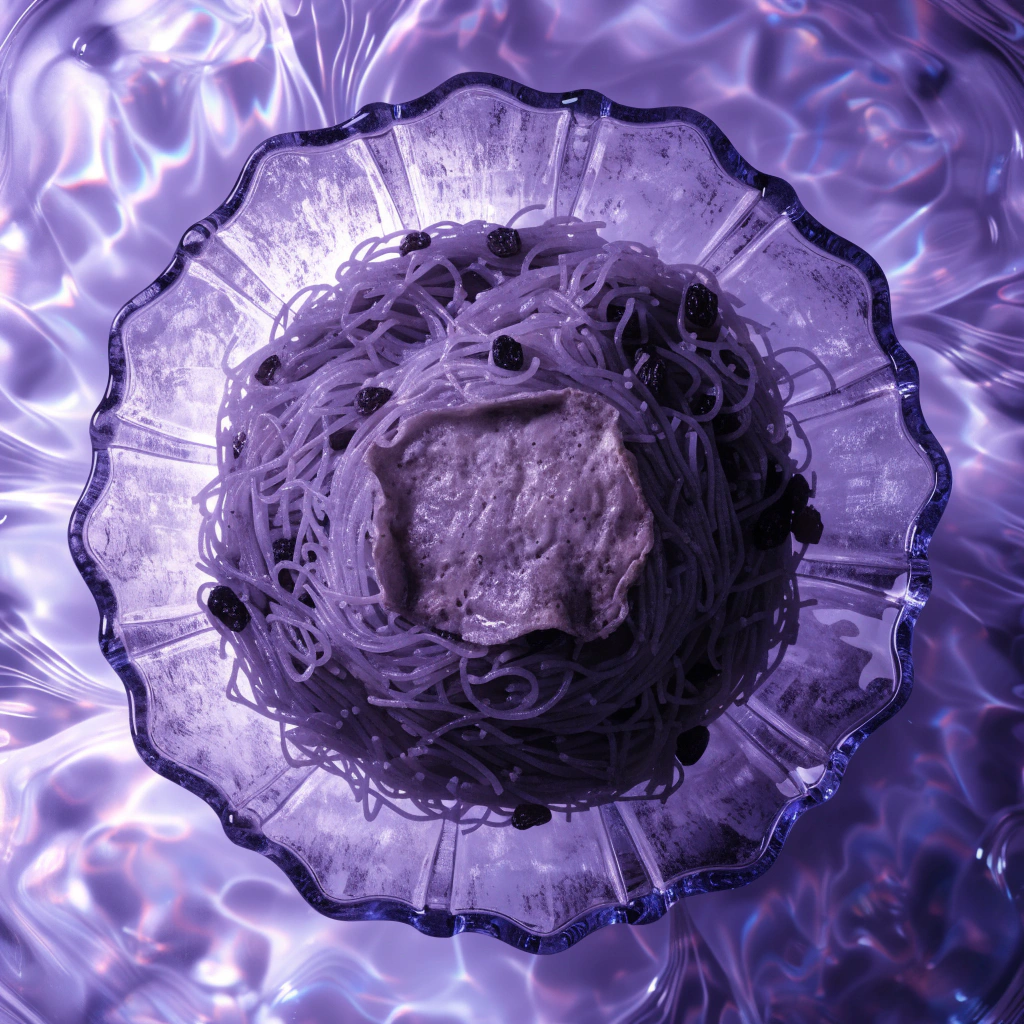
A Special Breakfast in the UAE
Balaleet is a popular food in the United Arab Emirates. People often eat it for breakfast. It is a mix of sweet and salty flavors. It is very delicious.
The dish has two parts. The bottom part is sweet noodles. The noodles have sugar, saffron, and cardamom. The top part is a thin egg omelet. The egg is salty.
Families eat Balaleet on special days like Eid. They also eat it for a light dinner. It is a famous and traditional meal in the UAE.
Point grammaire
Structure: Present Simple (Be)
"Balaleet is a popular food in the United Arab Emirates."
We use 'is' for singular facts and descriptions. It connects the subject to a noun or adjective.
Structure: Present Simple (Habits)
"Families eat Balaleet on special days like Eid."
We use the base form of the verb 'eat' for plural subjects (families) to talk about things people do regularly.
Teste ta compréhension
10 questions · A1 Débutant · 1 aperçu gratuit
Teste ce que tu as appris dans cet article. Réponds à toutes les questions pour gagner des XP !
When do people usually eat Balaleet?
Tu veux terminer le quiz ?
9 questions supplémentaires t'attendent. Inscris-toi gratuitement pour débloquer le quiz complet et gagner des XP !
S'inscrire gratuitementTu as dj un compte ? Connexion
Bien joué !
Continue à pratiquer !
Déjà terminé — pas de XP supplémentaire
Inscris-toi pour gagner des XPDétail des questions
When do people usually eat Balaleet?
Ta réponse:
Bonne réponse: For breakfast
Balaleet is only salty and not sweet.
Ta réponse:
Bonne réponse: Faux
What does 'delicious' mean?
Ta réponse:
Bonne réponse: Very good to eat
Families eat Balaleet on _____ days like Eid.
Ta réponse:
Bonne réponse: special
A Sweet and Salty Breakfast: Balaleet
Balaleet is a famous dish from the United Arab Emirates. It is a special breakfast because it is sweet and salty at the same time. In the past, people only ate it during Eid celebrations, but now it is a popular dinner too.
The dish has two parts. The bottom part has sweet noodles called vermicelli. To make it, the cook toasted the thin noodles until they were brown. Then, they added sugar, cardamom, and saffron. Saffron gave the noodles a beautiful yellow color. On top of the noodles, there is a thin, salty omelet.
Balaleet is very tasty because the flavors are different. The noodles are sweeter than the eggs, but they taste great together. Many people love the smell of the spices in the kitchen. It is one of the most traditional meals in Emirati culture. It is more delicious than many other breakfast dishes because it is unique.
Point grammaire
Structure: Past Simple
"The cook toasted the thin noodles until they were brown."
We use the past simple to talk about completed actions in the past. To form regular verbs, we add '-ed' to the base verb like 'toast' becoming 'toasted'.
Structure: Comparatives
"The noodles are sweeter than the eggs..."
We use comparatives to compare two things. For short adjectives, we add '-er' and use the word 'than' after it.
Teste ta compréhension
11 questions · A2 mentaire · 1 aperçu gratuit
Teste ce que tu as appris dans cet article. Réponds à toutes les questions pour gagner des XP !
When did people traditionally eat Balaleet in the past?
Tu veux terminer le quiz ?
10 questions supplémentaires t'attendent. Inscris-toi gratuitement pour débloquer le quiz complet et gagner des XP !
S'inscrire gratuitementTu as dj un compte ? Connexion
Bien joué !
Continue à pratiquer !
Déjà terminé — pas de XP supplémentaire
Inscris-toi pour gagner des XPDétail des questions
When did people traditionally eat Balaleet in the past?
Ta réponse:
Bonne réponse: During Eid celebrations
Balaleet is a dish that is only sweet.
Ta réponse:
Bonne réponse: Faux
What does the word 'salty' mean?
Ta réponse:
Bonne réponse: Tasting of salt
The noodles are _____ than the eggs.
Ta réponse:
Bonne réponse: sweeter
What gives the noodles a yellow color?
Ta réponse:
Bonne réponse: Saffron
Balaleet: A Sweet and Savory Emirati Tradition
Balaleet is a traditional Emirati dish that has become a symbol of hospitality in the United Arab Emirates. It is a unique meal because it combines sweet and savory flavors in one bowl. Most people eat it for breakfast, but it is also frequently served as a light dinner for guests.
The main part of the dish is vermicelli, which is a type of very thin pasta. To prepare the dish, the noodles are first toasted in a pan until they turn golden brown. Then, they are boiled and mixed with sugar, cardamom, and saffron. These ingredients give the noodles a beautiful yellow color and a wonderful smell. Finally, the sweet vermicelli is topped with a thin, salty omelet. This contrast between the sugary noodles and the eggs is what makes the dish special.
Balaleet has been a favorite choice for special occasions for many years. It is particularly popular during the festive mornings of Eid Al-Fitr and Eid Al-Adha. Families gather together to share this meal after their morning prayers. While some visitors might find the mix of sugar and eggs unusual, Emiratis believe the balance of flavors is perfect.
In modern times, the recipe has been passed down through many generations. Although there are now different ways to make it, the traditional taste remains the same. If you visit a local home in the UAE, you will likely be offered a plate of this delicious dish. It is a great example of how different ingredients, which might seem strange together, can create something truly special.
Point grammaire
Structure: Present Perfect
"Balaleet has been a favorite choice for special occasions for many years."
We use the present perfect (have/has + past participle) to talk about actions that started in the past and continue to the present. In this sentence, it shows that the dish's popularity started long ago and is still true today.
Structure: Passive Voice
"To prepare the dish, the noodles are first toasted in a pan."
The passive voice (be + past participle) is used when the action is more important than the person doing it. Here, it focuses on what happens to the noodles during the cooking process.
Teste ta compréhension
11 questions · B1 Intermédiaire · 1 aperçu gratuit
Teste ce que tu as appris dans cet article. Réponds à toutes les questions pour gagner des XP !
What is unique about the flavor of Balaleet?
Tu veux terminer le quiz ?
10 questions supplémentaires t'attendent. Inscris-toi gratuitement pour débloquer le quiz complet et gagner des XP !
S'inscrire gratuitementTu as dj un compte ? Connexion
Bien joué !
Continue à pratiquer !
Déjà terminé — pas de XP supplémentaire
Inscris-toi pour gagner des XPDétail des questions
What is unique about the flavor of Balaleet?
Ta réponse:
Bonne réponse: It combines sweet and savory flavors
Balaleet is often served during Eid celebrations.
Ta réponse:
Bonne réponse: Vrai
What does 'savory' mean?
Ta réponse:
Bonne réponse: Tasting of salt or spices
The noodles are mixed with sugar, cardamom, and _____.
Ta réponse:
Bonne réponse: saffron
What is placed on top of the sweet noodles?
Ta réponse:
Bonne réponse: A thin, salty omelet
Balaleet: A Symphony of Sweet and Savory in Emirati Culinary Heritage
Balaleet represents a sophisticated intersection of flavors within the Emirati culinary heritage. This traditional dish, which is characterized by its unique combination of sweet and savory elements, serves as a testament to the intricate history of trade in the Arabian Peninsula. At its core, Balaleet is a breakfast staple, though its presence is most prominent during festive occasions such as Eid Al-Fitr and Eid Al-Adha. It reflects the region's ability to harmonize diverse ingredients into a singular, cohesive experience.
The preparation of Balaleet is a meticulous process that requires precision to achieve the desired texture and flavor profile. The vermicelli is first lightly toasted until it achieves a golden hue, providing a nutty depth that contrasts with the sweetness to follow. Subsequently, the noodles are boiled briefly and then infused with an aromatic blend of sugar, cardamom, and saffron. These spices are not merely additives; they are integral components that elevate the dish, offering a fragrant complexity that is synonymous with Gulf hospitality.
What distinguishes Balaleet from other regional pasta dishes is the addition of a thin, savory omelet placed atop the sweetened vermicelli. This layer is often seasoned simply with salt and black pepper, creating a bold contrast that challenges the conventional boundaries of breakfast cuisine. To the uninitiated, the fusion of sugary noodles and salty eggs might seem unconventional; however, for the Emirati community, it is a cherished manifestation of cultural identity. The dish illustrates how historical trade routes brought spices and pasta to the region, which were then adapted to local tastes.
Furthermore, Balaleet has remained a staple of the local diet for generations because of its versatile nature. While it is traditionally served warm for breakfast, it is equally enjoyed as a light dinner or even a cold dessert in some contemporary variations. In modern UAE society, while international food trends continue to influence local dining habits, the enduring popularity of Balaleet signifies a deep-rooted respect for tradition. It is not merely a meal; it is a cultural bridge that connects the past with the present, ensuring that the essence of Emirati hospitality is preserved for future generations. As families gather around the table during celebrations, the golden strands of Balaleet continue to represent the warmth and richness of the nation's history.
Point grammaire
Structure: Passive Voice
"The vermicelli is first lightly toasted until it achieves a golden hue..."
The passive voice is used here to focus on the action being performed on the food rather than the person cooking it. It is formed using 'to be' + past participle.
Structure: Relative Clauses
"This traditional dish, which is characterized by its unique combination of sweet and savory elements, serves as a testament..."
Non-defining relative clauses provide extra information about a noun. They are separated by commas and use 'which' for objects or 'who' for people.
Structure: Present Perfect Simple
"Balaleet has remained a staple of the local diet for generations..."
The present perfect is used to describe a state or action that started in the past and continues to the present day. It emphasizes the continuity of the tradition.
Teste ta compréhension
11 questions · B2 Intermédiaire supérieur · 1 aperçu gratuit
Teste ce que tu as appris dans cet article. Réponds à toutes les questions pour gagner des XP !
According to the article, what historical factor influenced the ingredients of Balaleet?
Tu veux terminer le quiz ?
10 questions supplémentaires t'attendent. Inscris-toi gratuitement pour débloquer le quiz complet et gagner des XP !
S'inscrire gratuitementTu as dj un compte ? Connexion
Bien joué !
Continue à pratiquer !
Déjà terminé — pas de XP supplémentaire
Inscris-toi pour gagner des XPDétail des questions
According to the article, what historical factor influenced the ingredients of Balaleet?
Ta réponse:
Bonne réponse: Historical trade routes
Balaleet is exclusively served as a breakfast dish and is never eaten at other times.
Ta réponse:
Bonne réponse: Faux
What does 'intricate' mean in the context of the article?
Ta réponse:
Bonne réponse: Highly detailed and complex
The vermicelli is infused with an _____ blend of sugar, cardamom, and saffron.
Ta réponse:
Bonne réponse: aromatic
What is the primary function of the omelet in Balaleet?
Ta réponse:
Bonne réponse: To provide a savory contrast to the sweet vermicelli
L'Énigme Gustative du Balaleet : Une Odyssée entre Douceur et Salinité
Au sein de la mosaïque culinaire des Émirats arabes unis, peu de mets suscitent autant de fascination que le Balaleet. Ce plat, véritable emblème de l'hospitalité khaleeji, incarne une audace gastronomique qui défie les conventions occidentales : l'union sacrée du sucré et du salé. Si, pour un palais non averti, l'idée de marier des vermicelles sirupeux à une omelette salée peut paraître déconcertante, c'est pourtant dans cette antinomie que s'exprime toute la subtilité d'un héritage séculaire. La sophistication de ce plat ne saurait être réduite à une simple juxtaposition de saveurs ; elle est le fruit d'une alchimie précise entre textures et arômes.
La genèse du Balaleet repose sur une préparation méticuleuse, dont la rigueur confine à l'orfèvrerie. La torréfaction préalable des vermicelles constitue l'étape cruciale. Non seulement cette technique confère-t-elle aux pâtes une teinte ambrée et une texture croquante, mais elle exalte également des arômes de noisette qui serviront de socle aux épices. Une fois bouillies al dente, ces pâtes sont imprégnées d'un mélange capiteux de sucre, de cardamome et de safran, souvent rehaussé d'une touche d'eau de rose. C'est ici que s'opère la magie : le safran infuse le plat d'une couleur dorée et d'un parfum terreux, tandis que la cardamome apporte une fraîcheur mentholée.
Cependant, le Balaleet ne serait complet sans son contrepoint salé. Une omelette fine, simplement assaisonnée de sel, vient couronner les vermicelles. Cette superposition n'est pas fortuite ; elle crée un dialogue textuel et gustatif où la fermeté de l'œuf tempère la succulence des pâtes. La dégustation devient alors une exploration de contrastes, un paroxysme sensoriel où chaque bouchée oscille entre la douceur d'un dessert et la vigueur d'un plat de résistance. Rarement un plat aura-t-il su capturer avec autant de justesse l'âme d'une nation, oscillant perpétuellement entre tradition immuable et ouverture sur le monde.
Sur le plan socioculturel, la présence du Balaleet sur les tables émiraties lors de l'Aïd el-Fitr ou de l'Aïd el-Adha n'est pas anodine. C’est dans ce partage matinal, après les prières festives, que le plat acquiert sa dimension symbolique. Il représente le faste des jours de fête, tout en rappelant la résilience des populations bédouines qui savaient tirer parti des denrées précieuses issues du commerce maritime. Le syncrétisme des ingrédients — le sucre venu d'Inde, le safran d'Iran et les pâtes d'influence méditerranéenne — témoigne de la position historique des Émirats comme carrefour des civilisations.
En définitive, le Balaleet est bien plus qu'une simple curiosité culinaire. Il est le reflet d'une identité qui refuse les dichotomies simplistes. À travers l'analyse de sa structure, on perçoit une volonté d'équilibre. Bien que les tendances gastronomiques mondiales évoluent, ce pilier du petit-déjeuner émirati demeure inébranlable, prouvant que la tradition, lorsqu'elle est exécutée avec une telle maîtrise, transcende les époques.
Point grammaire
Structure: L'inversion du sujet après certains adverbes
"Non seulement cette technique confère-t-elle aux pâtes une teinte ambrée..."
En français soutenu, l'utilisation de 'Non seulement' en début de phrase entraîne souvent une inversion du sujet pour souligner l'emphase.
Structure: La structure clivée (C'est... que/qui)
"C'est dans ce partage matinal [...] que le plat acquiert sa dimension symbolique."
Cette structure permet de mettre en relief un élément précis de la phrase, ici le moment du partage, pour insister sur son importance.
Structure: La nominalisation
"La torréfaction préalable des vermicelles constitue l'étape cruciale."
L'usage de noms au lieu de verbes ('la torréfaction' au lieu de 'torréfier') permet de densifier le discours et de lui donner un ton plus académique et analytique.
Teste ta compréhension
12 questions · C1 Avancé · 1 aperçu gratuit
Teste ce que tu as appris dans cet article. Réponds à toutes les questions pour gagner des XP !
Quelle est la principale caractéristique gustative du Balaleet selon l'article ?
Tu veux terminer le quiz ?
11 questions supplémentaires t'attendent. Inscris-toi gratuitement pour débloquer le quiz complet et gagner des XP !
S'inscrire gratuitementTu as dj un compte ? Connexion
Bien joué !
Continue à pratiquer !
Déjà terminé — pas de XP supplémentaire
Inscris-toi pour gagner des XPDétail des questions
Quelle est la principale caractéristique gustative du Balaleet selon l'article ?
Ta réponse:
Bonne réponse: L'équilibre entre le sucré et le salé
La torréfaction des vermicelles est une étape facultative de la recette.
Ta réponse:
Bonne réponse: Faux
Que signifie le terme 'syncrétisme' dans ce contexte ?
Ta réponse:
Bonne réponse: Une fusion d'influences culturelles diverses
Le Balaleet est couronné d'une fine _____ salée.
Ta réponse:
Bonne réponse: omelette
À quelle occasion le Balaleet est-il traditionnellement servi ?
Ta réponse:
Bonne réponse: Pendant les jours de fête comme l'Aïd
L'article suggère que le Balaleet reflète l'histoire commerciale des Émirats.
Ta réponse:
Bonne réponse: Vrai
The Gastronomic Paradox: An Analytical Deconstruction of Emirati Balaleet
The culinary landscape of the United Arab Emirates serves as a profound testament to the historical confluence of trade routes, migration, and cultural synthesis. At the heart of this gastronomic heritage lies Balaleet, a dish that arguably represents the quintessential Emirati breakfast. To the uninitiated, Balaleet presents a seemingly paradoxical juxtaposition of flavor profiles: the unapologetic sweetness of sugar-dusted vermicelli noodles, infused with the ethereal aromatics of saffron and cardamom, set against the savory, protein-rich foundation of a seasoned omelet. This interplay of disparate elements is not merely a quirk of local taste but a sophisticated reflection of the region's socio-cultural evolution.
Scholars of food history posit that the origins of Balaleet are intrinsically linked to the spice trade that once flourished across the Indian Ocean. The vermicelli, ostensibly a product of early global trade, serves as a canvas for the more localized nuances of Gulf spices. Were one to scrutinize the textural composition of the dish, one would observe a meticulously achieved balance. The noodles are first parboiled or toasted—a process that must be executed with extreme precision lest the structure of the pasta collapse into an unappealing mass. This foundational layer is then sweetened and perfumed, creating a sensory experience that is as olfactory as it is gustatory.
However, it is the inclusion of the egg that elevates Balaleet from a mere dessert to a complex meal. The omelet, often seasoned with little more than salt and perhaps a hint of black pepper, acts as a functional counterbalance to the saccharine intensity of the noodles. This dichotomy between the sweet and the savory is a hallmark of many traditional Emirati dishes, yet Balaleet remains perhaps the most illustrative example. It is frequently suggested that this combination provided the necessary caloric density and nutritional variety required for the rigorous lifestyle of pearl divers and desert dwellers of previous centuries.
In contemporary Emirati society, the consumption of Balaleet is imbued with a sense of ritualistic significance. While it is a staple of everyday breakfast tables, its presence is mandatory during the festive mornings of Eid Al-Fitr and Eid Al-Adha. On such occasions, the dish functions as a social glue, facilitating communal bonding and reinforcing a shared identity. The preparation of Balaleet is often a didactic process, passed down through generations, where the subtle ratios of saffron to rosewater are debated with academic fervor.
Furthermore, the dish can be viewed as a culinary palimpsest, where layers of historical influence remain visible beneath the surface of modern presentation. There is a certain academic hedging required when discussing its 'original' form, as various coastal regions within the UAE may introduce slight deviations in spicing or technique. Some may argue that the addition of rosewater is essential, while others might contend that the cardamom should remain the dominant aromatic note. Regardless of these regional idiosyncrasies, the core identity of Balaleet remains unshakable.
Ultimately, Balaleet is more than a mere breakfast item; it is an analytical window into the Emirati psyche. It represents a culture that embraces complexity and finds harmony in contradiction. Seldom does a dish manage to bridge the gap between the ancient spice routes and the high-tech kitchens of modern Dubai so effortlessly. To consume Balaleet is to engage with a history that is simultaneously ephemeral in its aromas and enduring in its cultural resonance. It is imperative that the modern diner approach this dish not merely as sustenance, but as a sophisticated dialogue between the past and the present, where every bite reveals a nuanced chapter of the Arabian narrative.
Point grammaire
Structure: Subject-Auxiliary Inversion with Negative Adverbs
"Seldom does a dish manage to bridge the gap between the ancient spice routes and the high-tech kitchens of modern Dubai so effortlessly."
In formal C2 English, when a sentence begins with a negative or restrictive adverb like 'seldom', 'rarely', or 'never', the subject and the auxiliary verb are inverted to add emphasis and rhetorical weight.
Structure: Hypothetical Conditionals with 'Were'
"Were one to scrutinize the textural composition of the dish, one would observe a meticulously achieved balance."
This structure is a formal alternative to 'If one were to...'. It utilizes the subjunctive 'were' at the beginning of the clause to express a hypothetical or scholarly observation.
Structure: The Mandative Subjunctive
"It is imperative that the modern diner approach this dish not merely as sustenance, but as a sophisticated dialogue."
The subjunctive mood is used after adjectives expressing urgency or importance (e.g., imperative, essential). The verb 'approach' remains in its base form regardless of the subject.
Teste ta compréhension
12 questions · C2 Maîtrise · 1 aperçu gratuit
Teste ce que tu as appris dans cet article. Réponds à toutes les questions pour gagner des XP !
According to the article, what does the 'paradoxical juxtaposition' in Balaleet refer to?
Tu veux terminer le quiz ?
11 questions supplémentaires t'attendent. Inscris-toi gratuitement pour débloquer le quiz complet et gagner des XP !
S'inscrire gratuitementTu as dj un compte ? Connexion
Bien joué !
Continue à pratiquer !
Déjà terminé — pas de XP supplémentaire
Inscris-toi pour gagner des XPDétail des questions
According to the article, what does the 'paradoxical juxtaposition' in Balaleet refer to?
Ta réponse:
Bonne réponse: The combination of sweet vermicelli and a savory omelet.
The author suggests that the origins of Balaleet are entirely local and unaffected by international trade.
Ta réponse:
Bonne réponse: Faux
Which word describes something that has layers of history visible beneath its current state?
Ta réponse:
Bonne réponse: Palimpsest
The preparation of Balaleet is described as a _____ process, meaning it is used to teach and pass down cultural traditions.
Ta réponse:
Bonne réponse: didactic
What role does the omelet play in the dish's flavor profile?
Ta réponse:
Bonne réponse: It serves as a functional counterbalance to the sweetness.
The article claims that there is some academic uncertainty regarding the 'original' form of Balaleet due to regional variations.
Ta réponse:
Bonne réponse: Vrai

