isildur en 30 secondes
- Isildur is a legendary king from Tolkien's Middle-earth who famously defeated Sauron but failed to destroy the One Ring, leading to his tragic death.
- The name is a Quenya compound meaning 'Servant of the Moon,' reflecting the celestial naming traditions of the noble Númenórean bloodline in fantasy literature.
- In the 21st century, 'Isildur1' became the most famous anonymous pseudonym in online poker history, belonging to the aggressive Swedish pro Viktor Blom.
- Metaphorically, the name represents a 'heroic failure' or a person who achieves a great victory but is ultimately undone by a single, significant temptation.
The term Isildur primarily functions as a proper noun with two distinct yet culturally significant identities. In the realm of literature and cinematic history, Isildur is a central figure in J.R.R. Tolkien's Middle-earth legendarium. He was the High King of Gondor and Arnor, the son of Elendil, and the man who famously severed the One Ring from the hand of the Dark Lord Sauron during the War of the Last Alliance. His name carries the weight of both heroic triumph and tragic fallibility, as he famously refused to destroy the Ring in the fires of Mount Doom, leading to his eventual demise and the Ring's long disappearance. This duality makes the name a symbol of the 'human' capacity for greatness and the inherent weakness toward temptation.
- Literary Context
- In Tolkien's 'The Lord of the Rings,' Isildur represents the 'Bane' of the Ring and the legacy of the Dúnedain. His actions set the stage for the entire Third Age.
In a modern, digital context, the name gained a second life through the pseudonym Isildur1. This was the screen name used by the Swedish professional poker player Viktor Blom. During the late 2000s, 'Isildur1' became a sensation in the online poker world, participating in the largest pots in history and maintaining an anonymous, aggressive, and fearless persona that captivated millions. Thus, in contemporary conversation, especially within gaming or gambling circles, 'Isildur' might refer to high-stakes risk-taking, sudden rises to fame, or the archetypal 'aggressive' player who plays without fear of loss.
The professor noted that Isildur serves as a cautionary tale about the corrupting influence of power, even upon the most noble of kings.
The name is also used metaphorically. To describe someone as an 'Isildur' might imply they have achieved a great victory but are currently holding onto something that will eventually lead to their downfall. It suggests a character who is brave and capable but ultimately 'human' in their flaws. In the Quenya language (a fictional language created by Tolkien), the name translates to 'Servant of the Moon,' reflecting the celestial themes common in the naming of the Númenórean royalty.
- Etymological Roots
- Derived from 'Isil' (Moon) and '-dur' (servant), it connects the character to the celestial lore of the Eldar and the Edain.
Watching the high-stakes table felt like watching Isildur at the peak of his 2009 heater.
Furthermore, the name is frequently invoked in discussions about 'legacy.' Isildur's bloodline is what allows Aragorn to claim the throne of Gondor. Therefore, the name is synonymous with the 'Heir of Isildur' trope—the idea of a long-lost lineage returning to reclaim its glory. In fan communities, debates often center on whether Isildur was truly 'evil' for keeping the Ring or simply a victim of its overwhelming supernatural allure, making the name a focal point for moral philosophy within fantasy literature.
Without the failure of Isildur, the quest of the Fellowship would never have been necessary.
- Symbolism
- The Broken Sword (Narsil) and the White Tree are both symbols deeply tied to Isildur's narrative of survival and continuity.
He played the hand with the reckless abandon of Isildur facing down a million-dollar bluff.
In summary, whether you are analyzing the fall of a fictional king or the rise of a poker phenomenon, 'Isildur' evokes themes of high stakes, historical consequence, and the thin line between legendary success and catastrophic failure. It is a name that resonates across different subcultures, from high-fantasy enthusiasts to professional gamblers, representing the enduring power of myth-making in both fiction and real-world digital history.
Using the name Isildur requires an understanding of its specific contexts. Since it is a proper noun, it is always capitalized. Most commonly, it is used as the subject or object of a sentence describing historical or fictional events. However, its use as a comparative tool or a metaphorical descriptor is where the word truly enriches one's vocabulary. When discussing literature, you might use it to discuss character arcs: 'The tragedy of Isildur lies in his inability to cast the Ring into the fire.' Here, the name acts as a placeholder for the concept of 'noble failure.'
- Subjective Use
- 'Isildur founded the kingdom of Gondor alongside his brother Anárion.'
In the context of the poker world, the name is often used to describe a specific style of play. You might say, 'He went full Isildur on that river bet,' implying a massive, perhaps over-aggressive risk. In this sense, the name is being used almost as an adverbial phrase to describe a manner of action. It suggests a lack of fear and a willingness to put everything on the line. This usage is common in forums, live streams, and strategy discussions within the gambling community.
The protagonist's decision to keep the stolen data was his Isildur moment—the point where he chose personal gain over the greater good.
When writing about history or genealogy within a fictional framework, the name is often possessive. 'Isildur's Bane' is a famous kenning for the One Ring. Using the possessive form allows you to link the character to the objects and consequences they left behind. 'Isildur's mistake,' 'Isildur's lineage,' and 'Isildur's sword' are all common phrases that carry significant narrative weight. In academic discussions of Tolkien's work, you might see the name used to compare different eras: 'The era of Isildur was one of transition from the glory of Númenor to the struggles of Middle-earth.'
- Possessive Use
- 'Isildur's refusal to destroy the Ring is the catalyst for the entire Lord of the Rings trilogy.'
Many fans debated whether the new player was the next Isildur, capable of shaking up the high-stakes world.
In informal settings, particularly among fans of fantasy, the name can be used as a shorthand for 'the guy who messed up.' For example: 'Don't be an Isildur; just throw the trash away like you said you would.' While humorous, this shows how the name has permeated the collective consciousness as a symbol of failing to follow through on a necessary task. It is important to gauge your audience; while a Tolkien fan will understand the reference, someone outside that circle might be confused by the specific cultural baggage the name carries.
The legend of Isildur is told in the opening prologue of the film to establish the stakes of the world.
- Metaphorical Use
- 'The CEO's Isildur-like grip on his shares eventually led to the company's hostile takeover.'
He cut the ring from the dark lord's hand, but Isildur could not find the strength to destroy it.
Finally, when discussing the poker player, the name is often used with the '1' suffix (Isildur1). 'Isildur1's identity remained a mystery for years.' This usage highlights the digital-native aspect of the name, where it represents an avatar or a brand rather than a historical figure. Whether you are using it to discuss the 'Isildur1' effect on poker liquidity or Isildur's role in the downfall of the Northern Kingdom, the name serves as a powerful anchor for narratives of high drama and lasting impact.
The name Isildur is most frequently heard in environments where 'geek culture,' literature, or professional gambling intersect. If you are in a bookstore, specifically in the science fiction and fantasy section, you will likely hear it during discussions of Tolkien’s 'The Silmarillion' or 'The Lord of the Rings.' Fans often debate his motivations, his relationship with his father Elendil, and his ultimate fate at the Gladden Fields. In these settings, the name is spoken with a sense of historical reverence, as if discussing a real ancient king.
- Cinematic Context
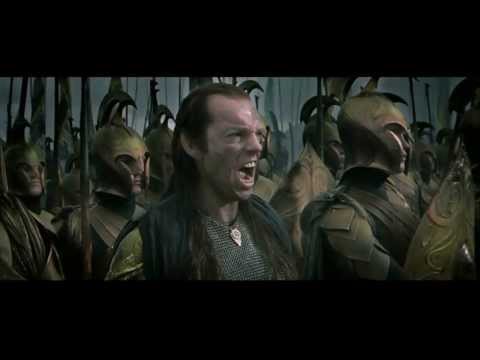
- In the opening minutes of Peter Jackson's 'The Fellowship of the Ring,' the narrator Galadriel mentions Isildur multiple times, cementing the name in the minds of millions of moviegoers.
Another major arena for this word is the world of online gaming and poker. On platforms like Twitch or YouTube, during high-stakes poker streams, commentators often reference 'Isildur1' when a player makes a particularly bold or aggressive move. You might hear a commentator say, 'That’s a classic Isildur move,' or 'He’s playing like it’s 2009 and he’s Isildur1.' In this context, the name has become a synonym for a specific, high-variance style of play that prioritizes pressure and psychological dominance over conservative strategy.
'The strength of men failed that day,' Elrond said, recalling the moment Isildur turned away from the fire.
In academic settings, particularly in 'Tolkien Studies' or 'Medievalism' courses, the name Isildur is analyzed as a bridge between the heroic age and the age of decline. Professors might discuss how Isildur’s character reflects Anglo-Saxon or Norse mythological influences. You might hear it in a lecture about 'The Fall of Kings' or 'The Corruption of the Ring.' Here, the name is used to explore themes of moral failure and the cyclical nature of history. It is a word that carries academic weight in the study of modern mythology.
- Pop Culture References
- The name appears in trivia games, crossword puzzles, and even as a name for pets or children among dedicated fans of the series.
During the poker boom, every young player wanted to know who the mysterious Isildur was.
Furthermore, with the release of high-budget television series like 'The Rings of Power,' the name Isildur has entered the mainstream conversation once again. You will hear it in TV reviews, podcasts, and social media discussions. Fans analyze the younger version of the character, discussing his journey from a sailor to a king. This has led to a resurgence of the name in daily pop-culture discourse, making it recognizable even to those who haven't read the original books. It is a name that spans generations of media, from 1950s literature to 2020s streaming services.
The news report mentioned that the poker legend Isildur had finally revealed his true identity to the world.
- Gaming Handles
- In MMOs like World of Warcraft, 'Isildur' and its variations are among the most common character names, showing its popularity in the gaming community.
The museum exhibit on fantasy literature featured a replica of the Ring that Isildur once held.
In conclusion, you hear 'Isildur' whenever people discuss the intersection of myth, risk, and legacy. It is a name that functions as a cultural touchstone, whether it's being used to describe a tragic literary hero or a fearless digital gambler. Its presence in films, books, TV shows, and online forums ensures that it remains a vibrant part of the modern English lexicon, particularly within specialized communities of interest.
One of the most frequent mistakes people make with the name Isildur is mispronunciation. Many English speakers tend to place the stress on the first syllable ('IH-sil-dur') or the last ('ih-sil-DUR'). However, according to Tolkien's own linguistic rules for Quenya and Sindarin, the stress should fall on the penultimate syllable: 'ih-SIL-dur.' Getting this right is a hallmark of a well-informed fan or scholar. Mispronouncing it in a dedicated community can immediately mark one as a newcomer to the lore.
- Pronunciation Error
- Saying 'EYE-sil-dur' instead of 'ih-SIL-dur.' The 'I' is short, like in 'it.'
Another common error is confusing Isildur with other characters from the same mythos, particularly his father Elendil or his descendant Aragorn. While they are all part of the same lineage, their roles are very different. Isildur is specifically the one who *kept* the Ring, whereas Elendil was the one who died fighting Sauron, and Aragorn was the one who finally redeemed the bloodline. Referring to Aragorn as 'Isildur' in a literary analysis would be a factual error that undermines the speaker's argument about redemption and heritage.
The student incorrectly wrote that Isildur was the one who destroyed the Ring, missing the entire point of the character's tragic flaw.
In the poker context, a common mistake is assuming 'Isildur' is a generic term for any aggressive player. While it is used that way colloquially, it specifically refers to the legend of Viktor Blom. Using it to describe a player who is simply 'bad' or 'reckless' without the skill level associated with Blom is a misuse of the term. 'Isildur' implies a high level of talent combined with extreme aggression, not just mindless gambling. Understanding this nuance is key to using the name correctly in gambling circles.
- Contextual Confusion
- Using the name in a business meeting without context. Unless your colleagues are Tolkien fans, they won't understand the 'Isildur's Bane' metaphor.
Don't confuse Isildur with Elendil; one represents the end of an era, the other the beginning of a struggle.
Spelling is also a frequent pitfall. You might see 'Isildore,' 'Isildur1,' or 'Isyldur.' The correct spelling in Tolkien's works is always 'Isildur.' The 'u' is important, as it follows the Quenya naming conventions. In the poker world, the '1' is often omitted in casual speech but is technically part of the original screen name. When writing formally, stick to the standard spelling to maintain credibility. Additionally, some people mistakenly think Isildur was an Elf because of his name and longevity; he was, in fact, a Man (a Númenórean), which is a vital distinction in the lore.
He misspelled Isildur as 'Isildore' in his fan fiction, which bothered the more dedicated readers.
- Lore Inaccuracy
- Claiming Isildur was 'evil.' In Tolkien's view, he was a tragic hero overcome by a power beyond his control, not a villain.
The commentator made a mistake by calling the player Isildur when he was actually playing a very tight, conservative game.
Lastly, avoid using the name as a verb unless you are in a very specific, informal subculture. Saying 'He Isildured the situation' is not standard English and will likely be misunderstood. Instead, use it as an adjective ('an Isildur-like decision') or a noun. By avoiding these common pitfalls—mispronunciation, factual confusion, spelling errors, and improper verbing—you can use the name 'Isildur' with the precision and authority of a true scholar or enthusiast.
When looking for alternatives to Isildur, one must first decide which aspect of the name they wish to replicate. If you are looking for other names of tragic heroes in literature, words like Oedipus, Macbeth, or Boromir come to mind. Boromir is particularly relevant as he is another Tolkien character who succumbed to the temptation of the Ring, though his story is one of immediate redemption through sacrifice, whereas Isildur's redemption came only through his lineage thousands of years later.
- Boromir vs. Isildur
- Both are noble men of Gondor tempted by the Ring. Boromir's failure is short-lived and redeemed in battle; Isildur's failure defines an entire age.
In terms of the 'High King' or 'Ancient Hero' archetype, alternatives include Gil-galad, Elendil, or even Arthur (from Arthurian legend). These names evoke a sense of mythic past and lost grandeur. If you are writing a story and want a name that sounds similar in linguistic structure, you might look at other Quenya-inspired names like Anárion or Eärendil. These names share the melodic, vowel-heavy quality of Tolkien's constructed languages.
While Isildur represents the failure of man, Aragorn represents his potential for renewal.
In the world of poker and high-stakes competition, alternatives to 'Isildur' (referring to Viktor Blom) might include names like Phil Ivey, Tom Dwan (durrrr), or Stu Ungar. Each of these names carries a specific 'vibe.' Phil Ivey represents cold, calculated perfection; Tom Dwan represents creative, hyper-aggressive 'new school' play; and Stu Ungar represents tragic genius. Choosing 'Isildur' specifically highlights the 'mysterious, aggressive phenom' aspect of a player's persona.
- Tom Dwan (durrrr) vs. Isildur1
- Both were online legends. Dwan was known for 'durrrr' and creative bluffs, while Isildur was known for his relentless, high-volume aggression against the world's best.
The new player's style was more like Isildur than the methodical Phil Hellmuth.
For metaphorical use, if you want to describe someone who fails at the last second, you might use the term Achilles (referring to his heel) or Icarus (who flew too close to the sun). 'Isildur' is a more niche but equally powerful metaphor for someone who survives the main battle only to be defeated by their own greed or attachment. It is a 'post-victory' failure, which is a very specific type of narrative arc.
He had an Isildur complex—he could win the war but couldn't let go of the spoils.
- Summary of Alternatives
- Literary: Boromir, Oedipus, Macbeth. Mythic: Elendil, Gil-galad. Poker: durrrr, Ivey. Metaphorical: Icarus, Achilles.
The debate over who was the greatest king often came down to Isildur versus his father Elendil.
Ultimately, while there are many similar words, 'Isildur' remains unique because of its dual-layered history in both classic literature and modern digital folklore. Whether you are using it to describe a king, a poker player, or a specific type of human failing, it carries a weight and a specific set of associations that other names simply cannot match. It is a word that rewards those who understand the depth of the stories it represents.
How Formal Is It?
Le savais-tu ?
Isildur's brother was named Anárion, which means 'Son of the Sun.' Together, the brothers represented the Moon and the Sun, a common theme in Tolkien's lore.
Guide de prononciation
- Stressing the first syllable: IH-sil-dur.
- Stressing the last syllable: ih-sil-DUR.
- Pronouncing the 'I' as a long 'EYE': EYE-sil-dur.
- Pronouncing the 'u' as a long 'A': Isildar.
- Mumbling the 'l' sound.
Niveau de difficulté
Easy to read if you know the story, but the spelling can be tricky.
Requires correct capitalization and specific context to be meaningful.
The Elvish pronunciation (i-SIL-dur) is often missed by casual speakers.
Distinctive sound, but can be confused with other fantasy names.
Quoi apprendre ensuite
Prérequis
Apprends ensuite
Avancé
Grammaire à connaître
Proper Noun Capitalization
Always write 'Isildur', never 'isildur'.
Possessive Apostrophe
Isildur's Ring (singular possession).
Appositives
Isildur, the King of Gondor, was a tall man.
Conditional Sentences
If Isildur had listened, the war would have ended.
Compound Adjectives
An Isildur-inspired strategy.
Exemples par niveau
Isildur was a king in a story.
Isildur était un roi dans une histoire.
Proper noun used as the subject.
He took the ring from Sauron.
Il a pris l'anneau de Sauron.
Simple past tense 'took'.
Isildur did not destroy the ring.
Isildur n'a pas détruit l'anneau.
Negative past tense 'did not destroy'.
Isildur is a famous name.
Isildur est un nom célèbre.
Subject + is + adjective phrase.
The movie shows Isildur at the start.
Le film montre Isildur au début.
Present simple for plot summary.
Isildur had a father named Elendil.
Isildur avait un père nommé Elendil.
Past tense 'had'.
Many people like the story of Isildur.
Beaucoup de gens aiment l'histoire d'Isildur.
Plural subject 'Many people'.
Isildur was very brave.
Isildur était très courageux.
Adjective 'brave' describing the subject.
Isildur cut the ring from the enemy's hand.
Isildur a coupé l'anneau de la main de l'ennemi.
Irregular past tense 'cut'.
He wanted to keep the ring for himself.
Il voulait garder l'anneau pour lui-même.
Infinitive 'to keep' after 'wanted'.
Isildur's mistake changed the history of the world.
L'erreur d'Isildur a changé l'histoire du monde.
Possessive 's.
The poker player Isildur1 was very young.
Le joueur de poker Isildur1 était très jeune.
Appositive phrase 'The poker player Isildur1'.
Isildur died because he lost the ring.
Isildur est mort parce qu'il a perdu l'anneau.
Conjunction 'because' showing cause.
Isildur was the son of a great king.
Isildur était le fils d'un grand roi.
Noun phrase 'son of a great king'.
You can read about Isildur in 'The Silmarillion'.
Vous pouvez lire sur Isildur dans 'Le Silmarillion'.
Modal verb 'can'.
Isildur is a character in a fantasy world.
Isildur est un personnage dans un monde fantastique.
Prepositional phrase 'in a fantasy world'.
Isildur's refusal to destroy the Ring is a key moment in the story.
Le refus d'Isildur de détruire l'Anneau est un moment clé de l'histoire.
Gerund phrase as a subject.
The pseudonym Isildur1 became legendary in the poker community.
Le pseudonyme Isildur1 est devenu légendaire dans la communauté du poker.
Adjective 'legendary' following 'became'.
If Isildur had destroyed the Ring, Sauron would have been gone forever.
Si Isildur avait détruit l'Anneau, Sauron aurait disparu pour toujours.
Third conditional (past unreal).
Isildur founded the city of Minas Ithil, which later became Minas Morgul.
Isildur a fondé la ville de Minas Ithil, qui est devenue plus tard Minas Morgul.
Relative clause 'which later became'.
The character of Isildur represents the human struggle with temptation.
Le personnage d'Isildur représente la lutte humaine contre la tentation.
Present simple for general truths.
Isildur was eventually betrayed by the Ring he chose to keep.
Isildur a finalement été trahi par l'Anneau qu'il a choisi de garder.
Passive voice 'was eventually betrayed'.
Many gamers use 'Isildur' as their handle in online matches.
De nombreux joueurs utilisent 'Isildur' comme pseudonyme dans les matchs en ligne.
Direct object 'Isildur'.
Isildur's bloodline continued through the Rangers of the North.
La lignée d'Isildur s'est poursuivie à travers les Rôdeurs du Nord.
Prepositional phrase 'through the Rangers'.
Isildur's actions at the Cracks of Doom are often cited as a turning point for Middle-earth.
Les actions d'Isildur aux Crevasses du Destin sont souvent citées comme un tournant pour la Terre du Milieu.
Passive voice with 'are often cited'.
The aggressive playstyle of Isildur1 forced many professionals to rethink their strategies.
Le style de jeu agressif d'Isildur1 a forcé de nombreux professionnels à repenser leurs stratégies.
Causative structure 'forced... to rethink'.
Despite his noble intentions, Isildur succumbed to the corrupting influence of the One Ring.
Malgré ses nobles intentions, Isildur a succombé à l'influence corruptrice de l'Anneau Unique.
Concessive clause starting with 'Despite'.
Isildur's legacy is a burden that Aragorn must eventually embrace to become king.
L'héritage d'Isildur est un fardeau qu'Aragorn doit finalement embrasser pour devenir roi.
Relative clause 'that Aragorn must eventually embrace'.
The name Isildur is derived from Quenya, meaning 'Servant of the Moon'.
Le nom Isildur est dérivé du Quenya, signifiant 'Serviteur de la Lune'.
Participle phrase 'meaning...'
Historians of the Second Age focus heavily on the reign of Isildur and his father.
Les historiens du Second Âge se concentrent beaucoup sur le règne d'Isildur et de son père.
Adverb 'heavily' modifying 'focus'.
Isildur's death at the Gladden Fields led to the Ring being lost for centuries.
La mort d'Isildur aux Champs aux Iris a conduit à la perte de l'Anneau pendant des siècles.
Gerund phrase 'the Ring being lost'.
The poker world was stunned when Isildur1's identity was finally revealed as Viktor Blom.
Le monde du poker a été stupéfait lorsque l'identité d'Isildur1 a finalement été révélée comme étant Viktor Blom.
Time clause starting with 'when'.
Isildur's failure to relinquish the Ring serves as a poignant reminder of the fallibility of even the most virtuous leaders.
L'échec d'Isildur à abandonner l'Anneau sert de rappel poignant de la faillibilité même des dirigeants les plus vertueux.
Complex subject with an infinitive phrase 'to relinquish'.
The 'Isildur1' phenomenon catalyzed a shift toward hyper-aggressive, high-variance play in online poker.
Le phénomène 'Isildur1' a catalysé un passage vers un jeu hyper-agressif à haute variance dans le poker en ligne.
Active verb 'catalyzed' for impact.
Tolkien utilizes Isildur as a bridge between the mythic heights of Númenor and the diminished reality of the Third Age.
Tolkien utilise Isildur comme un pont entre les sommets mythiques de Númenor et la réalité diminuée du Troisième Âge.
Metaphorical use of 'bridge'.
Isildur's decision to claim the Ring as 'weregild' illustrates the subtle ways in which power justifies its own preservation.
La décision d'Isildur de réclamer l'Anneau comme 'weregild' illustre les manières subtiles dont le pouvoir justifie sa propre préservation.
Relative clause 'in which power justifies...'
The archival records of Gondor were incomplete regarding the exact circumstances of Isildur's final journey.
Les archives de Gondor étaient incomplètes concernant les circonstances exactes du dernier voyage d'Isildur.
Adjective 'incomplete' with the preposition 'regarding'.
Scholars argue that Isildur's character is a reflection of the Anglo-Saxon concept of a 'doomed' hero.
Les érudits soutiennent que le personnage d'Isildur est un reflet du concept anglo-saxon de héros 'voué à l'échec'.
Noun clause 'that Isildur's character is...'
The sheer audacity of Isildur1's bluffs against world-class players redefined the limits of psychological warfare in gaming.
L'audace pure des bluffs d'Isildur1 contre des joueurs de classe mondiale a redéfini les limites de la guerre psychologique dans le jeu.
Abstract noun 'audacity' as the head of the subject phrase.
Isildur's presence in the narrative is often felt more through his absence and the legacy he left behind.
La présence d'Isildur dans le récit est souvent ressentie davantage à travers son absence et l'héritage qu'il a laissé derrière lui.
Passive voice 'is often felt'.
Isildur's refusal to consign the Ring to the fires of Orodruin is the quintessential 'Isildurian' moment, defining the ontological struggle of the Third Age.
Le refus d'Isildur de consigner l'Anneau aux feux de l'Orodruin est le moment 'isildurien' par excellence, définissant la lutte ontologique du Troisième Âge.
Use of 'quintessential' and 'ontological' for high-level precision.
The meteoric rise of Isildur1 within the high-stakes ecosystem remains an unparalleled case study in the volatility of digital reputation.
L'ascension fulgurante d'Isildur1 au sein de l'écosystème des hautes mises reste une étude de cas inégalée sur la volatilité de la réputation numérique.
Metaphorical 'meteoric rise' and 'ecosystem'.
By claiming the Ring as his own, Isildur inadvertently ensured the perpetuation of Sauron's malice, a tragic irony that permeates the entire legendarium.
En revendiquant l'Anneau comme sien, Isildur a par inadvertance assuré la perpétuation de la malice de Sauron, une ironie tragique qui imprègne tout le légendaire.
Participial phrase 'By claiming...' and appositive 'a tragic irony'.
The philological nuances of Isildur's name suggest a deep-seated connection to the lunar cycles and the ebb and flow of Númenórean fortune.
Les nuances philologiques du nom d'Isildur suggèrent un lien profond avec les cycles lunaires et le flux et le reflux de la fortune númenóréenne.
Complex noun phrase 'philological nuances of Isildur's name'.
Isildur's 'bane' is not merely the Ring itself, but the hubris that led him to believe he could master its power.
Le 'fléau' d'Isildur n'est pas seulement l'Anneau lui-même, mais l'orgueil qui l'a amené à croire qu'il pouvait maîtriser son pouvoir.
Not merely... but... structure for emphasis.
The narrative function of Isildur is to provide a historical anchor for the themes of decline and the necessity of a messianic return.
La fonction narrative d'Isildur est de fournir un ancrage historique aux thèmes du déclin et de la nécessité d'un retour messianique.
Infinitive phrase 'to provide...' as a complement.
Isildur1's strategic paradigm, characterized by relentless three-betting and polarized ranges, fundamentally disrupted the established poker orthodoxy.
Le paradigme stratégique d'Isildur1, caractérisé par des 'three-bets' incessants et des gammes polarisées, a fondamentalement perturbé l'orthodoxie établie du poker.
Parenthetical participial phrase 'characterized by...'
The enduring fascination with Isildur lies in his status as a liminal figure, caught between the divine grace of the West and the encroaching darkness of the East.
La fascination durable pour Isildur réside dans son statut de figure liminale, prise entre la grâce divine de l'Occident et l'obscurité envahissante de l'Orient.
Use of 'liminal' and 'encroaching' for nuanced description.
Collocations courantes
Phrases Courantes
— Refers to human willpower, often in the context of its limits.
Even the strength of Isildur was not enough to resist the Ring.
— The lasting impact of one's actions on future generations.
He struggled to live up to Isildur's legacy while avoiding his fate.
— A person who is both a great winner and a great risk-taker.
In the world of crypto, he is seen as a true Isildur.
— The feeling that past mistakes are still haunting the present.
The ghost of Isildur hung over the peace negotiations.
— A specific, avoidable mistake made by a powerful person.
The CEO's decision to ignore the audit was his Isildur's folly.
— An oath or exclamation referring to noble heritage.
By the blood of Isildur, we shall reclaim our home!
— When one aggressive player changes the entire dynamic of a game.
The Isildur effect caused everyone at the table to play tighter.
— Living in the reputation of a famous but flawed predecessor.
Aragorn spent years wandering in Isildur's shadow.
— A metaphorical return of a legendary figure or style.
The fans cheered the return of Isildur to the high-stakes lobby.
— A hidden burden or object that grants power but causes pain.
The encrypted drive was his Isildur's secret.
Souvent confondu avec
Elendil is the father; Isildur is the son. Elendil died in the battle; Isildur survived it.
Aragorn is the descendant who fixes Isildur's mistake thousands of years later.
A common misspelling of the name.
Expressions idiomatiques
— To achieve a massive victory but then fail to do the right thing immediately afterward.
He won the case but pulled an Isildur by refusing to share the credit.
Informal/Slang— Something that seems like a prize but is actually a curse.
That luxury car turned out to be Isildur's Bane due to the repair costs.
Literary/Metaphorical— Refusing to let go of something that is clearly harmful.
She's holding onto that toxic job like Isildur holding the Ring.
Informal— Someone who is destined for greatness but must overcome a family curse.
He felt like the Heir of Isildur, trying to fix his father's business mistakes.
Metaphorical— A period of incredible, aggressive winning in gambling.
He's on a total Isildur heater this week at the casino.
Gambling Slang— Making a decisive, heroic move to end a conflict.
The lawyer finally cut the ring by presenting the surprise evidence.
Metaphorical— A sudden, tragic end to a promising career or journey.
His political career was lost at the Gladden Fields after the scandal.
Literary— A reference to the fragility of human resolve under pressure.
When the market crashed, the strength of men failed and everyone panicked.
Poetic/Allusive— Good luck that turns into bad luck very quickly.
Winning the lottery was just Isildur's luck for him.
Informal— Playing with total fearlessness and high stakes.
You're playing like Isildur1 today; slow down or you'll lose it all.
Gaming SlangFacile à confondre
Proper Noun
Refers to the specific character or player.
Isildur was a king.
Pseudonym
Refers specifically to the poker player Viktor Blom.
Isildur1 won the pot.
Adjective
Describes things related to Isildur.
The Isildurian line was long.
Root Word
Means 'Moon' in Quenya.
Isil rose over the mountains.
Phrase
A specific name for the One Ring.
They searched for Isildur's Bane.
Structures de phrases
Isildur is [adjective].
Isildur is tall.
Isildur [verb] the [noun].
Isildur cut the ring.
Because of Isildur, [clause].
Because of Isildur, the ring was lost.
Isildur's [noun] led to [noun].
Isildur's choice led to disaster.
The [adjective] nature of Isildur's [noun]...
The tragic nature of Isildur's refusal...
To invoke Isildur is to [verb]...
To invoke Isildur is to acknowledge the fragility of virtue.
Isildur, who [verb]...
Isildur, who defeated Sauron, was a king.
Neither Isildur nor [noun]...
Neither Isildur nor his sons survived the ambush.
Famille de mots
Noms
Verbes
Adjectifs
Apparenté
Comment l'utiliser
Common in fantasy and gambling subcultures; rare in general daily news.
-
Calling Aragorn 'Isildur'.
→
Aragorn is the Heir of Isildur.
They are different people separated by thousands of years of history.
-
Saying Isildur was an Elf.
→
Isildur was a Man (a Númenórean).
Though he lived a long time and had an Elvish name, he was human.
-
Misspelling it as 'Isildore'.
→
Isildur.
The 'u' is the correct spelling in all of Tolkien's texts.
-
Stressing the first syllable: IH-sil-dur.
→
ih-SIL-dur.
The stress follows Quenya linguistic rules on the second-to-last syllable.
-
Thinking Isildur destroyed the Ring.
→
Isildur kept the Ring.
His failure to destroy it is the most important part of his story.
Astuces
Capitalize Always
Since it is a proper noun, never write it in lowercase. It refers to a specific individual or entity.
The 'SIL' Stress
Remember to stress the middle syllable. This is the most common mistake made by non-fans.
Check Your Audience
Only use the name metaphorically if you are sure your audience knows Tolkien or high-stakes poker.
Watch the 'U'
It's 'Isildur', not 'Isildor'. The 'u' is essential for the Elvish linguistic roots.
Distinguish from Elendil
Always remember that Isildur is the son. Elendil is the father who died to Sauron.
The '1' Suffix
In poker discussions, adding the '1' (Isildur1) makes you sound more knowledgeable about the digital era.
The 'Bane' Metaphor
Use 'Isildur's Bane' to describe something that looks good but is actually a trap.
Possessive Forms
Use 'Isildur's' for things he owned and 'of Isildur' for things relating to his lineage.
Avoid Verbing
Don't say 'he Isildured it.' It sounds awkward and is not standard English.
Root Recognition
Learning 'Isil' (Moon) helps you understand other Tolkien names like 'Isengard' or 'Minas Ithil'.
Mémorise-le
Moyen mnémotechnique
I-SIL-DUR: 'I' saw the 'SIL'ver 'DUR'ing the battle. (Silver moon/Isil).
Association visuelle
Imagine a king standing on a moonlit (Isil) beach, holding a gold ring that he refuses to throw away.
Word Web
Défi
Try to use 'Isildur' in a sentence about a historical figure who made a great mistake after a victory.
Origine du mot
The name was created by J.R.R. Tolkien for his fictional languages. It is primarily Quenya, one of the Elven tongues.
Sens originel : It is a compound of 'Isil' (Moon) and the suffix '-dur' (servant or devotee). Thus, it means 'Servant of the Moon'.
Constructed Language (Quenya/Sindarin influences).Contexte culturel
Generally safe to use, but avoid in professional settings where fantasy references might be seen as unprofessional.
Widely recognized by fans of 'The Lord of the Rings' movies and books.
Pratique dans la vie réelle
Contextes réels
Literary Discussion
- The tragedy of Isildur
- Isildur's moral failure
- The blood of Isildur
- Tolkien's portrayal of Isildur
Poker/Gambling
- Isildur1's bankroll
- The Isildur style
- High-stakes aggression
- Blom's Isildur persona
Gaming
- Naming my character Isildur
- Isildur's sword in-game
- The Isildur questline
- Playing like Isildur
History/Mythology
- The kings of old
- Ancient lineages
- The fall of Gondor
- Mythic archetypes
Casual Conversation
- Did you see Isildur in the show?
- He's such an Isildur.
- Remember the Isildur1 days?
- Isildur's Bane, right?
Amorces de conversation
"Do you think Isildur was truly evil for keeping the Ring, or just weak?"
"Have you ever heard of the poker player Isildur1 and his crazy winning streaks?"
"How does Isildur's character in the new TV show compare to the books?"
"If you were Isildur, would you have thrown the Ring into the fire?"
"Why do you think the name Isildur is so popular for gaming handles?"
Sujets d'écriture
Reflect on a time you had an 'Isildur moment'—a time you won something but made a mistake afterward.
Write a short story about a modern-day Isildur who works in a high-stakes corporate office.
Compare the legacy of Isildur to a real-world historical figure who is both a hero and a failure.
How does the concept of 'Isildur's Bane' apply to modern technology like social media?
If you could change one thing about Isildur's story, what would it be and why?
Questions fréquentes
10 questionsIsildur is the High King of Gondor and Arnor who cut the One Ring from Sauron's hand but refused to destroy it. This allowed Sauron's spirit to survive and led to the events of the books and movies. He is a central figure in the history of Middle-earth.
No, Isildur is a fictional character created by J.R.R. Tolkien. However, 'Isildur1' is the real-life pseudonym of professional poker player Viktor Blom, who is very famous in the gambling world.
It is pronounced 'ih-SIL-dur'. The stress is on the second syllable. The 'I' sounds like the 'i' in 'it', and the 'u' is a short 'oo' sound like in 'put'.
In Tolkien's Elvish language, Quenya, 'Isil' means 'Moon' and '-dur' means 'servant'. So the name means 'Servant of the Moon'.
Isildur kept the Ring as 'weregild' (compensation) for the death of his father and brother. He was also immediately tempted by the Ring's magical power, which makes people want to keep it.
He was ambushed by Orcs at the Gladden Fields. He tried to escape by swimming across a river using the Ring to stay invisible, but the Ring slipped off his finger, and the Orcs saw him and shot him with arrows.
Isildur1 is the online name of Viktor Blom, a Swedish poker player who became famous in 2009 for playing the world's biggest games against top pros while remaining anonymous for a long time.
Yes, Aragorn is the direct descendant of Isildur. He is the 'Heir of Isildur' who eventually becomes the King of Gondor at the end of 'The Return of the King'.
Yes, a younger version of Isildur is a main character in the 'Rings of Power' series, which explores his life before he became king and fought Sauron.
It is a poetic name for the One Ring. It is called this because the Ring was the cause of Isildur's death and the downfall of his kingdom.
Teste-toi 180 questions
Describe the character of Isildur in three sentences.
Well written! Good try! Check the sample answer below.
Explain why Isildur is called a 'tragic hero'.
Well written! Good try! Check the sample answer below.
Write a short paragraph about the poker player Isildur1.
Well written! Good try! Check the sample answer below.
How does Isildur's choice affect the story of 'The Lord of the Rings'?
Well written! Good try! Check the sample answer below.
Create a sentence using 'Isildur' as a metaphor for a mistake.
Well written! Good try! Check the sample answer below.
Compare Isildur and Aragorn in terms of their legacy.
Well written! Good try! Check the sample answer below.
What does the name Isildur mean, and why is it significant?
Well written! Good try! Check the sample answer below.
Write a dialogue between two people discussing Isildur's failure.
Well written! Good try! Check the sample answer below.
Summarize the events at the Gladden Fields.
Well written! Good try! Check the sample answer below.
Discuss the impact of Isildur1 on the online poker world.
Well written! Good try! Check the sample answer below.
Write a formal letter from King Isildur to his people.
Well written! Good try! Check the sample answer below.
Explain the etymology of the name Isildur.
Well written! Good try! Check the sample answer below.
Describe the scene where Isildur cuts the Ring from Sauron.
Well written! Good try! Check the sample answer below.
Why do you think Tolkien chose the name 'Servant of the Moon' for this character?
Well written! Good try! Check the sample answer below.
Write a poem about Isildur's Bane.
Well written! Good try! Check the sample answer below.
How is Isildur portrayed in the 'Rings of Power' TV series?
Well written! Good try! Check the sample answer below.
Discuss the theme of temptation in Isildur's story.
Well written! Good try! Check the sample answer below.
What would have happened if Isildur had destroyed the Ring?
Well written! Good try! Check the sample answer below.
Write a review of a poker match featuring Isildur1.
Well written! Good try! Check the sample answer below.
Describe the physical appearance of Isildur as depicted in films.
Well written! Good try! Check the sample answer below.
Pronounce 'Isildur' correctly and explain the stress rule.
Read this aloud:
Tu as dit :
Speech recognition is not supported in your browser. Try Chrome or Edge.
Tell the story of Isildur and the Ring in your own words.
Read this aloud:
Tu as dit :
Speech recognition is not supported in your browser. Try Chrome or Edge.
Discuss the pros and cons of being an aggressive poker player like Isildur1.
Read this aloud:
Tu as dit :
Speech recognition is not supported in your browser. Try Chrome or Edge.
Explain the metaphor 'Isildur's Bane' to a friend.
Read this aloud:
Tu as dit :
Speech recognition is not supported in your browser. Try Chrome or Edge.
Debate whether Isildur was right to keep the Ring as weregild.
Read this aloud:
Tu as dit :
Speech recognition is not supported in your browser. Try Chrome or Edge.
Describe the scene of Isildur's death.
Read this aloud:
Tu as dit :
Speech recognition is not supported in your browser. Try Chrome or Edge.
Talk about the cultural impact of 'The Lord of the Rings' movies on the name Isildur.
Read this aloud:
Tu as dit :
Speech recognition is not supported in your browser. Try Chrome or Edge.
How would you use 'Isildur' in a sentence about a business mistake?
Read this aloud:
Tu as dit :
Speech recognition is not supported in your browser. Try Chrome or Edge.
Compare the character of Isildur in the books vs. the movies.
Read this aloud:
Tu as dit :
Speech recognition is not supported in your browser. Try Chrome or Edge.
Explain the meaning of 'Servant of the Moon'.
Read this aloud:
Tu as dit :
Speech recognition is not supported in your browser. Try Chrome or Edge.
Describe Isildur's father, Elendil.
Read this aloud:
Tu as dit :
Speech recognition is not supported in your browser. Try Chrome or Edge.
Discuss the importance of lineage in fantasy stories.
Read this aloud:
Tu as dit :
Speech recognition is not supported in your browser. Try Chrome or Edge.
Talk about a time you felt tempted by something you shouldn't have kept.
Read this aloud:
Tu as dit :
Speech recognition is not supported in your browser. Try Chrome or Edge.
How does Isildur1's anonymity add to his legend?
Read this aloud:
Tu as dit :
Speech recognition is not supported in your browser. Try Chrome or Edge.
What makes a hero 'tragic'?
Read this aloud:
Tu as dit :
Speech recognition is not supported in your browser. Try Chrome or Edge.
Describe the White Tree of Gondor.
Read this aloud:
Tu as dit :
Speech recognition is not supported in your browser. Try Chrome or Edge.
Explain the significance of the shards of Narsil.
Read this aloud:
Tu as dit :
Speech recognition is not supported in your browser. Try Chrome or Edge.
Discuss the role of fate in Isildur's life.
Read this aloud:
Tu as dit :
Speech recognition is not supported in your browser. Try Chrome or Edge.
How has the name Isildur evolved in the digital age?
Read this aloud:
Tu as dit :
Speech recognition is not supported in your browser. Try Chrome or Edge.
Give a short presentation on the Second Age of Middle-earth.
Read this aloud:
Tu as dit :
Speech recognition is not supported in your browser. Try Chrome or Edge.
Listen to the pronunciation: Is it ih-SIL-dur or IH-sil-dur?
Identify the name 'Isildur' in a clip from the LOTR prologue.
Listen to a poker commentator and identify when they mention Isildur1.
Listen for the word 'Bane' in relation to Isildur.
Listen to a discussion on Quenya and identify the meaning of 'Isil'.
Listen for the mention of 'Gladden Fields' in a story.
Identify the speaker's tone when they talk about Isildur's mistake.
Listen for the names of Isildur's family members.
Listen to a summary of Viktor Blom's career and identify his pseudonym.
Listen for the phrase 'Heir of Isildur' in a movie scene.
Listen to a lecture on tragic heroes and identify if Isildur is used as an example.
Listen for the difference between 'Isildur' and 'Isildur1'.
Identify the city name 'Minas Ithil' in a recording.
Listen for the word 'weregild' and its connection to the Ring.
Listen to a fan theory and identify the main point about Isildur.
/ 180 correct
Perfect score!
Summary
Isildur is a name that bridges ancient myth and modern high-stakes competition. Whether referring to the king who kept the Ring or the poker player who bet millions, it signifies a character defined by massive impact, high risk, and a legacy that lingers long after they are gone. Example: 'His decision to keep the bonus was his Isildur moment.'
- Isildur is a legendary king from Tolkien's Middle-earth who famously defeated Sauron but failed to destroy the One Ring, leading to his tragic death.
- The name is a Quenya compound meaning 'Servant of the Moon,' reflecting the celestial naming traditions of the noble Númenórean bloodline in fantasy literature.
- In the 21st century, 'Isildur1' became the most famous anonymous pseudonym in online poker history, belonging to the aggressive Swedish pro Viktor Blom.
- Metaphorically, the name represents a 'heroic failure' or a person who achieves a great victory but is ultimately undone by a single, significant temptation.
Capitalize Always
Since it is a proper noun, never write it in lowercase. It refers to a specific individual or entity.
The 'SIL' Stress
Remember to stress the middle syllable. This is the most common mistake made by non-fans.
Check Your Audience
Only use the name metaphorically if you are sure your audience knows Tolkien or high-stakes poker.
Watch the 'U'
It's 'Isildur', not 'Isildor'. The 'u' is essential for the Elvish linguistic roots.