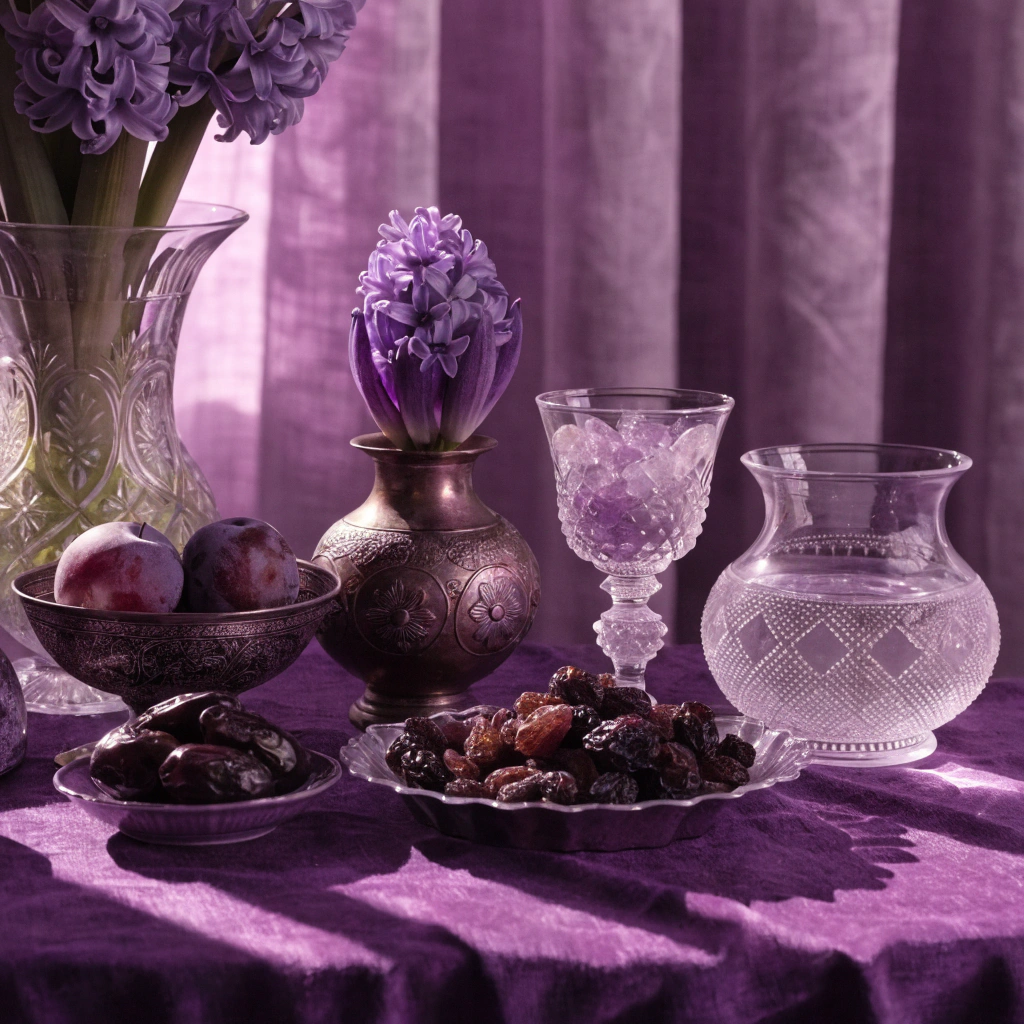
イランのお正月:ハフトスィーン
イランには、お正月があります。お正月の名前は「ノウルーズ」です。ノウルーズは春の始まりです。とても大切なお祭りです。
家族は「ソフレ・ハフトスィーン」というテーブルを作ります。このテーブルに七つの物があります。七つの物は「S」の音で始まります。例えば、リンゴや草です。
それぞれの物には良い意味があります。新しい年が良い年になるように、家族はこれをします。みんなで春の始まりをお祝いします。
文法スポットライト
パターン: Noun は Noun です
"お正月の名前は「ノウルーズ」です。"
「〜は〜です」は、何か(なにか)を説明(せつめい)するときに使(つか)います。「AはBです」は、「AイコールB」という意味(いみ)です。例(たと)えば、「これは本(ほん)です」と言(い)います。
パターン: Noun が あります
"このテーブルに七つの物があります。"
「〜があります」は、物(もの)や場所(ばしょ)が存在(そんざい)することを言う(いう)ときに使(つか)います。「テーブルに物(もの)があります」は、「テーブルの上(うえ)に物(もの)がある」という意味(いみ)です。
理解度をチェック
10 問 · A1 初級 · 無料プレビュー 1回
この記事で学んだことをテストしよう。全問正解してXPを獲得!
記事(きじ)のタイトルは何(なん)ですか?
問題の内訳
記事(きじ)のタイトルは何(なん)ですか?
あなたの回答:
正解: イランのお正月(しょうがつ):ハフトスィーン
ノウルーズは夏(なつ)のお祭(まつ)りです。
あなたの回答:
正解: 間違い
「意味(いみ)」は何(なん)ですか?
あなたの回答:
正解: メッセージ(めっせーじ)
家族(かぞく)は「ソフレ・ハフトスィーン」という___を作(つく)ります。
あなたの回答:
正解: テーブル
イランの新年:ハフト・スィーンのテーブル
イランには、ノーウルーという大切なお祭りがあります。これはイランの新年です。ノーウルーは、春の始まりを祝う日です。春分の日、自然が新しくなる時、このお祭りが始まります。
ノーウルーには、「ハフト・スィーン」という特別なテーブルを飾ります。まず、テーブルにきれいな布(ぬの)を敷(し)きます。そして、その上にペルシャ語で「S」の音で始まる7つの物を置きます。例えば、リンゴやニンニクなどです。これらの物には、それぞれ健康や再生などの良い意味があります。
この伝統は、3000年以上前のゾロアスター教という古い宗教から始まりました。ハフト・スィーンは、暗いものに打ち勝つ光の象徴です。家族みんなでこのテーブルを囲んで、新しい一年が良い年になることを願います。これはイランでとても愛されている文化です。
文法スポットライト
パターン: 〜て、〜ます (動詞のて形)
"テーブルにきれいな布を敷いて、その上にペルシャ語で「S」の音で始まる7つの物を置きます。"
動詞の「て形」は、二つの行動を順番に言うときに使います。「Aて、Bます」で「Aをして、それからBをする」という意味になります。
パターン: 〜から始まりました (〜から)
"この伝統は、3000年以上前のゾロアスター教という古い宗教から始まりました。"
「〜から」は、何かの始まりや原因を示すときに使います。この文では、「ゾロアスター教」が伝統が始まった場所や理由を示しています。
理解度をチェック
11 問 · A2 初級 · 無料プレビュー 1回
この記事で学んだことをテストしよう。全問正解してXPを獲得!
ノーウルーは何のお祭りですか?
問題の内訳
ノーウルーは何のお祭りですか?
あなたの回答:
正解: イランの新年を祝うお祭り
ハフト・スィーンのテーブルには、ペルシャ語で「S」の音で始まる物が8つあります。
あなたの回答:
正解: 間違い
「さいせい」の意味は何ですか?
あなたの回答:
正解: もう一度新しくなること
ノーウルーは、____の始まりを祝う日です。
あなたの回答:
正解: 春
ハフト・スィーンの伝統は、いつ頃から始まりましたか?
あなたの回答:
正解: 3000年以上前から
イランの新年「ノウルーズ」:7つのシンボル「ハフトスィーン」の食卓
イランでは、毎年春になると「ノウルーズ」という大切な新年のお祭りが祝われます。ノウルーズは、春分の日、つまり自然が新しく生まれ変わる瞬間を意味しています。このお祭りの最も美しい伝統の一つが、「ハフトスィーン」と呼ばれる特別な食卓を準備することです。
ハフトスィーンは、「7つのS」という意味で、ペルシャ語の「S」の音で始まる7つの物を飾ります。これらの物にはそれぞれ深い意味があり、生命、健康、豊かさ、幸福などを象徴しています。例えば、緑の麦やレンズ豆は新しい生命と成長を、リンゴは美しさと健康を、酢は忍耐を、ニンニクは健康を守ることを表しています。また、乾燥した果物やコインなども置かれることがありますが、これらは富や繁栄を願うものです。
この習慣は、3000年以上も前のゾロアスター教に由来すると言われています。暗闇に打ち勝つ光、つまり悪に対する善の勝利を祝う古代の信仰が、このノウルーズの伝統の基礎となっています。家族はノウルーズの瞬間にハフトスィーンの食卓の周りに集まり、新しい年の始まりを共に喜びます。
ハフトスィーンの食卓は、ただ美しいだけでなく、家族の絆を深め、希望に満ちた未来を願う大切な文化です。この伝統は、イランの人々にとって、自然の恵みに感謝し、新しい始まりを心から祝う機会を与えてくれています。
文法スポットライト
パターン: ~と言われています
"この習慣は、3000年以上も前のゾロアスター教に由来すると言われています。"
これは、聞いたことや一般的に知られていることを伝えるときに使います。「~と言われています」の前に、動詞の普通形や名詞/形容詞の普通形+だ、が入ります。自分の意見ではなく、客観的な情報を伝えるときに便利な表現です。
パターン: ~だけでなく、~も/~もまた
"ハフトスィーンの食卓は、ただ美しいだけでなく、家族の絆を深め、希望に満ちた未来を願う大切な文化です。"
これは、二つ以上の事柄が関係していることを示すときに使います。「AだけでなくBも」で、「Aということに加えてBも」という意味になります。AとBは同じ種類の言葉(名詞、形容詞、動詞など)が入ることが多いです。
理解度をチェック
11 問 · B1 中級 · 無料プレビュー 1回
この記事で学んだことをテストしよう。全問正解してXPを獲得!
ノウルーズはいつ祝われますか?
問題の内訳
ノウルーズはいつ祝われますか?
あなたの回答:
正解: 春分の日
ハフトスィーンの食卓に置かれる物は、ペルシャ語の「S」の音で始まらなければなりません。
あなたの回答:
正解: 正しい
「伝統」とはどういう意味ですか?
あなたの回答:
正解: 古い習慣や文化
ハフトスィーンの食卓は、ただ美しいだけでなく、家族の( )を深める大切な文化です。
あなたの回答:
正解: 絆
緑の麦やレンズ豆は何を象徴していますか?
あなたの回答:
正解: 新しい生命と成長
The Cultural Significance and Symbolism of Sofreh-e Haft-Seen
For over three millennia, the arrival of spring has been celebrated across the Iranian plateau through the vibrant and deeply symbolic festival of Nowruz. Marking the precise astronomical moment of the vernal equinox, this ancient tradition signifies the triumph of light over darkness and the seasonal rebirth of the natural world. At the absolute heart of these festivities lies the Sofreh-e Haft-Seen, an elaborate and visually striking table setting that reflects the collective hopes, historical values, and spiritual aspirations of the Iranian people.
The term 'Haft-Seen' translates literally to 'Seven S’s,' referring to seven specific items that must begin with the Persian letter 'Seen' (س). Each component is meticulously chosen for its metaphorical weight and historical significance. For instance, Sabzeh—wheat, barley, or lentil sprouts growing in a dish—represents rejuvenation and the lush greening of nature. Similarly, Samanu, a sophisticated sweet pudding made from wheat germ, symbolizes affluence and the rewards that come from patience and hard work. Other essential items include Senjed (dried oleaster fruit) for love, Seeb (apple) for beauty and health, Seer (garlic) for medicinal protection, Somāq (sumac berries) representing the color of sunrise, and Serkeh (vinegar) symbolizing age and the wisdom it brings.
Beyond the primary seven items, the arrangement often incorporates various secondary elements that enrich its meaning. A mirror is typically placed at the head of the table to encourage self-reflection and honesty, while lit candles signify enlightenment and the fire of life. Painted eggs are frequently included to represent fertility, and a bowl of goldfish symbolizes life within life. While the origins of these customs are deeply rooted in ancient Zoroastrianism, they have evolved over centuries into a secular cultural cornerstone that unites diverse ethnic and religious communities. It is widely believed by many families that if the table is not prepared with sufficient care and aesthetic harmony, the coming year might lack the balance and prosperity that these symbols are intended to invite.
In contemporary society, the setting of the sofreh remains a profound act of cultural preservation and national identity. As the clock strikes the exact second of the New Year, families gather around the table in their finest clothes, reinforcing social bonds and ancestral ties through shared prayers or poetry. Despite the rapid modernization of Iranian life, the core essence of the Haft-Seen persists, serving as a poignant reminder that the cycles of nature and the fundamental virtues of humanity are eternally intertwined.
文法スポットライト
パターン: Present Perfect Passive
"For over three millennia, the arrival of spring has been celebrated across the Iranian plateau."
This pattern is used to describe an action that started in the past and continues to the present, focusing on the receiver of the action. It is formed using 'has/have been' plus the past participle.
パターン: First Conditional with Modals
"If the table is not prepared with sufficient care and aesthetic harmony, the coming year might lack the balance and prosperity."
This structure expresses a real possibility in the future. The 'if' clause uses the present simple, while the main clause uses 'might' to show a possible consequence.
パターン: Defining Relative Clauses
"referring to seven specific items that must begin with the Persian letter 'Seen'."
The relative pronoun 'that' introduces a clause that provides essential information about the 'seven specific items'. This helps to define exactly which items are being discussed.
理解度をチェック
11 問 · B2 中上級 · 無料プレビュー 1回
この記事で学んだことをテストしよう。全問正解してXPを獲得!
What does the festival of Nowruz specifically mark?
問題の内訳
What does the festival of Nowruz specifically mark?
あなたの回答:
正解: The exact moment of the spring equinox
The Haft-Seen tradition is strictly a religious Zoroastrian practice in modern Iran.
あなたの回答:
正解: 間違い
What does 'metaphorical' mean in the context of the article?
あなたの回答:
正解: Representing something symbolic
Each item on the table is _____ chosen for its historical significance.
あなたの回答:
正解: meticulously
Which item is used to symbolize the wisdom that comes with age?
あなたの回答:
正解: Serkeh (Vinegar)
Vernal Resurgence: Deciphering the Semiotics of the Sofreh-e Haft-Seen
It is at the precise moment of the vernal equinox that millions across the Iranian plateau and beyond celebrate Nowruz, the Persian New Year. Central to this celebration is the Sofreh-e Haft-Seen, a meticulously curated table that serves as a profound manifestation of cultural identity and ancient cosmology. The setting of the table is not merely a ritualistic performance; rather, it represents a sophisticated synthesis of Zoroastrian heritage and the perennial human desire for renewal. This tradition, which has weathered the sands of time for over three millennia, offers a window into the philosophical psyche of a civilization that prizes the triumph of light over darkness.
The term 'Haft-Seen' refers to seven specific items beginning with the Persian letter 'Seen,' each imbued with deep semiotic significance. Not only does the Sabzeh (sprouted wheat or lentils) symbolize the rebirth of nature, but it also serves as a poignant reminder of the cyclicality of life. Similarly, Samanu, a sweet pudding made from wheat germ, represents the resilience and strength required to navigate the complexities of existence. The inclusion of Senjed (dried oleaster) points towards love and wisdom, while Seer (garlic) is traditionally associated with medicinal protection and the maintenance of health. Furthermore, Seeb (apple) is placed to evoke beauty and vitality, while Serkeh (vinegar) symbolizes the patience and wisdom that come with age. Completing the primary seven is Somaq (sumac), whose crimson hue represents the sunrise and the spice of life.
The historical underpinnings of this tradition are deeply rooted in the dualistic philosophy of ancient Persia, where the struggle between light and darkness was a central theme. The Sofreh acts as a microcosm of a harmonious universe. The presence of a mirror reflects the light of the soul and the clarity of self-reflection, while goldfish in a bowl denote life and the end of the astral year. The ephemeral nature of the spring season is captured in the delicate balance of these items, suggesting that while beauty may be fleeting, the spirit of renewal is eternal. The critical analysis of these symbols reveals a culture that finds divinity in the natural world.
The meticulous arrangement of the table involves significant nominalisation in its description: the preservation of heritage, the cultivation of hope, and the sanctification of the domestic space. It is through these symbolic gestures that families propitiate the forces of nature and welcome a prosperous year. The precursor to the modern Sofreh can be traced back to the Achaemenid era, surviving countless political and social upheavals. This metamorphosis of the tradition across centuries demonstrates the adaptive capacity of Persian culture, allowing it to remain relevant in an increasingly globalized world.
In contemporary times, the Sofreh-e Haft-Seen remains an indispensable element of Nowruz. It transcends religious boundaries, acting as a secular bond that unites diverse communities across the globe. By critically analyzing the semiotics of the Haft-Seen, one uncovers a narrative of human perseverance against the backdrop of seasonal change. It is this profound connection to the natural world and the ancestral past that ensures Nowruz remains a vibrant, living tradition in the twenty-first century, inviting us all to reflect on the possibilities of a fresh start.
文法スポットライト
パターン: Cleft Sentences
"It is at the precise moment of the vernal equinox that millions across the Iranian plateau and beyond celebrate Nowruz."
Cleft sentences are used to focus on a specific part of the sentence. They follow the structure 'It + is/was + [focused part] + that/who...'
パターン: Negative Inversion
"Not only does the Sabzeh symbolize the rebirth of nature, but it also serves as a poignant reminder of the cyclicality of life."
When a sentence starts with a negative adverbial like 'Not only,' the subject and auxiliary verb are inverted to create emphasis and a more formal tone.
パターン: Nominalisation
"The meticulous arrangement of the table involves significant nominalisation in its description: the preservation of heritage, the cultivation of hope, and the sanctification of the domestic space."
Nominalisation involves turning verbs or adjectives into nouns. This is common in academic and formal English to make the text sound more objective and concise.
理解度をチェック
12 問 · C1 上級 · 無料プレビュー 1回
この記事で学んだことをテストしよう。全問正解してXPを獲得!
What is the primary symbolic meaning of the Sabzeh on the Haft-Seen table?
問題の内訳
What is the primary symbolic meaning of the Sabzeh on the Haft-Seen table?
あなたの回答:
正解: The rebirth of nature
The tradition of the Sofreh-e Haft-Seen has its origins in Zoroastrian heritage dating back over 3,000 years.
あなたの回答:
正解: 正しい
What does the word 'ephemeral' mean in the context of the article?
あなたの回答:
正解: Lasting for a very short time
The _____ of the tradition across centuries demonstrates the adaptive capacity of Persian culture.
あなたの回答:
正解: metamorphosis
What does the mirror represent on the Sofreh?
あなたの回答:
正解: The light of the soul
The article suggests that Nowruz is exclusively a religious holiday and does not unite diverse communities.
あなたの回答:
正解: 間違い
The Semiotics of the Sofreh-e Haft-Seen: An Ontological Exploration of Nowruz
The vernal equinox, a celestial juncture marking the precise moment nature recalibrates itself, is nowhere more profoundly observed than in the Iranian tradition of Nowruz. Central to this antiquity-steeped celebration is the Sofreh-e Haft-Seen, a meticulously curated tableau that transcends mere aesthetic ornamentation. It serves as a semiotic anchor, grounding the observer in a complex matrix of Zoroastrian cosmology and syncretic cultural evolution. Should one scrutinize the arrangement, one would find that it is not merely a collection of flora and artifacts, but rather an axiological statement on the triumph of light over the primordial abyss of darkness.
The 'Haft-Seen', or the Seven S’s, consists of seven specific items, each commencing with the Persian letter 'Seen'. These items are not chosen arbitrarily; rather, they are imbued with allegorical depth. Sabzeh (wheat or lentil sprouts) symbolizes rebirth, yet its inherent transience serves as a poignant reminder of the ephemeral nature of life itself. Samanu, a sweet pudding derived from germinated wheat, represents affluence and the sophisticated alchemy of patience. Senjed (dried oleaster fruit) is said to evoke love and wisdom, while Seer (garlic) functions as a medicinal talisman against the encroaching malaise of ill health. Seeb (apple) represents beauty and health, Somāq (sumac) the crimson dawn of a new beginning, and Serkeh (vinegar) the stoic resilience and wisdom found in the process of aging.
Seldom has a cultural practice maintained such verisimilitude to its ancient roots while simultaneously absorbing the shifting theological tides of the region. The inclusion of a mirror, or Aayeneh, reflects the light of truth and self-contemplation, while the presence of goldfish in a vessel of water signifies life within life and the end of the astral year. Furthermore, the juxtaposition of the Quran alongside the Diwan of Hafez—the pinnacle of Persian lyrical poetry—exemplifies the syncretic harmony that characterizes the modern Iranian identity. It is imperative that the setting of the table be completed before the exact second of the 'Tahvil', the transition into the new year, as if the cosmic order itself depended on this domestic ritual. This liminality, the threshold between the old and the new, is a moment of profound psychological and spiritual significance.
Beyond the physical components, the Sofreh-e Haft-Seen functions as a locus of domestic conviviality. Families gather around the table, waiting for the cannon's roar or the radio's announcement of the equinox. In this moment, the domestic sphere is transformed into a sacred space. The olfactory experience—the scent of Sonbol (hyacinth) mingling with the aroma of Samanu—creates a sensory memory that binds generations together. This is not merely a performance of heritage but an ontological reassertion of the self within the cycle of the seasons. By engaging with these symbols, the practitioner participates in a temporal continuity that stretches back over three millennia, defying the erosive forces of time.
In an era defined by the rapid homogenization of global culture, the Sofreh-e Haft-Seen remains a bastion of particularity. It represents a sophisticated interplay between the material and the metaphysical. The coins (Sekkeh) represent future prosperity, yet they sit alongside the Sabzeh, which will eventually be cast into running water, illustrating the duality of human aspirations: the desire for material security and the recognition of life’s unavoidable transience. Thus, the Sofreh is not a static display but a living, breathing testament to the enduring human desire to find meaning in the rhythmic pulses of the cosmos. It is a scholarly endeavor in itself to unpack the layers of meaning embedded in this tradition, a tradition that continues to flourish as a vibrant expression of Iranian soul and resilience.
文法スポットライト
パターン: Inversion after negative or restrictive adverbs
"Seldom has a cultural practice maintained such verisimilitude to its ancient roots while simultaneously absorbing the shifting theological tides of the region."
When using restrictive adverbs like 'seldom', 'never', or 'hardly' at the start of a sentence for emphasis, the auxiliary verb is placed before the subject. This structure is common in formal, C2-level academic prose.
パターン: The Subjunctive Mood in noun clauses
"It is imperative that the setting of the table be completed before the exact second of the 'Tahvil'..."
The subjunctive 'be completed' is used after adjectives of necessity (imperative, essential, vital). Note the base form of the verb is used regardless of the subject.
パターン: Inverted Conditional (Should)
"Should one scrutinize the arrangement, one would find that it is not merely a collection of flora and artifacts..."
This is a formal alternative to 'If one should scrutinize'. It creates a more scholarly and hypothetical tone, typical of analytical writing.
理解度をチェック
12 問 · C2 マスター · 無料プレビュー 1回
この記事で学んだことをテストしよう。全問正解してXPを獲得!
What does the author suggest about the relationship between the items on the Sofreh and their meanings?
問題の内訳
What does the author suggest about the relationship between the items on the Sofreh and their meanings?
あなたの回答:
正解: The items serve as a complex system of symbolic and value-based statements.
The article claims that Nowruz has completely discarded its Zoroastrian origins in favor of modern secularism.
あなたの回答:
正解: 間違い
Which word describes the quality of appearing real or authentic?
あなたの回答:
正解: Verisimilitude
The author describes the transition into the new year as a moment of _____, or a threshold between two states.
あなたの回答:
正解: liminality
According to the text, what does the juxtaposition of the Quran and the Diwan of Hafez represent?
あなたの回答:
正解: The syncretic nature of contemporary Iranian identity.
The Sabzeh (sprouts) serves as a reminder of both rebirth and the temporary nature of existence.
あなたの回答:
正解: 正しい
イランの あたらしい とし
イラン。あたらしい とし、ナウルーズ です。 ナウルーズ は はる の まつり です。 ハフト・シーン。テーブル です。 テーブル に ななつ の もの あります。 かぞく と たのしい です。
文法スポットライト
パターン: Noun は Noun です
"ナウルーズ は はる の まつり です。"
「は」は、トピック を しめす マーク です。「です」は、ぶん の おわり に つかいます。これは、もの を せつめい します。
理解度をチェック
9 問 · A0 プレビギナー · 無料プレビュー 1回
この記事で学んだことをテストしよう。全問正解してXPを獲得!
イラン の あたらしい とし は なん です か?
問題の内訳
イラン の あたらしい とし は なん です か?
あなたの回答:
正解: ナウルーズ
ナウルーズ は ふゆ の まつり です。
あなたの回答:
正解: 間違い
ハフト・シーン の テーブル に は _____ の もの が あります。
あなたの回答:
正解: ななつ

