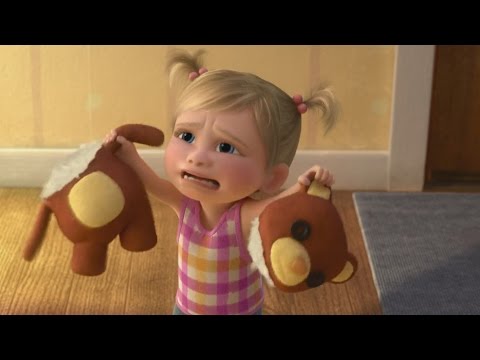
attitude 30秒で
- Attitude is a settled way of thinking or feeling that influences how you behave toward people and situations.
- It can be positive, negative, or neutral, and is often described as a person's 'mindset' or 'disposition.'
- In informal English, 'having an attitude' often means being rude, arrogant, or uncooperative with others.
- Attitudes are learned over time and can be changed through new experiences, education, and conscious effort.
The word attitude is a foundational concept in both everyday conversation and psychological study. At its core, an attitude is a settled way of thinking or feeling about someone or something, typically one that is reflected in a person's behavior. It is not merely a fleeting emotion or a temporary mood; rather, it is a relatively stable and enduring predisposition. When we talk about someone's attitude, we are referring to the internal lens through which they view the world, which subsequently dictates how they react to external stimuli. For instance, a person with a positive attitude toward challenges will likely view a difficult task as an opportunity for growth, whereas someone with a negative attitude might see the same task as an insurmountable obstacle. This internal state is often described as a 'mindset' or 'disposition,' and it plays a crucial role in shaping our social interactions, our work performance, and our overall mental well-being.
- The Cognitive Component
- This refers to the beliefs, thoughts, and attributes that we associate with an object. It is the intellectual basis of the attitude, such as believing that 'exercise is beneficial for health.'
- The Affective Component
- This involves the emotional reaction one has toward an object. For example, one might feel energized or excited at the prospect of going to the gym, which reinforces the positive attitude.
- The Behavioral Component
- This is the way the attitude we have influences how we actually act or behave. In the exercise example, this would be the actual act of going to the gym regularly.
In social contexts, 'attitude' can also take on a slightly different, more informal meaning. You might hear someone say, 'Don't give me that attitude!' In this sense, the word refers to a physical expression of a person's feelings, often one that is perceived as rude, defiant, or arrogant. This usage highlights how our internal states are frequently 'leaked' through our body language, tone of voice, and facial expressions. Whether it is a 'can-do attitude' in a job interview or a 'defeatist attitude' during a sports match, the word captures the essence of how our internal orientation manifests in the external world. It is a powerful word because it suggests that while we cannot always control our circumstances, we can control our internal response to them.
Success is less about talent and more about having the right attitude when things get difficult.
Furthermore, attitudes are not static; they are learned and can be unlearned. They are shaped by our experiences, our upbringing, the media we consume, and the people we associate with. This is why educational programs and corporate training often focus on 'attitude adjustment' or 'fostering a positive culture.' By changing the underlying beliefs and emotional responses of individuals, organizations hope to see a corresponding change in behavior. In the realm of psychology, the study of attitudes is central to understanding prejudice, persuasion, and social influence. It is a complex construct that bridges the gap between the individual's mind and their social environment.
The teacher noticed a significant improvement in the student's attitude toward mathematics after the extra tutoring sessions.
- Positive Attitude
- A state of mind that envisions and expects favorable results. It is characterized by optimism and resilience.
- Negative Attitude
- A state of mind that focuses on the negative aspects of a situation, often leading to pessimism and a lack of effort.
In conclusion, understanding 'attitude' is essential for navigating human relationships and personal development. It is the invisible force that drives our visible actions. Whether we are discussing a child's attitude toward their chores or a nation's attitude toward climate change, we are discussing the fundamental orientations that define our existence and our impact on the world around us. By being mindful of our own attitudes, we gain the power to reshape our reality and improve our interactions with others.
Using the word attitude correctly requires an understanding of its common grammatical patterns and the adjectives that typically accompany it. Most frequently, 'attitude' is followed by the prepositions 'to,' 'toward,' or 'towards.' These prepositions indicate the object or subject that the attitude is directed at. For example, 'His attitude toward his work is exemplary.' In this sentence, 'toward' connects the internal mindset to the specific context of work. While 'to' and 'towards' are often interchangeable, 'towards' is slightly more common in British English, while 'toward' is preferred in American English.
- Common Adjective Pairings
- Attitude is frequently modified by adjectives such as positive, negative, professional, defiant, casual, or cavalier. These adjectives provide specific color to the general concept of a mindset.
She has a very positive attitude about the upcoming changes in the company.
Another important usage involves the verb 'to have.' We often say someone 'has an attitude' or 'has a bad attitude.' When used without a specific adjective in an informal context, 'having an attitude' usually implies a negative, arrogant, or uncooperative disposition. For instance, 'The waiter had a real attitude when I asked for more water.' Here, the word 'attitude' acts as a shorthand for 'unpleasant or rude behavior.' Conversely, in a professional setting, we might say someone 'demonstrates a professional attitude,' which implies they are behaving in a way that is appropriate and respectful for their role.
In more formal or academic writing, 'attitude' is often used to describe collective viewpoints. You might read about 'public attitudes,' 'social attitudes,' or 'consumer attitudes.' In these cases, the word refers to the general consensus or prevailing mindset of a group of people. For example, 'The study explores changing social attitudes toward marriage in the 21st century.' This usage highlights that attitudes are not just individual traits but can be shared across entire populations, influenced by cultural and historical factors.
If you want to succeed in this industry, you need to adopt a 'can-do' attitude.
- Attitude + Preposition
- Attitude to (UK), Attitude toward (US), Attitude about (Informal), Attitude regarding (Formal).
Finally, consider the use of 'attitude' in the context of personal development. Phrases like 'attitude of gratitude' have become popular in self-help literature. This suggests that an attitude is something that can be consciously cultivated and practiced. It is not just something you are born with; it is a choice you make every day. By using the word in this way, we emphasize the agency and responsibility of the individual in shaping their own mental landscape. Whether you are writing a formal report or chatting with a friend, choosing the right modifiers and prepositions will ensure your use of 'attitude' is precise and effective.
The word attitude is ubiquitous, appearing in contexts ranging from high-stakes corporate boardrooms to casual playground interactions. In the workplace, 'attitude' is a key metric for performance reviews. Managers often look for employees with a 'positive attitude' or a 'collaborative attitude.' You might hear a supervisor say, 'We can train for skills, but we can't train for attitude.' This highlights the belief that a person's underlying mindset is more fundamental to their success than their technical abilities. In this environment, a 'bad attitude' is often grounds for disciplinary action, as it can negatively impact team morale and productivity.
The coach praised the team's never-say-die attitude after they came back to win the game in the final minutes.
In the world of sports, 'attitude' is frequently used to describe a player's mental toughness and competitive spirit. Commentators might talk about a player's 'aggressive attitude' on the field or their 'composed attitude' under pressure. Here, attitude is seen as a competitive advantage. A team with a 'winning attitude' is one that believes in its ability to succeed, regardless of the odds. This usage is also common in sports psychology, where athletes are taught techniques to maintain a 'focused attitude' during competition. You'll hear it in post-game interviews: 'We just went out there with the right attitude and executed our plan.'
In educational settings, teachers frequently discuss students' attitudes toward learning. A student with a 'growth mindset'—a specific type of positive attitude—is more likely to persist in the face of difficulty. Conversely, a student who 'has an attitude' in class is usually one who is being disruptive or disrespectful to the teacher. Parents also use the word frequently when talking to their children: 'I don't like your attitude, young man!' In these domestic contexts, 'attitude' is often a euphemism for 'backtalk' or 'disobedience.' It is a way of addressing the child's underlying lack of respect rather than just a specific action.
- News and Media
- Journalists often report on 'changing public attitudes' regarding political issues, social movements, or economic trends. For example, 'Public attitude toward climate change has shifted dramatically in the last decade.'
Finally, you will encounter 'attitude' in the self-help and wellness industry. Motivational speakers often proclaim that 'Attitude is everything.' They encourage people to adopt an 'attitude of gratitude' or a 'positive mental attitude' (PMA) to improve their lives. In this context, attitude is framed as a tool for personal transformation. You'll see it on posters, in book titles, and in social media captions. Whether it's a technical term in psychology or a slang term for being 'sassy,' the word 'attitude' is a versatile and essential part of the modern English vocabulary, reflecting our deep interest in the human psyche and how it interacts with the world.
One of the most common mistakes learners make with the word attitude is confusing it with similar-sounding words like 'altitude' or 'aptitude.' While they sound alike, their meanings are entirely different. 'Altitude' refers to the height of an object above sea level, and 'aptitude' refers to a natural ability to do something. Saying 'He has a great altitude toward his work' would be nonsensical. It is important to associate 'attitude' with 'mindset' or 'feeling' to avoid this phonetic confusion. Another frequent error involves the use of prepositions. Many learners use 'about' when 'to' or 'toward' would be more appropriate in a formal context. While 'attitude about' is common in casual speech, 'attitude toward' is the standard for professional writing.
- Attitude vs. Behavior
- A common conceptual mistake is using 'attitude' and 'behavior' interchangeably. An attitude is an internal state (how you feel), while behavior is an external action (what you do). While they are related, they are not the same.
Incorrect: He showed a bad attitude by arriving late. (Better: His lateness reflected a bad attitude.)
Another subtle mistake is the over-reliance on the informal meaning of 'having an attitude.' Because learners often hear this in movies or TV shows to mean 'being rude,' they may forget that 'attitude' is a neutral word that requires an adjective to give it meaning in most contexts. Simply saying 'He has an attitude' in a business report might be too vague or informal. Instead, specify the type of attitude: 'He has a dismissive attitude' or 'He has a cautious attitude.' This provides the necessary clarity and maintains a professional tone. Additionally, be careful with the plural form. 'Attitudes' is used when referring to the collective mindsets of a group or different types of mindsets, but 'attitude' is usually singular when referring to one person's general disposition.
Lastly, some learners struggle with the word's countability. 'Attitude' is a countable noun, but it is often used in a way that feels abstract. You can have 'an attitude,' 'many attitudes,' or 'a change of attitude.' A common mistake is omitting the article: 'He has bad attitude' should be 'He has a bad attitude.' Paying attention to these small grammatical details will significantly improve the naturalness of your English. By avoiding these common pitfalls—phonetic confusion, preposition errors, and conceptual blurring—you can use the word 'attitude' with confidence and precision in any situation.
To truly master the word attitude, it is helpful to understand how it compares to its synonyms and near-synonyms. While 'attitude' is a very versatile word, sometimes a more specific term is better suited to the context. For instance, 'mindset' is a popular alternative, especially in the context of personal growth and psychology. A 'mindset' is a fixed mental attitude or disposition that predetermines a person's responses to and interpretations of situations. While 'attitude' can be specific to one thing (an attitude toward broccoli), 'mindset' often refers to a broader way of thinking (a growth mindset).
- Attitude vs. Outlook
- 'Outlook' usually refers to a person's general point of view or their expectations for the future. You might have a 'positive outlook on life,' which is a broad application of a positive attitude.
- Attitude vs. Disposition
- 'Disposition' refers to a person's inherent qualities of mind and character. It is more about their natural temperament. Someone might have a 'sunny disposition,' which makes them prone to having a positive attitude.
While his attitude toward the project was skeptical, his general outlook remained optimistic.
Another related word is 'perspective.' While 'attitude' is how you feel about something, 'perspective' is how you see or understand it based on your particular standpoint. For example, 'From a financial perspective, the plan makes sense, but my attitude toward the environmental impact is negative.' Here, perspective provides the context, and attitude provides the evaluation. Similarly, 'stance' or 'position' are often used in formal or political contexts to describe a specific, often public, attitude toward an issue. 'The government has taken a firm stance on immigration' implies a settled and official attitude.
In informal settings, you might use words like 'vibe' or 'spirit.' 'I like the vibe of this place' is a modern way of saying the general attitude or atmosphere is pleasant. In sports, 'spirit' often replaces attitude, as in 'team spirit.' Understanding these nuances allows you to choose the word that most accurately conveys your meaning. Whether you need the psychological precision of 'mindset,' the character-based 'disposition,' or the forward-looking 'outlook,' having a range of alternatives for 'attitude' will make your English more expressive and sophisticated. By comparing these terms, we see that 'attitude' is the most general and widely applicable, making it a vital building block for more specific vocabulary.
How Formal Is It?
豆知識
In the 17th century, 'attitude' was mainly used by artists to describe the physical pose of a statue or a person in a painting. It wasn't until later that it came to mean a mental state.
発音ガイド
- Pronouncing it like 'altitude' (adding an 'l').
- Stressing the second or third syllable.
- Muddling the 't' sounds in the middle.
- Confusing it with 'aptitude'.
- Using a short 'u' sound at the end.
難易度
Commonly found in news and literature, usually easy to understand from context.
Requires correct preposition usage (to/toward) and appropriate adjectives.
Very common in daily speech, especially in its informal 'rude' sense.
Clear pronunciation, though can be confused with 'altitude'.
次に学ぶべきこと
前提知識
次に学ぶ
上級
知っておくべき文法
Prepositional Choice
Attitude 'to' is common in the UK; 'toward' is common in the US.
Countability
You can have 'an attitude' (singular) or 'different attitudes' (plural).
Adjective Placement
Adjectives always come before 'attitude' (e.g., 'a defiant attitude').
Verb Collocation
Use 'have', 'show', 'display', or 'adopt' with attitude.
Article Usage
Always use an article like 'a' or 'the' when 'attitude' is a countable noun.
レベル別の例文
He has a very good attitude.
Il a une très bonne attitude.
Use 'a' before 'good attitude'.
She has a positive attitude.
Elle a une attitude positive.
'Positive' describes the attitude.
I like your attitude!
J'aime ton attitude !
Direct object of the verb 'like'.
Bad attitude is not good for school.
Une mauvaise attitude n'est pas bonne pour l'école.
Subject of the sentence.
Do you have a happy attitude?
As-tu une attitude joyeuse ?
Question form with 'do'.
My teacher has a kind attitude.
Mon professeur a une attitude gentille.
Possessive 'my' + noun.
He showed a brave attitude.
Il a montré une attitude courageuse.
Verb 'showed' + noun phrase.
Change your attitude, please.
Change d'attitude, s'il te plaît.
Imperative mood.
What is your attitude toward sports?
Quelle est votre attitude envers le sport ?
Use 'toward' for the object.
She has a friendly attitude to everyone.
Elle a une attitude amicale envers tout le monde.
'To' is also common after attitude.
The boss likes his working attitude.
Le patron aime son attitude au travail.
Compound-like structure 'working attitude'.
Don't give me that attitude!
Ne me prends pas sur ce ton !
Informal idiom for being rude.
His attitude changed after the holiday.
Son attitude a changé après les vacances.
Intransitive use of 'changed'.
They have a different attitude about money.
Ils ont une attitude différente vis-à-vis de l'argent.
'About' is common in casual English.
A positive attitude helps you learn faster.
Une attitude positive vous aide à apprendre plus vite.
Gerund phrase as subject.
He was punished for his bad attitude.
Il a été puni pour sa mauvaise attitude.
Preposition 'for' + reason.
It's important to have a 'can-do' attitude in this job.
Il est important d'avoir une attitude volontaire dans ce travail.
'Can-do' acts as an adjective.
Her attitude toward the environment is very inspiring.
Son attitude envers l'environnement est très inspirante.
Complex subject phrase.
We need to adjust our attitude toward the new rules.
Nous devons ajuster notre attitude envers les nouvelles règles.
Infinitive 'to adjust'.
His professional attitude earned him a promotion.
Son attitude professionnelle lui a valu une promotion.
Subject-Verb-Indirect Object-Direct Object.
Success depends largely on your attitude.
Le succès dépend en grande partie de votre attitude.
Prepositional phrase 'on your attitude'.
The team's attitude was defiant after the loss.
L'attitude de l'équipe était provocatrice après la défaite.
Predicate adjective 'defiant'.
She has a very casual attitude toward deadlines.
Elle a une attitude très décontractée vis-à-vis des dates limites.
Adjective 'casual' modifies attitude.
Public attitude toward the project is mostly positive.
L'attitude du public envers le projet est majoritairement positive.
Uncountable-style usage for 'public attitude'.
The study analyzed consumer attitudes toward organic food.
L'étude a analysé les attitudes des consommateurs envers les aliments biologiques.
Plural 'attitudes' for group opinions.
He adopted a cavalier attitude toward the safety regulations.
Il a adopté une attitude cavalière envers les consignes de sécurité.
'Adopted' is a high-level verb choice.
Social attitudes have shifted significantly in recent years.
Les attitudes sociales ont considérablement évolué ces dernières années.
Present perfect tense.
Her skeptical attitude made her a good journalist.
Son attitude sceptique a fait d'elle une bonne journaliste.
Adjective 'skeptical' is B2 level.
The government's attitude toward the crisis was criticized.
L'attitude du gouvernement face à la crise a été critiquée.
Passive voice construction.
He has a very defeatist attitude whenever things go wrong.
Il a une attitude très défaitiste dès que les choses tournent mal.
Adjective 'defeatist' is specific.
Fostering a positive attitude is key to mental health.
Favoriser une attitude positive est essentiel à la santé mentale.
Gerund 'fostering' as subject.
Their attitude regarding the merger remains unclear.
Leur attitude concernant la fusion reste peu claire.
'Regarding' as a formal preposition.
The prevailing attitude in the office was one of quiet desperation.
L'attitude dominante dans le bureau était celle d'un désespoir tranquille.
'Prevailing' is a C1 collocation.
We must address the underlying attitudes that lead to prejudice.
Nous devons nous attaquer aux attitudes sous-jacentes qui mènent aux préjugés.
'Underlying' suggests depth.
His dismissive attitude toward my suggestions was hurtful.
Son attitude méprisante envers mes suggestions était blessante.
Adjective 'dismissive' is precise.
The film explores the shifting attitudes of the post-war generation.
Le film explore l'évolution des attitudes de la génération d'après-guerre.
Participial adjective 'shifting'.
She maintains a stoic attitude despite her personal struggles.
Elle conserve une attitude stoïque malgré ses difficultés personnelles.
'Stoic' is a high-level descriptor.
The survey revealed a deep-seated attitude of mistrust.
L'enquête a révélé une attitude de méfiance profondément ancrée.
Compound adjective 'deep-seated'.
His attitude is characterized by a lack of empathy.
Son attitude se caractérise par un manque d'empathie.
Formal 'characterized by' structure.
There is a noticeable difference in attitude between the two groups.
Il y a une différence d'attitude notable entre les deux groupes.
Noun 'difference' + 'in attitude'.
The paper interrogates the socio-cultural attitudes underpinning the law.
L'article interroge les attitudes socio-culturelles qui sous-tendent la loi.
'Interrogates' and 'underpinning' are C2 verbs.
Her attitude was an amalgam of cynicism and weary resignation.
Son attitude était un amalgame de cynisme et de résignation lassée.
Complex noun phrase 'amalgam of...'.
The politician's ambivalent attitude toward the treaty alienated voters.
L'attitude ambivalente du politicien envers le traité a aliéné les électeurs.
'Ambivalent' and 'alienated' are C2 level.
We need to dismantle the systemic attitudes that perpetuate inequality.
Nous devons démanteler les attitudes systémiques qui perpétuent l'inégalité.
Metaphorical use of 'dismantle'.
His attitude reflects a profound ontological insecurity.
Son attitude reflète une profonde insécurité ontologique.
Highly academic terminology.
The novel depicts the protagonist's evolving attitude toward his heritage.
Le roman dépeint l'évolution de l'attitude du protagoniste envers son héritage.
Literary analysis style.
Public attitude is often a bellwether for impending political change.
L'attitude du public est souvent un baromètre des changements politiques imminents.
Metaphorical 'bellwether'.
His nonchalant attitude in the face of danger was truly remarkable.
Son attitude nonchalante face au danger était vraiment remarquable.
'Nonchalant' is a sophisticated loanword.
よく使う組み合わせ
よく使うフレーズ
— Your mindset is the most important factor in success.
Remember, attitude is everything in sales.
— A spirit of willingness to tackle a job and get it done.
I love her can-do attitude.
— Delaying a decision until more is known.
The investors are taking a wait-and-see attitude.
— Acting as if you are morally superior to others.
I can't stand his holier-than-thou attitude.
— A policy or attitude of letting things take their own course.
The manager has a laissez-faire attitude toward the staff.
— A conscious effort to be thankful for what you have.
Practicing an attitude of gratitude can improve your mood.
— To adjust your mindset to be more appropriate.
You need to check your attitude before you walk in there.
— Something that depends on how you look at it.
Happiness is often just a matter of attitude.
よく混同される語
Altitude is the height above sea level; attitude is a mindset.
Aptitude is a natural ability; attitude is a way of thinking.
Behavior is what you do; attitude is the feeling behind it.
慣用句と表現
— To suddenly become rude or defiant.
She copped an attitude when I asked her to help.
Informal— To assume a particular physical or mental pose.
He struck an attitude of deep thought.
Formal/Literary— In a way that shows a strong, often negative, personality.
He's a rapper with an attitude.
Informal— To change your mindset to be more positive or cooperative.
You'd better adjust your attitude if you want to stay.
Neutral— A persistent tendency to be uncooperative or rude.
The new recruit has a bit of an attitude problem.
Neutral— A completely different way of thinking.
He has an altogether different attitude now.
Neutral— An attitude that spreads easily to others.
Her positive attitude is infectious.
Neutral— An uncompromising and strict mindset.
The boss has a hard-line attitude toward lateness.
Neutral— Showing a lack of proper concern; dismissive.
His cavalier attitude toward safety is dangerous.
Neutral間違えやすい
Phonetic similarity.
Altitude measures height; attitude measures mindset. They are completely unrelated in meaning.
The plane reached a high altitude, but the pilot had a calm attitude.
Phonetic similarity and shared Latin root.
Aptitude is your capacity to learn or do something; attitude is your willingness or feeling about doing it.
He has an aptitude for math but a bad attitude toward studying.
Both refer to internal states.
A mood is temporary and fleeting; an attitude is a settled, long-term way of thinking.
I'm in a bad mood today, but I generally have a positive attitude toward life.
Both involve thoughts about something.
An opinion is a specific belief; an attitude is a broader emotional and mental orientation.
My opinion is that the movie was long, but my attitude toward the director is respectful.
Both involve how we see things.
Perspective is the viewpoint or angle from which you see something; attitude is the feeling you have about it.
From my perspective as a parent, I have a protective attitude toward my children.
文型パターン
I have a [adjective] attitude.
I have a good attitude.
His attitude [verb] [preposition] [noun].
His attitude changed toward the dog.
It is important to show a [adjective] attitude.
It is important to show a professional attitude.
There has been a shift in [adjective] attitude.
There has been a shift in public attitude.
The [adjective] attitude [verb] [noun].
The prevailing attitude influenced the decision.
Interrogating the [adjective] attitudes [verb] [noun].
Interrogating the underlying attitudes revealed the truth.
Having a [adjective] attitude is [adjective].
Having a positive attitude is helpful.
The attitude toward [noun] is [adjective].
The attitude toward the project is skeptical.
語族
名詞
動詞
形容詞
関連
使い方
Very common in both spoken and written English.
-
He has a bad altitude.
→
He has a bad attitude.
Altitude refers to height; attitude refers to mindset.
-
What is your attitude about the news?
→
What is your attitude toward the news?
While 'about' is used informally, 'toward' or 'to' is more standard.
-
He showed bad attitude.
→
He showed a bad attitude.
Attitude is a countable noun and needs an article like 'a'.
-
She has an aptitude for being rude.
→
She has an attitude of being rude.
Aptitude is a skill; attitude is a mindset or behavior.
-
The team's attitude were positive.
→
The team's attitude was positive.
Attitude is singular here, so the verb must be 'was'.
ヒント
Preposition Power
Always remember to use 'to' or 'toward' when directing your attitude at something. For example: 'My attitude toward the project is positive.'
Be Specific
Instead of just saying 'bad attitude,' try more specific words like 'dismissive,' 'defiant,' or 'uncooperative' to be more descriptive.
Watch Your Tone
When you say someone 'has an attitude,' your tone of voice will tell the listener if you mean they are being rude or just have a specific mindset.
Formal Contexts
In formal reports, use 'attitudes' (plural) when referring to the general consensus of a group of people.
The Plane Trick
Remember that a plane's 'attitude' is its position. Your 'attitude' is your mental position toward the world.
Professionalism
In many cultures, showing a 'professional attitude' is the most important thing you can do to get a promotion.
Attitude of Gratitude
Try writing down three things you are grateful for every day to build a more positive attitude.
Catch the Slang
If you hear 'don't cop an attitude,' it's a very informal way of saying 'don't be rude.'
Psychological Use
In psychology, remember that an attitude has three parts: what you think, how you feel, and how you act.
Attitude vs. Skill
Many employers believe that 'attitude is more important than aptitude' because skills can be taught, but mindset is harder to change.
暗記しよう
記憶術
Think of 'AT' + 'TI' + 'TUDE'. Your ATtitude is the ATmosphere of your mind.
視覚的連想
Imagine a pair of glasses. A positive attitude is like wearing rose-colored glasses; a negative attitude is like wearing dark, muddy glasses.
Word Web
チャレンジ
Try to use 'attitude' in three different sentences today: one about work, one about a hobby, and one about a friend.
語源
Derived from the Italian word 'attitudine', which comes from the Late Latin 'aptitudo'.
元の意味: It originally referred to 'fitness' or 'aptitude' and later to the 'posture' or 'position' of a figure in art.
It belongs to the Romance language family (Latin/Italian) before entering English.文化的な背景
Be careful when telling someone they have 'an attitude,' as it can be perceived as confrontational or condescending.
In the US and UK, 'attitude' is frequently used in performance reviews and school reports to describe behavior.
実生活で練習する
実際の使用場面
Workplace
- professional attitude
- can-do attitude
- team attitude
- positive work attitude
School
- attitude toward learning
- good student attitude
- disruptive attitude
- improving attitude
Sports
- winning attitude
- competitive attitude
- never-say-die attitude
- aggressive attitude
Relationships
- supportive attitude
- defensive attitude
- caring attitude
- dismissive attitude
Self-Help
- attitude of gratitude
- positive mental attitude
- changing your attitude
- mindset and attitude
会話のきっかけ
"How do you maintain a positive attitude when things are going wrong?"
"Do you think a person's attitude is more important than their skills in a job?"
"What is your attitude toward the use of artificial intelligence in daily life?"
"How has your attitude toward a specific hobby changed over the years?"
"Have you ever met someone whose attitude completely changed your day?"
日記のテーマ
Describe a time when your attitude toward a person changed after you got to know them better.
Reflect on your current attitude toward your career goals. Is it helping or hindering you?
What does a 'can-do attitude' look like in your daily life? Give specific examples.
How do social media platforms influence the attitudes of young people today?
Write about a difficult situation where you chose to maintain a positive attitude. What was the result?
よくある質問
10 問No, 'attitude' is a neutral word. It only becomes negative if you add a negative adjective like 'bad' or 'rude,' or if you use the informal phrase 'to have an attitude.'
There is very little difference. 'Attitude to' is more common in British English, while 'attitude toward' is more common in American English. Both are correct.
Usually, 'attitude' refers to people's mindsets. However, in technical fields like aviation, it refers to the position of an aircraft relative to the horizon.
Improving your attitude often involves practicing gratitude, focusing on solutions rather than problems, and surrounding yourself with positive people.
It means having a positive and determined mindset, believing that you can find a way to succeed or solve a problem.
Yes, it is countable. You can say 'one attitude' or 'many different attitudes.'
An 'attitude problem' is a polite way of saying someone is consistently rude, unhelpful, or difficult to work with.
No, 'attitude' is only a noun. The verb form is 'attitudinize,' but it is very rare and formal.
Common synonyms include mindset, outlook, disposition, perspective, and stance.
Use it with adjectives like 'professional,' 'collaborative,' 'diligent,' or 'proactive' to describe a good work mindset.
自分をテスト 187 問
Write a sentence about a person with a positive attitude at work.
Well written! Good try! Check the sample answer below.
Describe your attitude toward learning a new language.
Well written! Good try! Check the sample answer below.
Explain the difference between attitude and behavior in your own words.
Well written! Good try! Check the sample answer below.
Write a formal paragraph about changing public attitudes toward technology.
Well written! Good try! Check the sample answer below.
How can a 'can-do attitude' help in a crisis? Give an example.
Well written! Good try! Check the sample answer below.
Describe a character in a book who has a defiant attitude.
Well written! Good try! Check the sample answer below.
Write a dialogue between a parent and a child about the child's 'attitude'.
Well written! Good try! Check the sample answer below.
What is an 'attitude of gratitude'? How do you practice it?
Well written! Good try! Check the sample answer below.
Discuss the impact of a leader's attitude on their team.
Well written! Good try! Check the sample answer below.
Analyze how attitudes are formed according to your experience.
Well written! Good try! Check the sample answer below.
Write a sentence using the word 'cavalier' and 'attitude'.
Well written! Good try! Check the sample answer below.
How does your attitude change when you are tired?
Well written! Good try! Check the sample answer below.
Write a short story about a person who changed their attitude.
Well written! Good try! Check the sample answer below.
Compare the attitudes of two different generations toward social media.
Well written! Good try! Check the sample answer below.
What is your attitude toward failure?
Well written! Good try! Check the sample answer below.
Describe a 'professional attitude' in a medical context.
Well written! Good try! Check the sample answer below.
Write a sentence using 'attitude toward' and 'environment'.
Well written! Good try! Check the sample answer below.
Discuss the role of implicit attitudes in social interactions.
Well written! Good try! Check the sample answer below.
Write a motivational quote about attitude.
Well written! Good try! Check the sample answer below.
How can a teacher foster a positive attitude in students?
Well written! Good try! Check the sample answer below.
Talk about a time you had to change your attitude.
Read this aloud:
あなたの回答:
Speech recognition is not supported in your browser. Try Chrome or Edge.
How would you describe a 'good attitude' in a friend?
Read this aloud:
あなたの回答:
Speech recognition is not supported in your browser. Try Chrome or Edge.
What is your attitude toward social media?
Read this aloud:
あなたの回答:
Speech recognition is not supported in your browser. Try Chrome or Edge.
Describe a person you know who has a great attitude.
Read this aloud:
あなたの回答:
Speech recognition is not supported in your browser. Try Chrome or Edge.
How does attitude affect success in sports?
Read this aloud:
あなたの回答:
Speech recognition is not supported in your browser. Try Chrome or Edge.
What is your attitude toward working in a team?
Read this aloud:
あなたの回答:
Speech recognition is not supported in your browser. Try Chrome or Edge.
Explain the phrase 'attitude is everything'.
Read this aloud:
あなたの回答:
Speech recognition is not supported in your browser. Try Chrome or Edge.
How do you deal with someone who has a bad attitude?
Read this aloud:
あなたの回答:
Speech recognition is not supported in your browser. Try Chrome or Edge.
What is your attitude toward learning English?
Read this aloud:
あなたの回答:
Speech recognition is not supported in your browser. Try Chrome or Edge.
Discuss how attitudes toward climate change vary around the world.
Read this aloud:
あなたの回答:
Speech recognition is not supported in your browser. Try Chrome or Edge.
How can you tell if someone has a 'professional attitude'?
Read this aloud:
あなたの回答:
Speech recognition is not supported in your browser. Try Chrome or Edge.
Describe a 'can-do attitude' in a work situation.
Read this aloud:
あなたの回答:
Speech recognition is not supported in your browser. Try Chrome or Edge.
What is your attitude toward travel and new cultures?
Read this aloud:
あなたの回答:
Speech recognition is not supported in your browser. Try Chrome or Edge.
How do parents influence their children's attitudes?
Read this aloud:
あなたの回答:
Speech recognition is not supported in your browser. Try Chrome or Edge.
Discuss the importance of a positive attitude in healthcare.
Read this aloud:
あなたの回答:
Speech recognition is not supported in your browser. Try Chrome or Edge.
What is your attitude toward the future of technology?
Read this aloud:
あなたの回答:
Speech recognition is not supported in your browser. Try Chrome or Edge.
Describe a time when someone's attitude surprised you.
Read this aloud:
あなたの回答:
Speech recognition is not supported in your browser. Try Chrome or Edge.
How do you maintain a good attitude during a long flight?
Read this aloud:
あなたの回答:
Speech recognition is not supported in your browser. Try Chrome or Edge.
Discuss the concept of 'implicit bias' as a type of attitude.
Read this aloud:
あなたの回答:
Speech recognition is not supported in your browser. Try Chrome or Edge.
What is your attitude toward taking risks?
Read this aloud:
あなたの回答:
Speech recognition is not supported in your browser. Try Chrome or Edge.
Listen for the word 'attitude' in a news report about public opinion.
Listen to a conversation where someone is being told to 'lose the attitude'.
Listen for 'attitude' in a sports commentary about a winning team.
Listen to a manager describing a 'professional attitude' in a meeting.
Listen for the difference between 'attitude' and 'altitude' in a sentence.
Listen to a teacher praising a student's 'positive attitude'.
Listen for 'attitude' in a podcast about mental health and mindset.
Listen to a child being told to 'change their attitude'.
Listen for 'cavalier attitude' in a political debate.
Listen for 'attitude of gratitude' in a motivational speech.
Listen to a pilot mention the 'attitude' of the aircraft.
Listen for 'shifting attitudes' in a documentary about history.
Listen to a friend complain about someone's 'bad attitude'.
Listen for 'attitude toward' in a survey results announcement.
Listen for 'defiant attitude' in a story about a rebel.
/ 187 correct
Perfect score!
Summary
Your attitude is the internal lens through which you view the world; it dictates your reactions and shapes your reality. For example, a 'can-do attitude' can turn a difficult problem into a manageable challenge.
- Attitude is a settled way of thinking or feeling that influences how you behave toward people and situations.
- It can be positive, negative, or neutral, and is often described as a person's 'mindset' or 'disposition.'
- In informal English, 'having an attitude' often means being rude, arrogant, or uncooperative with others.
- Attitudes are learned over time and can be changed through new experiences, education, and conscious effort.
Preposition Power
Always remember to use 'to' or 'toward' when directing your attitude at something. For example: 'My attitude toward the project is positive.'
Be Specific
Instead of just saying 'bad attitude,' try more specific words like 'dismissive,' 'defiant,' or 'uncooperative' to be more descriptive.
Watch Your Tone
When you say someone 'has an attitude,' your tone of voice will tell the listener if you mean they are being rude or just have a specific mindset.
Formal Contexts
In formal reports, use 'attitudes' (plural) when referring to the general consensus of a group of people.