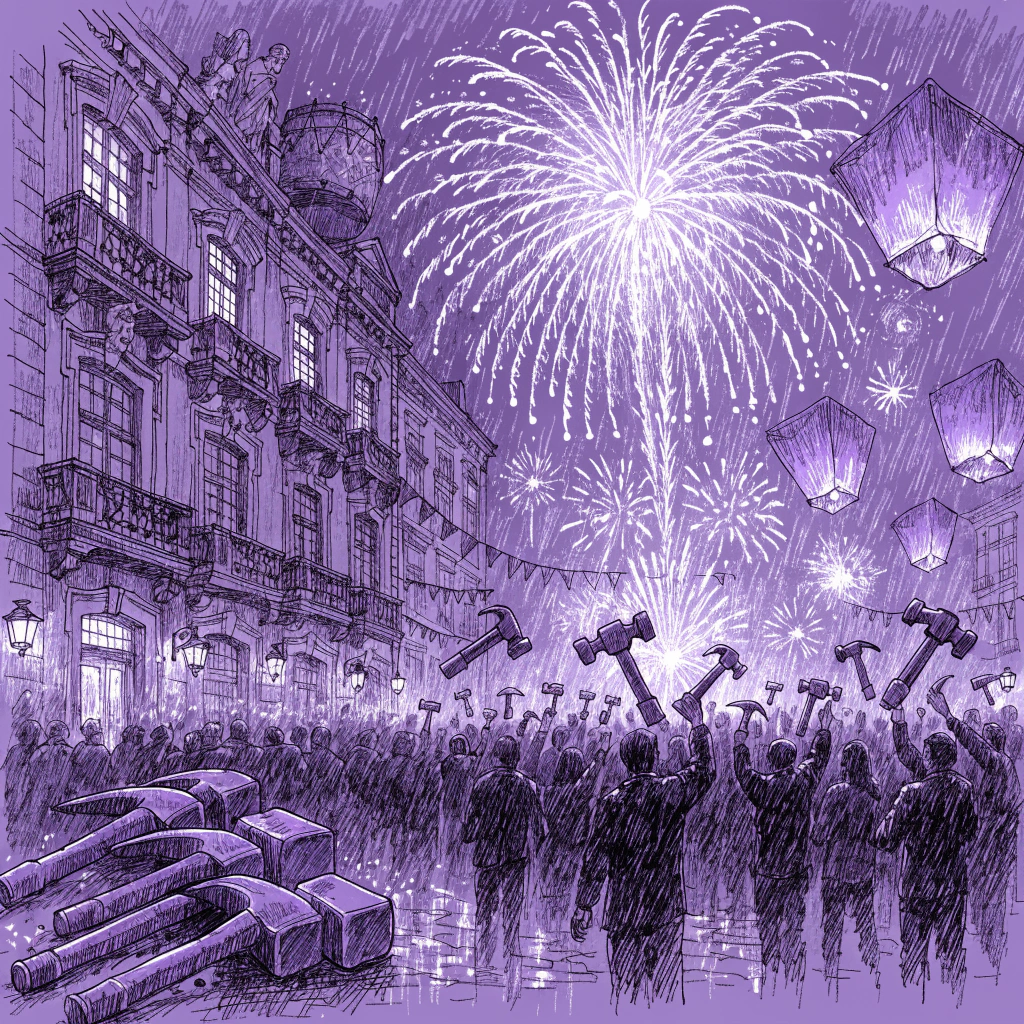
포르투의 즐거운 상 조앙 축제
포르투는 아름다운 도시입니다. 포르투에는 큰 축제가 있습니다. 이 축제 이름은 '상 조앙 축제'입니다. 이 축제는 600년 넘게 계속되었습니다. 사람들은 6월 23일에 이 축제를 합니다. 상 조앙은 성 요한입니다. 옛날에는 태양을 위한 축제였습니다. 지금은 모두 함께 즐기는 큰 파티입니다. 사람들은 불과 물로 축제를 즐깁니다. 밤에는 하늘에 불꽃놀이가 있습니다. 모두 행복하게 춤을 춥니다. 이 축제는 포르투 사람들에게 아주 중요합니다. 모두 함께 재미있게 보냅니다.
문법 스포트라이트
패턴: 입니다 / ㅂ니다 (to be / declarative ending)
"포르투는 아름다운 도시입니다."
이 문법은 명사 뒤에 붙어서 '무엇이다'라고 설명할 때 사용합니다. '입니다'는 보통 명사 뒤에 붙고, 'ㅂ니다'는 동사나 형용사 뒤에 붙어 문장을 끝냅니다. 아주 공손하고 정중한 말입니다.
패턴: ~에 (time / location particle)
"사람들은 6월 23일에 이 축제를 합니다."
이 조사는 시간이나 장소를 나타낼 때 사용합니다. '언제' 또는 '어디에서' 어떤 일이 일어나는지 알려줍니다. 명사 뒤에 붙여서 사용합니다.
이해도를 테스트하세요
10 질문 · A1 초급 · 무료 미리보기 1회
이 기사에서 배운 내용을 테스트하세요. 모든 질문에 답하여 XP를 획득하세요!
이 글은 무엇에 대한 이야기입니까?
문제별 결과
이 글은 무엇에 대한 이야기입니까?
내 답변:
정답: 포르투의 상 조앙 축제
상 조앙 축제는 6월 23일에 합니다.
내 답변:
정답: 참
다음 단어의 영어 뜻은 무엇입니까? '축제'
내 답변:
정답: festival
사람들은 _____과 물로 축제를 즐깁니다.
내 답변:
정답: 불
A Big Party in Porto: The Festa de São João
Porto is a beautiful city in Portugal. Every year in June, thousands of people celebrate a big party called the Festa de São João. This festival is more than six hundred years old and it is very popular.
On the night of June 23rd, the streets are full of people. They eat grilled sardines and drink wine with their friends. But the most interesting part of the festival is the plastic hammers. People hit each other on the head with soft, colorful hammers! It is a funny tradition and everyone smiles.
The city is brighter than usual because there are many lanterns in the sky. People also jump over small fires in the streets for good luck. They do this because they want to be happy and healthy in the future.
At midnight, there are beautiful fireworks over the Douro River. The party is louder and bigger than other festivals in Portugal. It is a special night because the whole city celebrates together in the streets until the morning.
문법 스포트라이트
패턴: Comparatives
"The party is louder and bigger than other festivals in Portugal."
We use comparatives to look at the differences between two things. For short adjectives, we add -er and then use the word 'than'.
패턴: Connectors: Because
"The city is brighter than usual because there are many lanterns in the sky."
We use the word 'because' to give a reason for something. It connects the result with the cause in one sentence.
이해도를 테스트하세요
11 질문 · A2 초등급 · 무료 미리보기 1회
이 기사에서 배운 내용을 테스트하세요. 모든 질문에 답하여 XP를 획득하세요!
When do people celebrate the Festa de São João?
문제별 결과
When do people celebrate the Festa de São João?
내 답변:
정답: On June 23rd
People hit each other with heavy metal hammers during the festival.
내 답변:
정답: 거짓
What does 'popular' mean?
내 답변:
정답: Liked by many people
People jump over small _____ in the streets for good luck.
내 답변:
정답: fires
Where are the fireworks at midnight?
내 답변:
정답: Over the Douro River
A Night of Hammers and Fireworks in Porto
Every year on June 23rd, the city of Porto in Portugal transforms into a huge party. This is the Festa de São João, a celebration that has been part of the city’s identity for over six centuries. Although it started as a pagan tradition for the summer solstice, it is now a religious and cultural event that brings the whole population together.
The festival is known for being quite eccentric. In the past, people used large garlic flowers to hit their friends on the head for good luck. Today, these flowers have been replaced by colorful plastic hammers. If you walk through the streets, you will be hit many times, but do not worry! It is all done in a spirit of brotherhood and joy.
The streets are decorated with bright lights and paper balloons. At midnight, thousands of these balloons are released into the sky, creating a beautiful sight. The air is also filled with the smell of grilled sardines, which is the traditional food eaten during the night.
One of the most exciting moments happens at the Douro River. A massive fireworks display is organized near the Dom Luís I Bridge. The bridge, which connects Porto to Gaia, becomes the center of attention as the sky lights up.
Porto is a city that loves its history, and this festival is the perfect example of how old traditions can stay alive. Whether you are a local or a tourist, the Festa de São João is an experience that should not be missed. It is a night where everyone is a friend and the party never seems to end.
문법 스포트라이트
패턴: Present Perfect
"This is the Festa de São João, a celebration that has been part of the city’s identity for over six centuries."
The present perfect (has/have + past participle) is used here to show an action or state that started in the past and continues until now. It often uses 'for' to show duration.
패턴: Passive Voice
"The streets are decorated with bright lights and paper balloons."
The passive voice is used when the action itself is more important than who is doing it. It is formed using the verb 'to be' and the past participle of the main verb.
이해도를 테스트하세요
11 질문 · B1 중급 · 무료 미리보기 1회
이 기사에서 배운 내용을 테스트하세요. 모든 질문에 답하여 XP를 획득하세요!
When is the Festa de São João celebrated in Porto?
문제별 결과
When is the Festa de São João celebrated in Porto?
내 답변:
정답: June 23rd
People nowadays use garlic flowers to hit each other on the head during the festival.
내 답변:
정답: 거짓
What does 'massive' mean?
내 답변:
정답: Extremely large
The air is filled with the smell of grilled _____, the traditional food of the festival.
내 답변:
정답: sardines
Where does the massive fireworks display take place?
내 답변:
정답: Near the Dom Luís I Bridge
The Vibrant Legacy of Porto’s São João Festival
The city of Porto, nestled along the Douro River, undergoes a remarkable transformation every June. While many European festivals are celebrated with solemnity, the Festa de São João is characterized by an exuberant display of communal joy. Having originated as a pagan ritual to honor the summer solstice, the event was eventually integrated into the Christian calendar to commemorate Saint John the Baptist. Nevertheless, its ancient roots remain visible in the symbolic use of fire and water, elements that have defined the celebration for over six centuries.
As the sun sets on June 23rd, the atmosphere becomes electric. Thousands of residents and tourists alike take to the streets, armed with peculiar tools of celebration. In decades past, it was customary for participants to hit fellow revelers with leeks; however, this tradition has largely been replaced by the use of colorful plastic hammers. Although it might seem intrusive to a newcomer, the rhythmic squeaking of these hammers creates a unique soundscape that defines the night. This playful interaction serves to dissolve social barriers, allowing strangers to engage in a shared experience of merriment without the constraints of formal etiquette.
Furthermore, the visual spectacle is equally captivating. Hot air balloons, crafted from delicate paper, are released into the midnight sky, symbolizing the ascent of prayers and wishes. This is followed by a magnificent fireworks display over the Ribeira district, which illuminates the historic bridges and riverbanks. Many participants also partake in the ancient tradition of jumping over bonfires, a practice believed to ensure good health and fertility. The sheer scale of the event requires significant coordination, yet it maintains an air of spontaneous enthusiasm.
Beyond the visual and auditory elements, the culinary traditions of São João are indispensable. The aroma of grilled sardines wafts through the narrow alleys of the historic center, inviting everyone to partake in a communal feast. This gastronomic aspect, combined with the traditional 'caldo verde' soup, reinforces the social fabric of the city. As families and friends sit together at long outdoor tables, the festival acts as a catalyst for strengthening community bonds. Consequently, the Festa de São João has managed to preserve its authentic character despite the pressures of globalization. For those seeking to understand the soul of Porto, there is no better occasion than this vibrant nocturnal celebration, where history and modernity coexist in perfect harmony.
문법 스포트라이트
패턴: Perfect Participle Clauses
"Having originated as a pagan ritual to honor the summer solstice, the event was eventually integrated into the Christian calendar."
Perfect participle clauses (having + past participle) are used to show that one action happened before another. It provides a formal way to explain the cause or background of the main clause.
패턴: Passive Voice for Formal Tone
"the Festa de São João is characterized by an exuberant display of communal joy."
The passive voice is used here to focus on the festival itself rather than the people who characterize it. This is common in formal writing to maintain an objective or descriptive tone.
패턴: Non-defining Relative Clauses
"the Ribeira district, which illuminates the historic bridges and riverbanks."
A non-defining relative clause adds extra information about a noun that is already clearly identified. It is separated by commas and is typical of B2 level academic or descriptive writing.
이해도를 테스트하세요
11 질문 · B2 중상급 · 무료 미리보기 1회
이 기사에서 배운 내용을 테스트하세요. 모든 질문에 답하여 XP를 획득하세요!
What is the primary function of the plastic hammers according to the text?
문제별 결과
What is the primary function of the plastic hammers according to the text?
내 답변:
정답: To facilitate playful interaction between strangers
The festival of São João has purely Christian origins with no pagan influence.
내 답변:
정답: 거짓
What does 'merriment' mean?
내 답변:
정답: High-spirited fun and enjoyment
The festival has managed to preserve its _____ character despite globalization.
내 답변:
정답: authentic
What do the paper balloons released at midnight symbolize?
내 답변:
정답: The ascent of prayers and wishes
The Sonic and Symbolic Tapestry of São João: A Porto Phenomenon
Never before has a city embraced the summer solstice with such unbridled fervor as Porto does during the Festa de São João. While Lisbon may boast its stately processions for Saint Anthony, it is in the undulating streets of Porto that the true essence of Portuguese revelry is distilled. The festival, which has its roots in ancient pagan sun-worshiping rituals, represents a sophisticated transmutation of historical vestiges into a contemporary cultural juggernaut. Rarely does one encounter a festival where the boundaries between the sacred and the profane are so inextricably blurred. On the night of June 23rd, the city undergoes a metamorphosis. The air becomes a thick cacophony of laughter, music, and the rhythmic squeaking of plastic hammers. It is this specific auditory landscape—the juxtaposition of traditional fado with the whimsical thumping of hammers—that defines the nocturnal experience. What began as a ritual involving leeks and garlic flowers to ward off evil spirits has evolved into a more playful, yet no less significant, display of camaraderie. The preservation of these idiosyncratic customs serves as a bulwark against the homogenizing forces of modern globalization. While the plastic hammers are a relatively modern addition, replacing the more aggressive leeks of yesteryear, the spirit remains one of egalitarian joy. It is the collective participation of the citizenry that transforms Porto into a living tapestry of light and sound. From the affluent neighborhoods of Foz to the labyrinthine alleys of Ribeira, the social hierarchy is momentarily suspended. In this ephemeral space, the santo festeiro reigns supreme. Furthermore, the launch of balões de São João—illuminated paper lanterns—creates a celestial spectacle that demands critical reflection. While aesthetically breathtaking, the practice has faced scrutiny due to fire hazards, leading to a nuanced debate between the sanctity of tradition and the pragmatism of modern safety regulations. This tension highlights the festival's status not merely as a relic of the past, but as a dynamic, evolving entity that must navigate the complexities of the 21st century. Ultimately, the Festa de São João is more than a mere street party; it is a profound expression of regional identity. The sheer scale of the fireworks display over the Douro River is not just a pyrotechnic feat, but a symbolic affirmation of the city's resilience and vitality. To witness São João is to witness the heart of Porto, beating in a synchronized rhythm of fire, water, and plastic hammers.
문법 스포트라이트
패턴: Negative Inversion
"Rarely does one encounter a festival where the boundaries between the sacred and the profane are so inextricably blurred."
Inversion is used after negative or restrictive adverbs (rarely, never, seldom) to add emphasis. The auxiliary verb 'does' is placed before the subject 'one'.
패턴: Cleft Sentences
"It is the collective participation of the citizenry that transforms Porto into a living tapestry of light and sound."
Cleft sentences use 'It is/was... that' to focus on a specific part of the sentence. Here, it emphasizes that the 'participation' is the key factor of transformation.
패턴: Nominalisation
"The preservation of these idiosyncratic customs serves as a bulwark against the homogenizing forces of modern globalization."
Nominalisation involves turning verbs (preserve) into nouns (preservation). This creates a more formal, academic tone typical of C1 level writing.
이해도를 테스트하세요
12 질문 · C1 고급 · 무료 미리보기 1회
이 기사에서 배운 내용을 테스트하세요. 모든 질문에 답하여 XP를 획득하세요!
According to the text, how does São João in Porto differ from Saint Anthony in Lisbon?
문제별 결과
According to the text, how does São João in Porto differ from Saint Anthony in Lisbon?
내 답변:
정답: It is described as more energetic and involves more revelry.
The plastic hammers used today were always the primary tradition of the festival.
내 답변:
정답: 거짓
What does 'ephemeral' mean in the context of the article?
내 답변:
정답: A short-lived, temporary state
The author argues that the festival acts as a _____ against globalization.
내 답변:
정답: bulwark
What is the 'nuanced debate' mentioned regarding the paper lanterns?
내 답변:
정답: The safety risks of fire versus the importance of tradition.
The social hierarchy in Porto remains strictly enforced during the night of June 23rd.
내 답변:
정답: 거짓
The Vernal Zenith: An Analytical Appraisal of Porto’s Midsummer Revelry
As the sun descends below the Douro’s horizon on the twenty-third of June, Porto undergoes a metamorphosis that defies mere categorization. The Festa de São João is not merely a localized celebration; it is a profound sociological phenomenon, an atavistic echo of ancient solstitial rites that have been meticulously subsumed into the Christian calendar. While the surface-level observer might perceive only a chaotic street party, the discerning scholar recognizes a complex interplay of historical continuity and cultural evolution. Never does the city of Porto appear more vibrant than during the zenith of these festivities, where the air itself seems to vibrate with a collective effervescence.
Historically, the roots of this celebration reach back to the summer solstice, a time when pagan ancestors sought to appease the sun through fire and water. These primordial elements remain central to the modern experience. The bonfire, once a beacon of celestial worship, now serves as a site for communal bonding, while the release of thousands of paper lanterns creates an evanescent galaxy against the obsidian sky. This transition from the pagan to the sacred was not an abrupt erasure but a gradual synthesis, where the figure of Saint John the Baptist was superimposed onto existing traditions. Were the festival to be stripped of its pagan vestiges, it would lose the very essence that defines its character.
Perhaps the most striking idiosyncrasy of the São João night is the ubiquitous presence of plastic hammers. This seemingly frivolous tradition is a modern evolution of the 'alho-porro' (leek), which revelers would use to strike passersby—a gesture historically rooted in fertility rites. Punctuated by the rhythmic thud of these hammers, the night air resonates with a cacophony of joy that bridges the gap between generations. This proclivity for playful interaction serves a deeper purpose: the temporary suspension of the rigid structures that govern daily life. In the narrow, winding streets of the Ribeira district, the ephemeral nature of the night allows for a radical egalitarianism.
The river Douro itself becomes a stage for this grand drama. Boats of all sizes congregate to witness the pyrotechnic display that illuminates the Dom Luís I Bridge, a structure that normally symbolizes industrial progress but, for one night, becomes a gateway to the sublime. The reflection of the fireworks in the water creates a mirrored world of light, effectively doubling the visual impact of the celebration. The culinary dimension further reinforces this sense of shared identity. The aroma of grilled sardines and roasted peppers wafts through the city, creating an olfactory landscape as rich as the visual spectacle. This communal feasting is not merely about sustenance; it is a ritualistic act that reinforces social cohesion. It is not merely that the populace gathers; they participate in a shared narrative that transcends the mundane.
The sheer scale of the jubilation, extending from the historic center to the shores of Foz, demonstrates the enduring power of tradition in an increasingly globalized world. In conclusion, the Festa de São João do Porto is a testament to the resilience of cultural memory. It is a celebration that honors the past while remaining firmly rooted in the present, offering a glimpse into the soul of a city that refuses to be defined by the constraints of modernity. As the first light of dawn begins to touch the Douro, the remnants of the night—the extinguished lanterns and the cooling embers—serve as a reminder of the ephemeral beauty of the human spirit. To witness São João is to witness the triumph of community over isolation, and the eternal return of the light.
문법 스포트라이트
패턴: Negative Inversion
"Never does the city of Porto appear more vibrant than during the zenith of these festivities."
When a sentence starts with a negative or limiting adverb like 'Never', the auxiliary verb comes before the subject. This is used for emphasis and is common in formal or literary writing.
패턴: Second Conditional (Inverted/Subjunctive)
"Were the festival to be stripped of its pagan vestiges, it would lose the very essence that defines its character."
Using 'Were' at the start of a conditional clause is a formal alternative to 'If the festival were...'. It emphasizes the hypothetical nature of the statement.
패턴: Participle Clause
"Punctuated by the rhythmic thud of these hammers, the night air resonates with a cacophony of joy."
This past participle clause functions as an adverbial phrase, providing context for the main clause. It allows for a more concise and sophisticated sentence structure.
이해도를 테스트하세요
12 질문 · C2 마스터 · 무료 미리보기 1회
이 기사에서 배운 내용을 테스트하세요. 모든 질문에 답하여 XP를 획득하세요!
What is the primary historical origin of the Festa de São João according to the text?
문제별 결과
What is the primary historical origin of the Festa de São João according to the text?
내 답변:
정답: An ancient pagan ritual celebrating the summer solstice
The plastic hammers used today are a modern replacement for traditional leek stalks.
내 답변:
정답: 참
What does 'atavistic' mean in the context of the article?
내 답변:
정답: Related to ancient or ancestral characteristics
The festival is described as an _____ echo of ancient solstitial rites.
내 답변:
정답: atavistic
How does the author characterize the social impact of the festival?
내 답변:
정답: It allows for a temporary suspension of social structures and radical egalitarianism
The transition from pagan rituals to Christian ones was described as an abrupt erasure of the past.
내 답변:
정답: 거짓

