









transistors 30초 만에
- Transistors are the essential building blocks of modern electronics, acting as tiny switches or amplifiers.
- They replaced vacuum tubes, allowing for the miniaturization and mass production of computers and phones.
- A single modern microchip can contain billions of transistors working together to process information.
- Invented in 1947, they are considered one of the most important inventions in human history.
The term transistors refers to the fundamental semiconductor devices that act as the nervous system of modern technology. At its most basic level, a transistor is a miniature electronic component that can do two things: it can amplify an electric signal, or it can act as a switch, turning electricity on or off. While this sounds simple, the ability to control the flow of electrons with such precision is what allows us to build complex computers, smartphones, and almost every piece of digital equipment in existence today. In a historical context, transistors replaced the bulky, fragile, and hot vacuum tubes used in early electronics, leading to the 'solid-state' revolution that made portable devices possible.
- The Switching Function
- In digital circuits, transistors operate as binary switches. When a transistor is 'on', it represents a 1; when it is 'off', it represents a 0. By combining billions of these tiny switches on a single silicon chip, engineers create the logic gates that perform the calculations necessary for software to run.
Without the invention of transistors, the modern digital age would be physically impossible, as computers would still occupy entire rooms and consume massive amounts of power.
People use the word 'transistors' most frequently in technical, engineering, and scientific discussions. However, it also appears in historical narratives regarding the mid-20th century. For example, the 'transistor radio' was a cultural icon of the 1950s and 60s, representing the first time high-tech electronics became affordable and portable for the general public. In modern parlance, we often discuss transistors in the context of 'Moore's Law,' which predicted that the number of transistors on a microchip would double approximately every two years, leading to the exponential growth in computing power we have witnessed over the last several decades.
- The Amplification Function
- In analog electronics, transistors take a weak input signal and use a separate power source to produce a much stronger output signal. This is how your phone's speakers produce sound from a tiny electrical pulse or how a radio picks up distant signals from the air.
Technically, there are many types of transistors, such as Bipolar Junction Transistors (BJTs) and Field-Effect Transistors (FETs). The most common type in modern computers is the MOSFET (Metal-Oxide-Semiconductor Field-Effect Transistor). These devices are now so small that they are measured in nanometers—roughly the size of a few dozen atoms. This extreme miniaturization is what allows a modern smartphone processor to contain over 15 billion transistors, each working in perfect harmony to process data at incredible speeds.
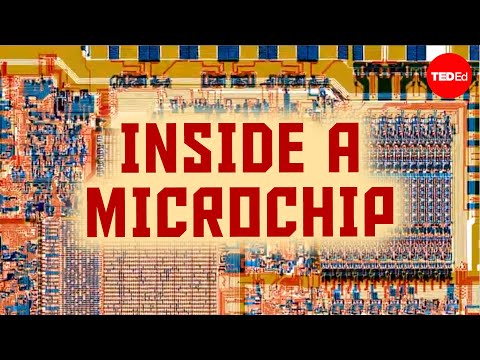
The silicon wafer was etched with billions of microscopic transistors, each acting as a tiny gate for electrical current.
In everyday conversation, you might hear the word when someone is talking about why their computer is fast or why a new piece of hardware is revolutionary. It is also a staple in the investment world, where the manufacturing of transistors (semiconductors) is a multi-billion dollar industry that drives global geopolitics. When there is a shortage of 'chips,' what people are really talking about is a shortage of the ability to manufacture and package these essential transistors into usable circuits.
- Historical Significance
- Invented at Bell Labs in 1947 by John Bardeen, Walter Brattain, and William Shockley, the transistor is often cited as the most important invention of the 20th century, earning the trio a Nobel Prize in Physics.
Early transistors were made of germanium, but researchers soon switched to silicon because of its superior thermal properties.
Ultimately, transistors are the bridge between the physical world of electricity and the abstract world of information. They allow us to manipulate energy to represent ideas, logic, and media. Whether you are sending a text, driving an electric car, or watching a movie, you are relying on the silent, lightning-fast operation of trillions of transistors working together to make that experience possible. Their ubiquity is so total that we often forget they are there, yet they are the silent engines of our civilization.
Engineers are currently exploring graphene as a potential material for the next generation of transistors.
The density of transistors on a chip determines its overall processing power and energy efficiency.
Using the word transistors correctly requires an understanding of its role as a plural noun in technical and general contexts. It is almost always used to refer to the components themselves or the technology as a whole. Because transistors are usually found in vast quantities within a single device, the plural form is much more common than the singular 'transistor,' unless you are referring to a specific individual component in a simple circuit.
- Technical Description
- When writing about hardware, you might say: 'The new processor architecture utilizes five-nanometer transistors to reduce power consumption.' This highlights the physical scale and the functional benefit.
The technician carefully replaced the blown transistors on the amplifier's circuit board.
In a historical or evolutionary context, the word is used to contrast modern technology with the past. You might write: 'The transition from vacuum tubes to transistors marked the beginning of the digital revolution.' Here, the word represents a category of technology rather than just a count of items. It serves as a shorthand for 'semiconductor technology' or 'solid-state electronics.'
- Metaphorical Usage
- While rare, 'transistors' can be used metaphorically to describe things that act as gates or amplifiers in other systems. For example: 'Neurons are the transistors of the human brain, processing signals to create thought.'
In academic writing, specifically in physics or electrical engineering, the word is often paired with specific descriptors. Phrases like 'junction transistors,' 'field-effect transistors,' or 'thin-film transistors' are common. When discussing the manufacturing process, you will see it used with verbs like 'etch,' 'fabricate,' 'implant,' or 'gate.' For instance: 'Photolithography is used to etch billions of transistors onto a silicon wafer.'
Modern supercomputers rely on the high-speed switching capabilities of specialized transistors.
In the business world, 'transistors' is often linked to supply chains and manufacturing capacity. A business report might state: 'The global shortage of transistors has led to significant delays in the automotive industry.' In this case, the word is used to represent the finished chips that contain the transistors, as the transistors themselves are not sold individually to car manufacturers but are integrated into larger components.
- Comparative Usage
- 'Compared to their predecessors, these new transistors are 30% more energy-efficient and operate at much higher frequencies.'
The student struggled to understand how transistors could function as both switches and amplifiers.
Finally, in consumer electronics marketing, the word is often used to impress potential buyers with technical specifications, even if the average consumer doesn't fully understand the physics. A company might boast about 'the highest transistor count in a consumer laptop,' using the word as a proxy for 'power' and 'sophistication.' In this context, the word carries a connotation of cutting-edge progress and engineering excellence.
By shrinking the size of individual transistors, manufacturers can fit more of them into the same physical space.
The discovery of the transistor effect in 1947 changed the course of human history by enabling the creation of transistors that were small and reliable.
You are most likely to encounter the word transistors in environments where technology is either being created, analyzed, or taught. In a university lecture hall for electrical engineering or physics, the word is used constantly. Professors will discuss the 'characteristics of transistors' or the 'physics of semiconductor junctions.' In these settings, the word is treated with high precision, often accompanied by complex mathematical equations describing electron flow and voltage thresholds.
- In the Tech Industry
- During product launches from companies like Apple, Intel, or NVIDIA, executives often mention transistor counts. They might say, 'Our new M2 chip features 20 billion transistors,' using the number to signal a leap in performance over the previous generation.
'The sheer density of transistors on this new GPU allows for real-time ray tracing,' the lead engineer explained during the keynote.
Another common place to hear the word is in news reports about the global economy. Because semiconductors are so vital to modern life, 'transistors' (often referred to as 'chips' or 'semiconductors') are a frequent topic in financial news. You might hear a reporter say, 'The trade dispute is centered on the manufacturing of advanced transistors used in artificial intelligence.' Here, the word is linked to national security, economic power, and the future of global industry.
- In Science Documentaries
- Documentaries about the history of the 20th century or the space race frequently mention transistors. They explain how transistors allowed NASA to build computers small enough to fit inside a spacecraft, a feat that would have been impossible with vacuum tubes.
In the world of high-end audio, 'transistors' is a word that can spark debate. Audiophiles often compare 'tube amps' (which use vacuum tubes) with 'solid-state amps' (which use transistors). You might hear someone say, 'I prefer the warm sound of tubes, but the precision and reliability of transistors are hard to beat.' In this context, the word is associated with a specific type of sound profile—often described as 'clean,' 'fast,' or 'analytical.'
'We need to check the power transistors in the output stage; the signal is clipping,' the audio repairman noted.
You will also hear the word in discussions about the future of computing. As we reach the physical limits of how small silicon transistors can be, scientists talk about 'quantum transistors' or 'optical transistors.' These conversations happen at research conferences and in science journals, where the word represents the cutting edge of human knowledge. They might discuss 'vertical transistors' or 'nanosheet transistors' as the next step in keeping Moore's Law alive.
- In Repair and DIY Communities
- On YouTube channels dedicated to electronics repair, you'll hear creators say, 'Always test your transistors with a multimeter to ensure they haven't shorted out.' It's a practical, hands-on word for people who build and fix things.
The documentary highlighted how the mass production of transistors led to the democratization of information technology.
Finally, you might hear the word in a more abstract sense in philosophy or sociology when discussing the 'Information Age.' Scholars might refer to transistors as the 'atoms of the digital world,' emphasizing that our entire modern reality is built upon these microscopic switches. Whether in a lab, a boardroom, or a repair shop, the word 'transistors' signals a focus on the fundamental mechanisms that power our world.
'The efficiency of these transistors is what allows your laptop to run for ten hours on a single charge,' the salesperson explained.
Researchers are working on biological transistors that could one day interface directly with living cells.
One of the most common mistakes people make with the word transistors is confusing them with other electronic components, particularly resistors or capacitors. While all three are found on circuit boards, they perform entirely different functions. A resistor limits current, a capacitor stores charge, but a transistor controls or amplifies the flow. Using 'transistor' when you mean 'resistor' is a frequent error for beginners in electronics, and it can lead to significant confusion in technical documentation.
- Confusion with 'Transmitters'
- Because the words sound somewhat similar, some people mistakenly use 'transistor' when they mean 'transmitter.' A transmitter is a device that sends out radio waves; a transistor is a component that might be *inside* a transmitter, but they are not the same thing.
Incorrect: 'The radio station's transistor was damaged by lightning.' (Should be 'transmitter')
Another mistake is the singular/plural confusion. In modern computing, we almost never deal with a single transistor. When discussing a CPU, saying 'the transistor in this chip is fast' is technically incorrect because there are billions of them. It is better to say 'the transistors in this chip' or 'the transistor technology used in this chip.' Conversely, if you are soldering a single component onto a board, you should use the singular 'transistor.'
- Misunderstanding the 'Switch' Analogy
- Many people think of a transistor as a mechanical switch like a light switch. However, transistors have no moving parts. They switch electronically using the properties of semiconductor materials. Describing them as 'moving' or 'clicking' is a conceptual error.
In writing, a common stylistic mistake is overusing the word when 'semiconductors' or 'chips' might be more appropriate for a general audience. While 'transistors' is technically precise, using it repeatedly in a non-technical article can make the text feel dense and unapproachable. However, in a technical paper, failing to specify the *type* of transistor (e.g., MOSFET vs. BJT) can be seen as a lack of detail.
Incorrect: 'The computer is made of transistors.' (While true, it's more common to say it's made of 'integrated circuits' or 'chips' which contain transistors.)
There is also a historical mistake where people credit the invention of the transistor to a single person. While William Shockley is often the most famous name associated with it, it was a collaborative effort at Bell Labs involving John Bardeen and Walter Brattain as well. In academic or historical writing, failing to acknowledge the team can be a factual oversight.
- The 'Power' Misconception
- People often assume that more transistors always means a faster device. While generally true, the *efficiency* and *architecture* of how those transistors are arranged are just as important. A chip with fewer, better-optimized transistors can sometimes outperform one with more.
'Don't confuse transistors with vacuum tubes; transistors are much smaller, more reliable, and require less power,' the teacher reminded the class.
Finally, in the context of 'transistor radios,' younger generations might mistakenly think the radio *is* the transistor. While the radio was named after the component that made it possible, the word 'transistor' refers to the internal part, not the whole device. Using the word to refer to a modern smartphone or digital radio would be an anachronism and a confusing use of the term.
The engineer noted that the transistors were overheating due to poor ventilation in the chassis.
It is a mistake to think that transistors are only used in computers; they are in everything from microwaves to cars.
When discussing the technology behind modern electronics, several words are often used interchangeably with transistors, though they have distinct meanings. Understanding these nuances is key to professional communication in the tech sector. The most common alternative is 'semiconductors,' which refers to the material (like silicon) that transistors are made of, but is often used as a metonym for the components themselves.
- Transistors vs. Semiconductors
- 'Semiconductor' is the broad category of materials and the industry as a whole. 'Transistors' are the specific devices made from those materials. You might say 'the semiconductor industry' but 'the transistor count on a chip.'
While transistors are the most famous semiconductors, diodes and LEDs also belong to the same family.
Another related term is 'Integrated Circuits' (ICs) or 'Microchips.' These are the finished products that contain thousands or billions of transistors. If you are talking about the physical object you plug into a motherboard, 'chip' or 'processor' is more common. If you are talking about the internal physics or the scale of the technology, 'transistors' is the correct term. For example: 'This chip is powerful because it has so many transistors.'
- Transistors vs. Vacuum Tubes
- In historical contexts, vacuum tubes are the direct ancestors of transistors. They did the same job but were large, glass-encased, and prone to burning out. Transistors are 'solid-state,' meaning they are made of solid material with no vacuum or moving parts.
In the context of logic and computing, you might hear 'logic gates.' A logic gate is a circuit that performs a basic operation (like AND, OR, NOT) and is usually made up of several transistors. While a transistor is a physical component, a logic gate is a functional unit. You could say, 'The transistors are arranged to form logic gates.'
The evolution from discrete transistors to integrated circuits allowed for the creation of the microprocessor.
For specific types of transistors, you might use acronyms like MOSFET, BJT, or FinFET. These are not just alternatives but more specific classifications. Using 'FinFET' instead of 'transistor' in a technical discussion about modern 7nm or 5nm chips shows a higher level of expertise. Similarly, 'power transistors' is a specific term for components designed to handle high voltages and currents, often found in power supplies and industrial machinery.
- Transistors vs. Diodes
- A diode is like a one-way valve for electricity. A transistor is like a valve that can be turned on and off or adjusted by a third connection. They are related but serve different roles in a circuit.
The invention of the planar process allowed for the mass production of transistors on a single piece of silicon.
Finally, in very modern contexts, you might hear about 'memristors' or 'quantum bits' (qubits). These are potential future alternatives to traditional transistors in specialized computing. While transistors are the current standard, these new terms represent the next frontier of signal processing and data storage. Understanding how 'transistors' fits into this broader family of electronic components helps in grasping the past, present, and future of technology.
Engineers are exploring how to use light instead of electricity in optical transistors to increase data speeds.
The reliability of silicon transistors has been the cornerstone of the electronics industry for over fifty years.
How Formal Is It?
재미있는 사실
John Pierce, who named the transistor, was also a science fiction author! He wanted a name that fit with other components like 'varistor' and 'thermistor.'
발음 가이드
- Pronouncing it as 'tran-zis-ters' with a hard 'e'.
- Confusing the 's' sound with a soft 's' instead of a 'z' sound.
- Stressing the first syllable instead of the second.
- Adding an extra 'i' like 'trans-is-ti-ors'.
- Mumbling the 'ors' ending.
난이도
Requires some technical knowledge to fully understand the context.
Easy to use as a noun, but harder to use in complex technical descriptions.
Pronunciation is straightforward once the 'z' sound is mastered.
Can be confused with 'transmitters' or 'resistors' in fast speech.
다음에 무엇을 배울까
선수 학습
다음에 배울 것
고급
알아야 할 문법
Pluralization of technical nouns
One transistor, many transistors.
Using 'as' to describe function
Transistors act as switches.
Passive voice in technical writing
Transistors are etched onto the wafer.
Compound adjectives with numbers
A 5-nanometer transistor (note the singular 'transistor' here).
Collective nouns and metonymy
The industry is focused on 'silicon' (meaning silicon transistors).
수준별 예문
The computer has many small transistors.
Компьютер имеет много маленьких транзисторов.
Plural noun 'transistors'.
Transistors are inside your phone.
Транзисторы находятся внутри вашего телефона.
Present simple tense.
A chip has many transistors.
В чипе много транзисторов.
Countable noun.
Transistors make the radio work.
Транзисторы заставляют радио работать.
Subject-verb agreement.
These transistors are very tiny.
Эти транзисторы очень крошечные.
Demonstrative adjective 'these'.
Do you see the transistors?
Вы видите транзисторы?
Question form.
Transistors use electricity.
Транзисторы используют электричество.
Simple sentence structure.
I like learning about transistors.
Мне нравится учить о транзисторах.
Gerund 'learning'.
Transistors are better than vacuum tubes.
Транзисторы лучше, чем вакуумные лампы.
Comparative 'better than'.
The engineer is fixing the transistors.
Инженер чинит транзисторы.
Present continuous tense.
Most electronics use silicon transistors.
Большинство электроники использует кремниевые транзисторы.
Adjective 'silicon' modifying 'transistors'.
He bought some new transistors for his project.
Он купил несколько новых транзисторов для своего проекта.
Past simple 'bought'.
Transistors can turn a signal on or off.
Транзисторы могут включать или выключать сигнал.
Modal verb 'can'.
There are billions of transistors on this chip.
На этом чипе миллиарды транзисторов.
'There are' with plural subject.
Why are transistors so important?
Почему транзисторы так важны?
Interrogative sentence.
Transistors helped make computers smaller.
Транзисторы помогли сделать компьютеры меньше.
Infinitive without 'to' after 'help'.
Transistors act as the building blocks of modern CPUs.
Транзисторы выступают в качестве строительных блоков современных процессоров.
Metaphorical use of 'building blocks'.
If we didn't have transistors, we wouldn't have smartphones.
Если бы у нас не было транзисторов, у нас не было бы смартфонов.
Second conditional.
The discovery of transistors led to the digital age.
Открытие транзисторов привело к цифровой эпохе.
Phrasal verb 'led to'.
These transistors are designed to handle high voltage.
Эти транзисторы разработаны для работы с высоким напряжением.
Passive voice 'are designed'.
We need to increase the number of transistors to improve speed.
Нам нужно увеличить количество транзисторов, чтобы улучшить скорость.
Infinitive of purpose 'to improve'.
Transistors are much more reliable than the components they replaced.
Транзисторы гораздо надежнее, чем компоненты, которые они заменили.
Relative clause 'they replaced'.
How many transistors can fit on a single wafer?
Сколько транзисторов может поместиться на одной пластине?
Countable quantity 'how many'.
The transistors amplify the sound in the speaker.
Транзисторы усиливают звук в динамике.
Present simple for general truth.
Modern processors contain billions of microscopic transistors etched onto silicon.
Современные процессоры содержат миллиарды микроскопических транзисторов, вытравленных на кремнии.
Past participle 'etched' as an adjective.
By utilizing transistors, engineers were able to miniaturize complex circuits.
Используя транзисторы, инженеры смогли миниатюризировать сложные схемы.
Gerund phrase 'By utilizing'.
The failure of these transistors caused the entire system to crash.
Выход из строя этих транзисторов привел к сбою всей системы.
Noun phrase as subject.
Transistors function by controlling the flow of electrons through a semiconductor.
Транзисторы функционируют, контролируя поток электронов через полупроводник.
Preposition 'by' followed by a gerund.
Moore's Law predicts the exponential growth of transistors on integrated circuits.
Закон Мура предсказывает экспоненциальный рост числа транзисторов в интегральных схемах.
Technical term 'integrated circuits'.
Unlike vacuum tubes, transistors do not require a warm-up period.
В отличие от вакуумных ламп, транзисторам не требуется период прогрева.
Contrastive preposition 'unlike'.
The efficiency of transistors is a key factor in battery life.
Эффективность транзисторов является ключевым фактором времени автономной работы.
Genitive construction 'efficiency of transistors'.
Researchers are developing new materials to replace silicon in transistors.
Исследователи разрабатывают новые материалы для замены кремния в транзисторах.
Present continuous for ongoing action.
The transition to FinFET transistors allowed for better control over leakage current.
Переход на транзисторы FinFET позволил лучше контролировать ток утечки.
Technical jargon 'leakage current'.
At this scale, the behavior of transistors is heavily influenced by quantum effects.
На таком масштабе поведение транзисторов сильно зависит от квантовых эффектов.
Adverbial phrase 'at this scale'.
The sheer density of transistors necessitates advanced cooling solutions in modern data centers.
Сама плотность транзисторов требует передовых решений по охлаждению в современных центрах обработки данных.
Verb 'necessitates' for formal tone.
Photolithography is the primary method used to pattern transistors onto wafers.
Фотолитография является основным методом, используемым для нанесения рисунка транзисторов на пластины.
Passive participle 'used to pattern'.
The geopolitical struggle for dominance in the manufacturing of advanced transistors is intensifying.
Геополитическая борьба за доминирование в производстве передовых транзисторов обостряется.
Complex subject phrase.
Transistors can be configured to perform a variety of logical operations.
Транзисторы могут быть сконфигурированы для выполнения различных логических операций.
Passive modal 'can be configured'.
The thermal management of billions of transistors remains a significant engineering hurdle.
Управление тепловым режимом миллиардов транзисторов остается серьезным инженерным препятствием.
Gerund phrase as subject.
Innovations in transistor design are crucial for the continued advancement of artificial intelligence.
Инновации в дизайне транзисторов имеют решающее значение для дальнейшего развития искусственного интеллекта.
Adjective 'crucial' for emphasis.
The philosophical implications of reducing human thought to the switching of transistors are profound.
Философские последствия сведения человеческой мысли к переключению транзисторов глубоки.
Abstract noun phrase.
As we approach the atomic limit, the reliability of traditional silicon transistors begins to diminish.
По мере приближения к атомному пределу надежность традиционных кремниевых транзисторов начинает снижаться.
Subordinate clause 'As we approach'.
The advent of the transistor precipitated an unprecedented era of socio-economic transformation.
Появление транзистора ускорило беспрецедентную эру социально-экономических преобразований.
Formal verb 'precipitated'.
Quantum tunneling in sub-nanometer transistors poses a formidable challenge to further scaling.
Квантовое туннелирование в субнанометровых транзисторах представляет собой серьезную проблему для дальнейшего масштабирования.
Technical noun phrase as subject.
The ubiquity of transistors has rendered the distinction between the physical and digital realms increasingly tenuous.
Повсеместное распространение транзисторов сделало различие между физической и цифровой сферами все более призрачным.
Present perfect 'has rendered'.
Semiconductor foundries are now grappling with the immense capital expenditure required for next-generation transistors.
Полупроводниковые заводы сейчас борются с огромными капитальными затратами, необходимыми для транзисторов следующего поколения.
Continuous aspect with 'grappling'.
The intricate interplay between dopant concentrations and transistor performance is a central theme in solid-state physics.
Сложное взаимодействие между концентрациями примесей и характеристиками транзисторов является центральной темой физики твердого тела.
Formal academic structure.
One might argue that the transistor is the most impactful artifact of the Anthropocene.
Можно утверждать, что транзистор является самым влиятельным артефактом антропоцена.
Modal 'might' for academic hedging.
동의어
반의어
자주 쓰는 조합
자주 쓰는 구문
— Referring to transistors as the most important part of a computer.
Transistors are truly the heart of the machine.
— Electronics that use transistors instead of tubes.
The move to solid-state electronics changed everything.
— The observation that transistor counts double regularly.
Moore's Law has driven the tech industry for decades.
— The system of 0s and 1s controlled by transistors.
Transistors enable the binary logic used in software.
— The size generation of the transistors being used.
We are currently moving to the 3nm semiconductor node.
— A chip that contains many transistors.
The integrated circuit revolutionized the world.
— The two positions a transistor can be in.
The transistor switches between an on and off state.
— The process of making a signal stronger using transistors.
Transistors are used for signal amplification in audio gear.
— Electricity that escapes from a transistor when it should be off.
Leakage current is a problem in very small transistors.
— A group of transistors performing a logical function.
The CPU is made of millions of logic gates.
자주 혼동되는 단어
Resistors only limit current; transistors control or amplify it.
Transmitters send signals; transistors are parts inside them.
Capacitors store energy; transistors act as gates.
관용어 및 표현
— A modern play on 'firing on all cylinders,' meaning working perfectly.
The new AI model is firing on all transistors.
informal— The fundamental parts of something larger.
Transistors are the building blocks of the digital age.
neutral— To change state instantly, often used metaphorically.
He can switch his focus like a transistor.
informal— To make a message louder or more widely known.
Social media acts like transistors to amplify the message.
metaphorical— Extremely reliable, often associated with solid-state tech.
The transistor-based system is solid as a rock.
informal— Referring to things that are extremely small or fundamental.
Modern transistors are engineered at the atomic level.
technical— The part that does the thinking/processing.
The transistors in the CPU are the brain of the operation.
informal— The most advanced part of a technology.
These new transistors are truly cutting edge.
neutral— Someone or something that controls access (like a transistor gate).
The transistor acts as a gatekeeper for the current.
metaphorical— The internal workings of a device.
Under the hood, it's all just billions of transistors.
informal혼동하기 쉬운
Singular vs. plural.
Use 'transistor' for one part, 'transistors' for the technology or many parts.
This circuit needs one transistor, but the CPU has billions of transistors.
Both start with 'trans' and deal with electricity.
A transformer changes voltage levels (usually big); a transistor switches/amplifies (usually tiny).
The transformer is on the pole outside; the transistors are in your phone.
Often used as synonyms.
Semiconductor is the material; transistor is the device made from it.
Silicon is a semiconductor used to make transistors.
Both refer to small tech parts.
A microchip is a package containing many transistors.
The microchip has 10 million transistors on it.
They do the same job.
Vacuum tubes are old, large, and hot; transistors are modern, tiny, and cool.
Old TVs used vacuum tubes, but new ones use transistors.
문장 패턴
The [device] has [number] transistors.
The radio has three transistors.
Transistors are [adjective] than [noun].
Transistors are smaller than tubes.
Transistors are used to [verb].
Transistors are used to amplify sound.
By [verb-ing], transistors can [verb].
By switching on and off, transistors can process data.
The density of transistors [verb] [noun].
The density of transistors determines the chip's power.
As transistors [verb], they [verb].
As transistors shrink, they become more efficient.
The advent of transistors [verb] [noun].
The advent of transistors revolutionized global communication.
One must consider the role of transistors in [noun].
One must consider the role of transistors in modern geopolitics.
어휘 가족
명사
동사
형용사
관련
사용법
Very high in technical and news contexts.
-
Using 'transistor' to mean 'radio'.
→
I listened to the news on my transistor radio.
While common in the 60s, calling the whole device 'a transistor' is technically incorrect and dated.
-
Confusing 'transistors' with 'transmitters'.
→
The radio transmitter uses many transistors.
A transmitter sends signals; a transistor is a component. They are not interchangeable.
-
Saying 'much transistors'.
→
There are many transistors on the chip.
'Transistors' is a countable noun, so 'many' must be used instead of 'much'.
-
Thinking transistors have moving parts.
→
Transistors switch electronically, not mechanically.
Transistors are 'solid-state,' meaning they have no moving parts like a traditional light switch.
-
Capitalizing 'transistors' in the middle of a sentence.
→
The circuit contains several transistors.
Unless it's at the start of a sentence or part of a title, 'transistors' is a common noun and should not be capitalized.
팁
The Faucet Analogy
Always visualize a transistor as a water faucet. The handle is the 'gate' that controls the flow. This simple image will help you remember that transistors are controllers of energy, not just paths for it.
MOSFET vs. BJT
If you are entering the world of electronics, learn the difference between MOSFETs (used in computers) and BJTs (used in simple circuits). It will make your use of the word 'transistors' much more professional.
The 1947 Milestone
Remember the year 1947. It's the birth year of the transistor. Knowing this date helps you place the 'solid-state revolution' in the correct historical context compared to the World Wars or the Space Race.
Countable vs. Uncountable
Remember that 'transistors' is countable. You can say 'many transistors' but not 'much transistors.' This is a common mistake for non-native speakers who treat it like 'equipment'.
The Middle 'Z'
The 's' in 'transistors' is pronounced like a 'z'. Practice saying 'tran-ZIS-tors' slowly to get the vibration right. It makes a big difference in how natural you sound.
Avoid Overuse
In a long essay, vary your vocabulary. Use 'semiconductor devices,' 'logic gates,' or 'microscopic switches' to refer to transistors occasionally to keep the reader engaged.
Watch a Visualizer
Search for a 'transistor visualization' online. Seeing how the electrons move when the gate is activated will make the definition of 'transistors' stick in your mind forever.
Impress with Numbers
Knowing a few transistor counts (like 15 billion for an iPhone) is a great way to use the word in a conversation about modern technology and sound well-informed.
Static Electricity
If you ever handle real transistors, remember they are sensitive to static. Mentioning 'ESD (Electrostatic Discharge) protection' when talking about transistors shows you know your stuff.
암기하기
기억법
Think of 'TRANSferring' electricity through a 'resISTOR'. TRANS-ISTOR. It transfers and resists signals.
시각적 연상
Imagine a tiny water faucet. The handle is the 'gate' that controls the water. That faucet is a transistor.
Word Web
챌린지
Try to explain how a transistor works to a friend using only the 'water faucet' analogy. Use the word 'transistors' at least three times.
어원
The word was coined in 1948 by John R. Pierce at Bell Labs. It is a portmanteau (a blend of words) of 'transfer' and 'resistor' or 'transconductance' and 'varistor.'
원래 의미: A device that transfers a signal across a resistor.
English (Modern scientific coinage).문화적 맥락
No specific sensitivities, though technical jargon can be exclusionary if not explained.
Commonly associated with the 'Silicon Valley' mythos and the 1950s 'Space Age' optimism.
실생활에서 연습하기
실제 사용 상황
Computing
- transistor count
- clock speed
- processing power
- logic gates
History of Science
- invention of the transistor
- Bell Labs
- Nobel Prize
- solid-state revolution
Electronics Repair
- blown transistor
- test the transistor
- solder the component
- voltage drop
Economics/Business
- semiconductor shortage
- chip manufacturing
- supply chain
- tech giants
Physics
- electron flow
- p-n junction
- charge carriers
- semiconductor properties
대화 시작하기
"Did you know that a modern smartphone has more than 15 billion transistors inside it?"
"How do you think our lives would be different if transistors were never invented?"
"Have you ever seen what a single transistor looks like on a circuit board?"
"Do you think we will ever find a material better than silicon for making transistors?"
"Why do you think the invention of the transistor is considered so important for history?"
일기 주제
Reflect on how the miniaturization of transistors has changed your daily routine over the last ten years.
Imagine a world where vacuum tubes were never replaced by transistors. Describe a typical day in that world.
Write a short explanation of how transistors work, intended for a ten-year-old child.
Discuss the ethical and environmental implications of manufacturing billions of transistors every year.
How does the concept of Moore's Law (transistor doubling) make you feel about the future of AI?
자주 묻는 질문
10 질문Transistors have two primary functions: they act as switches and amplifiers. As a switch, they can turn an electrical current on or off, which is the basis for digital logic (0s and 1s). As an amplifier, they take a small electrical signal and turn it into a larger one, which is essential for audio and radio communication.
Silicon is a semiconductor, meaning its ability to conduct electricity can be precisely controlled. It is also very abundant (it's found in sand) and can withstand high temperatures, making it ideal for the mass production of reliable electronic components like transistors.
A modern smartphone typically contains between 10 billion and 15 billion transistors. These are mostly packed into the main processor (CPU) and the graphics processor (GPU), allowing the phone to perform complex tasks like video streaming and gaming.
The transistor was invented in 1947 at Bell Labs by three scientists: John Bardeen, Walter Brattain, and William Shockley. They were awarded the Nobel Prize in Physics in 1956 for this groundbreaking invention, which paved the way for the computer age.
Yes, but it is becoming much harder. For decades, engineers followed Moore's Law, doubling the number of transistors on a chip every two years. We are now reaching the 'atomic limit,' where transistors are only a few atoms wide, leading to new designs like 3D transistors (FinFETs).
A transistor radio is a small, portable radio receiver that uses transistors instead of vacuum tubes. Introduced in the 1950s, they were the first mass-market electronic devices that were truly portable, changing how people consumed music and news.
Unlike vacuum tubes, transistors do not have a filament that burns out, so they can theoretically last for decades. However, they can be damaged by excessive heat, high voltage, or physical stress. In very small modern chips, 'electromigration' can eventually cause them to fail after many years of use.
These are the two main types of Bipolar Junction Transistors (BJTs). The difference lies in the arrangement of the semiconductor materials (Negative and Positive types). In an NPN transistor, a positive signal at the base allows current to flow; in a PNP, a negative signal does the same.
Transistors are made using a process called photolithography. A silicon wafer is coated with light-sensitive chemicals, and a pattern is 'printed' onto it using ultraviolet light. Chemicals then etch away parts of the silicon to create the complex structures of billions of transistors.
Quantum computers use 'qubits' instead of traditional transistors. While transistors represent a definite 0 or 1, qubits can exist in multiple states at once. However, traditional transistors are still used in the control systems that manage quantum computers.
셀프 테스트 200 질문
Explain the difference between a transistor and a vacuum tube in three sentences.
Well written! Good try! Check the sample answer below.
Describe how Moore's Law has affected the development of smartphones.
Well written! Good try! Check the sample answer below.
Write a short paragraph about the importance of transistors in modern medicine.
Well written! Good try! Check the sample answer below.
Compare and contrast BJTs and FETs.
Well written! Good try! Check the sample answer below.
Imagine a world without transistors. What would your daily life look like?
Well written! Good try! Check the sample answer below.
How does the 'gate' in a transistor control electricity? Use an analogy.
Well written! Good try! Check the sample answer below.
Discuss the environmental impact of producing billions of transistors.
Well written! Good try! Check the sample answer below.
Why is silicon the preferred material for transistors? Mention its properties.
Well written! Good try! Check the sample answer below.
Explain the role of transistors in the 'Information Age'.
Well written! Good try! Check the sample answer below.
Write a dialogue between an engineer and a student about transistor counts.
Well written! Good try! Check the sample answer below.
Describe the process of photolithography in simple terms.
Well written! Good try! Check the sample answer below.
What are the challenges of making transistors smaller than 5 nanometers?
Well written! Good try! Check the sample answer below.
How did the transistor radio change youth culture in the 1950s?
Well written! Good try! Check the sample answer below.
Explain why transistors are called 'solid-state' devices.
Well written! Good try! Check the sample answer below.
Write a technical specification for a high-power transistor.
Well written! Good try! Check the sample answer below.
Discuss the geopolitical importance of semiconductor foundries.
Well written! Good try! Check the sample answer below.
How do transistors enable artificial intelligence?
Well written! Good try! Check the sample answer below.
Explain the concept of binary logic using transistors as an example.
Well written! Good try! Check the sample answer below.
What is the relationship between transistors and integrated circuits?
Well written! Good try! Check the sample answer below.
Predict the next major evolution in transistor technology.
Well written! Good try! Check the sample answer below.
Describe what a transistor is to someone who has never heard of it.
Read this aloud:
당신의 답변:
Speech recognition is not supported in your browser. Try Chrome or Edge.
Give a 2-minute presentation on the history of the transistor.
Read this aloud:
당신의 답변:
Speech recognition is not supported in your browser. Try Chrome or Edge.
Discuss the pros and cons of continuing to shrink transistors.
Read this aloud:
당신의 답변:
Speech recognition is not supported in your browser. Try Chrome or Edge.
Explain the faucet analogy for a transistor's operation.
Read this aloud:
당신의 답변:
Speech recognition is not supported in your browser. Try Chrome or Edge.
Debate whether Moore's Law is dead or just evolving.
Read this aloud:
당신의 답변:
Speech recognition is not supported in your browser. Try Chrome or Edge.
Talk about your favorite piece of technology and the transistors inside it.
Read this aloud:
당신의 답변:
Speech recognition is not supported in your browser. Try Chrome or Edge.
Explain how a transistor radio works compared to a smartphone.
Read this aloud:
당신의 답변:
Speech recognition is not supported in your browser. Try Chrome or Edge.
Describe the process of making a microchip as if you were a tour guide.
Read this aloud:
당신의 답변:
Speech recognition is not supported in your browser. Try Chrome or Edge.
Discuss the importance of semiconductors in global politics.
Read this aloud:
당신의 답변:
Speech recognition is not supported in your browser. Try Chrome or Edge.
Role-play a job interview for an electrical engineering position.
Read this aloud:
당신의 답변:
Speech recognition is not supported in your browser. Try Chrome or Edge.
Explain the difference between an NPN and PNP transistor verbally.
Read this aloud:
당신의 답변:
Speech recognition is not supported in your browser. Try Chrome or Edge.
Talk about the future of computing beyond silicon.
Read this aloud:
당신의 답변:
Speech recognition is not supported in your browser. Try Chrome or Edge.
Describe a circuit diagram you are looking at.
Read this aloud:
당신의 답변:
Speech recognition is not supported in your browser. Try Chrome or Edge.
Discuss how transistors have changed the music industry.
Read this aloud:
당신의 답변:
Speech recognition is not supported in your browser. Try Chrome or Edge.
Explain why transistors are essential for artificial intelligence.
Read this aloud:
당신의 답변:
Speech recognition is not supported in your browser. Try Chrome or Edge.
Talk about the challenges of heat management in computers.
Read this aloud:
당신의 답변:
Speech recognition is not supported in your browser. Try Chrome or Edge.
Describe the feeling of soldering a tiny transistor for the first time.
Read this aloud:
당신의 답변:
Speech recognition is not supported in your browser. Try Chrome or Edge.
Explain the concept of a 'logic gate' to a classmate.
Read this aloud:
당신의 답변:
Speech recognition is not supported in your browser. Try Chrome or Edge.
Discuss the role of Bell Labs in 20th-century innovation.
Read this aloud:
당신의 답변:
Speech recognition is not supported in your browser. Try Chrome or Edge.
Predict how many transistors will be in a phone in 2050.
Read this aloud:
당신의 답변:
Speech recognition is not supported in your browser. Try Chrome or Edge.
Listen to a podcast about the 1947 invention and list the key dates.
Watch a video on how CPUs are made and identify the 'clean room' requirements.
Listen to a lecture on semiconductor physics and define 'Fermi levels'.
Watch a news clip about the chip shortage and list three affected industries.
Listen to an interview with a chip designer and identify their main challenge.
Watch a documentary snippet about the first transistor radio and describe its size.
Listen to a tutorial on testing transistors with a multimeter and list the steps.
Watch a presentation on FinFET technology and explain the 3D structure.
Listen to a debate on the future of Moore's Law and summarize both sides.
Watch a children's science show explaining transistors and identify the analogy used.
Listen to a technical talk on quantum tunneling and its effect on transistors.
Watch a video about Silicon Valley's history and find the origin of its name.
Listen to a report on the environmental cost of semiconductor mining.
Watch a product launch and note the transistor count of the new processor.
Listen to an audio guide for an electronics museum and identify the first transistor model.
/ 200 correct
Perfect score!
Summary
Transistors are the 'cells' of the digital world; they control electricity to create logic, making everything from your microwave to the internet possible. For example, a CPU is essentially a massive collection of transistors switching on and off.
- Transistors are the essential building blocks of modern electronics, acting as tiny switches or amplifiers.
- They replaced vacuum tubes, allowing for the miniaturization and mass production of computers and phones.
- A single modern microchip can contain billions of transistors working together to process information.
- Invented in 1947, they are considered one of the most important inventions in human history.
Context is Key
When using 'transistors' in a sentence, make sure the context clearly indicates whether you mean the individual components or the technology as a whole. This helps avoid confusion with 'chips' or 'processors'.
The Faucet Analogy
Always visualize a transistor as a water faucet. The handle is the 'gate' that controls the flow. This simple image will help you remember that transistors are controllers of energy, not just paths for it.
MOSFET vs. BJT
If you are entering the world of electronics, learn the difference between MOSFETs (used in computers) and BJTs (used in simple circuits). It will make your use of the word 'transistors' much more professional.
The 1947 Milestone
Remember the year 1947. It's the birth year of the transistor. Knowing this date helps you place the 'solid-state revolution' in the correct historical context compared to the World Wars or the Space Race.
예시
The invention of transistors revolutionized the field of electronics.
관련 콘텐츠
Technology 관련 단어
viewmodel
C1뷰모델(ViewModel)은 UI 관련 데이터를 관리하는 아키텍처 구성 요소입니다.
sdk
B2소프트웨어 개발 키트(SDK)는 애플리케이션을 만들기 위한 도구 모음입니다.
engines
B1엔진은 에너지를 운동으로 바꾸는 기계입니다.
post
A1소셜 미디어나 블로그에 게시된 메시지나 이미지.
apps
B1앱은 특정 작업을 수행하도록 설계된 컴퓨터 프로그램입니다.
api
B1API는 서로 다른 소프트웨어 애플리케이션이 서로 통신하고 데이터를 공유할 수 있도록 하는 규칙 집합입니다.
scroll
A1두루마리는 글을 쓰기 위해 종이를 길게 말아 놓은 것입니다.
technologies
B1기술은 실용적인 목적을 위한 과학적 지식의 다양한 응용입니다.
algorithms
B2알고리즘은 어떤 문제를 해결하기 위해 정해진 일련의 절차나 방법을 의미합니다.
intelligence
B2지능은 배우고 이해하는 능력입니다. 또한 정보나 첩보를 의미하기도 합니다.

