









wild 30초 만에
- Wild primarily refers to animals and plants living in their natural state without human intervention, such as lions in the savannah or flowers in a meadow.
- It also describes human behavior that is energetic, loud, or lacks self-control, often used to describe exciting parties or rebellious personalities.
- In a figurative sense, wild means something extreme or based on chance, like a 'wild guess' or 'wild rumors' that lack evidence.
- The word can also describe powerful natural forces like 'wild weather' or 'wild landscapes' that feel untamed and majestic.
The adjective wild is a foundational pillar of the English language, primarily used to describe entities, environments, or behaviors that exist in their natural state, untouched by the refining hand of human civilization or domesticity. At its core, 'wild' signifies a lack of restraint, a state of being that is governed by instinct rather than law, and a raw energy that can be both beautiful and dangerous. When we speak of the 'wild,' we are often referring to the vast, uncultivated regions of our planet—forests, oceans, and deserts—where life thrives without human intervention. However, the word's utility extends far beyond biology and geography. It has evolved into a powerful metaphorical tool used to describe human emotions, social gatherings, speculative guesses, and even the chaotic nature of weather patterns.
- Biological Context
- In biology, 'wild' distinguishes species that live in their natural habitat from those that have been domesticated. A wild horse, for instance, has never known a saddle or a stable, living instead by the rhythms of the herd and the seasons. This usage emphasizes autonomy and survival in a competitive ecosystem.
The hikers were thrilled to spot a wild bear foraging for berries near the riverbank.
Beyond the literal, 'wild' describes behavior that is unrestrained or unconventional. If a person is described as having a 'wild' personality, it suggests they are adventurous, perhaps a bit reckless, and certainly not bound by the typical social expectations of their peers. This can be a compliment, suggesting a vibrant and free-spirited nature, or a critique, implying a lack of discipline or responsibility. In the context of a social event, a 'wild party' is one characterized by loud music, energetic dancing, and perhaps a degree of chaos that deviates from a quiet, controlled gathering.
- Behavioral Nuance
- When applied to people, 'wild' often captures the essence of rebellion or high energy. It describes someone who follows their impulses rather than a pre-planned path, often leading to unpredictable and exciting outcomes.
Furthermore, 'wild' is frequently used in the realm of probability and speculation. A 'wild guess' is an estimate made without any supporting evidence or data—a shot in the dark. Similarly, 'wild rumors' are stories that circulate without a basis in fact, often growing more exaggerated as they spread. In these instances, 'wild' serves as a synonym for 'unfounded' or 'extreme.' It highlights the distance between the statement and the reality it attempts to describe.
I had no idea what the answer was, so I just took a wild guess during the quiz.
In the natural world, we also apply 'wild' to weather and landscapes. A 'wild storm' is one with high winds and heavy rain that feels uncontrollable and fierce. A 'wild landscape' is one that is rugged, overgrown, and perhaps difficult to navigate. This usage evokes a sense of awe and respect for the power of nature, reminding us that despite our technological advancements, there are forces that remain beyond our mastery. The word carries a dualistic weight: it represents both the origin of life and the chaotic forces that can disrupt it.
- Environmental Impact
- Describing a garden as 'wild' might mean it is beautifully natural or frustratingly overgrown, depending on the gardener's intent. It suggests a space where nature has reclaimed control from human design.
The wild coast of Scotland is famous for its dramatic cliffs and crashing waves.
In summary, 'wild' is a versatile descriptor that bridges the gap between the physical world and the psychological one. Whether you are describing a lion in the savannah, a chaotic night out, or a desperate attempt to answer a question, 'wild' captures the essence of that which is untamed, unpredictable, and intensely alive. Its use in English is ubiquitous because it touches on the fundamental human experience of navigating between the order we create and the chaos we encounter.
The children's imagination ran wild as they built a fort out of old cardboard boxes.
Despite the wild conditions, the sailors managed to bring the boat safely back to the harbor.
Using 'wild' correctly in a sentence requires an understanding of its grammatical flexibility and its various shades of meaning. As an adjective, it typically precedes the noun it modifies or follows a linking verb. However, the context determines whether 'wild' implies a lack of domestication, an intensity of emotion, or a degree of inaccuracy. Mastering these nuances allows for more descriptive and evocative communication. Let's explore the primary ways 'wild' functions within English syntax, focusing on its placement, its common pairings, and the subtle shifts in meaning that occur when it moves from literal to figurative usage.
- Attributive Usage
- When 'wild' is placed directly before a noun, it serves as a direct descriptor. This is the most common way to identify animals, plants, or environments. For example, 'wild flowers' or 'wild animals.' In this position, it sets the stage for the noun, immediately establishing its natural or untamed status.
We spent the afternoon picking wild strawberries in the meadow behind the house.
When 'wild' follows a linking verb like 'is,' 'became,' or 'seemed,' it describes the state or quality of the subject. This is often used to describe behavior or emotional states. Saying 'The crowd went wild' uses 'wild' as a predicative adjective to describe the sudden transition from calm to intense excitement. Here, the verb 'went' acts as a copula, linking the subject 'crowd' to the state of being 'wild.' This structure is particularly effective for showing change or reaction.
- Predicative Usage
- This structure is common in narrative writing to show a character's reaction. 'He became wild with grief' or 'The dog grew wild when it saw the leash.' It emphasizes the internal state manifesting as external behavior.
In more complex sentences, 'wild' can be used to describe abstract concepts like ideas, imaginations, or rumors. When we say 'Her imagination is wild,' we are attributing a quality of boundlessness and creativity to her mind. This figurative use is essential for creative writing and daily conversation alike. It allows the speaker to convey a sense of 'too much' or 'beyond the norm' without necessarily being negative. A 'wild idea' might be the very thing that solves a difficult problem precisely because it ignores traditional constraints.
The scientist proposed a wild theory that challenged decades of established research.
Adverbial phrases also frequently utilize 'wild' in its adverbial form, 'wildly.' While 'wild' itself can sometimes function as an adverb in informal speech (e.g., 'running wild'), 'wildly' is the standard choice for modifying verbs, adjectives, or other adverbs. For example, 'The stock market fluctuated wildly' or 'He was wildly successful.' This adds a layer of intensity and unpredictability to the action being described. It suggests that the action is occurring at an extreme level or in an erratic manner.
- Adverbial Modification
- Using 'wildly' helps quantify the degree of an action. It moves the description from a simple statement of fact to a vivid depiction of intensity. 'She smiled wildly' is much more descriptive than 'She smiled a lot.'
The rumors about the celebrity's retirement were wildly inaccurate.
Finally, consider the use of 'wild' in fixed expressions and idioms. Phrases like 'wild goose chase' or 'sow your wild oats' have specific meanings that cannot be deduced simply by looking at the word 'wild' in isolation. In these cases, 'wild' contributes a sense of futility or youthful recklessness to the overall idiom. Understanding these set phrases is a key part of reaching a B2 or C1 level of English proficiency, as they appear frequently in literature, film, and casual dialogue.
Looking for my lost keys in this messy room feels like a wild goose chase.
The children were allowed to run wild in the park until the sun went down.
The word 'wild' is ubiquitous in English-speaking cultures, appearing in a vast array of contexts ranging from the scientific to the colloquial. You will encounter it in nature documentaries, where narrators use it to describe the majesty and brutality of the animal kingdom. You will hear it in news reports, particularly those covering environmental issues like 'wildfires' or the 're-wilding' of urban spaces. In the world of entertainment, 'wild' is a favorite for song titles, movie scripts, and sports commentary, often used to evoke a sense of high energy, rebellion, or unpredictability. Understanding where and how 'wild' is used in these different domains will help you grasp its cultural resonance and practical application.
- Nature and Science
- In documentaries and biology textbooks, 'wild' is the standard term for non-domesticated life. Phrases like 'wildlife conservation' or 'in the wild' are fundamental. It emphasizes the ecological balance of systems that operate without human management.
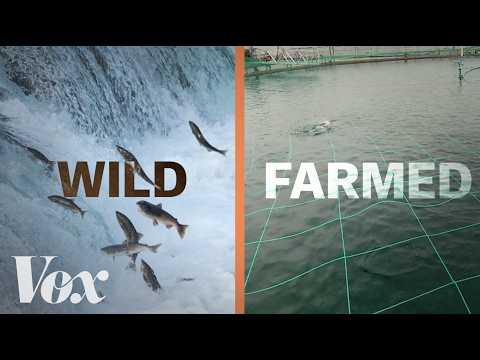
The documentary explored the challenges faced by wild salmon as they migrate upstream to spawn.
In daily conversation, 'wild' is frequently used as an intensifier or a descriptor of social chaos. If a friend tells you about a 'wild night,' they are likely describing a series of unexpected, exciting, or perhaps slightly out-of-control events. Similarly, in the workplace, a colleague might describe a 'wild week' to signify a period of intense activity, numerous deadlines, and perhaps a bit of organizational disarray. In these contexts, 'wild' is synonymous with 'hectic' or 'extraordinary.' It is a versatile way to convey that things were far from ordinary.
- Colloquial and Social Use
- Slang and informal speech often use 'wild' to mean 'crazy' or 'unbelievable.' For example, 'That's wild!' is a common reaction to a shocking story or an impressive feat. It expresses a mix of surprise and acknowledgment.
The news media also relies heavily on 'wild' to describe extreme events. 'Wild weather' is a frequent headline during hurricane or blizzard seasons. 'Wild swings' in the stock market describe periods of extreme volatility where prices rise and fall rapidly without a clear trend. In political discourse, 'wild claims' or 'wild accusations' are used to describe statements made by opponents that are seen as lacking evidence or being intentionally inflammatory. Here, 'wild' serves to delegitimize the claim by framing it as being outside the bounds of rational debate.
The morning news reported wild fluctuations in the price of gold following the economic announcement.
In literature and film, 'wild' often carries a romantic or philosophical weight. It represents the 'frontier'—both the physical frontier of the American West and the psychological frontier of the human soul. Characters who are 'wild' are often the protagonists who refuse to conform to society's rules, seeking instead a more authentic, albeit more dangerous, existence. Think of Jack London's 'The Call of the Wild' or the movie 'Into the Wild.' In these stories, the 'wild' is a place of transformation and ultimate truth, contrasting with the perceived artificiality of city life.
- Literary and Artistic Themes
- The 'wild' is often personified as a force that calls to the human spirit. It represents freedom, danger, and the raw power of existence, making it a perennial theme in art and storytelling.
The poet wrote about the wild beauty of the moors, where the wind never stops blowing.
Finally, you will hear 'wild' in the context of games and gambling. A 'wild card' is a card that can represent any other card, adding an element of unpredictability to the game. In sports tournaments, a 'wild card' team is one that qualifies for the playoffs despite not having the best record, often leading to exciting 'underdog' stories. This usage reinforces the idea of 'wild' as something that breaks the standard rules or expectations, introducing a element of chance that can change everything.
The team entered the tournament as a wild card but ended up winning the entire championship.
The crowd's wild cheering could be heard from several blocks away from the stadium.
While 'wild' is a common word, its multiple meanings and idiomatic uses can lead to several frequent errors for English learners. One of the most common mistakes is confusing 'wild' with 'angry' or 'savage.' While a wild animal can be dangerous, 'wild' primarily describes its natural state, whereas 'angry' describes a temporary emotion and 'savage' implies a level of cruelty or extreme violence. Understanding these distinctions is vital for precise communication. Another frequent error involves the misuse of 'wild' as an adverb in formal writing, where 'wildly' is the correct choice. Let's break down these common pitfalls to help you use 'wild' with confidence and accuracy.
- Wild vs. Angry
- Learners sometimes say 'He was wild at me' when they mean 'He was angry with me.' While 'wild' can describe a state of extreme, uncontrolled anger (e.g., 'wild with rage'), it is not a direct synonym for 'angry' in most everyday contexts. 'Wild' suggests a loss of control, whereas 'angry' is a standard emotional response.
Incorrect: My boss was wild because I was late. Correct: My boss was angry because I was late.
Another mistake is the confusion between 'wild' and 'savage.' 'Savage' is a much stronger word that often carries a negative connotation of being primitive, cruel, or fiercely violent. While a 'wild' animal is simply living in nature, a 'savage' attack implies a level of brutality that 'wild' does not necessarily convey. In modern English, 'savage' is also used as slang for a clever or brutal insult, a context where 'wild' would not fit. Using 'wild' when you mean 'savage' can understate the intensity of a situation, while using 'savage' when you mean 'wild' can make you sound unnecessarily harsh or archaic.
- Wild vs. Savage
- Use 'wild' for things in their natural state or for high energy. Use 'savage' for things that are intentionally cruel or extremely violent. 'Wild' is neutral or positive; 'savage' is often negative.
Grammatically, a common error is using 'wild' as an adverb in formal contexts. While phrases like 'running wild' are idiomatic and acceptable, in most cases, you should use 'wildly' to modify a verb. For instance, 'The wind blew wildly' is more grammatically sound than 'The wind blew wild.' This is a subtle distinction, but it is one that markers and professional editors look for. Using the correct adverbial form demonstrates a higher level of grammatical control and attention to detail.
Incorrect: The children were shouting wild during the game. Correct: The children were shouting wildly during the game.
Finally, learners often struggle with the prepositional use of 'wild.' As mentioned before, 'wild about' is a common idiom, but learners sometimes try to use other prepositions like 'wild for' or 'wild on.' While 'wild for' is occasionally heard, 'wild about' is the standard and most natural-sounding choice. Additionally, be careful with the phrase 'in the wild.' It is a fixed expression; saying 'in wild' or 'at the wild' is incorrect. These small prepositional errors can make your English sound less fluent, even if the listener understands your meaning.
- Prepositional Pitfalls
- Always use 'wild about' for enthusiasm and 'in the wild' for animals in nature. These are fixed patterns that do not change based on the surrounding sentence structure.
Incorrect: He is wild for football. Correct: He is wild about football.
The wild growth of the weeds eventually covered the entire garden path.
It was a wild exaggeration to say that everyone in the city was at the parade.
To truly master the word 'wild,' it is helpful to understand its synonyms and how they differ in register and nuance. Depending on whether you are describing a biological state, a personality trait, or a chaotic situation, there are several alternatives that might be more precise. Words like 'untamed,' 'feral,' 'chaotic,' and 'enthusiastic' all share some DNA with 'wild,' but they each bring a unique flavor to a sentence. By expanding your vocabulary to include these alternatives, you can avoid repetition and express yourself with greater clarity and sophistication. Let's compare 'wild' with some of its closest linguistic relatives.
- Wild vs. Untamed
- 'Untamed' is very similar to 'wild' but specifically emphasizes the lack of human control or domestication. It is often used in a more poetic or literary sense. While you might say 'wild animals,' you would say 'the untamed wilderness' to evoke a sense of ancient, untouched beauty. 'Untamed' suggests a resistance to being broken or controlled.
The artist was drawn to the untamed energy of the ocean during a storm.
'Feral' is a more technical term used to describe animals that were once domesticated but have returned to a wild state. For example, a 'feral cat' is not the same as a 'wild cat' (like a lynx). A feral cat's ancestors lived with humans, but it now lives independently. Using 'feral' instead of 'wild' in this context shows a higher level of biological precision. In a metaphorical sense, 'feral' can also describe a person who seems to have abandoned social norms in a raw, perhaps slightly frightening way.
- Wild vs. Feral
- Use 'feral' for domesticated animals that have gone wild. Use 'wild' for species that have always lived in nature. 'Feral' often carries a connotation of being scruffy or tough due to survival.
When 'wild' is used to describe a person's enthusiasm, synonyms like 'passionate,' 'eager,' or 'enthusiastic' can be more formal. If you say 'She is wild about her job,' it sounds informal and very personal. In a cover letter, you would instead say 'I am passionate about environmental conservation.' This maintains the intensity of the feeling while adjusting the register to fit a professional environment. Similarly, 'reckless' or 'impulsive' can be used if the 'wild' behavior you are describing has negative consequences.
His reckless driving was a danger to everyone on the road.
In the context of ideas or guesses, 'unfounded,' 'speculative,' or 'extravagant' are good alternatives. A 'wild claim' could be described as an 'extravagant claim' to emphasize that it goes far beyond what is reasonable or expected. An 'unfounded rumor' is a more formal way of saying a 'wild rumor,' emphasizing the lack of evidence. Choosing these words allows you to be more specific about why the idea is 'wild'—is it because it's creative, or because it's simply not true?
- Summary of Alternatives
-
- Nature: Untamed, feral, uncultivated.
- Behavior: Reckless, impulsive, boisterous.
- Emotion: Passionate, enthusiastic, frantic.
- Ideas: Speculative, unfounded, extravagant.
The garden was filled with uncultivated plants that had grown over the old stone wall.
The crowd's boisterous laughter filled the small theater.
She made a speculative investment in the new tech startup.
How Formal Is It?
재미있는 사실
The word 'wilderness' actually comes from the Old English 'wilder-ness,' which literally meant 'the place of wild animals.' It was a compound of 'wilder' (wild animal) and '-ness' (place/state).
발음 가이드
- Pronouncing it like 'willed' (short 'i' instead of 'ai').
- Dropping the final 'd' sound, making it sound like 'while'.
- Confusing the pronunciation with 'wildly' (which has two syllables).
- Over-emphasizing the 'l', making it sound like two syllables (wi-uld).
- Confusing it with 'wide' (missing the 'l' sound).
난이도
Easy to recognize in most texts, though metaphorical uses require more context.
Requires care to use the correct adverbial form (wildly) and to choose the right synonyms.
Very common in casual speech; idioms are the main challenge.
Clear pronunciation, but can be confused with 'wide' or 'while' in fast speech.
다음에 무엇을 배울까
선수 학습
다음에 배울 것
고급
알아야 할 문법
Adjective vs. Adverb
He is wild (adj). He ran wildly (adv).
Predicative Adjectives
The crowd became wild after the announcement.
Compound Adjectives
A wild-eyed man approached us.
Prepositional Phrases
She is wild about her new car.
Fixed Idiomatic Phrases
Don't go on a wild goose chase.
수준별 예문
The lion is a wild animal.
Le lion est un animal sauvage.
Adjective 'wild' comes before the noun 'animal'.
Look at the wild flowers in the park.
Regardez les fleurs sauvages dans le parc.
Plural noun 'flowers' modified by 'wild'.
Is that a wild cat or a pet?
Est-ce un chat sauvage ou un animal de compagnie ?
Using 'wild' to contrast with 'pet'.
We saw wild birds near the lake.
Nous avons vu des oiseaux sauvages près du lac.
Simple subject-verb-object structure.
The wild forest is very big.
La forêt sauvage est très grande.
Adjective used with a definite article 'the'.
Wild elephants live in Africa.
Les éléphants sauvages vivent en Afrique.
General statement about a species.
I like to see wild animals.
J'aime voir des animaux sauvages.
Infinitive phrase 'to see' followed by the object.
The garden has wild grass.
Le jardin a de l'herbe sauvage.
Describing a state of being untended.
The children are being very wild today.
Les enfants sont très turbulents aujourd'hui.
Using 'wild' to describe energetic behavior.
It is a wild and beautiful beach.
C'est une plage sauvage et magnifique.
Two adjectives joined by 'and'.
We found some wild berries in the woods.
Nous avons trouvé des baies sauvages dans les bois.
Using 'some' with a plural noun.
They love to go camping in the wild.
Ils adorent faire du camping en pleine nature.
The phrase 'in the wild' functions as a noun phrase here.
The wind was wild last night.
Le vent était déchaîné la nuit dernière.
Predicative adjective following the linking verb 'was'.
There is a lot of wildlife in this area.
Il y a beaucoup de vie sauvage dans cette région.
'Wildlife' is an uncountable noun related to 'wild'.
Don't be so wild; sit down!
Ne sois pas si agité ; assieds-toi !
Imperative sentence using 'wild' for behavior.
We saw a wild horse running.
Nous avons vu un cheval sauvage courir.
Participle 'running' describing the 'wild horse'.
The crowd went wild when the band started playing.
La foule s'est déchaînée quand le groupe a commencé à jouer.
The idiom 'go wild' means to become very excited.
I'm just taking a wild guess, but I think it's Friday.
Je fais juste une supposition au hasard, mais je pense que nous sommes vendredi.
Collocation 'wild guess' means a guess without evidence.
She is wild about her new puppy.
Elle est folle de son nouveau chiot.
The phrase 'wild about' means to be very enthusiastic.
The weather was too wild for us to go sailing.
Le temps était trop agité pour que nous puissions faire de la voile.
Using 'too... for... to' structure.
His imagination is very wild; he tells great stories.
Son imagination est très débordante ; il raconte de superbes histoires.
Describing a creative and unrestrained mind.
The price of bitcoin has been fluctuating wildly.
Le prix du bitcoin a fluctué de manière sauvage.
Adverb 'wildly' modifying the verb 'fluctuating'.
They had a wild party that lasted until 4 AM.
Ils ont eu une fête de folie qui a duré jusqu'à 4 heures du matin.
Using 'wild' to describe a high-energy social event.
It was a wild adventure through the jungle.
C'était une aventure sauvage à travers la jungle.
Describing an exciting and unpredictable journey.
The rumors about the merger were wild and unfounded.
Les rumeurs sur la fusion étaient folles et infondées.
Using 'wild' to mean exaggerated or extreme.
Finding a parking spot downtown is a wild goose chase.
Trouver une place de parking en centre-ville est une quête perdue d'avance.
Idiom 'wild goose chase' means a futile search.
He spent his youth sowing his wild oats in Europe.
Il a passé sa jeunesse à faire ses quatre cents coups en Europe.
Idiom 'sow one's wild oats' means to live recklessly while young.
The stock market saw some wild swings this week.
La bourse a connu des fluctuations sauvages cette semaine.
Collocation 'wild swings' refers to extreme volatility.
She made a wild accusation without any proof.
Elle a porté une accusation farfelue sans aucune preuve.
Describing a claim that is extreme or unlikely.
The project was a wild success beyond our expectations.
Le projet a été un succès fou, au-delà de nos attentes.
Using 'wild' as an intensifier for 'success'.
Wild horses couldn't drag me to that horror movie.
Même sous la torture, je n'irais pas voir ce film d'horreur.
Idiom 'wild horses couldn't drag me' means nothing could persuade me.
The landscape was a wild mix of mountains and valleys.
Le paysage était un mélange sauvage de montagnes et de vallées.
Using 'wild' to describe a rugged, natural variety.
The poet captured the wild despair of the lonely wanderer.
Le poète a capturé le désespoir sauvage du vagabond solitaire.
Using 'wild' to describe an intense, uncontrollable emotion.
The experiment yielded some wild results that we can't explain.
L'expérience a donné des résultats aberrants que nous ne pouvons pas expliquer.
Describing data that deviates significantly from the norm.
His wild ambition eventually led to his downfall.
Son ambition démesurée a fini par causer sa perte.
Describing ambition that is unrestrained and dangerous.
The city is a wild tapestry of different cultures and languages.
La ville est une mosaïque sauvage de cultures et de langues différentes.
Metaphorical use of 'wild' to show rich, chaotic variety.
She has a wild streak that makes her unpredictable.
Elle a un côté sauvage qui la rend imprévisible.
The phrase 'wild streak' refers to a part of someone's character.
The music was a wild, dissonant exploration of sound.
La musique était une exploration sauvage et dissonante du son.
Describing art that breaks traditional rules.
The wild-type gene is the most common form in nature.
Le gène de type sauvage est la forme la plus courante dans la nature.
Technical term 'wild-type' used in genetics.
He was wildly inappropriate during the formal dinner.
Il a été tout à fait déplacé pendant le dîner formel.
Adverb 'wildly' intensifying the adjective 'inappropriate'.
The philosopher argued that the wild is the source of all true liberty.
Le philosophe a soutenu que l'état sauvage est la source de toute liberté véritable.
Using 'the wild' as a philosophical concept.
The architecture was a wild departure from traditional styles.
L'architecture était une rupture totale avec les styles traditionnels.
Using 'wild departure' to show a radical change.
Her prose is marked by a wild, untrammeled energy.
Sa prose est marquée par une énergie sauvage et sans entraves.
Using 'wild' alongside 'untrammeled' for literary effect.
The stock market's wild gyrations left investors bewildered.
Les fluctuations sauvages de la bourse ont laissé les investisseurs perplexes.
Using 'gyrations' as a more sophisticated synonym for 'swings'.
The wild-card entry threw the entire competition into chaos.
L'entrée par invitation a plongé toute la compétition dans le chaos.
Using 'wild-card' as a compound adjective.
He possessed a wild, almost feral intensity in his eyes.
Il possédait une intensité sauvage, presque animale, dans le regard.
Comparing 'wild' with 'feral' for nuanced description.
The novel explores the wild frontier between sanity and madness.
Le roman explore la frontière sauvage entre la raison et la folie.
Metaphorical use of 'wild frontier'.
The storm's wild fury was a reminder of nature's indifference.
La fureur sauvage de la tempête était un rappel de l'indifférence de la nature.
Personifying the storm with 'wild fury'.
동의어
반의어
자주 쓰는 조합
자주 쓰는 구문
— In a natural environment, not in a zoo or lab. It refers to animals or plants living freely.
It is rare to see tigers in the wild these days.
— To become very excited, enthusiastic, or out of control. It often describes a crowd's reaction.
The fans went wild when the singer walked onto the stage.
— To grow or behave without any control or restraint. It can apply to plants or children.
The weeds were allowed to run wild in the abandoned garden.
— To be extremely enthusiastic about something or very attracted to someone. It is very informal.
My daughter is wild about the new superhero movie.
— To be experiencing an extreme emotion that causes a loss of control. Often used with rage, grief, or joy.
He was wild with anger when he found out he had been lied to.
— Unrefined, untamed, or lacking in order. Often used to describe a rough or exciting situation.
The debate got a bit wild and woolly toward the end.
— Having a look of extreme fear, excitement, or madness in one's eyes. It suggests a lack of sanity.
The wild-eyed man was shouting at people on the street corner.
— A technical term in biology for the typical form of a species as it occurs in nature.
The researchers compared the mutant strain to the wild-type bacteria.
— Refers to fish or seafood that was caught in its natural habitat rather than raised on a farm.
I prefer to buy wild-caught salmon because of the taste.
— A large, destructive fire that spreads quickly over woodland or brush. Also used metaphorically.
The news of the scandal spread like wildfire through the small town.
자주 혼동되는 단어
Sounds similar but refers to distance across, not a state of being untamed.
Sounds similar but is a conjunction referring to time.
The past tense of 'will'; sounds similar but has a short 'i' sound.
관용어 및 표현
— A foolish and hopeless search for or pursuit of something unattainable. It is a waste of time.
The police realized they were on a wild goose chase after the tip turned out to be fake.
neutral— To go through a period of youthful excitement and reckless behavior before settling down. Usually refers to men.
He traveled the world to sow his wild oats before joining the family business.
informal— Used to emphasize that nothing would persuade you to do something or go somewhere.
Wild horses couldn't drag me to that boring meeting on a Saturday.
informal— A person or thing whose influence is unpredictable or whose qualities are uncertain.
The new striker is a wild card who could either win us the game or get a red card.
neutral— The internal urge to return to a more natural, primitive, or adventurous way of life.
After years in the city, he finally answered the call of the wild and moved to the mountains.
literary— To behave in an unrestrained way; to grow without being tended or controlled.
The children were left to run wild while their parents were busy talking.
neutral— Extremely energetic, unconventional, and fun. Often used to describe a person's personality.
He's a wild and crazy guy who always has the best stories at parties.
informal— The sky or the ocean, especially when viewed as a vast, mysterious, and inviting space.
The pilots took off into the wild blue yonder at dawn.
poetic— A strike action undertaken by unionized workers without union leadership's authorization or support.
The factory was shut down by a wild-cat strike over safety concerns.
formal/business— Far better or more extreme than anything one could have imagined or hoped for.
The success of her first novel was beyond her wildest dreams.
neutral혼동하기 쉬운
Both can mean untamed.
'Wild' is often neutral or positive, while 'savage' is usually negative and implies cruelty or extreme violence.
A wild dog lives in the woods; a savage dog attacks people.
Both describe animals in nature.
'Feral' specifically means a domesticated animal that has gone back to the wild.
A feral cat was once a pet; a wild bobcat never was.
In some languages, the same word is used for both.
'Wild' describes a general state of being out of control, while 'angry' is a specific emotion.
He was wild with rage (extreme), but he was just angry about the late bus (standard).
Both describe uncontrolled behavior.
'Reckless' specifically implies a lack of care for safety or consequences.
He had a wild night (fun), but he was a reckless driver (dangerous).
Both describe high-energy people.
'Boisterous' is more specific to noisy, cheerful energy, often used for children.
The wild crowd (could be dangerous) vs. the boisterous children (just noisy).
문장 패턴
The [animal] is wild.
The tiger is wild.
I saw [noun] in the wild.
I saw monkeys in the wild.
The [noun] went wild.
The audience went wild.
I am wild about [noun/gerund].
I am wild about skiing.
It was a wild [noun].
It was a wild exaggeration.
A wild goose chase.
Looking for that file was a wild goose chase.
Wildly [adjective].
The plan was wildly ambitious.
A wild departure from [noun].
His new book is a wild departure from his earlier work.
어휘 가족
명사
동사
형용사
관련
사용법
Very high in both spoken and written English.
-
He was wild at the news.
→
He was wild with joy/anger at the news.
'Wild' needs a specific emotion or preposition to make sense in this context. You can't just be 'wild at' something like you can be 'angry at' something.
-
I saw a wild dog in the street.
→
I saw a stray dog in the street.
A 'wild' dog is a specific species (like a dingo). A pet dog that is lost is a 'stray' or 'feral' dog. Using 'wild' here sounds like you saw a jungle animal.
-
The price changed wild.
→
The price changed wildly.
You need the adverbial form 'wildly' to modify the verb 'changed'.
-
I am wild for chocolate.
→
I am wild about chocolate.
'Wild about' is the standard idiomatic expression for liking something intensely.
-
We went to the wild.
→
We went into the wild.
The phrase 'into the wild' is the standard way to describe going into a natural, uninhabited area.
팁
Use 'Wild' for Intensity
Don't just use 'wild' for animals. Use it to intensify emotions like 'wild joy' or 'wild despair' to make your writing more evocative.
Adverb Check
Always remember to use 'wildly' when modifying a verb. 'He shouted wildly' is correct; 'He shouted wild' is informal and often considered incorrect in writing.
Reaction Phrase
Use 'That's wild!' when a friend tells you something shocking. It's a very common and natural-sounding reaction in modern English.
Common Pairings
Memorize 'wild guess' and 'wild imagination'. These are two of the most useful non-animal collocations for the word 'wild'.
Avoid Repetition
If you've used 'wild' once in a paragraph, try 'untamed,' 'rugged,' or 'natural' for the next instance to keep your writing fresh.
Wild West
Understand that 'Wild West' is often used metaphorically to describe any new, unregulated area, like 'the wild west of cryptocurrency'.
Context Clues
When you hear 'wild,' check if it's followed by 'about'. If it is, the speaker is talking about something they love, not something dangerous.
Goose Chase
Use 'wild goose chase' to describe a task that is a complete waste of time. It's a very common and useful idiom in professional and personal life.
Don't Forget the 'L'
Make sure to include the 'l' in 'wild'. Without it, you have 'wide,' which means something completely different!
Long 'I' Sound
The 'i' in 'wild' is long, like in 'bike' or 'light'. Practice saying 'wild child' to get the vowel sound right.
암기하기
기억법
Think of a 'Wild' animal that has a 'Will' of its own. Both words start with 'Wil' and share the idea of being independent and uncontrolled.
시각적 연상
Imagine a bright green forest with no paths, where a tiger is running freely. This visual captures both the 'natural' and 'uncontrolled' aspects of the word.
Word Web
챌린지
Try to use 'wild' in three different ways today: once for nature, once for an emotion, and once for a guess. For example: 'I saw a wild rabbit,' 'I'm wild about this coffee,' and 'That's a wild guess!'
어원
The word 'wild' originates from the Old English 'wilde,' which meant 'untamed, uncultivated, or in a natural state.' It is related to the Proto-Germanic '*wilthijaz,' which also gave rise to the Old Norse 'villr' and the German 'wild.' The root is thought to be connected to the word 'will,' suggesting something that follows its own will rather than being controlled by others.
원래 의미: The original meaning was focused on being 'self-willed' or 'wandering,' particularly in the sense of animals that roam freely.
Germanic문화적 맥락
Be careful when using 'wild' to describe people from other cultures, as it can sometimes carry historical connotations of being 'uncivilized' or 'savage,' which are offensive. Stick to describing behavior or nature.
The 'Wild West' is a major cultural touchstone in the US, representing a time of lawlessness and adventure. 'Wild' is also a common theme in rock and roll music (e.g., 'Born to be Wild').
실생활에서 연습하기
실제 사용 상황
Nature and Environment
- wildlife conservation
- in the wild
- wild habitat
- wild species
Social Events
- wild party
- go wild
- wild night out
- wild celebration
Thinking and Ideas
- wild guess
- wild imagination
- wild theory
- wild rumors
Weather
- wild storm
- wild winds
- wild weather
- wild seas
Personal Feelings
- wild about
- wild with joy
- wild streak
- wild ambition
대화 시작하기
"Have you ever seen any dangerous wild animals in person?"
"What's the wildest thing that has ever happened to you on vacation?"
"Are you wild about any particular type of music or food?"
"Do you think it's better to see animals in a zoo or in the wild?"
"If you had to take a wild guess, what do you think the future will look like?"
일기 주제
Describe a time when you felt 'wild' and free. Where were you and what were you doing?
Write about a 'wild' idea you have for a new invention or a story.
Do you prefer a perfectly kept garden or a wild, natural one? Why?
Reflect on a time you made a 'wild guess' that turned out to be correct.
How does the concept of 'the wild' make you feel? Is it a place of peace or a place of fear?
자주 묻는 질문
10 질문Yes, 'the wild' is a noun phrase referring to a natural, uninhabited area. For example, 'He lived in the wild for three months.' It is usually used with the definite article 'the'.
'Wild' is primarily an adjective (wild animals), while 'wilderness' is a noun referring to a large, uncultivated region (the Alaskan wilderness). You use 'wild' to describe a quality and 'wilderness' to name a place.
No, it can be positive! If someone is 'wild and crazy' or has a 'wild imagination,' it often means they are fun, creative, and exciting to be around. It only becomes negative if it implies being 'reckless' or 'unreliable'.
'Wildly' is an adverb used to modify verbs or adjectives to show extreme intensity or lack of control. For example, 'He was wildly successful' or 'The wind blew wildly.' It's very common for emphasizing a point.
A 'wild card' is a team that qualifies for a tournament or playoff even though they didn't win their specific division or group. It's like an extra chance for a good team that had a bit of bad luck.
Yes, it is understandable and sometimes used, but 'I am wild about you' is much more common and sounds more natural to native speakers.
A 'wild guess' is an answer or estimate you give when you have absolutely no information to help you. It's a complete shot in the dark, based purely on luck.
'Wildlife' is an uncountable noun, so it is treated as singular. You say 'The wildlife is beautiful,' not 'The wildlife are beautiful.'
When a garden 'runs wild,' it means people have stopped taking care of it, so weeds and plants are growing everywhere without any order or control.
Yes, it often describes extreme changes in the market, like 'wild fluctuations' in stock prices or 'wild swings' in currency values. It conveys a sense of unpredictability and risk.
셀프 테스트 200 질문
Write a sentence using 'wild' to describe an animal.
Well written! Good try! Check the sample answer below.
Write a sentence using the phrase 'wild guess'.
Well written! Good try! Check the sample answer below.
Write a sentence using 'wildly' to describe an action.
Well written! Good try! Check the sample answer below.
Describe a 'wild party' you have seen in a movie.
Well written! Good try! Check the sample answer below.
Use 'wild about' to describe a hobby you love.
Well written! Good try! Check the sample answer below.
Explain what a 'wild goose chase' is in your own words.
Well written! Good try! Check the sample answer below.
Write a short paragraph (3 sentences) about 'wildlife' in your country.
Well written! Good try! Check the sample answer below.
Use 'wild with joy' in a sentence about a happy event.
Well written! Good try! Check the sample answer below.
Describe a 'wild landscape' you would like to visit.
Well written! Good try! Check the sample answer below.
Write a sentence using 'wild card' to describe a person.
Well written! Good try! Check the sample answer below.
Use 'wildly successful' to describe a business or product.
Well written! Good try! Check the sample answer below.
Write a sentence using 'wild-eyed' to describe someone's appearance.
Well written! Good try! Check the sample answer below.
Describe a 'wild storm' you have experienced.
Well written! Good try! Check the sample answer below.
Use 'beyond my wildest dreams' in a sentence.
Well written! Good try! Check the sample answer below.
Write a sentence using 'feral' correctly.
Well written! Good try! Check the sample answer below.
Explain the meaning of 'run wild' in the context of a garden.
Well written! Good try! Check the sample answer below.
Use 'wild rumors' in a sentence about a celebrity.
Well written! Good try! Check the sample answer below.
Write a sentence using 'wild-caught' in a restaurant context.
Well written! Good try! Check the sample answer below.
Use 'wild streak' to describe a friend's personality.
Well written! Good try! Check the sample answer below.
Write a sentence using 'wild-type' in a scientific context.
Well written! Good try! Check the sample answer below.
Describe your favorite wild animal and why you like it.
Read this aloud:
당신의 답변:
Speech recognition is not supported in your browser. Try Chrome or Edge.
Talk about a time you went into the wild (camping or hiking).
Read this aloud:
당신의 답변:
Speech recognition is not supported in your browser. Try Chrome or Edge.
Have you ever made a wild guess that was right? Tell the story.
Read this aloud:
당신의 답변:
Speech recognition is not supported in your browser. Try Chrome or Edge.
What makes a party 'wild' in your opinion?
Read this aloud:
당신의 답변:
Speech recognition is not supported in your browser. Try Chrome or Edge.
Are you wild about any specific food or drink? Explain.
Read this aloud:
당신의 답변:
Speech recognition is not supported in your browser. Try Chrome or Edge.
Describe a 'wild storm' you remember.
Read this aloud:
당신의 답변:
Speech recognition is not supported in your browser. Try Chrome or Edge.
What is a 'wild goose chase' you have been on?
Read this aloud:
당신의 답변:
Speech recognition is not supported in your browser. Try Chrome or Edge.
Do you think children should be allowed to 'run wild' sometimes?
Read this aloud:
당신의 답변:
Speech recognition is not supported in your browser. Try Chrome or Edge.
Who is a 'wild card' in your group of friends? Why?
Read this aloud:
당신의 답변:
Speech recognition is not supported in your browser. Try Chrome or Edge.
What does 'beyond your wildest dreams' mean to you?
Read this aloud:
당신의 답변:
Speech recognition is not supported in your browser. Try Chrome or Edge.
Talk about the importance of wildlife conservation.
Read this aloud:
당신의 답변:
Speech recognition is not supported in your browser. Try Chrome or Edge.
Have you ever seen a 'wildfire' on the news? What happened?
Read this aloud:
당신의 답변:
Speech recognition is not supported in your browser. Try Chrome or Edge.
What would you do if you were lost 'in the wild'?
Read this aloud:
당신의 답변:
Speech recognition is not supported in your browser. Try Chrome or Edge.
Is there anything 'wild horses couldn't drag you' to do?
Read this aloud:
당신의 답변:
Speech recognition is not supported in your browser. Try Chrome or Edge.
Describe someone with a 'wild imagination'.
Read this aloud:
당신의 답변:
Speech recognition is not supported in your browser. Try Chrome or Edge.
What is the difference between a wild animal and a pet?
Read this aloud:
당신의 답변:
Speech recognition is not supported in your browser. Try Chrome or Edge.
Talk about a 'wild night out' you had with friends.
Read this aloud:
당신의 답변:
Speech recognition is not supported in your browser. Try Chrome or Edge.
Do you prefer wild-caught or farm-raised fish? Why?
Read this aloud:
당신의 답변:
Speech recognition is not supported in your browser. Try Chrome or Edge.
What is a 'wild rumor' you have heard recently?
Read this aloud:
당신의 답변:
Speech recognition is not supported in your browser. Try Chrome or Edge.
Describe a 'wild landscape' in your country.
Read this aloud:
당신의 답변:
Speech recognition is not supported in your browser. Try Chrome or Edge.
Listen to the sentence: 'The crowd went wild when the goal was scored.' What happened to the crowd?
Listen to the sentence: 'I'm taking a wild guess here.' Is the speaker sure?
Listen to the sentence: 'We saw wild deer in the park.' Where were the deer?
Listen to the sentence: 'She is wild about her new car.' How does she feel?
Listen to the sentence: 'The wind blew wildly all night.' Was the wind calm?
Listen to the sentence: 'It was a wild goose chase.' Was the task successful?
Listen to the sentence: 'The garden has run wild.' Is the garden clean?
Listen to the sentence: 'Wild horses couldn't drag me there.' Will the person go?
Listen to the sentence: 'He has a wild imagination.' Is he creative?
Listen to the sentence: 'The news spread like wildfire.' Did the news spread slowly?
Listen to the sentence: 'The feral cat hissed at me.' Was it a pet?
Listen to the sentence: 'The stock market saw wild swings.' Was the market stable?
Listen to the sentence: 'He was wild with rage.' How angry was he?
Listen to the sentence: 'It was a wild success.' Was it a failure?
Listen to the sentence: 'The wild-type strain is common.' Is it a mutation?
/ 200 correct
Perfect score!
Summary
The word 'wild' is a versatile adjective that transitions from describing literal nature to figurative chaos. For example, 'A wild animal' is literal, while 'The crowd went wild' is figurative excitement.
- Wild primarily refers to animals and plants living in their natural state without human intervention, such as lions in the savannah or flowers in a meadow.
- It also describes human behavior that is energetic, loud, or lacks self-control, often used to describe exciting parties or rebellious personalities.
- In a figurative sense, wild means something extreme or based on chance, like a 'wild guess' or 'wild rumors' that lack evidence.
- The word can also describe powerful natural forces like 'wild weather' or 'wild landscapes' that feel untamed and majestic.
Use 'Wild' for Intensity
Don't just use 'wild' for animals. Use it to intensify emotions like 'wild joy' or 'wild despair' to make your writing more evocative.
Adverb Check
Always remember to use 'wildly' when modifying a verb. 'He shouted wildly' is correct; 'He shouted wild' is informal and often considered incorrect in writing.
Reaction Phrase
Use 'That's wild!' when a friend tells you something shocking. It's a very common and natural-sounding reaction in modern English.
Common Pairings
Memorize 'wild guess' and 'wild imagination'. These are two of the most useful non-animal collocations for the word 'wild'.
예시
We saw several wild deer in the forest during our morning hike.
관련 콘텐츠


관련 표현
Nature 관련 단어
flowers
A1꽃은 식물의 화려한 부분입니다.
nature
B1자연은 식물, 동물, 산, 바다와 같이 사람이 만들지 않은 물리적 세계와 그 안의 모든 것을 의미합니다.
bloom
B2개화 (꽃이 피는 상태) 또는 꽃. 예: 장미가 만발했습니다. (The roses are in full bloom.)
tides
B1조석은 달과 태양의 인력으로 인해 바닷물이 주기적으로 오르내리는 현상입니다.
seeds
A2씨앗은 새로운 식물이 자랄 수 있는 식물의 일부분입니다.
tidal
B1조수와 관련된 또는 조수의 영향을 받는.
lichens
B1지의류는 균류와 조류가 공생 관계를 맺어 형성된 복합 유기체입니다.
spores
B2포자는 균류나 일부 식물이 번식을 위해 만드는 아주 작은 단위입니다.
acacia
C1아카시아는 따뜻한 기후에서 자라는 나무나 관목으로, 깃털 모양의 잎과 작은 꽃이 특징입니다. 내구성이 뛰어난 목재와 아라비아 검 생산으로 잘 알려져 있습니다.
trees
A1나무는 줄기와 가지가 있는 다년생 목본 식물입니다.

