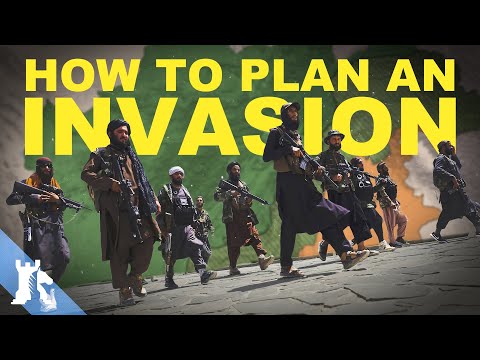
taliban in 30 Seconds
- The Taliban is a fundamentalist Islamic group currently governing Afghanistan, originating from religious students in the early 1990s.
- They enforce a strict version of Sharia law, which has led to significant international concern regarding human rights and gender equality.
- After a twenty-year insurgency against Western-backed forces, the Taliban regained full control of Afghanistan in August 2021.
- The group's name literally means 'students' in Pashto, reflecting its roots in religious education and conservative tribal values.
The term Taliban refers to a predominantly Pashtun, Islamic fundamentalist political and military movement that currently exercises de facto governance over Afghanistan. To understand the word, one must look at its linguistic roots; in the Pashto language, 'Taliban' is the plural form of 'Talib,' which translates directly to 'student.' This etymology is significant because the movement originated in the early 1990s among students attending religious schools, or madrasas, in southern Afghanistan and northern Pakistan. When people use this word today, they are usually referring to the organization as a governing body, an ideological force, or a historical entity that has shaped Central Asian geopolitics for three decades. The word carries immense weight in international discourse, often associated with debates over human rights, religious freedom, and global security. It is used by journalists to report on current events in Kabul, by political scientists to analyze theocratic governance, and by humanitarian workers to describe the operational environment in which they provide aid. The term is not merely a label for a group of people but represents a specific interpretation of Sharia law that governs every aspect of social and political life under their control.
- Political Context
- The Taliban first rose to power in 1996, following the vacuum left by the Soviet-Afghan War and the subsequent civil war. They were ousted in 2001 but returned to power in August 2021.
- Ideological Framework
- Their governance is characterized by a strict, literalist interpretation of Sunni Islam, often clashing with modern international norms regarding gender equality and civil liberties.
In academic and news settings, the word is treated as a proper noun. It is important to distinguish between the 'Taliban' as an organization and the 'Afghan people' as a whole, as the two are not synonymous. Using the word correctly involves understanding that it describes a specific faction with a specific history. For instance, one might discuss the 'Taliban's foreign policy' or 'life under the Taliban.' The word is also used in the context of the 'Pakistani Taliban' (Tehrik-i-Taliban Pakistan or TTP), which is a separate but ideologically aligned entity. Therefore, precision is required to ensure the audience knows which specific group is being discussed. The movement's return to power in 2021 has revitalized the word's frequency in global media, making it a central term for anyone studying modern history or international relations.
The international community remains divided on whether to formally recognize the Taliban as the legitimate government of Afghanistan.
Furthermore, the word is often used in discussions regarding the 'Doha Agreement,' where the Taliban negotiated with the United States. This usage highlights the group's transition from an insurgent force to a diplomatic entity, albeit one that remains unrecognized by many nations. The word 'Taliban' also appears frequently in human rights reports, particularly those focusing on the 'Taliban's ban on female education.' In these contexts, the word serves as a shorthand for the systemic restrictions imposed by the group. Understanding the word requires a grasp of the nuances between their 1990s era and their current administration, often referred to as 'Taliban 2.0' by some analysts, though many argue the core ideology remains unchanged. The term is deeply embedded in the lexicon of 21st-century conflict and governance.
Humanitarian aid is often funneled through NGOs to avoid direct financial support to the Taliban administration.
- Geopolitical Usage
- The term is central to discussions about regional stability in South and Central Asia, involving neighbors like Pakistan, Iran, and China.
Finally, the word is used in historical retrospectives to explain the failure of the twenty-year Western intervention in Afghanistan. It represents both the adversary of the NATO-led coalition and the eventual victors of the long-standing conflict. In this sense, 'Taliban' is a word that encapsulates a significant chapter of modern military history. It is also used in cultural studies to examine how religious fundamentalism can influence national identity. The word's meaning is thus multi-layered, spanning linguistics, religion, politics, and history. Whether used in a headline or a classroom, it demands a high level of contextual awareness to avoid oversimplification of a complex reality.
Using the word Taliban in a sentence requires an understanding of its role as a collective proper noun. Because it refers to a group, it can be treated as either singular or plural depending on the regional dialect of English (British English often uses plural verbs with collective nouns, while American English prefers singular), but it is most commonly treated as a singular entity in formal American journalism. For example, 'The Taliban has issued a new decree' is standard in the US, whereas 'The Taliban have issued a new decree' is common in the UK. The word is frequently preceded by the definite article 'the,' though it can stand alone when used as an adjective, such as in 'Taliban officials' or 'Taliban forces.' It is crucial to use the word neutrally in academic or journalistic writing to maintain objectivity, focusing on their actions, policies, and history.
- As a Subject
- 'The Taliban regained control of the capital city in August 2021.' Here, the word acts as the primary agent of the sentence.
- As an Adjective
- 'Taliban leaders met with regional representatives to discuss trade.' In this case, it modifies the noun 'leaders.'
When constructing sentences, it is also important to consider the tense. Since the Taliban has existed across different eras, sentences must clarify whether they refer to the 1990s, the insurgency period (2001-2021), or the current governance. For instance, 'During the insurgency, the Taliban utilized guerrilla tactics' uses the past tense to describe a specific historical phase. Conversely, 'The Taliban currently faces significant economic sanctions' uses the present tense to describe the contemporary situation. The word is often paired with strong verbs related to governance and conflict, such as 'enforce,' 'restrict,' 'negotiate,' 'seize,' and 'govern.' These pairings help convey the authoritative and often controversial nature of the group's activities.
Many Afghan citizens fled the country when the Taliban entered Kabul, fearing a return to the harsh policies of the 1990s.
In more complex sentences, the word can be used to describe the ideological influence of the group. For example, 'The Taliban's interpretation of Sharia law has led to the closure of most secondary schools for girls.' This sentence uses the possessive form ('Taliban's') to link the group to its specific policies. It is also common to see the word in the context of international relations: 'The United Nations has expressed concern over the Taliban's treatment of ethnic minorities.' Here, the word is part of a larger diplomatic narrative. Using the word effectively means being able to navigate these different grammatical roles while maintaining a clear and factual tone.
The Taliban spokesperson held a press conference to address the new economic reforms.
- Possessive Usage
- 'The Taliban's swift takeover surprised many intelligence agencies.' This shows ownership of the action.
Finally, the word is often used in the passive voice in news reporting to emphasize the impact of their actions on the population. For example, 'New restrictions were imposed by the Taliban on the media.' This structure places the focus on the 'restrictions' while identifying the Taliban as the source. Whether in simple or complex sentences, the word 'Taliban' serves as a critical anchor for discussing the political landscape of Afghanistan. Mastery of its usage involves balancing grammatical correctness with the heavy socio-political implications the word carries in the modern world.
The word Taliban is a staple of global news media, appearing daily in headlines from major outlets like the BBC, Al Jazeera, CNN, and Reuters. If you listen to podcasts about international affairs or watch documentaries on the history of the Middle East and Central Asia, you will hear this word frequently. It is central to the narrative of the 'War on Terror' and the subsequent geopolitical shifts in the region. In these contexts, the word is often spoken with a serious, analytical tone, reflecting the gravity of the group's impact on global security and human rights. You will also hear it in political speeches, particularly when world leaders discuss foreign policy, counter-terrorism, or humanitarian aid. The word is not just a name; it is a focal point for debates on the role of religion in government and the effectiveness of international intervention.
- News Media
- Broadcasts often start with phrases like, 'The Taliban has announced...' or 'Under Taliban rule, the situation in Afghanistan...'
- Academic Lectures
- Professors of history or political science use the word to discuss the Deobandi movement, the Afghan civil war, and the dynamics of insurgency.
Beyond formal news, you might hear the word in humanitarian circles. Aid workers and representatives from the United Nations frequently use the term when discussing the logistical challenges of operating in Afghanistan. They might talk about 'negotiating with Taliban authorities' to ensure the safe delivery of food and medicine. In these conversations, the word is used pragmatically to identify the group in power. Additionally, the word appears in the stories of refugees and migrants who have fled the country. For them, the word 'Taliban' is often associated with personal loss, fear, and the search for safety. Hearing the word in this context provides a human dimension to what is otherwise a political or military term.
'We had to leave because the Taliban were searching for people who worked with the previous government,' the refugee explained.
In popular culture, the word appears in books and films that deal with the conflict in Afghanistan. Works like 'The Kite Runner' or 'The Breadwinner' use the word to set the historical and social backdrop of their stories. In these fictional or semi-fictional accounts, the Taliban is often portrayed as the antagonist or the force that changes the lives of the protagonists. This cultural usage helps the general public understand the ideological impact of the group on everyday life. Furthermore, the word is often heard in military briefings and veteran narratives, where it refers to the enemy force encountered during the two-decade-long war. In these settings, the word is synonymous with a resilient and tactically proficient adversary.
The documentary explores the origins of the Taliban in the madrasas of the border regions.
- Human Rights Reports
- Organizations like Amnesty International use the word to document 'Taliban-led crackdowns' on protesters and journalists.
Finally, the word is heard in discussions about the future of global terrorism. While the Taliban is primarily a nationalistic movement focused on Afghanistan, its relationship with groups like Al-Qaeda often brings the word into the sphere of counter-terrorism analysis. Experts debate the extent of 'Taliban cooperation' with international extremist groups. Thus, whether you are reading a high-level intelligence report or listening to a local news broadcast, the word 'Taliban' is inescapable in any discussion involving the modern history and future of the Middle East and Central Asia. Its prevalence in the English-speaking world reflects the deep and ongoing involvement of Western nations in the region's affairs.
One of the most frequent mistakes people make when using the word Taliban is confusing the group with the entire population of Afghanistan. It is vital to remember that 'Taliban' refers to a specific political and military organization, not a nationality. An 'Afghan' is a person from Afghanistan, whereas a 'Taliban member' or 'Talib' is a member of that specific group. Using the terms interchangeably is not only factually incorrect but can also be offensive, as many Afghans have spent decades resisting the group's ideology. Another common error is failing to capitalize the word. As a proper noun referring to a specific entity, 'Taliban' should always start with an uppercase 'T.' Writing it in lowercase suggests it is a general noun, which diminishes its specific historical and political identity.
- Mistake: Nationality vs. Organization
- Incorrect: 'The Taliban people are very traditional.' Correct: 'The Afghan people are traditional, and the Taliban enforces a strict version of that tradition.'
- Mistake: Overgeneralization of Islam
- Incorrect: 'The Taliban represents all Muslims.' Correct: 'The Taliban represents a specific, fundamentalist interpretation of Sunni Islam.'
Linguistic confusion also occurs with the word's pluralization. In Pashto, 'Taliban' is already plural (the singular is 'Talib'). However, in English, it is treated as a collective noun. Some people mistakenly try to pluralize it further by saying 'Talibans,' which is incorrect in standard English. You should say 'Taliban members' or 'the Taliban' to refer to multiple individuals within the group. Furthermore, people often confuse the 'Afghan Taliban' with the 'Pakistani Taliban' (TTP). While they share a name and some ideological similarities, they are distinct organizations with different leadership and goals. Conflating the two can lead to significant misunderstandings in political analysis, especially regarding regional security.
Incorrect: 'The talibans have taken over.' Correct: 'The Taliban has taken over.'
Another mistake is using the word as a synonym for 'terrorist.' While the Taliban has been designated as a terrorist group by some nations and has used terrorist tactics, they are primarily an insurgent movement and now a governing body. In political science, these distinctions matter. Calling them 'the Taliban terrorists' in every instance may be seen as biased or imprecise in a formal academic setting where 'insurgents' or 'the de facto government' might be more accurate depending on the timeframe. Additionally, some people use 'Taliban' to describe any strict religious person. This is a hyperbolic and often inaccurate use of the word that strips it of its specific political context in Afghanistan. It is best to reserve the word for its actual meaning to maintain clarity.
Mistake: Using 'Taliban' to mean 'Afghan.' Correct: 'The Taliban is a group in Afghanistan, but not all Afghans support them.'
- Mistake: Mispronunciation
- Many English speakers stress the first syllable (TAL-ee-ban), but in the region, the stress is often more balanced or on the final syllable (tah-lee-BAHN).
Finally, avoid using the word in a way that suggests they are a new phenomenon. The Taliban has a history dating back to the 1990s, and their current actions are often a continuation or evolution of their previous rule. Forgetting this historical depth can lead to a shallow understanding of current events. When writing or speaking about them, always aim for precision, capitalization, and a clear distinction between the group and the broader population or religion. This ensures that your communication is professional, accurate, and respectful of the complex realities on the ground.
When discussing the Taliban, it is often useful to have a range of similar words and alternatives to provide variety and precision in your writing. Depending on the context—whether you are talking about their military actions, their ideology, or their role as a government—different terms may be more appropriate. For example, when they were fighting against the previous Afghan government and NATO forces, the word insurgents was frequently used. This term specifically refers to people who rise up in armed rebellion against an established government. Now that they are in power, terms like de facto authorities or the regime are more common in diplomatic and legal contexts. These words describe their current status as the group in control of the country, even if they lack international recognition.
- Insurgents vs. Taliban
- 'Insurgents' focuses on their role as rebels; 'Taliban' identifies their specific group and ideology. Use 'insurgents' when discussing the 2001-2021 war.
- Fundamentalists vs. Taliban
- 'Fundamentalists' is a broader term for those who adhere strictly to religious principles. The Taliban are fundamentalists, but not all fundamentalists are the Taliban.
Another useful alternative is militants. This word is often used in news reporting to describe armed members of the group who are actively engaged in combat or security operations. It is a more general term than 'Taliban' and can be used to describe various armed groups globally. If you are focusing on their religious ideology, you might use the term extremists or hardliners. These words emphasize the group's uncompromising stance on social and religious issues. However, these terms are more subjective and are often used in opinion pieces or critical reports rather than neutral academic descriptions. In formal political science, the term theocratic is often used to describe their form of government, which is based on religious authority.
The regime in Kabul has faced international criticism for its policies on women's rights.
For a more specific historical or linguistic alternative, you might see the term the Islamic Emirate of Afghanistan. This is the official name the Taliban uses for their government. Using this name in a sentence like 'The Islamic Emirate has sought to increase trade with neighboring countries' shows a high level of familiarity with the group's own self-identification. Conversely, critics might use the word occupiers or usurpers, though these are highly charged and non-neutral terms. In a military context, the term adversary or opposing force (OPFOR) was common during the conflict. Choosing the right alternative depends entirely on your intended tone and the specific aspect of the group you are highlighting.
The militants patrolled the streets to enforce the new curfew.
- Radicals vs. Taliban
- 'Radicals' implies a desire for extreme change. While the Taliban are radical in their policies, they often see themselves as traditionalists returning to 'pure' roots.
Finally, when discussing the individuals within the movement, you can use the word cadres or operatives to describe organized groups of members. In summary, while 'Taliban' is the most direct and common name, using alternatives like 'insurgents,' 'the regime,' 'militants,' or 'the Islamic Emirate' can help you tailor your language to the specific nuances of your discussion. This variety not only makes your writing more engaging but also demonstrates a deeper understanding of the complex political and social roles the group plays in the world today.
How Formal Is It?
Fun Fact
The group chose this name to emphasize their identity as religious students who were cleaning up the corruption of the post-Soviet civil war. They presented themselves as humble seekers of justice rather than traditional politicians.
Pronunciation Guide
- Pronouncing it as 'Tally-man'.
- Stressing the second syllable: ta-LEE-ban (though this is closer to the original Pashto, it's less common in English).
- Using a long 'a' in 'ban' like 'bane'.
- Adding an 's' to make it 'Talibans' when referring to the group.
- Confusing the 'T' with a 'D' sound.
Difficulty Rating
The word itself is easy to read, but the context is often found in complex political texts.
Easy to spell, but requires correct capitalization and understanding of collective noun grammar.
Pronunciation is straightforward for most English speakers.
Very common in news broadcasts, making it easy to recognize.
What to Learn Next
Prerequisites
Learn Next
Advanced
Grammar to Know
Proper Nouns
Always capitalize 'Taliban' as it refers to a specific group.
Collective Nouns
In US English, use 'The Taliban is'; in UK English, 'The Taliban are' is also acceptable.
Possessive Proper Nouns
Add 's to make it possessive: 'The Taliban's policies'.
Adjectival Use
When used before another noun, it acts as an adjective: 'Taliban leaders'.
Definite Article Usage
Use 'the' when referring to the organization as a whole: 'The Taliban took Kabul.'
Examples by Level
The Taliban is in Afghanistan.
Le Taliban est en Afghanistan.
Proper noun used as a singular subject.
The Taliban has many rules.
Le Taliban a beaucoup de règles.
Uses 'has' for a collective noun.
I saw the Taliban on the news.
J'ai vu les Talibans aux informations.
Object of the sentence.
The Taliban lives in Kabul.
Le Taliban vit à Kaboul.
Present simple tense.
Is the Taliban a group?
Le Taliban est-il un groupe ?
Question form.
The Taliban is very old.
Le Taliban est très vieux.
Adjective 'old' describing the group's history.
We talk about the Taliban.
Nous parlons du Taliban.
Prepositional phrase 'about the Taliban'.
The Taliban rules the country.
Le Taliban dirige le pays.
Active verb 'rules'.
The Taliban took control in 2021.
Le Taliban a pris le contrôle en 2021.
Past simple tense.
Many people left when the Taliban arrived.
Beaucoup de gens sont partis quand le Taliban est arrivé.
Subordinate clause with 'when'.
The Taliban word means 'students.'
Le mot Taliban signifie 'étudiants'.
Noun used to explain a definition.
The Taliban has a different government.
Le Taliban a un gouvernement différent.
Possessive meaning.
The Taliban leaders are in Kabul.
Les chefs talibans sont à Kaboul.
Used as an adjective.
They do not like the Taliban rules.
Ils n'aiment pas les règles des Talibans.
Negative sentence.
The Taliban is a fundamentalist group.
Le Taliban est un groupe fondamentaliste.
Predicate nominative.
The Taliban started in the 1990s.
Le Taliban a commencé dans les années 1990.
Historical reference.
The Taliban's return to power changed the region.
Le retour au pouvoir des Talibans a changé la région.
Possessive form 'Taliban's'.
The Taliban enforces a strict version of Sharia law.
Le Taliban impose une version stricte de la charia.
Third-person singular verb.
International aid to the Taliban is restricted.
L'aide internationale au Taliban est limitée.
Passive construction.
The Taliban spokesperson spoke to the press.
Le porte-parole des Talibans s'est adressé à la presse.
Compound noun 'Taliban spokesperson'.
Women face many challenges under the Taliban.
Les femmes sont confrontées à de nombreux défis sous le régime taliban.
Prepositional phrase 'under the Taliban'.
The Taliban has been in conflict for many years.
Le Taliban est en conflit depuis de nombreuses années.
Present perfect continuous.
Many countries do not recognize the Taliban government.
De nombreux pays ne reconnaissent pas le gouvernement taliban.
Direct object.
The Taliban originated in religious schools.
Le Taliban est originaire des écoles religieuses.
Verb 'originated' showing history.
The Taliban's rapid takeover caught many by surprise.
La prise de pouvoir rapide des Talibans en a surpris plus d'un.
Gerund phrase as subject.
The Taliban has struggled to gain international legitimacy.
Le Taliban a eu du mal à acquérir une légitimité internationale.
Present perfect tense.
Taliban officials met with diplomats in Qatar.
Des responsables talibans ont rencontré des diplomates au Qatar.
Adjectival use without 'the'.
The Taliban's ideology is rooted in Deobandi Islam.
L'idéologie des Talibans est enracinée dans l'islam deobandi.
Passive voice with 'is rooted'.
Sanctions against the Taliban have impacted the economy.
Les sanctions contre le Taliban ont eu un impact sur l'économie.
Prepositional phrase after 'sanctions'.
The Taliban has banned girls from attending secondary school.
Le Taliban a interdit aux filles d'aller à l'école secondaire.
Verb 'ban' with 'from' + gerund.
The Taliban's military tactics evolved over two decades.
Les tactiques militaires des Talibans ont évolué sur deux décennies.
Subject-verb agreement.
Negotiating with the Taliban proved to be difficult.
Négocier avec le Taliban s'est avéré difficile.
Gerund subject.
The Taliban's resurgence is a focal point of geopolitical analysis.
La résurgence des Talibans est un point central de l'analyse géopolitique.
Abstract noun 'resurgence'.
The Taliban operates as a de facto government despite lack of recognition.
Le Taliban fonctionne comme un gouvernement de fait malgré l'absence de reconnaissance.
Adverbial phrase 'de facto'.
The Taliban's internal cohesion remains a subject of debate among experts.
La cohésion interne des Talibans reste un sujet de débat parmi les experts.
Complex subject phrase.
The Taliban's interpretation of Sharia is often viewed as idiosyncratic.
L'interprétation de la charia par les Talibans est souvent considérée comme idiosyncrasique.
Advanced adjective 'idiosyncratic'.
The Taliban has sought to diversify its diplomatic relations.
Le Taliban a cherché à diversifier ses relations diplomatiques.
Infinitive of purpose.
The Taliban's fiscal policies are constrained by international sanctions.
Les politiques budgétaires des Talibans sont limitées par les sanctions internationales.
Passive voice with 'are constrained'.
The Taliban's rise can be traced back to the post-Soviet power vacuum.
L'ascension des Talibans remonte au vide de pouvoir post-soviétique.
Phrasal verb 'traced back to'.
The Taliban's governance model is inherently exclusionary.
Le modèle de gouvernance des Talibans est intrinsèquement excluant.
Adverb 'inherently' modifying an adjective.
The Taliban's consolidation of power has profound implications for regional stability.
La consolidation du pouvoir par les Talibans a des implications profondes pour la stabilité régionale.
Noun 'consolidation' with 'of power'.
The Taliban's narrative of sovereignty is predicated on religious legitimacy.
Le récit de souveraineté des Talibans est fondé sur la légitimité religieuse.
Passive phrase 'is predicated on'.
The Taliban's survival as an insurgent force was due to its decentralized structure.
La survie des Talibans en tant que force insurgée était due à sa structure décentralisée.
Complex prepositional phrase.
The Taliban's current administration faces a precarious economic situation.
L'administration actuelle des Talibans est confrontée à une situation économique précaire.
Adjective 'precarious'.
The Taliban's approach to governance is a rejection of liberal democratic norms.
L'approche de la gouvernance par les Talibans est un rejet des normes démocratiques libérales.
Gerund 'governance' as object of preposition.
The Taliban's relationship with Al-Qaeda remains a contentious issue in global security.
La relation des Talibans avec Al-Qaïda reste une question litigieuse dans la sécurité mondiale.
Adjective 'contentious'.
The Taliban's rhetoric often emphasizes national independence and anti-imperialism.
La rhétorique des Talibans met souvent l'accent sur l'indépendance nationale et l'anti-impérialisme.
Abstract nouns 'rhetoric' and 'independence'.
The Taliban's bureaucratic evolution is being closely monitored by international observers.
L'évolution bureaucratique des Talibans est suivie de près par les observateurs internationaux.
Present continuous passive.
Common Collocations
Common Phrases
— During the time when the Taliban is in control of the government.
Under the Taliban, music was banned in public places.
— A government that is organized and controlled by the Taliban group.
The Taliban-led government faces a major humanitarian crisis.
— A harsh and literal application of religious law, often involving public punishments.
The report described instances of Taliban-style justice in rural areas.
— To have formal discussions with the group to reach an agreement.
The US decided to negotiate with the Taliban in Doha.
— For a country to officially accept the Taliban as the legal government of Afghanistan.
No country has yet moved to formally recognize the Taliban.
— A term used by some to describe the current Taliban administration, suggesting they might be different from the 1990s.
Many are skeptical of the so-called Taliban 2.0 and its promises.
— A large-scale military attack or campaign launched by the group.
The Taliban offensive captured several provincial capitals in one week.
— An area where the Taliban has very strong support or military control.
Helmand province was long considered a Taliban stronghold.
— To engage in military or political struggle against the group.
The Northern Alliance continued to fight the Taliban for years.
— An official order or law issued by the Taliban leadership.
The latest Taliban decree requires women to cover their faces in public.
Often Confused With
Afghan is a nationality; Taliban is a political group. Not all Afghans are Taliban.
Al-Qaeda is an international terrorist network; the Taliban is a nationalistic Afghan group. They are allies but different.
ISIS-K is a rival extremist group that often fights against the Taliban in Afghanistan.
Idioms & Expressions
— A parallel administration set up by the group in areas they didn't officially control during the war.
Even before 2021, the Taliban's shadow government collected taxes in some districts.
Political— The process of a society becoming more fundamentalist and restrictive, similar to Taliban rule.
Observers warned about the potential Talibanization of the border regions.
Sociological— An extremely strict, uncompromising, or regressive way of doing something.
The principal's new rules were described as a Taliban-like approach to discipline.
Informal/Critical— Engaging in risky or controversial negotiations with the group.
Some politicians were accused of dancing with the Taliban for their own gain.
Journalistic— The harsh and forceful way the group maintains control.
The city was ruled with the Taliban's iron fist, leaving no room for dissent.
Literary— The secretive or hidden aspects of the group's internal workings.
The book attempts to look behind the Taliban's veil to see how they make decisions.
Journalistic— Their strategy of waiting out their enemies over many years to eventually win.
The Taliban's long game proved successful when the foreign troops finally withdrew.
Strategic— Being targeted or threatened by the group.
Journalists often found themselves in the crosshairs of the Taliban.
Military/Journalistic— Something designed to survive or resist the influence or attacks of the group.
They tried to build a Taliban-proof education system using secret home schools.
Informal— The extent of the group's presence or influence in a specific area.
The Taliban's footprint in the north has grown significantly this year.
MilitaryEasily Confused
It sounds like Taliban.
Talib is the singular (one person); Taliban is the plural (the whole group).
He is a Talib, but he does not represent the whole Taliban.
Both are Afghan fighter groups.
Mujahideen usually refers to the groups that fought the Soviets; the Taliban emerged later to fight the Mujahideen.
The Mujahideen were heroes to some, but the Taliban replaced them.
Most Taliban are Pashtun.
Pashtun is an ethnic group; Taliban is a political movement. Many Pashtuns are not in the Taliban.
He is a Pashtun man, but he opposes the Taliban.
The Taliban is defined by Sharia.
Sharia is the religious law itself; the Taliban is the group that enforces a specific version of it.
The Taliban uses Sharia to justify their laws.
Often mentioned together.
Kabul is the capital city; the Taliban is the group that rules it.
The Taliban captured Kabul in 2021.
Sentence Patterns
The Taliban is in [Place].
The Taliban is in Afghanistan.
The Taliban has [Noun].
The Taliban has strict rules.
Under the Taliban, [Clause].
Under the Taliban, many schools are closed.
The Taliban's [Noun] is [Adjective].
The Taliban's takeover was very fast.
The Taliban operates as [Noun Phrase].
The Taliban operates as a de facto government.
The [Noun] of the Taliban is predicated on [Noun].
The legitimacy of the Taliban is predicated on religious law.
People are [Verb-ing] because of the Taliban.
People are leaving because of the Taliban.
Despite the Taliban, [Clause].
Despite the Taliban, some people still protest.
Word Family
Nouns
Verbs
Adjectives
Related
How to Use It
Extremely high in news and political science; low in casual daily conversation unless discussing current events.
-
The taliban are coming.
→
The Taliban is coming.
Capitalization is required, and in American English, a singular verb is preferred for collective nouns.
-
He is an Afghan Taliban.
→
He is a member of the Taliban.
Using 'Taliban' as a singular noun for a person is technically incorrect in English; use 'member' or 'Talib.'
-
The Talibans rules are strict.
→
The Taliban's rules are strict.
Do not pluralize 'Taliban' with an 's'; use the apostrophe for possession.
-
All Afghans are Taliban.
→
The Taliban is a group within Afghanistan.
This is a factual error. Confusing a political group with a whole nationality is a major mistake.
-
The Taliban is a religion.
→
The Taliban is a political group that follows a religion.
The Taliban is an organization, while Islam is the religion they follow.
Tips
Capitalization
Always capitalize the 'T' in Taliban. It is a proper noun like 'France' or 'Microsoft.' Writing it in lowercase is a common spelling mistake.
Use 'Afghan' for People
If you want to talk about people from Afghanistan, use the word 'Afghans.' Only use 'Taliban' when you are specifically talking about members of that group.
The vs. No The
Use 'the Taliban' when it's a noun (The Taliban said...). Don't use 'the' when it's an adjective (Taliban leaders met...).
Two Eras
When writing, clarify if you mean the 1990s Taliban or the post-2021 Taliban. Their policies and the world's reaction have changed over time.
Be Objective
In academic writing, use neutral terms like 'the group,' 'the organization,' or 'the authorities' to avoid sounding overly biased while still being accurate.
First Syllable Stress
In English, most people say TAL-i-ban. If you stress the middle, people might not understand you as quickly in a fast conversation.
Check the Source
When you see 'Taliban' in a headline, check if the news is from a regional source or a Western source, as the perspective can be very different.
Avoid 'Talibans'
Never add an 's' to the end of Taliban. To talk about individuals, say 'Taliban members' or 'the Taliban' as a group.
Identify Spokespeople
News often quotes 'Taliban spokespeople.' This is a key phrase to listen for to know what the group's official position is.
Use in Discussion
When discussing the group, use phrases like 'According to reports' to show that you are basing your statements on available information.
Memorize It
Mnemonic
Think of 'TAL-i-BAN'. They are 'Students' (Talib) who want to 'BAN' many modern things. TALking students who BAN.
Visual Association
Imagine a group of students in a traditional school (madrasa) who suddenly pick up flags and take over a government building.
Word Web
Challenge
Try to use the word 'Taliban' as both a noun and an adjective in a short paragraph about world history.
Word Origin
The word comes from the Pashto language, which is spoken in Afghanistan and Pakistan. It is the plural of the word 'Talib.'
Original meaning: In Arabic and Pashto, 'Talib' means 'student' or 'seeker,' specifically one who seeks religious knowledge.
Indo-Iranian (Pashto) / Semitic (Arabic root).Cultural Context
Be careful when using the word around people from Afghanistan. For many, it is a source of trauma and political division. Avoid using it as a joke or a general insult.
In English-speaking media, the Taliban is almost always portrayed through a lens of human rights and security concerns.
Practice in Real Life
Real-World Contexts
International News
- Breaking news about the Taliban
- Taliban spokesperson's statement
- International reaction to the Taliban
- Taliban's latest decree
History Class
- The origins of the Taliban
- The 1996 Taliban takeover
- The fall of the Taliban in 2001
- The Taliban insurgency
Human Rights Discussions
- Women's rights under the Taliban
- Taliban restrictions on education
- Humanitarian crisis and the Taliban
- Protests against the Taliban
Military Analysis
- Taliban military strategy
- Fighting the Taliban
- Taliban weapon systems
- Taliban territorial gains
Diplomacy
- Recognizing the Taliban government
- Doha talks with the Taliban
- Sanctions on the Taliban
- Engaging with the Taliban
Conversation Starters
"What do you think about the current situation with the Taliban in Afghanistan?"
"How has the Taliban's return to power affected regional stability in Asia?"
"Do you think the international community should formally recognize the Taliban?"
"What are the main differences between the Taliban now and in the 1990s?"
"How can the world help Afghan women living under Taliban rule?"
Journal Prompts
Reflect on how the Taliban's takeover in 2021 changed your perspective on international intervention.
Write about the importance of education, considering the Taliban's ban on schools for girls.
Imagine you are a journalist reporting from Kabul; describe a day under Taliban governance.
Analyze the linguistic roots of the word 'Taliban' and how its meaning has evolved over time.
Discuss the challenges of providing humanitarian aid to a country ruled by the Taliban.
Frequently Asked Questions
10 questionsThe word Taliban means 'students' in the Pashto language. It refers to the group's origins in religious schools where the founding members were students of Islamic law. In English, we use it to name the entire organization.
No, the Taliban is not a country. It is a political and military group that currently governs the country of Afghanistan. It is important to distinguish between the group and the nation they rule.
The Taliban first took power in Afghanistan in 1996. They ruled most of the country until 2001, when they were removed from power by a US-led coalition following the September 11 attacks.
The Taliban returned to power in 2021 after the United States and its allies withdrew their military forces. The group launched a rapid offensive and captured the capital, Kabul, on August 15, 2021.
The Taliban follows a fundamentalist interpretation of Sunni Islam, specifically the Deobandi school. Their ideology emphasizes a strict social code, the implementation of Sharia law, and a rejection of many Western cultural influences.
No, they are different groups. The Taliban is primarily focused on governing Afghanistan, while Al-Qaeda is a global network focused on international terrorism. However, the two groups have a long history of cooperation and alliance.
The Taliban is widely criticized for its treatment of women. Since returning to power, they have banned girls from secondary schools and universities, restricted women's ability to work, and required them to cover their faces in public.
No, support for the Taliban varies. While they have support in some conservative and rural areas, many Afghans, especially in cities and among ethnic minorities, strongly oppose their rule and have fled the country.
This is the official name that the Taliban uses for the state of Afghanistan under their rule. Most of the international community still refers to the country simply as Afghanistan and does not use this official title.
In its original language, it is plural. In English, it is usually treated as a singular collective noun (e.g., 'The Taliban is...'), but in British English, it is often treated as plural (e.g., 'The Taliban are...').
Test Yourself 200 questions
Write a sentence using the word 'Taliban' as a subject.
Well written! Good try! Check the sample answer below.
Describe the meaning of the word 'Taliban' in your own words.
Well written! Good try! Check the sample answer below.
Write a short paragraph about the Taliban's return to power in 2021.
Well written! Good try! Check the sample answer below.
Explain the difference between 'Afghan' and 'Taliban.'
Well written! Good try! Check the sample answer below.
Write a news headline about the Taliban.
Well written! Good try! Check the sample answer below.
Discuss the impact of the Taliban on women's education.
Well written! Good try! Check the sample answer below.
Write a sentence using 'Taliban' as an adjective.
Well written! Good try! Check the sample answer below.
Summarize the origins of the Taliban movement.
Well written! Good try! Check the sample answer below.
Write a formal letter expressing concern about Taliban policies.
Well written! Good try! Check the sample answer below.
Compare the Taliban of the 1990s with the Taliban today.
Well written! Good try! Check the sample answer below.
Write a sentence using the possessive form 'Taliban's'.
Well written! Good try! Check the sample answer below.
Create a dialogue between two people discussing the Taliban.
Well written! Good try! Check the sample answer below.
Write a short essay on the role of the Taliban in regional geopolitics.
Well written! Good try! Check the sample answer below.
Describe a typical news report about the Taliban.
Well written! Good try! Check the sample answer below.
Explain why the Taliban is called a 'fundamentalist' group.
Well written! Good try! Check the sample answer below.
Write a sentence about the Taliban's flag.
Well written! Good try! Check the sample answer below.
Discuss the international community's dilemma regarding the Taliban.
Well written! Good try! Check the sample answer below.
Write a sentence about the Taliban's spokesperson.
Well written! Good try! Check the sample answer below.
Explain the linguistic root of the word 'Taliban.'
Well written! Good try! Check the sample answer below.
Write a sentence about the Taliban's takeover of Kabul.
Well written! Good try! Check the sample answer below.
Pronounce the word 'Taliban' correctly.
Read this aloud:
You said:
Speech recognition is not supported in your browser. Try Chrome or Edge.
Explain what the Taliban is to a friend.
Read this aloud:
You said:
Speech recognition is not supported in your browser. Try Chrome or Edge.
Discuss your opinion on the Taliban's education policies.
Read this aloud:
You said:
Speech recognition is not supported in your browser. Try Chrome or Edge.
Role-play a news reporter talking about the Taliban.
Read this aloud:
You said:
Speech recognition is not supported in your browser. Try Chrome or Edge.
Describe the history of the Taliban in three minutes.
Read this aloud:
You said:
Speech recognition is not supported in your browser. Try Chrome or Edge.
How would you explain the word 'Taliban' to a child?
Read this aloud:
You said:
Speech recognition is not supported in your browser. Try Chrome or Edge.
Debate whether the world should recognize the Taliban.
Read this aloud:
You said:
Speech recognition is not supported in your browser. Try Chrome or Edge.
Talk about the impact of the Taliban on global security.
Read this aloud:
You said:
Speech recognition is not supported in your browser. Try Chrome or Edge.
Give a short presentation on the origins of the Taliban.
Read this aloud:
You said:
Speech recognition is not supported in your browser. Try Chrome or Edge.
Explain the meaning of 'Sharia law' in the context of the Taliban.
Read this aloud:
You said:
Speech recognition is not supported in your browser. Try Chrome or Edge.
Describe the scene of the Taliban entering Kabul.
Read this aloud:
You said:
Speech recognition is not supported in your browser. Try Chrome or Edge.
Discuss the humanitarian situation under the Taliban.
Read this aloud:
You said:
Speech recognition is not supported in your browser. Try Chrome or Edge.
What are the challenges of negotiating with the Taliban?
Read this aloud:
You said:
Speech recognition is not supported in your browser. Try Chrome or Edge.
Talk about the Taliban's use of social media.
Read this aloud:
You said:
Speech recognition is not supported in your browser. Try Chrome or Edge.
How does the Taliban's rule affect neighboring countries?
Read this aloud:
You said:
Speech recognition is not supported in your browser. Try Chrome or Edge.
Explain the term 'Talibanization.'
Read this aloud:
You said:
Speech recognition is not supported in your browser. Try Chrome or Edge.
Discuss the role of the Taliban in the 'War on Terror.'
Read this aloud:
You said:
Speech recognition is not supported in your browser. Try Chrome or Edge.
What is the significance of the word 'student' for the Taliban?
Read this aloud:
You said:
Speech recognition is not supported in your browser. Try Chrome or Edge.
Talk about the future of Afghanistan under the Taliban.
Read this aloud:
You said:
Speech recognition is not supported in your browser. Try Chrome or Edge.
Describe the Taliban's flag and what it represents.
Read this aloud:
You said:
Speech recognition is not supported in your browser. Try Chrome or Edge.
Listen to a news clip and write down how many times 'Taliban' is mentioned.
What is the main topic of the radio report about the Taliban?
Identify the name of the Taliban spokesperson in the audio.
Listen for the word 'Sharia' in the discussion about the Taliban.
What date does the speaker give for the Taliban's return?
Summarize the speaker's points about Taliban economic policy.
Is the speaker's tone positive, negative, or neutral towards the Taliban?
What specific restriction on women did the speaker mention?
Listen to a podcast about the history of the Taliban and take notes.
Identify the location mentioned as the Taliban's birthplace.
What is the UN's reaction to the Taliban according to the clip?
Listen for the word 'insurgency' and explain its context.
What does the speaker say about the 'Doha Agreement'?
Identify the primary language spoken by the Taliban in the audio.
What is the speaker's conclusion about the Taliban's future?
/ 200 correct
Perfect score!
Summary
The Taliban is a powerful political and military entity in Afghanistan that enforces a strict, fundamentalist religious code. For example, their return to power in 2021 led to the immediate closure of many schools for girls, illustrating their uncompromising ideology.
- The Taliban is a fundamentalist Islamic group currently governing Afghanistan, originating from religious students in the early 1990s.
- They enforce a strict version of Sharia law, which has led to significant international concern regarding human rights and gender equality.
- After a twenty-year insurgency against Western-backed forces, the Taliban regained full control of Afghanistan in August 2021.
- The group's name literally means 'students' in Pashto, reflecting its roots in religious education and conservative tribal values.
Capitalization
Always capitalize the 'T' in Taliban. It is a proper noun like 'France' or 'Microsoft.' Writing it in lowercase is a common spelling mistake.
Use 'Afghan' for People
If you want to talk about people from Afghanistan, use the word 'Afghans.' Only use 'Taliban' when you are specifically talking about members of that group.
The vs. No The
Use 'the Taliban' when it's a noun (The Taliban said...). Don't use 'the' when it's an adjective (Taliban leaders met...).
Two Eras
When writing, clarify if you mean the 1990s Taliban or the post-2021 Taliban. Their policies and the world's reaction have changed over time.