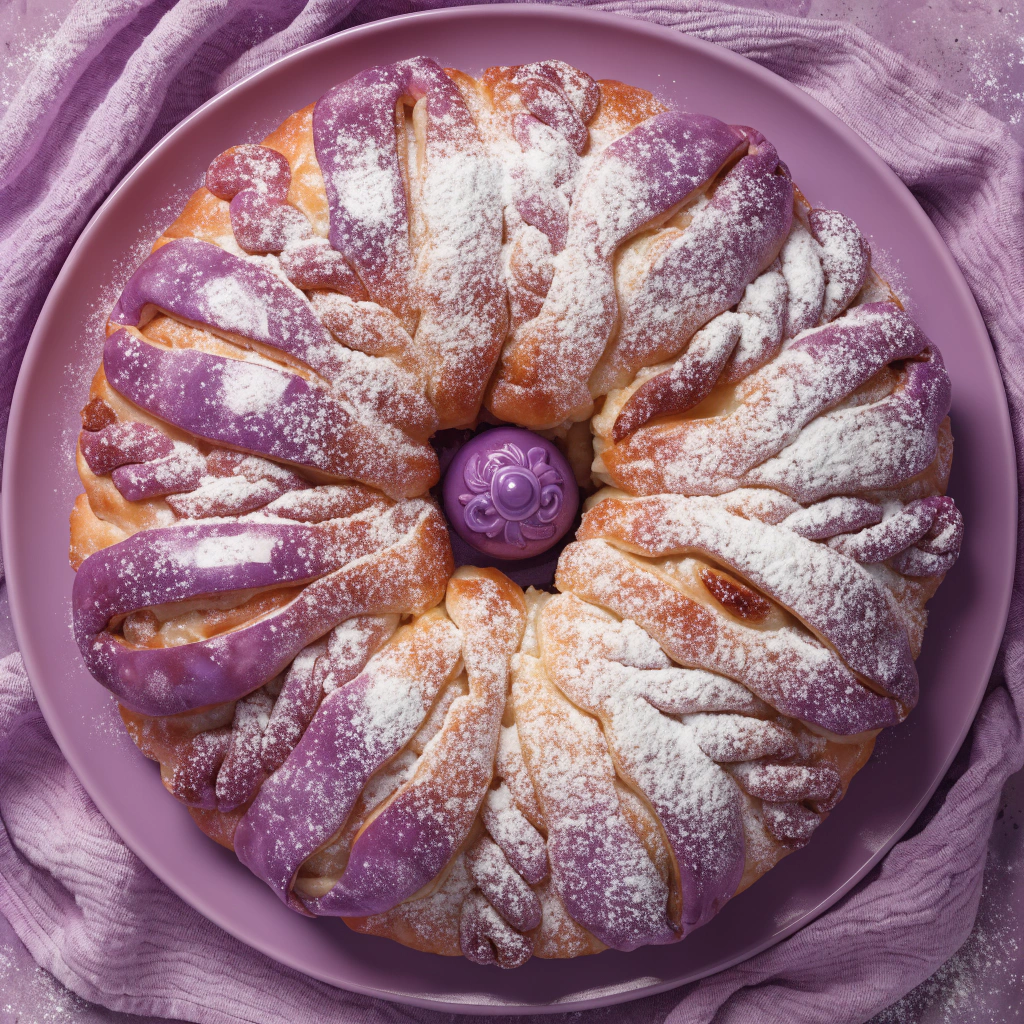
A Galette des Rois: Uma Tradição na França
A Galette des Rois é um bolo especial da França. As pessoas comem este bolo em janeiro. É uma festa importante no dia 6 de janeiro. Esta festa se chama Epifania.
Dentro do bolo, há um pequeno brinquedo ou um feijão. A pessoa que encontra o brinquedo é o "rei" ou a "rainha" do dia! Todos usam uma coroa de papel.
É uma tradição muito antiga e divertida. As famílias e amigos comem a Galette des Rois juntos. Eles celebram e se divertem muito na França.
Gramática em destaque
Padrão: Verbo "Ser" (Presente)
"A Galette des Rois é um bolo especial da França."
O verbo "ser" é muito importante em português. Usamos "é" para falar sobre o que algo ou alguém é. Ele descreve características permanentes ou a identidade.
Padrão: Artigos Definidos (O/A)
"A pessoa que encontra o brinquedo é o "rei" ou a "rainha" do dia!"
Usamos "o" (masculino singular) e "a" (feminino singular) para falar de coisas específicas. Eles vêm antes do substantivo para indicar algo conhecido.
Teste sua compreensão
10 perguntas · A1 Iniciante · 1 pré-visualização grátis
Teste o que aprendeu neste artigo. Responda todas as perguntas para ganhar XP!
Onde as pessoas comem a Galette des Rois?
Quer finalizar o quiz?
9 perguntas a mais estão esperando por você. Cadastre-se grátis para desbloquear o quiz completo e ganhar XP!
Cadastrar grátisJá tem conta? Entrar
Detalhamento das perguntas
Onde as pessoas comem a Galette des Rois?
Sua resposta:
Resposta correta: Na França
A Galette des Rois é comida em abril.
Sua resposta:
Resposta correta: Falso
O que significa 'bolo'?
Sua resposta:
Resposta correta: cake
A pessoa que encontra o brinquedo é o _____ do dia.
Sua resposta:
Resposta correta: rei
A Galette des Rois na França: Uma Tradição Deliciosa
Em janeiro, na França, há uma celebração muito especial. No dia 6 de janeiro, as famílias festejam o Dia de Reis. Nesta data importante, muitas pessoas comem um bolo tradicional que se chama Galette des Rois. Este bolo é bem gostoso, feito com massa folhada e um recheio doce de amêndoas.
A história desta tradição é mais antiga do que parece. Ela começou antes do cristianismo, no tempo dos romanos. Eles tinham uma festa chamada Saturnália. Durante esta festa, os romanos escondiam um feijão pequeno dentro de um bolo. A pessoa que encontrava o feijão se tornava o "Rei por um dia". Era uma brincadeira muito popular!
Hoje, a tradição é um pouco diferente, mas continua divertida. Dentro da Galette des Rois, há uma pequena surpresa, que geralmente é um bonequinho de cerâmica. Quem encontra a surpresa se torna o "rei" ou a "rainha" do dia. Esta pessoa usa uma coroa de papel e escolhe o próximo pedaço de bolo para alguém na mesa. É uma maneira alegre de começar o ano na França!
Gramática em destaque
Padrão: Pretérito Imperfeito
"Eles tinham uma festa chamada Saturnália."
O Pretérito Imperfeito descreve ações no passado que se repetiam ou que duravam um tempo. Por exemplo, 'eles tinham' ou 'eles escondiam'. Usamos para falar sobre hábitos ou situações passadas.
Padrão: Conectores de Adição e Contraste (e, mas)
"Este bolo é bem gostoso, feito com massa folhada e um recheio doce de amêndoas."
'E' e 'mas' são conectores. 'E' adiciona informações, unindo ideias. 'Mas' mostra contraste ou uma ideia oposta. Eles ajudam a ligar frases e ideias para que o texto fique mais claro.
Teste sua compreensão
11 perguntas · A2 Elementar · 1 pré-visualização grátis
Teste o que aprendeu neste artigo. Responda todas as perguntas para ganhar XP!
O que é a Galette des Rois?
Quer finalizar o quiz?
10 perguntas a mais estão esperando por você. Cadastre-se grátis para desbloquear o quiz completo e ganhar XP!
Cadastrar grátisJá tem conta? Entrar
Detalhamento das perguntas
O que é a Galette des Rois?
Sua resposta:
Resposta correta: Um bolo tradicional
A tradição da Galette des Rois começou depois do cristianismo.
Sua resposta:
Resposta correta: Falso
O que significa 'recheio'?
Sua resposta:
Resposta correta: O que se coloca dentro de um bolo
A Galette des Rois é um bolo ______ na França.
Sua resposta:
Resposta correta: tradicional
Quem encontra a surpresa na Galette des Rois usa uma ______ de papel.
Sua resposta:
Resposta correta: coroa
The King's Cake: A Sweet French Tradition
In France, January is a special month because of a delicious tradition called the "Galette des Rois," or King’s Cake. This celebration, which takes place on January 6th, has been enjoyed by French families for centuries. Although it marks the religious holiday of Epiphany, the custom actually started much earlier during Roman times.
The galette is a golden puff pastry that is filled with a sweet almond cream called frangipane. Inside the cake, a small ceramic figure known as a "fève" is hidden. Historically, a real bean was used, but today people find tiny statues of characters or animals.
The way the cake is served is very specific. To ensure fairness, the youngest person in the room hides under the table. They then shout out the names of the guests to decide who receives each slice. This is done so that nobody can see where the fève is.
The person who finds the fève in their slice is declared the king or queen for the day. They are given a paper crown and must choose a partner to rule with them. It is a joyful moment that is shared with friends and colleagues throughout the whole month of January.
Many bakeries across France compete to make the best galette. In recent years, different flavors like chocolate or apple have become popular, but the traditional almond version remains the favorite. This charming custom has remained an essential part of French culture because it brings people together during the cold winter weeks.
Gramática em destaque
Padrão: Passive Voice
"The galette is a golden puff pastry that is filled with a sweet almond cream..."
The passive voice is used when the action is more important than the person doing it. It is formed using 'to be' + the past participle.
Padrão: Relative Clauses
"The person who finds the fève in their slice is declared the king or queen..."
Relative clauses give more information about a person or thing. Here, 'who' introduces a clause that identifies which person we are talking about.
Teste sua compreensão
11 perguntas · B1 Intermediário · 1 pré-visualização grátis
Teste o que aprendeu neste artigo. Responda todas as perguntas para ganhar XP!
When do French people typically celebrate with the Galette des Rois?
Quer finalizar o quiz?
10 perguntas a mais estão esperando por você. Cadastre-se grátis para desbloquear o quiz completo e ganhar XP!
Cadastrar grátisJá tem conta? Entrar
Detalhamento das perguntas
When do French people typically celebrate with the Galette des Rois?
Sua resposta:
Resposta correta: January 6th
The tradition of the Galette des Rois started only a few years ago.
Sua resposta:
Resposta correta: Falso
What does the word 'slice' mean in the text?
Sua resposta:
Resposta correta: A piece of food cut from a larger piece
The youngest person hides under the _____ to decide who gets each piece of cake.
Sua resposta:
Resposta correta: table
What was historically used as the 'fève' before ceramic figures?
Sua resposta:
Resposta correta: A real bean
Beyond the Pastry: The Cultural Legacy of the Galette des Rois
As January arrives in France, patisseries across the nation become adorned with golden, flaky circles known as the Galette des Rois. While many view this merely as a seasonal indulgence, the tradition serves as a fascinating lens through which we can observe the intersection of ancient history and contemporary social rituals. Although the cake is now inextricably linked with the Christian feast of Epiphany, its roots are far older, stretching back to the Roman festival of Saturnalia.
During Saturnalia, the usual social order was temporarily suspended. This subversive period allowed slaves to dine with their masters, and a 'king' was chosen through a simple game of chance. A fava bean, or 'fève', was hidden within a cake; whoever discovered it would be designated king for the day. This practice was intended to mock the hierarchical structures of Roman society. Consequently, when Christianity began to dominate Europe, the Church adapted this custom to commemorate the arrival of the Magi, thereby blending pagan merriment with religious devotion.
The modern ritual remains remarkably consistent. The youngest member of the family, who hides under the table to ensure total impartiality, is typically instructed to call out the names of the guests to receive each slice. This ensures that the server cannot see where the fève is hidden. Furthermore, the person who finds the charm—now often a small porcelain figurine rather than a bean—is crowned and must choose a queen or king to reign alongside them. If one were to examine the regional differences, they would find that the galette is not a uniform tradition across France.
In the north, the frangipane-filled puff pastry is customary, whereas in the south, a brioche-style cake decorated with candied fruit is preferred. This regional variation signifies the diverse cultural identities within the country. Some critics argue that the tradition has become overly commercialized, yet for most French citizens, the galette represents a vital moment of communal gathering. It is a time when the complexities of modern life are set aside in favor of a shared, historical ritual. Ultimately, the galette is more than just a dessert; it is a symbolic bridge between the past and the present, reflecting a society that still values its ancient heritage.
Gramática em destaque
Padrão: Passive Voice
"the usual social order was temporarily suspended."
The passive voice is used here to focus on the action (the suspension of order) rather than who performed it. It is formed using the verb 'to be' plus the past participle.
Padrão: Relative Clauses (Non-defining)
"The youngest member of the family, who hides under the table to ensure total impartiality, is typically instructed..."
This clause provides extra information about the subject. It is separated by commas and uses the relative pronoun 'who'.
Padrão: Second Conditional
"If one were to examine the regional differences, they would find that the galette is not a uniform tradition."
Used for hypothetical or unlikely situations. It uses 'if' + past subjunctive (were) and 'would' + base verb.
Teste sua compreensão
11 perguntas · B2 Intermediário superior · 1 pré-visualização grátis
Teste o que aprendeu neste artigo. Responda todas as perguntas para ganhar XP!
What was the original purpose of the fava bean during the Roman Saturnalia?
Quer finalizar o quiz?
10 perguntas a mais estão esperando por você. Cadastre-se grátis para desbloquear o quiz completo e ganhar XP!
Cadastrar grátisJá tem conta? Entrar
Detalhamento das perguntas
What was the original purpose of the fava bean during the Roman Saturnalia?
Sua resposta:
Resposta correta: To select a temporary 'king' and mock social ranks
The Galette des Rois tradition is identical in every region of France.
Sua resposta:
Resposta correta: Falso
What does 'subversive' mean in the context of the text?
Sua resposta:
Resposta correta: Challenging or undermining established systems
The Church adapted the Roman custom to _____ the arrival of the Magi.
Sua resposta:
Resposta correta: commemorate
Why does the youngest person hide under the table during the ritual?
Sua resposta:
Resposta correta: To ensure the slices are distributed fairly and blindly
Beyond the Golden Crust: The Socio-Cultural Tapestry of the Galette des Rois
Scarcely has the festive season concluded before bakery windows across France are adorned with the golden sheen of the Galette des Rois. This puff-pastry confection, while ostensibly a celebration of Epiphany, represents a profound intersection of historical strata. The ubiquity of this ritual suggests something far deeper than a mere culinary preference; it reflects the enduring nature of French cultural identity and its capacity to synthesize disparate historical influences. Historically, the roots of the galette extend far beyond the Christian narrative of the Magi. It was the Roman festival of Saturnalia that first introduced the concept of the 'fève' or bean. During these midwinter festivities, the temporary subversion of social hierarchy allowed slaves to be treated as equals or even masters for a day, provided they discovered the hidden bean within a cake. Such a reversal of roles was not merely a playful diversion but a calculated release of social pressure within the Roman state.
The transition from pagan antiquity to Christian observance was not a sudden rupture but a gradual assimilation. The Christian Church, recognizing the tenacity of these customs, ascribed new meaning to the cake, linking it to the arrival of the Three Kings. Yet, despite this religious veneer, the secular ritual of placing the youngest child under the table to designate the recipients of each slice persists. This act ensures total impartiality, a vestige of the egalitarian spirit of the original Roman festival. In the modern era, the galette has undergone significant commercialization. The ephemeral nature of its availability—strictly limited to the month of January—creates a seasonal urgency that fuels mass consumption. The commercialization of the tradition has arguably led to a dilution of its historical gravity, transforming a communal rite into a commodity.
Furthermore, the regional divergence in the galette's composition highlights the geographical nuances of French gastronomy. While the northern frangipane-filled puff pastry dominates international perceptions, the southern 'Couronne des Rois'—a brioche ring decorated with candied fruit—remains a stout defender of Occitan tradition. Even in the political sphere, the galette maintains a symbolic presence. It is a well-known curiosity that the galette served at the Élysée Palace contains no fève, for the crowning of a 'king' within the heart of the Republic would be a symbolic contradiction. Nevertheless, for the average citizen, the galette remains an essential social lubricant, fostering conviviality in the bleak midwinter. Ultimately, the Galette des Rois serves as a tangible link to a complex past, embodying the resilience of tradition in an increasingly globalized and secular world.
Gramática em destaque
Padrão: Negative Inversion
"Scarcely has the festive season concluded before bakery windows across France are adorned with the golden sheen of the Galette des Rois."
When 'scarcely', 'hardly', or 'never' begin a sentence for emphasis, the auxiliary verb and subject are inverted. This creates a formal and dramatic tone typical of C1 level writing.
Padrão: Cleft Sentences
"It was the Roman festival of Saturnalia that first introduced the concept of the 'fève' or bean."
Cleft sentences use 'It is/was... that' to focus on specific information. Here, it emphasizes the specific historical origin (Saturnalia) over other possible origins.
Padrão: Nominalisation
"The commercialization of the tradition has arguably led to a dilution of its historical gravity."
Nominalisation involves turning verbs or adjectives into nouns (e.g., 'commercialize' to 'commercialization'). This allows for more abstract, objective, and dense academic argumentation.
Teste sua compreensão
12 perguntas · C1 Avançado · 1 pré-visualização grátis
Teste o que aprendeu neste artigo. Responda todas as perguntas para ganhar XP!
What does the author suggest about the Galette des Rois' origins?
Quer finalizar o quiz?
11 perguntas a mais estão esperando por você. Cadastre-se grátis para desbloquear o quiz completo e ganhar XP!
Cadastrar grátisJá tem conta? Entrar
Detalhamento das perguntas
What does the author suggest about the Galette des Rois' origins?
Sua resposta:
Resposta correta: It predates Christianity, rooted in Roman social rituals.
The President of France receives a galette containing a fève to celebrate the Republic's history.
Sua resposta:
Resposta correta: Falso
What does 'ephemeral' imply about the galette's availability?
Sua resposta:
Resposta correta: It is short-lived and seasonal.
The transition from pagan antiquity to Christian observance was a gradual _____.
Sua resposta:
Resposta correta: assimilation
Why is the youngest child placed under the table during the ritual?
Sua resposta:
Resposta correta: To ensure the distribution of slices is impartial.
The southern version of the king's cake is typically made of puff pastry.
Sua resposta:
Resposta correta: Falso
The Gastronomic Palimpsest: Decoding the Sociocultural Significance of the Galette des Rois
To contemplate the French 'Galette des Rois' is to engage with a gastronomic palimpsest, where layers of pagan ritual, Christian liturgy, and modern secularization overlap in a buttery, almond-scented harmony. While the casual observer might perceive merely a seasonal pastry, the galette represents a profound vestige of the Roman Saturnalia, a festival defined by its subversive egalitarianism. During this winter solstice celebration, the rigid hierarchies of Roman society were momentarily dissolved. A fava bean, or 'fève', would be concealed within a cake, and the individual fortunate enough to discover it—be they master or slave—would be designated 'King for a Day'. This temporary inversion of power served as a societal safety valve, a brief respite from the uncompromising structures of antiquity.
Were one to scrutinize the flaky layers of the galette, one would discover a narrative far more complex than mere culinary indulgence. With the advent of Christianity, the Church, recognizing the tenacity of such folk traditions, sought to imbue the practice with new theological significance. The galette was thus tethered to the Epiphany, commemorating the arrival of the Magi in Bethlehem. Yet, the pagan core remained remarkably resilient. The ritual of the 'innocent'—usually the youngest child present—hiding beneath the table to assign portions ensures an impartial distribution of fate. Tradition dictates that the youngest participant hide beneath the table, lest there be any suspicion of foul play or favoritism. This act of commensality transcends simple dining; it is a reenactment of a communal bond that bridges the gap between the domestic and the divine.
In contemporary France, the galette has undergone a process of secularization, yet its status remains sacrosanct in the national psyche. Not only does the galette serve as a seasonal delicacy, but it also functions as a profound instrument of social cohesion in an increasingly fragmented world. The dichotomy between the ephemeral nature of the pastry and the enduring legacy of the rite highlights a cultural paradox. While the religious connotations may have receded for many, the act of 'tirer les rois' (drawing the kings) persists as a vital social lubricant, fostering a sense of belonging that is increasingly rare in the digital age.
However, the commercialization of the galette poses a challenge to its traditional sanctity. Artisanal bakers, or 'boulangers', often find themselves in competition with mass-produced supermarket iterations that prioritize shelf-life over the nuanced interplay of frangipane and puff pastry. Furthermore, the fève itself has evolved from a humble bean to a collectible porcelain figurine, sometimes sparking a fervor that borders on the obsessive. Despite these shifts, the galette remains a cornerstone of French identity. It is a moment where time slows, and the participants engage in a dance of anticipation and play. In the southern regions of France, the 'Gâteau des Rois'—a brioche-style ring adorned with candied fruits—offers a regional counterpoint to the northern frangipane variety, illustrating the diverse tapestry of French regionalism.
Ultimately, the Galette des Rois is a testament to the power of tradition to adapt and survive. Whether it is viewed through the lens of historical continuity, sociological function, or sheer epicurean delight, the galette continues to reign supreme. As long as there are families to gather and children to hide beneath tables, the spirit of the Saturnalia—and the celebration of the Epiphany—will continue to flourish, one golden slice at a time. The galette is not merely consumed; it is performed, a yearly reminder that even in a modern republic, there is still room for a king, if only for a day.
Gramática em destaque
Padrão: Inverted Conditional
"Were one to scrutinize the flaky layers of the galette, one would discover a narrative far more complex than mere culinary indulgence."
This is a formal alternative to 'If one were to scrutinize...' It uses inversion of the subject and the verb 'were' to express a hypothetical or unlikely condition in the present or future.
Padrão: Subjunctive Mood with 'Lest'
"Tradition dictates that the youngest participant hide beneath the table, lest there be any suspicion of foul play or favoritism."
The word 'lest' is followed by the subjunctive base form of the verb (hide, be) to express a negative purpose or to prevent a specific outcome.
Padrão: Negative Inversion
"Not only does the galette serve as a seasonal delicacy, but it also functions as a profound instrument of social cohesion."
When a sentence starts with a negative or restrictive adverbial like 'Not only,' the auxiliary verb must come before the subject to create emphasis.
Teste sua compreensão
12 perguntas · C2 Domínio · 1 pré-visualização grátis
Teste o que aprendeu neste artigo. Responda todas as perguntas para ganhar XP!
What does the author imply by calling the galette a 'gastronomic palimpsest'?
Quer finalizar o quiz?
11 perguntas a mais estão esperando por você. Cadastre-se grátis para desbloquear o quiz completo e ganhar XP!
Cadastrar grátisJá tem conta? Entrar
Detalhamento das perguntas
What does the author imply by calling the galette a 'gastronomic palimpsest'?
Sua resposta:
Resposta correta: It contains multiple layers of historical and cultural meaning.
The Roman festival of Saturnalia maintained strict social hierarchies during its celebration.
Sua resposta:
Resposta correta: Falso
What does 'ephemeral' mean in the context of the article?
Sua resposta:
Resposta correta: Short-lived and fleeting
The practice of eating together, known as _____, is described as a communal bond in the text.
Sua resposta:
Resposta correta: commensality
What is the primary function of the 'innocent' hiding under the table?
Sua resposta:
Resposta correta: To ensure the slices are distributed without bias.
The 'Gâteau des Rois' is the specific name for the frangipane version found in northern France.
Sua resposta:
Resposta correta: Falso

