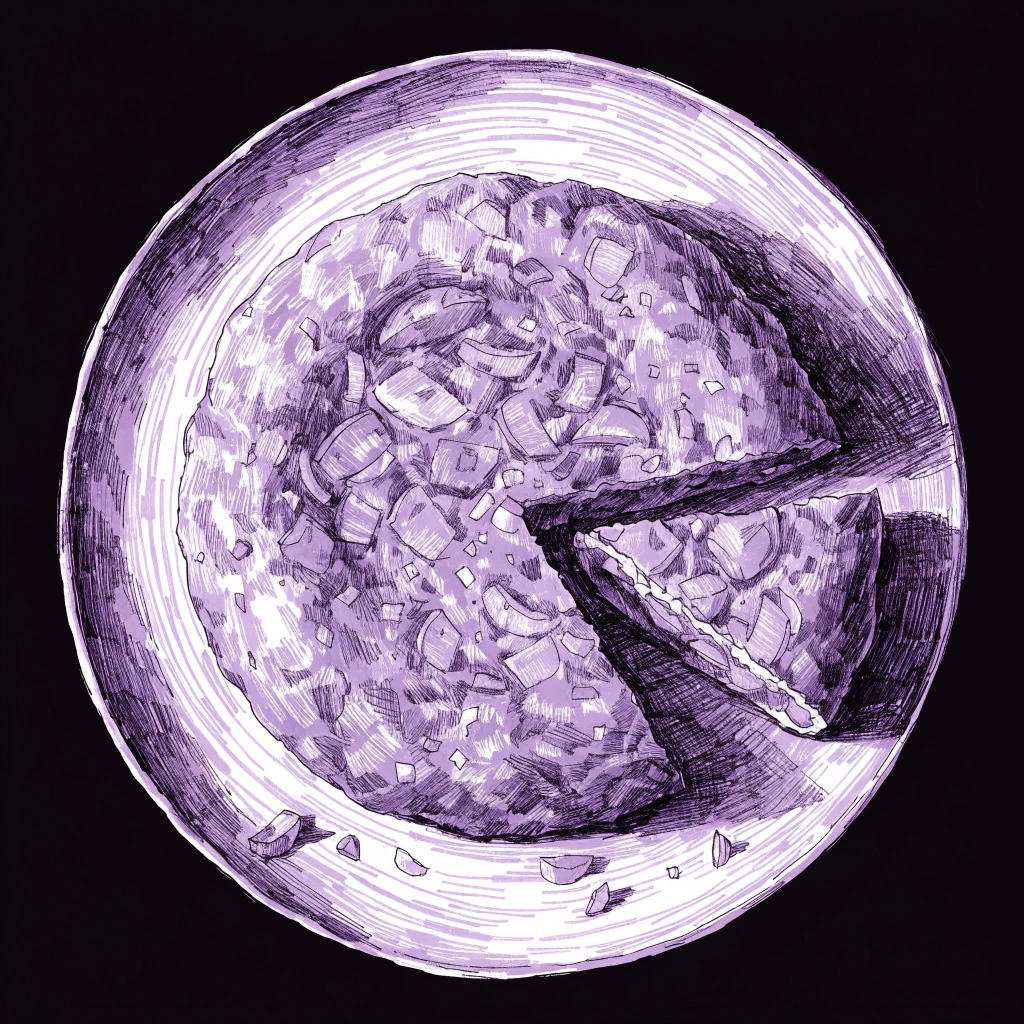
A Famous Dish from Spain
Spain has a famous dish. It is the Tortilla de Patatas. People call it the Spanish Omelet. It is very popular in every city.
The recipe is simple. You need eggs, potatoes, and oil. Some people also use onions. It is a thick and round dish.
People eat it for breakfast, lunch, or dinner. It is good hot or cold. Many families cook it at home. It is a delicious part of Spanish culture.
Gramática em destaque
Padrão: Present Simple with 'Be'
"It is the Tortilla de Patatas."
We use 'is' with singular subjects (he, she, it) to describe what something is or to give facts. This is the most common verb in English for beginners.
Padrão: Present Simple (Plural Subjects)
"Many families cook it at home."
When the subject is plural (like 'families'), we use the base form of the verb without adding an 's'. This describes a regular habit or general truth.
Teste sua compreensão
10 perguntas · A1 Iniciante · 1 pré-visualização grátis
Teste o que aprendeu neste artigo. Responda todas as perguntas para ganhar XP!
What is another name for the Tortilla de Patatas?
Quer finalizar o quiz?
9 perguntas a mais estão esperando por você. Cadastre-se grátis para desbloquear o quiz completo e ganhar XP!
Cadastrar grátisJá tem conta? Entrar
Detalhamento das perguntas
What is another name for the Tortilla de Patatas?
Sua resposta:
Resposta correta: Spanish Omelet
The recipe for this dish is very difficult.
Sua resposta:
Resposta correta: Falso
What does 'famous' mean?
Sua resposta:
Resposta correta: Known by many people
Some people also use _____ in the recipe.
Sua resposta:
Resposta correta: onions
The Famous Spanish Omelet
The Tortilla de Patatas is the most famous dish in Spain. You can find it in every city and small village. It is a very simple meal, but it is delicious. People eat it at home, in restaurants, and even as a snack.
This omelet is different from a French omelet. It is much thicker and looks like a small cake. The main ingredients are eggs, potatoes, and olive oil. Some people love adding onions because they make the tortilla sweeter. However, other people think that a real tortilla should only have potatoes and eggs.
There is an interesting story about its history. Many people believe a general named Tomás de Zumalacárregui invented it in the 19th century. He needed to feed his hungry soldiers quickly and cheaply. Because he had only a few ingredients, he created this famous dish. Today, the tortilla is a symbol of Spanish culture and it is more popular than ever.
Gramática em destaque
Padrão: Comparatives
"It is much thicker and looks like a small cake."
We use comparatives to compare two things. For short adjectives like 'thick', we add '-er' to the end of the word.
Padrão: Past Simple
"He needed to feed his hungry soldiers quickly and cheaply."
The past simple is used for finished actions in the past. For regular verbs, we usually add '-ed' to the base verb.
Teste sua compreensão
11 perguntas · A2 Elementar · 1 pré-visualização grátis
Teste o que aprendeu neste artigo. Responda todas as perguntas para ganhar XP!
What are the main ingredients of a basic Spanish omelet?
Quer finalizar o quiz?
10 perguntas a mais estão esperando por você. Cadastre-se grátis para desbloquear o quiz completo e ganhar XP!
Cadastrar grátisJá tem conta? Entrar
Detalhamento das perguntas
What are the main ingredients of a basic Spanish omelet?
Sua resposta:
Resposta correta: Eggs, potatoes, and olive oil
The Spanish omelet is thinner than a French omelet.
Sua resposta:
Resposta correta: Falso
What does 'ingredients' mean?
Sua resposta:
Resposta correta: The items used to make food
People eat the tortilla because it is very _____.
Sua resposta:
Resposta correta: delicious
When do people believe the tortilla was invented?
Sua resposta:
Resposta correta: In the 19th century
Tortilla Espanhola: Um Ícone da Culinária
A Tortilla de Patatas, ou Tortilla Espanhola, é sem dúvida um dos pratos mais emblemáticos da Espanha. Diferente da omelete francesa, que é fina e macia, a versão espanhola é um disco mais grosso e substancioso, feito principalmente com ovos e batatas. Por fora, ela tem uma textura firme, enquanto por dentro pode variar de bem cozida a deliciosamente cremosa, dependendo do gosto de quem a prepara. Este prato tem servido como uma verdadeira ponte culinária, unindo pessoas de todas as classes sociais e regiões do país.
A história da tortilla é um tema de muitos debates. Não se sabe ao certo quando e onde ela foi criada pela primeira vez. No entanto, uma lenda popular conta que a tortilla foi inventada pelo General Tomás de Zumalacárregui durante um cerco. Ele teria usado os poucos ingredientes disponíveis – batatas, ovos e cebola – para alimentar suas tropas. Desde então, a receita original tem se espalhado e se tornado parte essencial da identidade gastronômica espanhola. Muitas variações têm sido desenvolvidas ao longo dos anos, algumas com cebola, outras sem, e até com outros vegetais.
Hoje em dia, a tortilla é um prato que se encontra por toda parte na Espanha. Ela é servida como tapa em bares, como recheio para sanduíches chamados "bocadillos", ou até mesmo como um prato principal em refeições familiares. A sua simplicidade e o seu sabor único a tornaram um favorito tanto entre os espanhóis quanto entre os turistas que visitam o país. Muitas pessoas já experimentaram a tortilla e a consideram uma das delícias da culinária ibérica. É uma receita que tem passado de geração em geração, mantendo viva a tradição. Se você ainda não provou, deveria!
Gramática em destaque
Padrão: Pretérito Perfeito Composto (Present Perfect)
"Este prato tem servido como uma verdadeira ponte culinária..."
Usamos o Pretérito Perfeito Composto (verbo 'ter' ou 'haver' no presente + particípio do verbo principal) para ações que começaram no passado e continuam até o presente, ou ações repetidas no passado com relevância atual. Indica uma ação que ainda tem efeito ou se repete no tempo presente.
Padrão: Voz Passiva (Passive Voice)
"Ela é servida como tapa em bares..."
A Voz Passiva é usada quando o foco da frase está na ação sofrida pelo sujeito, e não em quem realiza a ação. É formada com o verbo 'ser' (ou 'estar') conjugado no tempo verbal adequado, seguido do particípio do verbo principal.
Teste sua compreensão
11 perguntas · B1 Intermediário · 1 pré-visualização grátis
Teste o que aprendeu neste artigo. Responda todas as perguntas para ganhar XP!
O que torna a Tortilla de Patatas diferente da omelete francesa?
Quer finalizar o quiz?
10 perguntas a mais estão esperando por você. Cadastre-se grátis para desbloquear o quiz completo e ganhar XP!
Cadastrar grátisJá tem conta? Entrar
Detalhamento das perguntas
O que torna a Tortilla de Patatas diferente da omelete francesa?
Sua resposta:
Resposta correta: É um disco mais grosso
A história da Tortilla de Patatas não tem debates sobre sua origem.
Sua resposta:
Resposta correta: Falso
O que significa a palavra 'emblemáticos' no texto?
Sua resposta:
Resposta correta: Importantes e representativos
A Tortilla de Patatas é servida como _____ em bares.
Sua resposta:
Resposta correta: tapa
Qual a principal ideia sobre a Tortilla de Patatas no texto?
Sua resposta:
Resposta correta: É um prato simples e popular na Espanha
The Gastronomic Soul of Spain: More Than Just an Omelet
The Tortilla de Patatas, widely recognized as the Spanish Omelet, represents a pivotal element of Spain's culinary identity. It is a ubiquitous dish, encountered in every corner of the country, from high-end restaurants in Madrid to modest village taverns. Unlike the delicate and thin French omelet, the Spanish version is a substantial, cake-like disk that is firm on the outside but can vary significantly in its internal consistency. While it appears deceptively simple—consisting primarily of eggs, potatoes, and olive oil—its preparation and ingredients are subjects of intense national debate.
The historical origins of the tortilla are frequently disputed among scholars and food historians. A popular legend suggests that the dish was invented by General Tomás de Zumalacárregui during the Siege of Bilbao in the 19th century. According to this narrative, it must have been a practical solution to feed a hungry army with limited resources. Historians argue that the combination of inexpensive potatoes and nutritious eggs provided the necessary energy for soldiers. Regardless of its true origin, the tortilla has evolved into a versatile staple that transcends social boundaries, serving as a culinary bridge across all demographics.
One of the most contentious issues surrounding the tortilla is the inclusion of onions. This controversy divides Spaniards into two passionate camps: the 'cebollistas' (those in favor of onions) and the 'sincebollistas' (those against). Proponents argue that onions provide a necessary sweetness and moisture, whereas critics claim they mask the pure flavor of the potato. Furthermore, preferences regarding the internal texture vary significantly by region. Some diners prefer a fully set, firm omelet, while others insist on a 'tortilla betanzos,' which is famously runny and liquid in the center.
Beyond its nutritional value, the tortilla serves as a cultural manifestation of Spanish social life. It is most frequently served as a 'pincho'—a small portion—alongside a drink, illustrating the communal nature of Spanish dining. The dish's enduring popularity can be attributed to its simplicity and the high quality of its basic components. Ultimately, the Tortilla de Patatas is not merely a meal; it is a shared heritage that continues to spark passion and conversation across the Iberian Peninsula, proving that even the simplest ingredients can define a nation's spirit.
Gramática em destaque
Padrão: Passive Voice
"The invention of the dish is frequently attributed to General Tomás de Zumalacárregui..."
The passive voice is used here to focus on the invention rather than the specific people doing the attributing. It is formed using the verb 'to be' plus the past participle.
Padrão: Relative Clauses
"...the Spanish version is a substantial, cake-like disk that is firm on the outside..."
The relative pronoun 'that' introduces a clause that provides essential information about the 'disk'. This structure helps combine ideas into more complex sentences.
Padrão: Modals of Deduction (Past)
"...it must have been a practical solution to feed a hungry army..."
The structure 'must have been' is used to make a logical deduction about a past situation based on evidence. It expresses a high degree of certainty.
Teste sua compreensão
11 perguntas · B2 Intermediário superior · 1 pré-visualização grátis
Teste o que aprendeu neste artigo. Responda todas as perguntas para ganhar XP!
According to the legend, why was the tortilla likely invented?
Quer finalizar o quiz?
10 perguntas a mais estão esperando por você. Cadastre-se grátis para desbloquear o quiz completo e ganhar XP!
Cadastrar grátisJá tem conta? Entrar
Detalhamento das perguntas
According to the legend, why was the tortilla likely invented?
Sua resposta:
Resposta correta: To feed soldiers efficiently during a siege
The Spanish tortilla is physically very similar to a thin French omelet.
Sua resposta:
Resposta correta: Falso
What does 'ubiquitous' mean in the context of the article?
Sua resposta:
Resposta correta: Found everywhere
The tortilla has evolved into a versatile _____ that transcends social boundaries.
Sua resposta:
Resposta correta: staple
What is the primary argument used by 'cebollistas'?
Sua resposta:
Resposta correta: Onions add necessary sweetness and moisture
The Gastronomic Soul of Spain: A Critical Analysis of the Tortilla de Patatas
Seldom does a culinary staple evoke such visceral passion and intellectual debate as the Spanish Tortilla de Patatas. Far from being a mere omelet, this thick, cake-like disk of potatoes and eggs serves as a quintessential symbol of Spanish identity, bridging the dichotomy between rural tradition and urban sophistication. While its ingredients appear deceptively rudimentary, the dish is a complex manifestation of historical necessity and regional pride.
The genesis of the tortilla remains shrouded in myth, yet its historical significance is undeniable. One popular legend attributes its invention to General Tomás de Zumalacárregui during the Siege of Bilbao in the 19th century. Faced with the scarcity of provisions, the general allegedly devised a high-calorie, easily portable meal for his troops. However, historical records suggest the proliferation of the potato as a staple crop was already well underway, driven by the economic exigencies of the time. What is certain is that the dish emerged from a necessity to stretch meager resources, a common theme in the evolution of Mediterranean cuisine.
In contemporary Spain, the discourse surrounding the tortilla is dominated by a contentious debate: the presence or absence of onions. The 'concebollistas' argue that the caramelization of onions provides a necessary sweetness and moisture, whereas the 'sincebollistas' maintain that the purity of the egg and potato should remain untainted. This disagreement is more than a matter of taste; it is a cultural schism that reflects the Spanish penchant for robust debate over everyday rituals. Furthermore, the textural integrity of the dish—ranging from the 'betanzos' style, which is almost liquid in the center, to the firmer versions found in the south—highlights the regional diversity of the peninsula.
It is the meticulous technique required for the 'vuelta'—the precarious act of flipping the omelet—that separates the amateur from the connoisseur. This moment of culinary tension requires both confidence and dexterity. The result is an egalitarian dish, served in the most clandestine village taverns and the most avant-garde Michelin-starred restaurants alike. Ultimately, the Tortilla de Patatas is not merely sustenance; it is a narrative of resilience, a testament to the power of simplicity, and an enduring pillar of Spanish social life.
Gramática em destaque
Padrão: Negative Inversion
"Seldom does a culinary staple evoke such visceral passion and intellectual debate as the Spanish Tortilla de Patatas."
When negative or restrictive adverbs like 'seldom' or 'rarely' start a sentence, the auxiliary verb comes before the subject for emphasis and formal tone.
Padrão: Cleft Sentences
"It is the meticulous technique required for the 'vuelta'—the precarious act of flipping the omelet—that separates the amateur from the connoisseur."
Cleft sentences use 'It is... that' to focus on a specific part of the information, highlighting the importance of the 'vuelta' in this context.
Padrão: Nominalisation
"The proliferation of the potato as a staple crop was already well underway..."
Nominalisation involves turning verbs into nouns ('proliferation' from 'proliferate'). This is a hallmark of C1 writing to convey complex ideas concisely and formally.
Teste sua compreensão
12 perguntas · C1 Avançado · 1 pré-visualização grátis
Teste o que aprendeu neste artigo. Responda todas as perguntas para ganhar XP!
What does the author suggest about the origin of the Tortilla de Patatas?
Quer finalizar o quiz?
11 perguntas a mais estão esperando por você. Cadastre-se grátis para desbloquear o quiz completo e ganhar XP!
Cadastrar grátisJá tem conta? Entrar
Detalhamento das perguntas
What does the author suggest about the origin of the Tortilla de Patatas?
Sua resposta:
Resposta correta: It emerged from a need to use limited resources efficiently.
The 'sincebollistas' are those who believe onions are an essential part of a tortilla.
Sua resposta:
Resposta correta: Falso
What does 'egalitarian' most likely mean in the context of the article?
Sua resposta:
Resposta correta: Accessible and fair to all social classes
The author describes the act of flipping the omelet as a _____ moment of culinary tension.
Sua resposta:
Resposta correta: precarious
What is the 'betanzos' style mentioned in the text?
Sua resposta:
Resposta correta: A version that is very runny in the center.
The article claims that the tortilla is found in both humble and high-end dining establishments.
Sua resposta:
Resposta correta: Verdadeiro
The Gastronomic Hegemony of the Tortilla de Patatas: A Sociopolitical and Culinary Inquiry
To traverse the Iberian Peninsula is to encounter a singular culinary artifact that transcends the mere function of sustenance, assuming instead a role of profound cultural gravitas. The Tortilla de Patatas, or Spanish Omelet, is ostensibly ubiquitous, yet its simplicity belies a sophisticated interplay of history, technique, and regional identity. Unlike its Gallic counterpart, which favors a delicate, ephemeral lightness, the Spanish iteration is a robust, cake-like disk. It serves as a vernacular bridge across disparate social strata, found with equal frequency in the most austere roadside taverns and the most avant-garde Michelin-starred establishments.
Historical accounts regarding the genesis of the tortilla are shrouded in a certain degree of mythopoeia. One particularly enduring narrative attributes its invention to General Tomás de Zumalacárregui during the Siege of Bilbao in the 19th century. Legend has it that the General sought a nutritive, economical, and easily transportable meal to sustain his Carlist troops through the arduous winter. Whether this account is factually grounded or merely a romanticized fabrication, it underscores the dish’s ontological status as a product of necessity and ingenuity. Notwithstanding these martial origins, the tortilla has evolved into a canvas for contemporary culinary discourse.
The most polemical debate within the Spanish gastronomic sphere concerns the inclusion of the onion—a schism that divides the nation into 'concebollistas' and 'sincebollistas.' For the proponent of the onion, the bulb’s caramelization provides a necessary sweetness and moisture that mitigates the inherent dryness of the tuber. Conversely, the purist argues that the addition of any extraneous constituent compromises the integrity of the potato-egg duality. This is not merely a matter of palate; it is an ideological divergence that reflects broader regional temperaments and the sanctity of tradition.
Technically, the preparation of a superlative tortilla requires a mastery of temperature and viscosity. The potatoes must be poached in olive oil rather than fried, ensuring a tender interstice between the crisp exterior and the succulent core. Furthermore, the degree of coagulation in the egg remains a point of intense scrutiny. While some regions demand a fully set, structural integrity, others—particularly in the north—prefer a 'betanzos' style, where the interior remains gloriously runny, bordering on the liquid. Seldom has such a rudimentary combination of ingredients elicited such nuanced aesthetic appreciation.
From a scientific perspective, the Maillard reaction that occurs during the slow poaching of the potatoes is essential to the dish's aromatic profile. Lest the texture be compromised, the ratio of egg to potato must be calibrated with mathematical precision. It is this meticulous attention to detail that elevates the tortilla from a humble peasant staple to a symbol of national pride. In an era of globalization, where culinary traditions are often diluted, the Tortilla de Patatas remains a steadfast bastion of Spanish identity, epitomizing the beauty of simplicity refined through centuries of practice.
Gramática em destaque
Padrão: Inversion with Negative Adverbials
"Seldom has such a rudimentary combination of ingredients elicited such nuanced aesthetic appreciation."
This pattern places the auxiliary verb before the subject to emphasize the rarity or intensity of the statement. It is a hallmark of formal, high-level English prose.
Padrão: Negative Subjunctive with 'Lest'
"Lest the texture be compromised, the ratio of egg to potato must be calibrated with mathematical precision."
The word 'lest' is used to express a fear of a negative outcome, followed by the base form of the verb (subjunctive). It is used here to indicate a precaution.
Padrão: Cleft Sentences for Focus
"Whether this account is factually grounded or merely a romanticized fabrication, it underscores the dish’s ontological status as a product of necessity and ingenuity."
While this sentence uses a 'Whether... or' structure, it functions to isolate and highlight the 'ontological status' of the dish as the primary subject of the analytical observation.
Teste sua compreensão
12 perguntas · C2 Domínio · 1 pré-visualização grátis
Teste o que aprendeu neste artigo. Responda todas as perguntas para ganhar XP!
What does the author suggest about the historical origin of the Tortilla de Patatas?
Quer finalizar o quiz?
11 perguntas a mais estão esperando por você. Cadastre-se grátis para desbloquear o quiz completo e ganhar XP!
Cadastrar grátisJá tem conta? Entrar
Detalhamento das perguntas
What does the author suggest about the historical origin of the Tortilla de Patatas?
Sua resposta:
Resposta correta: It is likely a romanticized legend born of military necessity.
The 'sincebollistas' argue that adding onion helps to balance the dryness of the potato.
Sua resposta:
Resposta correta: Falso
Which word describes the division between those who like onions in their tortilla and those who do not?
Sua resposta:
Resposta correta: Schism
The Tortilla de Patatas is described as being _____ in Spain, meaning it is found everywhere.
Sua resposta:
Resposta correta: ubiquitous
According to the text, what is the technical difference between preparation in the north and other regions?
Sua resposta:
Resposta correta: The level of egg coagulation, with some preferring it runny.
The author claims the Spanish omelet is lighter and more ephemeral than the French version.
Sua resposta:
Resposta correta: Falso

