The video owner has disabled playback on external websites.
This video is no longer available on YouTube.
This video cannot be played right now.
Watch on YouTube
Unlock AI-Powered Learning Tools
Sign up to access powerful tools that help you learn faster from every video.
Introduction to Indigenous Knowledge : Ep 8 of Crash Course Native American History
AI Summary
This video introduces Indigenous knowledge systems and how Native American ways of knowing complement Western science. Learners will encounter vocabulary related to cultural studies and science, including terms like 'ways of knowing,' 'oral history,' 'controlled burns,' 'biodiversity,' and 'two-eyed seeing.' The video explores topics such as traditional ecological management, technological innovations by Indigenous peoples, and the concept of braiding Indigenous and Western knowledge, offering rich material for cross-cultural English comprehension.
Learning Stats
CEFR Level
Total Words
Unique Words
Difficulty
Subtitles (46 segments)
DownloadLong ago, if you knew how to listen, you could hear the trees speaking. The Podawatami tells stories about this with trees gathering together, making plans.
Stories where the trees decide how to grow, how many seeds to produce, how to survive. And in recent years, non-native botnists have picked up on the same thing. Trees really are communicating.
They share resources and information through chemicals in the air and networks underground.
So, how did native peoples thousands of years ago figure out something that western scientists are only just discovering? Hi, I'm Jim and this is Crash Course Native American History.
[Music]
Science is a useful tool for understanding the world. It's helped us figure out really complex ideas like particle physics and evolution and microwave popcorn. And native people have made plenty of scientific discoveries, yet we're often perceived as anti-science.
So, what gives? Turns out what we typically consider science today isn't the only way to arrive at accurate information. There are a variety of ways of knowing or means through which people discover knowledge. And many Native American ways of knowing are rooted in observing the earth and living in close relationship to it since time immemorial. To paraphrase Pawatami writer and botnist Dr. Robin Wall Kimmeer.
We tend to think of science as being neutral and objective where the conclusions drawn are influenced by the people doing the concluding. But years ago,
Western scientists assumed plants didn't communicate because they don't do so in the ways that look like animal communication.
And later, when scientists revisited that question with the understanding that communication could look really different from what they'd expect, bingo, they started to find compelling evidence, which just goes to show that all knowledge is influenced by the perspectives we humans bring to it. And Native American cultures,
Full subtitles available in the video player
Key Vocabulary (17)
Associated with the place or circumstances of a person's birth, or originating naturally in a particular region.
The plural form of 'way,' referring to multiple methods, paths, or manners of doing something. It can also describe a person's characteristic habits or a specific distance or direction in informal usage.
People refers to a group of human beings or the general public. It is the standard plural form of the word 'person'.
Grammar in This Video
Practice with Exercises
Generate vocabulary, grammar, and comprehension exercises from this video
Comments (0)
Login to CommentSign up to unlock full features
Track progress, save vocabulary, and practice exercises
Interactive Mode
Quiz
Correct answer:
Related Videos

Why ramen is so valuable in prison

Easy English 31 - Typical Namibian

The Lion King-I Just Can't Wait To Be King Song(Official Video from "The Lion King")(1080p)(English)

Crime Scene - Saturday Night Live
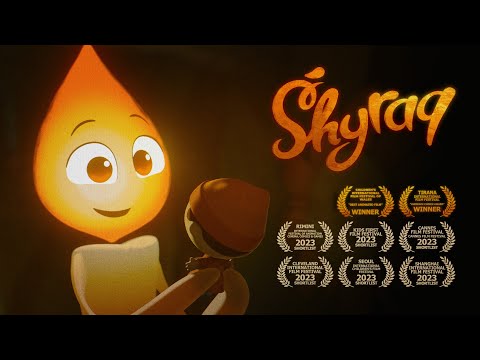
Animated short film - SHYRAQ (What does make us unite?)

CrashCourse
Quiz
Correct answer:
Quizzes appear as you watch the video
Memory Tip
From this video
Start learning languages for free

