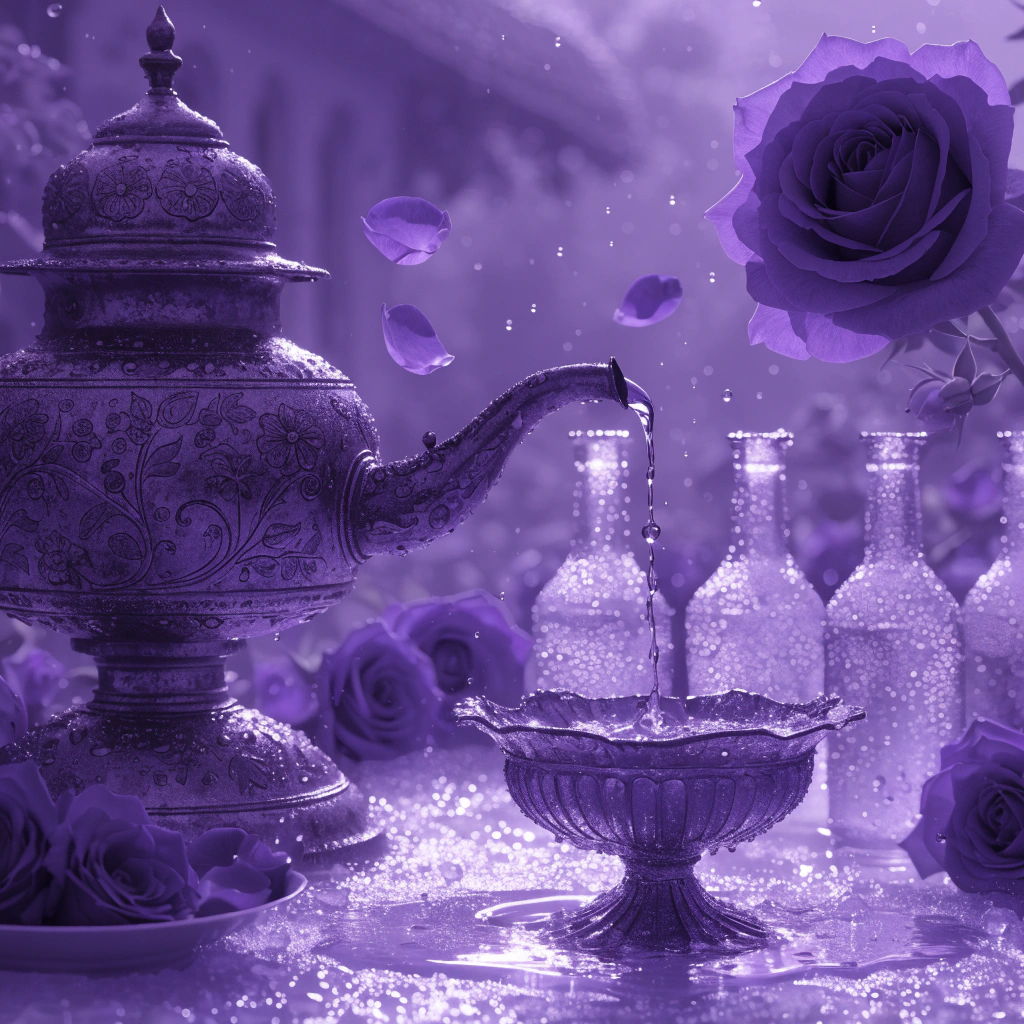
The Rose Water Festival in Iran
In May, many people visit Kashan in Iran. It is the time for the Rose Water Festival. The weather is warm and the flowers are beautiful. These flowers are pink roses. They have a very strong and sweet smell.
Farmers pick the roses early in the morning. Then, they put the flowers in big pots with water. They boil the water to make rose water. People use rose water in food and perfume. It is a very old tradition. Everyone is happy during this festival.
语法聚焦
句型: Present Simple: Be
"The weather is warm and the flowers are beautiful."
We use 'is' for one thing and 'are' for many things. It describes facts and states in the present.
句型: Present Simple: Action Verbs
"Farmers pick the roses early in the morning."
We use the base form of the verb (pick) with plural subjects like 'Farmers'. It shows a regular activity.
测试你的理解
10 个问题 · A1 初学 · 1 次免费预览
测试你从这篇文章中学到的知识。回答所有问题即可获得经验值!
In which city is the festival located?
题目详情
In which city is the festival located?
你的回答:
正确答案: Kashan
The roses at the festival are blue.
你的回答:
正确答案: 错误
What does 'smell' mean?
你的回答:
正确答案: What you notice with your nose
Farmers put the flowers in big _____ with water.
你的回答:
正确答案: pots
The Pink Rose Water Festival of Iran
In May, the city of Kashan in Iran becomes very beautiful. Many pink flowers grow in the gardens. This is the time for the Rose Water Festival. People celebrated this tradition for many centuries.
The festival focuses on the Mohammadi rose. This flower is special because it has a very strong smell. Workers wake up early in the morning to pick the roses. They do this because the flowers are fresher before the sun gets too hot. They work quickly and fill large bags with the pink petals.
Later, they take the roses to workshops. They put the flowers in big pots with water and boil them. This creates rose water. Iran is the largest producer of rose water in the whole world.
Today, many tourists visit the towns of Qamsar and Niasar. They like to watch the process and buy fresh rose water. People use it in delicious food and expensive perfumes. The work is hard, but the air smells like a beautiful garden.
语法聚焦
句型: Past Simple
"People celebrated this tradition for many centuries."
The past simple is used to talk about finished actions in the past. To form the past simple of regular verbs, we add '-ed' to the end of the verb.
句型: Comparative Adjectives
"They do this because the flowers are fresher before the sun gets too hot."
We use comparative adjectives to compare two things. For short adjectives like 'fresh', we add '-er' to the end to make 'fresher'.
测试你的理解
11 个问题 · A2 基础 · 1 次免费预览
测试你从这篇文章中学到的知识。回答所有问题即可获得经验值!
题目详情
When do workers pick the roses?
你的回答:
正确答案: Early in the morning
Iran is the largest producer of rose water in the world.
你的回答:
正确答案: 正确
What does 'workshop' mean?
你的回答:
正确答案: A place where things are made
Iran is the largest _____ of rose water in the whole world.
你的回答:
正确答案: producer
Why do they pick the flowers early?
你的回答:
正确答案: Because the flowers are fresher
The Sweet Scent of Spring: Iran’s Rose Water Festival
Every year in May, the dry landscapes around the city of Kashan are transformed into a beautiful sea of pink flowers. This is the time for the 'Golab-giri' or Rose Water Festival, which has been a tradition in Iran for over a thousand years. People from all over the world travel to the towns of Qamsar and Niasar to see this amazing event.
The focus of the festival is the 'Mohammadi Rose', a flower that is famous for its sweet smell. During the festival, millions of roses are picked by hand early in the morning. Then, the rose water is produced using a traditional method. The petals are put into large copper pots and boiled with water. The steam is collected and cooled to create the pure liquid, which is known as rose water. This process has been used by local families for centuries.
Iran is currently the largest producer of rose water in the world. The liquid is very important in Iranian culture because it is used in cooking, perfumes, and religious ceremonies. Visitors who walk through the streets can smell the intense fragrance everywhere. It is a unique experience that connects the past with the present.
Many tourists have visited these gardens to learn about the history of the region. The festival is not just about making a product; it is a celebration of nature and hard work. If you visit Iran in the spring, you will never forget the sight of the pink hills and the kind people who celebrate this ancient tradition.
语法聚焦
句型: Passive Voice
"During the festival, millions of roses are picked by hand early in the morning."
We use the passive voice (am/is/are + past participle) when the action is more important than who does it. In this sentence, the roses are the focus, not the workers.
句型: Present Perfect
"This is the time for the 'Golab-giri' or Rose Water Festival, which has been a tradition in Iran for over a thousand years."
The present perfect (have/has + past participle) connects the past to the present. It shows that the tradition started long ago and still continues today.
测试你的理解
11 个问题 · B1 中级 · 1 次免费预览
测试你从这篇文章中学到的知识。回答所有问题即可获得经验值!
Which city is famous for the landscapes transformed by pink roses?
题目详情
Which city is famous for the landscapes transformed by pink roses?
你的回答:
正确答案: Kashan
Iran is the largest producer of rose water in the world.
你的回答:
正确答案: 正确
What does 'fragrance' mean?
你的回答:
正确答案: A pleasant, sweet smell
The rose water is produced using a traditional _____.
你的回答:
正确答案: method
What kind of pots are used to boil the rose petals?
你的回答:
正确答案: Copper
The Fragrant Heritage: Iran’s Ancient Rose Water Tradition
As spring reaches its peak in May, the arid landscapes surrounding the historic city of Kashan undergo a breathtaking transformation. In the nearby towns of Qamsar and Niasar, the dusty plains are replaced by a vibrant sea of pink blossoms. This marks the commencement of 'Golab-giri,' the Rose Water Festival, a tradition that has been meticulously preserved for over a thousand years. The centerpiece of this annual event is the 'Mohammadi Rose' (Rosa damascena), a flower highly prized for its intense fragrance and exceptional oil content.
The 'Golab-giri' festival has been celebrated for over a millennium, maintaining a link between history and the present. Each year, thousands of visitors flock to the region to witness the traditional distillation process. The harvest begins at dawn when the flowers are at their most fragrant. Workers move through the fields with speed and precision, collecting the blossoms before the sun’s heat causes the essential oils to evaporate. This labor-intensive practice ensures that the resulting rose water retains its maximum potency and therapeutic qualities.
The Mohammadi Rose, which is prized for its intense fragrance and high oil content, remains the centerpiece of this annual event. Once harvested, the petals are transported to local workshops where they are placed into large copper pots. These pots are sealed and heated over wood fires, allowing the steam to pass through pipes and condense into the clear, aromatic liquid known as rose water. While modern technology could potentially speed up this process, many local producers insist that the traditional method produces a superior product. If the traditional distillation methods were abandoned, the unique potency of the rose water would likely diminish.
Iran is currently the largest producer of rose water globally, and the industry plays a vital role in the regional economy. Beyond its commercial value, rose water holds deep cultural and religious significance. It is frequently used to wash holy shrines and is a staple ingredient in Persian cuisine, lending its delicate floral notes to sweets and beverages. The festival serves as a reminder of the delicate balance between agricultural heritage and modern tourism. By analyzing the success of the Golab-giri, one can evaluate how traditional practices can thrive in a globalized world, provided they are supported by local pride and international interest.
语法聚焦
句型: Present Perfect Passive
"The 'Golab-giri' festival has been celebrated for over a millennium..."
This pattern is used to describe an action that started in the past and continues to the present, focusing on the event rather than the person performing it. It is formed using 'has/have + been + past participle'.
句型: Non-defining Relative Clause
"The Mohammadi Rose, which is prized for its intense fragrance and high oil content, remains the centerpiece of this annual event."
These clauses provide extra information about a noun but are not essential for the sentence to make sense. They are always separated by commas and often use 'which' or 'who'.
句型: Second Conditional
"If the traditional distillation methods were abandoned, the unique potency of the rose water would likely diminish."
Used to talk about hypothetical or unlikely situations in the present or future. It is formed using 'If + past simple, would + base verb'.
测试你的理解
11 个问题 · B2 中高级 · 1 次免费预览
测试你从这篇文章中学到的知识。回答所有问题即可获得经验值!
What is the primary reason the rose harvest begins at dawn?
题目详情
What is the primary reason the rose harvest begins at dawn?
你的回答:
正确答案: To prevent the essential oils from evaporating in the heat
The article suggests that modern technology is widely used to improve the quality of rose water in Qamsar.
你的回答:
正确答案: 错误
Which word describes something that is dry and lacks enough rain for plants?
你的回答:
正确答案: Arid
The clear aromatic liquid is created when steam is allowed to _____ in copper pipes.
你的回答:
正确答案: condense
According to the text, how does rose water contribute to Persian culture besides its economic value?
你的回答:
正确答案: It is used in religious rituals and culinary recipes
The Alchemical Vernissage: Decoding the Sensory Heritage of the Golab-giri
Seldom does a landscape undergo such a radical metamorphosis as the arid hinterlands of Kashan during the peak of spring. As May descends upon the Iranian plateau, the parched earth of Qamsar and Niasar is momentarily eclipsed by a sprawling sea of Mohammadi Roses (Rosa damascena). This annual event, known as the Golab-giri, is not merely a harvest; it is a profound cultural vestige that has endured for over a millennium, bridging the gap between ancient botanical wisdom and contemporary industrial demand. It is the Rosa damascena, prized for its exceptionally high oil content and pungent fragrance, that serves as the protagonist in this olfactory drama.
Iran stands as the global vanguard in rose water production, yet the festival remains deeply rooted in artisanal traditions. The process begins at dawn, a temporal necessity to ensure the petals retain their essential oils before the sun’s heat triggers their premature evanescence. Harvesters move with rhythmic precision, a testament to a craft passed down through generations. What follows is the distillation process, a sophisticated display of traditional chemistry where copper vats and steam transform delicate flora into a potent liquid commodity. The nominalization of this process—from 'picking' to 'distillation'—reflects the transition from a simple agricultural act to a complex economic and ritualistic phenomenon.
However, the festival invites a critical analysis of the tension between heritage preservation and modern commodification. While the ubiquity of rose water in Iranian cuisine and cosmetics underscores its cultural significance, the burgeoning tourism industry surrounding Golab-giri presents a double-edged sword. On one hand, the influx of visitors provides a vital economic stimulus to these rural enclaves. On the other, the sheer scale of modern demand threatens to dilute the authenticity of the artisanal experience. Is the festival a sacred ritual or a performative spectacle for the global stage?
Furthermore, the environmental implications cannot be ignored. The arid nature of the region necessitates meticulous water management, yet the cultivation of roses is an water-intensive endeavor. As climate change exacerbates water scarcity, the future of the Golab-giri may depend on the integration of sustainable agricultural practices with traditional knowledge. Only through such a synthesis can the ephemeral beauty of the rose season be preserved for future generations. Ultimately, the Golab-giri is more than a sensory delight; it is a complex intersection of history, economy, and environmental stewardship, reminding us that even in the most inhospitable climates, culture can bloom with unparalleled intensity.
语法聚焦
句型: Negative Inversion
"Seldom does a landscape undergo such a radical metamorphosis as the arid hinterlands of Kashan during the peak of spring."
Inversion is used after negative or restrictive adverbs (like 'seldom') to create emphasis. The auxiliary verb 'does' moves before the subject 'landscape'.
句型: It-Cleft Sentence
"It is the Rosa damascena, prized for its exceptionally high oil content and pungent fragrance, that serves as the protagonist in this olfactory drama."
Cleft sentences focus on a specific part of the information. Using 'It is... that' emphasizes the specific type of rose responsible for the festival's fame.
句型: Nominalization
"The nominalization of this process—from 'picking' to 'distillation'—reflects the transition from a simple agricultural act to a complex economic and ritualistic phenomenon."
Nominalization turns verbs or adjectives into nouns (e.g., 'picking' becomes 'distillation' as a concept). This is a hallmark of C1 writing, allowing for denser, more abstract academic discussion.
测试你的理解
12 个问题 · C1 高级 · 1 次免费预览
测试你从这篇文章中学到的知识。回答所有问题即可获得经验值!
According to the article, why is the dawn harvest considered a 'temporal necessity'?
题目详情
According to the article, why is the dawn harvest considered a 'temporal necessity'?
你的回答:
正确答案: To prevent the sun from causing the essential oils to evaporate.
The author suggests that the rise in tourism is purely beneficial for the Golab-giri tradition.
你的回答:
正确答案: 错误
What does the word 'ephemeral' most closely mean in the context of the rose season?
你的回答:
正确答案: Short-lived and fleeting
The transition from an agricultural act to an economic phenomenon is described as a _____ of the process.
你的回答:
正确答案: nominalization
What environmental challenge does the article highlight regarding rose cultivation?
你的回答:
正确答案: Water scarcity in an arid climate.
Iran is currently the world's leading producer of rose water.
你的回答:
正确答案: 正确
The Olfactory Alchemistry of Kashan: A Socio-Economic and Cultural Dissection of the Golab-giri
The Vernal Equinox in Iran heralds more than just a change in temperature; it initiates a sensory phenomenon that defines the cultural topography of the Isfahan province. As the month of Ordibehesht unfolds, the hinterlands of Kashan are transformed into a verdant tapestry, punctuated by the delicate pink of the Rosa damascena. This period, known as the 'Golab-giri', is an ancient distillation festival that serves as a testament to the enduring legacy of Persian horticulture and chemistry. To analyze the Golab-giri is to engage with a multi-layered narrative of historical continuity. The Mohammadi Rose, named in honor of the Prophet Muhammad, is not merely a floral specimen but a sacred icon. The distillation of rose water is a process that arguably reached its zenith during the Islamic Golden Age, with scholars like Avicenna refining the methodology of steam distillation. This historical backdrop informs the contemporary practice, where the extraction of 'golab' remains a meticulously choreographed ritual.
The process begins in the evanescent hours of the dawn. It is imperative that the harvest be completed before the sun’s meridian transit, as the increasing heat causes the volatile essential oils to dissipate, thereby diminishing the quality of the final distillate. Laborers move through the fields with a practiced dexterity, selecting blooms that are at their peak of aromatic potency. This temporal constraint adds a layer of urgency to the festival, contrasting with the otherwise meditative pace of rural life. Technologically, the Golab-giri is a fascinating study in the survival of pre-industrial methods. While modern industrial facilities exist, the artisanal 'deg'—a large copper pot—remains the preferred vessel for many. The flowers are placed into these cauldrons, submerged in water, and sealed with a clay-based paste to ensure an airtight environment. As the water boils, the steam, carrying the essence of the rose, travels through pipes cooled by running water, eventually condensing into the prized liquid. This transition from solid flower to ethereal fragrance is a form of alchemical transformation that has captivated poets and scientists alike for centuries.
Beyond the olfactory allure, the economic ramifications of the rose water industry are significant. Iran remains the primary global purveyor of high-quality rose water, a commodity essential to the luxury perfumery markets of Grasse and the culinary traditions of the Levant. However, this dominance is not without its challenges. The encroachment of climate change and the persistent threat of water scarcity in the arid central plateau necessitate a nuanced approach to agricultural sustainability. Were the subterranean qanat systems to fail or the rainfall to diminish further, the very existence of these rose gardens would be jeopardized. Culturally, the festival functions as a locus of communal identity. It is a time when the dichotomy between the urban and the rural is temporarily bridged, as thousands of visitors descend upon small towns like Qamsar. The air, thick with a fragrance that is both cloying and divine, facilitates a collective experience of beauty. Seldom does one witness such a harmonious integration of industry and aesthetics. The Golab-giri is not merely an economic activity; it is a profound expression of the Persian soul, reflecting a deep-seated appreciation for the ephemeral nature of beauty and the technical rigor required to preserve it. In conclusion, the Rose Water Festival of Kashan stands as a quintessential example of intangible cultural heritage. It is a complex synthesis of history, science, and art. As we navigate an increasingly homogenized global landscape, the preservation of such localized, nuanced traditions becomes an epistemological necessity.
语法聚焦
句型: The Mandative Subjunctive
"It is imperative that the harvest be completed before the sun’s meridian transit."
The subjunctive mood is used here after an adjective of urgency ('imperative'). Note the use of the base form 'be completed' regardless of the subject.
句型: Negative Inversion for Emphasis
"Seldom does one witness such a harmonious integration of industry and aesthetics."
When a sentence begins with a negative or restrictive adverb like 'seldom', the subject and auxiliary verb are inverted to create a formal, rhetorical effect.
句型: Inverted Conditional (Hypothetical)
"Were the subterranean qanat systems to fail... the very existence of these rose gardens would be jeopardized."
This is a formal alternative to 'If the qanat systems were to fail'. It uses inversion to express a hypothetical condition in the present or future.
测试你的理解
12 个问题 · C2 精通 · 1 次免费预览
测试你从这篇文章中学到的知识。回答所有问题即可获得经验值!
What is the primary scientific rationale for harvesting the Mohammadi Rose before dawn?
题目详情
What is the primary scientific rationale for harvesting the Mohammadi Rose before dawn?
你的回答:
正确答案: To prevent the dissipation of volatile essential oils
The text suggests that the refinement of steam distillation occurred during the Islamic Golden Age.
你的回答:
正确答案: 正确
In the context of the article, what does the word 'evanescent' signify?
你的回答:
正确答案: Something that is short-lived or fleeting
The artisanal copper vessel traditionally used for distillation is known as a _____.
你的回答:
正确答案: deg
What does the author identify as a significant threat to the future of the rose water industry in Kashan?
你的回答:
正确答案: Environmental factors such as water scarcity
The article claims that Iran's dominance in the global rose water market is currently unchallenged by any external factors.
你的回答:
正确答案: 错误

