Grammar Rule in 30 Seconds
Use 'be going to' for plans you made before speaking and predictions based on clear evidence you can see right now.
- Use 'am/is/are' + 'going to' + base verb for plans (e.g., I am going to travel).
- Use it for predictions when you see evidence (e.g., Look at those clouds! It's going to rain).
- In negative sentences, put 'not' after the 'be' verb (e.g., They are not going to come).

Overview
I'm going to do that on Sunday(我打算周日再洗)?或者你正在刷特价机票,小声嘀咕着,I am going to visit Tokyo next year(我打算明年去东京)?如果是的话,你其实已经在用英语里最核心的工具之一了。going to 结构就像是你未来的架构师。当我们有了蓝图、计划或者坚定的意图时,就会用到它。它不像 will 那样往往只是脑子里突然冒出的一个火花,going to 关乎的是你已经思考过的事情。这就是 I'll have a coffee(当下决定)和 I'm going to meet a friend for coffee(计划已经排在日程表里了)之间的区别。在这篇指南里,我们要来看看这个句型在现实世界中是怎么运作的——从在群聊里发消息到计划下一次疯狂刷 Netflix 剧集。它非常亲切,也非常常用,现实生活中大家就是这么聊自己的生活的。如果语法是一个社交媒体平台,那么 going to 就是你的“活动”标签页。那是事情真正计划好要发生的地方。别担心,这可比试着取消健身房会员简单多了。How This Grammar Works
going to 想象成一座桥梁。桥的一头是现在——你此时此刻所在的地方。另一头是未来。这个语法点把两者连接了起来,因为未来行动的“种子”在现在就已经存在了。如果你有一个意图或计划,那么这个意图在“当下”就已经产生了,即便具体的动作要等到“以后”才发生。这就是为什么我们要用动词 be 的现在时(am, is, are)来开始这个句子。它也用于当我们能看到眼前的证据时所做的预测。如果你看到一个骑自行车的人摇摇晃晃地骑得很危险,你会说,He's going to fall!(他要摔倒了!),因为证据就在眼前。你不是在瞎猜,而是在报告现状正导向什么结果。这就像在 YouTube 上看视频加载条一样——你能看到进度,所以知道接下来会发生什么。这是谈论未来最“踏实”的方式,因为它依赖于事实和已经做出的决定。此外,它能让你听起来生活过得很有条理,哪怕你唯一的计划只是 I'm going to order pizza and regret it(我打算点个披萨然后后悔)。
Formation Pattern
going to 造句就像在组装一个三明治。你需要按特定的顺序放好特定的层。按照以下步骤,每次都能做对:
be 的正确形式(am, is 或 are)。
going to。
Conjugation Table
| Form | Example | Translation |
|---|---|---|
| Positive | I am going to travel. |
我打算去旅行。 |
| Negative | She is not going to call. |
她不打算打电话。 |
| Question | Are you going to help? |
你打算帮忙吗? |
| Short Form | They're going to win. |
他们要赢了。 |
Politeness Levels
- **Formal
** I am going to attend the meeting.(用于电子邮件或 Zoom 面试)。
- **Informal
** I'm going to grab a burger.(和朋友或家人在一起时使用)。
- **Casual (Slang)
** I'm gonna watch a movie.(在发短信或聊天时非常常见,但千万不要在正式论文里写 gonna!)。
Memory Trick
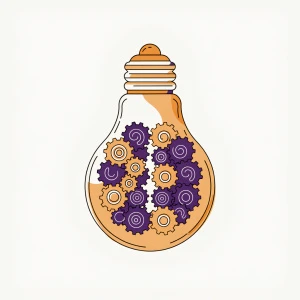
记住这个“三步计划”:Be(状态)+ Going(移动)+ To [Verb](目的地)。它就像你生活的 GPS!

When To Use It
going to 是你最好的拍档。首先,把它用于 Plans and Intentions(计划和意图)。这适用于任何你在说话*之前*就决定的事情。如果你已经买好了演唱会的票,你会说,I'm going to see Coldplay. 这是一个板上钉钉的计划。第二,用于 Predictions with Evidence(有据可循的预测)。这是指你看到某事正在发生,并且知道结果会怎样。如果天空漆黑一片且电闪雷鸣,你会说,It's going to rain. 你不是预言家,你只是在观察云层。第三,用于 Modern Social Contexts(现代社交场景)。当你准备发照片时,你可能会告诉朋友,I'm going to post this on Instagram. 这表明决定已经做好了。在打游戏时,如果你准备进入一场 Boss 战,你会告诉队友,I'm going to heal you. 这关乎你即时的角色和计划。基本上,如果你能预见到事情的发生,或者你已经考虑了超过两秒钟,用 going to 就准没错。只是别在求婚时用它,除非你想让它听起来像一桩生意往来:I am going to marry you 听起来有点像在威胁人。那种场合还是用 Will you marry me? 吧。
Common Mistakes
be。很多人会说 I going to eat 而不是 I am going to eat. 如果没有 am, is 或 are,这个句子就会像暴风雨中的廉价雨伞一样散架。另一个错误是 to 后面用了错误的动词形式。你必须始终使用动词原形。千万别说 I'm going to bought 或者 I'm going to buying. 保持简单:I'm going to buy. 还有一个容易忽视的错误是把 will 用于已经做好的计划。如果你告诉老板 I will go on holiday next week, 这听起来就像是你这秒钟才决定的。你老板可能会一头雾水。相反,应该用 I'm going to go on holiday 来表明这是几个月前就计划好的。最后,注意 going to go 的冗余问题。虽然 I'm going to go to the gym 在语法上是正确的,但很多母语者为了避免重复 go 这个词,会直接说 I'm going to the gym(使用现在进行时)。这就像戴了两顶帽子——技术上可行,但有点奇怪。Contrast With Similar Patterns
going to 和 will 之间做选择?想象你在一家餐厅。如果服务员问你点什么,而你在那一刻才决定,你会说,I'll have the steak.(这就是用于临时起意的 will)。但如果你因为有“选择困难症”而已经在网上看了三天菜单,你会告诉朋友,I'm going to have the steak.(这就是用于计划的 going to)。I am meeting him at 5 PM)。这和 going to 非常相似,但它通常用于和他人约好的固定安排或特定时间。Going to 更多是关于你的“意图”或“证据”。Going to:I'm going to buy a new phone.(我的意图)。Present Continuous:I'm buying the phone tomorrow at 10 AM.(一个确定的预约)。
will 是一道闪电(突然),那么 going to 就是火车轨道(设定了方向)。一个是惊喜,另一个是日程表。如果你用错了,人们还是能听懂你的意思,但你听起来可能会有点像一个试图冒充人类的机器人。Quick FAQ
我可以在工作面试里用 gonna 吗?
最好不要。把 gonna 留给你的 WhatsApp 群聊和 TikTok 配文吧。在面试中,要说 I am going to... 显得更专业、更有能力。
I'm going to go 正确吗?
是的,完全没问题!不过,I'm going to the store 更简短,也更常用。
万一我改变主意了呢?
语法并不会困住你!如果你说了 I'm going to study,结果却连刷了六个小时的 Netflix,你说话那一刻的语法依然是正确的,因为那是你当时的“意图”。至于你的效率,那就是另一回事了。
going to 能用于过去吗?
可以!用 was/were going to 来表达那些没能实现的计划。I was going to call you, but my phone died. 经典的借口!

Real Conversations
计划聚会:
Alex
Are you going to join us for the movie tonight?Sam
I'm not sure. I'm going to check my schedule and let you know.观察天气:
Sarah
Look at those clouds! It's going to pour.Tom
I'm going to grab the umbrella from the car.社交媒体生活:
Mia
I'm going to delete this app. It's a time-waster.Leo
You say that every week. You're not going to do it.Progressive Practice
Easy: 把一般现在时的句子改成未来的计划。(I eat -> I'm going to eat)。
Medium: 看向窗外,根据你看到的情况做 3 个预测(例如 That car is going to turn left)。
Hard: 用 going to 写一小段关于你“梦幻假期”的行程安排。
Conjugating 'Be Going To'
| Subject | Be Verb | Going To | Base Verb | Example |
|---|---|---|---|---|
|
I
|
am
|
going to
|
work
|
I am going to work.
|
|
You
|
are
|
going to
|
work
|
You are going to work.
|
|
He/She/It
|
is
|
going to
|
work
|
She is going to work.
|
|
We
|
are
|
going to
|
work
|
We are going to work.
|
|
They
|
are
|
going to
|
work
|
They are going to work.
|
Common Contractions
| Full Form | Contraction | Informal (Spoken) |
|---|---|---|
|
I am going to
|
I'm going to
|
I'm gonna
|
|
You are going to
|
You're going to
|
You're gonna
|
|
He is going to
|
He's going to
|
He's gonna
|
|
We are going to
|
We're going to
|
We're gonna
|
|
They are going to
|
They're going to
|
They're gonna
|
Meanings
A verb construction used to express a person's intentions or plans for the future, or to predict something that is likely to happen based on present evidence.
Prior Plans
Decisions made before the moment of speaking.
“We are going to visit my grandmother on Saturday.”
“He is going to buy a new car next month.”
Predictions with Evidence
Predicting the future based on what we can see or feel right now.
“Watch out! That vase is going to fall!”
“I feel terrible; I think I'm going to be sick.”
Intentions
Expressing a goal or a desire to do something, even if the specific time isn't set.
“I'm going to be a doctor when I grow up.”
“She's going to learn how to play the guitar someday.”
Reference Table
| 主语 | 肯定句 (+) | 否定句 (-) | 疑问句 (?) |
|---|---|---|---|
|
I
|
I am going to eat.
|
I am not going to eat.
|
Am I going to eat?
|
|
You
|
You are going to study.
|
You are not going to study.
|
Are you going to study?
|
|
He/She/It
|
He is going to work.
|
He is not going to work.
|
Is he going to work?
|
|
We
|
We are going to visit.
|
We are not going to visit.
|
Are we going to visit?
|
|
They
|
They are going to watch.
|
They are not going to watch.
|
Are they going to watch?
|
正式程度
I am going to attend the scheduled meeting tomorrow. (Work/Social)
I'm going to go to the meeting tomorrow. (Work/Social)
I'm gonna be at the meeting tomorrow. (Work/Social)
I'm gonna hit up that meeting tomorrow. (Work/Social)
Going To: 未来计划与意图
结构
- 主语 + BE I am, You are, She is
- + GOING TO Always 'going to'
- + 动词原形 eat, study, work
用途
- 已计划的行动 I'm going to travel.
- 意图 She's going to apply.
- 基于证据的预测 It's going to rain.
关键词
- 明天 I'm going to see them tomorrow.
- 下周/月 We're going to move next month.
- 很快 It's going to be ready soon.
Going To vs. Will (表达未来)
选择 'Going To' 的流程图
这是你已经做好的计划或意图吗?
这是基于你现在看到的明确证据的预测吗?
何时使用 Going To
周末计划
- • I'm going to hike.
- • We're going to watch a movie.
- • She's going to relax.
未来目标
- • I'm going to learn French.
- • He's going to start a business.
- • They're going to save money.
即时预测
- • It's going to break!
- • You're going to be late.
- • The food is going to burn.
否定意图
- • I'm not going to eat that.
- • She's not going to come.
- • We're not going to buy it.
按水平分级的例句
I am going to sleep now.
I am going to sleep now.
She is going to cook dinner.
She is going to cook dinner.
They are going to play.
They are going to play.
Are you going to eat?
Are you going to eat?
We are going to visit London next summer.
We are going to visit London next summer.
It is going to rain soon; look at the sky.
It is going to rain soon; look at the sky.
I'm not going to watch that movie.
I'm not going to watch that movie.
Is he going to buy that phone?
Is he going to buy that phone?
I was going to call you, but my phone died.
I was going to call you, but my phone died.
They're going to have a hard time finishing this project.
They're going to have a hard time finishing this project.
Are you going to be using the car this afternoon?
Are you going to be using the car this afternoon?
She's going to start her own business eventually.
She's going to start her own business eventually.
The economy is going to face significant challenges next year.
The economy is going to face significant challenges next year.
If you don't study, you're going to fail the exam.
If you don't study, you're going to fail the exam.
I'm going to have to ask you to leave.
I'm going to have to ask you to leave.
Is this situation ever going to improve?
Is this situation ever going to improve?
The sheer scale of the project is going to necessitate a complete overhaul.
The sheer scale of the project is going to necessitate a complete overhaul.
I'm going to suggest that we postpone the meeting.
I'm going to suggest that we postpone the meeting.
The tension in the room was so thick, you knew something was going to snap.
The tension in the room was so thick, you knew something was going to snap.
Are we really going to pretend that this isn't a problem?
Are we really going to pretend that this isn't a problem?
Such a radical shift in policy is inevitably going to alienate the core electorate.
Such a radical shift in policy is inevitably going to alienate the core electorate.
The protagonist's hubris is clearly going to be his downfall.
The protagonist's hubris is clearly going to be his downfall.
I was just going to observe that the data seems slightly skewed.
I was just going to observe that the data seems slightly skewed.
Whether we like it or not, automation is going to redefine the labor market.
Whether we like it or not, automation is going to redefine the labor market.
容易混淆
Both are used for the future. Learners don't know which to pick.
Learners use 'will' for everything future-related.
Learners think 'I am going to the park' is the same as 'I am going to go to the park'.
常见错误
I going to eat.
I am going to eat.
He is going eat.
He is going to eat.
They are go to play.
They are going to play.
I am going to playing.
I am going to play.
Are you going to buying it?
Are you going to buy it?
She not going to come.
She is not going to come.
I will go to the cinema tomorrow (when planned).
I am going to go to the cinema tomorrow.
I was going to calling you.
I was going to call you.
It will rain! (seeing black clouds)
It is going to rain!
I'm gonna to go.
I'm gonna go.
句型
I am going to ___ this weekend.
It is going to ___ because ___.
Are you going to ___ or ___?
I was going to ___ but ___.
Real World Usage
I'm gonna be there in 10 mins!
I am going to contribute my skills to your team.
It's going to be a sunny day tomorrow.
We're going to post a new video tonight!
The nurse is going to take your blood pressure.
Are we going to take the train or the bus?
别忘了“Be动词”!
be动词 (am, is, are) 是 going to 的“动力引擎”,每次用都要带上它!I am going to,
She is going to,
They are going to.
不用于“临时决定”
going to是为“有准备的计划”和“有根据的预测”准备的。如果你是临时起意,当下决定,就要用will哦。"I'll have a coffee".随意场合用“Gonna”
going to常常会变成gonna,听起来很自然!但正式写作时要避免用它。表达“确定性”
going to通常比will更能表达对计划的坚定或承诺。当你非常确定“这件事会发生”时,就可以用它。基于“证据”的预测
going to就对了。比如,看到乌云密布,你会说:It is going to rain.
Smart Tips
Always reach for 'going to'. It's the 'eyes-on-the-prize' tense.
Use 'going to' to show you're organized and have plans.
Contract the 'be' verb but keep the 'going to' clear until you're very comfortable.
Use 'was going to' to immediately signal that the plan changed.
发音
The 'Gonna' Reduction
In fast, casual speech, 'going to' often sounds like 'gonna'.
The 'Be' Contraction
The 'be' verb is almost always contracted (I'm, You're, He's).
Rising on the main verb
Are you going to GO? ↗
Emphasizing the action in a question.
记住它
记忆技巧
Remember 'B-G-T': Be verb, Going to, Then the verb.
视觉联想
Imagine a bridge. On one side is 'Today' (your plan), and on the other side is 'Tomorrow' (the action). 'Going to' is the bridge connecting them.
Rhyme
If you planned it in your head, 'going to' is what is said.
Story
Imagine you are holding a calendar. You point to Saturday and say 'I am going to...'. Then you look out the window at a dark cloud and say 'It is going to...'. The calendar is your plan; the window is your evidence.
Word Web
挑战
Look around your room. Find one thing that is 'going to' happen in the next 10 minutes (e.g., 'I am going to drink water') and say it out loud.
文化笔记
'Gonna' is extremely common in US pop culture and music, but using it in a formal essay will lower your grade.
British speakers often use 'going to' for immediate intentions, but may use 'shall' for formal offers, which 'going to' cannot do.
In project management, 'going to' is used to signal commitment to a plan.
The 'going to' construction evolved from the literal verb of motion 'to go'.
对话开场白
What are you going to do this weekend?
Look at the weather. What do you think is going to happen?
What are you going to do after you finish this course?
If you won the lottery, what are you going to buy first?
日记主题
常见错误
Test Yourself
My friends ___ to watch a new movie tonight.
Find and fix the mistake:
She going to learn Spanish next year.
Translate into English: 'Ella va a viajar a Italia el próximo verano.'
Answer starts with: ["S...
Score: /3
练习题
8 exercisesI ___ (visit) my aunt tomorrow.
Which sentence is correct for a prediction with evidence?
Find and fix the mistake:
They is going to buy a house.
She is going to cook.
A: Are you coming to the party? B: No, I ___.
1. I, 2. He, 3. We
Select the planned action.
___ you going to help me?
Score: /8
Practice Bank
12 exercisesI ___ to call my mom after work.
选择正确的句子:
将这些单词排列成一个句子:
Look at the dark clouds! It ___ to rain very soon.
They am going to travel to Spain.
Translate into English: '¿Vas a estudiar inglés este año?'
将每个主语与正确的形式匹配:
选择正确的句子:
We are go to visit our cousins next week.
Translate into English: 'No voy a comprar ese vestido, es demasiado caro.'
将这些单词排列成一个疑问句:
I heard the news. She ___ to get married next spring!
Score: /12
常见问题 (8)
No, `gonna` is only for informal speaking and texting. In homework or formal writing, always use `going to`.
Use `going to` for plans made before now. Use `will` for decisions made at this exact moment.
Technically, that is the `Present Continuous`. To make it the `Going To Future`, you should say `I am going to go to the store`.
Move the `be` verb to the start: `Are you going to...?` or `Is he going to...?`
Yes! You can say `I am going to retire in 40 years.` It just means you have the intention now.
It's a natural way to speak faster. The 'to' sound blends into the 'going' sound.
It describes a plan you had in the past that usually didn't happen. `I was going to cook, but I ordered pizza instead.`
Only if you have evidence. If you just 'think' something might happen without proof, use `will`.
Scaffolded Practice
1
2
3
4
Mastery Progress
Needs Practice
Improving
Strong
Mastered
In Other Languages
Ir a + infinitivo
Spanish doesn't need the 'be' verb (am/is/are).
Futur proche (Aller + infinitif)
French doesn't use the 'ing' form of 'aller' in this structure.
Futur I (werden + Infinitiv)
German does not distinguish between 'will' and 'going to'.
〜つもり (~tsumori)
Japanese verbs don't change for the future; the intention is added at the end.
Sa- (prefix) / Sawfa
It doesn't use a 'going' equivalent; it's a purely grammatical marker.
要 (yào) / 打算 (dǎsuàn)
There is no verb conjugation or 'be' verb involved.
Learning Path
Prerequisites
Continue With
相关视频
 06:24
06:24 Your Theme
 06:44
06:44 Tesla Self-Driving vs 318 Curves
 07:21
07:21 The Business of Piracy: How Pirate Ships Actually Worked
Learn All 12 English Verb Tenses | Complete English Grammar Lesson
JForrest English
MASTER ENGLISH VERB TENSES — All 12 Tenses Explained in 20 Minutes (Complete Guide)
English At The Ready
Related Grammar Rules
现在完成时:美式 vs 英式 (I've done vs I did)
Overview 你有没有觉得你的英语{教科书|jiàokēshū}在骗你?你在课上学了一个规则,然后听到一个加州{博主|bózhǔ}完全不理那...
Phrasal Verbs: An Introduction (Turn On, Give Up, Look After)
## Phrasal Verbs: An Introduction A **phrasal verb** = verb + particle (up, on, off, out, in, away...) The combination...
人生经历:现在完成时与 Ever 和 Never
你有没有过明明翘了健身课,结果两小时后刷着健身 TikTok 却倍感负罪?或者你可能永远无法理解为什么有人喜欢吃菠萝披萨,哪怕你...
将来进行时 (will be -ing)
### Overview 在英语学习的旅程中,当你达到 B2 这个阶段,你已经不再满足于仅仅表达“我要做什么”,而是开始追求表达的**精确度...
英语现在完成时:连接过去与现在(基本构成)
Overview 你{有没有|yǒuméiyǒu}过走进一个{房间|fángjiān},却{完全|wánquán}忘了自己进去是要干嘛?这种事我们都{经历|jīnglì}...

