









oklahoma 30秒了解
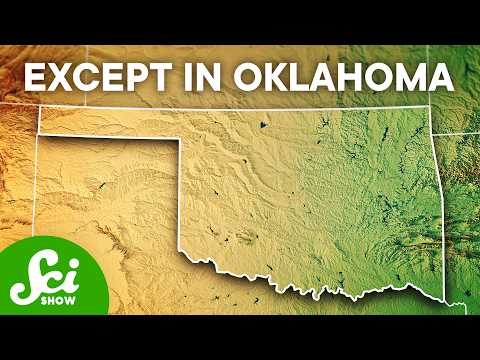
- Oklahoma is a US state located in the South Central region, known for its landlocked geography and diverse ecoregions.
- The state has a rich Native American history, serving as the home for 39 federally recognized tribal nations.
- Economically, Oklahoma is a leader in energy production, particularly in oil and natural gas, alongside aerospace and agriculture.
- Cultural icons of the state include the musical 'Oklahoma!', the 'Sooner' nickname, and its association with Route 66 and the Dust Bowl.
Oklahoma is a multifaceted term that primarily refers to a specific geographic and political entity within the United States of America. Located in the South Central region, it is a landlocked state that serves as a bridge between the Midwestern United States and the Southern United States. When people use the word Oklahoma, they are often referring to its unique position as a cultural crossroads, where the history of the American West, the heritage of numerous Native American tribes, and the industrial legacy of oil and agriculture intersect. The name itself is derived from the Choctaw words 'okla' and 'humma,' which literally translate to 'red people,' reflecting the deep indigenous roots of the territory before it achieved statehood in 1907. In conversation, Oklahoma is used to discuss everything from its volatile weather patterns, such as its location in the heart of 'Tornado Alley,' to its significant contributions to American music, particularly in the genres of country, western swing, and rock and roll.
- Geographic Context
- Oklahoma is bordered by six states: Kansas to the north, Missouri to the northeast, Arkansas to the east, Texas to the south and west, New Mexico to the west of its panhandle, and Colorado to the northwest. This central location makes it a vital hub for transportation and logistics.
The vast prairies of Oklahoma stretched out before the pioneers as they searched for a new beginning.
The term is also frequently invoked in academic and historical discussions regarding the 'Trail of Tears' and the forced relocation of Native American tribes. Because Oklahoma was designated as 'Indian Territory' for much of the 19th century, it remains home to 39 federally recognized tribal nations, more than almost any other state. This historical weight means that the word Oklahoma often carries connotations of resilience, complex heritage, and the ongoing dialogue between indigenous sovereignty and federal governance. Furthermore, the state is synonymous with the 'Land Run' of 1889, where 'Sooners'—people who entered the land before the official start—gave the state its famous nickname. This 'Sooner' spirit is often used metaphorically to describe someone who is ambitious, perhaps to a fault, or someone who gets a head start on a project.
- Cultural Identity
- The cultural identity of Oklahoma is often associated with the 'Dust Bowl' era of the 1930s, a period of severe environmental and economic hardship that shaped the character of its people, often referred to as 'Okies' in literature like John Steinbeck's 'The Grapes of Wrath'.
Many families left Oklahoma during the 1930s in search of better opportunities in California.
In modern usage, Oklahoma is a center for energy production, particularly oil and natural gas. The 'Oil Capital of the World' was a title once held by Tulsa, one of the state's two major metropolitan areas alongside Oklahoma City. Consequently, the word is often found in economic reports and energy sector news. Additionally, the state's name is globally recognized due to the famous Rodgers and Hammerstein musical 'Oklahoma!', which celebrates the state's transition from territory to statehood. This musical has cemented a specific, somewhat idealized image of the state in the global consciousness, characterized by 'bright golden haze on the meadow' and 'wind sweeping down the plain.' Whether discussed in the context of its 11 distinct eco-regions, its thriving aerospace industry, or its passionate college football rivalries, Oklahoma is a word that encompasses a rich tapestry of American life.
- Modern Economy
- Today, Oklahoma is known for a diverse economy that includes biotechnology, aviation, and telecommunications, moving far beyond its historical roots in just cattle and wheat.
The aerospace sector in Oklahoma provides thousands of high-tech jobs to residents.
I'm traveling to Oklahoma City to attend the annual arts festival.
The weather in Oklahoma can change from sunny to stormy in a matter of minutes.
Using the word 'Oklahoma' in a sentence requires an understanding of its role as a proper noun. As a proper noun, it must always be capitalized, regardless of its position in the sentence. It typically functions as the subject or object of a sentence, or as part of a prepositional phrase. For instance, in the sentence 'Oklahoma is known for its diverse geography,' Oklahoma is the subject. In 'She moved to Oklahoma last year,' it is the object of the preposition 'to.' Because it is a singular entity, it takes singular verb forms (e.g., 'Oklahoma has,' not 'Oklahoma have'). Understanding these basic grammatical rules is the first step toward using the word correctly in both formal and informal contexts.
- Subjective Use
- 'Oklahoma offers a wide range of outdoor activities, from hiking in the Wichita Mountains to boating on Lake Eufaula.'
Oklahoma became the 46th state to join the Union on November 16, 1907.
When describing something related to Oklahoma, you can use the word as an attributive noun (a noun acting like an adjective) or use the specific adjective form 'Oklahoman.' For example, you might say 'the Oklahoma state flag' or 'an Oklahoman sunset.' Using 'Oklahoma' as an attributive noun is very common in English, especially when referring to state institutions, laws, or geographical features. Phrases like 'Oklahoma history,' 'Oklahoma weather,' and 'Oklahoma politics' are standard. It is important to note that when using it this way, 'Oklahoma' remains capitalized because it still refers to the specific state.
- Attributive Use
- 'The Oklahoma legislature recently passed a new bill regarding education funding across the state.'
I really enjoy the unique flavor of Oklahoma barbecue, which often features smoked bologna.
In more complex sentences, Oklahoma can be part of comparative or superlative structures. You might hear someone say, 'Oklahoma is larger than many European countries,' or 'The Oklahoma City National Memorial is one of the most moving sites in Oklahoma.' When using the word in the context of sports, it often refers to the University of Oklahoma's athletic teams, the Sooners. In this case, people might say, 'Oklahoma won the game last night,' where 'Oklahoma' serves as a metonym for the team itself. This is a common feature of sports reporting and casual conversation among fans.
- Metonymic Use
- 'Oklahoma is ranked number one in the nation for gymnastics this season,' referring to the university team.
The diversity of wildlife in Oklahoma is truly surprising to many first-time visitors.
Many famous musicians, including Woody Guthrie and Garth Brooks, call Oklahoma their home state.
The route 66 highway runs through a significant portion of Oklahoma, attracting many tourists.
The word 'Oklahoma' is heard in a variety of real-world settings, ranging from national news broadcasts to popular entertainment and casual travel conversations. In the United States, you will frequently hear Oklahoma mentioned in weather reports, especially during the spring months. Meteorologists often discuss the 'dry line' in Oklahoma or the development of supercell thunderstorms across the Oklahoma plains. Because the state is a focal point for severe weather research, including the National Weather Center in Norman, the word is a staple in scientific and news-related discourse about meteorology and climate science.
- News and Weather
- 'A severe thunderstorm warning has been issued for central Oklahoma as a cold front moves through the region.'
The storm chasers headed toward western Oklahoma to intercept the developing tornado.
In the world of sports, Oklahoma is a powerhouse name. Whether it's the Oklahoma City Thunder in the NBA or the fierce 'Red River Showdown' between the University of Oklahoma and the University of Texas, the word is constantly spoken by sports commentators and fans. You'll hear it in stadiums, on sports talk radio, and in living rooms across the country. The word often carries an emotional weight for fans, representing a sense of pride and community identity. In these contexts, 'Oklahoma' is more than just a place; it's a team, a tradition, and a source of collective excitement.
- Sports Commentary
- 'Oklahoma is looking to bounce back after a tough loss in the conference championship game last weekend.'
The fans in Oklahoma City are known for being some of the loudest in the NBA.
Beyond news and sports, Oklahoma is a frequent subject in American literature and film. From the classic 'The Grapes of Wrath' to modern films like 'Twister' or 'Minari' (which is set in rural Arkansas but reflects the broader regional experience), Oklahoma is often used as a setting that symbolizes the struggle against nature or the pursuit of the American Dream. In the music industry, particularly country music, Oklahoma is mentioned in countless songs as a place of longing, home, or rugged beauty. Artists like Blake Shelton, Carrie Underwood, and Reba McEntire frequently reference their Oklahoma roots, making the word a familiar sound to millions of music fans worldwide. Finally, in the travel industry, you'll hear Oklahoma mentioned in discussions about Route 66, the 'Mother Road,' which has more drivable miles in Oklahoma than any other state.
- Travel and Tourism
- 'We are planning a road trip through Oklahoma to see the Blue Whale of Catoosa and the Philbrook Museum of Art.'
The history of the oil boom in Oklahoma is captured beautifully at the Woolaroc Museum.
Native American culture is celebrated every year at the Red Earth Festival in Oklahoma.
The Oklahoma sky turned a deep shade of purple as the sun began to set over the horizon.
One of the most common mistakes people make with the word 'Oklahoma' is misspelling it. The combination of vowels—O, A, O, A—can be confusing for English learners and native speakers alike. Common misspellings include 'Oklahome,' 'Oklahomah,' or 'Oklahama.' It is important to remember the specific sequence: O-K-L-A-H-O-M-A. Another frequent error is failing to capitalize the word. Since it is a proper noun referring to a specific state, it must always begin with an uppercase 'O'. Writing 'oklahoma' in lowercase is grammatically incorrect in all standard forms of English writing.
- Spelling Error
- Incorrect: 'I am visiting oklahome next week.' Correct: 'I am visiting Oklahoma next week.'
Spelling Oklahoma correctly is essential for any formal correspondence regarding the state.
Pronunciation can also be a stumbling block. Some people mistakenly emphasize the wrong syllable or mispronounce the 'h'. The correct pronunciation is /ˌoʊkləˈhoʊmə/, with the primary stress on the third syllable 'ho'. The 'h' is audible but soft. A common mistake is to pronounce it as 'Oak-la-home-a' with a very heavy 'home' sound, or to drop the 'h' entirely, making it sound like 'Okla-oma.' While regional accents vary, maintaining the clear four-syllable structure is key to being understood. Additionally, learners sometimes confuse 'Oklahoma' with 'Omaha,' which is a city in the neighboring state of Nebraska. While they both start with 'O' and have a similar rhythmic feel, they refer to entirely different locations.
- Pronunciation Pitfall
- Avoid saying 'Okla-home-a'. The 'o' in the third syllable should sound like the 'o' in 'go'.
The teacher corrected the student's pronunciation of Oklahoma during the geography lesson.
In terms of usage, a common mistake is using the wrong preposition. When talking about being located within the state, use 'in Oklahoma.' When talking about moving toward the state, use 'to Oklahoma.' Sometimes people mistakenly use 'at Oklahoma,' which is generally only correct if referring to a specific institution like 'The University of Oklahoma' (e.g., 'He is a student at Oklahoma'). Another subtle mistake is the misuse of the term 'Okie.' While historically it was a derogatory term for displaced Oklahomans during the Dust Bowl, today it is often used with pride by residents. However, as an outsider, using the term 'Okie' can sometimes be perceived as insensitive or stereotypical, so it is usually safer to use 'Oklahoman' when referring to a person from the state.
- Preposition Usage
- Incorrect: 'I live on Oklahoma.' Correct: 'I live in Oklahoma.'
It is more polite to refer to someone as an Oklahoman rather than using the slang term for Oklahoma residents.
The news report about Oklahoma was accurate and well-researched.
Learning the history of Oklahoma helps one understand the broader American story.
While 'Oklahoma' is a unique proper noun, there are several ways to refer to the state or its characteristics using alternative terms depending on the context. In a formal or poetic sense, you might hear it referred to by its nickname, 'The Sooner State.' This nickname originates from the Land Run of 1889 and carries a sense of history and competitive spirit. Using 'The Sooner State' adds a layer of cultural depth to your writing or speech. In very informal contexts, especially in digital communication or on maps, the two-letter postal abbreviation 'OK' is frequently used. However, one must be careful as 'OK' is also the most common word for agreement in the English language, so the context must be clear to avoid ambiguity.
- The Sooner State vs. Oklahoma
- 'The Sooner State' is more evocative and historical, whereas 'Oklahoma' is the standard, neutral name used in all official and everyday contexts.
Welcome to the Sooner State, also known as Oklahoma.
When discussing the people of Oklahoma, the standard term is 'Oklahomans.' This is the most respectful and widely accepted way to refer to the residents. As mentioned previously, 'Okies' is a slang term that has a complex history. While it can be used affectionately by locals, it can also carry a historical weight of poverty and displacement. Another alternative, specifically in the context of the University of Oklahoma, is 'Sooners.' If you say, 'The Sooners are playing today,' everyone will understand you are talking about the Oklahoma sports teams. In a broader regional sense, Oklahoma is often grouped with other states using terms like 'The Great Plains,' 'The South Central US,' or 'The Heartland.' These terms describe the general area where Oklahoma is located and can be used to provide geographical context.
- Regional Terms
- 'The Heartland' often includes Oklahoma and emphasizes its central location and traditional American values, while 'The Great Plains' focuses on its flat, grassy geography.
Living in the Heartland, specifically in Oklahoma, offers a unique perspective on American life.
In historical contexts, you might encounter the term 'Indian Territory.' Before statehood, much of what is now Oklahoma was designated as land for Native American tribes. While 'Indian Territory' is no longer a political entity, it is a crucial term for understanding the state's history and the word 'Oklahoma' itself. In modern political discussions, you might hear the state referred to as a 'Red State,' a term used in the US to describe states that consistently vote for the Republican Party. While this is a political descriptor rather than a synonym, it is a common way the state is categorized in national media. Lastly, when referring to the capital city, 'OKC' is a very common abbreviation for Oklahoma City, used by locals and visitors alike to save time in conversation and writing.
- Indian Territory vs. Oklahoma
- 'Indian Territory' refers to the pre-1907 historical status, whereas 'Oklahoma' refers to the modern state recognized by the US government.
Before it was Oklahoma, the land was known as Indian Territory.
We are flying into OKC to visit family in central Oklahoma.
The Oklahoma panhandle is a narrow strip of land that touches New Mexico and Colorado.
How Formal Is It?
趣味小知识
Oklahoma is the only state name in the U.S. that is derived from the Choctaw language. Most other state names with indigenous roots come from Algonquian or Iroquoian languages.
发音指南
- Emphasizing the second syllable (ok-LA-homa).
- Pronouncing it as three syllables (Okla-homa).
- Dropping the 'h' sound entirely (Okla-oma).
- Using a short 'o' sound like 'hot' in the first syllable.
- Pronouncing the final 'a' like 'ay'.
难度评级
The word itself is easy to read, but historical texts about it can be complex.
Spelling the four syllables correctly requires some practice.
The pronunciation is straightforward once the stress is learned.
Easily recognizable in most American accents.
接下来学什么
前置知识
接下来学习
高级
需要掌握的语法
Capitalization of Proper Nouns
Always write 'Oklahoma', never 'oklahoma'.
Prepositions of Place
Use 'in' for states: 'I am in Oklahoma.'
Subject-Verb Agreement
Oklahoma (singular) 'is' a state, not 'are'.
Possessive Nouns
Add 's to show possession: 'Oklahoma's capital'.
Attributive Nouns
Using a noun as an adjective: 'The Oklahoma flag'.
按水平分级的例句
I want to visit Oklahoma one day.
Je veux visiter l'Oklahoma un jour.
Use 'to' after 'visit' when it's a destination.
Oklahoma is a big state.
L'Oklahoma est un grand État.
Oklahoma is the subject of the sentence.
Is Oklahoma in the USA?
L'Oklahoma est-il aux États-Unis ?
In questions, the verb 'is' comes before the subject 'Oklahoma'.
The sun is hot in Oklahoma.
Le soleil est chaud en Oklahoma.
Use the preposition 'in' for locations like states.
My friend lives in Oklahoma City.
Mon ami habite à Oklahoma City.
Oklahoma City is the capital of Oklahoma.
Oklahoma has many farms.
L'Oklahoma a beaucoup de fermes.
Use 'has' because Oklahoma is singular (it).
I see a map of Oklahoma.
Je vois une carte de l'Oklahoma.
'Of Oklahoma' shows possession or relationship.
Oklahoma is beautiful in the spring.
L'Oklahoma est beau au printemps.
Adjectives like 'beautiful' describe the noun 'Oklahoma'.
We drove through Oklahoma on our vacation.
Nous avons traversé l'Oklahoma pendant nos vacances.
The preposition 'through' indicates movement from one side to the other.
There are many Native American tribes in Oklahoma.
Il y a beaucoup de tribus amérindiennes en Oklahoma.
Use 'there are' for plural nouns like 'tribes'.
Oklahoma is famous for its cowboys.
L'Oklahoma est célèbre pour ses cow-boys.
'Its' is the possessive pronoun for Oklahoma.
The weather in Oklahoma can be very windy.
Le temps en Oklahoma peut être très venteux.
'In Oklahoma' modifies the noun 'weather'.
Have you ever seen the musical 'Oklahoma!'?
As-tu déjà vu la comédie musicale 'Oklahoma !' ?
The title of the musical is also a proper noun.
Oklahoma joined the United States in 1907.
L'Oklahoma a rejoint les États-Unis en 1907.
Use the past tense 'joined' for historical facts.
Tulsa is a large city in Oklahoma.
Tulsa est une grande ville de l'Oklahoma.
A comma is not needed between 'city' and 'in Oklahoma'.
The Oklahoma state bird is the Scissor-tailed Flycatcher.
L'oiseau de l'État d'Oklahoma est le moucherolle à queue fourchue.
'Oklahoma' acts as an adjective here (attributive noun).
Oklahoma's economy relies heavily on the energy sector.
L'économie de l'Oklahoma repose largement sur le secteur de l'énergie.
Use an apostrophe and 's' for possession (Oklahoma's).
Many people moved from Oklahoma during the Dust Bowl.
Beaucoup de gens ont quitté l'Oklahoma pendant le Dust Bowl.
'From Oklahoma' indicates the starting point of a journey.
The university in Oklahoma has a very successful football team.
L'université de l'Oklahoma a une équipe de football très performante.
The phrase 'in Oklahoma' specifies which university.
Oklahoma is located in the heart of Tornado Alley.
L'Oklahoma est situé au cœur de l'allée des tornades.
'Located in' is a common phrase for geography.
The diverse landscape of Oklahoma includes both hills and plains.
Le paysage diversifié de l'Oklahoma comprend à la fois des collines et des plaines.
'Both... and' connects two features of the state.
She decided to settle in Oklahoma because of the low cost of living.
Elle a décidé de s'installer en Oklahoma en raison du faible coût de la vie.
'Because of' explains the reason for moving to Oklahoma.
Oklahoma provides a unique blend of Southern and Western culture.
L'Oklahoma offre un mélange unique de culture du Sud et de l'Ouest.
The verb 'provides' agrees with the singular subject 'Oklahoma'.
Route 66 passes through several historic towns in Oklahoma.
La Route 66 traverse plusieurs villes historiques de l'Oklahoma.
'In Oklahoma' acts as an adjective phrase for 'towns'.
The Oklahoma City National Memorial honors those affected by the 1995 bombing.
Le mémorial national d'Oklahoma City rend hommage aux personnes touchées par l'attentat de 1995.
'Oklahoma City' acts as a compound modifier for 'National Memorial'.
Oklahoma's legislative branch is responsible for creating state laws.
Le pouvoir législatif de l'Oklahoma est responsable de la création des lois de l'État.
The possessive form 'Oklahoma's' is used for its government.
The aerospace industry has become a major employer in Oklahoma.
L'industrie aérospatiale est devenue un employeur majeur en Oklahoma.
Present perfect 'has become' shows a change over time.
Oklahoma's nickname, the Sooner State, reflects its early settlement history.
Le surnom de l'Oklahoma, l'État des Sooners, reflète l'histoire de son peuplement précoce.
The appositive 'the Sooner State' provides more info about the nickname.
Despite its landlocked status, Oklahoma has more miles of shoreline than some coastal states.
Malgré son statut d'État enclavé, l'Oklahoma possède plus de kilomètres de rivage que certains États côtiers.
'Despite' introduces a contrast to the fact that Oklahoma is landlocked.
The cultural impact of Oklahoma on American country music is undeniable.
L'impact culturel de l'Oklahoma sur la musique country américaine est indéniable.
The preposition 'of' shows the source of the impact.
Researchers in Oklahoma are at the forefront of severe weather prediction.
Les chercheurs de l'Oklahoma sont à l'avant-garde de la prévision des phénomènes météorologiques violents.
'In Oklahoma' identifies the location of the researchers.
Oklahoma's panhandle was one of the areas hardest hit by the Dust Bowl.
Le panhandle de l'Oklahoma a été l'une des zones les plus durement touchées par le Dust Bowl.
The superlative 'hardest hit' describes the impact on the region.
The jurisdictional complexities in Oklahoma were highlighted by the recent Supreme Court ruling.
Les complexités juridictionnelles en Oklahoma ont été mises en évidence par la récente décision de la Cour suprême.
Passive voice 'were highlighted' focuses on the complexities.
Oklahoma's diverse ecoregions range from cypress swamps to high mesas.
Les écorégions diversifiées de l'Oklahoma vont des marécages de cyprès aux hautes mesas.
'Range from... to' illustrates the variety within Oklahoma.
The socio-economic fabric of Oklahoma is deeply rooted in its tribal history.
Le tissu socio-économique de l'Oklahoma est profondément ancré dans son histoire tribale.
The metaphor 'deeply rooted' describes a strong connection.
The literary portrayal of Oklahoma in the 20th century often focused on agrarian struggle.
La représentation littéraire de l'Oklahoma au XXe siècle s'est souvent concentrée sur la lutte agraire.
The noun 'portrayal' is modified by the prepositional phrase 'of Oklahoma'.
Oklahoma's transition from territory to statehood was a pivotal moment in Western expansion.
La transition de l'Oklahoma du statut de territoire à celui d'État a été un moment charnière de l'expansion vers l'Ouest.
'From... to' shows the process of change.
The state of Oklahoma has implemented innovative strategies for water conservation.
L'État de l'Oklahoma a mis en œuvre des stratégies innovantes pour la conservation de l'eau.
'The state of Oklahoma' is a formal way to refer to the entity.
Oklahoma's political landscape is characterized by a strong tradition of individualism.
Le paysage politique de l'Oklahoma est caractérisé par une forte tradition d'individualisme.
Passive voice 'is characterized by' describes a defining feature.
The preservation of indigenous languages is a critical initiative within Oklahoma.
La préservation des langues autochtones est une initiative cruciale au sein de l'Oklahoma.
The preposition 'within' suggests something happening inside the state.
The historical narrative of Oklahoma is a complex tapestry of dispossession and resilience.
Le récit historique de l'Oklahoma est une tapisserie complexe de dépossession et de résilience.
The metaphor 'complex tapestry' emphasizes the multifaceted nature of Oklahoma's history.
Oklahoma's geographical position makes it a quintessential crossroads of the American experience.
La position géographique de l'Oklahoma en fait un carrefour quintessentiel de l'expérience américaine.
The adjective 'quintessential' highlights Oklahoma as a perfect example.
The profound impact of the petroleum industry on Oklahoma's urban development cannot be overstated.
L'impact profond de l'industrie pétrolière sur le développement urbain de l'Oklahoma ne peut être surestimé.
The phrase 'cannot be overstated' emphasizes extreme importance.
Oklahoma serves as a microcosm for the broader tensions between federal and tribal jurisdictions.
L'Oklahoma sert de microcosme aux tensions plus larges entre les juridictions fédérales et tribales.
'Serves as a microcosm' suggests Oklahoma represents a larger issue.
The ephemeral beauty of an Oklahoma supercell is often tempered by its destructive potential.
La beauté éphémère d'une supercellule de l'Oklahoma est souvent tempérée par son potentiel destructeur.
The contrast between 'beauty' and 'destructive potential' is central here.
Oklahoma's cultural output has consistently challenged and redefined Western archetypes.
La production culturelle de l'Oklahoma a constamment remis en question et redéfini les archétypes occidentaux.
Present perfect 'has... challenged' shows ongoing action.
The legacy of the Land Run continues to permeate the collective consciousness of Oklahoma.
L'héritage de la Land Run continue d'imprégner la conscience collective de l'Oklahoma.
The verb 'permeate' suggests a deep, widespread influence.
Navigating the legal intricacies of Oklahoma's tribal lands requires specialized expertise.
Naviguer dans les complexités juridiques des terres tribales de l'Oklahoma nécessite une expertise spécialisée.
The gerund 'navigating' acts as the subject of the sentence.
常见搭配
常用短语
— Located within the borders of the state. Used for location.
It is very windy in Oklahoma today.
— Moving toward or traveling to the state. Used for direction.
We are moving to Oklahoma next month.
— Spanning the entire state. Used for extent.
Storms are expected across Oklahoma tonight.
— The middle part of the state, usually including the capital.
Oklahoma City is located in central Oklahoma.
— The flatter, more arid western part of the state.
Western Oklahoma is known for its wheat fields.
— The more mountainous and forested eastern part of the state.
Eastern Oklahoma has many beautiful lakes.
— A formal way to refer to the political entity.
The state of Oklahoma was founded in 1907.
— A phrase used to express pride in a person from the state.
Garth Brooks is one of Oklahoma's own.
— Referring to a specific way of doing something, like BBQ.
I love Oklahoma style smoked meats.
容易混淆的词
Omaha is a city in Nebraska, while Oklahoma is a state. They are often confused because they both start with 'O'.
Oakland is a city in California. The 'Oak' sound at the beginning can cause confusion for some learners.
Arkansas is a neighboring state. People sometimes confuse their locations or histories.
习语与表达
— A positive expression derived from the state song, meaning things are going well.
We've got some challenges, but we're doin' fine, Oklahoma!
Informal— While not specific to the state, Oklahomans often use this with a wink to their nickname.
We need to finish this project sooner rather than later.
Neutral— An old, somewhat derogatory slang for a siphon used to steal gas.
In the old days, some folks called a siphon an Oklahoma credit card.
Slang/Dated— Used to describe very windy conditions, quoting the musical.
Hold onto your hat; the wind is really sweeping down the plain today.
Informal/Literary— Sometimes used to describe a very firm, honest agreement.
We didn't need a contract, just an Oklahoma handshake.
Informal— Having people physically present in the state for a task.
We need more boots on the ground in Oklahoma for the campaign.
Informal— Refers to the intense competition between Oklahoma and Texas.
The whole town shuts down for the Red River Rivalry.
Informal/Sports— Refers to someone with traditional, small-town values, from the Merle Haggard song.
He's a real Okie from Muskogee, proud of his roots.
Informal/Cultural— A spirit of competition and being the first to claim something.
The tech boom in the city has a real Land Run mentality.
Informal— Used metaphorically for someone who has endured extreme hardship.
My grandmother was a real Dust Bowl survivor; she's tough as nails.
Neutral容易混淆
Learners might not know if it's the state or the person.
Oklahoma is the place (noun); Oklahoman is the person (noun) or the descriptor (adjective).
She is an Oklahoman living in Oklahoma.
It's a nickname that doesn't sound like the state name.
Sooner is a nickname for people from Oklahoma, while Oklahoma is the official name.
The Oklahoma Sooners won the game.
It sounds like a different country.
Indian Territory was the historical name for the land before it became the state of Oklahoma.
Oklahoma was once called Indian Territory.
It has two meanings.
OK can mean 'all right' or it can be the abbreviation for Oklahoma.
It is OK to move to OK.
It's a strange geographic term.
The panhandle is a specific narrow part of Oklahoma, not the whole state.
The Oklahoma panhandle is very long.
句型
I like [Oklahoma].
I like Oklahoma.
[Oklahoma] is a [adjective] state.
Oklahoma is a beautiful state.
The capital of [Oklahoma] is [City].
The capital of Oklahoma is Oklahoma City.
Known for its [feature], [Oklahoma] attracts many [people].
Known for its history, Oklahoma attracts many tourists.
The [aspect] of [Oklahoma] is deeply influenced by [factor].
The culture of Oklahoma is deeply influenced by its tribal heritage.
To understand [Oklahoma] is to engage with the complexities of [topic].
To understand Oklahoma is to engage with the complexities of American westward expansion.
Many people in [Oklahoma] work in the [industry] sector.
Many people in Oklahoma work in the energy sector.
Have you ever been to [Oklahoma]?
Have you ever been to Oklahoma?
词族
名词
形容词
相关
如何使用
Common in American English, especially in news, sports, and geography.
-
oklahoma
→
Oklahoma
Proper nouns like state names must always be capitalized.
-
I live at Oklahoma.
→
I live in Oklahoma.
Use the preposition 'in' for large geographic areas like states.
-
Oklahome
→
Oklahoma
The word ends with an 'a', not an 'e'.
-
The Oklahoma are beautiful.
→
Oklahoma is beautiful.
Oklahoma is a singular noun and takes a singular verb.
-
He is an Oklahoma.
→
He is an Oklahoman.
Use 'Oklahoman' to refer to a person, not the name of the state itself.
小贴士
Vowel Pattern
Notice the pattern of vowels in Oklahoma: O-A-O-A. This can help you remember the spelling more easily.
Stress the 'HO'
Always put the emphasis on the third syllable: ok-la-HO-ma. This makes your pronunciation sound natural.
Proper Noun Rule
Always capitalize Oklahoma. It is a specific name of a state and requires an uppercase 'O'.
Central Location
Remember that Oklahoma is in the middle of the U.S. This helps you understand why it's a 'crossroads' state.
The Musical
Watching or listening to the musical 'Oklahoma!' is a fun way to get familiar with the word and its history.
Oklahoman
Learn the word 'Oklahoman' to refer to people from the state. It is more formal and polite than 'Okie'.
Weather Association
Associate Oklahoma with tornadoes in your mind. This is a very common context for the word in news and conversation.
1907
Remember the year 1907. This is when Oklahoma became a state, moving from 'territory' to 'state'.
The Thunder
If you like basketball, associate the word with the Oklahoma City Thunder to help you remember the name.
Route 66
Associate Oklahoma with Route 66. It has the longest stretch of this famous historic highway.
记住它
记忆技巧
Think of 'OK' (the abbreviation) and 'LA' (like Los Angeles) and 'HOME' and 'A'. OK-LA-HOME-A. (Just remember the 'home' is spelled 'homa').
视觉联想
Imagine a red prairie with a giant 'OK' sign standing in the middle of it under a swirling tornado cloud.
Word Web
挑战
Try to use 'Oklahoma' in three different ways today: as a location, as an adjective (Oklahoma weather), and as a historical reference.
词源
The name 'Oklahoma' was suggested by the Choctaw chief Allen Wright in 1866 during treaty negotiations with the federal government. He proposed the name for the Indian Territory to represent the people living there. It was officially adopted as the name of the state when it joined the Union in 1907.
原始含义: It is a combination of two Choctaw words: 'okla' meaning 'people' and 'humma' meaning 'red'. Thus, it literally means 'Red People'.
Muskogean (Choctaw language).文化背景
Be careful with the term 'Okie.' While many Oklahomans use it with pride today, it was historically a slur against poor migrants during the Great Depression. Use 'Oklahoman' to be safe.
In the U.S., Oklahoma is often associated with 'Heartland' values—hard work, community, and tradition. It is frequently mentioned in country music and western films.
在生活中练习
真实语境
Travel and Tourism
- Visiting Oklahoma
- Road trip through Oklahoma
- Oklahoma landmarks
- Best time to visit Oklahoma
Weather Reports
- Storms in Oklahoma
- Oklahoma tornado warning
- The Oklahoma dry line
- Sunny skies in Oklahoma
Sports
- Oklahoma football
- The Oklahoma City Thunder
- Oklahoma vs Texas
- Go Oklahoma!
History Class
- The Oklahoma Land Run
- Indian Territory history
- Oklahoma statehood
- The Dust Bowl in Oklahoma
Business and Economy
- Oklahoma oil industry
- Investing in Oklahoma
- Oklahoma job market
- Oklahoma's energy sector
对话开场白
"Have you ever traveled through Oklahoma on a road trip?"
"What do you know about the Native American history in Oklahoma?"
"Would you ever want to live in a place like Oklahoma with so much open space?"
"Have you seen the famous musical named after the state of Oklahoma?"
"What is the first thing that comes to your mind when you hear the word Oklahoma?"
日记主题
Imagine you are a pioneer during the Oklahoma Land Run. Describe your feelings as you wait for the signal to start.
Write about a time you experienced severe weather, and how you would feel living in Oklahoma's Tornado Alley.
Research one of the 39 tribes in Oklahoma and write a summary of their cultural contributions to the state.
If you were to visit Oklahoma, would you prefer to see the big cities like Tulsa or the natural beauty of the prairies?
Reflect on how the 'Sooner' spirit of getting a head start could be applied to your own life or studies.
常见问题
10 个问题Oklahoma is famous for its Native American heritage, its role in the oil industry, and its location in Tornado Alley. It is also known for the musical 'Oklahoma!' and its diverse geography ranging from plains to mountains.
Oklahoma is often considered a South Central state. It shares cultural characteristics with both the South (like its history and food) and the Midwest (like its agriculture and geography).
The nickname comes from the Land Run of 1889, when some settlers entered the land 'sooner' than they were legally allowed to in order to claim the best plots.
The capital is Oklahoma City, which is also the largest city in the state and a major hub for business and culture.
It is spelled O-K-L-A-H-O-M-A. Remember the alternating vowels: O, A, O, A.
Oklahoma has a continental climate with hot summers and cool winters. It is well-known for severe thunderstorms and tornadoes, especially during the spring months.
The major industries include energy (oil and natural gas), aerospace, agriculture (wheat and cattle), and biotechnology.
Yes, Oklahoma is home to 39 federally recognized tribal nations, each with its own government, culture, and history.
Yes, Oklahoma is completely surrounded by land and does not have any borders on an ocean or gulf.
Historically, 'Okie' was a derogatory term for poor migrants from Oklahoma during the Dust Bowl. Today, many residents use it as a proud nickname for themselves.
自我测试 200 个问题
Describe the geography of Oklahoma in three sentences.
Well written! Good try! Check the sample answer below.
Write a short paragraph about why Oklahoma is called the 'Sooner State'.
Well written! Good try! Check the sample answer below.
Imagine you are visiting Oklahoma City. What are two things you would like to see?
Well written! Good try! Check the sample answer below.
Explain the importance of the oil industry to Oklahoma.
Well written! Good try! Check the sample answer below.
Compare the climate of Oklahoma to the climate where you live.
Well written! Good try! Check the sample answer below.
Write a sentence using 'Oklahoma' as an attributive noun.
Well written! Good try! Check the sample answer below.
Describe the cultural significance of Native American tribes in Oklahoma.
Well written! Good try! Check the sample answer below.
What are the pros and cons of living in a state like Oklahoma?
Well written! Good try! Check the sample answer below.
Write a formal letter to the Oklahoma Tourism Board asking for information.
Well written! Good try! Check the sample answer below.
Summarize the impact of the Dust Bowl on Oklahoma.
Well written! Good try! Check the sample answer below.
Write three facts about Oklahoma for a travel brochure.
Well written! Good try! Check the sample answer below.
Describe a famous person from Oklahoma and their contribution.
Well written! Good try! Check the sample answer below.
How has Oklahoma's economy changed over time?
Well written! Good try! Check the sample answer below.
Write a dialogue between two people planning a trip to Oklahoma.
Well written! Good try! Check the sample answer below.
Discuss the significance of the name 'Oklahoma'.
Well written! Good try! Check the sample answer below.
What is the 'Red River Rivalry' and why is it important?
Well written! Good try! Check the sample answer below.
Describe the Oklahoma panhandle.
Well written! Good try! Check the sample answer below.
Write a short poem about the Oklahoma wind.
Well written! Good try! Check the sample answer below.
Why is the aerospace industry important to Oklahoma today?
Well written! Good try! Check the sample answer below.
What does 'Oklahoma' mean to you after studying it?
Well written! Good try! Check the sample answer below.
Pronounce the word 'Oklahoma' clearly.
Read this aloud:
你说的:
Speech recognition is not supported in your browser. Try Chrome or Edge.
Tell a partner one fact you learned about Oklahoma.
Read this aloud:
你说的:
Speech recognition is not supported in your browser. Try Chrome or Edge.
Describe the weather in Oklahoma to a friend.
Read this aloud:
你说的:
Speech recognition is not supported in your browser. Try Chrome or Edge.
Explain what a 'Sooner' is in your own words.
Read this aloud:
你说的:
Speech recognition is not supported in your browser. Try Chrome or Edge.
Discuss why someone might want to move to Oklahoma.
Read this aloud:
你说的:
Speech recognition is not supported in your browser. Try Chrome or Edge.
Give a short presentation on the history of Oklahoma.
Read this aloud:
你说的:
Speech recognition is not supported in your browser. Try Chrome or Edge.
Debate the pros and cons of living in Tornado Alley.
Read this aloud:
你说的:
Speech recognition is not supported in your browser. Try Chrome or Edge.
Describe the cultural diversity of Oklahoma.
Read this aloud:
你说的:
Speech recognition is not supported in your browser. Try Chrome or Edge.
Role-play a conversation between a tourist and an Oklahoma local.
Read this aloud:
你说的:
Speech recognition is not supported in your browser. Try Chrome or Edge.
Explain the significance of the oil industry to a non-expert.
Read this aloud:
你说的:
Speech recognition is not supported in your browser. Try Chrome or Edge.
Talk about a famous person from Oklahoma.
Read this aloud:
你说的:
Speech recognition is not supported in your browser. Try Chrome or Edge.
Describe the landscape of the Oklahoma panhandle.
Read this aloud:
你说的:
Speech recognition is not supported in your browser. Try Chrome or Edge.
Discuss the impact of the musical 'Oklahoma!' on the state's image.
Read this aloud:
你说的:
Speech recognition is not supported in your browser. Try Chrome or Edge.
Explain the meaning of the name 'Oklahoma'.
Read this aloud:
你说的:
Speech recognition is not supported in your browser. Try Chrome or Edge.
Talk about the importance of Route 66 in Oklahoma.
Read this aloud:
你说的:
Speech recognition is not supported in your browser. Try Chrome or Edge.
Describe the Oklahoma City National Memorial.
Read this aloud:
你说的:
Speech recognition is not supported in your browser. Try Chrome or Edge.
Discuss the 'Red River Rivalry' from a fan's perspective.
Read this aloud:
你说的:
Speech recognition is not supported in your browser. Try Chrome or Edge.
Explain the concept of 'Green Country'.
Read this aloud:
你说的:
Speech recognition is not supported in your browser. Try Chrome or Edge.
Talk about the aerospace industry in Oklahoma.
Read this aloud:
你说的:
Speech recognition is not supported in your browser. Try Chrome or Edge.
What is your overall impression of Oklahoma?
Read this aloud:
你说的:
Speech recognition is not supported in your browser. Try Chrome or Edge.
Listen to the description: 'This state is known as the Sooner State and its capital is Oklahoma City.' Which state is it?
Listen to the weather report: 'Severe storms are moving through central Oklahoma tonight.' Where are the storms?
Listen to the history fact: 'Oklahoma joined the Union in 1907.' In what year did it become a state?
Listen to the sports news: 'The Oklahoma City Thunder won their game last night.' Which team won?
Listen to the travel tip: 'If you're driving through Oklahoma, be sure to stop at the Route 66 Museum in Clinton.' Where is the museum?
Listen to the etymology: 'The name Oklahoma is derived from the Choctaw words for red people.' Which language does the name come from?
Listen to the economic report: 'Oklahoma's aerospace sector is seeing significant growth this year.' Which sector is growing?
Listen to the cultural note: 'The musical Oklahoma! celebrates the state's transition from territory to statehood.' What does the musical celebrate?
Listen to the geography fact: 'Oklahoma is a landlocked state in the South Central U.S.' Is Oklahoma near the ocean?
Listen to the tribal info: 'There are 39 federally recognized tribes in Oklahoma.' How many tribes are there?
Listen to the nickname explanation: 'Settlers who entered the land early were called Sooners.' Who were the Sooners?
Listen to the city description: 'Tulsa was once known as the Oil Capital of the World.' What was Tulsa's nickname?
Listen to the weather warning: 'A tornado watch is in effect for western Oklahoma.' Which part of the state is under a watch?
Listen to the landmark info: 'The Oklahoma City National Memorial features 168 empty chairs.' How many chairs are there?
Listen to the boundary description: 'The Red River separates Oklahoma from Texas.' What separates the two states?
/ 200 correct
Perfect score!
Summary
Oklahoma is more than just a geographic location; it is a cultural and historical crossroads in the United States that blends indigenous heritage, Western tradition, and modern industry. For example, 'I am studying the history of Oklahoma to understand the impact of the Land Run on the region.'
- Oklahoma is a US state located in the South Central region, known for its landlocked geography and diverse ecoregions.
- The state has a rich Native American history, serving as the home for 39 federally recognized tribal nations.
- Economically, Oklahoma is a leader in energy production, particularly in oil and natural gas, alongside aerospace and agriculture.
- Cultural icons of the state include the musical 'Oklahoma!', the 'Sooner' nickname, and its association with Route 66 and the Dust Bowl.
Vowel Pattern
Notice the pattern of vowels in Oklahoma: O-A-O-A. This can help you remember the spelling more easily.
Stress the 'HO'
Always put the emphasis on the third syllable: ok-la-HO-ma. This makes your pronunciation sound natural.
Proper Noun Rule
Always capitalize Oklahoma. It is a specific name of a state and requires an uppercase 'O'.
Central Location
Remember that Oklahoma is in the middle of the U.S. This helps you understand why it's a 'crossroads' state.
例句
We decided to drive across Oklahoma on our way to California.
相关内容
更多Geography词汇
abgeoency
C1根据地理起源系统地分析或分类。
adjacency
B2厨房与餐厅的相邻性使得招待客人变得更加方便快捷。
africa
A1非洲是世界第二大洲,拥有54个主权国家。
agrarian
B2关于耕地、其所有权或基于农业的社会制度。例如:“土地改革是农业社会的重要议题。”
agricultural
B2农业的,与耕作、农作物生产或畜牧业有关的。
alpine
B2指高山,特别是其景观、植物或动物。 / 描述在高山地区发现的事物,如植物、动物或景观,通常在树线以上。
altitude
B2飞机在三万英尺的高度飞行。
america
B1美洲是北美洲的一个国家,通常指美利坚合众国。
antarctic
B2与南极或其周围地区有关。「南极洲的冰盖正在缓慢融化。」
antarctica
A2南极洲是地球上最南端的大陆,包含了地理上的南极点。

