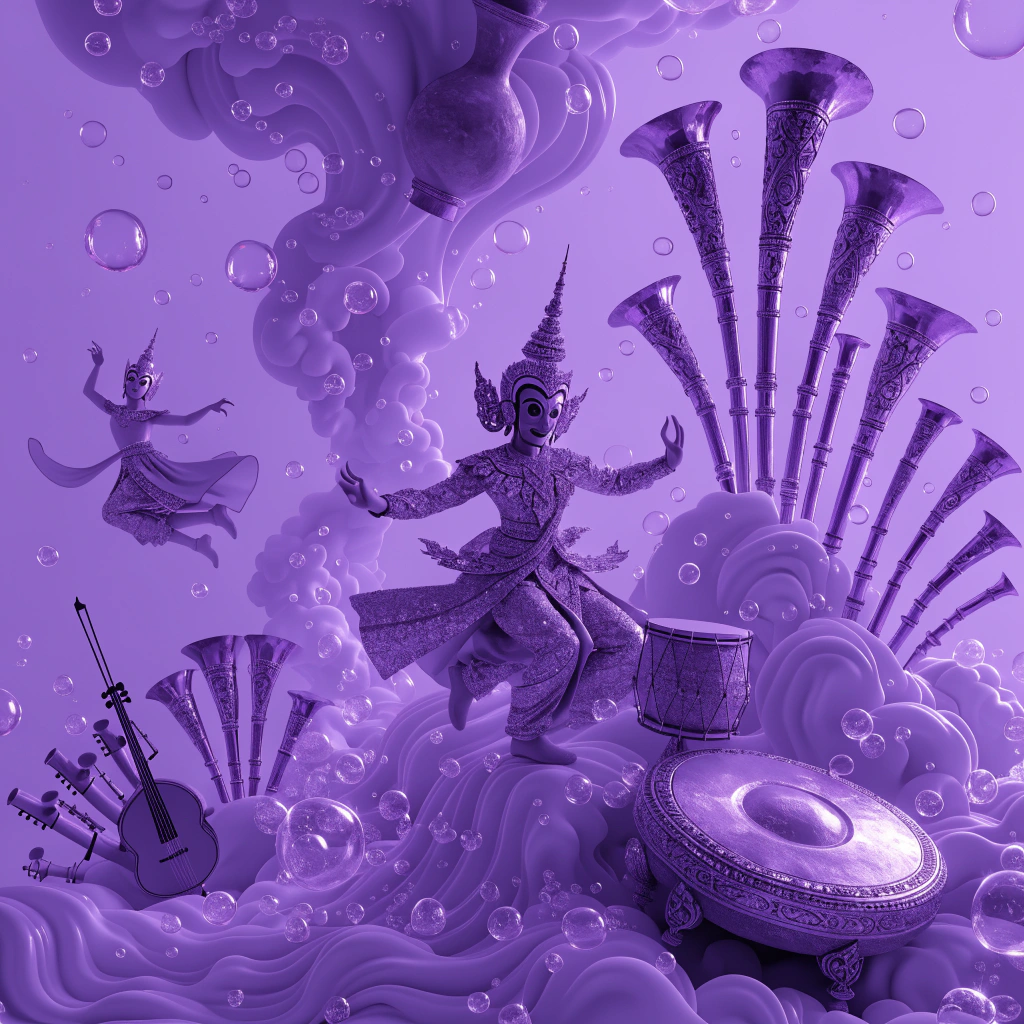
Nora: A Special Dance from Thailand
Nora is a famous dance from Southern Thailand. It is very old and special. Many people in Thailand love this art.
The dancers wear beautiful clothes. Their clothes have many bright colors like red, gold, and green. They wear long, silver nails on their fingers. The dancers move their hands and bodies slowly. They also sing songs and tell stories.
Nora is important for the community. Families watch the dance together. It is a happy time for everyone. Children learn the dance from their parents. This tradition is very famous in the world today.
تسليط الضوء على القواعد
نمط: Present Simple (to be)
"Nora is a famous dance from Southern Thailand."
We use 'is' for one person or thing. It describes facts or states that are always true.
نمط: Present Simple (Action Verbs)
"The dancers wear beautiful clothes."
We use the base verb for plural subjects like 'dancers'. This describes a regular action or a fact.
اختبر فهمك
10 أسئلة · A1 مبتدئ · معاينة مجانية واحدة
اختبر ما تعلمته من هذا المقال. أجب على جميع الأسئلة لكسب نقاط خبرة!
Where is Nora from?
هل تريد إنهاء الاختبار؟
9 أسئلة أخرى بانتظارك. سجّل مجاناً لفتح الاختبار الكامل وكسب نقاط خبرة!
سجل مجاناًلديك حساب بالفعل؟ دخول
تفصيل الأسئلة
Where is Nora from?
إجابتك:
الإجابة الصحيحة: Southern Thailand
The dancers wear silver nails on their fingers.
إجابتك:
الإجابة الصحيحة: صحيح
What does 'beautiful' mean?
إجابتك:
الإجابة الصحيحة: Very pretty
Families _____ the dance together.
إجابتك:
الإجابة الصحيحة: watch
رقصة نورا: فن جميل وتاريخ قديم في تايلاند
نورا هي رقصة تقليدية جميلة جداً من جنوب تايلاند. هذه الرقصة ليست فقط للتسلية، بل هي جزء مهم من حياة الناس وثقافتهم هناك. أصبحت نورا مشهورة في كل العالم. في عام 2021، وضعت اليونسكو رقصة نورا في قائمة التراث الثقافي العالمي. هذا يعني أن نورا فن مهم جداً ويجب أن نحافظ عليه للأجيال القادمة.
نورا هي أكثر من مجرد رقصة. هي فن قديم جداً، ربما قبل وصول البوذية إلى هذه المنطقة. الراقصون في نورا يلبسون ملابس جميلة ومختلفة ويتحركون بسرعة كبيرة. هم أيضاً يغنون قصصاً قديمة بطريقة ارتجالية. هذه القصص تتحدث عن أساطير وحكايات من الماضي. رقصة نورا تحتاج إلى تدريب طويل وصعب.
الناس في جنوب تايلاند يحبون رقصة نورا كثيراً لأنها تذكرهم بتاريخهم وثقافتهم الغنية. إنها تساعدهم على التواصل مع أجدادهم ومع بعضهم البعض. نورا هي قلب المجتمع في هذه المناطق وهي رمز قوي لهويتهم. هي أقدم من معظم الفنون الأخرى في المنطقة. هذا الفن يجمع الناس معاً ويجعلهم يشعرون بالسعادة والفخر.
تسليط الضوء على القواعد
نمط: كان وأخواتها (أصبحت)
"أصبحت نورا مشهورة في كل العالم."
أصبحت هي من أخوات 'كان' وتستخدم لوصف تحول أو حالة في الماضي. تدخل على الجملة الاسمية، فترفع المبتدأ ويسمى اسمها، وتنصب الخبر ويسمى خبرها. في هذا المثال، 'نورا' هي اسم 'أصبحت' و'مشهورة' هي خبرها.
نمط: الصفة والموصوف
"رقصة تقليدية جميلة جداً"
الصفة تصف الاسم (الموصوف) وتتبعه في أربعة أمور: الإعراب (الرفع، النصب، الجر)، التذكير والتأنيث، التعريف والتنكير، والعدد (مفرد، مثنى، جمع). في هذا المثال، 'تقليدية' و'جميلة' صفتان لـ 'رقصة' وكلها مؤنثة ومرفوعة.
اختبر فهمك
11 أسئلة · A2 ابتدائي · معاينة مجانية واحدة
اختبر ما تعلمته من هذا المقال. أجب على جميع الأسئلة لكسب نقاط خبرة!
أين توجد رقصة نورا؟
هل تريد إنهاء الاختبار؟
10 أسئلة أخرى بانتظارك. سجّل مجاناً لفتح الاختبار الكامل وكسب نقاط خبرة!
سجل مجاناًلديك حساب بالفعل؟ دخول
تفصيل الأسئلة
أين توجد رقصة نورا؟
إجابتك:
الإجابة الصحيحة: جنوب تايلاند
رقصة نورا فن جديد جداً.
إجابتك:
الإجابة الصحيحة: خطأ
ما معنى كلمة "قديم"؟
إجابتك:
الإجابة الصحيحة: عتيق
في عام 2021، وضعت اليونسكو رقصة نورا في ______ التراث الثقافي العالمي.
إجابتك:
الإجابة الصحيحة: قائمة
لماذا يحب الناس في جنوب تايلاند رقصة نورا؟
إجابتك:
الإجابة الصحيحة: لأنها تذكرهم بتاريخهم وثقافتهم
النورا: رقصة تايلاندية عريقة على قائمة اليونسكو
النورا، المعروفة أيضًا باسم مانوهرا، هي رقصة درامية حيوية ومفعمة بالحركة من جنوب تايلاند. تتميز هذه الرقصة بغناء ارتجالي وحركات بهلوانية مدهشة. لقد أُدرجت النورا في القائمة التمثيلية لليونسكو للتراث الثقافي غير المادي للبشرية في عام 2021، وهذا يؤكد أهميتها العالمية.
النورا ليست مجرد شكل من أشكال الترفيه؛ بل هي عمود روحي واجتماعي للمجتمعات المحلية في المقاطعات الجنوبية. يعتقد الكثيرون أن جذور هذا الفن متأصلة في التاريخ القديم، وربما تعود إلى ما قبل وصول البوذية إلى المنطقة. تدور الرقصة حول أسطورة قديمة، وتُقدم عروضها غالبًا في احتفالات ومناسبات خاصة، حيث يجتمع الناس لمشاهدتها والاستمتاع بها.
الراقصون، الذين يُعرفون بمهاراتهم العالية، يرتدون أزياء تقليدية زاهية ويُقدمون عروضًا تتطلب قوة بدنية ومرونة كبيرة. لقد تطورت النورا على مر العصور، لكنها حافظت على جوهرها الروحي والثقافي. إنها تُعد وسيلة لنقل القصص والقيم التقليدية من جيل إلى جيل. اليوم، تُشاهد عروض النورا في المهرجانات والمعابد، مما يُظهر استمرار شعبيتها وأهميتها.
لقد ساهمت هذه الرقصة في بناء هويات قوية للمجتمعات التي تُمارسها. إن الاعتراف بها من قبل اليونسكو قد ساعد في زيادة الوعي العالمي بجمالها وعمقها الثقافي. يُنظر إلى النورا على أنها جزء حي من التراث التايلاندي، الذي يجب حمايته والحفاظ عليه للأجيال القادمة.
تسليط الضوء على القواعد
نمط: الفعل المبني للمجهول (Passive Voice)
"لقد أُدرجت النورا في القائمة التمثيلية لليونسكو للتراث الثقافي غير المادي للبشرية في عام 2021."
يُستخدم الفعل المبني للمجهول عندما يكون الفاعل غير معروف أو غير مهم، أو عندما نريد التركيز على الفعل نفسه أو المفعول به. يُصاغ الفعل الماضي المبني للمجهول بضم الحرف الأول وكسر ما قبل الأخير، مثل 'كُتب'. أما المضارع فيُضم أوله ويُفتح ما قبل آخره، مثل 'يُكتب'.
نمط: الأسماء الموصولة (Relative Pronouns)
"الراقصون، الذين يُعرفون بمهاراتهم العالية، يرتدون أزياء تقليدية زاهية."
تُستخدم الأسماء الموصولة (مثل: الذي، التي، اللذان، اللتان، الذين، اللاتي) لربط جملة بجملة أخرى، وتصف الاسم الذي يسبقها. هي تساعد على إضافة معلومات إضافية حول الاسم دون الحاجة لبدء جملة جديدة، مما يجعل النص أكثر ترابطًا وتعقيدًا.
اختبر فهمك
11 أسئلة · B1 متوسط · معاينة مجانية واحدة
اختبر ما تعلمته من هذا المقال. أجب على جميع الأسئلة لكسب نقاط خبرة!
ما هو الاسم الآخر لرقصة النورا؟
هل تريد إنهاء الاختبار؟
10 أسئلة أخرى بانتظارك. سجّل مجاناً لفتح الاختبار الكامل وكسب نقاط خبرة!
سجل مجاناًلديك حساب بالفعل؟ دخول
تفصيل الأسئلة
ما هو الاسم الآخر لرقصة النورا؟
إجابتك:
الإجابة الصحيحة: مانوهرا
النورا هي رقصة حديثة ظهرت في تايلاند مؤخرًا.
إجابتك:
الإجابة الصحيحة: خطأ
ماذا تعني كلمة 'متأصلة' في سياق المقال؟
إجابتك:
الإجابة الصحيحة: لها جذور عميقة وقديمة
لقد أُدرجت النورا في القائمة التمثيلية لـ ______ للتراث الثقافي غير المادي للبشرية.
إجابتك:
الإجابة الصحيحة: اليونسكو
ما هو الدور الرئيسي للنورا بالنسبة للمجتمعات المحلية؟
إجابتك:
الإجابة الصحيحة: عمود روحي واجتماعي
نورا التايلاندية: فنٌّ عريقٌ وروحٌ متجددة
تُعرف رقصة "نورا"، التي تُسمى أحيانًا "مانوهرا"، بأنها شكلٌ فنيٌّ نابضٌ بالحياة من جنوب تايلاند، يجمع بين الرقص الدرامي الأكروباتي والغناء الارتجالي. هذا الفن العريق، الذي أُدرج في القائمة التمثيلية لليونسكو للتراث الثقافي غير المادي للبشرية عام 2021، يتجاوز كونه مجرد ترفيه؛ فهو يمثل ركيزةً روحيةً واجتماعيةً للمجتمعات في المقاطعات الجنوبية.
تُشير الروايات التاريخية إلى أن جذور "نورا" عميقةٌ جدًا، وربما تعود إلى فترة ما قبل وصول البوذية إلى المنطقة، مما يمنحها بعدًا زمنيًا وثقافيًا فريدًا. يتمحور هذا الفن حول أسطورةٍ قديمةٍ، غالبًا ما تكون أساسًا للقصص التي تُروى وتُجسّد من خلال الأداء. هذه الأسطورة لا تقتصر على كونها حكايةً عابرة، بل هي جزءٌ لا يتجزأ من النسيج الثقافي للمنطقة، وتُعزز القيم والتقاليد المتوارثة عبر الأجيال.
تتميز عروض "نورا" بالتعقيد والحرفية العالية، حيث يؤدي الراقصون، الذين غالبًا ما يرتدون أزياءً زاهيةً ومتقنةً، حركاتٍ بهلوانيةً مذهلةً تتطلب مرونةً وقوةً بدنيةً استثنائية. يترافق الرقص مع موسيقى تقليدية ساحرة تُعزف على آلاتٍ محليةٍ، بالإضافة إلى الغناء الارتجالي الذي يسمح للمؤدين بالتعبير عن مشاعرهم وأفكارهم في لحظة الأداء. هذه العناصر المتكاملة تخلق تجربةً فنيةً غنيةً تُبهر الجمهور وتنقله إلى عالمٍ من القصص والأساطير.
إن الأهمية الروحية والاجتماعية لـ "نورا" لا تقل عن أهميتها الفنية. فبالإضافة إلى كونها وسيلةً للتعبير الثقافي، تُستخدم عروضها في العديد من المناسبات الدينية والاجتماعية، مثل الاحتفالات بالحصاد أو طرد الأرواح الشريرة أو حتى كجزءٍ من طقوس الشفاء. هذا الاندماج بين الفن والحياة اليومية يجعل من "نورا" أكثر من مجرد عرضٍ مسرحي؛ إنها جزءٌ حيٌّ ومتنفسٌ ثقافيٌّ يُحافظ على هوية المجتمعات المحلية ويُعزز ترابطها. إن الحفاظ على هذا التراث الثقافي غير المادي يُعد أمرًا بالغ الأهمية لضمان استمراريته للأجيال القادمة، ولتعريف العالم بهذا الكنز الفني التايلاندي الفريد.
تسليط الضوء على القواعد
نمط: الفعل المبني للمجهول (Passive Voice)
"هذا الفن العريق، الذي أُدرج في القائمة التمثيلية لليونسكو للتراث الثقافي غير المادي للبشرية عام 2021، يتجاوز كونه مجرد ترفيه."
يُستخدم الفعل المبني للمجهول عندما يكون الفاعل غير معروف أو غير مهم، أو عندما يكون التركيز على الفعل نفسه أو على المفعول به. في هذا المثال، الفعل "أُدرج" يُظهر أن الحدث (الإدراج) هو الأهم، وليس من قام به.
نمط: الاستخدام المتقدم لـ "ما" المصدرية
"إن الأهمية الروحية والاجتماعية لـ "نورا" لا تقل عن أهميتها الفنية. فبالإضافة إلى كونها وسيلةً للتعبير الثقافي، تُستخدم عروضها في العديد من المناسبات الدينية والاجتماعية."
تُستخدم "ما" المصدرية هنا مع "كونها" لتحويل الجملة الاسمية إلى مصدر مؤول، مما يضيف تعقيدًا وأناقة للأسلوب. "كونها" تعني "أنها تكون"، وتُستخدم هنا كشبه جملة توضح طبيعة "نورا" كـ "وسيلة للتعبير".
نمط: الجملة الشرطية المعقدة (إذا/عندما + جملة فعل الشرط + جملة جواب الشرط)
"حيث يؤدي الراقصون، الذين غالبًا ما يرتدون أزياءً زاهيةً ومتقنةً، حركاتٍ بهلوانيةً مذهلةً تتطلب مرونةً وقوةً بدنيةً استثنائية."
على الرغم من عدم وجود أداة شرط صريحة مثل "إذا" في هذا المثال، فإن "حيث" تُستخدم هنا كظرف مكان يتضمن معنى الشرطية الضمنية أو السببية، فهي تُقدم سياقًا يؤدي إلى نتيجة. الجملة تصف الظروف التي تحدث فيها الأفعال التالية، مما يربط الأفكار بشكل منطقي ومعقد.
اختبر فهمك
11 أسئلة · B2 فوق المتوسط · معاينة مجانية واحدة
اختبر ما تعلمته من هذا المقال. أجب على جميع الأسئلة لكسب نقاط خبرة!
ما هو الاسم الآخر لرقصة نورا؟
هل تريد إنهاء الاختبار؟
10 أسئلة أخرى بانتظارك. سجّل مجاناً لفتح الاختبار الكامل وكسب نقاط خبرة!
سجل مجاناًلديك حساب بالفعل؟ دخول
تفصيل الأسئلة
ما هو الاسم الآخر لرقصة نورا؟
إجابتك:
الإجابة الصحيحة: مانوهرا
أُدرجت رقصة نورا في قائمة اليونسكو للتراث الثقافي غير المادي في عام 2021.
إجابتك:
الإجابة الصحيحة: صحيح
ماذا تعني كلمة "ركيزة" في سياق المقال؟
إجابتك:
الإجابة الصحيحة: أساس أو دعم قوي
يتمحور فن نورا حول ______ قديمة غالبًا ما تكون أساسًا للقصص.
إجابتك:
الإجابة الصحيحة: أسطورة
ما هي بعض المناسبات التي تُستخدم فيها عروض نورا؟
إجابتك:
الإجابة الصحيحة: في الاحتفالات بالحصاد وطرد الأرواح الشريرة
The Ethereal Resilience of Nora: Southern Thailand’s Living Legacy
Beyond the shimmering facade of Thailand’s tourism industry lies a profound artistic tradition that transcends mere aesthetic appeal. Nora, or Manohra, represents an intricate tapestry of southern Thai identity, weaving together ancestral veneration, improvisational prowess, and acrobatic dexterity. Inscribed upon the UNESCO Representative List of the Intangible Cultural Heritage of Humanity in 2021, this art form serves as a spiritual conduit, bridging the temporal gap between the modern populace and their mythological forebears. Seldom does a performing art encapsulate such a multifaceted synthesis of the sacred and the secular. At its heart lies the legend of the half-bird princess, yet the performance is far from a static reenactment. It is the raw, visceral energy of the dancers—adorned in vibrant, beaded costumes and elongated silver fingernails—that truly mesmerizes.
What makes Nora particularly compelling is its improvisational nature; performers must possess the linguistic agility to compose extemporaneous verses that address contemporary social issues while maintaining the rhythmic integrity of the traditional music. This interplay between the ancient and the current allows Nora to remain relevant in a rapidly changing social landscape. The dancers' movements are characterized by extreme flexibility, where the spine is arched and fingers are curved in ways that seem to defy human anatomy. These physical feats are not merely for show; they signify the dancer's mastery over the physical realm and their readiness to host the divine.
The spiritual underpinnings of Nora are equally significant. For many practitioners, the stage is a hallowed space where the invocation of ancestral spirits is not just symbolic but a lived reality. This metaphysical dimension necessitates a rigorous apprenticeship, often spanning decades, as the transmission of esoteric knowledge is paramount. The relationship between a master and a disciple is sacred, involving not just the teaching of steps, but the passing of a spiritual lineage. However, the commercialization of cultural heritage poses a formidable challenge in the twenty-first century. While international recognition ensures visibility and funding, there is a persistent risk that the commodification of Nora for the global stage might dilute its ritualistic potency.
It is the precarious balance between preservation and evolution that defines the current trajectory of Nora. Critics argue that the institutionalization of the art form within academic settings—while providing a structured environment for learning—may strip it of its organic, communal essence. In traditional settings, Nora is performed in villages, responding to the immediate needs and humors of the local audience. Conversely, without formal frameworks, the survival of these complex oral traditions remains vulnerable to the encroaching tide of globalization and the shifting interests of younger generations. Ultimately, the resilience of Nora lies in its capacity to adapt without forfeiting its core identity. It remains a testament to the enduring power of performance to articulate the collective consciousness of a community, proving that even in an era of rapid digital transformation, the resonance of the human voice and the precision of a gesture can still command profound reverence.
تسليط الضوء على القواعد
نمط: Cleft Sentences (It is... that...)
"It is the raw, visceral energy of the dancers... that truly mesmerizes."
Cleft sentences are used to focus on specific information. By starting with 'It is', the speaker emphasizes the subject (the energy) as the primary cause of the effect (mesmerizing).
نمط: Negative Inversion
"Seldom does a performing art encapsulate such a multifaceted synthesis of the sacred and the secular."
When using negative or restrictive adverbs like 'seldom' at the beginning of a sentence, the auxiliary verb and subject are inverted. This adds rhetorical emphasis and a formal tone.
نمط: Nominalisation
"The transmission of esoteric knowledge is paramount."
Nominalisation involves turning verbs (transmit) into nouns (transmission). This is a hallmark of C1 writing, as it allows for more abstract, concise, and objective analysis.
اختبر فهمك
12 أسئلة · C1 متقدم · معاينة مجانية واحدة
اختبر ما تعلمته من هذا المقال. أجب على جميع الأسئلة لكسب نقاط خبرة!
What is the primary concern regarding the modern trajectory of Nora mentioned in the text?
هل تريد إنهاء الاختبار؟
11 أسئلة أخرى بانتظارك. سجّل مجاناً لفتح الاختبار الكامل وكسب نقاط خبرة!
سجل مجاناًلديك حساب بالفعل؟ دخول
تفصيل الأسئلة
What is the primary concern regarding the modern trajectory of Nora mentioned in the text?
إجابتك:
الإجابة الصحيحة: The precarious balance between preservation and evolution
Nora performances are entirely scripted and do not allow for improvisation.
إجابتك:
الإجابة الصحيحة: خطأ
Which word describes something intended for a small group with specialized knowledge?
إجابتك:
الإجابة الصحيحة: Esoteric
The article suggests that the _____ of Nora into academic settings might remove its communal essence.
إجابتك:
الإجابة الصحيحة: institutionalization
What do the extreme physical movements of Nora signify spiritually?
إجابتك:
الإجابة الصحيحة: The dancer's mastery over the physical realm and readiness for the divine
Nora was inscribed on the UNESCO list in 2021.
إجابتك:
الإجابة الصحيحة: صحيح
The Ontological Resonance of Nora: A Syncretic Tapestry of Southern Thailand
Seldom does an art form encapsulate the collective psyche of a region as profoundly as Nora, the quintessential dance drama of Southern Thailand. Inscribed upon the UNESCO Representative List of the Intangible Cultural Heritage of Humanity in 2021, Nora—or Manohra—transcends the mere boundaries of aesthetic performance, functioning instead as a liminal bridge between the mundane and the celestial. To witness a Nora performance is to observe a visceral manifestation of history, where the rhythmic cadence of the 'thap' drum and the ethereal wail of the 'pi' oboe orchestrate a narrative that is as much spiritual invocation as it is social commentary. It is an art form rooted in antiquity, possibly predating the hegemony of Buddhism in the Malay Peninsula, yet it remains an indelible pillar of contemporary southern identity.
At the heart of Nora lies a syncretic blend of animist rituals, Hindu-Brahmanical influences, and Buddhist morality tales. The central narrative typically revolves around the legend of Manohra, a kinnari—a half-bird, half-human celestial being—whose capture and subsequent liberation serve as a poignant metaphor for the soul’s journey toward enlightenment. However, the performance is not merely a rote recitation of myth. It demands of its practitioners a formidable level of physical dexterity and improvisational prowess. The dancers, adorned in intricate beaded costumes and winged structures, execute acrobatic contortions that defy the perceived limits of human anatomy. These movements are not intended for gratuitous spectacle; rather, they represent a disciplined mastery over the physical self, a prerequisite for the spiritual communion that the dance facilitates.
The ritualistic dimension of Nora is perhaps most vividly articulated in the 'Nora Rong Khru' ceremony. This multi-day event is designed to propitiate ancestral spirits and seek divine benediction for the community. It is of paramount importance that the practitioner maintain an unwavering focus throughout these rites, as the efficacy of the ceremony is predicated upon the purity of intent. Were the ritual to be performed without the requisite sincerity, its spiritual efficacy would be rendered moot, potentially inviting misfortune rather than merit. This underscores the ontological weight Nora carries; it is not a performance one simply watches, but a cosmic negotiation one participates in.
Despite its deep-seated cultural significance, Nora faces the ephemeral nature of tradition in an increasingly globalized epoch. The encroachment of digital entertainment and the migration of youth to urban centers have threatened to preclude the transmission of this complex heritage to future generations. Nevertheless, there is a burgeoning scholarly interest in Nora as a site of resistance against cultural homogenization. By reclaiming the improvisational verses—often laden with sharp political satire and local dialect—modern Nora troupes are ensuring that the art form remains a living, breathing entity. The challenge, therefore, lies in balancing the preservation of its ancient, sacred tenets with the necessity of evolution. Should the art form fail to adapt, it risks becoming a static museum piece, shorn of the vitality that has sustained it for over a millennium. Ultimately, Nora remains a testament to the enduring power of human expression to navigate the complexities of existence, bridging the gap between the ancestral past and an uncertain future.
تسليط الضوء على القواعد
نمط: Negative Inversion
"Seldom does an art form encapsulate the collective psyche of a region as profoundly as Nora."
Inversion is used for rhetorical emphasis. When a negative or restrictive adverbial (like 'seldom') starts a sentence, the auxiliary verb moves before the subject.
نمط: Subjunctive Mood
"It is of paramount importance that the practitioner maintain an unwavering focus throughout these rites."
The subjunctive 'maintain' (instead of 'maintains') is used after expressions of necessity or importance to indicate a requirement or desired state.
نمط: Inverted Mixed Conditional
"Were the ritual to be performed without the requisite sincerity, its spiritual efficacy would be rendered moot."
This uses 'Were' to replace 'If' in a hypothetical conditional, creating a more formal, scholarly tone to discuss a theoretical situation.
اختبر فهمك
12 أسئلة · C2 إتقان · معاينة مجانية واحدة
اختبر ما تعلمته من هذا المقال. أجب على جميع الأسئلة لكسب نقاط خبرة!
What does the author suggest about the origins of Nora?
هل تريد إنهاء الاختبار؟
11 أسئلة أخرى بانتظارك. سجّل مجاناً لفتح الاختبار الكامل وكسب نقاط خبرة!
سجل مجاناًلديك حساب بالفعل؟ دخول
تفصيل الأسئلة
What does the author suggest about the origins of Nora?
إجابتك:
الإجابة الصحيحة: It likely existed before Buddhism became dominant in the region.
The physical acrobatics in Nora are intended solely for the entertainment of the audience.
إجابتك:
الإجابة الصحيحة: خطأ
Which word is synonymous with 'the study of the nature of being' as used in the text?
إجابتك:
الإجابة الصحيحة: Ontological
The author argues that globalization might _____ the transmission of Nora to the next generation.
إجابتك:
الإجابة الصحيحة: preclude
What is the primary function of the 'Nora Rong Khru' ceremony?
إجابتك:
الإجابة الصحيحة: To appease ancestors and seek divine blessings.
The author believes Nora should remain exactly as it was a thousand years ago to survive.
إجابتك:
الإجابة الصحيحة: خطأ

