









great في 30 ثانية
- Great is a common adjective meaning excellent or very good.
- It can also mean physically large or significant in scale.
- It is often used as an exclamation to show agreement or joy.
- Common forms include greater (comparative) and greatest (superlative).
The word great is one of the most versatile and frequently used adjectives in the English language. At its core, especially for a beginner at the A1 level, it serves as a powerful synonym for 'very good' or 'excellent.' However, its linguistic journey is much deeper than a simple expression of approval. Historically, 'great' referred primarily to physical size—meaning large or massive—a usage that still survives in phrases like 'The Great Lakes' or 'a great oak tree.' In modern conversational English, its primary role has shifted toward expressing high quality, enthusiasm, or significant degree. When you tell someone you had a 'great time,' you are communicating that the experience was not just acceptable, but notably positive and enjoyable. It carries an emotional weight that 'good' lacks, signaling a higher peak of satisfaction. This word is a cornerstone of social interaction, used to respond to news, describe experiences, and quantify emotions. Understanding 'great' requires recognizing its dual nature: the 'big' great and the 'excellent' great. In most daily contexts, if you hear someone say 'That is great!', they are praising an idea or an outcome. It is the go-to word for positive reinforcement in schools, workplaces, and casual friendships. Its utility is so high because it fits almost any situation where positivity is required, from a child's drawing to a major scientific breakthrough.
- Quality and Approval
- Used to describe something of a very high standard or something that is very much liked. Example: 'She is a great teacher.'
- Size and Scale
- Referring to things that are physically large or extensive in space. Example: 'A great wall surrounded the city.'
- Intensity and Degree
- Used to emphasize the strength of a feeling or the extent of a situation. Example: 'He felt great pain after the fall.'
I have some great news to share with the whole family today!
Beyond simple praise, 'great' acts as an intensifier. When we say there is a 'great deal' of work to do, we are not saying the work is 'excellent,' but rather that there is a 'large amount' of it. This distinction is crucial for learners. The word bridges the gap between physical magnitude and abstract importance. A 'great leader' is not necessarily tall; they are influential and significant. In the 21st century, 'great' is also used sarcastically in informal settings. If someone spills coffee on their shirt, they might mutter, 'Oh, great,' with a falling intonation, meaning the exact opposite. However, for a learner, focusing on the positive and quantitative aspects is the first priority. It is a 'safe' word—it is rarely offensive and almost always understood. Whether you are describing a movie, a meal, a person, or a historical event, 'great' provides a solid foundation for expressing significance. It is the building block for more advanced adjectives like 'magnificent,' 'stupendous,' or 'colossal.' By mastering 'great,' you gain the ability to participate in the most common form of English evaluation: telling the world what you think is important and good.
The great white shark is one of the ocean's most famous predators.
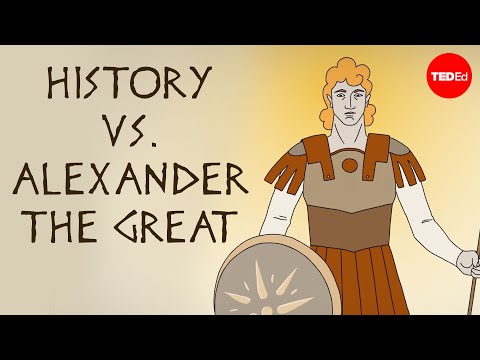
Alexander the Great conquered many lands during his reign.
We had a great time at the party last night.
This is a great opportunity for your career growth.
- Social Context
- In social settings, 'great' is a 'social lubricant.' It makes conversations smoother by providing easy, positive feedback to others.
- Professional Context
- In business, 'great' is used to describe successful projects, high-performing employees, and significant market trends.
Using 'great' correctly involves understanding its placement in a sentence and the nouns it typically modifies. As an adjective, it usually comes before a noun or after a linking verb like 'be,' 'feel,' or 'look.' For example, in 'The movie was great,' it follows the verb 'was' to describe the subject. In 'It was a great movie,' it precedes the noun 'movie.' This flexibility allows you to emphasize different parts of your thought. When using 'great' to mean 'large,' it often pairs with words related to distance, quantity, or physical objects. 'A great distance' or 'a great number of people' are standard collocations. In these cases, 'great' acts as a formal or emphatic version of 'big' or 'many.' It is important to note that 'great' is rarely used to describe people's physical height in modern English; we say a person is 'tall,' not 'great,' unless we are referring to their character or achievements. If you call someone a 'great man,' you are praising his morality or his impact on history, not his stature. Furthermore, 'great' is often paired with 'too' to indicate excess: 'He went to great lengths to help us.' This means he did an extraordinary amount of work. In comparative forms, we use 'greater' and 'greatest.' 'This challenge is greater than the last one' compares two things, while 'This is the greatest day of my life' singles out one day as the absolute best. Understanding these grammatical patterns ensures that your use of 'great' sounds natural and precise. It is also frequently used in the phrase 'great at [activity],' such as 'She is great at tennis,' which indicates high skill level. This is a very common way to compliment someone's abilities.
- Attributive Use
- Placed before the noun: 'A great idea,' 'A great success,' 'A great wall.'
- Predicative Use
- Placed after a linking verb: 'The food tastes great,' 'You look great today,' 'Everything is great.'
- Comparative and Superlative
- Greater (comparing two) and Greatest (the top of a group). Example: 'The greatest show on Earth.'
She is great at playing the piano.
Another common structure is 'a great many' or 'a great deal of.' These are slightly more formal ways of saying 'a lot of.' For instance, 'A great many people attended the concert' sounds more sophisticated than 'Lots of people attended.' Similarly, 'He spent a great deal of money' emphasizes the magnitude of the spending. When using 'great' as an exclamation, it often stands alone: 'Great! I will see you at six.' This functions as a confirmation and expression of happiness. In writing, 'great' can sometimes be seen as a 'weak' word if overused, so writers often look for more specific alternatives. However, in spoken English, its frequency is unmatched. It is the 'utility player' of adjectives. You can also use 'great' to describe a relationship, such as 'great-grandfather,' where it denotes a generation further back. This is a specific genealogical use that every learner should know. Whether you are describing a 'great adventure' or a 'great disappointment,' the word provides a scale of intensity that helps the listener understand the depth of your experience. It is a word that expands the boundaries of a sentence, adding color and emphasis wherever it is placed.
The greatest risk is taking no risk at all.
There is a great deal of confusion regarding the new rules.
He has a great sense of humor.
They showed great courage during the storm.
- Phrasal Patterns
- 'Great at' + Verb-ing: 'Great at cooking.' 'Great with' + Noun: 'Great with kids.'
- Exclamatory Use
- 'Great!' as a standalone response to indicate agreement or pleasure.
In the real world, 'great' is ubiquitous. You will hear it in the coffee shop when the barista hands you your drink and you say 'Great, thanks!' You will hear it in corporate boardrooms when a CEO describes a 'great quarter' for the company. It is the language of enthusiasm. In American English especially, 'great' is a standard polite response. If someone asks 'How are you?', the most common answers are 'Good' or 'Great.' Choosing 'Great' signals a higher level of energy and positivity. In British English, while also common, you might hear 'brilliant' or 'lovely' used in similar slots, but 'great' remains a universal constant. On television, sports commentators use it to describe 'great plays' or 'great athletes,' emphasizing the peak of human performance. In movies, it is a staple of dialogue, used to express everything from genuine wonder to biting sarcasm. When you hear 'great' in a movie, pay attention to the actor's face; if they are smiling, it is positive. If they are rolling their eyes, it is sarcastic. This word is also a favorite in advertising. Marketers love the word 'great' because it is simple, positive, and easy for everyone to understand. 'Great taste,' 'Great value,' and 'Great service' are the three pillars of many advertising campaigns. In academic settings, professors might speak of 'The Great Depression' or 'The Great Migration,' using the word to denote the massive scale and historical importance of these events. In these contexts, 'great' is not about being 'good,' but about being 'significant' and 'large-scale.' You will also hear it in music—countless songs use 'great' in their lyrics to describe love, life, or feelings. It is a word that resonates because it is so fundamental to how we evaluate the world around us. From the 'Great Wall of China' to a 'great cup of coffee,' the word spans the entire spectrum of human experience, from the monumental to the mundane.
- Daily Greetings
- 'I'm doing great, how about you?' - A standard, high-energy response to 'How are you?'
- Customer Service
- 'Have a great day!' - A ubiquitous parting phrase in shops and restaurants.
- Historical Labels
- 'The Great War' (WWI) or 'The Great Fire of London' - Using 'great' to mean large and impactful.
That sounds like a great plan! Let's do it.
In social media, 'great' is often replaced by emojis like the thumbs up or the fire emoji, but in written comments, 'Great job!' is one of the most common phrases. It is a quick way to provide validation. In podcasts and interviews, you will notice speakers using 'great' to transition between topics: 'That's a great point, and it leads us to our next question.' Here, 'great' is used to acknowledge the value of what the other person said. It is a tool for active listening. In literature, 'great' is used to create a sense of awe. Think of 'The Great Gatsby'—the title suggests someone who is larger than life, mysterious, and significant. When you read, look for how 'great' modifies nouns. Is it describing a 'great forest' (size) or a 'great hero' (quality)? The context will always tell you. In science, 'great' often appears in the names of species or phenomena, like the 'Great Barrier Reef.' Here, it serves as a geographical and biological marker of scale. Whether you are in a classroom, a theater, a stadium, or a grocery store, 'great' is the sound of English-speaking culture expressing its values and its measurements. It is a word that you cannot avoid, and one that you will find yourself using dozens of times a day once you become comfortable with it.
You did a great job on the presentation.
The Great Lakes are a major part of North American geography.
He is a great believer in hard work.
It gives me great pleasure to introduce our guest.
- Travel and Tourism
- 'Great views,' 'Great location,' 'Great amenities' - standard descriptors in travel reviews.
- Sports Commentary
- 'A great save by the goalkeeper!' - Used to highlight exceptional skill during a game.
One of the most frequent mistakes learners make is confusing 'great' with 'big' or 'large.' While 'great' can mean large, it is usually reserved for abstract concepts or specific historical/geographical names. You would not say 'I have a great dog' if you mean your dog is physically large; you would say 'I have a big dog.' If you say 'I have a great dog,' people will think your dog is well-behaved or talented. This distinction is vital. Another mistake is overusing 'great' to the point where it loses meaning. If everything is 'great'—the weather, the food, the shoes, the movie, the news—the listener might feel you are not being specific or sincere. Try to use 'great' for things that truly stand out. Additionally, learners sometimes struggle with the comparative and superlative forms. Remember that 'great' is a one-syllable adjective, so it follows the '-er' and '-est' rule: 'greater' and 'greatest.' Do not say 'more great' or 'most great.' These are grammatically incorrect. Another subtle mistake involves the use of 'great' as an adverb. In informal speech, you might hear 'He's doing great,' which is widely accepted. However, in formal writing, you should use the adverb 'greatly' or 'well.' For example, 'He was greatly influenced by his father' is correct, while 'He was great influenced' is wrong. Sarcasm is also a pitfall. If you don't catch the tone of voice, you might think someone is happy when they are actually upset. If someone says 'Great, it's raining' while they are carrying a surfboard, they are being sarcastic. Understanding the context and the speaker's emotion is key to interpreting 'great' correctly. Finally, be careful with the phrase 'a great deal.' It is used for uncountable nouns (money, time, effort), not countable ones. You say 'a great deal of time,' but 'a great many people.' Mixing these up is a common error for intermediate learners.
- Great vs. Big
- Use 'big' for physical size (a big house). Use 'great' for quality (a great house) or abstract scale (great importance).
- Adverbial Confusion
- 'He plays great' is common in slang, but 'He plays well' is the standard grammatical form.
- Comparison Errors
- Avoid 'more great' or 'most great.' Use 'greater' and 'greatest' exclusively.
Incorrect: This is the most great day ever! Correct: This is the greatest day ever!
Another area of confusion is the use of 'great' with 'too.' While 'too great' is correct (meaning excessively large or intense), learners sometimes use it when they just mean 'very great.' 'The challenge was too great for him' means he failed because it was too hard. If you just want to say it was very hard but he succeeded, say 'The challenge was very great.' Also, pay attention to 'great' vs 'grand.' 'Grand' often implies luxury or social status (a grand hotel), while 'great' is more general. You wouldn't call a simple but delicious sandwich 'grand,' but you would call it 'great.' Lastly, remember that 'great' is an absolute adjective in some contexts, but it can be graded. You can say 'really great' or 'truly great,' but 'very great' sometimes sounds a bit redundant or old-fashioned. In modern English, 'really great' is the preferred intensifier. By avoiding these common traps, you will use 'great' with the precision of a native speaker, ensuring your meaning is always clear and your tone is appropriate for the situation.
Incorrect: I have a great pizza (meaning size). Correct: I have a large pizza.
Incorrect: He is great at English (meaning he speaks it). Correct: He is good at English or speaks it well.
Incorrect: A great many of water. Correct: A great deal of water.
Incorrect: It was a great mistake (meaning small but bad). Correct: It was a big mistake.
- Countable vs. Uncountable
- Use 'a great many' for things you can count (books, people). Use 'a great deal of' for things you cannot count (time, love).
- Register Awareness
- In very formal academic papers, 'great' is often replaced by 'significant,' 'considerable,' or 'substantial.'
While 'great' is a fantastic word, English offers a treasure trove of alternatives that can make your speech more precise and colorful. If you are describing something that is very good, you might choose 'wonderful,' which implies a sense of wonder or amazement. 'Fantastic' and 'terrific' are high-energy alternatives often used in casual conversation. If you want to sound more formal, 'excellent' or 'outstanding' are perfect choices. For something that is physically large, instead of 'great,' you could use 'massive,' 'huge,' 'enormous,' or 'gigantic.' These words specifically target size without the ambiguity of 'great.' If you are talking about someone's skill, 'superb' or 'brilliant' can replace 'great' to show a higher level of admiration. In the context of importance, 'significant,' 'major,' or 'pivotal' are stronger choices for academic or professional writing. For example, instead of saying 'a great change,' you might say 'a significant transformation.' This adds a layer of sophistication to your language. On the other hand, if you want to express the idea of 'great' in a very informal, slangy way, words like 'awesome,' 'cool,' or 'amazing' are very popular among younger speakers. Understanding the 'register' or the level of formality of these synonyms is key. 'Excellent' is professional; 'Awesome' is casual; 'Magnificent' is grand and descriptive. By expanding your vocabulary beyond 'great,' you can tailor your message to your audience more effectively. For instance, in a restaurant review, you might say the service was 'impeccable' rather than just 'great.' In a job interview, you might describe your previous experience as 'extensive' rather than 'great.' This variety shows that you have a deep command of the language and can express nuances of meaning. Comparing these words helps you see that 'great' is the center of a large web of adjectives, each with its own specific flavor and intensity.
- Excellent
- More formal than 'great.' Often used in professional evaluations and academic feedback.
- Wonderful
- Carries a sense of joy and beauty. Often used for personal experiences like holidays or gifts.
- Massive
- Specifically refers to physical size and weight. Replaces the 'big' meaning of 'great.'
The view from the top of the mountain was magnificent.
Another set of alternatives focuses on the 'intensity' aspect. 'Immense' and 'vast' are great for describing large spaces or amounts of data. 'Profound' is used for deep feelings or thoughts, such as 'a profound impact' instead of 'a great impact.' This word suggests that the effect went deep into the core of something. In terms of social responses, 'brilliant' is very common in the UK to mean 'great' or 'clever.' In Australia, you might hear 'bonza' or 'ripper,' though these are very regional. In the US, 'stellar' or 'top-notch' are often used in business to describe high-quality work. When you are learning these alternatives, try to group them by what they describe. Group 1: Size (Huge, Enormous). Group 2: Quality (Excellent, Superb). Group 3: Emotion (Wonderful, Fantastic). Group 4: Importance (Significant, Major). This mental organization will help you retrieve the right word at the right time. Remember, 'great' is like a multi-tool; it can do many jobs. But sometimes, you need a specialized tool like a 'scalpel' (precise word) rather than a 'Swiss Army knife' (general word). Using the right synonym at the right time makes your English sound more natural, more educated, and more expressive. Don't be afraid to experiment with these words in your daily practice!
That was an extraordinary performance by the young violinist.
The company has made considerable progress this year.
We have a vast amount of work to complete before Friday.
The chef prepared a superb five-course meal.
- Terrific
- Interestingly, this used to mean 'causing terror,' but now it just means 'very good' or 'great.'
- Substantial
- A formal word for 'great' in terms of amount or importance. 'A substantial sum of money.'
How Formal Is It?
حقيقة ممتعة
In the past, 'great' was the opposite of 'small', while 'large' was the opposite of 'narrow'.
دليل النطق
- Pronouncing it like 'greet' (wrong vowel).
- Pronouncing it like 'grate' (this is a homophone, sounds the same but spelled differently).
- Making the 't' too soft so it sounds like 'gray'.
- Adding an extra syllable (it is one syllable).
- Confusing the vowel sound with 'get'.
مستوى الصعوبة
Very easy to recognize in text.
Easy to use, but avoid overusing it.
A essential word for daily conversation.
Need to listen for tone to detect sarcasm.
ماذا تتعلّم بعد ذلك
المتطلبات الأساسية
تعلّم لاحقاً
متقدم
قواعد يجب معرفتها
One-syllable adjective comparison
great -> greater -> greatest
Adjective placement
A great (adj) idea (noun)
Linking verbs
The pizza (subject) tastes (verb) great (adj).
Quantifiers
A great deal of (quantifier) money (uncountable noun).
Intensifiers
Really great, truly great.
أمثلة حسب المستوى
This is a great book.
C'est un excellent livre.
Adjective before the noun.
The weather is great today.
Il fait très beau aujourd'hui.
Adjective after the verb 'is'.
You are a great friend.
Tu es un super ami.
Used to describe a person's quality.
That is a great idea!
C'est une excellente idée !
Used as an exclamation of approval.
We had a great time.
Nous avons passé un excellent moment.
Describes an experience.
The food tastes great.
La nourriture est excellente.
Follows the linking verb 'tastes'.
Great! See you later.
Génial ! À plus tard.
Used as a standalone exclamation.
He is a great teacher.
C'est un excellent professeur.
Modifies the noun 'teacher'.
She is great at playing tennis.
Elle est très douée pour le tennis.
Pattern: great at + -ing verb.
Have a great weekend!
Passe un excellent week-end !
Common social greeting.
It was a great surprise for me.
C'était une grande surprise pour moi.
Describes the intensity of an emotion.
The greatest city in the world is London.
La plus grande ville du monde est Londres.
Superlative form 'greatest'.
He felt great joy when he won.
Il a ressenti une grande joie quand il a gagné.
Modifies an abstract noun 'joy'.
There is a great deal of work to do.
Il y a beaucoup de travail à faire.
Phrase 'a great deal of' means 'a lot of'.
This mountain is greater than that one.
Cette montagne est plus grande que celle-là.
Comparative form 'greater'.
They are great fans of football.
Ce sont de grands fans de football.
Used to show strong interest.
The Great Wall of China is very long.
La Grande Muraille de Chine est très longue.
Part of a proper noun; means 'large'.
He went to great lengths to help her.
Il s'est donné beaucoup de mal pour l'aider.
Idiom meaning 'did a lot of work'.
It is of great importance to arrive on time.
Il est d'une grande importance d'arriver à l'heure.
Formal use with abstract noun 'importance'.
A great many people attended the meeting.
Un grand nombre de personnes ont assisté à la réunion.
Phrase 'a great many' used with countable nouns.
My great-grandfather was a doctor.
Mon arrière-grand-père était médecin.
Prefix used for family generations.
The Great Depression affected many countries.
La Grande Dépression a touché de nombreux pays.
Historical term meaning 'large-scale'.
She has a great sense of style.
Elle a un grand sens du style.
Describes a personal quality.
Oh, great! Another rainy day.
Génial ! Encore une journée de pluie.
Sarcastic use; means the opposite.
The project was a great success for the team.
Le projet a été un grand succès pour l'équipe.
Describes a significant positive outcome.
He is a great believer in education.
Il croit fermement en l'éducation.
Means a 'strong' or 'firm' believer.
The company faces great challenges this year.
L'entreprise fait face à de grands défis cette année.
Describes significant difficulties.
She took great care in preparing the report.
Elle a apporté un grand soin à la préparation du rapport.
Means 'a lot of' or 'thorough' care.
The Great Lakes are located in North America.
Les Grands Lacs sont situés en Amérique du Nord.
Geographical proper noun.
It gives me great pleasure to be here.
Cela me fait un immense plaisir d'être ici.
Formal expression of happiness.
He was a great admirer of her work.
Il était un grand admirateur de son travail.
Means a 'strong' admirer.
The potential for growth is great.
Le potentiel de croissance est important.
Means 'significant' or 'large'.
The great and the good were all at the gala.
Les gens importants et influents étaient tous au gala.
Idiom referring to influential people.
He was at great pains to explain his theory.
Il s'est donné beaucoup de mal pour expliquer sa théorie.
Idiom meaning 'making a lot of effort'.
The great majority of citizens voted today.
La grande majorité des citoyens ont voté aujourd'hui.
Formal way to say 'most people'.
His influence on modern art was great.
Son influence sur l'art moderne a été considérable.
Describes a profound impact.
The Great Gatsby is a classic American novel.
Gatsby le Magnifique est un roman américain classique.
Literary title with symbolic meaning.
To no great extent has the policy changed.
La politique n'a pas changé dans une large mesure.
Formal structure meaning 'not much'.
The great outdoors offers peace and quiet.
Le grand air offre calme et tranquillité.
Fixed phrase for nature/outside.
He is a great one for telling stories.
Il est du genre à raconter des histoires.
Informal idiom for someone who does something often.
The great chain of being is a philosophical concept.
La grande chaîne de l'être est un concept philosophique.
Academic/Philosophical term.
She has a great capacity for empathy.
Elle a une immense capacité d'empathie.
Describes a profound internal quality.
The great powers negotiated the treaty.
Les grandes puissances ont négocié le traité.
Political term for influential nations.
It was a great achievement in the field of physics.
Ce fut une prouesse dans le domaine de la physique.
Describes a monumental accomplishment.
The great unwashed is a derogatory term for the masses.
La populace est un terme dérogatoire pour les masses.
Archaic/Literary idiom.
He wrote with great eloquence and wit.
Il a écrit avec une grande éloquence et beaucoup d'esprit.
Describes high-level stylistic skill.
The great divide between the rich and the poor.
Le grand fossé entre les riches et les pauvres.
Metaphor for a significant gap.
He is the great-grandson of a famous explorer.
Il est l'arrière-petit-fils d'un célèbre explorateur.
Precise genealogical relationship.
تلازمات شائعة
العبارات الشائعة
— Refers to nature and being outside in the wild.
I love spending time in the great outdoors.
يُخلط عادةً مع
Sounds the same but means a metal frame or to shred food.
Use 'big' for physical size and 'great' for quality or importance.
'Great' is much stronger and more enthusiastic than 'good'.
تعبيرات اصطلاحية
— Used when two people have the same idea at the same time.
You bought pizza too? Great minds think alike!
informal— To do everything possible to achieve something.
He went to great lengths to find the gift.
neutral— To try very hard to do something correctly.
She was at great pains to be polite.
formal— People who are important and influential in society.
The party was full of the great and the good.
journalistic— Used when something is lost but it doesn't matter much.
If he leaves, it's no great loss.
informal— Someone expected to bring success to a group.
He is the team's great white hope.
idiomatic— Someone who likes or does something very often.
My mom is a great one for gardening.
informal— To consider something to be very important.
He sets great store by honesty.
formal— In very good physical condition or health.
He is in great shape for his age.
neutral— Doing something very fast or very successfully.
The business is going great guns.
informalسهل الخلط
Both can mean big.
'Large' is neutral for size; 'Great' is emphatic or abstract.
A large box vs. A great challenge.
Both imply scale.
'Grand' implies luxury or social status.
A grand hotel vs. A great hotel.
Both mean very good.
'Excellent' is more formal and objective.
An excellent report vs. A great report.
Both mean very good.
'Wonderful' implies joy or amazement.
A wonderful dream vs. A great dream.
Great people are often famous.
'Great' implies merit; 'Famous' just implies being known.
A famous criminal is not a great person.
أنماط الجُمل
Subject + is + great.
The food is great.
It is a + great + Noun.
It is a great day.
Subject + is + great at + Verb-ing.
He is great at cooking.
Have a + great + Noun!
Have a great trip!
A great deal of + Uncountable Noun.
A great deal of effort.
A great many + Countable Noun.
A great many students.
Of great + Abstract Noun.
Of great importance.
To no great + Noun.
To no great extent.
عائلة الكلمة
الأسماء
الصفات
مرتبط
كيفية الاستخدام
One of the top 500 most used words in English.
-
Using 'great' for height.
→
He is tall.
'Great' refers to character or importance, not physical height.
-
Saying 'more great'.
→
Greater.
'Great' is a short adjective, so it uses the -er suffix.
-
A great many of water.
→
A great deal of water.
'Many' is for countable nouns; 'deal' is for uncountable nouns.
-
He was great influenced.
→
He was greatly influenced.
Use the adverb 'greatly' to modify a verb or adjective.
-
It was a great mistake (meaning small).
→
It was a big mistake.
'Great' often implies significance, while 'big' is better for general errors.
نصائح
Avoid Overuse
If you use 'great' for everything, it loses its power. Try using 'fantastic' or 'superb' for variety.
Countable vs Uncountable
Remember: 'A great many' for things you can count, 'A great deal of' for things you can't.
Tone Matters
Your voice tells the listener if you are being sincere or sarcastic. A happy tone means 'good'!
Historical Names
When you see 'Great' in history, think 'significant' or 'large-scale,' not necessarily 'good'.
Formal Alternatives
In essays, replace 'great' with 'considerable,' 'substantial,' or 'noteworthy' for a better grade.
Polite Responses
'Great!' is a perfect one-word answer to show you agree with a plan.
American English
Americans use 'great' very often as a standard positive adjective. Don't be surprised!
Great Minds
Use 'Great minds think alike' when you and a friend have the same idea. It's a fun phrase!
Long A
Make sure the 'a' in 'great' sounds like the 'a' in 'paper' or 'cake'.
The Thumbs Up Word
Associate 'great' with the thumbs-up emoji to remember its most common meaning.
احفظها
وسيلة تذكّر
GREAT: G-ood, R-eally E-xcellent, A-nd T-remendous.
ربط بصري
Imagine a giant thumbs-up symbol standing next to a huge mountain.
Word Web
تحدٍّ
Try to use 'great' in three different ways today: for size, for quality, and as an exclamation.
أصل الكلمة
Derived from the Old English word 'great', which meant 'big, thick, or coarse'. It is related to the Dutch 'groot' and German 'groß'.
المعنى الأصلي: Large in size or thick in substance.
Germanicالسياق الثقافي
Generally safe, but be careful with sarcasm so you don't sound rude.
Used as a standard greeting response: 'I'm great!'
تدرّب في الحياة الواقعية
سياقات واقعية
Socializing
- That's great!
- Have a great time!
- You look great!
- Great to see you!
Work
- Great job on the report.
- A great success.
- Great potential.
- Great teamwork.
Travel
- Great views.
- A great location.
- Great weather.
- Great experience.
School
- Great answer!
- A great teacher.
- Great progress.
- Great effort.
Shopping
- A great price.
- Great quality.
- Great service.
- Great deals.
بدايات محادثة
"What is the greatest movie you have ever seen?"
"Tell me about a great day you had recently."
"Who do you think is a great leader in history?"
"What are you great at doing?"
"Do you think having a great deal of money makes people happy?"
مواضيع للكتابة اليومية
Write about a great achievement in your life and why it was important.
Describe a great place you have visited and what made it special.
What does it mean to be a 'great' person in today's world?
Write a story that starts with: 'It was a great day until...'
List five things that make a great friend.
الأسئلة الشائعة
10 أسئلةNo, you should use 'tall.' Saying someone is 'great' usually refers to their character or achievements.
It is neutral. It is fine in conversation and most writing, but academic writing often prefers 'significant' or 'excellent'.
'Greater' is the correct comparative form. 'More great' is grammatically incorrect.
Use it with uncountable nouns like time, money, or energy to mean 'a lot of'.
Yes, when used sarcastically ('Oh, great!') or with negative nouns ('a great disaster').
In casual speech, yes. In formal writing, use 'He plays well' or 'He plays excellently'.
It refers to the five large freshwater lakes in North America. Here, 'great' means large.
Yes, 'great' implies a much higher level of quality or satisfaction than 'good'.
It is the brother of your grandmother or grandfather.
In very old English, yes, but in modern English, this meaning is no longer used.
اختبر نفسك 180 أسئلة
Write a sentence using 'great' to describe your favorite food.
Well written! Good try! Check the sample answer below.
Write a sentence using 'great' to describe a friend.
Well written! Good try! Check the sample answer below.
Write a sentence using 'great at'.
Well written! Good try! Check the sample answer below.
Write a sentence using 'greatest'.
Well written! Good try! Check the sample answer below.
Write a sentence using 'a great deal of'.
Well written! Good try! Check the sample answer below.
Write a sentence using 'a great many'.
Well written! Good try! Check the sample answer below.
Write a sentence using 'great success'.
Well written! Good try! Check the sample answer below.
Write a sentence using 'great importance'.
Well written! Good try! Check the sample answer below.
Write a sentence using 'at great pains'.
Well written! Good try! Check the sample answer below.
Write a sentence using 'the great outdoors'.
Well written! Good try! Check the sample answer below.
Write a sentence using 'great eloquence'.
Well written! Good try! Check the sample answer below.
Write a sentence using 'great capacity'.
Well written! Good try! Check the sample answer below.
Write a sentence using 'great' and 'weather'.
Well written! Good try! Check the sample answer below.
Write a sentence using 'greater than'.
Well written! Good try! Check the sample answer below.
Write a sentence using 'great-grandfather'.
Well written! Good try! Check the sample answer below.
Write a sentence using 'great potential'.
Well written! Good try! Check the sample answer below.
Write a sentence using 'to no great extent'.
Well written! Good try! Check the sample answer below.
Write a sentence using 'great divide'.
Well written! Good try! Check the sample answer below.
Write 'Have a great day!'
Well written! Good try! Check the sample answer below.
Write 'Great job!'
Well written! Good try! Check the sample answer below.
Say: 'The food is great.'
Read this aloud:
قلت:
Speech recognition is not supported in your browser. Try Chrome or Edge.
Say: 'Have a great day!'
Read this aloud:
قلت:
Speech recognition is not supported in your browser. Try Chrome or Edge.
Say: 'He is great at soccer.'
Read this aloud:
قلت:
Speech recognition is not supported in your browser. Try Chrome or Edge.
Say: 'This is the greatest.'
Read this aloud:
قلت:
Speech recognition is not supported in your browser. Try Chrome or Edge.
Say: 'A great deal of money.'
Read this aloud:
قلت:
Speech recognition is not supported in your browser. Try Chrome or Edge.
Say: 'The Great Wall of China.'
Read this aloud:
قلت:
Speech recognition is not supported in your browser. Try Chrome or Edge.
Say: 'It gives me great pleasure.'
Read this aloud:
قلت:
Speech recognition is not supported in your browser. Try Chrome or Edge.
Say: 'A great success.'
Read this aloud:
قلت:
Speech recognition is not supported in your browser. Try Chrome or Edge.
Say: 'The great and the good.'
Read this aloud:
قلت:
Speech recognition is not supported in your browser. Try Chrome or Edge.
Say: 'The great outdoors.'
Read this aloud:
قلت:
Speech recognition is not supported in your browser. Try Chrome or Edge.
Say: 'Great eloquence.'
Read this aloud:
قلت:
Speech recognition is not supported in your browser. Try Chrome or Edge.
Say: 'Great capacity.'
Read this aloud:
قلت:
Speech recognition is not supported in your browser. Try Chrome or Edge.
Say: 'Great idea!'
Read this aloud:
قلت:
Speech recognition is not supported in your browser. Try Chrome or Edge.
Say: 'Great job!'
Read this aloud:
قلت:
Speech recognition is not supported in your browser. Try Chrome or Edge.
Say: 'Great-grandfather.'
Read this aloud:
قلت:
Speech recognition is not supported in your browser. Try Chrome or Edge.
Say: 'Great potential.'
Read this aloud:
قلت:
Speech recognition is not supported in your browser. Try Chrome or Edge.
Say: 'At great pains.'
Read this aloud:
قلت:
Speech recognition is not supported in your browser. Try Chrome or Edge.
Say: 'Great divide.'
Read this aloud:
قلت:
Speech recognition is not supported in your browser. Try Chrome or Edge.
Say: 'Great news!'
Read this aloud:
قلت:
Speech recognition is not supported in your browser. Try Chrome or Edge.
Say: 'Greater than.'
Read this aloud:
قلت:
Speech recognition is not supported in your browser. Try Chrome or Edge.
Listen and write the word: 'The weather is great.'
Listen and write the word: 'Great job!'
Listen and write the word: 'He is great at it.'
Listen and write the word: 'The greatest day.'
Listen and write the word: 'A great deal.'
Listen and write the word: 'Great-grandfather.'
Listen and write the word: 'Great success.'
Listen and write the word: 'Great potential.'
Listen and write the word: 'Great outdoors.'
Listen and write the word: 'At great pains.'
Listen and write the word: 'Great eloquence.'
Listen and write the word: 'Great divide.'
Listen and write the word: 'Great news.'
Listen and write the word: 'Greater than.'
Listen and write the word: 'Great Wall.'
/ 180 correct
Perfect score!
Summary
The word 'great' is a versatile adjective that expresses high quality or significant size. Use it to praise something or to emphasize the scale of an object or feeling. Example: 'She did a great job on her project.'
- Great is a common adjective meaning excellent or very good.
- It can also mean physically large or significant in scale.
- It is often used as an exclamation to show agreement or joy.
- Common forms include greater (comparative) and greatest (superlative).
Avoid Overuse
If you use 'great' for everything, it loses its power. Try using 'fantastic' or 'superb' for variety.
Countable vs Uncountable
Remember: 'A great many' for things you can count, 'A great deal of' for things you can't.
Tone Matters
Your voice tells the listener if you are being sincere or sarcastic. A happy tone means 'good'!
Historical Names
When you see 'Great' in history, think 'significant' or 'large-scale,' not necessarily 'good'.
مثال
Great idea!
محتوى ذو صلة

تعلّمها في السياق
هذه الكلمة بلغات أخرى
عبارات ذات صلة
مزيد من كلمات emotions
good
A1كلمة 'good' تعني أن شيئاً ما إيجابي أو ذو جودة عالية.
laugh
A2ضحك على النكتة.
thirsty
A2عطشان. الشعور بالحاجة إلى شرب الماء.
sadness
A2الحزن هو حالة عاطفية تتميز بمشاعر الخسارة واليأس.
humorous
B1كلمة 'humorous' تعني 'فكاهي' أو 'مضحك'. مثال: 'كان لديه أسلوب فكاهي في الحديث' (He had a humorous way of speaking).
like
A2أن تحب أو تستمتع بشيء ما. على سبيل المثال، 'أنا أحب التفاح' أو 'أنا أحب القراءة'.
joyful
B1مبهج. كان يوما مبهجا مليئا بالضحك والاحتفال.
happiness
A2السعادة هي شعور بالبهجة والرضا.
amuse
A2جعل شخص يضحك أو يبتسم.
dear
A2عزيزي/عزيزتي: تستخدم للتعبير عن المودة أو لبدء رسالة.

