moo در ۳۰ ثانیه
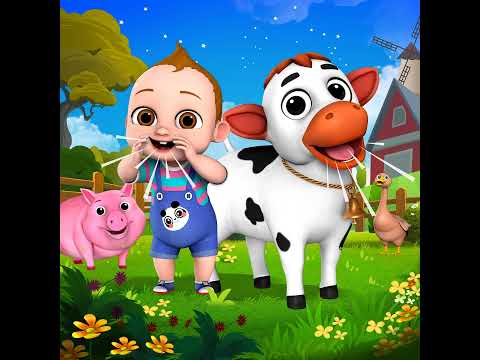
- Moo is the onomatopoeic word for the sound made by cows and bulls.
- It functions as both a noun (the sound) and a verb (to make the sound).
- The word is commonly used in farm, educational, and children's contexts.
- It is a regular verb, following standard conjugation patterns like 'mooed' and 'mooing'.
The word moo is a quintessential example of onomatopoeia in the English language, representing the deep, resonant vocalization produced by cattle, specifically cows and bulls. While it is primarily associated with agricultural settings and children's literature, its utility extends into various linguistic domains, serving as both a noun to identify the sound and a verb to describe the act of making it. In a literal sense, a moo is a form of bovine communication used to express a range of needs, from hunger and distress to the location of a calf. For learners of English, mastering this word involves understanding its phonetic simplicity and its deep-seated cultural presence. When you visit a farm or watch a documentary about rural life, the moo is the primary auditory signal of the presence of livestock. It is a low-frequency sound that can carry over long distances, making it a distinctive feature of the countryside soundscape.
- Linguistic Category
- Onomatopoeia (a word that phonetically imitates the sound it describes).
Beyond the farm, the word is frequently used in educational contexts to teach children about animals. It is one of the first animal sounds an English-speaking child learns, often through songs like 'Old MacDonald Had a Farm.' In adult conversation, 'moo' might be used humorously or descriptively to characterize a sound that is low and rumbling, or even metaphorically in political or social commentary to describe a herd-like behavior, though this is less common than its literal application.
The silence of the early morning was broken only by the distant, rhythmic moo of a cow waiting to be milked.
In terms of register, 'moo' is a neutral word. It is neither overly formal nor particularly slangy, making it appropriate for almost any context where cattle are discussed. However, in more technical or literary descriptions, one might encounter the word 'low' (as in 'the lowing of the cattle'), which provides a more poetic or archaic alternative to the standard 'moo'. Understanding the difference between these terms helps a B1 learner transition toward more nuanced vocabulary.
Furthermore, the word 'moo' is often used in the context of food and dairy industries, albeit sometimes in a playful or marketing-focused manner. For instance, a milk brand might use the sound in its advertising to evoke a sense of freshness and farm-to-table quality. The simplicity of the word makes it highly memorable and universally recognized across English-speaking cultures.
Every time the farmer approached the gate with the hay, the entire herd would begin to moo in anticipation.
- Acoustic Quality
- A long, sustained 'u' sound preceded by a soft nasal 'm'.
In creative writing, the word can be used to set a scene. Imagine a misty morning in the Scottish Highlands; the 'moo' of a Highland cow adds a layer of authenticity to the atmosphere. It is a sound that signifies peace, nature, and the slow pace of rural life. For a learner, being able to identify and use this word correctly is a step toward describing the natural world with precision.
The toddler pointed at the field and let out a small moo, much to the delight of her parents.
Ultimately, while 'moo' might seem like a simple word, its role in English is foundational. It bridges the gap between basic animal recognition and more complex descriptive language. Whether you are reading a bedtime story, discussing agricultural output, or simply describing a trip to the countryside, 'moo' is the essential term for the voice of the cow.
The documentary highlighted how a cow's moo can change in pitch depending on its emotional state.
- Synonym Note
- 'Bellow' is used for a much louder, more aggressive moo, often from a bull.
We could hear the cattle mooing from across the valley as the sun began to set.
Using 'moo' correctly requires an understanding of its dual role as a noun and a verb. As a verb, it describes the action. For example, 'The cow moos when it is hungry.' Here, 'moos' is the third-person singular present tense. In the past tense, we say 'The cow mooed loudly.' This flexibility allows you to describe bovine activity across different timeframes. As a noun, it refers to the sound itself: 'I heard a loud moo.' This usage is common when the sound is the focus of the sentence rather than the animal making it.
- Verb Conjugation
- I moo, you moo, he/she/it moos, we moo, they moo. Past: mooed. Participle: mooing.
When constructing sentences, you can add adverbs to provide more detail about the sound. A cow might moo 'plaintively' if it is sad, 'insistently' if it wants food, or 'softly' if it is communicating with its calf. These modifiers help elevate your English from basic to intermediate. For instance, 'The cow mooed plaintively for its lost calf' paints a much more vivid picture than simply saying 'The cow made a sound.'
The herd began to moo in unison as the tractor arrived with the morning feed.
In more complex sentence structures, 'moo' can be part of a participial phrase. 'Mooing loudly, the cow followed the farmer across the field.' This structure is excellent for showing simultaneous actions. You can also use it in the passive voice, though it is less common: 'A low moo was heard from the barn.' This shifts the emphasis to the sound and the location.
For learners focusing on narrative writing, 'moo' is a great tool for sensory description. Instead of just describing what a farm looks like, describe what it sounds like. 'The air was thick with the smell of hay and the constant, low moo of the dairy cows.' This engages the reader's sense of hearing and makes the writing more immersive.
If you moo at a cow, it might actually look at you in confusion.
- Common Adverb Pairings
- Loudly, softly, distantly, incessantly, mournfully.
In casual conversation, you might use 'moo' to imitate a cow or to talk about a child's toy. 'The toy cow moos when you press its ear.' This is a very common way the word is used in daily life, especially by parents or teachers. It's also used in jokes, such as the famous 'Interrupting Cow' joke, which relies on the suddenness of the 'moo'.
The sound of a single moo echoed through the quiet valley, signaling the start of the day.
Finally, consider the word's use in figurative language. While rare, one might say 'He's just mooing,' to imply someone is making noise without saying anything meaningful, though this is quite informal and specific to certain dialects. Mostly, stick to the literal cow-related usage for clarity.
Do you hear that? It sounds like a cow mooing in the distance.
- Noun vs. Verb
- Noun: 'The moo was loud.' Verb: 'The cow will moo.'
The children laughed when the farmer taught them how to moo like a real cow.
The most obvious place to hear the word 'moo' is in a rural or agricultural setting. If you are walking through the countryside in England, the United States, or any other English-speaking country with a dairy or beef industry, you will hear the sound itself and people using the word to describe it. Farmers use it practically: 'I heard a moo from the north pasture; I should check if a gate is open.' In this context, the word is a functional part of daily work life.
- Primary Setting
- Farms, ranches, and livestock auctions.
Another major venue for the word 'moo' is in the world of early childhood education. From nursery rhymes to picture books, 'moo' is a staple. Teachers and parents use it to help children associate sounds with animals. If you visit a preschool, you will likely hear the word used in songs, games, and storytelling. It's a foundational piece of vocabulary that helps build phonemic awareness in young learners.
In the classic children's book, the cow doesn't just walk; it stops to moo at every passerby.
In popular culture, 'moo' appears in cartoons and animated movies. Think of characters like Otis from 'Barnyard' or the cows in 'Home on the Range'. These characters often use the word 'moo' as a catchphrase or a way to emphasize their bovine nature. Furthermore, the word is used in brand names and marketing. A famous example is the 'Cow Abduction' trope in science fiction, where the sound 'moo' is often used for comedic effect as a cow is lifted into a spaceship.
You might also encounter 'moo' in the context of animal behavior studies. Scientists researching how cattle communicate might use the word in their reports: 'The frequency of the moo was recorded to determine the stress levels of the herd.' While 'vocalization' is the more scientific term, 'moo' is still used for clarity and accessibility in science communication.
The nature documentary featured a segment on how a mother cow recognizes her calf's unique moo.
- Media Contexts
- Children's TV shows, farm-themed video games, and nature documentaries.
In the digital age, 'moo' has even found a place in technology. Some apps use a 'moo' sound as a notification, and there are countless memes involving cows that use the word for humor. It's a word that has successfully transitioned from the physical farm to the digital landscape, maintaining its core meaning while expanding its reach.
The alarm clock was set to a gentle moo to wake the campers up without startling them.
Finally, you'll hear it in casual jokes. The 'Interrupting Cow' joke is a rite of passage for many English learners: 'Knock knock.' 'Who's there?' 'Interrupting cow.' 'Interrupting cow wh—' 'MOO!' This joke perfectly illustrates the word's phonetic impact and its role in simple, everyday humor.
The comedian's impression of a cow's moo was so accurate the audience burst into laughter.
- Common Usage
- Describing animal sounds, children's play, and rural atmosphere.
As we drove through the countryside, we could hear the cows mooing in the meadows.
One of the most common mistakes learners make with the word 'moo' is confusing it with other animal sounds. In many languages, the representation of a cow's sound is different. For example, a learner might accidentally use 'mu' or 'meuh' instead of the English 'moo'. While the sound is similar, the spelling and pronunciation in English are specific. It's important to remember the double 'o' which creates the long /uː/ sound.
- Spelling Error
- Writing 'mo' or 'mue' instead of 'moo'.
Another mistake is using 'moo' for animals that don't make that sound. Sheep 'baa', goats 'bleat', and horses 'neigh' or 'whinny'. Using 'moo' for a sheep is a common slip-up for beginners. Precision in animal sounds is a hallmark of a more advanced vocabulary. Additionally, learners sometimes struggle with the verb forms. Remember that 'moo' is a regular verb, so the past tense is 'mooed', not 'moo' or some irregular form.
Incorrect: The cow moo yesterday. Correct: The cow mooed yesterday.
A more subtle mistake involves the context of the word. While 'moo' is perfectly fine for general use, using it in a highly technical veterinary or scientific paper might be seen as too informal. In those cases, 'vocalization' or 'bovine call' would be more appropriate. Conversely, using 'bovine call' when talking to a child would be overly formal and confusing. Matching the word to the register is key.
Learners also sometimes confuse 'moo' with 'move'. Because they look somewhat similar, a student might write 'The cow moved' when they mean 'The cow mooed'. This changes the meaning of the sentence entirely—one describes physical displacement, while the other describes a sound. Always double-check the spelling to ensure you are conveying the intended meaning.
Confusing 'moo' with 'move' can lead to sentences like 'The cow moved loudly,' which is nonsensical.
- Grammar Pitfall
- Treating 'moo' as a transitive verb (e.g., 'The cow mooed a sound'). It is intransitive.
Finally, some learners might over-apply the 'moo' sound to all bovine-like creatures. While bison and water buffalo make sounds that could be described as moos, they often have more specific terms like 'grunt' or 'bellow'. Being aware of these nuances can help you sound more like a native speaker. However, for a B1 learner, 'moo' is a safe and generally understood term for most large, cattle-like animals.
It's a common mistake to think that only female cows moo; bulls and calves do as well.
In summary, avoid spelling errors, watch your verb tenses, and be mindful of the animal you are describing. With these tips, you'll use 'moo' accurately and naturally in your English conversations and writing.
The student realized their mistake when they wrote that the pig mooed instead of oinked.
- Quick Check
- Does the animal have horns or produce milk? If yes, 'moo' is likely the right word.
Remember: 'moo' is for cows, 'baa' is for sheep, and 'oink' is for pigs.
While 'moo' is the most common word for the sound a cow makes, English offers several alternatives depending on the intensity and context of the sound. The most frequent literary alternative is 'low'. To 'low' is to make the deep, characteristic sound of a cow. You will often find this in classic literature or poetry, such as Thomas Gray's 'Elegy Written in a Country Churchyard', where he mentions 'The lowing herd wind slowly o'er the lea.' 'Lowing' sounds more peaceful and rhythmic than 'mooing'.
- Low (Verb/Noun)
- A more formal or poetic term for moo. Example: 'The cattle were lowing in the twilight.'
Another alternative is 'bellow'. This word describes a much louder, deeper, and often more aggressive sound. While a cow might moo, a large bull is more likely to bellow, especially if it is angry or asserting dominance. 'Bellow' can also be used for humans who shout in a deep voice, making it a versatile word to know as you progress to B2 and C1 levels. 'The bull bellowed a warning to the intruders.'
While the calf gave a tiny moo, the massive bull let out a thunderous bellow.
For the sounds made by younger cattle, you might use 'bawl'. This describes a loud, distressed cry, often from a calf that has been separated from its mother. It conveys more emotion and urgency than a simple 'moo'. Understanding these distinctions allows you to be much more descriptive in your writing. 'The hungry calf began to bawl for its mother.'
In a scientific context, you might encounter 'vocalization'. This is a broad term that covers any sound made by an animal using its vocal cords. While you wouldn't use this in a casual story, it's the standard term in biology and animal behavior studies. 'The researchers analyzed the bovine vocalizations to understand herd dynamics.'
The poet preferred the word 'low' to moo because it felt more melodic and evocative of the countryside.
- Comparison: Moo vs. Bleat
- Moo is deep and resonant (cows); bleat is higher-pitched and wavering (sheep/goats).
It's also helpful to compare 'moo' with the sounds of other large animals. For instance, an elephant 'trumpets', a lion 'roars', and a horse 'neighs'. By learning these together, you build a mental map of animal sounds. 'Moo' fits into the category of domestic farm animal sounds, along with 'oink' (pig), 'cluck' (hen), and 'quack' (duck).
The sound of the cow's moo is much deeper than the sheep's bleat.
Finally, consider the word 'hollar' or 'shout' in a metaphorical sense. If someone is 'mooing' their orders, it implies they are doing so in a loud, unintelligent, or bovine manner. However, this is quite rare and usually derogatory. Stick to the literal animal sounds for most purposes.
The farmer could distinguish between a contented moo and a distressed bawl from his cattle.
- Summary Table
- Moo (Standard) | Low (Poetic) | Bellow (Loud/Angry) | Bawl (Distressed/Calf).
The transition from a soft moo to a loud bellow indicated the bull's growing irritation.
چقدر رسمی است؟
نکته جالب
Before 'moo' became the standard, the word 'low' was more commonly used in English to describe the sound of cattle.
راهنمای تلفظ
- Pronouncing it with a short 'u' like 'mud'.
- Adding a 'v' sound at the end (confusing it with 'move').
- Not making the 'm' sound long enough.
- Pronouncing it like 'mew' (the sound of a cat).
- Dropping the 'm' and just saying 'ooh'.
سطح دشواری
Very easy to recognize and read.
Easy, but watch the double 'o'.
Simple pronunciation, but requires a long vowel.
Very distinct and easy to identify.
بعداً چه یاد بگیریم؟
پیشنیازها
بعداً یاد بگیرید
پیشرفته
گرامر لازم
Onomatopoeia as Verbs
The cow moos (imitates the sound).
Regular Verb Conjugation
Moo, mooed, mooing.
Intransitive Verbs
The cow mooed (no object needed).
Noun Countability
I heard three moos.
Adverbial Modification
The cow mooed loudly.
مثالها بر اساس سطح
The cow says moo.
La vache fait meuh.
Simple present tense.
Moo, moo, goes the cow.
Meuh, meuh, fait la vache.
Onomatopoeia used as a sound.
I like the cow's moo.
J'aime le meuh de la vache.
Noun usage.
Look! The cow can moo.
Regarde ! La vache peut faire meuh.
Modal verb 'can' + base verb.
A big cow says moo.
Une grande vache fait meuh.
Adjective + noun + verb.
Can you moo like a cow?
Peux-tu faire meuh comme une vache ?
Interrogative sentence.
The white cow says moo.
La vache blanche fait meuh.
Color adjective.
One moo, two moos.
Un meuh, deux meuhs.
Singular and plural noun.
The cows moo when they are hungry.
Les vaches meuglent quand elles ont faim.
Present tense with a conjunction.
I heard a loud moo last night.
J'ai entendu un meuglement fort hier soir.
Past tense 'heard' + noun.
The farmer heard the cow moo.
Le fermier a entendu la vache meugler.
Perception verb + object + base verb.
Why is that cow mooing so much?
Pourquoi cette vache meugle-t-elle autant ?
Present continuous tense.
We heard many moos on the farm.
Nous avons entendu beaucoup de meuglements à la ferme.
Plural noun with 'many'.
The baby cow learned to moo.
Le veau a appris à meugler.
Infinitive phrase 'to moo'.
It is fun to moo at the cows.
C'est amusant de meugler aux vaches.
Dummy 'it' subject.
The cow's moo was very deep.
Le meuglement de la vache était très grave.
Possessive 's + noun.
The cow mooed loudly as the sun began to rise.
La vache a meuglé bruyamment alors que le soleil commençait à se lever.
Past tense with an adverb and a time clause.
If you listen closely, you can hear the cows mooing in the distance.
Si vous écoutez attentivement, vous pouvez entendre les vaches meugler au loin.
Conditional sentence with a participle.
The sudden moo startled the hikers as they crossed the field.
Le meuglement soudain a fait sursauter les randonneurs alors qu'ils traversaient le champ.
Noun as a subject with a past tense verb.
I haven't heard a single moo since we arrived at the ranch.
Je n'ai pas entendu un seul meuglement depuis que nous sommes arrivés au ranch.
Present perfect tense.
The cow was mooing plaintively for its calf.
La vache meuglait plaintivement après son veau.
Past continuous with a descriptive adverb.
She tried to imitate the cow's moo, but it sounded more like a goat.
Elle a essayé d'imiter le meuglement de la vache, mais cela ressemblait plus à une chèvre.
Contrastive 'but' clause.
The documentary explained why cows moo at different pitches.
Le documentaire expliquait pourquoi les vaches meuglent à différentes hauteurs.
Indirect question in a noun clause.
Every morning, the same cow moos right outside my window.
Chaque matin, la même vache meugle juste devant ma fenêtre.
Frequency adverb 'every morning'.
The resonant moo of the Hereford echoed across the valley, signaling the start of the day.
Le meuglement résonnant du Hereford a résonné dans la vallée, signalant le début de la journée.
Complex noun phrase with a participial phrase.
The cattle were mooing incessantly, perhaps sensing the approaching storm.
Le bétail meuglait sans cesse, sentant peut-être l'orage approcher.
Past continuous with an adverb and a speculative phrase.
While some might find the sound annoying, I find the occasional moo quite soothing.
Alors que certains pourraient trouver ce son agaçant, je trouve le meuglement occasionnel assez apaisant.
Concessive 'while' clause.
The sound of a distant moo added to the pastoral charm of the village.
Le son d'un meuglement lointain ajoutait au charme pastoral du village.
Prepositional phrases adding detail.
The cow mooed as if it were trying to tell us something important.
La vache a meuglé comme si elle essayait de nous dire quelque chose d'important.
Subjunctive mood 'as if it were'.
The recording captured the unique moo of each individual cow in the study.
L'enregistrement a capturé le meuglement unique de chaque vache individuelle dans l'étude.
Definite article with a specific noun phrase.
Despite the noise of the tractor, the cow's moo was clearly audible.
Malgré le bruit du tracteur, le meuglement de la vache était clairement audible.
Prepositional phrase 'despite' for contrast.
The children were delighted to hear the toy cow moo when they pressed its button.
Les enfants étaient ravis d'entendre la vache en jouet meugler quand ils appuyaient sur son bouton.
Infinitive after an adjective.
The air was thick with the scent of damp earth and the mournful moo of a solitary cow.
L'air était imprégné de l'odeur de la terre humide et du meuglement lugubre d'une vache solitaire.
Evocative adjectives and parallel structure.
One could hardly distinguish the lowing of the herd from a deep, guttural moo in the fog.
On pouvait à peine distinguer le meuglement du troupeau d'un meuglement profond et guttural dans le brouillard.
Use of 'one' as an impersonal subject and 'distinguish from'.
The author uses the cow's moo as a recurring motif to emphasize the stillness of the rural landscape.
L'auteur utilise le meuglement de la vache comme un motif récurrent pour souligner le calme du paysage rural.
Literary analysis terminology.
The cow's moo, though seemingly simple, contains a variety of frequencies that convey different meanings.
Le meuglement de la vache, bien que paraissant simple, contient une variété de fréquences qui transmettent différentes significations.
Parenthetical 'though' clause.
The silence was so profound that even the softest moo from the barn seemed to vibrate through the house.
Le silence était si profond que même le meuglement le plus doux provenant de l'étable semblait vibrer à travers la maison.
Result clause 'so... that'.
The documentary explored the linguistics of the 'moo', comparing it across different human languages.
Le documentaire explorait la linguistique du 'meuh', en le comparant à travers différentes langues humaines.
Gerund phrase 'comparing it'.
He gave a low, mock moo to tease his younger sister, who was afraid of the cattle.
Il a poussé un petit meuglement moqueur pour taquiner sa petite sœur, qui avait peur du bétail.
Relative clause 'who was afraid'.
The transition from the frantic bleating of sheep to the steady moo of the cows was a welcome change.
La transition du bêlement frénétique des moutons au meuglement régulier des vaches était un changement bienvenu.
Comparison of two different animal sounds.
The primordial moo of the ancient breed resonated with a depth that seemed to echo through the very annals of agricultural history.
Le meuglement primordial de la race ancienne résonnait avec une profondeur qui semblait faire écho à travers les annales mêmes de l'histoire agricole.
Highly sophisticated vocabulary and metaphorical depth.
In the symphony of the countryside, the moo serves as the foundational bass note upon which all other sounds are layered.
Dans la symphonie de la campagne, le meuglement sert de note de basse fondamentale sur laquelle tous les autres sons se superposent.
Extended metaphor.
The cow's moo was less a sound and more a physical presence, a low-frequency vibration that settled in the marrow of one's bones.
Le meuglement de la vache était moins un son et plus une présence physique, une vibration à basse fréquence qui s'installait dans la moelle des os.
Correlative structure 'less... and more...'.
The linguistic evolution of the word 'moo' reflects our long-standing symbiotic relationship with bovine species.
L'évolution linguistique du mot 'meuh' reflète notre relation symbiotique de longue date avec les espèces bovines.
Academic register and complex subject.
To describe the sound as a mere 'moo' is to do a disservice to the complex emotional spectrum it can represent.
Décrire le son comme un simple 'meuh', c'est faire injure à la palette émotionnelle complexe qu'il peut représenter.
Infinitive phrase as a subject.
The artist captured the essence of the farm not through sight, but through the visceral, recorded moo of the morning milking.
L'artiste a capturé l'essence de la ferme non par la vue, mais par le meuglement viscéral et enregistré de la traite du matin.
Contrastive 'not... but...' structure.
The sudden, sharp moo of a cow in distress cut through the pastoral idyll like a jagged blade.
Le meuglement soudain et aigu d'une vache en détresse a transpercé l'idylle pastorale comme une lame dentelée.
Simile and evocative imagery.
The sheer volume of the bull's moo was enough to rattle the windowpanes of the nearby cottage.
Le volume impressionnant du meuglement du taureau suffisait à faire vibrer les vitres de la chaumière voisine.
Noun phrase 'the sheer volume of'.
ترکیبهای رایج
عبارات رایج
— A basic sentence used to teach children animal sounds.
In the book, the cow says moo.
— A playful way to describe a cow making noise at night.
The cows were mooing at the moon all night.
— A simile used to describe a deep, perhaps ungraceful sound.
His snoring sounded like a cow mooing.
— To imitate a cow's sound after hearing one.
The children liked to moo back at the cattle.
— The earliest sound made by the cattle in the morning.
The first moo of the day always came at 5 AM.
— Making noise to get someone to notice them.
The calf was mooing for attention.
اغلب اشتباه گرفته میشود با
Learners often confuse the spelling or pronunciation, but 'move' is about motion, while 'moo' is a sound.
This is the sound a cat or a seagull makes; it is much higher-pitched than a moo.
This is a synonym, but 'low' is more formal/poetic and can also mean 'not high'.
اصطلاحات و عبارات
— For a very long time; indefinitely. While it doesn't use 'moo', it's the most famous cow idiom.
I could talk about this until the cows come home.
informal— A common humorous mispronunciation of 'a moot point' (a point that is irrelevant). Popularized by the TV show Friends.
It's a moo point; it's like a cow's opinion, it doesn't matter.
slang/humorous— A confusing mix of two idioms, sometimes used humorously to describe making a lot of noise.
He was mooing like a stuck pig after he lost the game.
informal— A pun on 'move it', used to tell someone to hurry up, often in a farm context.
Moo-ve it, we're late for the show!
informal/pun— A business or product that consistently makes a lot of money. Related to cows but not the sound.
That new app is a real cash cow for the company.
business— An exclamation of surprise. Related to cows but not the sound.
Holy cow! Look at the size of that pumpkin!
informal— To become very upset or angry. Related to cows but not the sound.
Don't have a cow, it was just an accident!
informal— To get as much benefit as possible from a situation. Related to cows.
He's really milking that injury for all it's worth.
informal— Having large, gentle eyes. Related to cows.
She looked at him with cow-eyed devotion.
literary— To do what everyone else is doing. Related to cows.
He never follows the herd; he has his own style.
neutralبهراحتی اشتباه گرفته میشود
Both are farm animal sounds.
Baa is for sheep and is higher-pitched; moo is for cows and is deeper.
The sheep says baa, but the cow says moo.
Both are large farm animal sounds.
Neigh is the sound of a horse; it is much more complex and higher than a moo.
You can hear the horse neigh and the cow moo.
Both are common animal sounds taught to children.
Oink is the sound of a pig; it is shorter and more nasal than a moo.
The pig goes oink and the cow goes moo.
Both describe the vocalization of livestock.
Bleat is for sheep or goats; moo is only for cattle.
The goat's bleat was much thinner than the cow's moo.
Both describe cow sounds.
Bellow is much louder and more aggressive, often used for bulls.
The cow mooed, but the bull bellowed.
الگوهای جملهسازی
The [animal] says [sound].
The cow says moo.
I heard a [adjective] [sound].
I heard a loud moo.
The [animal] was [verb-ing] [adverb].
The cow was mooing loudly.
If you [verb], you can hear the [sound].
If you listen, you can hear the moo.
The [sound] of the [animal] [verb-ed] through the [place].
The moo of the cow echoed through the valley.
Despite the [noun], the [sound] was [adjective].
Despite the wind, the moo was audible.
A [adjective], [adjective] [sound] [verb-ed] the [noun].
A low, mournful moo broke the silence.
[Participial phrase], the [animal] let out a [adjective] [sound].
Sensing the storm, the cow let out a resonant moo.
خانواده کلمه
اسمها
فعلها
صفتها
مرتبط
نحوه استفاده
Common in specific contexts (farming, children's stories).
-
The cow mu.
→
The cow mooed.
In English, the sound is spelled 'moo' and the past tense is 'mooed'.
-
I heard a move from the cow.
→
I heard a moo from the cow.
'Move' is an action of changing position; 'moo' is the sound.
-
The sheep mooed.
→
The sheep baaed.
Sheep make a 'baa' sound, not a 'moo'.
-
The cow mooed a loud sound.
→
The cow mooed loudly.
'Moo' is intransitive; it's better to use an adverb.
-
The bull was meuh-ing.
→
The bull was mooing.
'Meuh' is French; in English, we use 'moo'.
نکات
Farm Context
When visiting a farm, use 'moo' to describe the sounds you hear; it's the most natural term.
Verb Forms
Remember the forms: moo, moos, mooed, mooing. It's a regular verb, so it's easy to remember!
Long Vowel
The 'oo' in moo is a long sound, like in 'moon'. Don't make it too short.
Literary Alternative
If you're writing a poem, try using 'low' instead of 'moo' for a more classic feel.
Jokes
The 'Interrupting Cow' joke is a great way to remember the word and have a laugh with friends.
Sensory Details
Use 'moo' in your stories to help the reader hear the setting, not just see it.
Identify the Sound
Try to find videos of cows online and practice saying the word 'moo' as you hear them.
Global Sounds
Notice how different languages represent the same sound; it's a fun way to learn about linguistics.
Teaching Kids
Use 'moo' when playing with children; it's one of the easiest and most fun words for them to learn.
Avoid Confusion
Be careful not to confuse 'moo' with 'move' in your writing; check your spelling!
حفظ کنید
روش یادسپاری
Think of a cow in a 'Moo-seum' (museum) making a long 'ooooo' sound.
تداعی تصویری
Imagine a large, black-and-white cow with its mouth wide open, and the word 'MOO' written in big, bubbly letters coming out.
شبکه واژگان
چالش
Try to say 'The moody cow mooed at the moon' five times fast without making a mistake.
ریشه کلمه
The word is of imitative (onomatopoeic) origin, dating back to the 16th century. It was created to mimic the actual sound made by a cow.
معنای اصلی: The vocal sound of a cow.
Germanic (English).بافت فرهنگی
Generally a very safe, neutral word with no negative connotations.
A staple of nursery rhymes and farm-themed toys.
تمرین در زندگی واقعی
موقعیتهای واقعی
On a farm
- The cows are mooing.
- I heard a moo.
- Why is that cow mooing?
- The moo was very loud.
Reading to children
- What does the cow say?
- The cow says moo!
- Can you moo like a cow?
- The little cow gave a small moo.
Nature documentaries
- The cow's moo carries for miles.
- A unique moo.
- The frequency of the moo.
- Mooing to find its calf.
Describing a rural scene
- The distant moo of cattle.
- A peaceful moo.
- The only sound was a moo.
- The air was filled with moos.
Telling a joke
- Interrupting cow...
- MOO!
- Why did the cow moo?
- A funny moo.
شروعکنندههای مکالمه
"Have you ever lived on a farm and heard the cows mooing in the morning?"
"What is the word for a cow's sound in your native language?"
"Do you find the sound of a cow's moo to be relaxing or annoying?"
"Can you do a good impression of a cow's moo?"
"Do you remember learning the 'Old MacDonald' song when you were a child?"
موضوعات نگارش
Describe a time you visited a farm. What sounds did you hear? Did you hear a cow moo?
Write a short story from the perspective of a cow. Why are you mooing today?
Compare the sounds of different animals. Why do you think the 'moo' is so iconic?
Imagine a world where cows didn't moo. What sound would they make instead?
How does the sound of a distant moo make you feel about the countryside?
سوالات متداول
10 سوالYes, 'moo' is a standard English word used as both a noun and a verb to describe the sound a cow makes. It is widely recognized and used in many contexts, from children's books to agricultural discussions.
The past tense of 'moo' is 'mooed'. It is a regular verb, so you simply add '-ed' to the end. For example: 'The cow mooed at me yesterday.'
Yes, bulls can moo, although their sound is often deeper and louder than a cow's. When a bull makes a very loud sound, it is often called a 'bellow' instead of a 'moo'.
While 'moo' is a neutral word, it is often replaced by more formal terms like 'vocalization' or 'lowing' in technical or literary writing. However, it is not incorrect to use it in formal settings when discussing cattle.
'Moo' is the common, everyday word for the sound. 'Low' is a more poetic or archaic term. You will see 'low' in older books and poems, while 'moo' is used in modern conversation.
Cows moo for many reasons, including to call their calves, to express hunger or thirst, to signal distress, or to communicate their location to the rest of the herd.
No, different languages have different onomatopoeic words for the sound. For example, in French it is 'meuh', in Spanish 'mu', and in Japanese 'mō'. 'Moo' is specific to English.
It is both! You can say 'I heard a moo' (noun) or 'The cow started to moo' (verb). This flexibility makes it a very useful word.
Generally, no. 'Moo' is specifically for cattle. Using it for a sheep or a horse would be considered a mistake, unless you are being intentionally funny.
This is a common idiom meaning 'for a very long time'. While it doesn't use the word 'moo', it is a very popular English phrase related to cows.
خودت رو بسنج 180 سوال
Write a sentence using 'moo' as a noun.
خوب نوشتید! تلاش خوبی بود! پاسخ نمونه را ببینید.
Write a sentence using 'moo' as a verb in the past tense.
خوب نوشتید! تلاش خوبی بود! پاسخ نمونه را ببینید.
Describe the sound of a cow using the word 'moo' and an adverb.
خوب نوشتید! تلاش خوبی بود! پاسخ نمونه را ببینید.
Write a short dialogue between two children on a farm using 'moo'.
خوب نوشتید! تلاش خوبی بود! پاسخ نمونه را ببینید.
Use 'mooing' in a sentence about a busy farm.
خوب نوشتید! تلاش خوبی بود! پاسخ نمونه را ببینید.
Write a sentence using 'moo' and 'distance'.
خوب نوشتید! تلاش خوبی بود! پاسخ نمونه را ببینید.
Explain why a cow might moo in two sentences.
خوب نوشتید! تلاش خوبی بود! پاسخ نمونه را ببینید.
Use 'resonant' and 'moo' in a descriptive sentence.
خوب نوشتید! تلاش خوبی بود! پاسخ نمونه را ببینید.
Write a sentence using 'moo' in a metaphorical way.
خوب نوشتید! تلاش خوبی بود! پاسخ نمونه را ببینید.
Describe a sunrise on a farm including the word 'moo'.
خوب نوشتید! تلاش خوبی بود! پاسخ نمونه را ببینید.
Write a sentence using 'moo' and 'startled'.
خوب نوشتید! تلاش خوبی بود! پاسخ نمونه را ببینید.
Use 'moo' in a sentence about a children's toy.
خوب نوشتید! تلاش خوبی بود! پاسخ نمونه را ببینید.
Write a sentence comparing a 'moo' to a 'baa'.
خوب نوشتید! تلاش خوبی بود! پاسخ نمونه را ببینید.
Use 'incessantly' and 'mooing' in a sentence.
خوب نوشتید! تلاش خوبی بود! پاسخ نمونه را ببینید.
Write a sentence using 'moo' and 'echo'.
خوب نوشتید! تلاش خوبی بود! پاسخ نمونه را ببینید.
Describe a cow's communication using the word 'moo'.
خوب نوشتید! تلاش خوبی بود! پاسخ نمونه را ببینید.
Write a sentence using 'moo' and 'plaintive'.
خوب نوشتید! تلاش خوبی بود! پاسخ نمونه را ببینید.
Use 'moo' in a sentence about a documentary.
خوب نوشتید! تلاش خوبی بود! پاسخ نمونه را ببینید.
Write a sentence using 'moo' and 'meadow'.
خوب نوشتید! تلاش خوبی بود! پاسخ نمونه را ببینید.
Use 'moo' in a sentence about a nursery rhyme.
خوب نوشتید! تلاش خوبی بود! پاسخ نمونه را ببینید.
Say the word 'moo' three times with a long 'oo' sound.
این را بلند بخوانید:
تو گفتی:
تشخیص گفتار در مرورگر شما پشتیبانی نمیشود. از کروم یا اج استفاده کنید.
Describe a cow's sound in a full sentence.
این را بلند بخوانید:
تو گفتی:
تشخیص گفتار در مرورگر شما پشتیبانی نمیشود. از کروم یا اج استفاده کنید.
Imitate a cow mooing loudly.
این را بلند بخوانید:
تو گفتی:
تشخیص گفتار در مرورگر شما پشتیبانی نمیشود. از کروم یا اج استفاده کنید.
Say: 'The cow mooed at the moon.'
این را بلند بخوانید:
تو گفتی:
تشخیص گفتار در مرورگر شما پشتیبانی نمیشود. از کروم یا اج استفاده کنید.
Explain to a child what a cow says.
این را بلند بخوانید:
تو گفتی:
تشخیص گفتار در مرورگر شما پشتیبانی نمیشود. از کروم یا اج استفاده کنید.
Say: 'I heard a distant moo in the valley.'
این را بلند بخوانید:
تو گفتی:
تشخیص گفتار در مرورگر شما پشتیبانی نمیشود. از کروم یا اج استفاده کنید.
Describe the difference between a moo and a bark.
این را بلند بخوانید:
تو گفتی:
تشخیص گفتار در مرورگر شما پشتیبانی نمیشود. از کروم یا اج استفاده کنید.
Say: 'The cows were mooing all night long.'
این را بلند بخوانید:
تو گفتی:
تشخیص گفتار در مرورگر شما پشتیبانی نمیشود. از کروم یا اج استفاده کنید.
Imitate a soft, gentle moo.
این را بلند بخوانید:
تو گفتی:
تشخیص گفتار در مرورگر شما پشتیبانی نمیشود. از کروم یا اج استفاده کنید.
Say: 'The bull let out a loud bellow.'
این را بلند بخوانید:
تو گفتی:
تشخیص گفتار در مرورگر شما پشتیبانی نمیشود. از کروم یا اج استفاده کنید.
Say: 'The toy cow moos when you press it.'
این را بلند بخوانید:
تو گفتی:
تشخیص گفتار در مرورگر شما پشتیبانی نمیشود. از کروم یا اج استفاده کنید.
Say: 'The cow mooed plaintively for its food.'
این را بلند بخوانید:
تو گفتی:
تشخیص گفتار در مرورگر شما پشتیبانی نمیشود. از کروم یا اج استفاده کنید.
Say: 'A chorus of moos greeted the farmer.'
این را بلند بخوانید:
تو گفتی:
تشخیص گفتار در مرورگر شما پشتیبانی نمیشود. از کروم یا اج استفاده کنید.
Say: 'The cow's moo was very resonant.'
این را بلند بخوانید:
تو گفتی:
تشخیص گفتار در مرورگر شما پشتیبانی نمیشود. از کروم یا اج استفاده کنید.
Say: 'Did you hear that cow moo?'
این را بلند بخوانید:
تو گفتی:
تشخیص گفتار در مرورگر شما پشتیبانی نمیشود. از کروم یا اج استفاده کنید.
Say: 'The cow mooed as the sun rose.'
این را بلند بخوانید:
تو گفتی:
تشخیص گفتار در مرورگر شما پشتیبانی نمیشود. از کروم یا اج استفاده کنید.
Say: 'The cow mooed at the gate.'
این را بلند بخوانید:
تو گفتی:
تشخیص گفتار در مرورگر شما پشتیبانی نمیشود. از کروم یا اج استفاده کنید.
Say: 'The cow's moo was deep and low.'
این را بلند بخوانید:
تو گفتی:
تشخیص گفتار در مرورگر شما پشتیبانی نمیشود. از کروم یا اج استفاده کنید.
Say: 'The calf let out a tiny moo.'
این را بلند بخوانید:
تو گفتی:
تشخیص گفتار در مرورگر شما پشتیبانی نمیشود. از کروم یا اج استفاده کنید.
Say: 'The cow mooed for its calf.'
این را بلند بخوانید:
تو گفتی:
تشخیص گفتار در مرورگر شما پشتیبانی نمیشود. از کروم یا اج استفاده کنید.
Listen to the sound: [Moo]. What animal is this?
Listen to the sentence: 'The cow mooed twice.' How many times did it make a sound?
Listen to the sentence: 'I heard a loud moo.' Was the sound quiet?
Listen to the sentence: 'The cows are mooing in the field.' Where are the cows?
Listen to the sentence: 'The cow's moo was faint.' Was the cow near or far?
Listen to the sentence: 'The cow mooed when it saw the hay.' What made the cow moo?
Listen to the sentence: 'The bull's moo was deep.' What was the pitch of the sound?
Listen to the sentence: 'The cow mooed for its calf.' Who was the cow calling?
Listen to the sentence: 'A sudden moo startled me.' How did the person feel?
Listen to the sentence: 'The toy cow moos.' What does the toy do?
Listen to the sentence: 'The cow mooed at the moon.' What was the cow mooing at?
Listen to the sentence: 'The cow's moo was resonant.' Was the sound thin or full?
Listen to the sentence: 'The cow mooed all day.' How long did it moo?
Listen to the sentence: 'The cow mooed at the gate.' Where was the cow?
Listen to the sentence: 'The cow mooed softly.' Was the sound loud?
/ 180 درست
نمره کامل!
Summary
The word 'moo' is the essential English term for the sound of a cow. Whether you are describing a peaceful farm scene or teaching a child about animals, 'moo' is the correct and most natural word to use. Example: 'The cow's gentle moo was the only sound in the quiet morning.'
- Moo is the onomatopoeic word for the sound made by cows and bulls.
- It functions as both a noun (the sound) and a verb (to make the sound).
- The word is commonly used in farm, educational, and children's contexts.
- It is a regular verb, following standard conjugation patterns like 'mooed' and 'mooing'.
Farm Context
When visiting a farm, use 'moo' to describe the sounds you hear; it's the most natural term.
Verb Forms
Remember the forms: moo, moos, mooed, mooing. It's a regular verb, so it's easy to remember!
Long Vowel
The 'oo' in moo is a long sound, like in 'moon'. Don't make it too short.
Literary Alternative
If you're writing a poem, try using 'low' instead of 'moo' for a more classic feel.